Podcast
ComSoc Technology News (CTN)
Hosted by IEEE Communications Society · EN
ComSoc Technology News (CTN) is a free, online podcast that discusses interesting, timely, and newsworthy articles that span a wide range of topics related to the communications technology industry. Our mission is to be an informational resource that brings diverse perspectives and thought leadership while providing a platform for lively discussion amongst our readers.
CTN is run by a team of volunteer editorial board members who are technical experts in diverse fields.
23episodes
Episodes
Newest firstAll episodes
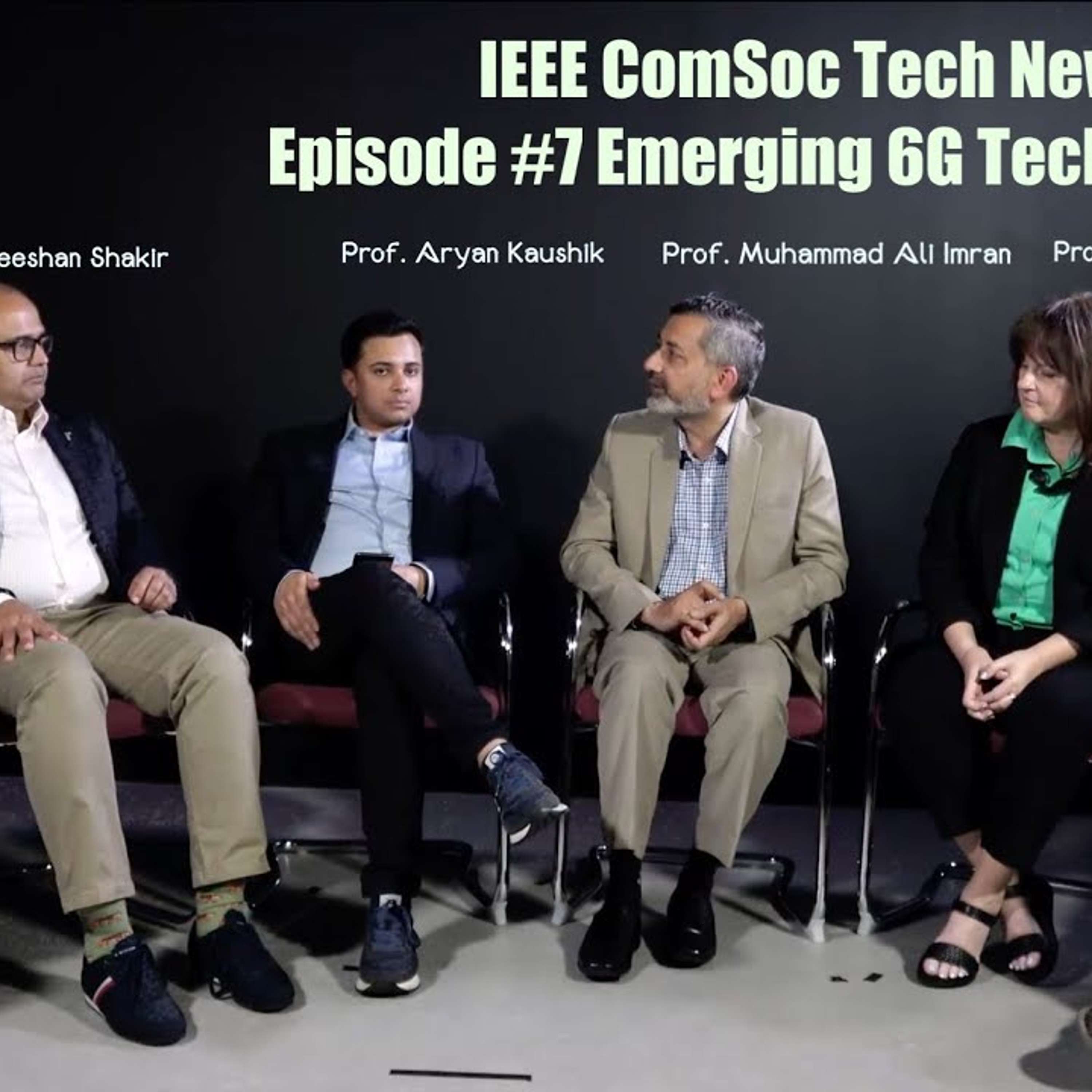
Episode 7: Emerging 6G Technologies
Oct 25, 202400:39:57Tap to summarizeCTN’s podcast #7 features a very distinguished academic panel discussing the emerging technologies that are being researched and developed in order to support the upcoming 6G network’s requirements. Some of these will be there on day one, while some still need more research but they all can be far reaching and have the potential to usher in many exciting new services. We wish to thank the panelists for their contribution to CTN’s podcast series.Prof. Julie McCann, Professor, Imperial College London, UKProf. Muhammad Ali Imran, Professor, University of Glasgow, UKProf. Syed Ali Raza Zaidi, Associate Professor, University of Leeds, UKProf. Muhammad Zeeshan Shakir, Professor, University of the West of Scotland, UKProf. Bob Stewart, Professor, University of Strathclyde, UK
Transcribe →
Episode 6: Machine Learning & AI based Wireless Connectivity for 6G & Beyond
Oct 25, 202400:43:50Tap to summarizeCTN’s podcast #6 features Professor Yansha Deng discussing with our very own Professor Aryan Kaushik the vision of AI and how it will be enhancing the upcoming 6G technology cycle. The words “AI native” has been used extensively as it relates to 6G, and academic work has and is taking place in almost every research space, from physical layer, to cross layer to management and orchestration. This podcast provides great insights into the ways in which AI will make 6G promises become realities. Enjoy it.
Transcribe →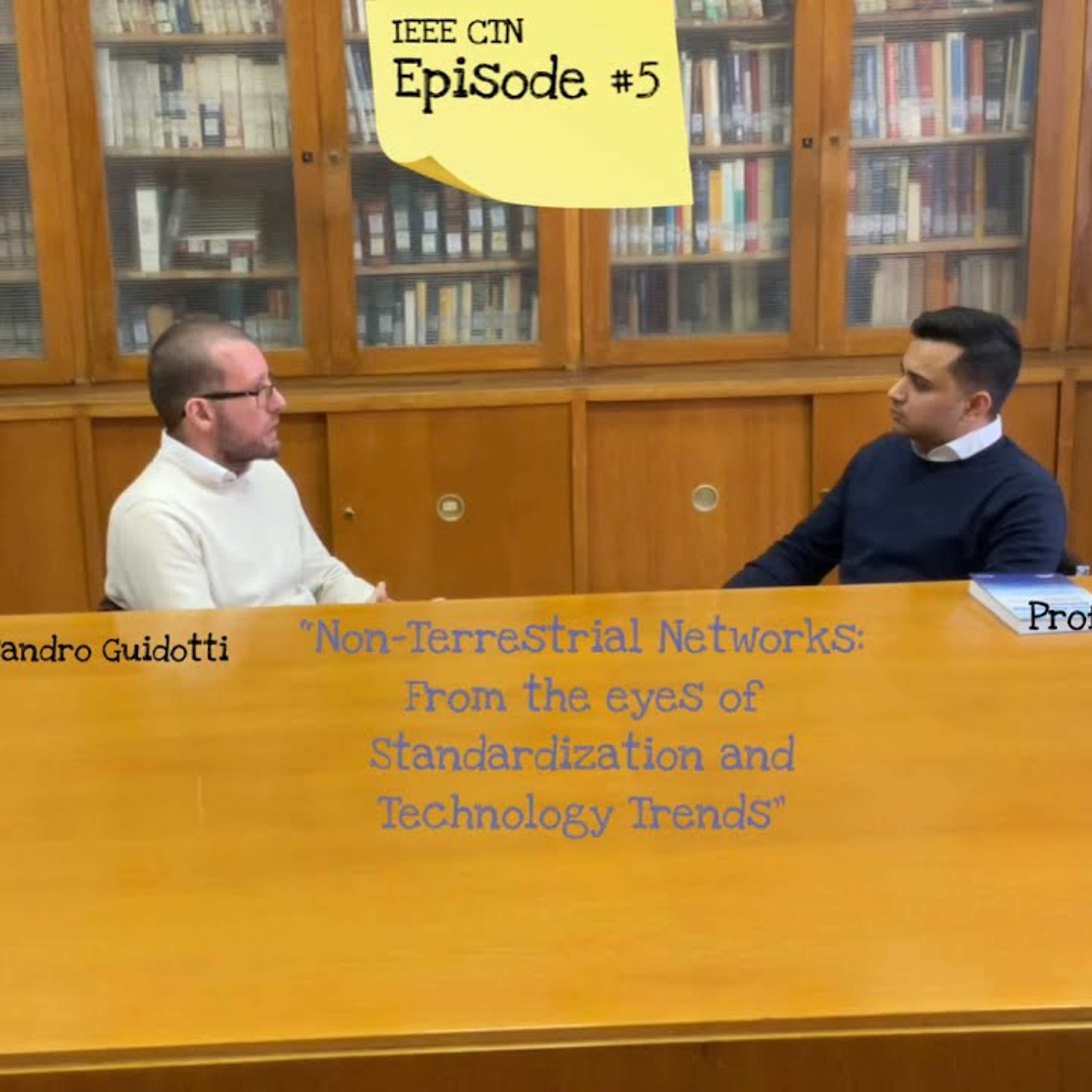
Episode 5: Non-Terrestrial Networks: From the eyes of Standardization and Technology Trends
Oct 25, 202400:32:05Tap to summarizePodcast #5 of CTN is proud to present Alessandro Guidotti, Senior Researcher, CNIT, Italy discussing Non-Terrestrial Networks (NTN) from the perspective of standardization activities and how the technology fits with the Terrestrial Networks (TN) evolution towards 6G. Since its inception, 3GPP has been focused on the standardization and evolution of terrestrial wireless networks and specifically cellular networks.In the most recent release of 3GPP, and for the first time in its history, NTN networks appear as part of study and work items being taken up by 3GPP. Along with this, as the definition of 6G is starting to take shape, a number of objectives set forth by ITU will have to take advantage of a multitude ofnetwork types to support the growing number of services, applications and social objectives. Please join us in this informative discussion between Dr. Guidotti and Professor Kaushik about this exciting evolution of wireless communications.
Transcribe →