← Confessions of an Implementer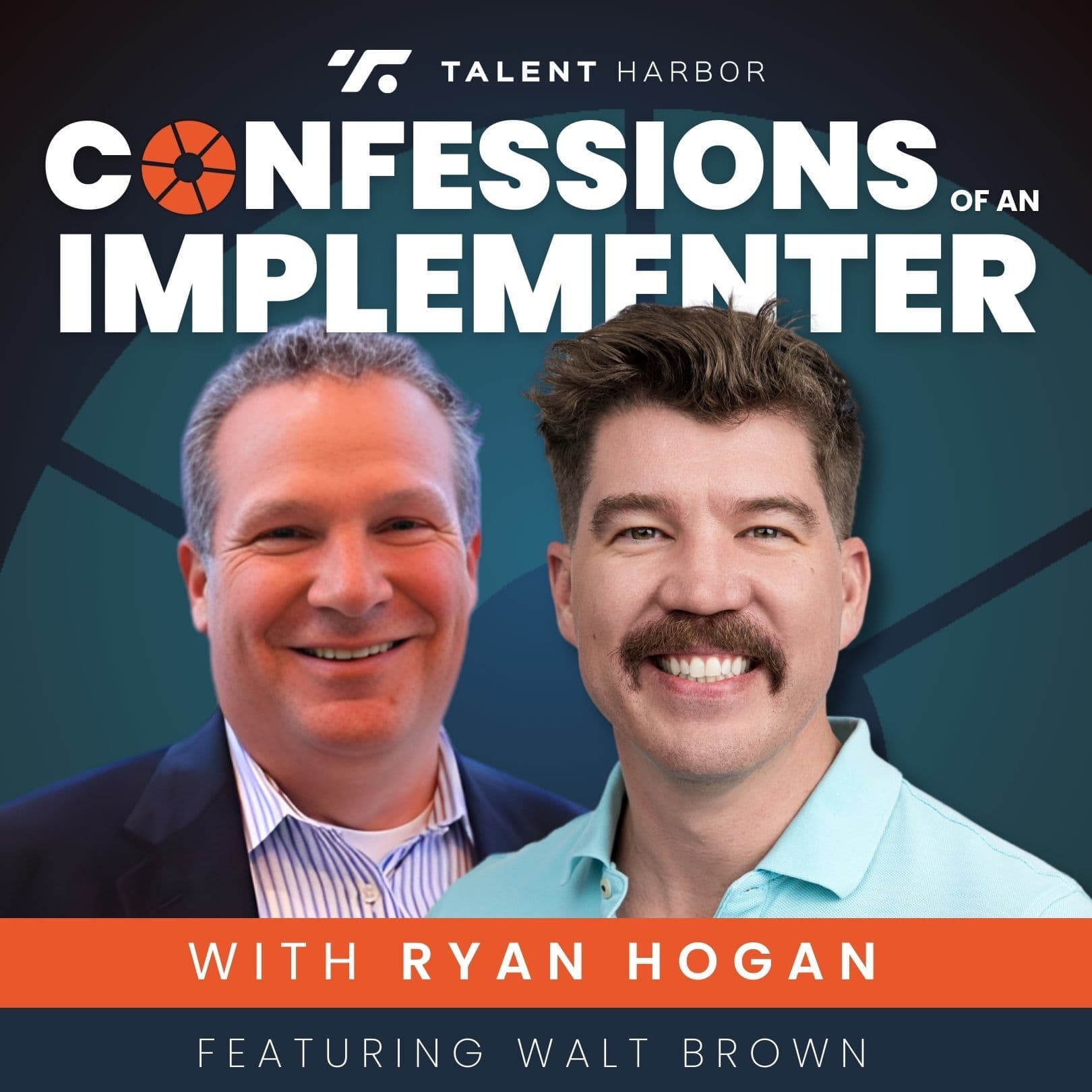
Confessions of an Implementer
S2E34 | Right Person, Right Seat: Aligning Your Team With Your Company’s Core Values with Walt Brown
00:59:42
Loading summary
Transcript99 lines
- [00:00]
A
Think of three employees you've had over the years that if everybody's the exact same way, you could take over the world. List their names, ask them to write down the attributes that you think of with these three people. And then you just do like a keep, kill, combine, and it comes out typically right. And then it's just facilitation, you know, of helping them dig into the real, to the real words and then helping them understand the words they're using can. Can help them create a shorthand for managing and lead.
- [00:36]
B
Welcome to Confessions of an Implementer. I'm your host, Ryan Hogan. We share unique stories of EOS implementers and the companies they've transformed to give you a rare glimpse into the successes and challenges of the system in action. Let's jump in. There's a couple things to start with here, I guess. One is, oh, you already have it in your thing. I thought you were going to put Walt Brown, but you put Uncle Walt. Where does Uncle Walt come from?
- [01:00]
A
Oh, I don't know. Early on, Eos client is a big industrial rigging company with like 1800 hard hats. And I'm in there and the president's name was John Wilson. And I think I was reading from like, one of Lencioni's books and John says, read to us, Uncle Walt. It's like, what do you mean by Uncle Walt, John? He goes, well, you know, you're just that loving uncle. You show up every now and then. You know, you're not afraid of putting your arm around her shoulder, maybe telling us something we don't want to hear. You'll give us some good information, but at the end of the day, you leave and we don't have to pay attention to anything you said, which is the perfect example of an implementer. I mean, yes, that's Uncle Walt.
- [01:48]
B
That's. It's so funny. Like, like you took that as endear. Like, I would have been like, you could have stopped right before that last sentence. And. And I would have felt really good about myself. But you're like, no, that's. That's what I do. Come in and speak the truth and help companies out. And then I get out of the way so they can go, they can go execute. Yeah.
- [02:06]
A
And it's their choice whether they execute or not.
- [02:08]
B
That's. That's true. What do you. I feel like this is a, this is a contested statement. So you and I, we were sitting, somehow we got on the rooftop bar and we were having a wonderful evening and there's some debate over what number Implementer. You are what it.
- [02:29]
A
Okay, we did talk about that. So number three.
- [02:33]
B
Wait a minute.
- [02:34]
A
Wait a minute.
- [02:35]
B
What?
- [02:35]
A
Don is one, Mike Peyton is number two, and then Renee. Renee and I were in the same class, so it could be two, two and a half, three, whatever. But you know, who had the. Who had the client. Who had clients first. So I got clients for Renee. Who freaking cares? But it was really. It was really cool to be in that freak show with. I remember showing up on, like, in Gino's room and looking around. He got Gino and Don Tenney, who are a little bit wonderfully, beautifully odd. And he's like four other people, Renee, who had been spending his whole life in, like, Pizza Hut. And then, like, these three, like, random dudes, actually, with that random. Maybe I'd be number four, but Dwayne Marshall. And I remember going out into the hallway the very first break, and Peyton was like, the only normal, seemingly normal guy. He had, like a little. He had his little sweet, little dapper, you know, jacket that he always wears. And I said to him, mike, you can't leave me. Don't leave. So I thought he was normal. Then I realized that none of us are normal and we're all like a bunch of freaks in that room. But I just. I don't know if that made any sense or not. Right? But what a cool story right off the bat. Yeah. Number three is what I call myself.
- [03:53]
B
That's awesome. All right, so we got that. We got that situated at least this time. Number.
- [03:57]
A
Number three of people who still are active and didn't bolt, Gray Marshall bolted. What.
- [04:03]
B
What about when I went to your LinkedIn profile? So I have conversations like this every now and then. And I'll do. I'll do some research ahead of time. For you. For you. I read a book, and so I'm excited to talk about that. And we're going to promote the heck out of Attractor Repel. There's some things I really like about this book. I mean, I love the book, but there's some things you key in on when it deals with culture. And like, when I've gotten hiring wrong in the past, it wasn't because I was illiterate or couldn't read a resume. It was literally because I brought the wrong person into the organization. But before we get into that, I opened up your LinkedIn profile. And one, it's beautifully set up, so if you have an agency that's running that, I'd like a flyer on their card.
- [04:44]
A
You're giving me a hard Time.
- [04:46]
B
Well, now I am. I'm leading up to the hard time. You have 25, 25 different experiences. So number two implementer, where did this story all start for you?
- [04:58]
A
I came out of school as an accounting and statistics guy. You know, I always thought I wanted to go into my own business. I didn't want to become an mba. So I was like, well, I'll just do accounting because you get to see a lot of different stuff. I did four years as an auditor with Ernst and Young, Ernst and Winnie. And then in that 1986, I took the IQ exam and I scored low enough and I was allowed to start my own company. And then that, that turned into, you know, four companies that specialized in like importing, marketing and distributing things to really high net worth companies with like a focus on people who raise sailboats and people who show horses. And then that just led to, you know, that was 20 years. Those would have been four of the heavy experiences. You know, just a cool, lot of cool stuff there. So then sold the companies, started coaching and then that led to a discovery of this and a discovery of that type of thing. So I guess those are the experiences. Ryan. Now here we are.
- [05:58]
B
Now here we are. Well, like were they all beautiful experiences? Hockey stick rope up and to the right. You hired all the right people?
- [06:05]
A
Oh, no, I had one horrible thing. I think I still have it on there. I was after selling my companies, you know, you have best friends. Some guys I've sail race sailboats with really, really close friends. We got involved in this thing called the Blue Ocean Fishing Club. I don't know if anybody's read the book the Blue Ocean Strategy. Pretty cool book. And it was an angel network and we were putting money into companies and we put a bunch of money into a wastewater treatment solution. Fascinating. Worlds Wastewater. Well, I got called in to turn it around kind of as a halftime part time CEO. And if you're turning something around, you're probably arguing with the board a little bit. And just be careful folks, when you find that out there, man, that board's looking for a chance of whacking upside the head with a 2 by 4. So I got whacked with a 2 by 4 by my best friends. Just, you know, fired, fired a CEO. We had turned it around. It was just arguments, you know, that's the negative. Not everything is beautiful, right? Turnarounds are hard.
- [07:14]
B
Turnarounds are really hard. And like now I'm fascinated and unfortunately I've been in some turnaround situations for my own companies. 1, 1 We were unsuccessful and unfortunately bankrupted. I'm curious to hear, like, when you walked into that turnaround situation, like, what's the, what's the, what was your number one goal? Like walking through the door, you're like, I gotta get this done in order to like start this process.
- [07:39]
A
Well, we were, this was a new technology in a very like, backwards world. And we just had to get trials running in wastewater treatment plants, you know, so you gotta get it out there, Gotta get it out there. And one of the primary driver money people behind it had owned a, had on a Budweiser distributorship. And I don't know anything about Budweiser distributorships, but they, they make a 32% margin. They get paid cash on the barrel head and they get 45 days to pay for their inventory. So it's an infinite cash machine. And you know, I was like, in order to get this going, we have to like, we got to get these trials in here and if we can just at least get the people to pay. What our cost is to get the property product into the wastewater treatment plant were golden. And we had that goal. We had that going. So we invested a lot in inventory and so we were turning the inventory to get cash out, if that makes any sense. So my two goals were to get the cash out of the inventory by putting in the trials and pilots. And we got that rolling. But there were some other things that just got in the way of, you know, it's, you got to make money, you got to make money. Well, you know, you can't force people to buy something that hadn't been proven, especially in that world made up of lots of municipal employees who are very risk averse.
- [08:58]
B
And was that, it sounds like there was a falling out at a certain period. Was that, was that what the board was pushing for was great. Like you figured out some of this stuff. But now, now we need to make money.
- [09:10]
A
Yeah. And I was like, well, we haven't even, we just, we. There was this huge, you know, not seeing eye to eye on things, you know, but just, you know, so you're doing, you're doing. Have you ever gone around and raised money?
- [09:25]
B
Yeah, we raised, we raised 12 million in equity and about 30 million in debt at my last company.
- [09:30]
A
Yeah, I mean, you know, so you're going out there and you're, you're talking to people. It's a horrible place to be. I never want to be back in that world again. Just mean, mean green. Just, you know, oh, it was tough. So, you know, and you think you're Doing the right thing and you're trying to help and next thing you know it just, geez, how did I get myself fixed up and all this kind of crap? And the money comes to calling, you know, it wasn't anything negative, but I felt good because I was in the, I was, you know, I was a CPA accounting guy. So I would hand this board every single month, I would hand the board a statement of income statement, balance sheet, statement of changes and the reconciled bank account to the freaking penny every month. So it's like, you know, there was no question where like money was going and all that kind of stuff. You know, a lot of these guys can't even read a freaking income statement or balance sheet or even understand you have to. Statement of changes. Am I saying this publicly?
- [10:22]
B
Damn it. Okay, I like I'm, I'm. As you're talking, like I'm getting, you're bringing up a lot of like old memories because like for one, fundraising for us, like that became my primary job at the time. And, and the debt that we raised, by the way, like we weren't carrying that on the books. We just every time, every time we got a little bit better, then we could go out and get a different interest rate. So like we started with like the crazy ones, little less crazy. We got into mez and we would just constantly roll it down. But what you just said there, like it one, that was my full time job for like three years. Like you know there's, there's leading the company, there's running the company. But when you are fundraising like that's, that's your job. You're jumping on flights and just like going.
- [11:09]
A
It's horrible. It's a horrible life because then you get a little bit of money and you try to run the business and then you're out looking for more. I mean it was just really is really difficult. I got a lot of respect for people out there who do it. It's hard work.
- [11:21]
B
You still friends with them today?
- [11:23]
A
No, lost my relationships, which is probably the world working in the right direction for me. Thanks for scratching that scab.
- [11:35]
B
My only goal here on the show is to try and get you emotional. So it's not working yet.
- [11:39]
A
The cool thing about that, to bring it back to, you know, confessions of an implementer. So this happened right before July 4th on going on vac family vacation. And it went down and I called Don Tenney. So I'd been out. I left eos for like 18 months.
- [11:56]
B
Oh wow.
- [11:57]
A
During this period and I called Don Tenney said, don, will you have me back? He says, oh, heck yeah, man. See you in August. That's pretty cool. Isn't that cool? Yeah.
- [12:10]
B
Well, let's let. I was gonna. So we are actually one. Let me see if you're beating. Let me see if you're beating. We're, we're pretty much tied with, with where Dan Wallace was and there's actually questions coming in. And so I would give you this long, drawn out story about, about my situation actually happened the day before July 4th, and basically like investors committed, then they pulled out, then my board locked something. But it sounds like you and I both have, both have some scar tissue there. Cam just came in. Cam Lawson, who obviously you're familiar with.
- [12:47]
A
He's a paid contributor, so he might not count competition with Dan.
- [12:56]
B
He wants to know about the seven critical needs and how that correlates with eos. So let's jump right into the book at that point. So you've got, you've got a book and it's called Attract or Repel. I love this book because it's, it's the fundamental of if you understand your culture and you live and breathe it, then you're naturally going to attract the right people and you got to, you got to get rid of the wrong people. So talk to me about, like, where this came from. Like, was this all your 25, your 25 experiences on LinkedIn? Is this just the culmination of just things that you've observed and that you've seen over time?
- [13:31]
A
Yes and no. So I'll give you the origin story that makes sense. So you can't see my session room here, but if you could, you would see the pictures of sailboats and trophies and all sorts of stuff. So I raised sailboats for most of my life on teams, boats with eight people, like 17 people. So for that I played football. And you just get an understanding of what a championship team feels like. That's a lot of what we're doing in the world of eos is, you know, are you creating a championship team? And so after, after selling my companies and hanging my shingle as like an executive coach, I got a phone call from Gallup and Gallup was looking for, for, for coaches. And they were running like a pilot program to see if they could get coaches to like, roll out their Q to 12 questions of employee engagement. I don't ever seen Gallup's Q12 or not. But, you know, they're, they're the big boys. And so, you know, it's been a year underneath the umbrella of Gallup while doing some other stuff, really understanding employee engagement on the statistical side and, like, on their psychological side. And then I got a phone call. I was on my mountain bike one day, and it was Don Tenney calling just out of the blue. And so he kind of got recruited into eos, went out there and got trained. And so the whole time I've been doing EOs, I've been. I'd seen it early through the lens of the gallops. Q12. That makes sense. I don't know if that was clear what I was just saying there or not through that lens. And then in 2014, at about client number 7,276 was back when everybody was complaining about millennials. I don't know if you remember that time or not, but they're just complaining. And I sat back and looked at all of my clients, and, like, I don't see that going on with them. They're. Millennials are completely destroying the mold, just breaking the stereotype. And so what I did is I asked my clients if I could go in and do, like, focus groups with their millennials. And what came back was, these folks, there are about a hundred of them across the whole piece, plus the clients I was working at that time. And it was like, what EOS is doing is it's defining these seven things that are really important for me to know whether I'm bought in at work or not. It's defining what it means to belong, and it's defining what they're asking me to believe in. And it's defining clearly what I'm accountable for, and it's defining what I'm. How I'm being measured, rubrics, millennials, zillennials, whoever. It's defining how I'm heard. It's defining how I can step into my own development, and it's defining. Defining for me whether I can be balanced or not. It's just like. Just came into the seven critical needs. You know, it's just like, there it is. Then you start turning that into a survey, and you start putting statistics behind it and experiences. So that's where the seven critical needs came from. That. That flow of work.
- [16:23]
B
Interesting. And so what. What are those seven critical needs?
- [16:29]
A
Can you see behind me on the board? Or they turn upside down.
- [16:33]
B
Oh, no, it's. It's right. It's right, Ty.
- [16:37]
A
Yeah, Go you the seven critical digits. And if you notice the EOS process on the other side. But the need to belong, which basically, in the world of Eos, you know, we're defining what the core values are, and we're also defining what the skills are that tie to the roles that we need to make the business go forward, the need to believe. It's like, this is what our plan is. This is. This is our product. This is what our purpose, our calls, our passion is. This is what we're going to be best in the world at. I mean, just going through the VTO, this is where we're going to be in 10 years. This is where our sweet spot, customer is. This is where we'll be in three years, one year out. This is where we're going to be. And then the next nine days can be focused on these things. You see the plan? Yes. Do you believe. Can you believe in that? You know, and then we jump into understanding and embracing what you're accountable for as it ties to this thing you're being asked to believe. And you take that another level further and you're saying, okay, do you understand how you're measured against what you're accountable for that ties to what you're being asked to believe? And then you. How can you bring your voice to the table and add and contribute to. Around what you're accountable for, what you're being asked to believe in? Then how can you be involved in your own development around these things that you're trying to. You're bought in like everybody else. How can you get better with. Along with everyone else? So they need to be developed. And then ultimately is the need to be balanced. So, you know, work, life, money, and all we're trying to say with these. And through eos or any, Any operating system that's worth its salt, define how long, how much time the job takes, and be honest with it. You know, this set of roles takes this many hours a week and it pays this much. So you're putting it out there and you're being. It's like a promise, Ryan. You know, in order for a promise to have any power, it has to be accepted. So you as an employer, saying, this is what the deal is. Are we on the same page? You know, yes, I understand those as promises. And we'll come on in. Kind of went off on a little tangent there, but those are the seven critical needs.
- [18:41]
B
Got it. And I am going to get to the promise. That was actually one of the things that I've got earmarked in here for today is this idea of the promise. Because that. I think that was. That was a really kind of powerful thing. Especially you positioned it as, as far as like the recruiting and the hiring process, and one of the promises you make before they ever joined the team, before we, before we get to that, though, which, like, is there. Is there one that you're. Like, this one? This is the most important. Are they all equal? Like, what, what have you seen through this journey?
- [19:12]
A
Well, it's the, the, the. The baseline is, is that if we talk about being positively aligned with each of the seven critical needs, and if any of them are not aligned or not, you're not, you know, somebody saying, well, if I was on a scale of 1 to 10, giving my satisfaction with this particular need, if they're giving it a six, that's a negative, like, net promoter score, it's a negative. Just in one is enough to trigger the person. This is, you know, I'm not, I'm not balanced or I'm not being her, or, you know, I don't know how I'm being developed. It just depends on, you know, different people force rank these in different ways. Ryan, you know, you might be on a career path and you're really interested in knowing what you're accountable for and measured and getting really good at a certain trade, and you're willing to kind of suck it up with regards to maybe believing in the product or, you know, fitting into the culture. You want to be all in there. But that question gets asked all the time, and I'm not sure that there.
- [20:08]
B
Is one primary one that's so interesting because, like, for some reason, like, you just kind of turned it around. Like, my, my perception had been, like, from the company. So, like, you know, when the company receives these results, like, what does it mean? And it's really interesting how you just shifted the perspective there to the actual teammate. Like you just said, like, they may value different things differently. And, and so then how would you reconcile that? Meaning. Meaning, like, when I, when you go to a company and you have them take the assessment and you're sitting down with the leaders of that organization and you're kind of going over the assessment results and things like that. Like, like, how do you, how do you debrief that? Or what do you debrief to say? Like, these are the areas we need to work on based upon the results that we're seeing.
- [20:57]
A
Well, you know, it's. In a lot of ways, you're debriefing to strengthen the things you're actually good at. But the survey comes back with people scored on a scale of one to ten, and we look at like an eight and a half, a nine or ten is positive. And like a seven and a eight and a half is like, neutral. Anything below negative. But one of the things we encourage is anonymous is they actually write a lot of comments. So the individuals are writing comments, and along with that comment is the score they gave, which gives you a lot of information so they can be writing something, and you'll see whether they were a six or a seven coming in. And, you know, I don't know if I made any sense there, Ryan, but you got. It's got a lot of, like, detail up underneath it. But the beauty of this thing is, is when we, like, like Don Tenney's really gotten involved heavily into the seven critical needs, and we're pushing it in, trying to get it in as a. As an official Trust builder. That's November 10th. It's a decision that Kelly and Mark got to make. But. But they challenged us, Don and I, going out to vet the seven critical needs. And one of the things we talk about in the world of EOS is vision, traction, healthy. And, you know, vision's pretty easy. Traction's pretty easy. But how do you measure healthy? And so we're saying a healthy organization is one where all of the seven critical needs are being met by all of the people. Right? So if you say these are the needs. It's essential. They have to be met. And then you have to step back and say, do we have. It's essential that we have a really simple way to measure it and get responses back. That's like the second essential. And the third essential is we need to be able to respond through the tools of our operating system. Well, in my case, we're using eos. Is it can or can you respond through the pure EOS process, through the rhythms of quarterlies and Level 10s? Can you respond through the pure use of the tools? I get annoyed at the word pure, but at the end of the day, if you look at the purity of the tools is how well they support each of the seven critical needs. So you can look at ids, for instance, as a tool, and you think further out in the organization. It doesn't have to be inside of a perfect level 10. It's just, are you given. Are you honoring the person to allow them to be able to IDS what's going on inside their own situation or their own job, to be heard and be developed and to be balanced? Am I making sense at all in terms of that? So it's just. And so our debrief is, yes, let's figure out what's going on. But the real power of the debrief is what tools do you not using that are part of your operating system that you need to double back down on. And then a lot of the debrief is just about messaging with the company is hey, here was a survey, this is what we heard. And the way we're going to take action is through the tools of our operating system. We're doing this thing EOS for you, not to you. It just makes the whole thing come.
- [24:08]
B
Alive for the believing. Like let's say they believe in kind of where the company's going or let's say they score really highly. Is there ever a time where you've approach the assessment and like the belief in, in the company did not correlate with the vto? And I guess what I'm trying to, trying to get at here is, is is there a way or is or do you analyze? Because the deeper inside of an organization you go generally like it's like the game of telephone, the harder the message is to get deeper into the organization. Do you ever see like a disparity between like someone has a deep belief in the company but doesn't quite understand like where the company's going or some of these other things but they kind of don't know what they don't know.
- [24:54]
A
Well, what you find more is like especially with an EOS run company where the company's outputting the VTO out in front of them and the employees don't see the, the company living into that, living into what they put out. And that's so they're calling crap on it, you know. Oh right. They pointed out, man, it's pretty, pretty, it's pretty cool, you know, because, because it's, you can't think further out. The guy driving the, the forklift probably has more time to think about this than the person running a county, you know. So that person has, as they're living a life, they have kids, they have a family and a car and a mortgage. They're thinking just as much as anybody else. Just they're probably circumstance in life didn't allow them to maybe go to college or something like that, but they're still super. This is, these needs are still just as important to them as everybody else. And you start putting it out there, ask them, tell them about what they believe and you start telling what your focus is and your, your purpose, they'll call you out on it. That's what you're asking? Yeah.
- [25:58]
B
What's interesting about that, Cam and I were, I talked to Cam this morning. And so him and I just had a conversation that was really similar to this. So even at Talent harbor, like we, it, we're always placing small bets. And you know, the feedback that I'm getting, especially from coaches is like, guy, you gotta focus, like focus the organization. Just get really good at one thing and then let kind of some of these other things come naturally. And so like, I'm trying to not do that anymore. But what's interesting about what you just said is like I enlisted in the Navy in 2002 and I was an enlisted air crewman. And one of your first jobs, if you're in the 53 community, is standing in this position called long cord, which is basically there's this long cord and you plug it into your helmet, this one that's right behind me. And you stand in front of the helicopter while it's on the ground and you just make sure that everything the scene is safe. If you're doing something called a functional check flight, you could be standing out there for like four hours with the bird spinning and you're just listening to the pilots talk back and forth. And I remember like how much time I had to think. I, like, I would dream and I would think about all the things. And so it was really interesting about what you just said. Like we kind of had a misstep at, at Talon harbor with one of the, the business lines that we recently introduced and, and Cam was given a situation where he was able to look around, be like, hey, like I can see things. What's interesting is like the guy driving the forklift, like might, might have the right answer for where the company needs to go. And everybody else is so busy just being productive and doing things that, that they're missing it, right? Sure can.
- [27:30]
A
You know, and that fort length driver a lot of times is talking to guys that are, that are delivering, delivering products to six different competitors. I mean sometimes your, your delivery drivers can see more out there in the world than you can from a marketing standpoint. They're backing up to you to, to your competitors every day, seeing what's going on, right? It's like, it's amazing how we don't listen to those guys, but those guys are thinking and it's like you charge, you charge them with an idea or thought or hey, why don't you report something you thought was important that you saw in one of the places you loaded with this week? Bring it back. It's just little simple stuff like that.
- [28:09]
B
Have you ever done one of these assessments and like you could just tell immediately that like it was a toxic culture, like everything was jacked up inside of the organization.
- [28:19]
A
Well, I can usually tell that from the leadership team even before it goes out. I mean. Right. And sort of the sad part of about it is you don't see that often, Ryan, because if you've got the guts, the balls to do a survey like this, you care already. So you don't get the opportunity to really see the negative underbelly because those guys are too afraid to actually lift the kimono and see what's underneath there.
- [28:49]
B
That's a great point. Some of our best clients, they run on Eos. And what does that mean? It means they have a growth mindset. It means they're looking to learn. I've heard a lot about like the speakers that go on kind of the Vistage trail. Like they love Vistage CEOs because just the fact that like they're taking a day, a month out of their workday, like they have a different mindset on, on business and professional development.
- [29:15]
A
Yeah. Anybody who's been, been involved in a peer group is a good, you know, is a good prospect for anybody who's putting anything out there. Five, seven EOs, those are willing to, willing to learn. Got enough scars. Typically I find that's not the 32 year old guy, that's the 38 to 42 year old is where you start to realize that you don't have it all figured out.
- [29:37]
B
Yeah, I showed up to my first Vistas meeting in Flip flops and it was February of in Baltimore. So yeah, I've since learned and grown. What, what are some of the signs? So let's say you walk into a leadership team and you're. Because one of the things that's interesting that you just said was like I can tell pretty immediately like if the company has their crap together or not. What are some of the things that like you'll see and you'll immediately be like this is there's going to be an issue here. And the reason that I asked this question, not to like dig into all of those things, but I asked this question because like maybe there's leaders that are sitting on a team that don't even know what they're looking for or not seeing it themselves. And so like what are some of those, some of those observations?
- [30:24]
A
Yeah, I think what you said is, you know, what are you seeing when you walk in? There's a unique perspective. Remember I did four years of audit for Ernst and Winnie, Ernst and Young. So I mean I was inside of the office doing financial audits. And it's amazing. And so. And you were also. I was doing a lot of like manufacturing and really hard stuff. So it wasn't just like an insurance company with a bunch of numbers with no product. You were in there, you're doing inventories and you could walk into an office and almost know immediately whether this company was profitable. You just, you just tell the way they were organized, some of them were kind of crazy sloppy, but they were profitable. Other ones were like really buttoned up and they're profitable. So that was sort of this, you know, and you're interviewing the CEO, you're interviewing the cfo, you're doing a lot of work with like the people who are now on your leadership team. So you're, you know, you're sitting there, remember that 1800 person company I talked about at the very beginning? We're talking about Uncle Walt. My firm used to audit them and I used to have to go in and talk to the Mr. Johnson and argue with him about whether the receivable was going to be received or not to stay on the financial statements, you know, then end up working with his son and he was still on the board. And it's pretty, pretty cool, Mr. Johnson, but that's a little bit of a tangent. But you go into eos, one of the things that EOS does super well and really the need for the seven critical needs is EOS forces upgrades to the leadership team. It absolutely smokes people out that can't carry their weight or are wrong, fits or not bought in. It cleans that team up just naturally. And probably 80% of the time you got an eight person team, two of those people aren't going to be there in a year. And a lot of the, I'm sorry, going off a little bit here, this is more like lessons to implementers. One of our goals when we go in here, we're trying to help this person run this company and live the EOS life. Our goal is to make sure that in a year we're doing this first two day annual that we haven't screwed those two days up by allowing two people to be on that leadership team that shouldn't be there. When we start going through team health, we can't allow that to happen. And we don't have to do the forcing. We just have to use the tools to shine the light to help that person. Those people either self select out or help the team owner make the decision to let the person go on down the road. But you Know, you can see it, it's in the body language they're dropping like this. A lot of times they're just really good pointers outs of problems as opposed to being solvers. And the team just ultimately gets fricking tired of it.
- [33:07]
B
All right, quick break friends. Do you find it impossible to hire and retain top sales talent or worse, are you paying insane recruiter fees who are all using outdated hiring processes? Yeah, I was too at Hunt a Killer. We were spending hundreds of thousands on recruiter agency fees. And after I sold that company in 2025, I started Talent Harbor. And the whole vision here was to make sales recruiting accessible to small and medium sized businesses. Because the organizations that can hire and retain world class people are the ones that ultimately win. Most organizations rely on things like ZipRecruiter or LinkedIn and they get hundreds if not thousands of resumes. But we find that the best salespeople are already perfectly placed somewhere else. And that's why our approach is to go after them. And we do that through a business model called recruiting as a service. We do not charge commissions, we do not have success fees, we don't have contracts, we don't have long term engagements. And we become an extension of your team as expert sales recruiters. If you're tired of the same old recruiters and want to actually grow your sales team, check us out@talent harbor.com. that's Talent Harbor. T A L E N T H A R B O R dot com. Let's get your next sales superstar hired. Rob Toomey has a question for you. I think this is a, this is a good one. He says, have you ever taken the leadership team down to the factory floor to learn from the people, the workers, the drivers on the front lines?
- [34:40]
A
I have not. Because you know, we always meet off site. Rob, that would make a lot of sense. But in essence we are, we're taking them on a. I know Rob real well, so that's why I'm. We take them on a virtual journey down to the factory floor, riding on the magic carpet of the assessment.
- [34:58]
B
Rob, nice, nice. What if you guys, you have a company and they are, they're giving out this survey and they get all high remarks like, are you just like, hey, good to go and this is great or is there always something in there where you're able to say like we can optimize even further?
- [35:18]
A
That's a great question. But like a little story that reminds me, there is, it was more of Chris Dawson. You know, Coach Dawson was working with this One client, and this one client had, I don't know, four or five locations. And one of the locations was staffed by a whole bunch of Chinese Asians. And it was like 50 people in that location. They all came back with tens. Because their culture doesn't, you know, their culture doesn't give negative feedback to ownership. That makes sense. But I thought that was kind of a funny story. You know, there's things like the. Do I understand. Embrace what I'm accountable for always comes back high the first time through. Because they think the question is, are you accountable? Yes, I'm accountable. Now we're asking, do you understand what you're. What you're accountable for? There's always. There's always. There's never anything that's a perfect score. There's always a. There's always something to work on. But still it's even. Even if they are all perfect scores, Ryan, it's like, hey, guys, this is what we heard. We want to make sure it keeps going. We're going to double down on these tools. You know, it's communicating.
- [36:28]
B
Yeah. And like. And that, that's probably a great segue to, to one of the other things that, that I read in the book that I, I thought was absolutely brilliant. And I won't bore everybody with the. The details of, of all of my hiring challenges and hiring woes, but you talk about this thing called a promise, and you touched on it earlier, but like, I really saw that as. There's like a. Like there's something very kind of core and very deep to that. So what is the promise? And. And just kind of walk us through how you think through that.
- [36:59]
A
Yeah. So are you ready to go. Go deep with Uncle Walt? You know, it's just people always tell me I make things too complicated, but, you know, try not to. It's the study of a. Of a promise, of the seven critical needs. Used to be called the seven questions. Seven promise. And then that was hard people get their heads around. So that's just the seven critical needs. And when you. When one thinks about a promise, there's a couple of lessons. Is. Is in order for a promise to actually have any power, it has to be accepted by the Promisee. So I'm. I'm making a promise to you, Ryan. I'm the promise or you're the promisee. You have to accept that. Okay. And then once you accept it, in order to build trust, we need to constantly keep that promise. Two of the lessons. The other thing that happens just all these salts don't all come from me. I'm brain cramping on who I lifted them from. But you know, if I, if, if you ask me to give you a ride home, Ryan, and I promise to give you a ride home, I've actually given up some of my rights to you for you to hold me to that promise. So it's a real subservient type of thing. When you actually are making promises to folks, you got to pay a lot of attention to the promises that you're making and the promises that you're accepting. And if you can live in a world where you're paying attention to the promises that you're making and then seeing if the person accepts them and then work to keep them and the promises that you're actually accepting and then work together to keep them, you create, you get rid of a lot of just the chaos in the world. So in our world, we're making a promise. We want to create a place where you know you belong and we're going to surround you with people who have these core values. Pay attention because I'm going to tell you what these core values are and they're a high standard. And if you can keep, if you can live into these, it's going to be nirvana. If you can't, it's going to be hell on earth. Because I'm making a promise to you. I'm going to surround you with people who have these values and if, if you don't have them, I'm going to clean up the herd. We're on the same page. That's my promise. This is hard, hard, common. You're not pulling them in by lovey dovey stuff. You're being really clear to them about who you are and who you're not.
- [39:16]
B
What is this like where in the conversation? So let's say, let's say it's a hiring conversation actually this is going to be a two parter in the hiring process. Where is this promise best delivered? And if you haven't implemented this kind of like promise philosophy into your organization, then should you go back individually one on one with everybody and make that commitment?
- [39:41]
A
Yeah, and that's the, you know, that's what EOS is trying to get us to do. And you got to go back and do the cleanup. But the whole idea is we're trying to start at the front gate. You know, you're, you're talking about core values. It comes from me. I was, I was doing this before with my companies. I would say to people, hey man, before you even think about Coming in here, let me tell you about what our core values are. Positive, cheerful and cognizant. Number one, I want, I want people that I'm surrounded with every day to be positive. I want them to have a cheerful attitude. But at the same day I want them to be aware and cognizant. If shit's hitting the fan, you don't have to be like lovey dovey positive, but you know, pull it back together. We've got two more core values. It's challenge your work and three questions first. And so once you've proved us you can do the work, we want you to challenge it. You know, there's, we aren't going to adopt the status quo there. And, and then three questions first. Slow down, ask three questions. Don't come in here if you can't believe that. And the other thing we do is we are just using my examples. We believe that our customers only have a finite number of weekends and we are absolutely protecting their weekends and their Fridays. If you're in doubt about a decision, you're getting that thing out to them by Friday. It's just stuff like that up front. And you're saying to them, you know, go home and think about this stuff and then tell me tomorrow whether you think we want this job or not. But you know, this, these are, these are like standards we're holding everybody to just, you know, bold. This is what you're accountable for. These are your roles. This is how you're going to be measured. This is how we listen. Explaining all that stuff up front. Right. You know, think about how powerful it is with your clients as you're bringing talent in and if their clients discuss to organize these stories and then you're able to talk to the, to the prospect, hey, is this sound like a place you want to work? This is who they are. You get rid of all the problems up front.
- [41:28]
B
We believe deeply in this. And that's why I shared the story earlier of like when I've gotten hiring wrong in the past. It's always been because they were not the right culture fit for the organization. And that's why like we have, it's probably maybe four or five different parts to our, to our vetting process. But we have two main interviews and we spend an hour on a core values interview to make sure that the candidates values align with the client's values.
- [41:55]
A
We get those right, so much else goes better.
- [41:58]
B
So 100% like, you know, the whole idea of, of like right person, wrong seat, like, and I'm not insinuating that organizations should create seats needlessly, but there might be other seats in the organization that that person can go to, but if you've got the wrong person, there's only one place they're going at that point.
- [42:15]
A
No, what you do is you make another seat. You send them into another department.
- [42:22]
B
That's. That's what big corporations do.
- [42:27]
A
Terrible.
- [42:28]
B
So would you say that this promise. And like, the reason I'm going down this path so much is because, like, now, now I feel like I got to take a round turn on some of the things that we're doing because that was a big key takeaway for me in this. Besides, I want to implement your software now and have my team do your assessment. Um, but besides that, like, are you insinuating that it's probably right around the same time that the offer comes where it's like, hey, we're about to present an offer to you, and, and like, this is where negotiations are going to start, but you need to hear me loud and clear on this. The promise.
- [42:59]
A
I think it's start. Yeah, I think it's starting before. Let me describe the job. Describe working here. And you just say, you know, we're making these seven promises, everybody. And you describe them to them. You know, it's like when. And there's a, you know, there's a huge deep dive in. In accountable and measured and heard. There's like 14 points that I teach my clients to. You know, here's seats, here are your roles, here are the meetings you'll be part of. Here's how short your measure. Short term, long term, here's who you turn to to be coached. You know, getting all that out in the open or super clear. Ryan is kind of nerd stuff, but, you know, laying it out, talking to them about, you know, we, we have a promise to you. We want you to be able to say, you know, I'm. I understand. Embrace how I'm heard, and you're going to be in a. You'll be honored with a level 10 meeting every week and a quarterly conversation. We're, We're. I'm coaching my clients to, in the interviews to talk about. They're talking about EOs specifically, but they might say, we have these seven critical needs, their promises. And we keep the promise through our level 10, through our, our operating system. And I'll explain some of the tools when we go through the. The cert. Through the interview. Once you get it, it's pretty. Once you see the way the tools align up to those critical needs. It just, it just comes straight out with people who are eos first and.
- [44:20]
B
The promise that we're making is the core values. And some of the things that you talked about, one of the, I forget the exact quote, but it had to do with like, values are not industry specific or there was another thing in there. So like what's. When an organization is trying to understand, like let's say they're brand new. Let's say like, like, you know, they don't really have any core values, but the organization is successful in spite of itself. And, and you're coming through like what's, how do we get to the root of the core values that are driving those actions and behaviors that are ultimately leading to the success?
- [44:59]
A
Well, I kind of feel like most people, the, the founder already has the core as a, has the core values already kind of baked into who they are. And you have a tendency early on to hire people who have those core values. And ultimately, I mean all the Lencioni stuff of permission to play accidental aspirational. Are you talking about that model Lencioni?
- [45:22]
B
Just how, how to help an organization like articulate it. So let's say it, let's say it is the founder. And I agree with you there, by the way. I do have a follow up that I've been pondering lately. But like, you know, the, the core behaviors of the founder are generally the, the initial values that said. So like how do you, how do you come in and kind of look at all of these things that are happening and say, and help the organization like actually articulate what they are?
- [45:47]
A
That's a lot of, that's the, you know, doing EOs, we actually borrow a facilitation from Lencioni where he says, you think of three employees you've had over the years that if everybody's the exact same way, you could take over the world. List their names and then you say, then you come in and you ask them to write down the attributes that you think of with these three people. And then you just do like a keep kill combined and it comes out typically right. And then it's just facilitation, you know, of watching the faces around the room looking at the owner, seeing if he's ringing true over there and helping them dig into the real to the real words and then helping them understand the words they're using can, can help them create a shorthand for managing and leading. Like yesterday, one of the clients, brand new, is in a, is a vision building one, you know, they have the, they have the Core value relationships, you know and just somebody does something and you say Ryan, is that, is that live? Is that building a relationship? Yes or no? I mean make sense there. The values just need to be part of just being able to correct super quick, quick, not in a negative way. I know this past two weeks, Cam, you're, you're, you're watching up think. I went to our core values in the Bite7world a couple of times just to, just to gain alignment. It wasn't talking about strategy or tactics, it was just alignment to the, to the values that answered that or not Ryan. But you know when they're real, they're real and you feel them, they can't be touchy feely words. They need to be internal words.
- [47:31]
B
I just did a post on this this morning like we so at Talent harbor and we did this at Hunt a killer as well. But every single Friday we get the entire team together and I think we've always called them Firesides. Regardless of the company and today's conversation we always go over a core value. So one we acknowledge or identify somebody in the organization that had a decision or an action that exhibited that core value and then we just go deep. And so today we went deep on growth mindset, which is my absolute favorite. What is there a time where core values evolve? And I've been thinking about this question for, for a while now but like you know there's, there's the early days where the core values is literally the founders core values and then maybe like the team grows a little bit and so there's some other ideas or there's some other observations. Do you think an organization ever outgrows the founders core values?
- [48:29]
A
I think they're always going to be tied to them. They just might, they just might mature. I can't come up a good way to explain what I would say mature. Right. But it's, you know, do I see it change a lot in terms once they, once they lock them in and get them right. I don't see him changing a whole lot. Typically they can evolve. Maybe the words. I know yesterday this team came in, they had six words and we basically use the exact same stuff. We just clean some of the words up to mean more what they mean to communicate further out of the company. Is that what you're saying? I mean the world of EOs, we, we challenge them every year at least in the annual. Like one of the things I do a lot of times this is a trick for implementers out there when you can't remember the team Team members, names around the room and check in. You ask them to, to answer you a check in. Good news, personal. Good news, professional. What's working? What's not working? To your left, what is this person's most, most awesome core value fit? And so they go, they'll say, well, Ryan's most core value, it reminds you of their name and also like reinforces the core value. So you have to use your name. Sorry.
- [49:53]
B
There'S like a 30 second delay between the live stream. So I can't wait until, until Rob, Rob hears that one.
- [49:58]
A
He can pass that on to his wife. You know, she's the implementer.
- [50:01]
B
Have you ever challenged a core value at the annual? And listen, I realize that EOS is supposed to be this like two year program and you graduate. I, I never subscribed to that notion. I felt that having a third party, an outside party in the room on a continuing basis provides an enormous amount of value. So I'm assuming you've probably have some long term clients that stayed past graduation. Are you, are you, have you ever challenged the core values at an annual and they've changed them or changed one or two of them?
- [50:33]
A
I think the process brings that up. You know, it's typically, I do this thing where they're called sandbags. So you know rocks. So you know what a rock is. You know what a rock is, right?
- [50:46]
B
Yeah, yeah, I know what a rock is.
- [50:47]
A
So the model is water's the interruptions of life, sands, interruptions of work. Pebbles are your amount of time your job takes. And rocks are the things that are, you know, you do, if you have any time left over, you know, when you do the model correctly. I asked my clients two questions. One to the question, quarterly, I say, okay, let's think of all the sandbags that hit us in the last 90 days. And those sandbags, we start on day one and we set our rocks out 90 days. That's the exercise. But then there's stuff that hit, hits us in that quarterly. Like we hit a sandstorm and it fills up a bag that has some quikrete in it, gets a little bit wet. It ends up feeling like a rock. I call that a sandbag with my clients. And then the other thing I do, so that's in the quarterly and then the annuals, I ask them, reviewing the whole annual, what kind of sand trucks backed up and dumped on you in the last year? I mean, you know, so it's that you didn't anticipate. And very often when you start digging into that, that big Old pile of sand. It's people issues and it's like, so what? Where did the people issue come from? Was it they did not get or won't have the capacity to do their roles? Or is it but just cause your, your core values weren't clear enough, you know, so that's when you challenge them. You let them, you let the tools work in order to them saying, hey, you know, we let them go. And I can't tell you what core value he was violating that. You're like, okay, we need to work on the core values. Does that help at all? Yeah, I'll never say that core value sucks. We back into it.
- [52:31]
B
Might need to improve this. Let's think about this again. Okay. Is there anything that we haven't. I can't believe. But like the hour has absolutely flown by and I have two standard kind of outro questions that I'll ask you, but I want to make sure that we touched on enough of the concepts of attract or repel and the seven critical needs. And then because it's more than just the book and kind of your philosophy, like you have a software platform, an actual assessment, like you got a lot of really interesting things going on. Is there anything that we haven't covered? Cam came with a question, but is there anything that we haven't touched on that you're like, I wish we would have went there.
- [53:12]
A
Well, I think the natural place that it works on if you're in an EOS journey is like annual two or annual three where you're trying to go deeper in the, in the team health and the trust builders. That's a natural place for it to come up. And really you. You hit it. Ryan, I can't believe I'm glad you follow that list I sent before the meeting. I'm joking. This is really what it's. Yeah, I think you. I just enjoy the hours it's been. It's been great. So I think you hit everything. Hopefully people are getting served out there.
- [53:45]
B
I know you've had some ringers for especially for. So believe it or not, most of the people that download this podcast are all USIs. Like we thought that, you know, we thought we were going to get in front of icps. It's a whole bunch of amazing implementers that listen to it and I think you've. You've given quite a few amazing eosi tips and tricks in here as well. Cam does have one question that kind of, it kind of builds off of the last one and he basically, he says, how do you help A leadership team that thinks they're healthy just because they're performing well. And I think if I could add just a little bit of nuance to that. What I think he's getting at is like they're actually not healthy, but they're productive. Meaning like they're driving results and they're driving growth.
- [54:26]
A
Yeah. So I don't need to make this up. This is, this is, you know, lifted, I mean lifted right off from eos. Just lifted it straight from Patrick Lencioni camp, you know, the five dysfunctions pyramid. So this is, this is, This is how we get from here to here is through here. How you like. Like that, Ron? I can erase.
- [54:54]
B
Oh, that. You, you've been working on that. Well, you've had those books there the whole conversation. This is good.
- [54:59]
A
I have. And that's why this book exists. Is, is the CEO of Ben Bella, who published this book, said there's a gap between this book and this book and this book fills it, but it's just, it's, it's teaching the bottom rung of the, of the seven of the five dysfunctions, Cam. You know, vulnerability based trust. Without, without high levels of vulnerability based trust, you can't have open and honest debate. And without open, honest debate, you can't get commitment. Without, without commitment, you can't create accountability. Without accountability, you're not going to get really good results across the whole team. So it's just, you know, EOS just sets this up beautifully. At the very beginning of an EOS journey, we talk about healthy and smart, you know, lincy only Lincioni defines healthy as little. No confusion. That leads to little to no politics. It leads to high levels of morale and productivity and low turnover and key people. I mean that's just, and that just leads us straight into the seven critical needs. And how do you measure health throughout the whole organization? Does that help A little bit. Cam.
- [56:05]
B
He won't see it for like 30, 45 seconds. Awesome. Let's. So number one, what do you look for in a client? Are you, are you still hopping on planes nowadays or you're like my clients come to me. Where, where are you at? And, and what are you looking for in, in your clients?
- [56:21]
A
Yeah, so I am taking on clients. I graduate people, Ryan, at two, 18 months or whatever. And you know, they graduate when they master it. Mastery means they can teach it to other people. So I, I am, I'm jumping on the plane with, with the right clients. You know, I'm really trying to, I don't want to go two Steps out. You know, I'm going kind of down to Atlanta and stuff like that. But, you know, I'm taking clients who are interested in the seven critical needs and are interested in eos. Interestingly, I have a bunch of clients who've been through and have graduated EOs and they're coming back going, hey, we want to take it to the next level. You know, we see the seven critical needs as a way to get there. So I've got some of those clients working too.
- [57:05]
B
Yeah. And with the, the seven critical needs, just to be clear on, on the service that you provide there, because there's, there's the software component. Do you, do you actually come in and like, implement it as well and like walk the organization through the assessment of, or the analysis of the results and things like that?
- [57:21]
A
Yeah, just the leadership team, we train the leadership team to go out and do the, do the communication. But, you know, the idea is it fits so well with like an implementer. If you're already, if you're already implementing, you will get this stuff and you should be able to work with your clients. We do have, you know, Chris Dawson is our head coach and he's engaged with some clients that are non EOs and he goes in and trains them, does the assessment, does the debrief, calls them once a month, does all that kind of stuff too. So there's the sort of the seven critical needs piece, which is basic, easy to teach inside of an EOS implementation. And then you have Bike seven that sits over here, and it's kind of the standalone, like, company that wasn't clear. But you know, both, both of them overlap and use the survey, the assessment. So it's just seven question survey. Thank you, Ryan. You're trying to help me sell stuff. Appreciate that.
- [58:22]
B
I'm here for you. Last question. So someone just listened to all this and they were like, Uncle Walt already, already loved the name. Number, number two. Number two or three or two and a half or three and a half somewhere in like the first five implementer ever. Because there's like a thousand of y' all now. And like, you were, you are like the OG inside of this ecosystem. So they heard that and they heard all this amazing stuff that you're doing to be able to tie traction to the five dysfunctions of a team through your, your philosophy of attract and repel and some of these other things. All of that said, how would they get a hold of you?
- [59:01]
A
WaltBrown.co or Waltite7.com Walt Brown. They'll come up probably you should do.
- [59:14]
B
An Uncle Walt email address. That's. That's. That would be awesome. Uncle Walt at.
- [59:17]
A
I think you're right. You know, I do. I'm. I'm embracing that brand more and more.
- [59:23]
B
Ryan, I appreciate you staying. I've held you three minutes. Hopefully I didn't just jam you for. For another meeting, but I appreciate you coming on. We're going to. We're going to sign off here, and I'll catch you in the green room, but thank you.
- [59:34]
A
Cool. Thank you, Ryan.