Loading summary
Transcript53 lines
- [00:01]
Ailsa Chang
Okay. The story we're about to hear touches on the criminal dark web, cutting edge technology and the global economy. But it begins somewhere more personal.
- [00:10]
Cooper Katz McKim
Like anything you know, it starts with my own anxiety.
- [00:14]
Ailsa Chang
That is Cooper Katz McKim, a producer for the Indicator from Planet Money, NPR's daily economics podcast.
- [00:20]
Cooper Katz McKim
There was this week long period where I was opening up the news every day and there would just be some other data breach that was at the bottom. And it freaked me out.
- [00:30]
Ailsa Chang
It freaked him out. And he wanted to know, is this my imagination or is this problem getting worse? And when he dug into it, he.
- [00:38]
Cooper Katz McKim
Found the US Is on track for a record year in data breaches, which.
- [00:43]
Ailsa Chang
A quick spin through NPR's newscast confirms cyberhackers have access the personal data of Most of the 1.4 million customers of alliance.
- [00:52]
Cooper Katz McKim
Like the Congressional Budget Office says it's.
- [00:55]
Ailsa Chang
Been hit by a cyber attack, partially disclos government data to British department store Harrods, cryptocurrency giant Coinbase said the app.
- [01:02]
Cooper Katz McKim
T recently, I tried making a list at one point and it just got unwieldy. Hacked images were posted to the fringe right wing message board 4chan. I mean, it's not just big businesses, though.
- [01:12]
Ailsa Chang
The City of St. Paul in Minnesota is still recovering from a ransomware attack.
- [01:16]
Cooper Katz McKim
That took its local government, its schools, its hospitals, its government entities.
- [01:20]
Ailsa Chang
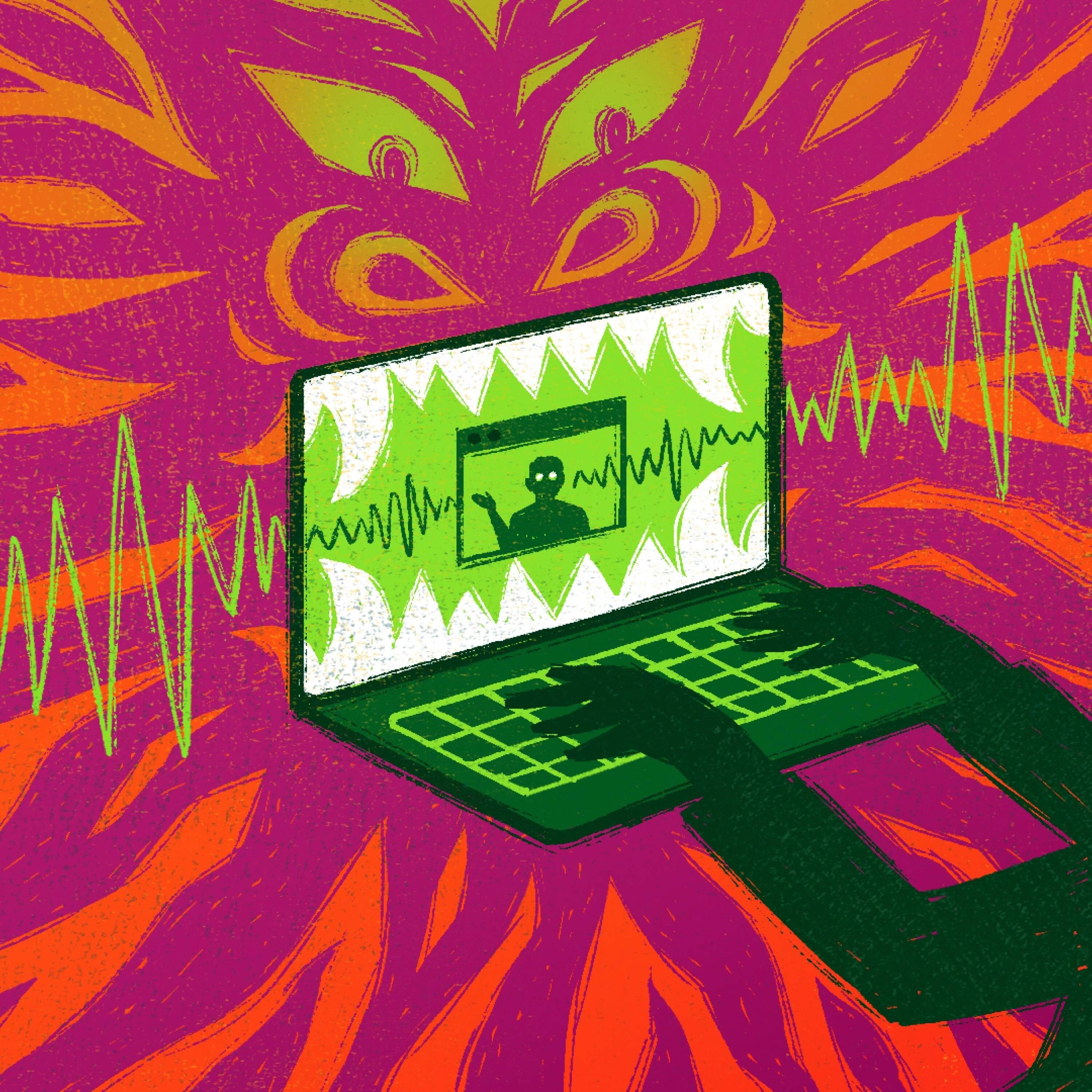
So Cooper started looking into what is supercharging these hackers. And it turns out one big answer is is artificial intelligence.
- [01:28]
Cooper Katz McKim
They're faster, they're more opaque, and they're more autonomous than ever.
- [01:33]
Ailsa Chang
Consider this, AI has made cybercriminals work easier, cheaper and scalable. What does that mean for the rest of us? From npr, I'm Ilset Cheng.
- [01:51]
Cooper Katz McKim
Hey, it's Ray from Car Talk. Are you tired of all the depth and thoughtful care that goes into NPR shows?
- [01:57]
Ailsa Chang
Want some good old fashion goofing around.
- [01:59]
Cooper Katz McKim
And stumbling to figure out what's going on?
- [02:02]
Ailsa Chang
Well, I've been taking occasional car questions again, you can hear them by signing up for NPR along with lots of other bonus content.
- [02:10]
Cooper Katz McKim
Just go to plus.NPR.org this Thanksgiving week. Up first from NPR News is your companion with news of traveling and shopping and Black Friday and the health of the economy and all the other news you need to start your day each morning, listen on the NPR app or wherever you get your podcasts.
- [02:36]
Ailsa Chang
Wicked was a smash hit that earned Oscar nominations for Ariana Grande and Cynthia Erivo. But that was only the first half of the story. Wicked for Good is every bit as splashy as the first installment but can it match the impact of its predecessor and live up to the hype? Listen to pop culture Happy hour in the NPR app or wherever you get your podcasts. It's consider this from NPR. Cooper Katz. McKim's question was, why does it seem like so many data breaches are happening? It opened a door into a whole world of modern vice. And just like the rest of the economy, it turns out that AI is really transforming the business of crime. Cooper and his colleagues at the indicator podcast from NPR's Planet Money looked into this, and he's here with us now to talk all about it. Hey, Cooper.
- [03:29]
Cooper Katz McKim
Hi, Elsa.
- [03:29]
Ailsa Chang
Hey. Okay, so we mentioned that AI is kind of helping supercharge data breaches, right? Can you just explain how that's happening?
- [03:37]
Cooper Katz McKim
Because it makes just about every aspect of data breaches easier. So let's say you're the type of criminal that wants a ton of passwords. You succeed, and you find yourself with a million passwords. You've effectively just gotten a pile of keys. So, generally, a criminal is very patient. They're willing to try every key in every metaphorical house in the neighborhood until it leads to something useful, say, a bank account. Well, AI can automate that process and test which keys are useful way, way, way faster in hours rather than days. So it just makes them more efficient with less technical skill, and there's just suddenly a lot more access.
- [04:14]
Ailsa Chang
Okay, so AI is enabling these criminals to better data scrape, data crunch. That makes sense. But I have to say, when I first heard that AI crime is on the rise, I was imagining something a little sexier, like with a little more intrigue. Super sophisticated data collection just doesn't sound all that criminally sexy to me.
- [04:38]
Cooper Katz McKim
Yeah, I mean, it is definitely used for more sophisticated crimes. You know, something like spear fishing, for example.
- [04:46]
Ailsa Chang
Wait, like you're standing in a boat with a long spear, ready to harpoon a fish?
- [04:51]
Cooper Katz McKim
Okay, not quite. It's like the metaphorical version of this. It's this targeted, personalized kind of cyber attack that goes after one individual. I asked Stuart Madnik about this. He's Director of cybersecurity at mit. That takes time and effort. Guess what? AI systems can do that splendidly. Much faster and in many case, higher quality than humans could. Yeah, so imagine you're a criminal, and you're trying to convince people you're this trusted person. Maybe it's their boss or their family member. You just need a lot of actual information to convince them of that. Maybe it's like the cadence of when they message you or how they talk. AI can help get all that information and make you more convincing as this spearfisher. So that's happening. And meanwhile, the criminal economic infrastructure is also advancing. So there's ready made phishing kits that people can buy online too. Once I built the tool to do that, it's kind of easy to say. For $10,000 or 50% of the gain here, I will give you this tool. So there's a multiplying effect going on on the bad guy world. There's this thing called SaaS software as a service, it's the same kind of shtick, but this time for crime, where there's literally subscription tiers for some of these services.
- [06:05]
Ailsa Chang
Okay, so let's say I'm a criminal and I want to go shopping. What are my options? Like, what is out there for me to buy?
- [06:11]
Cooper Katz McKim
Y. You have a lot more options than ever. You're in luck. There's ransomware as a service. You can literally rent banking malware kits, spam sending services. So one's ability to get into this world, the bar is very low. Like, I don't know if You've heard of DDoS attacks, but it's like this complicated cyber attack intended to bring down a site. People with no coding experience can now rent a kit for that.
- [06:37]
Ailsa Chang
Wow.
- [06:38]
Cooper Katz McKim
And run them alone. So accessibility has just skyrocketed.
- [06:40]
Ailsa Chang
Well, then how are companies trying to protect themselves from all of this?
- [06:44]
Cooper Katz McKim
So we talked to a guy named Ben Coleman who's been looking at scams related specifically to voice cloning technology. He's the CEO of this startup called Reality Defender. He was telling me big companies like banks are paying them to protect themselves against scams that involve deepfakes, because that's another use of AI to further crime. So, for example, fraudsters might call bank using a deep fake of someone's voice and trying to break through the voice is my password protection.
- [07:12]
Ailsa Chang
Wait, so how do you stop that?
- [07:14]
Cooper Katz McKim
It's kind of funny, but what I learned was that AI itself is being used to fight AI. So Reality Defender has its own detection software utilizing artificial intelligence to identify these fake voices. So deepfakes are just so easy to do nowadays. Coleman doesn't even think banks should be using voice verification. It's too easy. Unfortunately, many institutions, not only banks, but also government organizations, insurance companies, media organizations, are still using what are called voice biometrics, which is a sure way of saying your voice is your password.
- [07:48]
Ailsa Chang
Yeah. Why are banks still doing this?
- [07:50]
Cooper Katz McKim
Good question. We spoke with Mark Kwapozewski at PNC bank and he basically said, it's one piece of the puzzle, it's not the whole thing. I think if you're only using the one dimension, there's risk in everything. There'd be risk in accepting a driver's license, for example, somebody walking into your branch. Which is why you're starting to see a lot more technologies that are looking for multi factor authentication or even just those other signals. Other signals, like where you're calling from, from what device? Maybe a text verification code. But he says the bigger risk isn't just that banks will be targeted, but that customers will too.
- [08:26]
Ailsa Chang
Targeting customers how exactly?
- [08:28]
Cooper Katz McKim
So this is going back a little bit to what we were talking about earlier, where a fraudster might call you, pretending to be this trusted person, like someone at your bank. They can spoof that number, pretend to be your bank, have all this information about you, and then say, hey, you got to move your money quick. And it is almost a. It's a scam every time. The criminal calling might also pretend to be your child or grandparent.
- [08:53]
Ailsa Chang
Geez.
- [08:53]
Cooper Katz McKim
Being in this part of the business I have with my family is essentially a safe word. And we all know if there's ever a situation where somebody is really in trouble and asking for money, it's consistent. We will ask for the safe word.
- [09:09]
Ailsa Chang
That is such a great idea. I need to come up with a safe word. So, I mean, just listening to you talk, Cooper, it just seems like the range of potential vulnerabilities is huge in this world where, you know, AI is cheap and totally accessible. It just feels like being a person in 2025 now requires a really high level of vigilance. Like, I'm stressed out just having this conversation with you.
- [09:33]
Cooper Katz McKim
Yeah, I mean, that's the. That's the theme that came through in this reporting. AI has supercharged crime. It's made it easier, it's more accessible, it's more scalable. Just all barriers to entry have been torn down and there's. There's only so much an individual can do to protect themselves because, I mean, governments, businesses, academics, they need to work together. We heard from one expert to assemble an actual solution. This piecemeal approach clearly isn't working. Stuart Madnik, who we heard earlier, expects things to get worse. Doesn't mean we're not going to try to hold back the tide, but the tide is rising against us.
- [10:07]
Ailsa Chang
The tide is rising against us. That sounds ominous.
- [10:11]
Cooper Katz McKim
Yeah, I know.
- [10:12]
Ailsa Chang
And we will leave it there. On that ominous note, NPR's Cooper Katz McKim. He's a producer on the Indicator podcast from Planet Money. Thank you so much, Cooper.
- [10:20]
Cooper Katz McKim
Thank you for having me.
- [10:22]
Ailsa Chang
Additional reporting in this episode came from Darian woods. And there's a lot more in the Indicator series on the evolution of crime. Check out the links in our episode notes this episode was produced by Connor Donovan. It was edited by Kate Concannon and Patrick Jaron Watananen with fact checking by Sierra Juarez. Our executive producer is Sami Yenigun. It's Consider this from npr. I'm Ailsa Chang. This is a safe space. How often do you scroll on Zillow looking at homes?
- [10:58]
Cooper Katz McKim
There are a lot of people who right now don't feel like it's in their future. At least not in their near term future.
- [11:05]
Ailsa Chang
If homeownership is a wash at this point, what's next for those of us who want a piece of the pie? Listen to It's Been a Minute on the NPR app or wherever you get your podcasts. On NPR's Wildcard podcast, Suleika Jawad reflects on losing friends she met while getting treated for cancer in her 20s. And the truth is, I would experience.
- [11:26]
Cooper Katz McKim
Any amount of grief to experience those loves.
- [11:31]
Ailsa Chang
Watch or listen to that Wildcard conversation on the NPR app or on YouTube. P rwildcard want to hear this podcast without sponsor breaks? Amazon prime members can listen to Consider this Sponsor free through Amazon Music. Or you can also support NPR's vital journalism and get consider this plus@ +npr.org that's +npr.org.