Loading summary
Transcript30 lines
- [00:01]
A
It's ALL Things CONSIDERED from NPR News. I'm Emily Kwong.
- [00:04]
B
It's been a really intense experience to be living here and then also reporting here.
- [00:09]
A
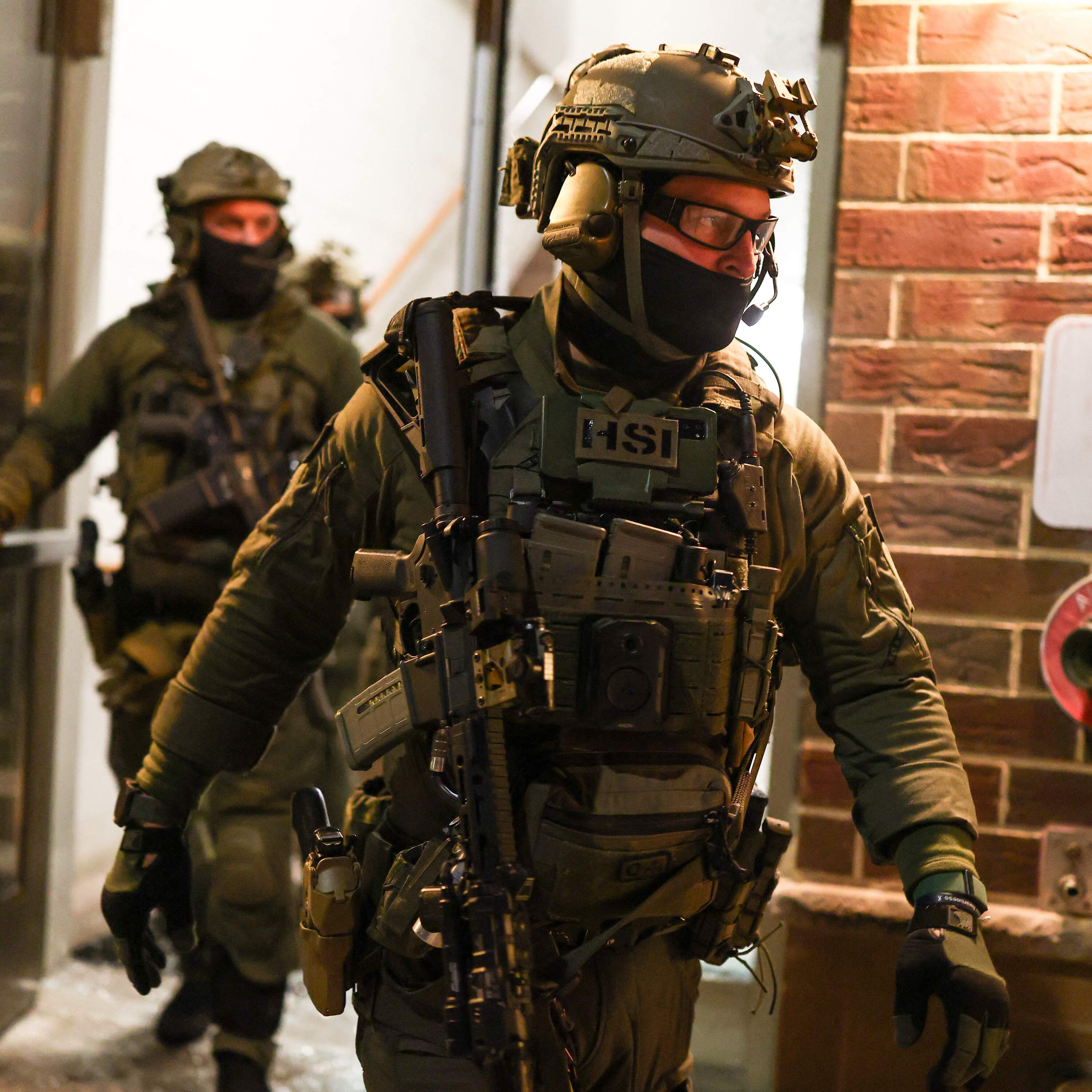
That is Meg Anderson, a correspondent for NPR's national desk, based in Minneapolis, where for two months the Trump administration's sweeping immigration campaign has resulted in violent, sometimes deadly confrontations between community members and federal immigration agents.
- [00:26]
B
Renee Macklin Goode was killed in just a residential neighborhood. I knew exactly where it was as soon as I saw the videos. And same with Alex Preddy. Like, that where he was killed is just this, like, really vibrant street. It's Nicollet Avenue. People call it Eat Street. There's tons of really good restaurants. Most of them, or many of them are immigrant owned. And you watch the videos and you're like, there's a really weird element there of being really familiar with a place and then seeing these things, these horrible things happen.
- [00:59]
A
For Meg, life looks normal in Minneapolis until it doesn't.
- [01:04]
B
Last night I went to a friend's house. I picked up takeout for us. I went to a place to get burritos. We did a pickup order. And you go there and it's like there are people standing guard outside. You can't enter. It's locked. They kind of radio in on a walkie talkie who you are and what you ordered. They bring it out to you, and then you go back to your car. And then I kind of went on my way to my friend's house.
- [01:30]
A
This blend of the normal with the not so normal has been difficult for her. And then there was the time she was tear gassed while covering a protest.
- [01:39]
B
I was okay. I was, I was pretty far back. And it was, it was fine, but it was just weird to, like, have that happen and go home and, you know, have to shower and wash my clothes. And then like, we made dinner, you know, and it was kind of like, well, what else are we gonna do?
- [01:55]
A
Consider this. When a national reporter is covering a story, they're also living through the job changes. Coming up, Meg Anderson on reporting on the surge of federal immigration agents in Minneapolis, the city she calls home. From npr, I'm Emily Kwong.
- [02:19]
C
This message comes from wise, the app for international people. Using money around the globe, you can send, spend and receive in up to 40 currencies with only a few simple taps. Be smart. Get WISE. Download the WISE app today or visit WISE.com Ts and Cs apply.
- [02:37]
D
This message comes from Ollie. Offering gummies for occasional sleeplessness, expertly formulated with melatonin. L, theanine and botanical extracts. Go to o l l y.com these statements have not been evaluated by the Food and Drug Administration. This product is not intended to diagnose, treat, cure or prevent any disease.
- [02:57]
C
This message comes from Mint Mobile. This holiday season, stop overpaying for wireless and switch to Mint Shop. 50% off unlimited plans@mintmobile.com Switch limited time offer upfront payment of $45 for three months, $90 for six months or $180 for 12 months. Taxes and fees. Extra initial plan term only above 35 GB. Network may slow when busy capable device required. Availability speed and coverage varies. See mintmobile.com.
- [03:34]
A
It's Consider this from NPR NPR correspondent Meg Anderson has called Minneapolis home for several years. And when thousands of immigration agents arrived in the city earlier this winter, she had to adapt to reporting on a major story that had all of a sudden made her familiar surroundings in many ways unfamiliar. When we sat down for this week's Reporter's Notebook, I wanted to talk to Meg about what it's like to cover this story unfolding in her own community.
- [04:02]
B
I think it is a level of emotional drain that is really intense. But then also, like, what I'm experiencing here is the experience that, like, local reporters have, right. Like, this is like the definition of being a local reporter is that you're reporting on your own community and when really bad things happen, like, it's your own community. So I want to, like, acknowledge that. And there's been really amazing local reporting happening here. And I do think, like, there's also an element of, like, worrying or feeling like the national spotlight is going to drift away at some point. And I've been thinking a lot about that lately how, you know, you think about those really awful floods that happened in Texas last year or California wildfires, you know, any of these huge disasters that like, upend a person's life, often they go on after the national media goes away. I worry, and I can feel how that might happen here where it's like, oh, but like, people's lives here are gonna be changed forever. Really? Yeah. Yeah. Forever for a really long time.
- [05:12]
A
That's a really interesting thing to hear you talk about and grapple with because. Right. We at npr, we are national reporters in what we do. You cover criminal justice issues in places where you don't live all the time. But because. And we sometimes call that parachute journalism. Sometimes we just call that journalism. But you are having this experience of. Right. Of being a local reporter in a way, for a national outlet. How has that changed your Approach to your job itself, this experience, I think.
- [05:43]
B
The way that I approach talking with people, right, who are gonna tell me about something that directly happened to them, about them being approached by ICE or detained or how they're staying at home or whatever. Like, I think I'm approaching all of that with the same philosophies that I always have, you know, of just being really gentle with people and spending time with them. But I do think there's, like, a level of, like, commiseration that's happening right where I'm like, yeah, I live here, too. I. I understand. Right? Yep. I live right over there. Or I know exactly the place that you're talking about. Or. Yeah, that happened to a friend of mine, too. That has felt much more present in the way that I'm talking with people when I'm interviewing them.
- [06:29]
A
How has that changed how protesters or community activists, People you interview, responded to you when you reveal that, hey, I.
- [06:37]
B
Live here too, with some people, I think it has created a little bit more of a sense of ease to just be like, oh, yeah, okay, you live here. Like, oh, you get it. But then I think there are other people. Like, I have noticed, you know, because I was at the site where Renee Goode was shot, like, two hours after it happened. And I have watched over the last month, like, people become more guarded with the media. Oh, I think people are scared and freaked out. And, you know, as we see more reporting about, like, facial recognition technology or there are, you know, rumors that I believe still are. I don't know if they're founded or not, if there's reporting on this, but, like, I. Infiltrating signal chats. Right. Or that there's going to be more focus on signal chats and things. Like, you can feel people kind of becoming a little more insulated and a little like, actually, I don't want to talk to you, or can I talk to you? Anonymously, the administration has seemed to pivot.
- [07:34]
A
A little. More than a week ago, they swapped out border patrol field leader Gregory Bevino. Four of the White House immigrations are Tom Homan. And on Wednesday, Homan reduced the number of immigration officers in Minneapolis, removing 700 of them after state and local officials agreed to cooperate by turning over arrested immigrants. Meg, as we talk now, has this changed the situation on the ground?
- [07:58]
B
I think it is too early to say. What I'm hearing from people in the community is, nope, like, nothing is different yet. Wow, there are still federal agents kind of roaming the streets. There are still kind of these very tense clashes between Observers and these federal agents. Another thing I think is important context is so the surge that started at the beginning of December was about 2, 000 federal agents coming to Minnesota. Then after Renee Macklin Good was shot, they escalated that number to 3,000. They added a thousand agents. And then. So really, like, I think important context here is that this. This drawdown that was announced this week is still. It's. It's like a de. Escalation from an escalation. Right. That they. There's still more federal agents on the ground than there were before Goode's killing. And so it's a step back from.
- [09:05]
A
What is a heightened.
- [09:07]
B
It's a step back, but it's like not. There's still. There's as many as there were. There's more than there were than at the very beginning of the surge at the beginning of December. Tom Holman's rhetoric is more calm, for sure, than like Gregory Bevino, who was in charge before him. But it isn't. It feels way too early, I think, to say if it's gonna cause any sort of real change for the people living here.
- [09:30]
A
Meg, this situation is not over. But even so, like, what lessons from this month of reporting will you take with you on stories that you report far from home?
- [09:43]
B
Yeah, I mean, I like to think that I knew this already, but I am one of the parachuting in reporters sometimes. Right. And I just want. I do think I already knew this, but it's just like this continued reminder of like, what when you go to a place and you report, it is like happening so deeply to the people that you are reporting on. And it is so vivid and that it. And it doesn't go away when you go back home and write your stories and you're there for, you know, a week or a couple of days or whatever, like, just continuing to remember, like, it's still happening to those people. It is like at the very, very center of their lives. And I do think I knew that, but I think it's just that much more vivid now.
- [10:30]
A
Well, we really appreciate your reporting and everything you're doing and thank you for it.
- [10:35]
B
Yeah, well, you're welcome. And thank you for. Thanks for having me on and to talk about it.
- [10:42]
A
This episode was produced by Leena Muhammad and Matt Ozuk. It was edited by Adam Raney. Our executive producer is Sami Yenigun. Let's consider this. I'm Emily Kwong.
- [11:11]
D
This message comes from Mint mobile. Starting at $15 a month. Make the switch@mintmobile.com Switch $45 upfront payment for 3 months 5 gigabyte plan equivalent to $15 a month Taxes and fees Extra first 3 months Only see terms.
- [11:28]
C
This message comes from ebay the worst part about loving cars might just be buying them and all the parts from Toyotas to Aston Martins. Ebay has thousands of cars and the largest online selection of vehicle parts and accessories. Ebay Things People Love this message comes.
- [11:48]
D
From Mint mobile starting at $15 a month. Make the switch at mintmobile. Com switch $45 upfront payment for 3 months 5 gigabyte plan equivalent to $15 a month taxes and fees extra first 3 months.