← Consider This from NPR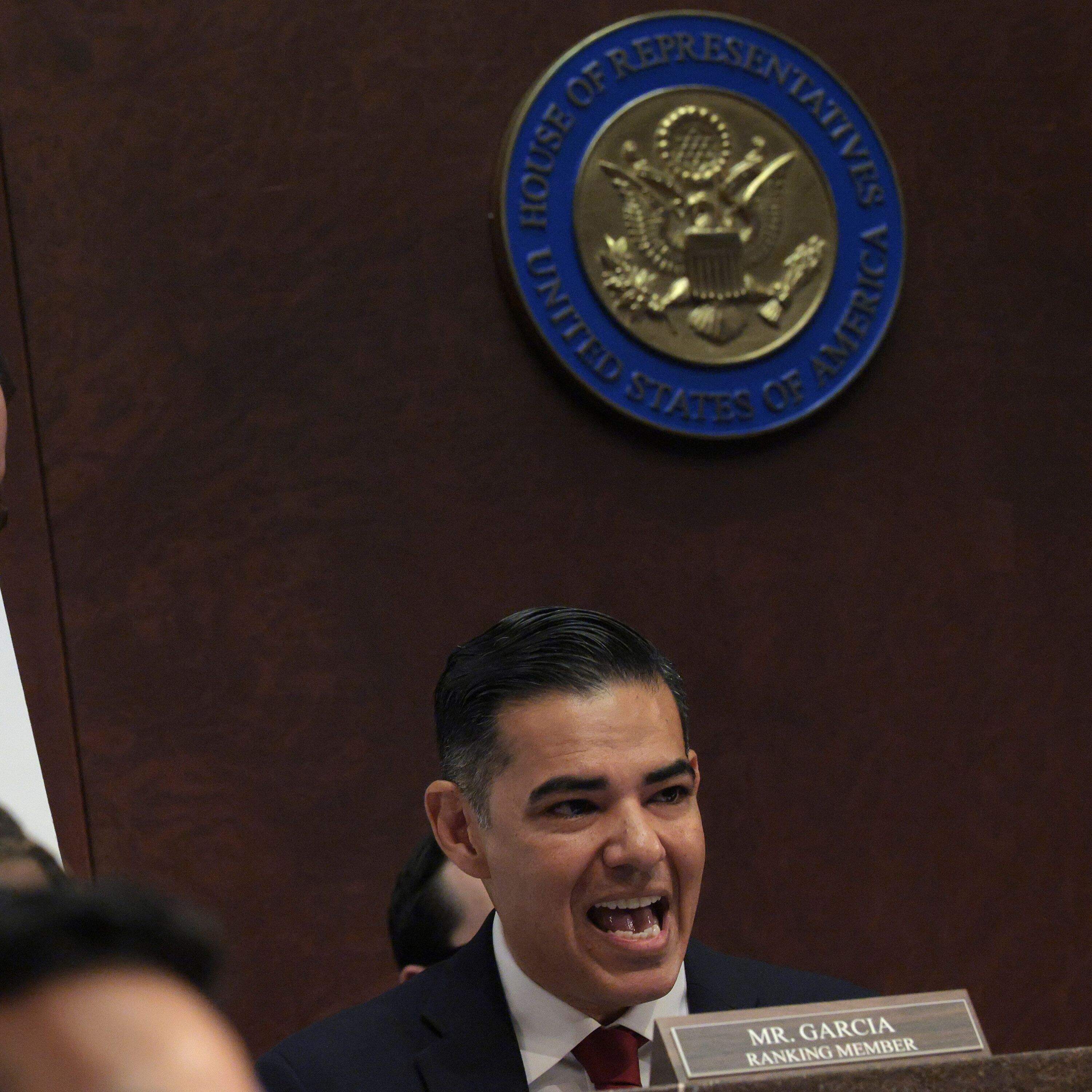
Loading summary
Transcript32 lines
- [00:01]
Scott Detrow
President Trump and Jeffrey Epstein were once friendly. On this point, just about everybody agrees. It's the exact details and the timeline of that relationship that have consumed Washington on and off since the summer, much to Trump's chagrin.
- [00:16]
Donald Trump
He's dead for a long time. He was never a big factor in terms of life. I don't understand what the interest of, what the fascination is.
- [00:26]
Scott Detrow
I really don't think that is Trump back in July, after his Justice Department announced it would not be releasing further documents from its investigation into Jeffrey Epstein. Epstein had been facing federal charges for sex trafficking of minors when he died in prison in 2019 by suicide. According to authorities, during his 2024 campaign for the White House. Trump, as well as future members of his administration, had called for the release of those documents. But once in office, Trump changed his tune.
- [00:55]
Donald Trump
It's all been a big hoax. It's perpetrated by the Democrats, and some stupid Republicans and foolish Republicans fall into the net.
- [01:03]
Scott Detrow
After that, more details did trickle out. A Wall Street Journal story detailed a birthday note to Epstein from 2003. It included a drawing of a woman's naked silhouette and appeared to be signed by Trump. Trump denied he had written it. Democrats on the House Oversight Committee then released a copy from Epstein's estate in September.
- [01:22]
Donald Trump
It's not my signature and it's not the way I speak. And anybody that's covered me for a long time know that's not my language. It's nonsense.
- [01:30]
Scott Detrow
Trump has long claimed that his friendship with Epstein ended before Epstein's 2006 indictment in Florida for soliciting prostitution. He said the breakup was over. Epstein hiring away young female employees from Trump's Mar A Lago resort.
- [01:44]
Donald Trump
When I heard about it, I told him, I said, listen, we don't want you taking our people. Whether it was spa or not spa, I don't want them taking people. And he was fine. And then not too long after that, he did it again. And I said, out of here.
- [01:58]
Scott Detrow
Then there was the prison meeting earlier this year between Deputy Attorney General Todd Blanche and Epstein's longtime accomplice, Ghislaine Maxwell. She said the president was never inappropriate with anybody and, quote, a gentleman in all respects. Shortly after that, the Bureau of Prisons moved Maxwell to a minimum security prison camp after months of drip, drip, drip. The last 24 hours have brought a deluge. Democrats on the House Oversight Committee released emails from Epstein that suggest Trump may have known about Epstein's sex abuse operations. And Republicans on the committee responded by releasing tens of thousands of documents from the Epstein estate. Consider this can 20,000 more pages of documents get us any closer to the truth about Jeffrey Epstein and Donald Trump? From NPR, I'm Scott Detrow.
- [02:56]
Announcer
This message comes from AT&T. America's First Network is also its fastest and most Reliable based on RootMetrics United States Root Score Report 1H 2025 tested with best commercially available smartphones on three national mobile networks across all available network types. Your experiences may vary. RootMetrics rankings are an endorsement of AT and T. When you compare, there's no comparison. AT and T support for NPR and the following message come from NBC News. When the news feels overwhelming, NBC News brings clarity by reporting on the facts that shape daily life for Americans, coverage that looks deeper and stories that connect. NBC News Reporting for America. This message comes from Wise, the app for using money around the globe. When you manage your money with Wise, you'll always get the mid market exchange rate with no hidden fees. Join millions of customers and visit wise.com Ts and Cs apply.
- [04:01]
Scott Detrow
It's consider this from NPR. Democrats on the House Oversight Committee released three emails Wednesday morning from the massive trove of documents that the Epstein estate handed over last week. In one, Epstein writes that Trump, quote, spent hours at my house with one of Epstein's victims. In another, Epstein writes that Trump, quote, knew about the girls. In a third, a writer advises Epstein that he can use his history with Trump as a, quote, valuable PR and political currency should he ever need to. To all of that, White House Press Secretary Caroline Levitt said these emails prove absolutely nothing other than the fact that.
- [04:36]
Representative Robert Garcia
President Trump did nothing wrong.
- [04:38]
Scott Detrow
I wanted to ask Representative Robert Garcia of California what he thinks the emails about Trump demonstrate and why he chose to release them. He is the ranking Democratic member of the House Oversight Committee. Let's start with this. We have long known now that the future president and Jeffrey Epstein were friendly before they had a falling out around 2004, which was well before Trump ran for president. What did we learn that was new here? Did this bring any new information?
- [05:03]
Representative Robert Garcia
I think that the emails today show clearly that there is a relationship between Donald Trump and Epstein. As far as what Donald Trump knew, what he participated in, I think are real questions. And I think the thing on everyone's mind, certainly those of us on the committee, is why the COVID up? Why won't the White House release the Philipsin files? You have an email today essentially saying that Donald Trump may have spent hours with one of the victims. As you said, another email that talks about Donald Trump possibly knowing what was happening with these Girls. And I think this is really disturbing stuff. We want justice for these women and these survivors. We know that many were abused when they were underage and powerful men were involved. And our whole goal here is to get to the truth. And we are imploring the Department of Justice to release the files.
- [05:55]
Scott Detrow
But again, we've all been blanketed with the pictures of these two men together. We saw a lot of reporting earlier this year of these alleged birthday notes that Trump was writing to Epstein. Information did you learn from these emails?
- [06:06]
Representative Robert Garcia
Well, I think part of it is the President admitting that there was a real relationship here between him and Epstein. And I think that is what today's emails actually also show first.
- [06:15]
Scott Detrow
Well, these are all other people talking about Trump. Trump does not hear himself.
- [06:19]
Representative Robert Garcia
That's right. This is Jeffrey Epstein's emails. And there's 23,000 documents here, of course. And so what's important is when you spend the entire campaign saying you're going to release the Epstein files, when we know that Jeffrey Epstein has said that Donald Trump was his best friend for 10 years. The birthday note you just referenced Donald Trump as a reminder, said it didn't exist until we actually produced it with his own signature. And so Trump has a record of lying about this, and he has a record of saying that he wants its release. And now they're refusing to do so. I think it's important to note that every single piece of evidence we want to release to the public, this is about transparency, it's about oversight, and it's about getting justice for the victims.
- [06:56]
Scott Detrow
Curious how you're approaching this. This is a case laden with conspiracy theories. These are emails, many of whom are coming from not especially trustworthy people. How are you verifying this information that you're looking at?
- [07:07]
Representative Robert Garcia
Look, I think the important thing is that people absorb and read the documents for themselves and make their own judgments. I think for us, clearly, anything that is a correspondence from Jeffrey Epstein, whether it's to Ghislaine Maxwell, which we saw today in one of those emails, or others, is significant. And what we're trying to say right now at this moment is the only way to get the full picture of what happened is for the DOJ to follow the subpoena sent by the Oversight Committee and to hand over all of the documents. There are an enormous amount of documents, photographs, possibly videos, that the public has a right to know what actually happened. We know, for example, that back when the Epstein case was being developed and prosecuted, there were multiple men that were going to be named as co conspirators. In this and that that was all essentially washed aside by at the time, Alex Acosta, who then becomes, of course, Trump's labor secretary. So there's a lot of questions here.
- [08:03]
Scott Detrow
I want to make sure we get to a few more points here. This is also a notable day in that you're about to gain another Democratic member of the House who will side the discharge position and petition enforce a vote possibly on the House floor to release the files. We know the White House is probably pressuring the four Republicans who have signed on that to that petition to pull their names. Are you in communication with any of these Republican representatives who have been having meetings at the White House today?
- [08:27]
Representative Robert Garcia
Look, I've been talking to many Republicans. There's no question that if we hold and they hold, this will pass the House and there will be numerous Republicans that will vote yes. They understand that this is important to their constituency. The Epstein files and its release is very bipartisan. When you ask the American public and.
- [08:46]
Scott Detrow
What'S important, the question especially is important because again, this is something that's been playing out for more than a decade now. This is, this is somebody who's been long dead but continues to make news. Why is this the priority for you, given all of the other issues the federal government is facing right now?
- [09:00]
Representative Robert Garcia
Well, look, I think there's a lot of important things. We've got to focus on health care, we got to focus on lowering costs. This goes straight to the corruption of this administration. And Donald Trump spent his campaign talking about this. And if you were going to lean in so hard on a campaign promise and then essentially go back on it, we have to ask why? And in meeting all these women and these victims and survivors, they want justice. I've talked to many of them personally, one on one, and they deserve justice and they deserve the truth.
- [09:29]
Scott Detrow
How do you.
- [09:30]
Representative Robert Garcia
But let me say one more thing. I think it's really important. When you have powerful men, and I don't care what party they're in, what their job is, when you have powerful men abuse, rape and traffic women, and yet you don't bring justice to those women, what are we saying to American kids, to girls, to women across this country, that the most powerful men can get away with this? And that has to also drive our investigation.
- [09:51]
Scott Detrow
Congressman, we got about 30 seconds left. But how do you balance transparency and protecting these victims who have been abused so many times at this point forward with the release of thousands of pages of information?
- [10:01]
Representative Robert Garcia
What's most important at the end of the day is we've got to protect the victims. And so we're doing that. We're redacting names. We've made that promise and everything else we're going to get out to to the public.
- [10:09]
Scott Detrow
That is Congressman Robert Garcia of California, the top Democrat on the House Oversight Committee. Thank you so much for talking to us.
- [10:16]
Representative Robert Garcia
Thank you.
- [10:18]
Scott Detrow
This episode was produced by Connor Donovan and Alejandra Marquez Hanse. It was edited by Patrick Jaron Watanan and Courtney Dorning. Our executive producer is Sammy Yenigan. It's consider this from npr. I'm Scott Detrow.
- [10:34]
Announcer
Support for NPR and the following message come from Indeed hiring Do it the right way with Indeed's sponsored jobs claim a $75 sponsored job credit to get your jobs more visibility@ Indeed.com NPR terms and conditions apply. This message comes from Schwab at Schwab. How you invest is your choice, not theirs. That's why when it comes to managing your wealth, Schwab gives you more choices. You can invest and trade on your own plus get advice and more comprehensive wealth solutions to help meet your unique needs. With award winning service, low costs and transparent advice, you can manage your wealth your way at Schwab. Visit schwab.com to learn more. This message comes from Viking, committed to exploring the world in comfort. Journey through the heart of Europe on an elegant Viking longship with thoughtful service, destination focused dining and cultural enrichment on board and on shore. And every Viking voyage is all inclusive with no children and no casinos. Discover more at viking. Com.