← Consider This from NPR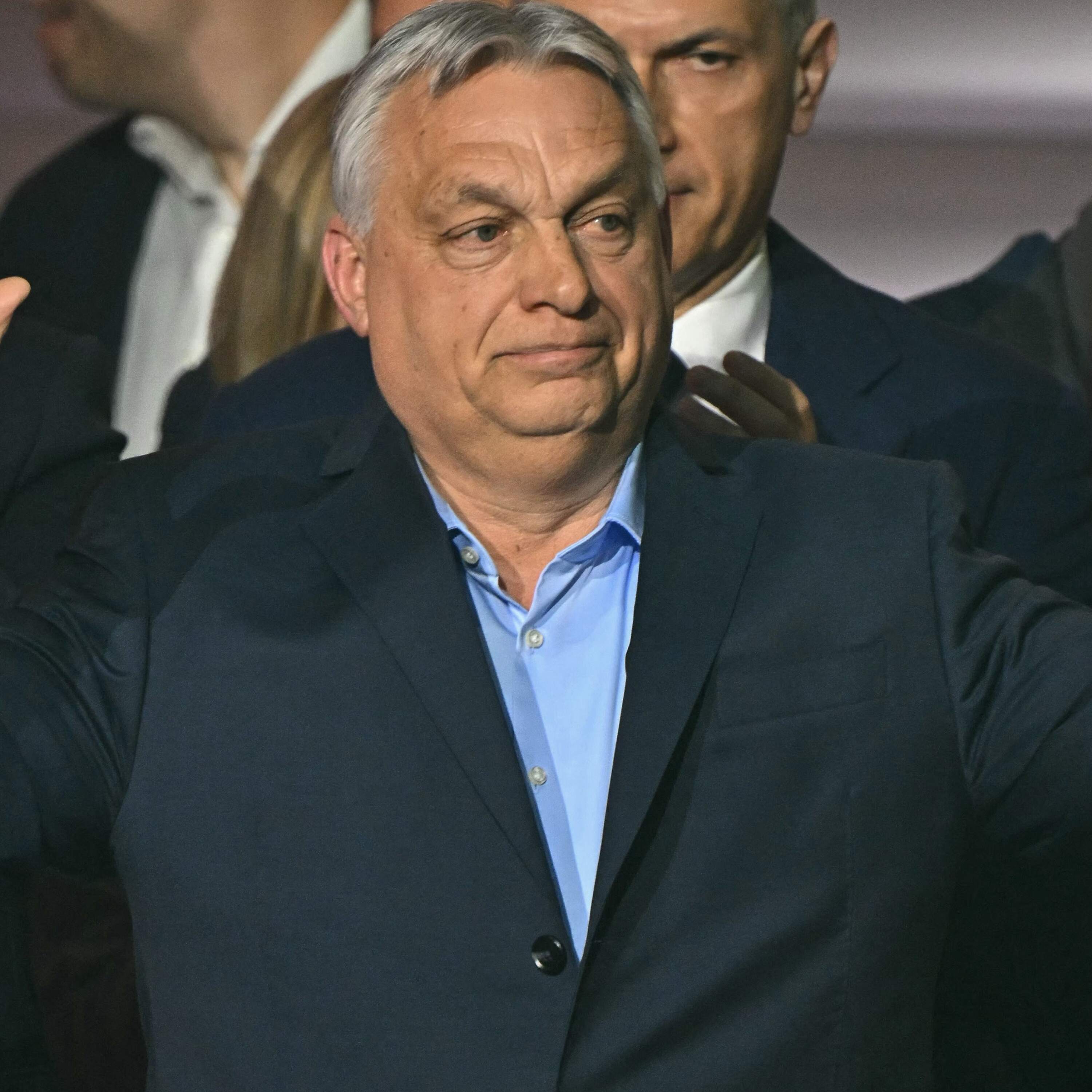
Consider This from NPR
Hungary's Viktor Orban concedes defeat in election with global consequences
00:09:09
Loading summary
Transcript31 lines
- [00:00]
A
In an historic election Sunday, voters in the central European country of Hungary voted out Prime Minister Viktor Orban. Orban conceded late Sunday. I congratulated the winning partners. The result of this election has far reaching implications, not just for Hungary or for the eu, where Orban has been a thorn in the side of regional leaders, but also because his rise as a right wing nationalist populist provided a playbook for conservative leaders looking to centralize power. Orban is a close ally of both Russian President Vladimir Putin and President Donald Trump who have been big fans of the Hungarians governance style. Last week the Trump administration sent Vice President J.D. vance to an Orban election event in Budapest. In a last minute push to rally support, Vance held up his cell phone so the US President could speak to the crowd. I love Hungary and I love that victor. I'll tell you, he's a fantastic man. We've had a tremendous relationship. During his 16 years in power, Orban has been the architect of a style of governance known as illiberal democracy, one where key democratic institutions like the judiciary, the free press and civil society have been methodically weakened, but where citizens still retain the right to vote. Timothy Gartenash is a professor of European Studies at Oxford University and describes Orban as a disruptive force who blocked European assistance to Ukraine with worked to water down sanctions on Moscow and presented Ukraine, not Russia, as the principal threat to Europe's security.
- [01:33]
B
Viktor Orban is the veto player in the European Union. He is the European Union's blackmailer in chief.
- [01:41]
A
But even as Orban consolidated power and played on Europe's weaknesses, familiar problems plagued his government and helped propel voters to push for change. Jujan Avegh is a political analyst at the German Marshall Fund.
- [01:54]
C
Inflation is very high and under Orban's watch Hungary has become one of the poorest countries of the European Union, which is striking.
- [02:06]
A
A big factor in this election was also a growing narrative around the Hungarian government's corruption. 45 year old Peter Magyar, the leader of the opposition party Tisa, ran on an anti corruption ticket. He promised to invest the money he said lined the pockets of Orban's inner circle into Hungary's crumbling healthcare and education systems.
- [02:26]
C
He managed to both embody and also to gather and capture the disillusionment with the Orban regime.
- [02:36]
A
Many young people known as Generation Orban voted for the first time on Sunday. 27 year old Yulia Molnar said she was deeply frustrated with systemic corruption.
- [02:46]
D
It's infuriating and I'm very glad that people are finally brave enough to show up and see for themselves.
- [02:54]
A
Consider this an election in a country of just 9 million people about the population of New Jersey may have just shown the world a path towards the center after a period of right wing populist rule. From npr, I'm Rob Schmitz.
- [03:17]
C
This message comes from NPR sponsor CFP Certified financial planner professionals committed to acting in their clients best interests. Learn more@letsmakeaplan.org this message comes from NPR sponsor Charles Schwab with its original podcast on Investing. It's hosted by Liz Ann Saunders, Schwab's chief investment strategist, and Colin Martin, head of fixed income research and strategy for the Schwab center for Financial Research. Each week, Liz, Ann, Colin and their guests analyze economic developments and bring context to conversations around stocks, fixed income, the economy and more. Download the latest episode and subscribe@schwab.com oninvesting or wherever you get your podcasts.
- [04:00]
E
This message comes from NPR sponsor Carvana. Carvana believes selling your car should be refreshingly simple. Enter your license plate or vin, get a real offer down to the penny and schedule a pickup on your time. No surprises. Sell your car today@carvana.com pickup fees may apply.
- [04:23]
A
It's Consider this from npr. Viktor Orban's leadership in Hungary has been a model of right wing nationalist populism that's been a point of fascination for politicians around the world, including those in the Trump administration. But Orban's defeat in Sunday's election shows that style, with its efforts to control the judiciary and media, has now seen new limitations. For more on what motivated Hungary's electorate in this historic vote and the implications globally, I spoke with NPR's Esme Nicholson and political scientist Abel Boyar.
- [04:55]
B
What happened today was a truly historical moment in Hungary's political history. Record number of people turned out at today's election. The turnout was close to 80%, which historically is a huge number, 10 percentage point higher than in most previous elections. What that means in practice is that Viktor Orban's grip on power in the last 16 years seems to be over, leading the way for Peter Modan, his opposition challenger, to form a new government with a two thirds majority, which gives him basically free reins to undertake sweeping constitutional changes. And what we are hoping at this point is that he will use that to redemocratize the country.
- [05:39]
A
This is an historic day for Hungary.
- [05:41]
B
It seems to be so.
- [05:43]
A
And Esme, you were just out with supporters of Tisa, the opposition party, and its candidate Peter Magyar. You just came back by bicycle. What did you see there?
- [05:53]
F
Well, I mean, first of all, I've never seen so many Hungarian flags. And you know, people are not just elated and overjoyed, but they are relieved. I spoke to a teacher in her 50s who said Hungary belongs to Europe, not Russia, and is relieved that her son has a future. I also spoke to 18 year old Sara Chongaradi who had voted for the very first time and she really couldn't contain her excitement. This is her speaking.
- [06:16]
D
I'm really hopeful for the next one and I really hope that it will be a better country for us and I hope there will be no corruption and I hope the media will be also better. And yeah, that's all. I. I'm just really happy.
- [06:37]
A
Wow, she sounds really happy. Azmee, what did they tell you specifically about Petra Magyar? Who is he and why did he become so popular with voters?
- [06:45]
F
Well, among the crowd, the answer I heard most was that he is not Orban, that he is simply something new. He's a center right politician, as we know, although we don't know that much really about him, of course, but he's not considered a progressive and yet there were lots of progressive liberal voters out there this evening, simply relieved that he is change. He represents change. He is not all Orban. But others were also quite realistic and quite aware that Madyar has a huge task on his hands.
- [07:13]
A
Now let's go to you, Abel Bollar. For the the past 16 years, Viktor Orban's government has changed the country's constitution. It's purged judges, it's consolidated the media, it's managed to take control of some of the country's most prestigious universities, all in an effort to keep Viktor Orban, who has become a global symbol of the far right, in power as long as possible. That didn't happen. Will Orban still control some element of the government or not?
- [07:39]
B
Elements of the government, that's hard to say, but he will definitely, for the time being, for the foreseeable future, he will definitely control some of the state institutions as long as the new government, with their 2/3 majority, is able and willing to dismantle them. How they will do it, in what time frame they will do it, and what exactly that means, what institutions they will be able to change? That's a big open question. But that's the agenda. That's one of the centerpieces of Peter Mallard's agenda. And that's what most people who voted for him are waiting for.
- [08:08]
A
I'm also curious to hear your opinion about the Oligarchy that Orban has created during his 16 years, the last 16 years while he was prime minister, is that going to retain some sort of control over society?
- [08:21]
B
Well, that's the million dollar question in the short run for sure. In many key economic sectors, such as construction, they have a key role in running the economy. And overtaking those businesses with extremely intricate business networks all the way through the supply chains is not going to happen overnight. So to answer your question, the short run, they will definitely play a key role in the Hungary economy. Yes.
- [08:43]
A
And how much power do you think Magyar will have to actually change things in Hungary?
- [08:49]
B
Well, to answer the question, you have to distinguish between legal constitutional power, which now he seems to have a free reign to use it, and as you said before, reverse or undertake implement new changes in the constitution and the actual political power. And that's a big open question because it's one thing to have the legal means to implement these legal changes. Another thing is whether he can do so while preserving the sort of political support and electoral coalition that stands behind him.
- [09:17]
A
From each of you, briefly, what should we watch for next? Abe?
- [09:20]
B
Well, what we should first watch for as the first policy measures that they will try to okay, first of all, transfer of power. It looks like it's going to happen. Peaceful transfer seems like it's going to happen. Yeah. It operates from tonight. But the next step should be what are the first policies that they will propose to introduce?
- [09:39]
F
ESME and I think we should be watching capitals across the world, from Brussels to Washington to Moscow to see what the reactions there are.
- [09:47]
A
That's abel Boyar and NPR's Esme Nicholson. This episode was produced by Michael Levitt, Mate Hallmosch and Daniel Hoffman. It was edited by Sarah Robbins. Our executive producer is Sammy Yenigun. It's consider this from npr, I'm Rob Schmitz.
- [10:11]
E
This message comes from Rosetta Stone. Spring Travel coming up. Rosetta Stone has been the trusted leader in language learning for over 30 years. Ready to start learning a new language this spring? Visit rosettastone.com NPR today. This message comes from NPR sponsor BetterHelp. Financial stress affects more than just your bank account. It can impact your sleep, your relationships and your overall mental health. If money worries are weighing on you, you're not alone. And it doesn't mean you've failed. Therapy isn't about financial advice. It's about working through the anxiety, shame or overwhelming thoughts that money stress can bring. When life feels overwhelming, therapy can help get 10% off. @betterhelp.com NPR.