Loading summary
Transcript185 lines
- [00:01]
Scott Detrow
A warning that this podcast includes explicit language depictions of violence and suicide. On our last episode.
- [00:10]
Brandon Fellows
Four War. Our Civil war.
- [00:13]
Tom Dreisbach
More War.
- [00:14]
Brandon Fellows
Our Civil War.
- [00:16]
Daniel Hodges
I was afraid that I might lose consciousness or be killed there.
- [00:20]
Tom Dreisbach
Hold the line.
- [00:22]
Brandon Fellows
Hold the line.
- [00:23]
Michael Fanone
It was just not a scene that I had ever experienced in 20 years of inner city policing.
- [00:30]
Jason Riddle
I was happy about it.
- [00:32]
Tom Dreisbach
You were happy about them seeing, like.
- [00:34]
Jason Riddle
Being afraid of people. Like, here's a common man. Here we are.
- [00:42]
Scott Detrow
After Jason Riddle stormed the Capitol, chugged wine, and ran away, he eventually made his way back home to New Hampshire, but he didn't exactly go into hiding.
- [00:52]
Jason Riddle
A New Hampshire man who attended the.
- [00:53]
Brandon Fellows
Protest in D.C. wednesday and even joined.
- [00:56]
Tom Dreisbach
The mob as it stormed the Capitol building is now speaking out.
- [00:59]
Scott Detrow
Audrey Riddle spoke out to a reporter for an NBC station in Boston.
- [01:04]
Brandon Fellows
Why did you go in?
- [01:06]
Jason Riddle
I just.
- [01:08]
Tom Dreisbach
I had to see it. You don't regret it?
- [01:11]
Greg Rosen
No.
- [01:12]
Jason Riddle
After doing that, I was like, okay, I'm probably gonna get arrested. I was on a bender. I drank. Morning tonight. This place was gross. There was a dead Christmas tree in the corner. It smelt in here. And I was. I'd wake up on the floor of the couch, and I was just looking out the window, waiting for them to show up. And they did.
- [01:31]
Scott Detrow
When the FBI came to his apartment, Riddle admitted that he went in the building, that he was drinking wine as people do to the Capitol. And then the FBI agents asked if he stole anything. At first, Riddle said, no, he didn't think so.
- [01:44]
Jason Riddle
And the FBI agent went, okay, because we have this. And they opened up a folder and they took out a picture, and they have a picture of me holding the book outside of the Capitol building.
- [01:51]
Scott Detrow
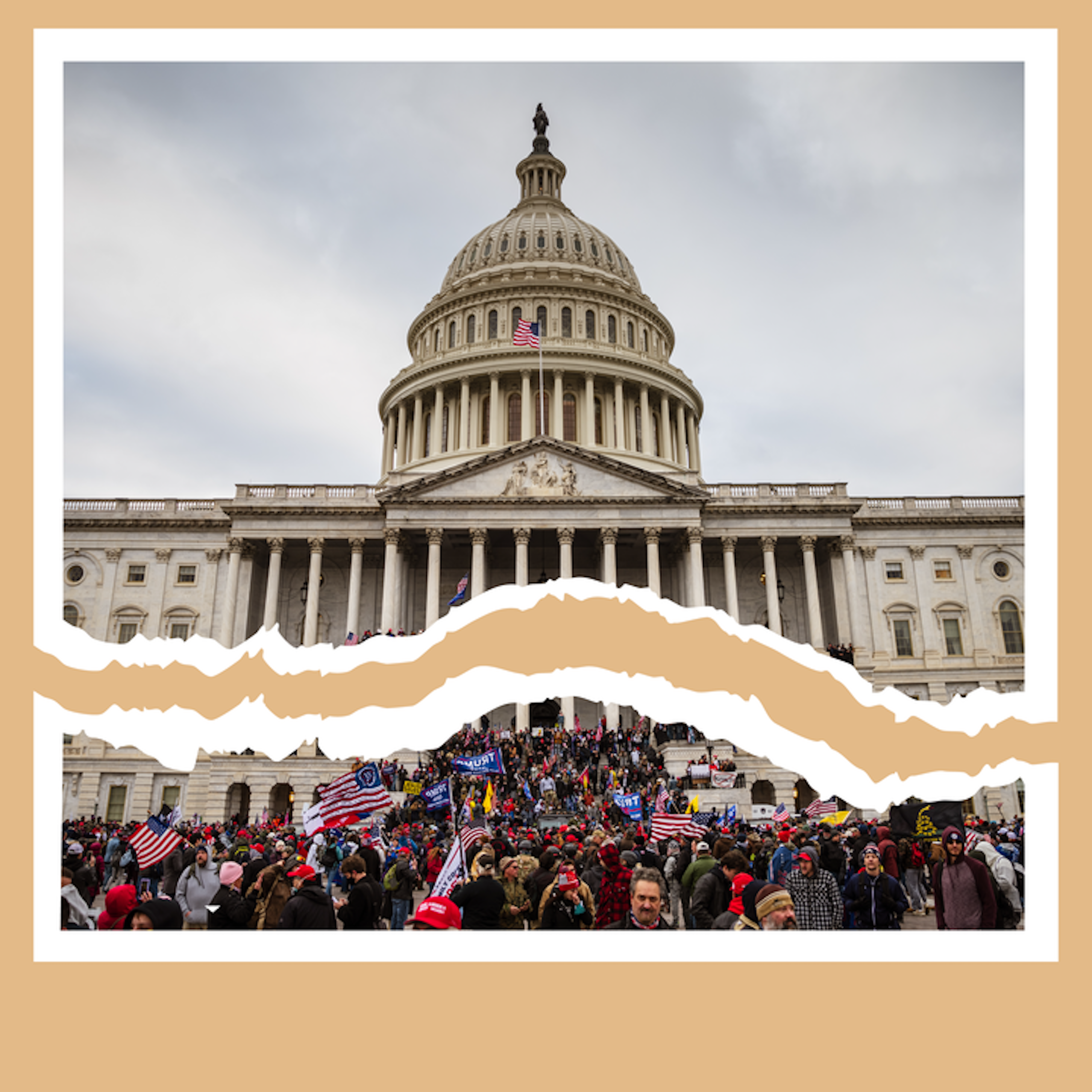
The FBI knew the that Riddle had stolen a book that belonged in the Capitol. It was about Senate procedure. Riddle sold it to someone in the crowd outside the Capitol for 40 bucks. The FBI also knew what time he had entered the Capitol, what time he left, and what he did inside. Jason Riddle was about to be arrested, and his life was about to completely change. And in ways he never expected. That was true of hundreds of people, because the FBI and the Department of Justice had launched the largest criminal investigation and in the history of the federal government. Their cases took them to every state in the country as agents tracked down a wide spectrum of people, from those accused of orchestrating seditious plots and brutal assaults to the hundreds of people who stormed the Capitol but never threw a punch. FBI agents and prosecutors used videos, text messages, emails, cell phone tower data, social media posts, confidential informants, and testimony to create a comprehensive history of January 6th, across more than 1500 cases, judges and juries evaluated all that evidence in court. But in the world of politics, President Trump wrote a wave of conspiracy theories and misinformation to turn that history on its head and return to power. And now his administration is actively trying to erase what actually happened. Consider this. How did this massive effort to hold people accountable become Donald Trump's launchpad to return to power? From npr, I'm Scott Detrow. It's Consider this from npr. Here's NPR investigative correspondent Tom Dreisbach.
- [03:38]
Tom Dreisbach
Greg Rosen was a federal prosecutor. He'd spent years going after drug and gun crimes in D.C. and on January 6th, he saw a crime playing out on live TV at the Capitol. And he says he knew they needed to move into high gear immediately.
- [03:53]
Greg Rosen
The American people expected a peaceful transition of power approximately two weeks later. And we needed to ensure that the rule of law mattered.
- [04:03]
Tom Dreisbach
Remember, Trump was still president. Joe Biden's inauguration was coming, and no one knew if another copycat attack or worse was about to hit.
- [04:12]
Greg Rosen
And so in those early days, hours, minutes, there was a very keen realization that if we didn't act carefully but quickly, we had no idea what was coming next.
- [04:26]
Tom Dreisbach
Those fears were not just speculation. So few arrests had happened on January 6 that the people who led the riot were still out there. There are reports of large armed insurrections that will happen armed to the fucking teeth at every capital in the country. And Joe Biggs was one of the leaders of the proud boys who stormed the Capitol afterwards. He was saying publicly that January 6th was just a warning shot.
- [04:50]
Michael Fanone
If you don't think that this shit's.
- [04:51]
Brandon Fellows
About to pop off, you're out of your goddamn mind.
- [04:57]
Tom Dreisbach
So a major part of the Justice Department's mission at first was to prevent a future attack. And leads were pouring in.
- [05:05]
Greg Rosen
People provided hundreds of thousands of tips. And those tips could come from family members or friends, or it could come from people who are sort of outside looking in, trying to sleuth their way into identifying an individual or whatnot.
- [05:21]
Tom Dreisbach
People turned in neighbors, a match on a dating app, ex husbands, a fellow patient at the dentist who was showing off riot videos on a phone. And a son even turned in his father. One tip pointed to a man in South Georgia, the town of Americus.
- [05:40]
Brandon Fellows
Hello? McCall. Hey.
- [05:42]
Tom Dreisbach
Hey, Louis.
- [05:42]
Brandon Fellows
Hey, it's Louis returning your call.
- [05:44]
Tom Dreisbach
Like a lot of people, McCall Calhoun recorded himself storming the Capitol. And like a lot of people, he posted about it online. And that got the attention of local Assistant District Attorney Lewis Lamb. And Lamb decided to record their call.
- [05:58]
Brandon Fellows
You know, those statements that you made on Facebook, those certainly caught my attention, you know, along with the we're coming back armed and ready for war.
- [06:09]
Tom Dreisbach
And, you know, the exact quote from Calhoun's post was, if this deal doesn't get fixed, there's talk of patriots coming back, this time fully armed for war. Calhoun told Lamb this was all just a big misunderstanding.
- [06:23]
Brandon Fellows
As far as the weed coming back, what I said was the word on the street is, and people were talking about that in the crowd, that's all I was communicating was what I was hearing. I mean, I'm not going back to Washington armed or anything.
- [06:39]
Tom Dreisbach
But Calhoun said he was serious about one thing. The people needed to get ready because the country under Joe Biden was set to become some kind of communist dictatorship patrolled by violent antifa terrorists.
- [06:53]
Brandon Fellows
I mean, what is the link? I'm not aware of antifa burning anybody's house down in South Georgia.
- [06:59]
Henry Karamenta
You know.
- [07:02]
Tom Dreisbach
If this phone call sounds almost a little casual, there's a reason for that. Calhoun was a local criminal defense attorney for decades, so he and Lamb knew each other. They even faced off in court in a murder trial. Now, Calhoun was posting about killing people, and that made Lamb worried.
- [07:22]
Brandon Fellows
But it also concerns me for the public at large, because I didn't threaten anyone. Well, I mean, except Democrats and communists and something like a communist cross the line and civil war or something then. Well, I mean, you did say that you're ready to kill them and get ready, you got. You can do headshots from 200 yards. And I mean, McCall, it makes you sound dangerous and it makes sane, normal people nervous. You know, that somebody who is heavily armed says those kinds of comments. Yeah, well, everybody's heavily armed. I mean, and it's, you know, it's.
- [08:07]
Tom Dreisbach
Before long, the FBI was at McCall Calhoun's door. All right, McCall, what I'm asking to do is have your consent to go back in that spare bedroom where you were staying. The DA had sent the feds a recording of that call, and Calhoun was arrested, charged with multiple non violent crimes for storming the Capitol. The connection between talk and action was something investigators had to look at in every case. What was just a wild online rant and what was a real threat? Because as much as Calhoun ranted online about wanting to kill Democrat communists, he was not personally violent on January 6th. But for other people, all that talk of civil war, public executions, and revolution helped lead to real violence.
- [08:50]
Greg Rosen
Okay, so just so you know, my.
- [08:53]
Tom Dreisbach
Name is Henry Karamenta. I'm a Special Agent with the FBI.
- [08:57]
Henry Karamenta
Okay. My name's Agent Elias. Office agent.
- [09:03]
Tom Dreisbach
You seem to have a pretty good.
- [09:05]
Henry Karamenta
Idea while we're here, right?
- [09:07]
Tom Dreisbach
Daniel Rodriguez was arrested in California about two months after the riot. He was in his late 30s at the time. And Rodriguez told the FBI his path to the Capitol kind of all started with the far right conspiracy show InfoWars. He said the show opened his eyes to how the world really works and who's really in charge.
- [09:27]
Henry Karamenta
Globalists and unelected officials, elitists, you know, people who are obsessed with power and control.
- [09:33]
Tom Dreisbach
When Trump said the election was stolen, Rodriguez believed it. And when Trump called his supporters to D.C. for the 6th, he listened.
- [09:42]
Henry Karamenta
I thought that there was going to be battles across the country. I thought that there was going to be fighting for some reason in different cities. And I thought that the main fight, the main battle was going to be in D.C. because Trump called everyone there. And then I thought that was going to bring BLM and Antifa there, and it was going to be like a big battle. That's what I really thought.
- [10:02]
Tom Dreisbach
On the night before January 6th, Rodriguez wrote to a group chat with other Trump supporters. There will be blood. Welcome to the revolution. The next day, he joined the mob at the Lower West Terrace Tunnel. That was the site of the worst violence that day. His goal, he said, was to do everything he could to push past the police line and get people inside the Capitol.
- [10:26]
Henry Karamenta
We're trying to get in the building to try to occupy the building, okay? So I called, I called, I shouted, I turned around and like, hey, we need Tasers up here. And I thought someone was gonna come up with a Taser, not hand me a Taser.
- [10:41]
Tom Dreisbach
After Rodriguez asked for a Taser, someone handed him one. That's when the rioters pulled a cop out of the tunnel and into the mob. That cop was Michael Fanon. People started to attack Fanon. They punched him, they grabbed for his gun, and then Rodriguez went up in the scrum and plunged the Taser into the back of Fanon's neck twice.
- [11:04]
Henry Karamenta
Why did you Taser him? You said he was struggling. I just kind of, at that point, he's struggling to be let let go. Yeah. And you chose to assault him while he's struggling? Well, I just felt that, like, I didn't know what they were going to do to him. And so you Tasered him to protect him? Not. I mean, that sounds stupid. I don't know if I pray to protect him, but maybe just to, like, so he wouldn't struggle and get hurt. Maybe. And honestly, I didn't think very much about it because when I did it, I was like, oh my God, what did I just do?
- [11:37]
Tom Dreisbach
Rodriguez said he thought he was saving the country, but that's not how things worked out.
- [11:43]
Brandon Fellows
I'm so sorry. I didn't know that we were doing the wrong thing. I thought we were doing the wrong right thing. I thought we were gonna be. I'm so stupid. I thought I was gonna be awesome. I thought I was a good guy.
- [12:08]
Tom Dreisbach
Over time, the Justice Department moved from investigations to court. Here's Greg Rosen, the prosecutor.
- [12:14]
Greg Rosen
It is certainly the largest federal prosecution in American history in terms of the statistics. We prosecuted approximately 1,593 cases and had approximately 260 plus trials. There were only two defendants that were fully acquitted. So very high success rate.
- [12:35]
Tom Dreisbach
The only major setback they faced was when the Supreme Court narrowed a law that prosecutors were using to charge certain people with obstructing Congress. But most people, more than a thousand, pleaded guilty. And here's where it's important to understand the wide spectrum of people's involvement in the riot. You can basically separate it into three categories. First, there were a few hundred people accused of some type of violence. These are people like Daniel Rodriguez. And they were some of the highest priority cases with more severe punishments. Rodriguez, for example, pleaded guilty to assaulting Fanon. He was sentenced to 12 years in prison. And then there was a second category of cases, seditious conspiracy. Basically planning to use force, violence to stop the electoral certification.
- [13:25]
Greg Rosen
Conspiracies are dangerous because they represent a tier of conduct that is not impulsive. It is not. I got swept up in the moment and sort of, quote, walked into the U.S. capitol. And it's incredibly corrosive to the rule of law when individuals get together and plan behaviors like this.
- [13:45]
Tom Dreisbach
These cases were a big swing from the Justice Department. And after weeks of testimony, juries found leaders of both the Proud Boys and the Oath Keepers guilty of seditious conspiracy. The case against the Proud Boys was especially serious. A judge appointed by Trump sentenced Proud Boy leader enrique tarrio to 22 years in prison. And then there was a third category of cases. This is basically the largest group, including hundreds of other people who, who did storm the Capitol building, but were not involved in a conspiracy and did not personally assault police.
- [14:18]
Greg Rosen
You know, each one individual did not necessarily commit a violent act, though there were many violent acts that day. But the collective entity, the monolith that existed, created sort of the perfect storm to overrun the U.S. capitol Police and Congress.
- [14:37]
Tom Dreisbach
Some of the people in that category got prison time like that south Georgia lawyer McCall Calhoun. He was convicted and sentenced to a year and a half in prison. But the courts did not throw the book at all the defendants in that category, hundreds of people, got no prison time at all. Jason Riddle, who chugged that bottle of wine in the Capitol, pleaded guilty. He was sentenced to 90 days in lockup. But what happened next showed how the effort to use prison to get people to reform or make amends for January 6th sometimes backfired. First of all, just listen to how Riddle described the prison he was sent to.
- [15:14]
Jason Riddle
It's like a nursing home. It's a joke. You're not really afraid for your safety. And there's just a bunch of old people gossiping and talking crap about each other and getting fat.
- [15:28]
Tom Dreisbach
And inside, he was not some pariah for what he did on January 6. If anything, it was the opposite.
- [15:34]
Jason Riddle
Like, correctional officers are giving me props. And the guy who ran the block, he was a mafia guy. He was waiting for me in my cell when I got there. He wanted to meet me for just being at the riot, and he loved me for being at the riot. And every day he'd walk by my cell and he'd call me a patriot and a hero. He'd be like, hey, patriot, you hero. He'd call me every single day. I got called a patriot and a hero. My nickname was Trump.
- [15:56]
Tom Dreisbach
This was not just the case at the prison where Riddle was. A few dozen of the people charged with the most serious crimes, like assault, ended up in one section of the D.C. jail. Basically just for January 6th. Defendants.
- [16:10]
Brandon Fellows
This is a free call from an incarcerated individual at Correctional Treatment Facility.
- [16:15]
Tom Dreisbach
I got a lot of calls from inmates there while they were awaiting trial. The conditions were bad. It's been well documented that the jail fails to meet basic standards. And there was a lot of infighting. One told me it was like the movie Mean Girls, but with racist anti Semitic extremists. But they also bonded. Brandon Fellows had stormed the Capitol and smoked a joint in a senator's office. He was jailed pending trial for allegedly harassing his probation officer. He told me that getting locked up only made him more radical.
- [16:44]
Brandon Fellows
They made an enemy for sure. You know, I didn't like them before, but now they made an enemy.
- [16:48]
Tom Dreisbach
And when you say they, well, who do you mean by they?
- [16:51]
Brandon Fellows
The doj? The Biden administration? That's why when they offer me a time serve plea deal, I'm sorry, I just don't negotiate with terrorists, so.
- [16:59]
Tom Dreisbach
So you're more Political than ever, it sounds like.
- [17:02]
Brandon Fellows
Oh, yeah, no, they. They really made the wrong decision.
- [17:05]
Tom Dreisbach
Every night at the D.C. jail, the January 6th defendants started singing the national anthem together, and their supporters recorded it over a scratchy jailhouse phone. Soon, that ritual would become much more famous. There are a lot of reasons covering January 6th has been an unusual experience. And it wasn't just because of the period of my life where I got multiple calls a day. From January 6th, defendants in jail. One of the wildest parts has been watching what seemed like a national consensus about the riot crumble under our feet. Back in early 2021, a majority of the Congress believed Trump should be impeached for inciting the attack. And even Republican senators who voted against convicting Trump, like Mitch McConnell, called January 6th an act of domestic terrorism. And a year after the attack, this is what Republican Senator Ted Cruz was saying. We are approaching a solemn anniversary this week, and it is an anniversary of a violent terrorist attack on the Capitol, where we saw the men and women of law enforcement demonstrate incredible courage, incredible bravery. But what Cruz did not seem to realize was that the consensus about January 6 had been changing, at least on the right. You called this a terror attack when.
- [18:36]
Scott Detrow
By no definition was it a terror attack.
- [18:38]
Tom Dreisbach
That's a lie. You told that lie on purpose, and.
- [18:41]
Scott Detrow
I'm wondering why you did.
- [18:43]
Tom Dreisbach
Tucker Carlson confronted Cruz on Fox News, and Cruz, rather than stand his ground, seemed to sense which way the winds were blowing. The way I phrased things yesterday, it was sloppy and it was, frankly dumb. And I don't buy that. Cruz said he only meant to call the people who assaulted police terrorists. But even that was no longer part of the consensus. January 6th was becoming another Democrat hoax. In retrospect, all the signs were there from the beginning. The consensus was always a little shaky because the conspiracies had been bubbling up from the very beginning. There's the C Span clip I keep thinking about from the night of January 6th. On screen, police were still trying to secure the building. C SPAN opened their phones to callers.
- [19:33]
Brandon Fellows
So, just a couple of thoughts.
- [19:35]
Tom Dreisbach
A guy named Brad called in with a theory. There are some pictures of some of the people who have joined in today's crazy acts that have been seen both at prior antifa demonstrations.
- [19:50]
Dominic Box
Where are you finding that information?
- [19:53]
Tom Dreisbach
On Twitter. And you trust it?
- [19:55]
Brandon Fellows
Yeah. I mean, they're pictures.
- [19:58]
Tom Dreisbach
Those photos that spread online on Twitter were of Trump supporters. But that same night, Fox News ran with those theories, too.
- [20:05]
Brandon Fellows
Keep in mind, we don't know who.
- [20:07]
Tom Dreisbach
All were the instigators in this, I.
- [20:10]
Brandon Fellows
Think a lot of it is the antifa folks.
- [20:13]
Tom Dreisbach
I've been sent pictures and there are some reports that antifa sympathizers may have been sprinkled throughout the crowd. As every conspiracy theory popped up and was debunked, another would take its place, even though they never really made sense together. Like it was antifa doing all the destruction or actually a false flag by the deep state to make Trump supporters look bad. Or maybe it was just not really a big deal. Republican Congressman Andrew Clyde said as much.
- [20:42]
Scott Detrow
You know, if you didn't know the.
- [20:43]
Tom Dreisbach
TV footage was a video from January 6th, you would actually think it was a normal tourist visit. But what all these stories had in Common was this. January 6th was not Trump's fault, and it was not his supporters fault either. If there are victims, it was the people who were arrested. Of course, no one can shape the beliefs of the Republican Party like Donald Trump. And in his campaign, rather than running away from January 6, if anything, Trump ran on it.
- [21:17]
Dominic Box
Ladies and gentlemen, justice for All.
- [21:20]
Tom Dreisbach
Featuring President Donald J. Trump and the J6 choir. Trump decided to open the very first rally of his reelection campaign in Waco, Texas, with a song. It was that recording of the January 6th defendants in jail singing the national anthem. But now it was mixed with ambient music and Trump reading the Pledge of Allegiance. It was all produced by Kash Patel. Yes, that Kash Patel, the current FBI director. Trump said the people who perpetrated the January 6th attack were political prisoners.
- [21:56]
Donald Trump
For those who have been wronged and betrayed, of which there are many people out there that have been wronged and betrayed, I am your retribution. We will take care.
- [22:04]
Tom Dreisbach
And it wasn't just in Waco. Again and again, Trump called the criminal charges against the rioters a con job based on a giant lie.
- [22:13]
Donald Trump
That was, I call them the J6 hostages. Many of those people are very innocent people. They did nothing wrong. They're great people. Many of them are just great people.
- [22:23]
Tom Dreisbach
That summer, Trump himself was indicted by the Department of Justice for allegedly using fraud and other illegal means to overturn the 2020 election. Trump described himself as one more victim of political persecution, just like the riot defendants. And he kept playing that song at his rallies. Must have been distracting. When you have President Trump releasing a song with your defendants voices recorded on the jailhouse phones, I mean, that might.
- [22:50]
Greg Rosen
Be the understatement of the century.
- [22:52]
Tom Dreisbach
This is Greg Rosen again, the prosecutor.
- [22:54]
Greg Rosen
Distracting is obviously one word for it.
- [22:57]
Tom Dreisbach
What are the words you would use?
- [22:58]
Greg Rosen
I mean, insane.
- [23:00]
Tom Dreisbach
What was insane for prosecutors was a badge of honor for January 6th defendants after being called domestic terrorists by the FBI. Now the former possible future president was calling them patriots. Jason Riddle was watching all of this unfold, and he had every reason to embrace the story Trump was telling. After all, in prison, people called him a hero, and money was at stake. Some defendants had raised tens and hundreds of thousands of dollars in donations. But two things changed for Riddle. First, his drinking problem. After one bender, his probation officer put him on a breathalyzer to make sure he stopped drinking. Otherwise he'd go to jail. The way he puts it, the law forced him to get sober and just, I needed help.
- [23:49]
Jason Riddle
And that was the problem. I couldn't admit that. And once I was able to admit that, it made it a whole lot easier.
- [23:54]
Tom Dreisbach
He got his life back on track, found a steady job, and it also made him rethink a lot of things, including Trump.
- [24:02]
Jason Riddle
The things he says, they definitely didn't have the same effect on me without alcohol at night. Like all these things that I used to find funny as Trump supporter, now I'm just finding really annoying.
- [24:13]
Tom Dreisbach
And then Trump did something that shocked him, changed his whole perspective. When Trump was indicted in New York City, this was over the hush money payments he made to the adult film star Stormy Daniels. He called for protests. Trump saying today he expressed expects to be arrested on Tuesday and is calling for protests.
- [24:31]
Jason Riddle
And I remember the obsessive part of my brain thinking, how could you do that? Someone else can get killed. Another Ashley Babbitt can happen. You can't do that. And I'm just like, that was my epiphany. Trump's asking people to do that because he doesn't care about who gets hurt. He doesn't care about repercussions. He only cares about himself.
- [24:47]
Tom Dreisbach
But Jason Riddle was an outlier. Ladies and gentlemen, please welcome President Electoral Donald J. Trump. Unlike in 2020, Trump won the 2024 election and on a platform that embraced January 6th and the rioters.
- [25:09]
Donald Trump
Frankly, this was, I believe, the greatest political movement of all time. There's never been anything like this in this country.
- [25:17]
Tom Dreisbach
After winning, the Department of Justice dismissed their criminal cases against Trump because of the policy against prosecuting a sitting president. That only left the 1500 more January 6th cases. And just before the inauguration, JD Vance, the Vice President elect, was asked how far those pardons would go. I think it's very simple.
- [25:37]
Michael Fanone
Look, if you protested peacefully on January 6th and you've had Merrick Garland's Department of Justice treat you like a gang.
- [25:44]
Tom Dreisbach
Member, you should be pardoned. If you committed Violence on that day, Obviously, you shouldn't be pardoned, and there's.
- [25:50]
Scott Detrow
A little bit of a gray area there.
- [25:51]
Tom Dreisbach
But now, even at this point, January 2025, the FBI was still looking for people who assaulted cops. So when Greg Rosen heard Vance's comments, he thought maybe that work could actually continue.
- [26:04]
Greg Rosen
Obviously, it would be fair to say that I understood that there might be changes to our prosecution, but I thought there was a Runway so that we could focus on those individuals who committed violence against police officers.
- [26:18]
Tom Dreisbach
After all, even Ted Cruz had called those people terrorists. So Rosen was stunned by what Trump decided to do on his first day in office.
- [26:27]
Donald Trump
So this is January 6th. These are the hostages. Approximately 1,500 for a pardon?
- [26:36]
Tom Dreisbach
Yes.
- [26:36]
Donald Trump
Full pardon.
- [26:40]
Jason Riddle
Full pardon or commutations?
- [26:41]
Donald Trump
Full pardon.
- [26:42]
Tom Dreisbach
Trump gave nearly every January 6th defendant a full pardon. It did not matter what they did. That spectrum was flattened. Everyone, in Trump's view, was a victim. The only partial exceptions were 14 people who were connected to the seditious conspiracy cases against the Proud Boys and oath keepers. Those 14 got commutations, meaning they got out of prison, but still had the felony conviction on their records.
- [27:14]
Henry Karamenta
Hey, everybody, we're here.
- [27:15]
Tom Dreisbach
With all that. Look around, all the. Daniel Rodriguez had cried and blamed Trump after he was arrested, but after the pardon, he got out of prison and celebrated.
- [27:28]
Henry Karamenta
Thank you, President Trump. You know, you're doing a great job. Everybody's going for you. We're all proud that you won and you're supporting the country again.
- [27:38]
Tom Dreisbach
Trump's decision to issue mass pardons meant people were suddenly freed who had long criminal rap sheets for prior crimes, including rape, assault, child abuse, and domestic violence. Some of the former defendants talked about going after their prosecutors, posted their names online, whipped up online mobs against them. Enrique Tarrio, the former Proud Boys leader, started talking about revenge.
- [28:02]
Brandon Fellows
The people who did this, they need to feel the heat.
- [28:05]
Tom Dreisbach
They need to be put behind bars.
- [28:07]
Brandon Fellows
And they need to be prosecuted.
- [28:10]
Tom Dreisbach
Dozens of prosecutors who worked on January 6th cases were fired. Greg Rosen was demoted and then later chose to resign. Meanwhile, the Trump Justice Department hired a man named Jared Wise. He was at the riot, went inside the Capitol, yelled, kill him. Kill him. As rioters assaulted police. He had pleaded not guilty, and Trump dismissed his charges. So now that Trump is back in office, he has flipped the story of January 6th on its head, and he's using the power of the government to try to make that the official story. Trump said that the pardons would help lead to a national reconciliation over January 6. But since then, Trump, many people's Lives are falling apart. Some are still doing damage. One man has been charged with molesting multiple children, including an 11 year old. Another is facing charges of possessing images and videos of child sexual abuse. And another has been accused of threatening to kill Hakeem Jeffries, the House Minority Leader. I asked the White House about those cases. And White House spokeswoman Abigail Jackson said Trump, quote unquote, exercised his constitutional authority to issue pardons to individuals who were abused by the Biden justice system and aggressively over prosecuted for political purposes. In one case, just five days after Trump's pardons on a state road in Indiana. The reason I'm pulling yours for 70 and a 55. Any reason for going that fast today, sir?
- [29:45]
Donald Trump
I'll just keep going for traffic.
- [29:47]
Tom Dreisbach
Okay. Matthew Huddle was driving when he was stopped by a sheriff's deputy for speeding. Huddle told the cop right away who he was. I just want to let you know that I'm a 1-6- defendant.
- [29:59]
Brandon Fellows
What do you mean?
- [30:00]
Donald Trump
I stormed the Capitol.
- [30:01]
Tom Dreisbach
I'm waiting on my pardon. Really? Yeah.
- [30:04]
Donald Trump
And I can't really afford to get.
- [30:07]
Tom Dreisbach
In any trouble right now. But even before January 6th, Huddle had a long history of problems with the law, like drunk driving and a criminal record for violent child abuse. Trump's pardon only covered his Capitol riot case for pleading guilty to storming the building.
- [30:22]
Michael Fanone
So today, you are going to come with me.
- [30:24]
Donald Trump
Look, I can't. I can't.
- [30:26]
Dominic Box
You're gonna have to, okay?
- [30:27]
Tom Dreisbach
You're gonna come with me today, all right? I can't go to jail for this.
- [30:30]
Dominic Box
Sir, you're gonna have to come.
- [30:31]
Tom Dreisbach
As the deputy started to write down the paperwork, Huddle bolted.
- [30:37]
Brandon Fellows
Don't you do it, buddy. Don't.
- [30:43]
Tom Dreisbach
At this point, the body cam video released by law enforcement cuts off. According to the sheriff's department, Huddle reached for a handgun and said, I'm shooting myself. The sheriff's deputy said he feared for his life and shot and killed Huddle. The shooting was declared justified. Now Huddle's name is one more on a list of former January 6th defendants who have died. It's read at a weekly vigil in front of the White House.
- [31:13]
Brandon Fellows
Matthew Huddle, rest in peace. Mark Shively, rest in peace.
- [31:21]
Tom Dreisbach
There's just a handful of people there, some former defendants, others who are just supporters. Dominic Box is a regular. He said he hopes President Trump understands that life after pardons has not been easy.
- [31:33]
Dominic Box
I've been couch hopping effectively since I got out of prison. And, you know, I've been selling the few items that I still have shoes, clothes. I've got some different items from jail and prison that trying to sell some J6 memorabilia, but it's really just, you know, praying and staying positive that eventually I'll find an opportunity that'll work.
- [31:50]
Tom Dreisbach
Box was convicted of non violent charges for storming the Capitol and recording it all. He ended up locked up, largely because he got arrested for drunk driving while he was awaiting trial. Now he just wants to find work.
- [32:02]
Dominic Box
But given the, the scarlet eye of insurrection that I wear, even despite the pardons, you know, very few companies are willing to put you in a forward facing role.
- [32:11]
Tom Dreisbach
Box said he's hoping that Trump will get the January 6th defendants money restitution to compensate for their arrests. So far, the family of Ashley Babbitt has received nearly $5 million from a settlement with the Trump administration. But it's unclear if the administration will go any further.
- [32:28]
Dominic Box
You know, despite everything that I have experienced, lost, given up, I wouldn't change.
- [32:35]
Greg Rosen
Anything about it, really.
- [32:36]
Tom Dreisbach
Absolutely. Even with everything, with the job loss, knowing job loss, do everything the same.
- [32:41]
Dominic Box
Everything, the only thing I would probably do different is Maybe bring another GoPro, get some more footage. But ultimately, you know, I still believe, and I would say I know that the election in 2020 wasn't clean. I believe that I was there doing whatever every American should have done and that's voicing their concerns, supporting their preferred presidential candidate.
- [33:04]
Tom Dreisbach
But then there's Jason Riddle. He had stopped supporting Trump, but then Trump offered him a full pardon. It would not wipe away all the news stories about his case, but it would clear his criminal record. The kind of thing employers ask about, the kind of thing that he said he still gets hassled over at the airport. And for a moment he thought about it. But then he asked his lawyer to send a letter formally rejecting the pardon.
- [33:30]
Jason Riddle
I can't, I can't accept, you know, this is, cops have died. Trump is promoting criminal behavior. That was a criminal act. January 6th was a crime. And I think it's going to result in more death eventually there's going to be another riot. Something's going to happen if you keep promoting these lies. That's what January 6th was as a result of his lies. So I don't want to go down that path. I'm just going to avoid that at all costs.
- [34:01]
Tom Dreisbach
In the aftermath of Trump's pardons, the police officers who were injured on January 6th are also figuring out where they go next. Michael Fanone has been looking for work because of his injuries and the fact that he felt no support from his bosses at the police department. He resigned back in 2021. When I sat down to talk with him, we watched his body cam footage from the riot together. And the most surprising thing in that whole interview was what he said after we watched the moments when he was pleading for his life. How does it feel to watch that?
- [34:35]
Michael Fanone
You know, it doesn't. It makes me miss the job.
- [34:45]
Tom Dreisbach
Really?
- [34:46]
Michael Fanone
Yeah.
- [34:47]
Tom Dreisbach
Why?
- [34:49]
Michael Fanone
I mean, I loved being a cop.
- [34:51]
Tom Dreisbach
I really did.
- [34:53]
Michael Fanone
And it was like. I mean, it's one of those professions that just, like, you know, like, cannibalizes you. Like, it just becomes your entire identity. And for 20 years, like, that's who I was. All my social circles were cops, and, you know, my kids played with other cops kids. And you watch this now, and it's like, it's the last time I got.
- [35:19]
Scott Detrow
To be a cop.
- [35:21]
Michael Fanone
That's literally the last day of my career.
- [35:25]
Tom Dreisbach
I think a lot of people would be surprised to hear you say this is almost nostalgic in a way for you, given how it was probably the worst day of your career in policing.
- [35:39]
Michael Fanone
I mean, like, was it incredibly violent? Yes. You know, was January 6th traumatic? Yes. Was it more traumatic than other experiences in my career? I don't know. I mean, what was traumatic was everything that happened afterwards. Like, we're still living in the midst of my fucking trauma. You know, I've got a president that fucking pardoned all the people that assaulted me. Called them patriots. 50% of the country thinks I'm a traitor to the country. I get death threats every single fucking day. I lost my career, I lost my friends. I had my entire life turned upside down, all because of me doing my job.
- [36:37]
Daniel Hodges
I can't draw a straight line between this and the six, but I've been diagnosed with major depressive disorder, anxiety adjustment disorder, and PTSD symptoms.
- [36:50]
Tom Dreisbach
Daniel Hodges, the cop who was repeatedly assaulted and then crushed inside a door in that tunnel on January 6, he is still with the police department, but the Capitol riot has changed his life fundamentally.
- [37:03]
Daniel Hodges
I'm still the same person. I still value the same things. I still want the same things. It's made me a little sadder because I was really hopeful after the sixth that this is it. Nobody can see what just transpired here and want to support these people anymore. And that's made me sad. It's made me a little bitter about humanity, but not completely. I still have hope. I still believe that we can be better.
- [37:46]
Tom Dreisbach
After covering January 6th these past five years, it's clear that there is not just one story about that day. Those 1500 cases represent more than 1500 stories of perpetrators and victims. There are a lot of true stories to tell about that day, some that have yet to be told. But there is one story that is wrong on a fundamental level. It's President Trump's story that January 6th was a day of love. Because when I've talked to people who were there, the members of Congress who feared for their lives, the the police officers who were beaten, the family members of people who died, and even the people who stormed the Capitol, what I see is a day of loss. Officers like Michael Fanone and Daniel Hodges told me they know they're not going to change anyone's minds by telling the true story of the violence they experienced. So both told me they'll talk about it. But now it's for the future, for history. That is the same reason Greg Rosenberg, the prosecutor, is still talking.
- [38:48]
Greg Rosen
And so, you know, I think it's disappointing that people believe that what they did to police officers on that day or what they did to members of Congress or what they did to the institution itself was somehow justified or righteous. But I'm hoping that the history of this prosecution is not simply memorialized by those feelings, but by the historical record in the court cases. And then eventually what happens years and.
- [39:22]
Tom Dreisbach
Decades later, that maybe the history as we tell it right now in 2025 won't be the history that we tell in 2035 or 2045.
- [39:34]
Greg Rosen
That's my.
- [39:42]
Scott Detrow
This episode was produced by Monika Estatieva with audio engineering by Robert Rodriguez. It was edited by Barry Hardyman. Our executive producer is Sami Yenigun. It's Consider this from npr. I'm Scott Detrow.
- [40:00]
Brandon Fellows
Want to hear this podcast without sponsor breaks? Amazon prime members can listen to Consider this sponsor free through Amazon Music. Or you can also support NPR's vital journalism and get consider this plus@plus.NPR.org that's plus.NPR.org.