← Consider This from NPR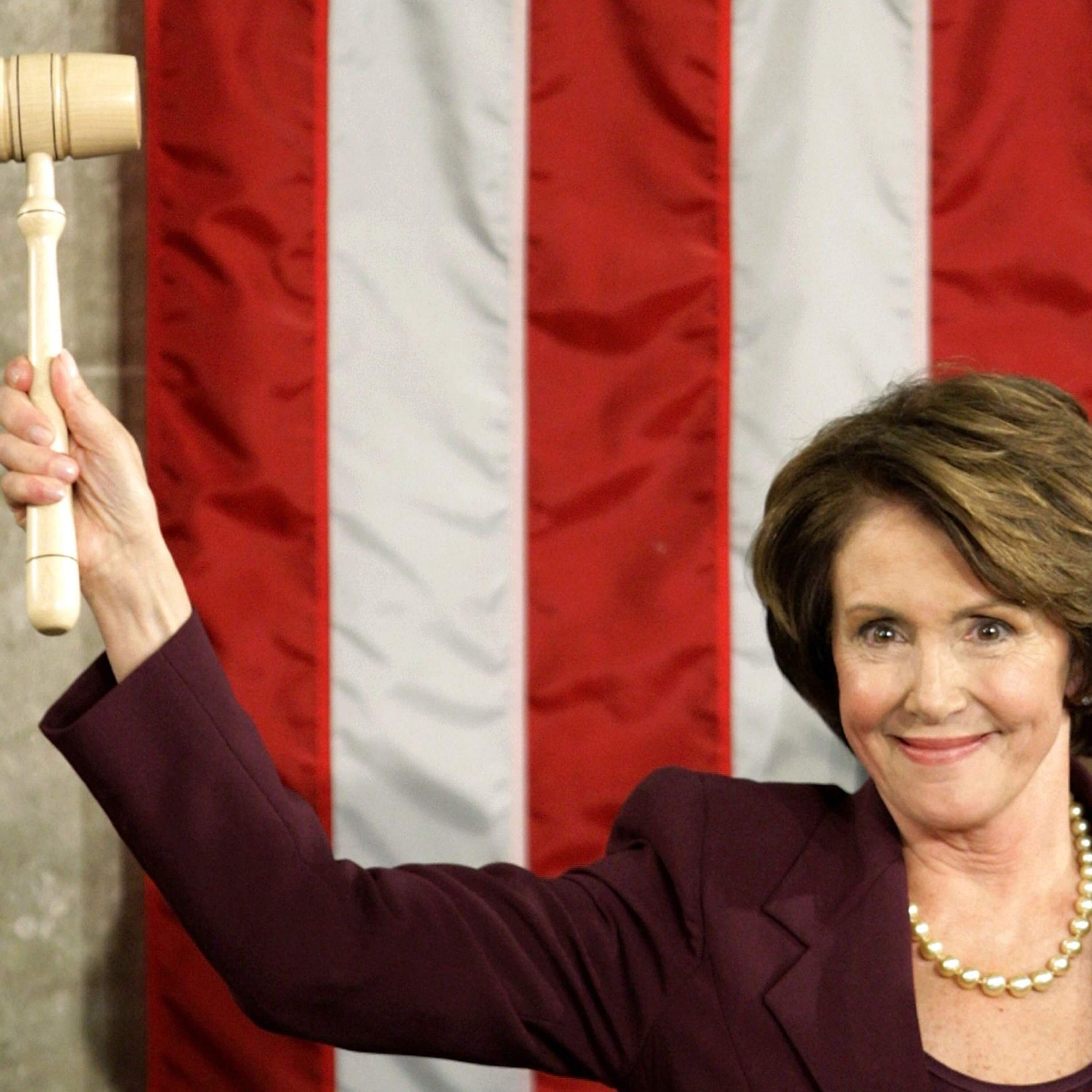
Loading summary
Transcript51 lines
- [00:01]
A
An era in American politics is coming to an end.
- [00:04]
B
With a grateful heart, I look forward to my final year of service as your proud representative as we go forward.
- [00:11]
A
In a video dedicated to her San Francisco constituents, Nancy Pelosi announced today she will not seek reelection. Pelosi was first elected to Congress nearly four decades ago in 1987, and the freshman Democrat quickly established herself as a bold voice in the House chamber.
- [00:28]
B
Also the gentlelady from California. Mr. Speaker, I'm saddened and outraged at the murder of Herbert Anaya.
- [00:35]
A
Here she is in an early speech on the House floor talking about the murder of a human rights leader.
- [00:39]
B
Mr. Anaya was a man of dignity and courage who was committed to the work for peace in his own war torn country.
- [00:46]
A
Her influence only grew as she accumulated power, becoming minority whip for the Democratic Party, then minority leader, and finally in 2007, speaker of the House, the first and only woman to attain that role.
- [01:01]
B
I accept this gavel in the spirit of partnership, not partisanship, and I look.
- [01:08]
A
Forward to working as speaker. Pelosi was a key ally to former President Barack Obama and she was instrumental in passing the landmark Affordable Care Act.
- [01:19]
B
The yeas are 220, the nays are 215. The bill is passed.
- [01:29]
A
But as an opponent, she was also known not to mention words. Here she is speaking to CNN's Wolf Blitzer about then President George W. Bush in 2008.
- [01:38]
B
God bless him, bless his heart. The president of the United States, a total failure, losing all credibility with the American people on the economy, on the war on energy.
- [01:47]
A
Pelosi is currently serving her 20th term in Congress and on Thursday morning she said she would not seek another. Consider this. Arguably the most powerful woman in American history says she'll retire. What did she achieve? And what legacy does she leave behind? From npr, I'm Juana Summers.
- [02:12]
B
Hi, it's Terry Gross, host of FRESH AIR. Hey, take a break from the 24 hour news cycle with us and listen to long form interviews with with your favorite authors, actors, filmmakers, comedians and musicians. The people making the art that nourishes us and speaks to our times. So listen to the FRESH AIR podcast from NPR and whyy. I'm Rachel Martin. If you're tired of small talk, check out the Wild Card Podcast. I invite influential thinkers to open up about the big topics we all think about but rarely talk about. Tune in this fall to hear Mel Robbins, Malala Yousafzai and Brene Brown talk about everything from grief and God to ambition and forgiven forgiveness. Watch or listen on the NPR app, YouTube or wherever you get your podcasts.
- [02:58]
A
On this week's books we've loved.
- [03:00]
B
We're headed to the Open Range with.
- [03:02]
A
Morning Edition's Michelle Martin to break down Charles Portis classic True Grit.
- [03:07]
B
Find books we've loved in NPR's Book of the Day podcast feed on the NPR app or wherever you get your podcasts.
- [03:22]
A
It's Consider this from npr. After nearly four decades in office, Congresswoman Nancy Pelosi has said she will not seek reelection. Pelosi rose to remarkable heights in American politics, the first and only woman to become speaker of the House. And though she came from a political family, her father the longtime mayor of Baltimore, and her mother a political organizer, she didn't run for Congress until her late 40s. I called up Susan Page, the Washington bureau chief of USA Today and author of Madam Speaker Nancy Pelosi and the Lessons of Power, and I asked her to explain what pushed Pelosi to run for office back in 1987.
- [04:02]
B
You know, she had been a fundraiser in California. She had been chair of the state party, but she never really thought of herself as a potential candidate. And it took another woman who was actually dying and gonna leave her the San Francisco House seat to urge her to run in the special election that would follow her death. And that's what prompted her to run for office for the first time when she was 47 years old.
- [04:30]
A
So in 1987, she is elected to Congress as a Democratic representative for California. I wanna know more about those early days and how she navigated Congress once she was there. And then she just went on to accumulate so much political power that eventually drive her to become speaker.
- [04:48]
B
She was fearless from the start. You know, that was a time when AIDS was a very serious issue in San Francisco, but it was one that there was a big stigma about. And so a lot of politicians didn't want to talk about hiv, aids. Nancy Pelosi started talking about the importance of addressing AIDS and addressing those helping those who are struggling with AIDS from her first speech on the House floor. And that was really a sign for things to come. She was someone who, who was not afraid to talk about big issues in ways that sometimes made other people uncomfortable or angry.
- [05:22]
A
She made history as the first woman to become speaker of the house in 2007. I remember that well. How big a deal was it and how big of a deal is it still, almost two decades later? She's been the only one.
- [05:34]
B
Yeah. Look at all the women who have been speaker of the House. There's exactly one. Our president of the United States our Chief justice of the Supreme Court. You know, she is the only woman to head one of our three co equal branches of government. And that tells you something about how significant that election was.
- [05:52]
A
I mean, the fact that she was a high profile woman, leading Democrats in the House made her both the subject of sexist attacks at times, but she was also something of a feminist hero, a subject of adoration. How did Nancy Pelosi herself reckon with all of that public discourse that seemed to swirl around her?
- [06:13]
B
She ignored it. She plowed on. She pretended she dismissed sexist attacks. By and large, she just went and did her job. She was enormously focused on just getting things done. And she was also a mentor to a whole generation of women who followed her. There was of course, no woman to be a mentor to her because no woman had done what she was aiming to do. But she turned around and helped a whole generation of women after her, including, by the way, the two women who were elected governor of New Jersey and Virginia on Tuesday.
- [06:48]
A
You're talking there about Mikey Sherrill and Abigail Spanberger.
- [06:51]
B
Exactly. Both former House members who Nancy Pelosi helped gain their political footing.
- [06:58]
A
I was a congressional reporter at times when Nancy Pelosi was leading House Democrats. And I remember watching her sort of wield her power. Well, Susan Page, can you talk a little bit about her political legacy in Congress? She was this prominent for pushing the Obama White House to deliver on the Affordable Care Act. What did that moment show us about who she was as a political leader?
- [07:18]
B
Well, remember that the Affordable Care act had been a promise of Barack Obama's during the campaign. But when the time came to deliver, there were those in the White House who wanted to do a kind of a small version of it. Nancy Pelosi did not allow that to happen. And while the Affordable Care act certainly wouldn't have passed without President Obama, it also would not have passed without Nancy Pelosi. And even among Democrats, there were those who thought it would be an impossible task to get that big transformative legislation through Congress. And it is the achievement that she says she is most proud of.
- [07:54]
A
From what you know of her, was there anything unique about the way that Pelosi wielded her power, whether she was dealing with the President or her fellow members of Congress?
- [08:03]
B
The thing about Pelosi is that she is so comfortable with power. She's comfortable having power and she's comfortable using power. And I think that's because it's in her DNA. You know, her father, the three term mayor of Baltimore, Tommy the elder D' Alessandro, a legendary figure. Her mother, who ran the political operation for her father, Big Nancy d'. Alessandro. These are the people that were by her side when she was growing up and figuring out how the world worked. And that was reflected throughout her congressional career.
- [08:35]
A
In a different era of our politics, bipartisanship was a celebrated virtue both on the left and the right. How much did bipartisanship matter to Pelosi throughout her political career? And I wonder, Susan, did her views on that change?
- [08:50]
B
Nancy Pelosi was a pretty fierce partisan from the start. She was a Democrat. There were no question about her allegiances. That said, you know, she delivered for a Republican president. For George W. Bush in 2008, the financial meltdown that bank based bailout was failing to get through, Republicans were not passing the bank bailout that the President needed that economists said was important to avoid another Great Recession. And it was Nancy Pelosi who finally pushed that through Congress at some considerable political cost. She thought it was a big factor in Democrats then losing control of the House and her losing the speakership. That was a gesture of bipartisanship on her part because she felt it was crucial for the future of the country and even the globe.
- [09:38]
A
We should also note that Nancy Pelosi exerted a really powerful influence on the Presidency. Back in 2008. She pushed back on a plan for superdelegates to help Hillary Clinton take the Democratic nomination from Barack Obama, which then helped Obama, of course, secure his path to the White house. And in 2024, just last year, she was key in getting Biden to drop out of the presidential race. What do those moves say about her power within the Democratic Party more broadly, outside of Capitol Hill?
- [10:05]
B
You know, it's mostly behind the scenes. She's not great at giving a speech. She's not a charismatic figure. She is enormously effective behind the scenes. The things you don't see. And when Joe Biden was continuing to seek a second term last year and a lot of Democrats thought that was a bad idea, it was Nancy Pelosi who stepped up to really engineer the pressure on him that got him to drop that race.
- [10:31]
A
As you look back now, we are in a moment where Republicans hold the presidency as well as both houses of Congress. What do you see as Nancy Pelosi's political legacy?
- [10:42]
B
You know, I think the most, the thing she has some regret about is that she's leaving office while Donald Trump is still in it because there was no president she opposed more fiercely than Donald Trump. And in fact, she told me that she was actually thinking seriously about retiring from Congress in 2016 and didn't because Donald Trump got elected. She thought she'd leave. The announcement she made today, she was going to make that after Hillary Clinton had been elected president. And when that didn't happen, she signed back on because of her opposition to Trump and her belief that he represented a threat to democratic institutions.
- [11:20]
A
Susan Page is the author of Madam Speaker Nancy Pelosi and the Lessons of Power. Susan, thank you.
- [11:25]
B
Want to thank you.
- [11:27]
A
This episode was produced by Michael Levitt with audio engineering by Jimmy Keeley. It was edited by Christopher Intagliotta, Courtney Dorning, and Nadia Lancy. Her executive producer is Sammy Yenigun. It's CONSIDER this from npr. I'm Juana Summers. Making time for the news is important, but when you need a break, we've got you covered on All Songs Considered.
- [11:53]
B
NPR's music podcast.
- [11:55]
A
Think of it like a music discovery show, a well deserved escape with friends.
- [11:59]
B
And yeah, some serious music insight. I'm gonna keep it real. I have no idea what this story is about. Hear new episodes of All Songs Considered every Tuesday. Wherever you get podcasts you care about what's happening in the world, stay informed.
- [12:13]
A
With NPR's State of the World podcast.
- [12:16]
B
In just a few minutes, we take you to stories around the globe. You might hear the latest developments in world conflicts or about what global events mean for the price of your coffee. Listen to the State of the World podcast from npr.
- [12:32]
A
Want to hear this podcast without sponsor breaks?
- [12:34]
B
Amazon prime members can listen to Consider.
- [12:36]
A
This sponsor free through Amazon Music.
- [12:38]
B
Or you can also support NPR's vital.
- [12:41]
A
Journalism and get consider this plus@plus.NPR.org that's plus.NPR.org.