← Consider This from NPR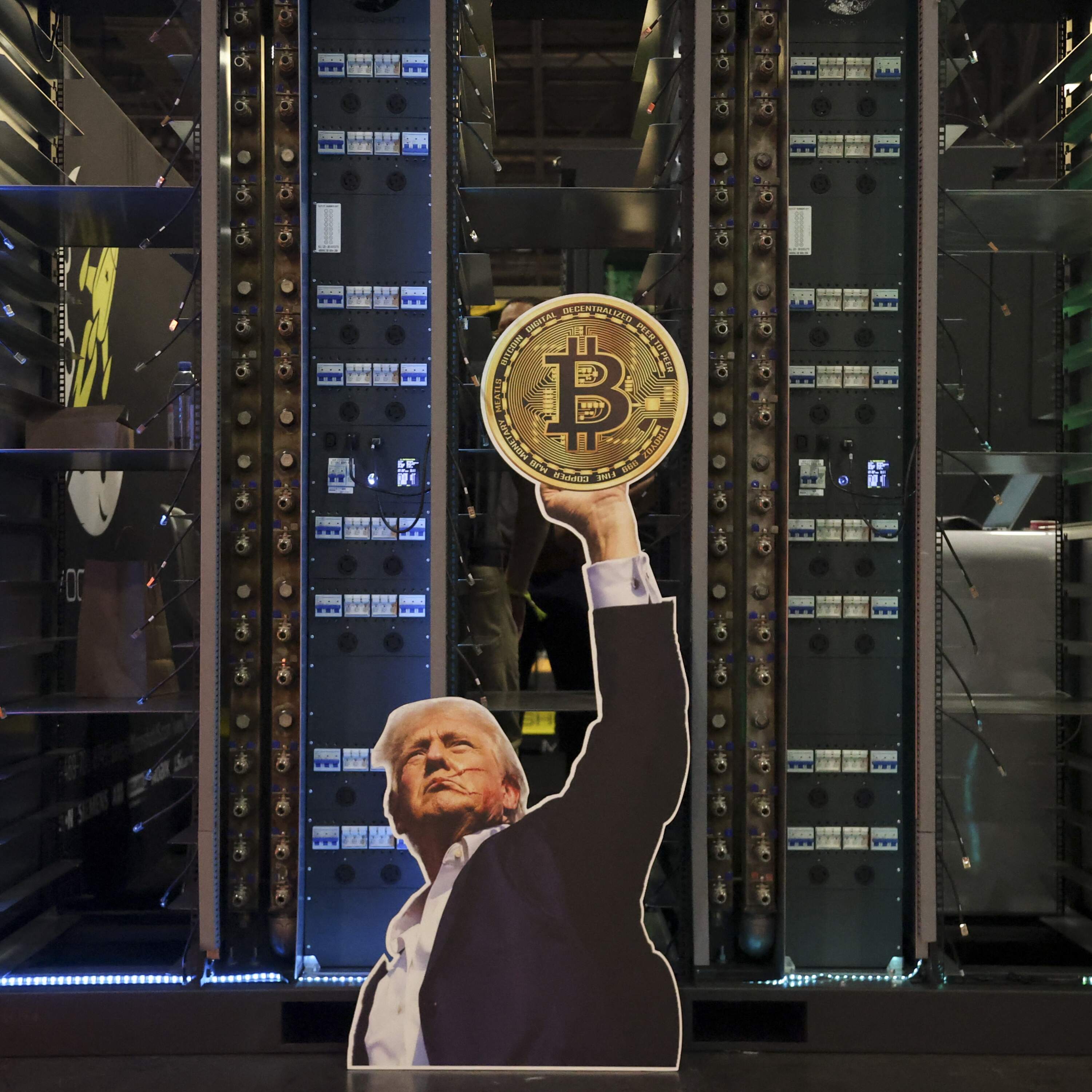
Loading summary
Transcript30 lines
- [00:00]
Scott Detrow
It's Consider this, where every day we go deep on one big news story today, how President Trump is profiting from cryptocurrency.
- [00:08]
Bernard Condon
Many have called me the first crypto president.
- [00:11]
Scott Detrow
That's an honor. New financial disclosures reveal Trump and his family have made more than a billion dollars from his crypto businesses since returning to office last year. But what does it mean that a president is making this kind of money from an industry his government regulates? He addressed that question on Wednesday while talking to reporters. But to critics who say, you're profiting off the presidency, Mr. Sm, you know why I'm profiting?
- [00:33]
Bernard Condon
Because the stock market's going up. Everybody's profiting.
- [00:35]
Scott Detrow
Some of Trump's businesses have benefited from his administration's policies.
- [00:39]
Bernard Condon
It seems the any reluctance to strike a deal that could seem like he's profiting off the presidency is gone.
- [00:49]
Scott Detrow
Consider this. For as long as he's been in politics, President Trump has had varied business interests. But it's his second term where he's amassed more than a billion dollars from crypto. How did he do it? And what has changed since the first term? From npr, I'm Scott Detrow.
- [01:11]
Sponsor/Announcer
This message comes from Saatva. Declare your independence from back pain and sleepless nights with a handcrafted luxury mattress from Saatva. You'll save up to $625 when you visit saatva.com NPR during their July 4th sale. This message comes from IXL. IXL is designed to help students strengthen core skills and build confidence before the new school year begins. The adaptive platform provides personalized learning for Pre K through 12th grade and is used in 96 of the top 100 school districts in the United States. One hour of tutoring can cost more than an entire month of IXL. Receive an exclusive 20% discount on an IXL membership.
- [01:52]
Scott Detrow
And@ixl.com NPR this message comes from NPR sponsor Carvana. Carvana makes car buying easy 100% online prices down to the penny, delivered to your door.
- [02:04]
Bernard Condon
Why make car buying hard when it could be easy?
- [02:07]
Scott Detrow
Visit Carvana.com today.
- [02:09]
Bernard Condon
Terms may apply.
- [02:18]
Scott Detrow
It's Consider this from npr. Historically, when presidents have taken office, they have walled themselves off from their business interests, not President Trump. A new financial disclosure form released yesterday shows Trump and his family have raked in more than a billion dollars from cryptocurrency ventures in the past year alone. Trump was once a crypto critic but has embraced the currency in his second term, loosening government scrutiny of the sector, among other steps. Bernard Condon wrote about it for The Associated Press and joins us now to explain how these companies made Trump money. Welcome to ALL THINGS considered.
- [02:51]
Bernard Condon
Thank you.
- [02:52]
Scott Detrow
I want to start with just the scale of all of this. What were the responses that you got from the people you talk to about the fact, just the fact that a sitting president netted a billion dollars from a field that he helped set federal government's regulatory stance of?
- [03:07]
Bernard Condon
I have been covering Trump businesses since his first term more than a decade ago. And the watchdogs, and predictably the Democrats were outraged that he had opened a hotel in Washington and welcomed foreign dignitaries and lobbyists. This is a whole new level. In one year, a little before he took office, he has taken in over $1 billion, outstripping much of anything he owns in his property portfolio. The speed is breathtaking.
- [03:45]
Scott Detrow
This is all money that came in essentially since he had been reelected president and was about to take office and has been a sitting president. And as you're saying now, it outscales the decades of various Trump ventures in
- [03:59]
Bernard Condon
revenue in many properties. Yes. Now, that's not to say he hasn't done well with his properties. He has taken in tens of millions, this disclosure report shows, from hotels and resorts overseas that didn't exist a little over a year ago. So his property business, at least according to my judgment, is growing at the fastest it has in the century since the Trump Organization, his family business started. And yet crypto triumphs.
- [04:36]
Scott Detrow
I want to talk more about the details of how this crypto money came in in a moment. But given the fact that you have been covering this all along, what is the best way to think about any restrictions, if any, that Trump has put on himself when it comes to making personal profits and running his family businesses in this second term?
- [04:58]
Bernard Condon
In this first term, he signed a so called white paper forbidding his business from striking any new deals abroad. And he also said that he would not even do things that showed the appearance of a conflict, much less a conflict itself. The latter rule he broke. He opened the hotel in Washington, among other things. But he didn't strike new deals abroad this time. That language, I will not put my name or build anything overseas in countries with which the US Government has important business, militarily, economically, that is gone. It seems any sort of reluctance to strike a deal that could seem like he's profiting off the presidency is gone.
- [05:59]
Scott Detrow
And to that end, do we have much of an idea of who is investing in these crypto ventures? Whether it's the Trump meme COIN or World Liberty Financial, do we have a sense who is purchasing this cryptocurrency that makes Trump's money. Because there's been all sorts of questions raised of our people trying to do this to curry favor with the administration on mergers, on regulatory policy, and a whole host of other issues.
- [06:24]
Bernard Condon
A Chinese billionaire named Justin sun bought $75 million of a crypto asset called Governance Tokens issued by World Liberty, and they plunged in value. Regulators years ago said, watch out. These things are dangerous. Meanwhile, the same Chinese billionaire also bought 200 million worth of these kind of souvenir meme coins that Trump issued, and those too have plunged in value. So this one man, Justin sun, has bought $275 million of Trump crypto stuff. Later, he had been sued in the prior administration for duping investors. That lawsuit was put on hold, and eventually the lawsuit was settled for $10 million. Son denies there was any link between him pouring hundreds of millions of dollars into Trump's crypto businesses and World Liberty says there's absolutely no conflict of interest here.
- [07:38]
Scott Detrow
What has the White House's response been to all of this? Since the disclosures have come out, the
- [07:44]
Bernard Condon
White House says that Trump only acts in the interests of the public, not for himself. His sons run the business. He's not involved at all. And they actually come out and attack the media, saying, it's a disgrace that you keep bringing up this issue about ethics. And if anything, Trump has done great things for America by helping the crypto industry.
- [08:14]
Scott Detrow
Let me ask you this. These disclosure forms came out and put a number to all of this. But there's still a lot of questions, right? When it comes to private business dealings. As somebody who's covered this, what are your biggest ongoing questions about just how large the Trump crypto business is?
- [08:33]
Bernard Condon
I'm interested in finding out more about who bought some of these tokens and coins. The US has strict rules. If you give to a presidential campaign, you have to disclose who you are, and there are limits on how much you can give. If you lobby, you have to disclose who you are and what you lobbied on behalf of in this case. It's the Wild West. So aside from one or two actors like the Chinese billionaire Justin Sun, a company tied to the United Arab Emirates government that put 500 million into one of Trump's crypto companies. Aside from those few examples, we know next to nothing. We know how much Trump got, but we don't know from whom.
- [09:26]
Scott Detrow
Bernard Condon, an investigative reporter for the Associated Press. Thank you so much.
- [09:30]
Bernard Condon
Thank you.
- [09:32]
Scott Detrow
This episode was produced by Michelle Aslam and Tyler Bartlem. It was edited by Christopher Intagliata and Tin Beat Ermias. Our interim executive producer producer is Courtney Dorning. It's consider this from npr. I'm Scott Detrow.
- [09:54]
Sponsor/Announcer
This message comes from ixl. Providing an online learning environment intended to keep students skills sharp over summer vacation. The platform covers core subjects and adapts to each child's pace. Receive 20% off at.ixl.com npr this message comes from Bombas. Bombas compression socks help keep legs fresh on travel days, work days, leg days and more. That's all day relief with everyday style. Go to bombas.com NPR.