← Consider This from NPR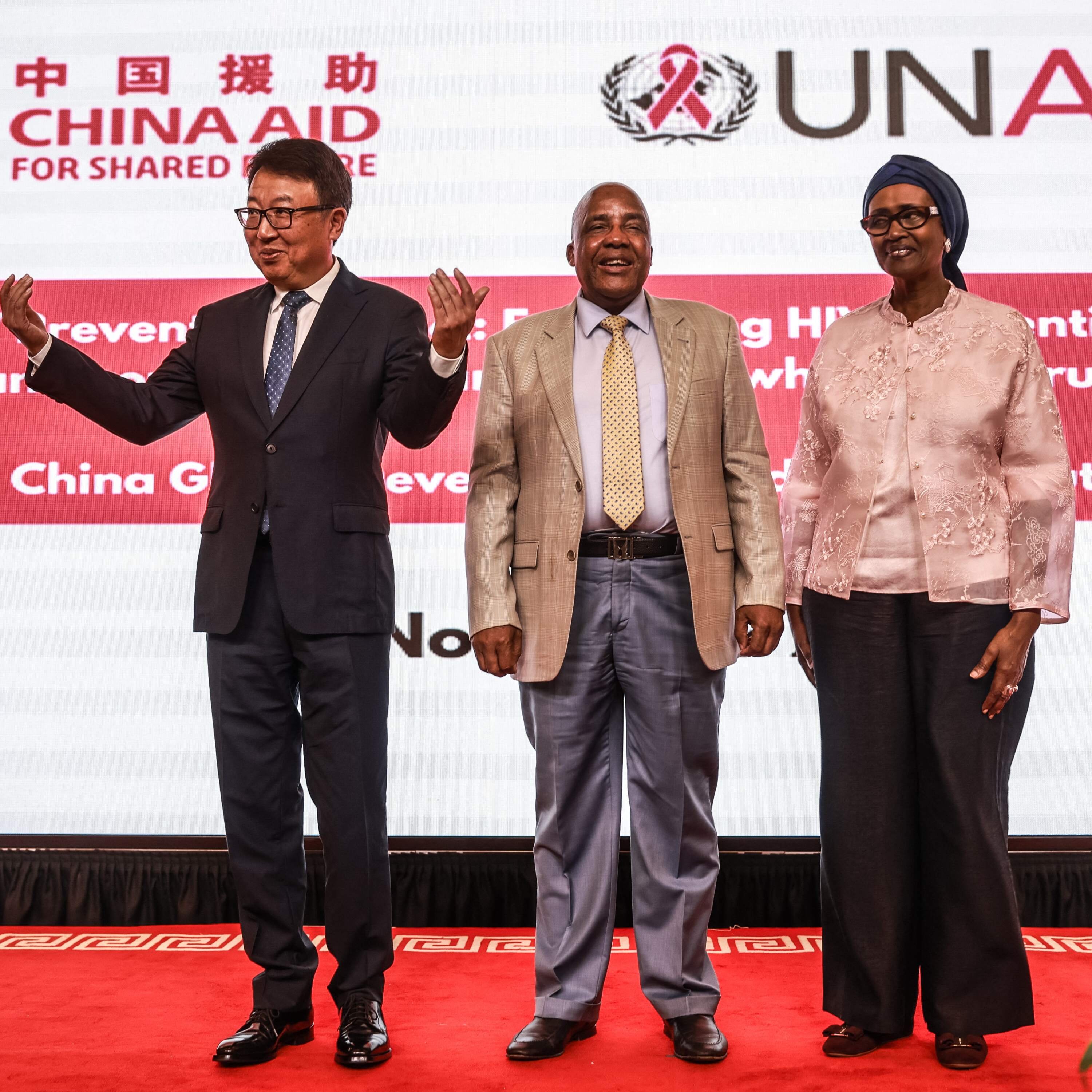
Loading summary
Transcript19 lines
- [00:00]
A
Hey, it's Rob. Before we get to today's episode, we wanted to ask you to do us a favor. We want to know what you think about. Consider this what interests you, what you like and what you don't like, what keeps you listening. That's why we're hoping you'll take a couple of minutes to fill out the NPR News podcast listener survey. You can find it at npr.org springsurvey and please do not be shy. We want to hear from everyone, even our new listeners and those who might not have taken one of our surveys before. Yes, that means you. Okay, onto today's episode. This past year, NPR global health and development correspondent Fatma Tanis has been digging into the global impact of billions of dollars of USAID being cut from programs around the world. A lot of the headlines in the US Focused on Washington, the chaos, the ideology, the politics. So Fatma went to Uganda last September to find out what it looked like on the ground. And what she found was something unexpected. Not anger, but something harder to explain.
- [01:02]
B
I really got this sense of how, how the US Is just viewed as this, like, major superpower. I remember one community elder who kept referring to Donald Trump as Father Trump when he was talking about, you know, the aid cuts.
- [01:21]
A
Fatima was struck by the description.
- [01:24]
B
And I asked him, why do you, why are you calling him father? And he said, well, he's the provider Father Trump.
- [01:32]
A
That phrase, equal parts reverence and bewilderment, captures something about how US Foreign aid has functioned for decades, not just as money, but as identity, as presence, as power. Consider this. The United States spent decades building influence abroad through foreign aid. Now that it's pulling back, other powers are lining up to fill the Void. From NPR, I'm Rob Schmitz.
- [02:03]
C
This message comes from Intuit TurboTax with TurboTax Expert Full Service match with a dedicated expert who will do your taxes for you from start to finish, getting you every dollar you deserve. It's that easy. Visit turbotax.com to match with an expert today. Support for this podcast and the following message come from Strawberry Me. Be honest. Are you happy with your job? Are you stuck in a job you've outgrown or never wanted in the first place? Are your reasons for staying really just excuses for not leaving? Let a career coach from Strawberry Me help you get unstuck. Discover the benefits of having a dedicated career coach in your Corner and get 50% off your first coaching session at Strawberry MV.
- [02:51]
D
This message comes from NPR sponsor Carvana. Carvana believes selling your car should be refreshingly simple. Enter your license plate or vin, get a real offer down to the penny, and schedule a pickup on your time. No surprises. Sell your car today@carvana.com Pickup fees may apply.
- [03:17]
A
It's Consider this from n the US spent decades and billions of dollars building global influence, funding clinics, coaching programs, disease prevention. Now that that money is gone, NPR global health and development correspondent Fatma Tanis went to Uganda to see what's left and who the new players are that are moving in.
- [03:36]
B
In Uganda, you still see the remnants of USAID everywhere you go, posters and murals with, you know, the American flag, guidelines about how to deal with the COVID 19 pandemic. You kind of see that everywhere on the ground. And then on the other hand, in the big cities, the shopping malls are Chinese built. The roads that you're taking to go everywhere are Chinese built. The GPS in the cars that people are driving are Chinese gps. And people are definitely sort of aware of what's coming from where. And the Chinese sort of strategy of aid has long been focused on infrastructure, these big, big infrastructure projects. But they have also run into some issues with that, issues of quality. When we were driving on those roads, there were a lot of places where they had been pretty messed up and nobody was fixing it. So at one point that road was beautiful and paved, but now when you're driving on it, it's like potholes everywhere. But China is changing its approach, and that's something that I've been looking into because of a lot of the criticism around the way that it does. Its aid has been hampering its reputation. And so they've been taking an approach that's slightly more similar to what the US had been doing, which is to fund these small projects here and there to win hearts and minds. They actually call them small and beautiful projects, which go from any. Like there are various different building a bridge in an island or refurbishing maternal ward in Zimbabwe, helping medical supplies get into a Latin American country. And so at a moment when the US Is moving away from its model of aid and moving more toward a bilateral version, you see China moving the other way. And that's something that's really interesting to watch.
- [05:47]
A
Yeah, that's interesting because I used to cover China and back when I was covering China, China would focus its aid on, like you said, infrastructure like roads, public transportation, and especially ports. And a lot of it was built partly to help that country, but also to take resources from that country and then quickly export them to China. So it was in many ways self serving. You Know what you're saying right now is that they're actually shifting to other types of aid, basically to help that country develop in its health care and also for education, things like that. But that is an interesting change for a superpower like China.
- [06:31]
B
Absolutely. And I think there's something interesting there because the way that governments like the US and China do aid, I mean, there's always an element of it being self serving. But I think the way that China did it was so obvious that people viewed in many places like Kenya and others, they viewed Chinese aid as suspicious, like, okay, you're building a support, but what are you going to get from us? That kind of transactionality was so, so obvious in a way that it wasn't with U.S. aid. And I think now China is moving toward a more subtle, subtle form of aid, but I think it's still very much eyeing the positive returns that it's going to get. Because when China gives something to, you know, when China builds a bridge in an island, there's still positive gains for China. People will view it positively and that's still a gain.
- [07:27]
A
I mean, do, do the folks that you're speaking to, for example in Uganda and in other African countries, are they starting to see China in an aspirational way like they saw the US as an aspirational country?
- [07:40]
B
I don't think that the China's new model has. I think it's still new in that sense. I think it hasn't had that like the decades of influence that US aid has. But I think certainly China's biggest advantage perhaps is the fact that the US is pulling away. And so right now, where the US is not giving anything, China is, and that alone is a win for them.
- [08:15]
A
So fama, I wanted to get also into how you report when you're on the ground. There's this thing that happens in reporting where you go out to cover one story, especially in developing countries. This happens a lot, especially to me, and you end up noticing something completely different and then you're kind of pulled in a different direction. How often does that happen to you and did that happen to you while you're working on these stories? You know, when you're covering aid from China and things like that?
- [08:45]
B
Yeah, it certainly does. And I do, you know, when I'm planning my reporting, that's something I definitely build in space for both, you know, logistically, but also mentally. Most recently, when I was in Uganda, there was one story I was working on. You know, obviously we were covering the USAID shutdown and its impacts and like the change in foreign aid policy. However, I also wanted to do stories that had nothing to do with that. And so there was this one program in a rural part of Uganda that I was profiling. It was a program meant to, you know, push people who are living in extreme poverty out by giving them some cash and coaching. It's a program that's, you know, has been it has had high rates of success elsewhere. And this one was doing something interesting. It was not funded or supported in any way by the US it was funded privately. And so, you know, we're out there in the field, we're talking to participants of these programs, trying to understand how their lives are changing with the help of this cash and the coaching. And we realized that there had been something that was stopping people from being able to invest as much as they could have or they had been encouraged to in building their businesses. And it turned out to be that the US Aid cuts had caused a serious slowdown in the local economy because people who weren't in the program, people in the area who had been receiving aid, had no longer had the resources to spend money in the markets. And that was affecting local businesses. It was also affecting these people in the program who are trying to build businesses. So even a story that I had, I was intentionally trying to do outside of the aid cuts ended up being dragged into it.
- [10:47]
A
Fama Tennis is a global health and development correspondent for npr. Fama, thanks so much.
- [10:52]
B
Thank you for having me.
- [10:55]
A
And before we go, just one more reminder to take a couple of minutes to fill out the NPR News podcast Listener Survey. You can find it at npr.org springsurvey There's a short list of questions. It's anonymous, and it would really help to hear from you, even if you've done one of these in the past. NPR.org SpringSurvey that link is in our episode Notes and thanks. This episode was produced by Lena Muhammad. It was edited by Giselle Grayson and Adam Rainey. Our executive producer is Sammy Yenigun. It's consider this from npr. I'm Rob Schmitz.
- [11:34]
D
This message comes from Rosetta Stone. Spring Travel coming up. Rosetta Stone has been the trusted leader in language Learning for over 30 years, ready to start learning a new language this spring? Visit rosettastone.com NPR today. This message comes from Angie Tackling a Home Project. Angie can connect you with pros who do such a good job, you might ask them to be your kid's godfather. Don't do that. Just trust them to get the job done. Find a pro for your projects at angie. Com. That's angi combination.