← Consider This from NPR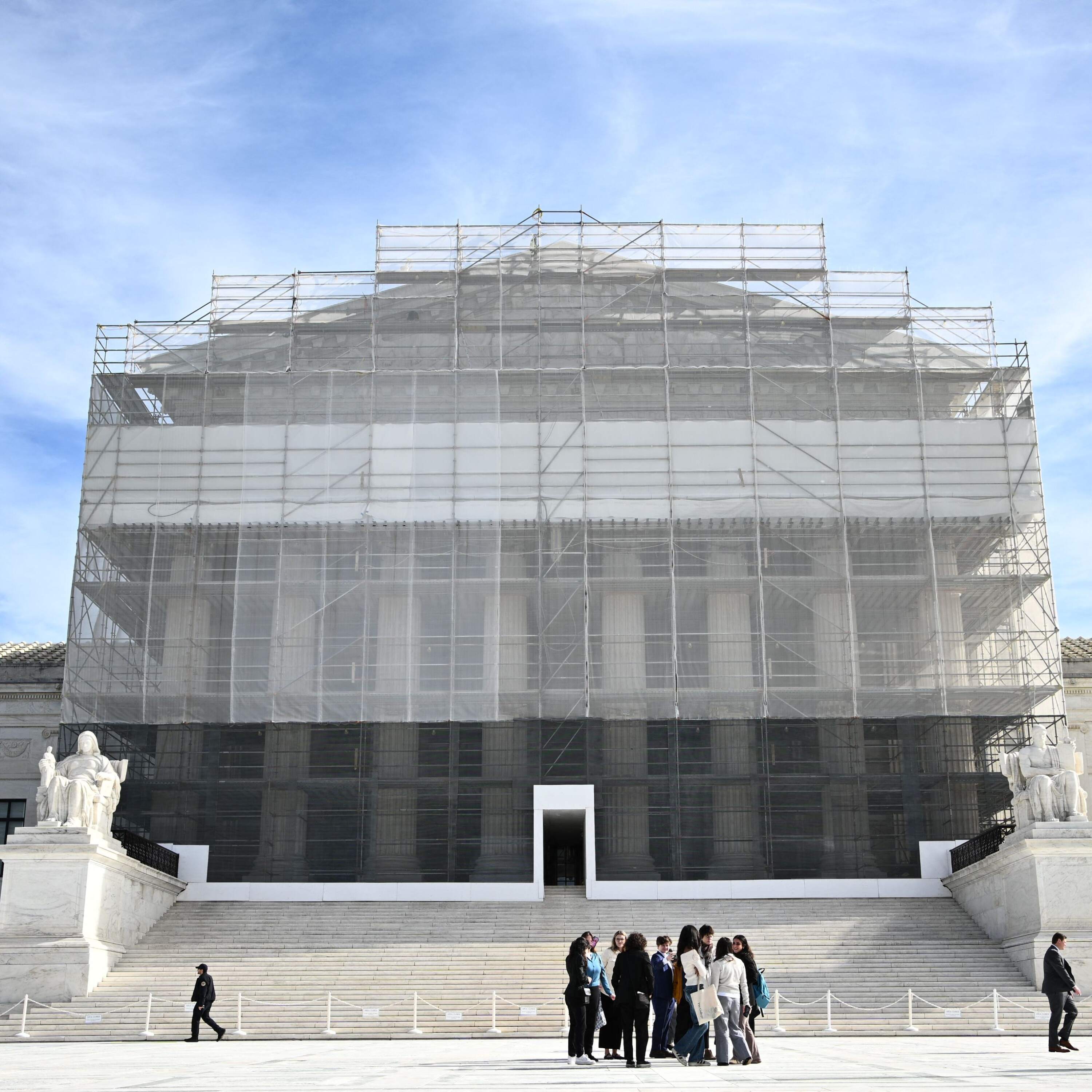
Loading summary
Transcript43 lines
- [00:00]
Scott Detrow
President Trump's tariff policy and his use of executive authority faces its most consequential test yet as it goes before the Supreme Court on Wednesday.
- [00:09]
Danielle Kurtzleben
I think it's the most important subject discussed by the Supreme Court in a hundred years.
- [00:15]
Scott Detrow
That was Trump this past weekend on CBS's 60 Minutes. The president has been clear in his defense of his signature economic tool, tariffs. And he has warned again and again that there will be dire economic consequences if this tool raising taxes on imports to extract concessions from other countries is taken away from him.
- [00:35]
Danielle Kurtzleben
I think our country will be immeasurably hurt. I think our economy will go to hell. Look, because of tariffs, we have the highest stock market we've ever had.
- [00:45]
Scott Detrow
But at the same time, many business leaders have said that tariffs are shutting down economic opportunity. Kentucky farmer Caleb Ragland farms 4,000 acres of soybeans, corn and winter wheat. And he's also the president of the American Soybean Association.
- [00:59]
Scott Horsley
The message that I have for President.
- [01:01]
Danielle Kurtzleben
Trump, the administration, is we need opportunities from the market.
- [01:07]
Scott Detrow
And tariffs and trade wars, they take away opportunity. Whether tariffs are helping or hurting the economy is not the direct question before the court. Instead, it is whether Trump exceeded his authority to place tariffs on foreign goods without congressional approval. Democratic Senator Amy Klobuchar from Minnesota spoke last week on the Senate floor calling for bipartisan legislation to overturn Trump's emergency tariffs.
- [01:33]
Danielle Kurtzleben
Finally, enough is enough. We're asserting our power, and you're not going to be able to just put on a 40% tariff on Brazil with a country with which we have a trade surplus simply because the guys being facing a trial there that the president doesn't like. No, this is not how this work. It's not how it works under the Constitution. It's not how it works under the law.
- [01:58]
Scott Detrow
Consider the White House will defend the constitutionality of the president's tariff emergency, the centerpiece of his economic policy. How is the policy shaping the economy? And what could the decision mean for businesses, for consumers, and for the president's string of possible trade deals? From npr, I'm Scott Detrow.
- [02:28]
Danielle Kurtzleben
Families around the world aren't having as many kids as they used to. Researchers say the average woman is having half as many children now than they did in the 1970s. I love having only one child. On the Sunday story from up first, why are so many families making this choice? And what exactly does it mean for our future? Listen now to the Sunday story on the up first podcast from npr.
- [02:52]
Scott Detrow
Hey, I'm Daoud. Tyler Amin.
- [02:53]
Danielle Kurtzleben
And I'm Anne Powers.
- [02:55]
Scott Detrow
We are an editor and a critic at NPR Music. And we're also friends who love digging into music histories and thinking about how songs can change over time.
- [03:04]
Danielle Kurtzleben
And we're doing that on a new show we're totally nerding out about the songs that just stick with us and why.
- [03:10]
Scott Detrow
Find our first episode in the All Songs considered feed on October 23rd.
- [03:15]
Danielle Kurtzleben
Hi, it's Terry Gross, host of Fresh Air. Hey, take a break from the 24 hour news cycle with us and listen to long form interviews with your favorite authors, actors, filmmakers, comedians and musicians, the people making the art that nourishes us and speaks to our times. So listen to the FRESH AIR podcast from NPR and whyy.
- [03:43]
Scott Detrow
It's Consider this from npr. On Wednesday, the Supreme Court will hear arguments in a major case about the administration's use of tariffs. President Trump has long touted the power of tariffs as a tool for trade negotiations and even for ending conflicts. But now the justices will hear how that tool may be misused. Here to discuss the administration's tariff policy and its economic impact are White House correspondent Danielle Kurtzleben and chief economics correspondent Scott Horsley. Danielle, let's start with you. What are the Supreme Court justices considering on Wednesday?
- [04:16]
Danielle Kurtzleben
Well, this case is a big deal. The court is going to be ruling on the legality of some tariffs that are very central to Trump's economic agenda. Furthermore, this is yet another case where the Supreme Court is deciding how much power Trump can have. So the case matters very much. Now, in addition, to hear the White House tell it, the economic stakes of this case are apocalyptic. Trump has been saying that for months. Here he was in October. That's one of the most important cases in the history of our country.
- [04:43]
Scott Horsley
Because if we don't win that case.
- [04:44]
Danielle Kurtzleben
We will be a.
- [04:48]
Scott Horsley
Weakened, troubled financial.
- [04:51]
Danielle Kurtzleben
Mess for many, many years to come. I don't even know if survivable, you know, survivable is a good term.
- [04:58]
Scott Detrow
I mean, Scott, you are our in house expert on tariffs, is the president, right?
- [05:03]
Scott Horsley
Let's be clear. The United States will survive with or without these tariffs. Now, the president's import taxes are raising a lot of revenue for the federal government, about $30 billion in September alone. But that is less than 6% of all the money the federal government took in that month. And in fact, the rise in tariff revenue in September was more than offset by a drop in corporate tax collections. Keep in mind, too, that tariff revenue doesn't just drop out of the sky. And despite what the president likes to say, most of the money does not come from foreign countries or foreign companies. It's paid by people and businesses here in the United States, people like Patrick Allen, who is a wine importer in Columbus, Ohio.
- [05:45]
Danielle Kurtzleben
That revenue comes from somewhere.
- [05:47]
Scott Horsley
It's a tax, and it gets built.
- [05:49]
Danielle Kurtzleben
Into the price everybody's paying for goods.
- [05:51]
Scott Horsley
We're the people that are paying this tax. And eventually it gets passed on. It has to be passed on to the consumer. There's no one that can eat this. But whether you think tariffs are good for the economy or bad for the economy, that's not what the Supreme Court has to decide. The court has to decide, are these tariffs constitutional?
- [06:08]
Scott Detrow
All right, so, Danielle, what is the central argument here? What is the central legal argument?
- [06:14]
Danielle Kurtzleben
The big question in this case is how much power a president has to impose tariffs. The justices will be considering one specific type of tariffs that Trump has imposed on individual countries. So this will include the tariffs Trump called reciprocal earlier this year, even though they really didn't look all that reciprocal in the end. And also other tariffs he said would combat the inflow of fentanyl into the U.S. now, importantly here, the Constitution explicitly gives Congress the power to tariff, but it is also true that Congress over the years has passed laws that give some of that tariffing power to the president. So at issue in this case is a 1970s law that gives the president broad economic powers in the case of national emergencies. So the question is whether Trump overstepped what that law intended. Now, the businesses and states who brought this case say Trump took it too far. They say, well, look, this law doesn't even use the word tariff. And Congress also didn't explicitly give Trump, they argue, the power to impose sweeping taxes on goods from almost the entire world.
- [07:16]
Scott Detrow
So, Scott, it's not the question the court is considering, but it's an important political question. How are these tariffs affecting the economy?
- [07:23]
Scott Horsley
Well, they've raised prices for everything we import, whether it's coffee or bananas or raw materials or parts that factories use to assemble and to finish products here in the US in some cases, foreign suppliers have absorbed some of that added cost, but a lot of it's being paid by Americans. And that's a key reason inflation has been inching up in recent months. Annual inflation in September was 3%, up from just over 2% back in April when the worldwide tariffs were rolled out. Inflation is still far lower than it was a few years ago, but it's moving in the wrong direction since these worldwide tariffs took effect. Now, part of the president's stated goal in making imports more expensive is to promote domestic manufacturing. But so far at least, the tariffs don't seem to be having that effect. Factories have lost more than 40,000 jobs since April. And surveys by the Institute for Supply Management show factory activity has been slumping, not growing, every month. Those surveys are filled with complaints from factory managers who say the wild and unpredictable swings in tariffs are making their jobs harder, not easier.
- [08:27]
Danielle Kurtzleben
And we should add here that for the White House, wild and unpredictable is a feature, not a bug. I mean, in this case, Trump has claimed a really large authority to impose or revoke tariffs, really according to his whims. And he's been using those tariffs as leverage in doing something he loves, which is deal making. He likes going to foreign countries and using the threat of high tariffs as a way to try to extract concessions, to get them to pledge big investments in the U.S. or purchases of U.S. goods or once again, pledges of those purchases. But those trade deals he's striking, they're not trade deals as we often think of them. What you have thus far is a lot of non legally binding frameworks or memos. And, and in many cases we don't know the details of these deals or the details are just still being worked out behind the scenes.
- [09:16]
Scott Detrow
Okay, let's look down the line a few months or however long it takes the court to decide. Let's say the Supreme Court does get rid of these tariffs. What happens next?
- [09:23]
Scott Horsley
Well, only some of Trump's tariffs are being challenged in this case. So if they're struck down, the average tax on imports would drop from about 18% down to about 9%. But there are other laws that give the president more clear cut authority to impose tariffs. And Georgetown Professor Kathleen Clausen says even if Trump loses this case, he could probably reassemble much of his tariff wall.
- [09:45]
Danielle Kurtzleben
I think in the end, he could probably piece together something very close to, if not identical, frankly, to what he's done so far. That's not to say so then we might not have legal challenges in the courts once again. But certainly on the surface, I think the president could move to replicate what he's already done using these other statutes. But those other laws she's talking about do come with strings attached, for example, time limits. So that could at least make any new tariffs a little more predict. But one more thing here, it is also possible if the court determines these tariffs illegal, that businesses could be able to get refunds on the tariffs they've already paid. So if that happens, and again, that's if this could get very chaotic, that.
- [10:27]
Scott Detrow
Is NPR's Danielle Kurtzleben and Scott Horsley. Thanks, Deboff.
- [10:30]
Danielle Kurtzleben
You're welcome. Thank you.
- [10:32]
Scott Detrow
This episode was produced by Connor Donovan and Karen Zamora. It was edited by Courtney Dorning, Rafael Nahm and Dana Farrington. Our executive producer is Sami Yenigun.
- [10:41]
Danielle Kurtzleben
Foreign.
- [10:47]
Scott Detrow
It's Consider this from npr. I'm Scott Detrow.
- [10:50]
Danielle Kurtzleben
I'm Rachel Martin. If you're tired of small talk, check out the Wild Card podcast. I invite influential thinkers to open up about the big topics we all think about but rarely talk about. Tune in this fall to hear Mel Robbins, Malala Yousafzai and Brene Brown talk about everything from grief and God to ambition and forgiveness. Watch or listen on the NPR app, YouTube or wherever you get your podcasts. On this week's Books We've Loved, we're headed to the Open Range with Morning Edition's Michelle Martin to break down Charles Portis classic True Grit. Find books we've loved in NPR's Book of the Day podcast feed on the NPR app or wherever you get your podcasts. Want to hear this podcast without sponsor breaks? Amazon prime members can listen to Consider this sponsor free through Amazon Music. Or you can also support NPR's vital journalism and get consider this plus@ +npr.org that's +npr.org.