← Consider This from NPR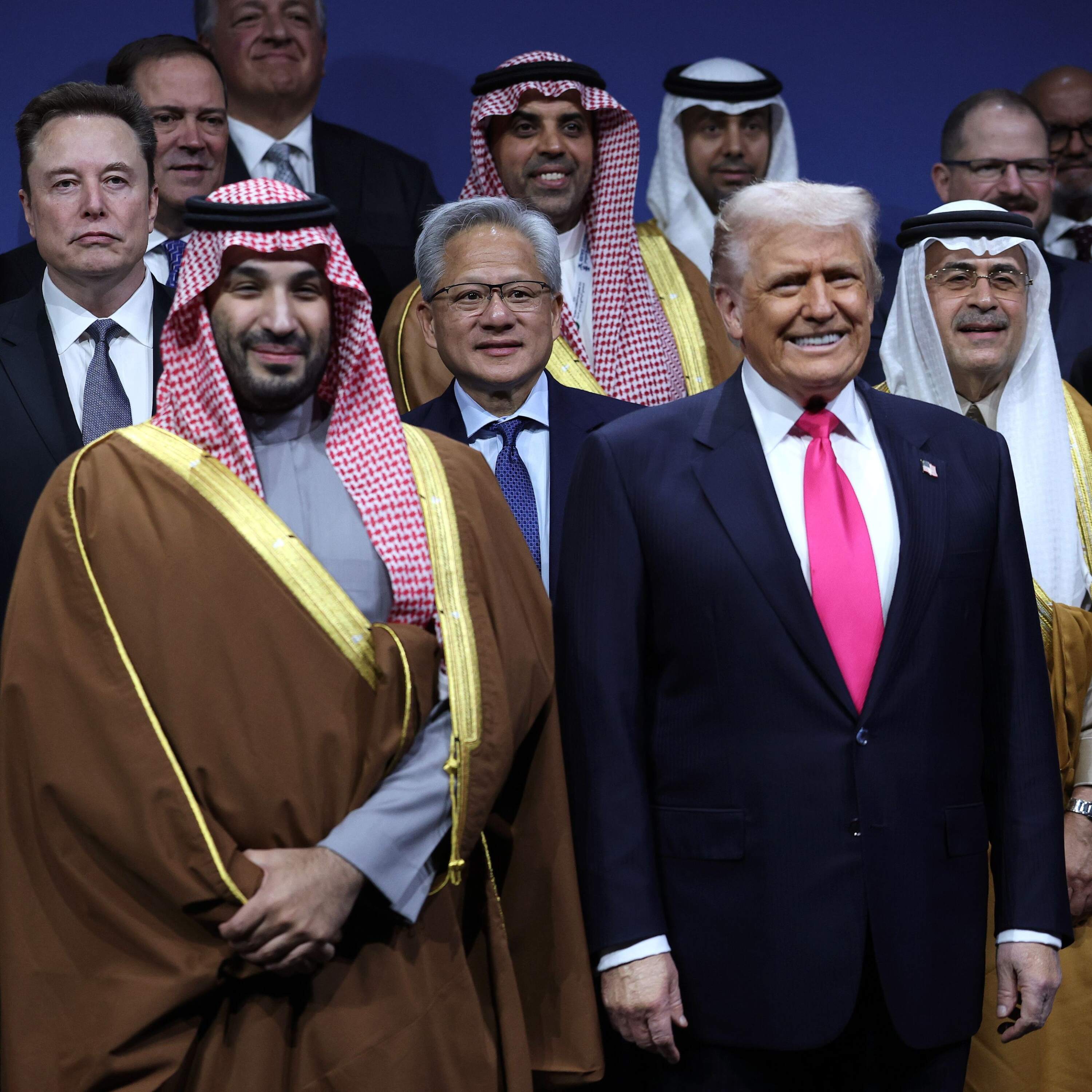
Loading summary
Transcript34 lines
- [00:00]
Ailsa Chang
President Trump has taken a pretty unusual hands on approach to the economy, using billions of dollars in taxpayer funds to purchase shares in private companies like intel for the US Government.
- [00:13]
Donald Trump
I said, you know what you should do if you're smart? Give the United States of America 10% of your company. And he looked at me and he said, I'll do that.
- [00:23]
Ailsa Chang
The US Government also has positions in a handful of other companies, many involved in minerals and energy. President Trump has publicly press CEOs enforce the restructuring of social media giants like TikTok. Members of the administration argue that these moves are essential for national security.
- [00:41]
Donald Trump
We've got to have the infrastructure to help our national security and our economic.
- [00:46]
NPR Sponsor Announcer
Security, and that's what Donald Trump is bringing to America.
- [00:49]
Ailsa Chang
But critics like California Governor Gavin Newsom call it, quote, crony capitalism.
- [00:55]
Donald Trump
This notion of crony capitalism, I don't like it. It's corruption. People that can afford to make a phone call, afford to get an exemption on a tariff, afford to get something no one else can get, afford to even get in the door. I've never seen open corruption like this in my life.
- [01:13]
Ailsa Chang
Consider this. What is the boundary between business and presidential power? And how is the Trump administration rewriting those rules? From npr, I'm Ailsa Chang.
- [01:29]
Maria Aspen
Cognitive disorders are common among criminal defendants.
- [01:32]
Donald Trump
Many of them would struggle with a basic explanation and it wouldn't even be did they do it or not? It would just be like, where were you that day?
- [01:41]
Maria Aspen
Hear about one pioneering effort to address the needs of those with cognitive disabilities in the criminal justice system. The Sunday story from the up first podcast. Listen now on the NPR app.
- [01:53]
NPR Sponsor Announcer
This message comes from Cachava. It feels good to connect to your simpler side, simplifying your wellness with Kachava's all in One Nutrition shake. Feels good too, with 25 grams of protein, 6 grams of fiber, greens and more. No fillers, just the highest quality ingredients. Simplify your nutrition@cachava.com and use code NPR. New customers get $20 off an order of two bags or more now through January 31st. That's K A C H A V A.com code NPR.
- [02:35]
Ailsa Chang
It's consider this from npr. President Trump has spent his first year back in office rewriting the rules of American capitalism. But what will that mean for the future of our economy and of our government? Well, those are the questions that NPR financial correspondent Maria Aspen set out to answer.
- [02:53]
Maria Aspen
Intel is one of America's original tech startups. Remember this sound from its Intel Inside commercials? Founded back in 1968, intel made some of the first computer chips that have become so crucial to today's tech boom. By the start of this century, its chips had made the tech company into a giant of American capitalism. But last year, intel became something very different, a symbol of how much President Trump is taking control of private companies. In August, Trump publicly threatened Intel CEO Lip Bhutan, calling for his resignation over his ties to China. Then Tan went to the White House to meet with Trump.
- [03:37]
Donald Trump
I said, you know what? I think the United States should be given 10% of intel.
- [03:42]
Maria Aspen
And now the United States owns a chunk of intel and several other companies. It's also seeking more control over today's tech darling, Nvidia. Trump wants Nvidia to pay the US a 25% cut of some sales in China as a condition of allowing it to sell some computer chips there. Trump often makes these deals with CEOs who have gone out of their way to court him, sometimes donating to his personal projects. Like Nvidia CEO Jensen Huang, who's among the tech billionaires and companies funding Trump's controversial White House ballroom. Here's Wang in April at a White House press conference.
- [04:21]
Donald Trump
And so I want to thank you, sir, for everything that you've done and the strong encouragement and the great policies that make it possible for us. Thank you, sir.
- [04:29]
Maria Aspen
CEOs have always tried to court the White House, whoever its occupant. But for the US Government, which almost never takes a direct stake in US Companies, this is a huge break from tradition. Now business experts across the political spectrum are worried that the United States is starting to look more like China.
- [04:49]
Ann Lipton
If companies aren't competing on their ability to innovate and develop better products, if they're competing on their ability to schmooze, then, I mean, that's bad for everybody.
- [05:00]
Maria Aspen
Ann Lipton has been working in corporate law for decades. She's a professor at the University of Colorado's law school. She says that when the government picks winners and losers, companies have less incentive to compete with each other. That leads to less innovation and less spending and less job creation, which can all hurt the economy. This has long been the conventional wisdom in Washington and on Wall Street.
- [05:26]
Ann Lipton
If you believe that the free market is the best way of generating resources and innovations and everything, then this just sort of messes with that.
- [05:35]
Maria Aspen
It certainly messes with what's known as free market capitalism, which for decades has been the gospel of corporate America.
- [05:43]
Daniela Belew Ayers
We are seeing a shift away from the type of rules based capitalism that has made America's economy so robust.
- [05:51]
Maria Aspen
Daniela Belew Ayers founded a consulting company and served in the Obama administration. Now she runs the Leadership Now Project, a coalition of business leaders that has endorsed political candidates from both parties. She's worried that the United States is even at risk of tipping over into crony capitalism, meaning that companies rise and fall based on how much a political leader likes them, like, say, the Russian billionaires who own oil companies under Vladimir Putin.
- [06:21]
Daniela Belew Ayers
What we have right now is a lot of personalized decision making, chaotic decision making, instability that we're seeing the cost of.
- [06:29]
Maria Aspen
A White House official speaking to NPR on condition of anonymity largely dismisses these concerns and says that companies like intel and Nvidia are crucial to US national and economic security. And to be sure the US Stock market is booming away. Intel didn't respond to requests for comment. In an emailed statement, an Nvidia spokesperson says its discussions with President Trump have focused, quote, on his desire for America to win as a nation. Belew Ayers says that it's tough for business leaders to know how to stand up to Trump, especially after he's threatened some of them.
- [07:06]
Daniela Belew Ayers
You don't want to say anything unless it's like, clearly, exactly in your core interests, in your core business and at no risk.
- [07:12]
Maria Aspen
But she warns that crony capitalism can have some pretty dire consequences for the overall economy, but also for individual business leaders. In extreme cases like Russia, executives who fall out of favor then sometimes fall out of windows, the cronies and crony.
- [07:31]
Daniela Belew Ayers
Capitalism, they don't end. Look at the oligarchs in Russia. It doesn't really end well for many of them. And you can't predict if you're one who ends up okay or not.
- [07:40]
Maria Aspen
Russia is an extreme example, but she hopes it's an early warning to US Business leaders to stand up for free market capitalism, if not for the sake of the economy, at least for their own long term self interest. Maria Aspen, NPR News.
- [07:58]
Ailsa Chang
This episode was produced by Vincent Echovino with audio engineering by Tiffany Vera Castro. It was edited by our executive producer, Sami Yenigun. It's consider this from npr. I'm Ailsa Chang.
- [08:17]
Tanya Moseley
This is Tanya Moseley, co host of Fresh air. You'll see your favorite actors, directors and comedians on late night TV shows or YouTube, but what you get with FRESH AIR is a deep dive. Spend some quality time with people like Billie Eilish Questlove, Ariana Grande, Stephen Colbert and so many more. We ask questions you won't hear asked anywhere else. Listen to the FRESH AIR podcast from NPR and whyyy.
- [08:46]
NPR Sponsor Announcer
This message comes from Brex. Brex is the intelligent finance platform that helps you spend smarter and move faster. With brex, you get corporate cards with built in expense management, plus a team of AI agents that handle manual finance tasks.
- [09:01]
Maria Aspen
Learn more@brex.com Want to hear this podcast without sponsor breaks? Amazon prime members can listen to Consider this sponsor free through Amazon Music. Or you can also support NPR's vital journalism and get consider this plus@plus.NPR.org that's plus.NPR.org.