← Consider This from NPR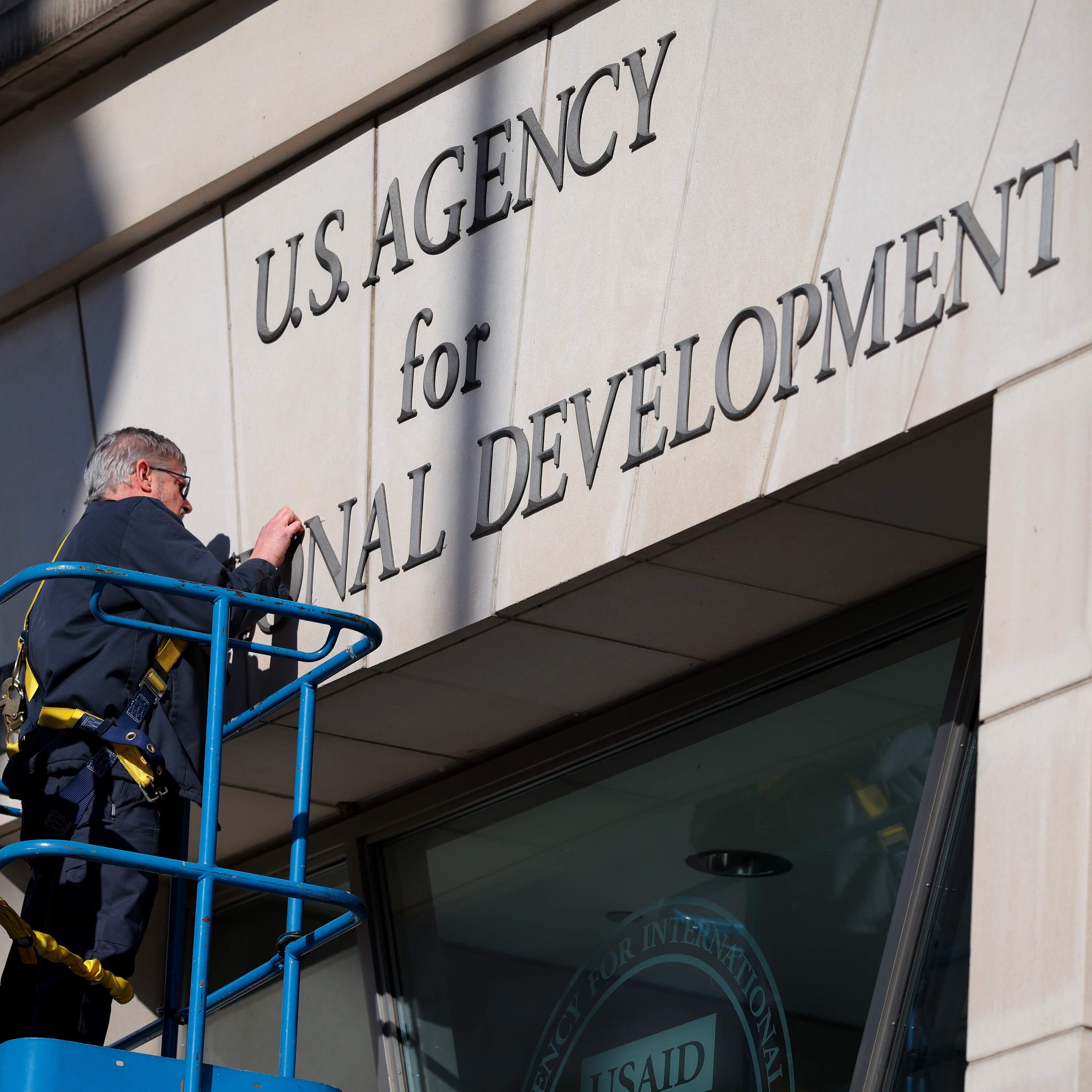
Loading summary
Transcript47 lines
- [00:01]
Juana Summers
On the night of his inauguration, President Trump signed an executive order that froze almost all international assistance for 90 days. Shortly after that, the State Department has.
- [00:10]
Zach Mack
Issued an expansion on President Trump's executive action Monday to freeze foreign assistance for 90 days.
- [00:16]
Juana Summers
In a memo, Secretary of State Marco Rubio ordered a pause on foreign aid spending and a stop work order for any existing humanitarian and development projects. 1 what followed was the termination of billions of dollars in aid, which funded everything from infrastructure building to vaccination programs to getting supplies into sensitive conflict zones. Experts like Abby Maxman, president of Oxfam America, warned at the time that this move could have a destabilizing effect in countries where that aid's critical.
- [00:47]
Fatma Tanis
It's having seismic impacts for the entire global aid system. And really, frankly, it's a cruel decision that has life or death consequences for millions of people around the world.
- [00:57]
Juana Summers
One US foreign aid program working to eliminate so called neglected tropical diseases was shut down this year. Those diseases affect more than a billion people worldwide and can be debilitating. Mamadou Kouybali coordinates several disease elimination programs for the Mali Ministry of Health.
- [01:19]
Zach Mack
It was like a thunderbolt. This lack of financing has stopped our activities.
- [01:25]
Juana Summers
He says the country has used its own money to fill the financial void, but it just isn't enough.
- [01:33]
Zach Mack
These are diseases that make someone completely invalid. They have a very heavy impact on the development of the country. There could be a return of these diseases if we're not careful.
- [01:43]
Juana Summers
Over in southwest Uganda, locals note that refugees are spending less on food. That's because the US has not renewed its contributions to the UN's World Food Program that helped them buy groceries. The economist Dean Carlin works on anti poverty programs in the region.
- [01:58]
Zach Mack
Because of the cutbacks in aid, there was less economic activity going on. The markets were not as thriving, and.
- [02:05]
Fatma Tanis
They could actually see that difference.
- [02:07]
Juana Summers
As the Trump administration ends its first year, some foreign aid money is flowing again, but much less than before. And the future of US foreign assistance now looks very different. Consider this. The complete overhaul in foreign aid policy is affecting people on the ground who need assistance now, and it may come to affect the reputation of the United States worldwide. From npr, I'm juana summers.
- [02:41]
Nora Ramm
This message comes from Capital One. With the Venture X card. Earn unlimited double miles, a $300 annual capital one travel credit and access to airport lounges. Capital One what's in your wallet? Terms apply.
- [02:54]
Zach Mack
Details@Capital1.com what if public radio stopped sounding like this?
- [02:59]
Nora Ramm
Live from NPR News in Washington, I'm Nora Ramm.
- [03:03]
Zach Mack
And started sounding like this NPR is doing everything possible to keep this trusted and free public service going with your support. We will not be silent. Please give today@donate.NPR.org thanks. What's the best Christmas gift you've ever received? Was it the laughter of your children? The love of a good friend? A smile on your partner's face? Yeah, well, we're not talking about any of that nonsense. We're talking about actual, tangible Christmas presents, that one toy you found waiting for you under the tree and still think about from time to time. Listen to Pop Culture Happy Hour in the NPR app or wherever you get your podcasts.
- [03:47]
Juana Summers
It's Consider this from NPR the cuts to foreign aid and the shutting down of USAID had widespread impact on countries and programs that relied on that assistance. NPR spot Matanis and Gabriela Emanuel have been following this all year and spoke with my co host Mary Louise Kelly about it.
- [04:05]
Fatma Tanis
Gabriela, just reaction, the Trump administration makes this move right out of the gate.
- [04:10]
Gabriela Emanuel
Reaction globally was what at the beginning, total shock. Some people we spoke to called this kind of a cataclysmic event.
- [04:20]
Fatma Tanis
Okay, so Fatma, the why question why did the Trump administration a feel they need to do it and b do it so quickly?
- [04:27]
Well, it became clear quickly that the Trump administration viewed foreign aid as a big fat problem, that it was not aligned with the national interest, it cost too much money, even though, you know, foreign aid was about 1% of the overall federal budget. So they wanted to really take the whole thing apart and recreate it in a way that fits the the America first foreign policy. Usaid, as the agency that led foreign aid, was seen by Trump Republicans as a bastion of the left. And some of its programs that supported gender equity or LGBTQ rights or climate solutions or even reproductive health, they were seen as part of this woke agenda that taxpayers should not be funding. And the president even accused the agency of waste, fraud and abuse, even though the White House hasn't provided evidence of that so far. I spoke with Max Primorak. He's with the Heritage Foundation. It's the conservative think tank that was behind Project 2025. Primorak has held several senior roles at USAID in the past. Here's how he would put it.
- [05:25]
Max Primorak
We were spending money every year. It was never changing. We weren't solving problems. We were not putting Africans in the lead. And it just through inertia, spending a lot of money without really seemingly to get the kinds of results that we wanted.
- [05:41]
Fatma Tanis
Other global health experts disagree. We talked to people who said USAID could have been certainly Improved in many different ways. But they also said that you burning it all down as the administration did, was arbitrary and irresponsible.
- [05:54]
Well, and Gabriela, say more about the burning it all down and the consequences. You were starting to describe this as you were hearing from people. Chaos, words like cataclysmic. What was the impact?
- [06:06]
Gabriela Emanuel
Yeah. So we talked to people all over the world. One woman who her son had died because their US funded hospital had closed. Another whose baby had died because she could no longer get the treatment for severe malnutrition. When I went to Zambia about eight weeks after the foreign aid freeze went into effect, I met people who were on HIV medications and found that overnight their neighborhood clinics had shut down. These were clinics funded by the US that had been part of this kind of massive decade long effort that was started under George W. Bush to control HIV AIDS. The U.S. put over $100 billion into this. It's credited with saving 26 million lives. And then suddenly the doors are locked, electricity turned off and people could no longer get their daily meds.
- [06:56]
Fatma Tanis
Okay, so just make this specific, like is there one human story you would tell that brings us home?
- [07:02]
Gabriela Emanuel
Yes. So one mom I met, Teresa Mwanza. She had a 10 year old daughter. They were both HIV positive. They got their daily medication from one of these local US funded clinics in their neighborhood. And then one day her daughter went to get their medications. Here's Teresa Mwanza.
- [07:21]
Fatma Tanis
So she'll run to the clinic and then she'll come back home and say.
- [07:24]
Oh, the clinic is closed, they're not there anymore.
- [07:27]
What are we going to do?
- [07:29]
Gabriela Emanuel
I was with them at their house. The little girl was confused about what was happening. And at that point when I met the two of them, they had completely run out of their medications. And the 10 year old girl, the daughter, was already showing visible signs of the virus of HIV returning because she wasn't on her meds. And this is not an isolated event. I met many others who this was happening to as well. People losing weight, developing these open sores, flu like symptoms, all signs that HIV was progressing to aids. And I'll just add here that the scale is hard to overstate. One study out of the Institute of Health Metrics and Evaluation found that this is the first year this century that child Deaths under age 5 went up instead of down. And that is directly due to aid cuts.
- [08:19]
Fatma Tanis
Fatma. It's so interesting because it wasn't that long ago that you would have found a largely bipartisan consensus that in fact foreign aid was in America's Interests. It was a tool of power that America could project abroad. A soft power, but making friends, building goodwill, spreading ideals about America and American democracy. I know this is hard to answer, but are you able to track how this year's developments have changed the way people see the United States?
- [08:51]
It is hard to track, like you said, but in speaking to people when we were out there on the ground overseas, you could see that it had had some impact on the way people viewed the United States. I saw that when I was in Uganda in August and there was confusion about why the US a global superpower, as people put it, would suddenly stop giving money. Some people thought it was a sign that the US was struggling financially or that it wasn't as strong as it used to be. But it was also clear that years of had bought the US some goodwill among people like Okot Bosco. He's a refugee from South Sudan who lost his job with an aid group because of the US cuts. And he told me America's foreign aid money was not just a one way street. It wasn't just the recipients like himself who benefited.
- [09:34]
Zach Mack
America benefits, but they don't know that they are benefiting. They benefit. They trust people, trust them so much.
- [09:38]
Fatma Tanis
Bosco grew up in a camp for displaced people and he told me he never forgot the food and medicine that he and his family got that carried the USAID logo, the American flag with the words from the American people on it.
- [09:52]
Okay, so we're at this moment now, Fatma, where the US is spending less money on foreign aid and they're also spending it differently. There's a new approach they've rolled out. What is it?
- [10:01]
That's right, they rolled it out in September. And instead of working with nonprofits or aid groups like the old model, the US is now prioritizing, working directly with governments, creating opportunities for American businesses and also faith based organizations. So the State Department recently announced one of its first major grants, $150 million to the American drone zipline, to expand their operations in Africa, delivering medicine, blood supplies, other health supplies. They also made agreements with Kenya, Uganda and Rwanda, where the US will be investing hundreds of millions of dollars to those countries. And those governments will be also putting in money as well. Here's how Primorak with the Heritage foundation sees this new strategy.
- [10:42]
Max Primorak
This administration is being a far better steward of American taxpayer monies than previous administrations were. So it's recognizing we have a debt, recognizing that we have to be effective around the world with less and taking the steps to do so.
- [11:00]
Fatma Tanis
Okay, so the argument there for this new approach. Gabriella, one more question to you just before I let y' all go. What happened to the little girl who couldn't get her HIV meds?
- [11:09]
Gabriela Emanuel
So we have good news here, actually. The Zambian government heard our reporting. They went to the villages where we had profiled the community, and they re interviewed them, saw the situation, and made sure that they could access their HIV meds. It's a small number of people, relatively speaking, but it was a good sign.
- [11:29]
Fatma Tanis
NPR's Gabriela Emanuel and Fatma Tanis, thank you so much for your reporting.
- [11:33]
Thank you.
- [11:34]
Gabriela Emanuel
Thank you.
- [11:36]
Juana Summers
This episode was produced by Mallory Yu with additional reporting by Jonathan Lambert. It was edited by Patrick Jaranwattanan and Rebecca Davis. Our executive producer is Sammy Yenigun. And thanks to our consider this + supporters who make the journalism you hear on the show possible. Supporters also hear every episode without messages from sponsors. Learn more at plus.NPR.org. It's Consider this from npr. I'm Juana Summers.
- [12:10]
Nora Ramm
This holiday season, the team at up first is still hard at work with all new episodes, but the news does not take a holiday, and we know it's harder than ever to keep up this time of year. Listen for three essential stories in under 15 minutes. Get caught up and get on with your day. Up first, listen on the NPR app or wherever you get your podcasts.
- [12:33]
Zach Mack
Hi, I'm Zach Mack. You might have heard my series Alternate Realities on Embedded. In it, my dad bet me $10,000 on 10 conspiracy theories he lost, but it turns out he wasn't done trying to. I can't believe you want to do this again. Hey, I got to win my money back, right? This time, things went very differently. Listen to Alternate Realities on the Embedded Podcast from npr.
- [12:58]
Nora Ramm
Want to hear this podcast without sponsor breaks? Amazon prime members can listen to Consider this sponsor free through Amazon Music. Or you can also support NPR's vital journalism and get consider this plus@plus.NPR.org that's plus.NPR.org.