Loading summary
Transcript41 lines
- [00:01]
A
Before we get started, a warning. Today's episode contains graphic descriptions of violence and rape against women and children. Tom Fletcher describes Darfur as the epicenter of suffering in the world.
- [00:13]
B
Right now, it's a horror show.
- [00:15]
A
He's the UN's top humanitarian and emergency relief official. He spoke to NPR last month. Sudan's civil war has entered its third year, and in October, the paramilitary Rapid Support Forces seized control of the Darfur region from the Sudanese army. Fletcher just spent a week there.
- [00:33]
B
You're going through checkpoint after checkpoint manned by child soldiers. You're meeting people who are starving, who've been displaced many times, victims of sexual violence, victims of horrible torture, brutality.
- [00:47]
A
During one of those days, he met someone, a lady who had escaped from El Fashur, the capital of North Darfur, where a paramilitary group had been laying siege to the city.
- [00:57]
B
She'd seen her own child killed in front of her, her husband killed in front of her. She'd gone next door to her neighbors who were all killed in front of her. And she'd scooped up to one survivor, a two month old malnourished kid.
- [01:09]
A
This lady, she walked miles and miles just to escape.
- [01:12]
B
And on the way, she'd been gang raped. She'd had her leg broken. But somehow she'd got to us and we were looking after her. We were saving that child's life and we were trying to help them turn the corner. But that's just one story among thousands.
- [01:26]
A
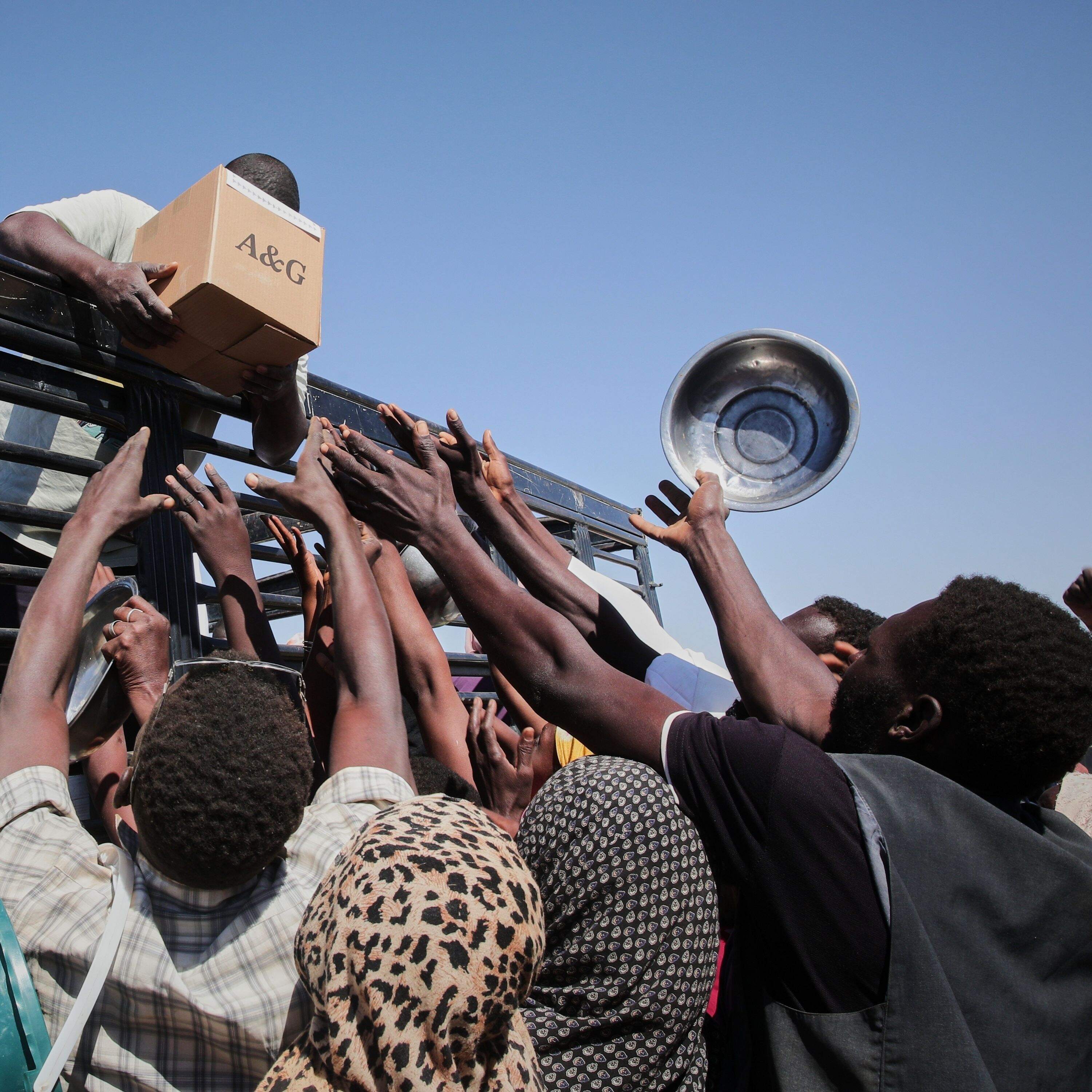
Consider this. The situation in Darfur is dire, with thousands killed and millions displaced by the fighting. Coming up, we hear from another aid worker about the bravery he witnessed at a camp for internally displaced people there. From NPR, I'm Juana Summers. What's in store for the music, TV and film industries for 2026? We don't know, but we're making some fun, bold predictions for the new year, plus setting personal pop culture resolutions. Listen to Pop Culture Happy Hour in the NPR app or wherever you get your podcasts. It's consider this from npr. Bob Kitchen leads emergency humanitarian programs for the International Rescue Committee, and he's just returned from Darfur.
- [02:23]
C
I've made it through to Tooele, where half a million people have run for their lives and now live in straw and flimsy material shelters in one of the largest camps I've ever seen.
- [02:35]
A
Darfur is once again engulfed in a bloody and brutal civil war. Tawila is a camp where hundreds of thousands of Sudanese people have taken refuge from the violence.
- [02:45]
C
It sits in a dust bowl surrounded by mountains and stretches as far as the eye can see. I drove across it this morning and after an hour we still hadn't made it to the end.
- [02:54]
A
Bob Kitchen described what he saw in a series of audio diaries that he shared with NPR.
- [02:59]
C
I'm visiting during the supposedly cold season. Got to 90 degrees Fahrenheit this morning by 11. In a few months time, that number will be 110.
- [03:09]
D
Every single day.
- [03:10]
C
It's really hot. The other thing I've noticed is there's hardly any men. I also know the women and children have been caught right in the centre of this crisis and have faced significant violence. I'll share more on that tomorrow. Today I got the chance to visit a women and girls health centre in one of the camps here. We work with women before and after they give birth to make sure that they are safe and that they're able to give birth safely. The thought of having to give birth on a sandy floor in a tiny shelter surrounded by 500,000 people trying to survive is just a daunting thought. So we're here to help them. I was then briefed on an assessment that we've just completed. We knew that when Zamzam, a camp.
- [03:52]
D
Just to the north of us, was.
- [03:53]
C
Overrun nine months ago, many women and girls were raped. But in the last month, as Al Fasha, the state capitol, fell, it seems clear that essentially every woman and girl.
- [04:04]
D
Was raped as they escaped the city.
- [04:07]
E
And Bob Kitchen is with us now.
- [04:09]
D
Thanks for having me.
- [04:10]
A
Bob.
- [04:10]
E
Start if you can, by telling me about someone that you met on your recent trip to Darfur who's still on your mind today.
- [04:17]
D
I met this young mother. She'd seen her husband been killed, so she grabbed her three tiny children. She was only 23 herself, but she grabbed her children and she fled south. She had a tiny little daughter on her lap. She'd just received an amount of cash. We were distributing cash as a program, and she said she was going to spend it on food and she was going to spend it on drugs for her family. And at one bright moment in the whole trip of otherwise just desperate need was that she told me that her daughter was called Hope.
- [04:51]
B
Hmm.
- [04:52]
E
I mean, the conditions that you've described from the refugee camp, they're harrowing and heartbreaking. What are the most immediate needs on the ground?
- [05:02]
D
Well, this camp is just so far away from anywhere. It took us three days, but the last leg of the trip was through the mountains to get there, and that took 10 hours in a modern SUV. I'm saying that because it's a long supply line to get aid into this camp. And as a result of that, and as a result of the global cuts to humanity, humanitarian funding, collectively, the humanitarian communities are only reaching 50% of food needs, 50% of water needs, 50% of the number of toilets in there. So half a million people are literally struggling to stay fed, to stay healthy, to stay everything just to survive.
- [05:44]
E
I heard you mention in the audio that we play that there are not many men there. Where did the men go? What has happened to them?
- [05:53]
D
So women and children, non fighting age, children sometimes were allowed to leave Al Fasha, this is the major city about 60 kilometers to the north. But men were never allowed to leave. Yale University released a report last week suggesting that 60,000 people were killed in Al Fasha and there's still 150,000 people missing, unaccounted for. And I can attest to that. My colleagues, Sudanese colleagues who work for the IRC, so many of them are still calling 10 times a day trying to get through to the loved ones with just clinging on to the hope that they're still alive out there.
- [06:34]
E
You also discussed hearing extensive reports of sexual violence from the women in the camp. Can you talk more about how you understand the scale and severity of the sexual violence in the SW be?
- [06:48]
D
It's one of the worst cases of widespread sexual violence and the brutality of the violence is again amongst the worst I've ever seen. I've worked in Sierra Leone, Liberia and Congo. And then 20 years ago in Sudan, and this is up there, reports of six month old children, girls being raped in front of their family, up to elderly women of the age of 72, which is, it's an old age in Sudan. Again being raped in front of the family. It's terrible.
- [07:22]
E
I know that you have a long history with Darfur. I understand that back in 2004 you helped set up the IRC's response in this war that killed over a quarter of a million people. Is there anything about this time that feels different?
- [07:38]
D
I suppose that's the saddest part of my trip. No, not really. The violence is being meted out by the same armed groups and, and it's the same communities, it's the same families that are being displaced after they were displaced the first time. So the cycle of violence is coming around, hitting the same families, but new generations of families who've been born into displacement camps and now having to run for their lives.
- [08:05]
E
You've mentioned that the violence that's happening there, it's coming from the same groups that you've seen historically. Tell us about those people who is committing this violence?
- [08:16]
D
Well, this time the battle lines are clear. The violence is between the government of Sudan and then a breakaway military element called the Rapid Support Forces. Over the last 20 years, they've been funded and trained and they fought in different countries, and they've now become a highly equipped, highly experienced fighting force. And they now occupy nearly half of Sudan while the government occupy the other half. So the battle lines, the sophistication of the fighting has changed, but it's the same groups that are still fighting.
- [08:51]
E
Thinking back on your recent trip, were there moments that struck you particularly hard or was there one you'd like to share with us that gave you hope?
- [09:00]
D
I mean, the moments that struck me that were the hardest was just the scale of this camp. We had the opportunity to visit one of the it's called one of the entries, and it's where new arrivals are arriving. And as I was there, there's donkeys and carts coming in all the time with people who have have managed to get down this road away from the fighting and the siege that has been there for the last almost a year. So the sense that it's just getting worse was a lot for me to handle. And then in terms of hope, the Sudanese population being able to endure this level of violence and displacement is quite something. And they they're brave and they're fighting to keep their families together. When we do assessments, the first need that people always identify as food, but the second one is education. They care deeply about their children. They want the next generation to live a better, more peaceful life than theirs.
- [10:00]
E
Bob Kitchen, he's the vice president of emergencies and humanitarian action at the International Rescue Committee. Thank you.
- [10:07]
D
Thank you.
- [10:09]
A
This episode was produced by Michael Levitt and Karen Zamora with audio engineering by Jay Siz. It was edited by Sarah Handel. Our executive producer is Sami Yenigun. It's Consider this from npr. I'm Juana Summers.
- [10:27]
E
Want to hear this podcast without sponsor breaks? Amazon prime members can listen to Consider this sponsor free through Amazon Music, or you can also support NPR's vital journalism and get consider this plus@+npr.org that's plus.npr.org.