← Consider This from NPR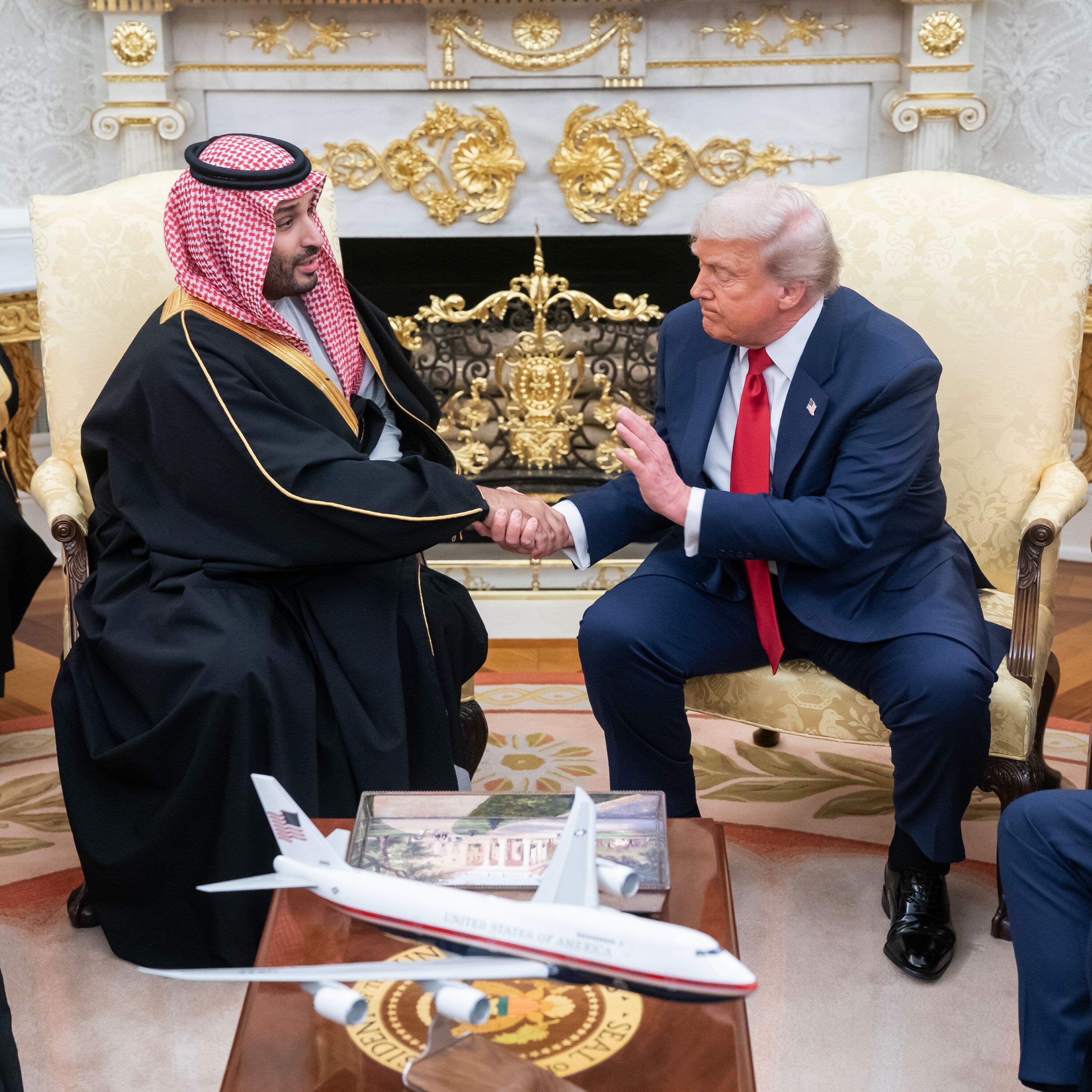
Consider This from NPR
When it comes to the U.S. relationship with Saudi Arabia, it's complicated
00:13:23
Loading summary
Transcript37 lines
- [00:00]
Juana Summers
President Biden once vowed to make Saudi Arabia a pariah state.
- [00:04]
Jason Rezaian
We were going to, in fact, make them pay the price and make them, in fact, the pariah that they are.
- [00:10]
Juana Summers
And by pay the price, Biden is referring to the Saudi government's role in the 2018 murder of Washington Post columnist Jamal Khashoggi. The US intelligence community concluded that Saudi Crown Prince Mohammed bin Salman approved the killing. Saudi Arabia has denied his role.
- [00:27]
Jason Rezaian
There's very little social redeeming value in the present military government in Saudi Arabia.
- [00:33]
Juana Summers
But after promising to punish the kingdom, Biden changed his tune. After he became president, Biden traveled to Riyadh in 2022 to rebuild relations, but kept the Saudi government an arm's length away until today.
- [00:46]
Donald Trump
We have a extremely respected man in the Oval Office today and a friend of mine for a long time, a very good friend of mine.
- [00:55]
Juana Summers
President Trump welcomed the crown prince to the White House with a level of pomp and circumstance rarely on display. There was a military FL and a welcome from the US Marine ban. Mohammed bin Salman last visited the US Seven years ago, just months before Khashoggi's death. The crown prince has denied responsibility for the killing. Here he is at the White House on Tuesday.
- [01:18]
Jason Rezaian
It's been painful for us in Saudi Arabia. We've did all the right steps of investigation, etc. In Saudi Arabia and we've improved our system to be sure that nothing happened like that. And it's painful and it's a huge mistake and we are doing our best that this doesn't happen again.
- [01:36]
Juana Summers
Trump dismissed the findings Tuesday.
- [01:38]
Jason Rezaian
It's a signal to friends and foes alike that you can literally get away with murder if you're the right kind of partner to the United States.
- [01:47]
Juana Summers
That's Jason Rezaian. He's the director for press freedom initiatives at the Washington Post, the paper where Khashoggi was a columnist when he was murdered. He spoke to NPR Tuesday morning.
- [01:57]
Jason Rezaian
I think it's a mistake for the United States to greenlight the type of behavior that Mohammed bin Salman has been guilty of multiple times.
- [02:06]
Juana Summers
Consider this. President Trump is deepening the US Relationship with Saudi Arabia despite the government coming under fire for human rights abuses. Despite the concerns the prince himself ordered the killing of a journalist. Why is Saudi Arabia such an important ally for the United States?
- [02:23]
Jason Rezaian
Foreign.
- [02:29]
Juana Summers
From NPR, I'm Juana Summers.
- [02:31]
NPR Announcer
This message comes from AT&T. America's First Network is also its fastest and most reliable based on root metrics. United States root score report 1H 2025 tested with best commercially available smartphones on three national mobile networks across all available network types, your experiences may vary. Rootmetrics rankings are not an endorsement of AT&T. We when you compare, there's no comparison.
- [02:55]
NPR Sponsor Message
AT and T this message comes from MIDI Health. If you're a woman over 40 dealing with hot flashes, insomnia, weight gain or brain fog, you don't have to accept it as just another part of aging. The clinicians at Midi Health understand what you're experiencing and know how to help. MIDI Health provides specialized care for perimenopause and menopause covered by insurance. Book your Visit today@joinmidi.com that's joinmidi.com support for NPR.
- [03:22]
NPR Announcer
And the following message come from NBC News, a news source that brings clarity to the stories that matter by asking tough questions and holding every fact up to the light coverage that steadies stories that connect NBC News Reporting for America.
- [03:46]
Juana Summers
It's Consider this from npr. President Trump met with Saudi Arabia's Crown Prince Mohammed bin Salman on Tuesday. The men touted a deal between the two countries. The Saudi government would bring hundreds of billions in investment into the United States, and in exchange, the United States would grant access to key military and technology assets for the Gulf Nation. NPR White House correspondent Danielle Kurtzleben joined me to talk about the meeting. So, Danielle, I know that there is a whole lot of ceremony around the crown prince's arrival, and this evening there is a black tie dinner. What does all of this tell us about the that President Trump is approaching this visit?
- [04:23]
Danielle Kurtzleben
Well, it shows very clearly that Trump is really excited about the visit. After all, he's welcomed many foreign leaders this year and he doesn't give them all swanky dinners. So the tone is celebratory. Already today in the Oval Office with the crown prince, Trump was emphasizing potential Saudi investments in the US and really seemed excited about that. So we should expect a lot of investment talk. In fact, there's an event tomorrow called the US Saudi Investment Forum at the Kennedy center, and it's set to include speakers from tech, oil and medicine pharma companies. And so it's really meant to telegraph that the Saudi US Partnership is going to be great for business.
- [05:02]
Juana Summers
Saudi Arabia has repeatedly come under fire for human rights abuses. I'm thinking specifically of the killing of Washington Post journalist jamal Khashoggi in 2018. And that did come up during today's presser.
- [05:15]
Donald Trump
Let's listen to as far as this gentleman is concerned, he's done a phenomenal job. You're mentioning somebody that was extremely controversial. A lot of people didn't like that gentleman that you're talking about. Whether you like him or didn't like him, things happen. But he knew nothing about it. And we can leave it at that. You don't have to embarrass our guests by asking a question like that.
- [05:35]
Juana Summers
And I'll note that US Intelligence has found that Mohammed bin Salman did approve the operation to kill Khashoggi. However, we should say that the crown prince does deny having a role. Tell us more about that exchange today.
- [05:48]
Danielle Kurtzleben
Well, even before Khashoggi came up at the start of the meeting, Trump praised the crown prince on his human rights record. And then when a reporter asked about Khashoggi, as you heard, President Trump got angry and shockingly didn't condemn the killing and dismemberment of a journalist from an American news outlet. Rather, Trump called Khashoggi, who a Saudi Arabia controversial. Now, the crown prince did answer after that, and he said the killing was a painful incident and that his country has taken steps to make sure nothing like that will ever happen again.
- [06:21]
NPR Announcer
Right.
- [06:22]
Juana Summers
Okay. We know that economics and security, they're both top priorities here. What deals are the US And Saudi Arabia hoping to get out of this visit?
- [06:30]
Danielle Kurtzleben
Well, let's start with what Saudi Arabia wants. That country wants to buy advanced F35 jets, which Trump has said this week the US will sell to them. Saudi Arabia also wants access to advanced AI chips and they want assistance on developing nuclear power. Although today in that meeting, Trump said nuclear cooperation isn't urgent right now. But finally, the Saudis are looking for a defense pact. They want an agreement that the US Would help defend their country if they were attacked.
- [06:57]
Juana Summers
And what about what the US Wants?
- [06:59]
Danielle Kurtzleben
Well, the crown prince has already said earlier this year that his country would do $600 billion in investments. In the US today, he said there could be even more investments than that, which Trump got pretty excited about. But also Trump is going to be pushing Saudi Arabia to sign onto the Abraham Accords, which is a series of diplomatic deals he brokered in his first term between Israel and other Arab countries. But there's a pretty significant hurdle to that happening today. Mohammed bin Salman said he wants to be part of the Abraham Accords, but also wants a two state solution. Now, Benjamin Netanyahu, the leader of Israel, has said there will never be a Palestinian state.
- [07:40]
Juana Summers
Last thing and quickly, Danielle, President Trump was also asked today about his family's business dealings in Saudi Arabia. How do you respond?
- [07:46]
Danielle Kurtzleben
Well, he brushed off any concerns about conflicts of interest. He said he isn't involved in the family business right now, but the ties between the Trump Organization and Saudi Arabia are still there. For example, Trump branded properties are being developed in Saudi Arabia.
- [08:00]
Juana Summers
NPR White House correspondent Daniel Kurtzleben, thank you.
- [08:03]
Danielle Kurtzleben
Thank you.
- [08:04]
Juana Summers
This episode was produced by Gabriel Sanchez and Karen Zamora. It was edited by Jeanette Woods, Dana Farrington and Courtney Dorning. Executive producer is Sami Yenigun. It's consider this from npr. I'm Juana Summers.
- [14:05]
Donald Trump
Well, thank you very much, everybody. We have a extremely respected man in the Oval Office today and a friend of mine for a long time, a very good friend of mine. And I'm very proud of the job he's done. What he's done is incredible in terms of human rights and everything else. And he's the crown prince, the future king. And I just.
- [14:31]
NPR Sponsor Message
Support for NPR. And the following message come from Ten Speed Press, publisher of Star of the My Life on Stage by Dolly Parton. A collection of personal stories, more than 500 photos and ephemera from her archives. Star of the show spotlights performances, memories and lessons learned from a life as a global superstar from her family's front porch to the world stage and beyond. Star of the show by Dolly Parton is available wherever books and audiobooks are sold.
- [15:00]
NPR Announcer
Support for NPR and the following message come from Indeed hiring Do it the right way with Indeed sponsored jobs claim a $75 sponsored job credit to get your jobs more visibility@ Indeed.com NPR terms and conditions apply. This message comes from Viking, committed to exploring the world in comfort. Journey through the heart of Europe on an elegant Viking longship with thoughtful service, destination focused dining and cultural enrichment on board and on shore. And every Viking voyage is all inclusive with no children and no casinos. Discover more@viking.com.