← Consider This from NPR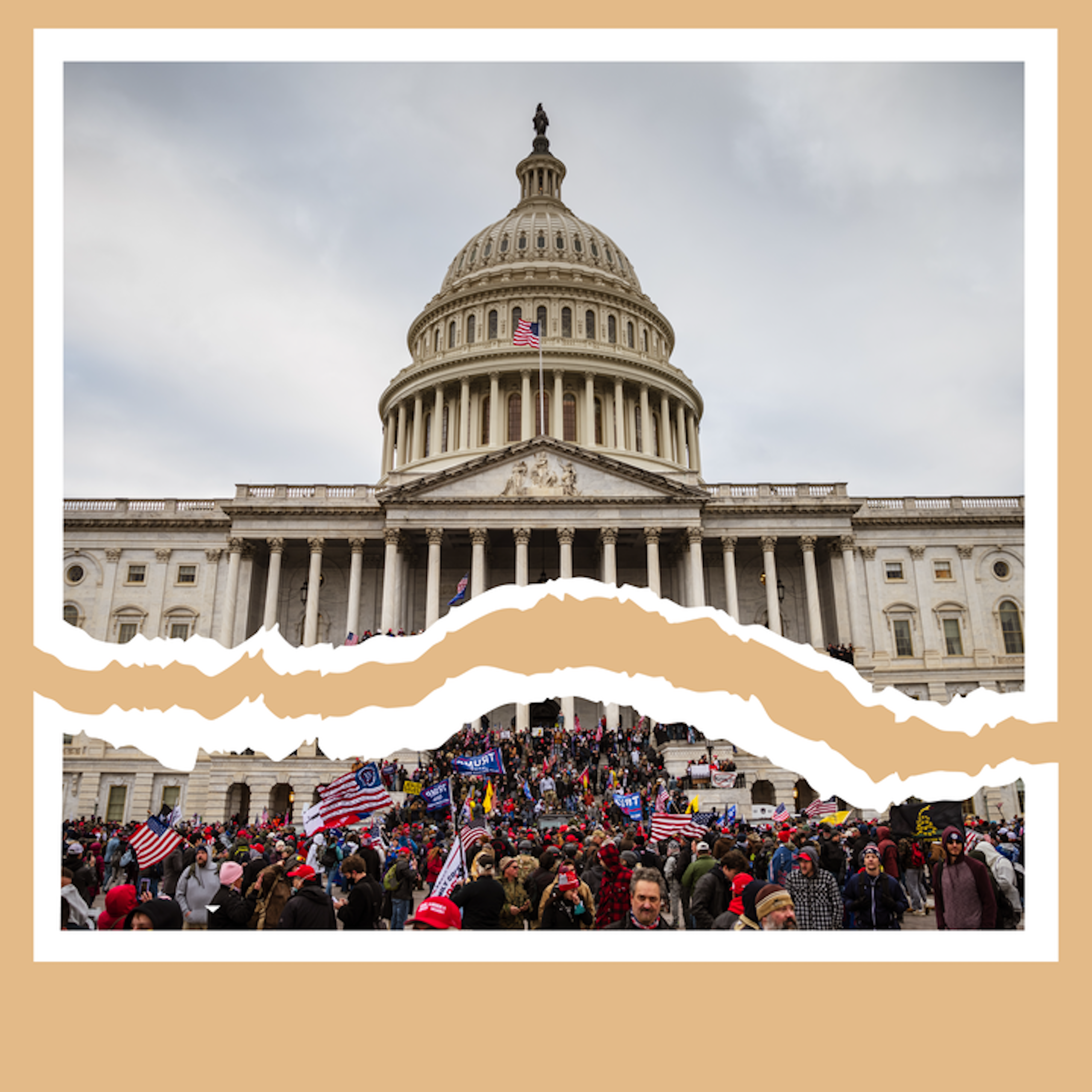
Loading summary
Transcript31 lines
- [00:01]
Trump Supporter
Usa. Usa. And we fight. We fight like hell.
- [00:06]
Emily Kwong
It has been five years since the attack on the US Capitol on January 6, 2021, when a pro Trump mob stormed the building trying to stop the certification of the presidential election.
- [00:17]
Trump Supporter
And if you don't fight like hell, you're not gonna have a country anymore.
- [00:23]
Emily Kwong
In the years since, journalists, investigators and historians have tried to piece together and understand what happened that day. And at npr, investigative reporter Tom Dreisbach wanted to do even more. He led an ambitious team effort to preserve a comprehensive record of those events for Future Generations. The January 6th archive is a timeline of the moments before, during and after that attack. Built from video evidence gathered over many years. It also includes a database tracking every criminal case tied to January 6th.
- [00:56]
Tom Dreisbach
We kind of thought of it as, as like a January 6th museum in a way where it covered different aspects of that day, the violence, the weapons people used, the motivations of people and tried to preserve in a way this history of what happened that day. At a time when the government has been actively trying to erase or whitewash or otherwise distort the events of January
- [01:21]
Trump Supporter
6th,
- [01:23]
Emily Kwong
consider this as the narrative around the January 6th attack continues to change. NPR reporters built an archive to document what happened. From npr, I'm Emily Kwong.
- [01:39]
NPR Announcer
This message comes from Kachava. That wellness goal you set at the start of the year, it's not too late to stick with it and make your future self proud, especially with The all in One Nutrition Shake from Cachava with 25 grams of protein, 6 grams of fiber, greens, adaptogens and more. No fillers, no nonsense, just the highest quality ingredients. Stick with your wellness goals. Go to kachava.com and use code NPR for 15% off. That's K-C-H-A-V A.com code NPR this message
- [02:13]
Sponsor Voice
comes from NPR sponsor Shopify. No idea where to sell? Shopify puts you in control of every sales channel. It is the commerce platform revolutionizing millions of businesses worldwide. Whether you're a garage entrepreneur or IPO ready, Shopify is the only tool you need to start, run and grow your business without the struggle. Once you've reached your audience, Shopify has the Internet's best converting checkout to help you turn them from browsers to buyers. Go to Shopify.com NPR to take your business to the next level. Today.
- [02:47]
Emily Kwong
It's consider this from npr. Five years ago, after the attack on the Capitol during the certification of the 2020 election, NPR set out to gather thousands of videos, court exhibits and records. From that day into one place to create a comprehensive archive of what happened and to preserve it at a time when the public narrative around January 6th continues to change. For this week's Reporter's Notebook, I wanted to talk with NPR's Tom Dreisbach about how the project came together and what it took to document years of work. So I started by asking him how long he thinks he spent on it.
- [03:24]
Tom Dreisbach
I could not quantify, you know, the work started on January 6th itself of 2021. So that was more than five years ago. That was really days and days and weeks and months of my life was obsessively watching video. We started noticing from the criminal cases that a number of the people being arrested had served in the military or had connections to the military or even active duty military service members in some capacity. And so we had this thought, okay, could we actually, you know, put some numbers to this? And we did a story pretty early on, I think, in the, you know, just a few weeks after the attack.
- [03:59]
NPR Announcer
By NPR's count, nearly 20% of people charged in connection with the attack and rioting are veterans. NPR investigative correspondent Tom Dreisbach is here to talk about what we found. Hi, Tom.
- [04:10]
Tom Dreisbach
Hey, Ari. That number has since gone down to about 14%, but it was a significant enough number that it led to a review by the Pentagon of extremism in the ranks. And, and we realized, oh, wow, if this could lead to, you know, information and impact for the public that people were really interested in, what else can we learn by taking comprehensive approach? And then we decided, well, if we're gonna do this, we should make it available to the public. We would read every single arrest record and there would be these arrest affidavits written by FBI agents that would kind of tell the story of each person's participation in the riot. We tracked things like the number of people who had ties to extremist groups, so like the Proud Boys or the Oath Keepers or people who were followers of the QAnon conspiracy theory. And out of that, you know, we picked individual stories that were interesting, but also just tried to get a comprehensive picture. And so, you know, there was a question, well, what are the outcomes going to be from all these investigations and arrests? And we were able to put numbers to that like that the median sentence was 30 days in jail. About a third of people who were actually sentenced got no jail time at all.
- [05:17]
Emily Kwong
I'm really curious about this group of people. This over 1500 people from all 50 states who were arrested in connection to January 6th. What else did you learn about them as People.
- [05:30]
Tom Dreisbach
Oh, it's such a varied group. One guy that we ended up profiling was a man named Jason Riddle. He was a big time Trump supporter. He loved just sort of the attention it got him. He loved being in people's faces. He also had a drinking problem. He's very open about this now. He was an alcoholic, and he kind of was lost in his life a little bit. And when he heard about the January 6th rally, he was excited. He was like, yeah, he's been to, you know, more than a dozen Trump rallies in his life. He calls it like a party. So he went into the building, he stormed the Capitol, he found a bottle of wine inside, was drinking it until a police officer said, like, get the heck outta here. And he was sentenced for his participation. He got 90 days in jail. But the process of going through the criminal justice system led him to get sober. And in the process of getting sober and dealing with his alcoholism, he started to rethink a lot of things in his life, including his support for Trump.
- [06:34]
Commentator/Critic
Trump is promoting criminal behavior. That was a criminal act. January 6th was a crime. And I think it's going to result in more death. Eventually, there's going to be another riot. Something's going to happen if you keep promoting these lies. That's what January 6th was. It was a result of his lies.
- [06:51]
Tom Dreisbach
On the other hand, there's many, many people who see themselves as victims, as martyrs in some way, and that they believe that they're still victims and they deserve restitution from the federal government. There's one man named Jake Lang who said he is still willing to use violence.
- [07:08]
Trump Supporter
I'm very proud to have done what I did on January 6th. And I think that it was just the beginning of what America needs to. To cleanse itself.
- [07:15]
Emily Kwong
And then, of course, when it comes to President Trump himself, how he publicly talks about this day has changed, too. What was the moment that you realized that this history was being rewritten by the president himself and by others?
- [07:30]
Tom Dreisbach
It started kind of slowly and then seemed to be all at once over time. You know, Trump just embraced the January 6th defendants. He started to just say that, no, they didn't do anything wrong. You know, he had gone from, like he said that they had defiled the seed of democracy and they must pay. They must pay for their crimes to saying that they were actually the victims. And he really made his entire 2024 presidential campaign, in part about the January 6th defendants. And so it became clear that the narrative about what actually happened that day was being rewritten before our Eyes. And at a time when we were getting more and more information from court records about what actually had happened, because we were getting so much more video and so many more verdicts in these cases that were being proven factually in court at the same time as it felt like the public's understanding was slipping away from us.
- [08:28]
Emily Kwong
That sounds like a call to action as a journalist. Like, they say that journalists write the first draft of history, but in this case, you're recovering the first draft of history, or at least the elements for the first draft of history. And that was on you all to do, because it's who if not you, then who, it sounds like, is what you were thinking.
- [08:45]
Tom Dreisbach
Right? That's what it felt like. It was like, I'm actually not sure anyone is going to do this. And I started getting calls over this process from prosecutors who were like, hey, I actually was looking for the record from this case that I Prosecuted related to January 6th. Do you have it? And in some cases, I was able to help. But, you know, over time, it just became clear that if we didn't do this, then it's possible some of this stuff would be destroyed forever.
- [09:10]
Emily Kwong
What kind of story did you want to tell with the authority you had of all the materials? How did you choose to, like, focus it?
- [09:17]
Tom Dreisbach
Ooh, well, there's not one story you can tell from this. And our hope is that with the archive, people can find a lot of those stories themselves. They can look at individual cases, they can view surveillance footage, body cam footage for themselves, and see what happened that day and maybe discover stories that even we didn't realize were there in the. In the archive. And so our approach was not just telling one story, but trying to make sure that this history is available for future generations.
- [09:51]
Emily Kwong
How do you ultimately hope January 6th will be remembered?
- [09:55]
Tom Dreisbach
One of the overriding feelings or thoughts that I had throughout the process of reporting this was the level of violence and the level of terror felt by people who were inside the Capitol or defending the Capitol as police officers. It can be sanitized in many cases and has been sanitized by the administration. And so in some ways, I hope people remember just how traumatic that day was for the country, arguably, and certainly for all the people who were there. Trump likes to refer to January 6th as a day of love, and I think of it as a day of loss. Everyone connected to that day seemed to lose something. So it's not for me to say ultimately how people remember that day, but I just hope people remember the specifics and the human lives that were at the center of what happened at the Capitol.
- [10:54]
Emily Kwong
Tom Dreisbach is a correspondent on NPR's investigations team. You can look through the reporting and see all the evidence for yourself@npr.org j6archive Tom, thank you so much.
- [11:05]
Tom Dreisbach
Thanks so much, Emily.
- [11:08]
Emily Kwong
This episode was produced by Lena Muhammad and Daniel Offman. It was edited by Sarah Robbins. Our executive producer is Sammy Yanigun. Consider this. I'm Emily Kwong.
- [11:22]
Throughline Podcast Host
This year on Throughline, NPR's history podcast, for generations, an American quest has shaped the world. Life, liberty, the pursuit of happiness. Now, 250 years in, what is that pursuit really about? Join us each Tuesday for an essential new series, america in Pursuit, from Throughline on the NPR app or wherever you get podcasts.
- [11:47]
Sponsor Voice
Want to hear this podcast without sponsor breaks? Amazon prime members can listen to Consider this sponsor free through Amazon Music. Or you can also support NPR's vital journalism and get consider this plus@plus.NPR.org that's plus.NPR.org.