← Conspiracy Theories, Cults, & Crimes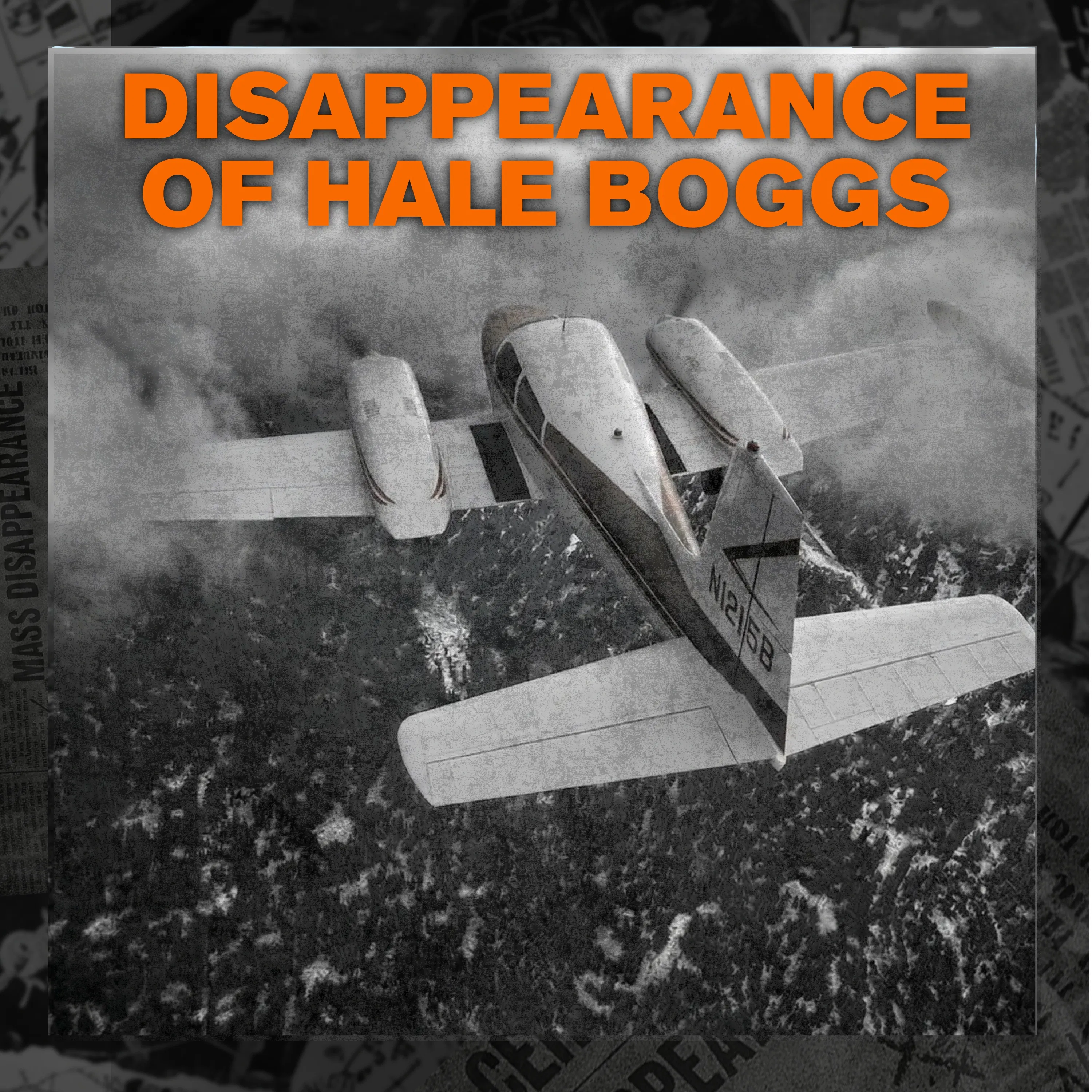
Loading summary
Transcript17 lines
- [00:02]
Vanessa Richardson
Hi listeners, it's Vanessa Richardson. Real quick, before today's episode, I want to tell you about another show from Crime House that I know you'll love. America's Most Infamous Crimes. Hosted by Katie Ring. Each week, Katie takes on one of the most notorious criminal cases in American history. Serial killers who terrorized cities, unsolved mysteries that keep detectives up at night, and investigations that change the way we think about justice. Listen to and follow America's Most infamous crimes Tuesday through Thursday on Apple Podcasts, Spotify, Amazon Music or wherever you listen to podcasts. This is crime house. There's no place quite like Alaska. Although it's twice the size of Texas, less than 750,000 people live there total. Add in the fact that most of the state is untouched and undeveloped and you can see why Alaska is known as the last frontier. With all that in mind, it makes sense that getting around the state presents a unique set of challenges. Most of the cities in Alaska are only accessible by boat or plane. But flying through a frozen tundra isn't exactly easy. Since 2016, over 40% of fatal US plane crashes have occurred in Alaska. But these victims families aren't just grieving the loss of their loved ones. Many are seeking closure too. Because when you get on a plane in Alaska, you aren't just at risk of dying, you. You're at risk of disappearing without a trace. From UFO cults and mass suicides to secret CIA experiments, presidential assassinations and murderous doctors, these aren't just theories. They're real stories that blur the line between fact and fiction. Hi, I'm Vanessa Richardson and this is Conspiracy, Cults and Crimes. A Crime House original powered by Pave Studios. Every Wednesday and Friday, I'll explore the real people at the center of the world's most shocking events and nefarious organizations. These cases are wild and I want to hear what you think at the end of each episode. Leave a comment wherever you listen. Be sure to rate, review and follow so we can continue building this community together. And for ad free access to every episode, subscribe to Crime House plus on Apple Podcasts. Today I'm discussing one of the most baffling mysteries of the 1970s known as the Hale Boggs disappearance. On October 16, 1972, Congressmen Thomas Hale Boggs and Nick Begich were campaigning for re election in Alaska. That day they boarded a plane in Anchorage bound for Juneau. They never made it. And all these years later, we're still not sure what happened along that 575 mile journey. Some people think it was a tragic accident. But others are more skeptical. They believe the two congressmen were the victims of one of the largest conspiracies in US History. All that and more coming up.
- [03:32]
Lemonade Pet Insurance Advertiser
If you're the proud parent of a puppy or kitten, you know you can't pet proof your entire life. There simply isn't a sock drawer high enough or a couch cover thick enough. But you can pet proof your wallet with Lemonade Pet Insurance. Whether it's an unexpected accident or a routine checkup, Lemonade can cover up to 90% of the bill. Plus they can handle claims in as little as two seconds. So before you turn into a complete helicopter pet parent, get a quote@lemonade.com pet
- [04:00]
Venmo Advertiser
score more with the college branded Venmo Debit Card and earn up to 5% cash back with Venmo Stash Got paid back with the Venmo Debit card, you can instantly access your balance and spend on what you want, like game day, snacks, gear, tickets and more. The more you do, the more cash back you can earn. Plus, there's no monthly fee or minimum balance. Sign up now@venmo.com collegecard the Venmo Mastercard is issued by the Bancorp Bank NA Select Schools available Venmo Stash terms and exclusions apply at venmo me stashterms max $100 cash back per month
- [04:32]
Vanessa Richardson
on March 12, 1968, a discovery on the northern coast of Alaska changed everything. That day, enormous oil and natural gas reserves were found in Prudhoe Bay. There were other oil fields in Alaska by then, but none this massive. The possibilities were endless. If oil companies could access the reserves in Prudhoe Bay, Alaska was looking at hundreds of millions of billions in revenue. But before any of that could happen, someone needed to cut through the red tape and get a pipeline built. A young politician named Nick Begich hoped he could be the one to make it happen. Begich was a first generation American whose parents had emigrated from Croatia in the early 1900s. Eventually, Begich settled down in Anchorage, Alaska and completely fell in love with the state. After college, Begich worked as a guidance counselor and teacher at the University of Alaska, and he also started a family of his own and went on to have six kids. Everyone who knew him said he had an awkward, nerdy sort of charm. Most importantly, they said, he cared about Alaska. And by 1970, Begich had successfully transitioned to politics and was a newly elected Democratic member of the House of Representatives. He quickly joined the team working on the new pipeline to Prudhoe Bay. He helped draft the Alaska Native Claims Settlement Act. One of the main goals was to get Alaska natives compensated for the land they would lose to the pipeline. The bill ultimately passed Congress and was signed into law by President Richard Nixon. It granted payments for over 44 million acres of land paying out over $1 billion to Alaskan natives. For Begich it seemed like a promising start to a long political career and. But there was one man who seemed immune to his charms. 57 year old Thomas Hale Boggs, who went by his middle and last names, had represented Louisiana as a Democrat since the 1940s. As majority whip in the House of Representatives, he'd been friends with both John F. Kennedy and his successor Lyndon B. Johnson. By 1970 he was also being considered for Majority Leader in the House, which would have been quite a promotion. But Begich, a freshman congressman, backed Boggs opponent in the race. Boggs came out ahead. But he wasn't going to forget Begich's betrayal so easily. Boggs wanted to know exactly who his enemies were because he was gearing up for a fight with the FBI. On April 5, 1971, Hale Boggs addressed the press on the floor of the House of Representatives. He said he was concerned that he and his colleagues were under surveillance by the FBI. He called for the immediate resignation of FBI Director J. Edgar Hoover. His reasoning? Wiretapping elected officials and American citizens violated the Bill of Rights. When one reporter pointed out that Hoover denied these allegations, Boggs responded by saying if he categorically denies it, I categorically say it's true. Boggs didn't know it at the time, but his accusations against Hoover would shake Washington D.C. to its core. President Nixon was furious. He had a private meeting with Gerald Ford, who was the House Minority Leader at the time and Nixon's close ally. During the meeting Nixon complained that he could no longer confide in Boggs as a member of Congress. He ranted that Boggs was paranoid and had been drinking too much. Boggs had probably struck a nerve with Nixon. The President was at the peak of his popularity. The public didn't know his administration was wiretapping people left and right. It would be more than a year until the Watergate scandal broke. Though Boggs never got the chance to see it all play out, he still knew the risk he was taking by accusing Hoover. But if any man could take the heat, it was Boggs. By 1972 he was one of the most famous men in the House and had a rock solid base in Louisiana where with no major challengers on the horizon, in fact he was expected to be the frontrunner for the next speaker of the House. As the election year rolled around, Nick Begich approached Hale Boggs. He asked if the older Democrat would campaign with him for re election in his state of Alaska. Since the state only had one representative, Begich was seen as an important cornerstone for Democrats. Although Boggs was probably still salty about the past, he was prepared to move on for the sake of the party. So in mid October of that year he flew to Alaska to join Begich. On the evening of October 15th, the two congressmen had a cocktail reception in Anchorage with 120 of their fundraisers. Boggs was jet lagged, but he mingled with the crowd in front of a roaring fireplace. Later that evening, they drove to a second, more public fundraiser in a hotel ballroom. It was packed with people, including local reporters and news cameramen, and it was rare that a D.C. big shot like Boggs came all the way out to their state. Boggs introduced Begich, saying he was very fond of the young congressman and his wife. Boggs also voiced concern that they were facing a rise in authoritarianism in American politics and an infrastructure crisis in every major city. Begich took the mic after Boggs eagerly announcing their plans for the next 48 hours. Their next appearance was scheduled for the following day in the capital of Juneau, and no one knew they would never make it there alive.
- [10:19]
Taco Bell Advertiser
Life is full of choices, but the choice between getting crispy chicken nuggets or a Crunchwrap slider isn't one you'll have to make. The new Crispy Chicken Crunchwrap slider at Taco Bell. All white meat chicken nuggets, breaded in tortilla chips, wrapped up sauce and all inside a slider sized Crunchwrap. Choose from Creamy Chipotle or Jalapeno Honey Mustard. Well there we go. Life still full of choices. The new Crispy Chicken crunchwrap Slider, a brand new classic only at Taco Bell and participating in those Taco Bell locations for a limited time and while supplies last.
- [10:50]
Bleacher Report Advertiser
The Bleacher Report app is your destination for sports right now. The NBA is heating up, March Madness is here and MLB is almost back. Every day there's a new headline, a new highlight, a new moment you've got to see for yourself. That's why I stay locked in with the Bleacher Report app. For me, it's about staying connected to my sports. I can follow the teams I care about, get real time scores, breaking news and highlights all in one place. Download the Bleacher Report app today so you never miss a Moment.
- [11:22]
Vanessa Richardson
On the morning of October 16, 1972, a pilot named Don Johns arrived at the airport in Anchorage, Alaska. John John's had a lot of flying experience, especially in Alaska. He knew the weather could change on a dime, so he'd been checking the reports all night to be sure the conditions were safe. He'd flown famous politicians like Ted Kennedy and Hubert Humphrey before and wasn't taking any chances. That morning, the skies were gray over Anchorage Airport, but John seemed pretty confident that it wasn't too cold or windy to fly. Earlier that month, he'd written a column for a pilot's magazine. He said that flying in icy conditions can be like playing with the devil. But that day, everything seemed fine to Johns. After a quick breakfast at the airport, Johns called his son, then headed to the aircraft parked just below the control tower. It was a white and orange Cessna 310C with two engines and four seats, one for the pilot, three for passengers. The plane was in peak flying condition. The previous day, an engineer in Fairbanks had completed a 100 hour checkup on all the systems. Johns took half an hour to refuel the plane and taxi it back to its place on the tarmac. By the time he returned, three men were waiting for him. Congressman Hale Boggs and Nick Begich, as well as Begich's aide, Russell Brown. After a brief introduction, they all boarded the plane. At 8:59am the plane took off from Runway 24. The flight headed southeast, following a 575 mile route from Anchorage to Juneau, the state capital. If all went according to plan, they'd land in about three and a half hours. Johns had enough fuel for six hours, so they were comfortably within range. Ten minutes in, Don Johns radioed an FAA specialist to file his flight plan. He told them he'd probably have to fly by visual flight rules because of the atmospheric conditions. That meant he'd fly southeast toward Yakutat for most of the way, then redirect toward Juneau. The specialist asked if they had an emergency beacon and locator on board. Johns confirmed they did. At the airport in Juneau, staff prepared for the plane's arrival. They were supposed to land at 12:30pm but the time came and went without any sign of the Cessna and no word from Johns. At 1pm a call was placed to the U.S. air Force Rescue Coordination Center. Outright panic set in at 3pm when the plane would have run out of fuel. Word spread fast throughout Juneau, then all the way to Washington. Back in Louisiana, Lindy Boggs, Hale Boggs wife, received a phone call. It was from one of their mutual friends, warning her not to watch the 10 o' clock news. In it, the anchor announced that the plane carrying Hale Boggs and Nick Begich had vanished somewhere in southern Alaska between the cities of Anchorage and Juneau. The search and rescue effort began the next day, on October 17. Initially, the team focused on an area called Portage Pass, a narrow corridor along the flight path Don Johns was planning to take. It was 50 to 60 miles southeast of Anchorage. Since Johns called shortly after takeoff, then went silent, it seemed likely that the plane had gone down near there, especially since Portage Pass was known for its turbulent weather. In fact, another pilot had reported severe turbulence when flying over the pass early on the morning of the disappearance. Problem was, the conditions hadn't improved much since then. The search and Rescue team had 50 planes at its disposal, but. But that first day, only 15 larger planes were able to take off. The clouds were too thick and the rain was too heavy for the others to join them. The planes that were able to take off hoped for something to show up on their radar. They couldn't see through the clouds, but they could pick up a signal from the Cessna's emergency locator beacon, which had a Signal range of 150 miles. No signal appeared. As word spread about the missing congressman, several tips came in. A fisherman reported hearing a Cessna passing over the town of Whittier, right near Portage Pass that morning. That suggested the plane had at least made it to the pass before something went wrong. But the most dramatic witness came from California ham radio operator Roy Harris picked up what he described as a distress call from his amateur radio station in Nevada City. The pilot on the radio said they were experiencing engine problems and had just 14 minutes of gas left. They described their position as over water but getting close to land. After the call abruptly cut off, Harris notified his local sheriff. And Harris wasn't the only radio operator who heard this call. Al Miller, also from Nevada City, heard the same one. Miller remembered the pilot saying he had eight minutes of gas, not four, 14. Other than that, the details matched up perfectly. It was a promising lead, but it didn't do much to move the investigation forward. Search and Rescue didn't know if the radio operators had heard Don Johns or another pilot experiencing technical difficulties on the West Coast. But the biggest challenge was the amount of ground the search and rescue team needed to cover. The plane could have gone down at any point along the 575 mile route, a potential area of around 300,000 square miles. The team had found a life raft on Portage Pass. But no one knew how long it had been there. So after eight days around October 26, the search team changed their focus from Portage Pass to the Gulf of Alaska. By this point, the authorities thought Johns must have been mistaken when he said they had an emergency transmitter on board. There was no other way to explain the absolute radio silence coming from the Alaskan mountains. The election was less than two weeks away and two prominent candidates were still missing. Republican congressional hopeful Don Young made a statement on behalf of Begich. Young was challenging Begich for his seat in the House. He said he hoped they wouldn't lose Begich, calling him a good man to have in Alaska politics. He even as an opponent. Meanwhile, the family members of the missing congressman struggled to stay positive. They weren't just worried about their loved ones. They were forced to deal with hoaxes and false leads too. A couple weeks after Begich went missing in early November, his wife Peggy received a cryptic letter. The author took responsibility for killing her husband, saying he died because he allied himself with Croatian separatists. Peggy passed the letter to the FBI. The Bureau took this claim seriously. Croatia was in the midst of a crisis at the time with nationalist groups attempting to liberate the country from its communist regime. Plane hijackings and terrorist attacks attributed to these groups were not unheard of in 1972. But ultimately the FBI determined the letter was fake, even though the congressman was of Croatian descent and he had no ties to any Croatian nationalists. The most likely motive was someone trying to take advantage of the tragic disappearance to spotlight their own political cause. Which made sense. The US election was just around the corner. On November 7, 1972, Richard Nixon won his second term in a landslide, securing every state but Massachusetts and Washington, D.C. nick Begich and Hale Boggs won re election in absentia. Their final campaign, which likely cost them their lives, had been successful. For their families, it was a BitcoinSweet moment. On November 24, the search was officially suspended after 39 days. Not a scrap of plain had been found. Experts were baffled. Even in such a large state to disappearances like these were rare. At that point in time, 1200 planes had vanished in Alaska. Of those, only three had never been found at all. Nick Begich and Hale Boggs were presumed lost. And that December, after a brief hearing, both men were officially declared dead. Begich was 40. Boggs was 58. In January of 1973, memorial services were held for both men. The Louisiana Memorial for Hale Boggs was attended by former President Lyndon B. Johnson as well as Nixon's Vice President Spiro Agnew. Meanwhile, a tribute was held for Nick Begich at East Anchorage High School. The tallest building in Whittier, Alaska was renamed the Begich Towers, and a peak on Portage Pass was named Begich Peak, marking the spot near where his final flight was presumably lost. At that point, the country was left with two what happened to the two men? And who would fill their seats in Congress? The second question was the only one with a clear answer. In March of 1973, about five months after Begich and Boggs disappeared, their districts both held special elections. Both of their widowed wives were on the ballot. Peggy Begich had an uphill battle and wound up conceding. Republican Don Young eventually took the seat, which he held for almost 50 years before his death in 2022. In an ironic twist of fate, he also passed away in the middle of a re election campaign aboard a plane headed to Alaska. Meanwhile, Lindy Boggs had more success than Peggy. On March 20, 1973, she won her special election and became the first woman to represent Louisiana in the House. She held that position for almost 20 years. Even then, her husband's disappearance hung over her. In the decades since he went missing, countless conspiracy theories have sprung up. People wondered if Boggs's plane hadn't accidentally gone down that day. Maybe he was targeted because Hale Boggs was not no ordinary politician. Back in 1963, he'd been the youngest member of the Warren Commission, the committee assigned to investigate the assassination of jfk. Was it possible he lost his life because of it?
- [22:07]
Venmo Advertiser
So good, so good. So good.
- [22:10]
Nordstrom Rack Advertiser
New spring arrivals are at Nordstrom Rack stores now. Get ready to save big with up to 60% off rag and bone margin. Martha Jacobs Free people and more.
- [22:20]
Vanessa Richardson
How did I not know Rack has Adidas? Cause there's always something new.
- [22:23]
Nordstrom Rack Advertiser
Join the NordicLub to unlock exclusive discounts. Shop new arrivals first and more. Plus buy online and pick up at your favorite Rack store for free. Great brands, great prices. That's why you rack.
- [22:37]
Disney Plus Advertiser
Zootopia 2 has come home to Disney. Let's go get ready for a new case.
- [22:41]
Vanessa Richardson
We're the greatest partners of all time. New friends Gary, Destiny and your last name. The Snake Dream Team. New Habitats Zootopia has a secret reptile population.
- [22:51]
Disney Plus Advertiser
You can watch the record breaking phenomenon at home. Zootopia 2 now available on Disney Plus. Rated PG. And right now you can get Disney plus and Hulu for just 4.99amonth for three months with a special limited time offer. Ends March 24th. After three months, Plan Auto renews at $12.99 a month. Terms apply.
- [23:08]
Vanessa Richardson
Hi listeners, it's Vanessa Richardson. I wanted to take a brief moment to tell you about another show from Crime House that I know you'll love, America's Most Infamous Crimes, hosted by Katie Ring. Each week, Katie takes on a notorious crime, whether unfolding now or etched into American history, revealing not just what happened, but how it forever changed our society. Serial killers who terrorized cities, unsolved mysteries that keep detectives up at night, and investigations that change the way we think about justice. Each case unfolds across multiple episodes, released every Tuesday through Thursday, from the first sign that something was wrong to the moment the truth came out or didn't. These are the stories behind the headlines. Listen to and follow America's Most Infamous Crimes Tuesday through Thursday on Apple Podcasts, Spotify, Amazon Music, or wherever you listen to podcasts. After the 1972 disappearance of Hale Boggs and Nick Begich, the National Transportation Safety Board conducted an inquest to determine what happened to the plane. The results were inconclusive. Without any evidence, it was impossible to say whether there was a mechanical issue, a pilot error, or something else. But that didn't stop some NTSB investigators from casting blame on on pilot Don Johns. According to them, he was a reckless man who took unnecessary risks. This seemed partially true. After all, Johns enjoyed the thrills of flying, but people who knew him personally insisted that he always flew carefully when passengers were on board. Ultimately, the NTSB didn't think Johns or the engineers who serviced the plane before the flight were at fault. John they determined that icy conditions had caused the plane to crash. They believed that frost had gotten into the engine or caused some sort of mechanical failure. And the NTSB promised that if the plane was found, they would continue the investigation and figure out what happened once and for all. In the meantime, there were plenty of theories about what could have taken place. Boggs, in particular, was the focus of a lot of speculation. He was a historic figure who had served in Congress from the 1940s through the Civil rights era and Vietnam. But his most notable act wasn't a piece of legislation. It was his investigation into the assassination of John F. Kennedy. Almost 20 years before he went missing. Hale Boggs served on the Warren Commission alongside future President Gerald Ford and then CIA Director Alan Dulles. They were trying to answer the now legendary question, did Lee Harvey Oswald act alone? At 49 years old, Boggs had been the youngest of the seven man committee, and he took his role on the Warren Commission very seriously. According to personal letters, he planned to keep a diary throughout the process, this diary was never found. And in 2020, his surviving family members said they didn't know anything about about it. So either Boggs changed his mind or he kept a diary that was then either confiscated or destroyed. But that's not the only detail conspiracy theorists can't get past. Boggs was also one of the only members of the Warren Commission who publicly said he wasn't fully satisfied with their conclusions. He never said he thought Oswald didn't act alone or that there was more to the story to but that one admission was enough to make people wonder. According to this logic, Boggs knew something about the JFK assassination that made his higher ups nervous. Maybe they worried he'd tell the public everything he suspected as soon as he became speaker of the House. If that was the case, his Alaskan flight with Nick Begich wasn't the first attempt on his life either. On July 23, 1970, an unknown car ran him off the road in Washington, D.C. after recovering, Boggs chased the vehicle and got the plate number. Though he submitted a report to the police, the culprit was never found. But when it comes to the fatal flight, some people think they know who might have been responsible. Remember, Boggs had made an enemy of J. Edgar Hoover not long before his disappearance. Hoover was known to be a vindictive man in the it's possible he wasn't above targeting a sitting Congressman. Of course, this theory had a major problem. By the time Hale Boggs disappeared, J. Edgar Hoover had been dead for five months. If he had planned on taking the Congressman out, it would have been from beyond the grave. In the end, that was just another theory without any legs. We may never know if Boggs was targeted because of his public statements. But he wasn't the only one on board that day whose life was the subject of speculation. Decades after Boggs and Begich went missing in the late 2000 and tens, a journalist named John Walzack revisited the case, which culminated in his 2020 podcast, Missing in Alaska. During his research, Walzack spoke to many people who knew the two congressmen, and in the process, he uncovered a fascinating detail. Sixteen and a half months after the disappearance of Nick Begich, he his widow Peggy, remarried. She'd come into a lot of money after her husband's disappearance. His life insurance policy had a double indemnity clause in case of accidental death, which meant she pocketed around $158,000. This would be more than a million dollars today. The man she married was named Jerry Paisley, a bar owner she met in Fairbanks. It turned out Paisley. Paisley was a mob enforcer from Tucson, Arizona, who'd moved to Alaska because of the booming oil industry. He had experience terrorizing people on behalf of the Mafia and making and delivering bombs. There's no evidence that he did any mafia activity while in Alaska. However, he was implicated in a mafia protection racket and a series of bombings while in Tucson. One of the victims was a journalist who died in the early 1970s. Peggy and Paisley's marriage didn't last long. They divorced in 1976 after about three years. At that point, Paisley moved back to Arizona and spent the next decade serving minor prison sentences. He was locked up for good in 1993 for charges, including murder. And that was when things got interesting. The next year, in 1994, he. He reached out to the FBI, hoping to make a deal. In his interview with investigators, he alleged that Peggy Begich had met with a former mob boss In September of 1972, a month before the plane crash. According to Paisley, the boss had given him an assignment. Paisley was told to take a locked briefcase to Alaska. One of the mob boss's lieutenants told him there was an explosive device inside. Paisley alleged that Peggy wanted to cash in on her life insurance policy by exploding her husband's plane. He said only seven people knew about this. Peggy, the mob boss, Paisley, and three other associates. According to John Walzack, the three investigators who interviewed Paisley found him to be a credible witness. His story was consistent, and he told them facts about other unsolved cases they that they could verify. But of the seven people Paisley named, only three were still alive, and none would talk to Walzack. As interesting as this theory is, it has a few crucial holes. First, there's no evidence that Peggy Begich knew any mobsters. And second, she wouldn't have known which aircraft her husband was going to use. The Cessna was chartered at the last minute. The most likely explanation is that Paisley was just looking for a lighter sentence. Without any outside sources to verify his claims, we have to assume they don't hold up. At the end of the day, we're left without a shred of physical evidence to point us in the right direction. But we can look at the facts. Airplane accidents are common, and plane crashes happen more frequently in Alaska than almost any other state because of its sheer size. What happened to the two congressmen in 1972 was shocking and unpredictable. But it wasn't unheard of because of how many planes crash or go missing between Juneau, Anchorage and the northern town of Uqiagvik. The region even has a nickname, the Alaska Triangle. Like the Bermuda Triangle, it has an ominous reputation. The Alaska Triangle has been the site of more than 16,000 disappearances since 1988, at a rate of four people per year. Because of its proximity to the Arctic Circle, the Alaska Triangle is known to have magnetic anomalies that can disrupt navigation equipment. That might be why so many planes get lost there, but it probably doesn't explain why Don Johns lost control of the aircraft. According to his last known communication, he was flying vfr. So even if something went wrong with his compass or other equipment, he'd still be flying by eye. Which brings me to my final question. What do you all think happened to Hale Boggs and Nick Begich? Were they the victims of a tragic accident? Did their plane go haywire because of the Alaska Triangle? Or did something more sinister take place that day? Let us know your thoughts in the comments. The story of Hale Boggs and Nick Begich is a fascinating and tragic one. It's hard to accept that we may never get closure. But instead of focusing on what we can't change, we can reflect on everything we do know. Both congressmen died doing what they serving their constituents. Nick Begich was was at the beginning of his career. In many ways, he helped transform Alaska, boosting the state's economy while prioritizing Native residents. Who knows what else he could have achieved? Meanwhile, Hale Boggs took time away from his own campaign to help a younger congressman in his own storied career. He was a mentor to many and an inspiration to countless Americans. He was one of the few public politicians who was brave enough to go against the grain. He wasn't afraid to stand up to the FBI and the President. He cared more about transparency than preserving his own reputation. And that's something we can all admire. Thanks so much much for listening. I'm Vanessa Richardson and this is Conspiracy Theories, Cults and Crimes. Come back next time. We'll decode the episode together and hear another story about the real people at the center of the world's most notorious cults, conspiracies and criminal acts. Conspiracy Theories, Cults and Crimes is a Crime House original powered by Pave Studios Here at Crime House, we want to thank each and every one of you for your support. If you like what you heard today, reach out on social media, rimehouse on TikTok and Instagram. Don't forget to rate, review and follow Conspiracy Theories, Cults and Crimes wherever you get your podcasts, your feedback truly makes a difference. And to enhance your Conspiracy Theories, Cults and Crimes listening experience. Subscribe to Crime House plus on Apple Podcasts. You'll get every episode ad free. We'll be back on Wednesday. Conspiracy Theories, Cults and Crimes is hosted by me, Vanessa Richardson and is a Crime House original. Powered by Pave Studios, this episode was brought to life by the Conspiracy Theories, Cults and Crimes team. Max Cutler, Ron Shapiro, Alex Benedon, Natalie Pertzovsky, Lori Marinelli, Sarah Camp, Robert Teamstra, Sheila Patterson and Michael Langley. Thank you for listening.
- [35:43]
Bleacher Report Advertiser
Quick interruption worth hearing. If you love sports, TikTok is for you. Game highlights, expert breakdowns and fan reactions. Just the moments that matter. Download TikTok now.
- [36:00]
Vanessa Richardson
Thanks for listening to today's episode. Not sure what to listen to next? Check out America's Most Infamous Crimes hosted by Katie Ring. From serial killers to unsolved mysteries and game changing investigations, each week Katie takes on a notorious criminal case in American history. Listen to and follow America's Most Infamous Crimes now. Wherever you listen to podcasts.