← Conversations with Coleman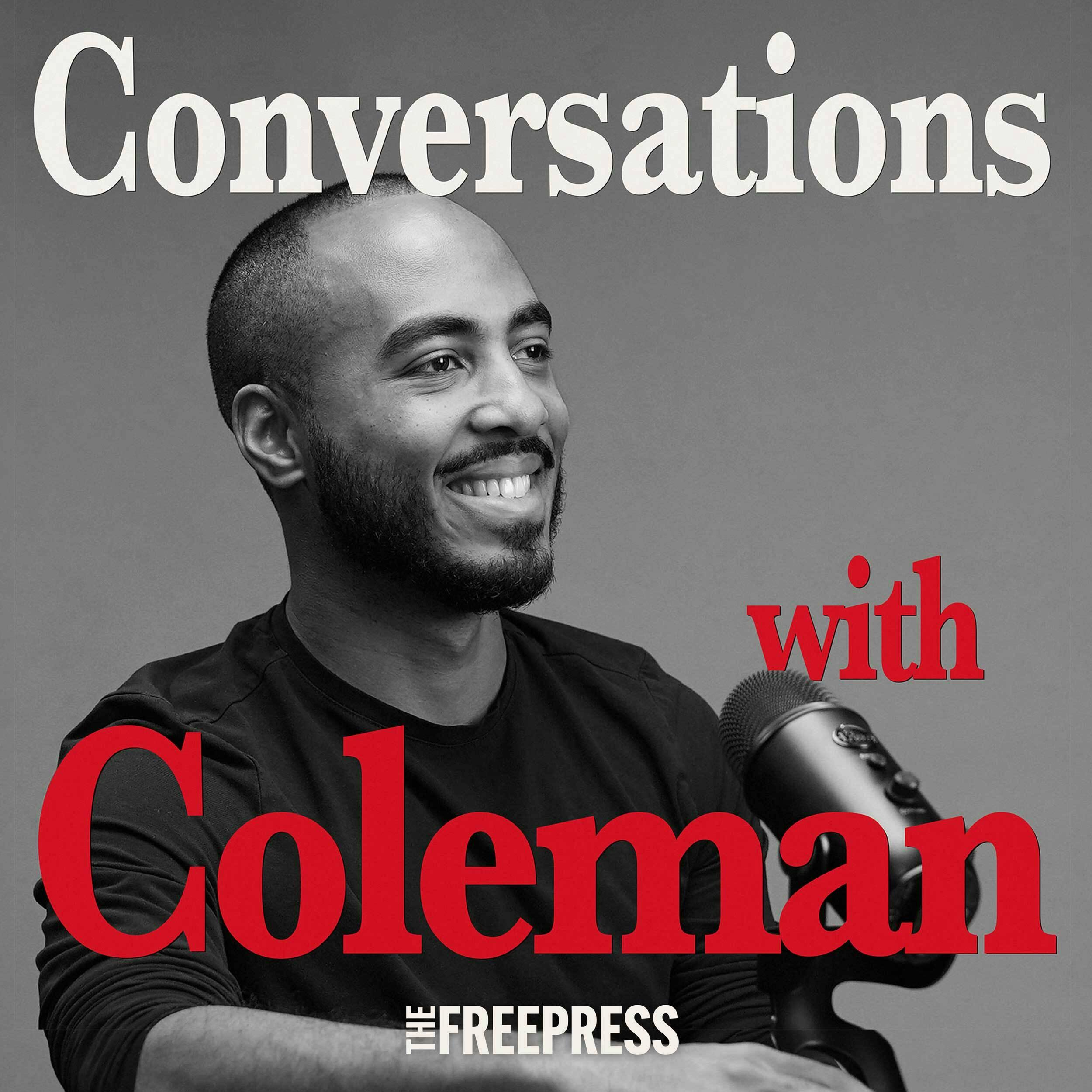
Conversations with Coleman
Did Trump Win Over Black Men or Did the Democrats Lose Them? with Astead Herndon
01:03:12
Loading summary
Transcript123 lines
- [00:01]
Coleman Hughes
Welcome to another episode of Conversations with Coleman. My guest today is Asted Herndon. Asted is a journalist who has focused on election coverage for the New York Times as well as for cnn. His journalism has won several awards and he's recently joined Vox, where he is a podcast host and an editorial director. In this episode, we talk about how Trump's win in 2016 shaped both of our political outlooks. We disagree on the extent to which Trump's first win was motivated by racism. We talk about why black voters have been moving to the right. We talk about Mamdani's recent victory in New York City. We discuss his views on Israel, his pivot away from defund the police, his views on rent control, and much more. So without further ado, Astead Herndon hi there.
- [01:00]
Fox News Advertiser
I want to tell you about a new breaking news app you won't want to miss. You can now stream Fox News Live on the Fox One app. I'm what you would call a news junkie, so having breaking news all in.
- [01:11]
Coleman Hughes
One place is really exciting.
- [01:13]
Fox News Advertiser
It means you can stay on top of breaking news and the biggest stories live as they happen.
- [01:18]
Coleman Hughes
And all from FOX Voices you love.
- [01:20]
Fox News Advertiser
Bringing you coverage you won't find anywhere else. You can hear from people like my friends Ricky Schlott or Winston Marshall who are regulars on Fox and whose takes you won't want to miss. Start your 7 day free trial today. Offers are subject to change. Go to Fox One for complete terms and conditions. Fox one we live for live streaming now.
- [01:41]
Coleman Hughes
Estad Herndon, thanks so much for coming on my show.
- [01:43]
Astead Herndon
Thank you for having me. I appreciate it.
- [01:46]
Coleman Hughes
So you've been a much celebrated and award winning journalist for some time now. I think you joined New York Times in 2018, is that right?
- [01:57]
Astead Herndon
I did, yeah.
- [01:58]
Coleman Hughes
And you were there for many years and recently you left the New York Times and joined Vox. And so before we get into the issues you've been covering, you've been covering Mamdani a lot lately and I want to dig into that. But before we get there, can you give my audience a short sense of who you are, where you're from, how you got into journalism?
- [02:22]
Astead Herndon
Yeah, no problem. I have been a newspaper reporter my whole life. Until a couple weeks ago, I was originally I'm from Chicago. I went to college in Wisconsin and taught kids for a second and then became an education reporter. And then as I had done some like internships and small stuff in school, I joined the Boston Globe after college and initially was like crime, murders, fires, classic newspaper, first job and also covering Kind of local politics. At the time, Boston was changing a lot, and they were kind of building to a city council or mayor's race that ends up being irrelevant because Donald Trump won in 2016, and it changed everybody's life. And so after the 2016 election, I got moved to D.C. i spent the first couple years covering Trump from Washington before joining The Times in 2018. I had been one of the lead Times reporters on presidential cycle. Since then was the Elizabeth Warren reporter. Kamala Harris did a lot of Trump rally and kind of Trump voter coverage, too. And then most recently, I wrote a profile of Zoram Hamdani for the New York Times Magazine. The last thing I did. And that was the last thing I did. And so I'm coming to Vox most recently to start a new podcast here, and also to just try some different things and I think try to expand my journalism to a different language.
- [03:47]
Coleman Hughes
Okay, cool. So I know that your journalism has focused on basically talking to real voters, and rather than trying to impose what elites think, they think to just hear them out in their own words. And so you've done pieces where you go up to Trump voters and ask them just simple questions. You know, why don't you like Kamala? Why do you like Trump? And the way you cover them seems to allow their words to take front and center as opposed to what elites sort of think impose on them. Is that accurate to say?
- [04:28]
Astead Herndon
Yeah, to me, that's been my goal, and I think that's necessary in terms of election coverage. I mean, part of my formative experience is coming out of 2016 and really getting a sense that parties, that kind of media leads, and I wouldn't even just say elites, but I would say just like the people with the most power in Washington had no real pulse on where the country's going. I think that was true on the Republican side with Donald Trump's rise. I think that was true on the Democratic side. And so it really kind of informed my experience that to track where changes in the country were being felt, that to track kind of where politics was going, that requires a lens that's bottom up more than top down. And so my work has included certainly talking to elected officials and doing the kind of insidery stuff, but I don't think that's the fullness of it. And so part of my goals has been also to let people into the process who are ignored. And in doing so, I think it makes you much more prepared for election results. I'm not trying to predict who's going to win or lose or more so than I'm trying to have you armed with the information that can let you know, no matter what the result is, why that could have happened. And so that's, I think, a different effort, but to me, a much more news, honest effort, and one that's much more based in letting people speak for themselves than imposing what we think they believe or using poll numbers to explain it away. Right.
- [05:55]
Coleman Hughes
In 2016, when Trump won, I was the picture of a clueless liberal elite that was blindsided by Trump's victory and very upset by it. I mean, I, I may have told this story on the podcast before. It's not something I'm proud of, but it was part of my. I guess I was 20 years old and I was so it was, it was so obvious to me that Hillary was going to win and I voted for Hillary. And. But it was so obvious that on election night, and keep in mind, this is shortly after Trump had made comments about Mexicans. They're not bringing their best, they're rapists, etceter. So me and my Mexican friend, in order to celebrate Trump's loss on election night, we cooked Mexican food while watching the election results. Like, just as like a fuck you to him.
- [06:41]
Astead Herndon
I mean, I would say you were alone in that the assumptions were true on all points. I mean, I'll tell media story. I was working at the Globe at the time and I don't say this about them, but I think just in the assumptions largely, and you know, part of the reason I moved to Washington the day after the election and is cause they didn't even have reporters planned to really cover the transition. There was a sense that Hillary was gonna win and that then there would be a kind of normal transition to a new administration and they could all take vacations now that the election was over. And so it really changed my life and career to be ready and available to do that coverage. But also, I think I wasn't beholden to political rules that I didn't grow up or spend a bunch of time reporting in. And so I wasn't really spending all of that initial couple years after Trump was elected mourning the norms that were being busted. More so than, I think, seeing politics in the shape that it was taking. And I think that really served my work well. I mean, I was, to your point about kind of surprise in 2016. I was in Boston. And at that time my job was to cover local politics. So I was covering like a housing referendum. And I remember that morning talking to the mayor of Boston and he was really Saying he was really kind of hinting that once Hillary won, he might take this role. And so much changed immediately. And it wasn't that I thought Trump couldn't win more so than I thought media had not. And I would say political media failed in preparing the country to understand basic changes. And so that was my takeaway at the end of the night, was not necessarily, how did America vote for Donald Trump? But what actually did, what did the profession do and fail at? So that we did not know the ways America was changing. And so that sense of surprise is a really informing piece to me, because I feel like a goal of mine from 2020-24, and I think every election I cover is that you don't have that feeling again and again. That's not to say you know, who's going to win, but you're prepared for whatever way the result can go.
- [08:47]
Coleman Hughes
Yeah. I mean, the only thing I would say in defense of my former self and my cluelessness and shock and surprise is that according to Jared Kushner in his book, they didn't think they were going to win either.
- [08:59]
Astead Herndon
Yeah.
- [09:00]
Coleman Hughes
I mean, where they didn't even have a victory speech written, they had to hastily put one together. So I think that's.
- [09:05]
Astead Herndon
Yeah, Trump folks especially, I mean, you could go media. Democrats were assuming they were going to win. I mean, 2020 was a bigger polling error than 2016. So, I mean, at this point, we've had so many of these results. I think a key thing I stress to everyone is if you come into election night in that kind of prescriptive way, you're bound to be disappointed.
- [09:25]
Fox News Advertiser
Right.
- [09:26]
Coleman Hughes
The reason I brought this up is because I was not a political person, really. In 2016. I was a professional musician and philosophy major in my first year at undergrad. But the Trump victory, what it did to me was that I instantly became curious, like, why did this happen? Because in my model of America, a guy like Trump saying what he said could not possibly win. So that must mean my model of America is wrong in some way. So I was trying to consume articles, I was listening to podcasts, looking for an explanation for how am I wrong about the country that I thought I knew. And the answer I got most often from people on the left was that while the country's just way more racist than you thought it was, and that racism has sort of awoken in the past few years, somewhat inexplicably.
- [10:25]
Astead Herndon
Right.
- [10:27]
Coleman Hughes
And to me, that didn't seem like a good explanation, first of all, because you had counties that went for Obama Twice Barack Hussein Obama, twice, like McCombs County, Michigan, that then went for Trump. And just, just in general, the idea that we would have a two term black president who again, people at the time didn't think could get elected, but turned out he could, not elected, not once but twice, and that right after that you would get some of those same people voting for Obama. That seemed to me to be the phenomenon to be explained. And so I started questioning my own assumptions and looking for deeper explanations. Right. That doesn't mean the Trump voyagers were all right in what their grievances were, but they had grievances that were more complicated than I hate black people.
- [11:14]
Fox News Advertiser
Right.
- [11:16]
Coleman Hughes
So that was a moment for me where I realized that the media I was consuming was, as you say, it wasn't doing a good job of putting me in touch with the rest of the country. And I was really dismayed to see a lot of people on the left just like double down on that same, well, the simplistic, easy story that there is just like an awakening of racism and that was my entry into politics. So it's not really a question, it's just, I don't know if there's anything there.
- [11:46]
Astead Herndon
I mean, if you want me to respond, like, I half agree. I think that, I basically think that I've talked to a ton of Obama, Trump voters. I've been to Macomb County, I've been, I talk to those people all the time. I think that it's both. And race certainly matters and also other things matter too. And so I think that anyone whose explanation is one size fit all, whether it be about, whether it be about discrimination and race or identity or whatever, or it just be about economics or it just be about immigration, all of that is wrong. It's usually in my experience, a combo of a lot of things. I mean, I talk to a lot of voters. I mean, it's amazing to me how much, how many times I've met a person who voted for Obama, particularly a first time. And the beer summit with Henry Louis Gates is a breaking point. Or I talked to people where second term Obama, where BLM and him is a breaking point. I mean, there are certainly racial inflections that were breaking points in that time. Now there are certainly a decline in manufacturing and free trade agreements that matter. Right. There's also certainly a Democratic Party that didn't talk about immigration and Donald Trump naming a diagnosed issue that a lot of Americans agree with that matters. And so I'm saying it's not one or the other more so Than I think in our work, we try to talk about all the factors that happen at once. And so there, and that election specifically, you have a legitimate, I think, type of voter and activation that Donald Trump is bringing into the process. And I think the voter that is missed certainly is a person who wants to break up the establishment, who wants to try something new, who will roll the dice because they are sick of same old, same old. Now that I think is not exclusive to just race and identity. And that's something you increasingly see if we fast forward eight years. He convinced a lot of working class people of color on that same exact point. And so I would not say that those things mean that, you know, I'm not someone who comes from the primacy of, I think race, gender and sexuality being the things that have driven Donald Trump's rise. But I would say based on my own reporting and being talking to these voters, it would be non journalistic to say it doesn't matter. It would be false to say it doesn't matter because it really does.
- [14:07]
Coleman Hughes
Yeah, well, okay, I would push back on that only in the. So like the examples you gave, like Trayvon Martin, Henry Louis Gates to take.
- [14:15]
Astead Herndon
These, I'm using that specific ones, I can give you thousands. Okay. I made a whole podcast about it for three years. So I'm saying I can give you a ton. So I'm just using those at the top of my head.
- [14:24]
Coleman Hughes
Got you. So to me, if I were talking to the voter that said, yeah, I liked Obama until he did the, he said the cop acted stupidly in arresting Henry Louis Gates, I imagine, I mean, you've talked to these people, so you could say better than I can what their version of that opinion is, but I imagine it's, yeah, I had no problem with a black president. Matter of fact, I voted for him. I liked what it meant that he was black for the country. But then when there was a case where a police officer saw someone looking like they were breaking into a house and didn't basically took like the very cynical law and order approach and was like, I'm not going to believe the guy that looks like he's breaking into a house that this is his house, turns out that cop was wrong. There's a person that says, okay, you know, maybe I've, maybe I'm a cop. Maybe I know someone who's a cop. I take the cop's perspective in general in such a way.
- [15:22]
Astead Herndon
I totally understand what you're saying.
- [15:23]
Coleman Hughes
And it wasn't about race per se. Right.
- [15:25]
Astead Herndon
It was, I get I listen, listen, I've talked to them. So some of it is not about race and some people will clearly explain that and some people will, some people will tell you it's about race and so don't erase their concerns also by acting as if it's not. When I've had people tell me to my face all the time that it is. And so I'm saying it's a difference between, I think some people who don't do the work I do because they can't speak from a firsthand perspective. I'm saying I go and I ask them what they care about. So if they're saying to me back about race, then am I, is it, is it journalist or not to report that back? Right. No. So I'm saying it's all of the above. Is that to say every single person who mentions that is coming from a place of discrimination? No, I'm not saying that. I'm saying though. But you know, I would also say to put even race just in a black white prism is old news too, that another way that we're talking about changes in culture or changes in identity over the last eight years, arc I'm talking about is really the break of that prism altogether. And so I think Democrats did themselves harm by increasingly talking about, by thinking, particularly in a kind of 2020ish time, talking about race in an exclusive black white framework. That's not where the rest of the country's moving. That's not increasingly how race is defined in this place. It's a lot more complicated than that. You have a lot of black folks who will come from different places who, who don't see that same framework of America, racial hierarchy. So I'm saying like they haven't updated the ways they're talking about the issue to match the electorate where they are. But you should also, as someone who does again, that voter centric work, like I can talk all day about, you know, you know, the reasons why people vote for someone the way they are, but some people want to vote for a man, they don't want to vote for a woman. They tell me it's, you know, that's not me making that up, that's that, you know, so I'm saying it's to ignore also that importance is bad in my opinion.
- [17:28]
Coleman Hughes
Just to be clear, the point I'm making is sort of like why did the. I'm trying to think about the voter who did vote for Obama twice would have no problem voting for a black man and then voted for Trump. To me that's the crux of, like, because Republicans are going to vote Republican regardless.
- [17:44]
Fox News Advertiser
Right?
- [17:45]
Coleman Hughes
So the phenomenon to be explained in that year was like, the shift in that.
- [17:50]
Astead Herndon
But those things weren't determined by themselves. If more Democrats. All right, Donald Trump in the 2016 election gets less votes in Wisconsin than Mitt Romney, it's that Hillary Clinton dropped off a ton, too. So I'm saying you can totally focus on Obama, Trump, voters of Wisconsin, whatever, But you could also focus on Obama 2012 voters to non voters, too. You can also vote on people who vote third party. I mean, that election is too close for you to be too determinative on one thing. And so I'm not saying that Obama, Trump voters don't matter more so than I'm saying in that election, as an example, way too much stuff mattered to point at one specific thing. And so I'm like, it's not to say that Hillary couldn't have won, you know, or there's only one solution. So this is why I feel like I can sometimes be a Switzerland for all the ideological halves and sometimes be annoying for them, too, is because I don't. I think you can make a case again, if we're Gonna Harp on 2016, to say maybe she picks a more exciting VP and owns a more progressive lane and she cobbles together a couple more votes. That's not implausible. Maybe she goes the opposite direction and, like, doesn't do as much. I'm with her identity politics and cobbles together more votes. Maybe. You know what I'm saying? It's too small for you to just. For it to just be persuasion as the only thing she failed at. They failed at several fronts that could have gotten the election.
- [19:15]
Coleman Hughes
Okay. I don't mean to harp on 2016, by the way. We can move on.
- [19:19]
Astead Herndon
I would love to move on.
- [19:20]
Coleman Hughes
Okay. What happens when education is built around conversation, not debate? When every student is treated as a source of insight and community, as a path to wisdom? At St. John's College, students read the great books together, from Plato and Aristotle to Wolf and Du Bois, discussing humanity's hardest questions. In small seminars, they learn to listen.
- [19:43]
Fox News Advertiser
Question, and think together across perspectives.
- [19:47]
Coleman Hughes
It's hard. It's human. It's St. John's College. The education students deserve at SJC. Ed. Hi there.
- [19:55]
Fox News Advertiser
I want to tell you about a new breaking news app you won't want to miss. You can now stream Fox News Live on the Fox One app. I'm what you would call a news junkie. So having breaking news all in one.
- [20:06]
Coleman Hughes
Place is really exciting.
- [20:08]
Fox News Advertiser
It means you can stay on top of breaking news and the biggest stories.
- [20:11]
Coleman Hughes
Live as they happen. And all from FOX voices you love.
- [20:14]
Fox News Advertiser
Bringing you coverage you won't find anywhere else. You can hear from people like my friends Ricky Schlott or Winston Marshall who are regulars on Fox and whose takes you won't want to miss. Start your 7 day free trial today. Offers are subject to change. Go to Fox one for complete terms and conditions. Fox one, we live for live streaming.
- [20:34]
Astead Herndon
Now.
- [20:36]
Coleman Hughes
Let's talk about Mamdani.
- [20:38]
Astead Herndon
Sure.
- [20:39]
Coleman Hughes
So I guess where should we start? What does Mamdani's election victory to you represent? Does it represent, you know, a shifting to the left of voters in New York City? Does it represent just a once in a generation political talent combined with two weak, weak rivals? Like, what's the story here? What's the takeaway?
- [21:09]
Astead Herndon
Yeah, yeah, yeah, A theme. But I'm gonna say all but I'm like, I can rank some importance. I think that the trust collapse with Democratic establishment to their own voters is huge. So there's an open space for people to occupy, partially because of the broken relationship between, I would say Democratic Party, particularly nationally, and their own base of voters who feels like they not only let them down, but aided in Donald Trump's comeback. And so I think a lot of people can seize on that gap, left, right, center. I think in New York there's some specific lessons that Madani's campaign I think shows. One is, you know, speaking about, even if I go to that kind of breaking of the black white paradigm that I was talking about earlier, I would say New York is on the forefront of this right or you know, as it's, as is kind of immigrant rich history, as I would say a, a reflection of an electorate that is increasingly foreign born. And his ability to put together a coalition that goes beyond just DSA left, which is I think how a lot of people understand him. There has been a history of a lot of those DSA organizers and activists. What has made Mamdani unique is his ability to go beyond that and to create a broader left liberal coalition. And so that is what has had him able to be successful. Now I would say like that's somewhat about, I would say, like that's mostly about housing affordability. And I think and just beyond the kind of lefty concern of it bringing Democrats back to an issue that is tangible. You know, so many of the things they were offering working class folks, people of color over the last several years were about representation, were about kind of like mushy. I would say kind of elite, focused advancement. I think one of the things Mamdani and mass politics does well is reframe it to people who are outside of that conversation. Things like buses, things like childcare, are obviously much more tangible than that. I think there's lessons about the ways Democrats have shifted in relationship to Israel and Palestine. I think his ability to cobble together a coalition in the primary was partially aided by his willingness to speak out on that issue. So certainly it caused him some issues in the general election, drove up Cuomo's numbers, allowed him to consolidate folks who were upset by it, but in the primary, it helped him become the Democratic nominee. If I was a Democrat, thinking about 2026 or 2028, that's definitely something to watch, too. The last thing I would say about this, though, it's just bigger than left, right, center. It's more just generational. I think if you just take people under 40 in the last Democratic primary, there was a huge gap between those people and kind of the rest of the Democratic electorate that was kind of the entirety of the Bernie Sanders wing, with some exceptions, where that prime. Those folks are now the base of the Democratic Party. And so there is a growing question of can the politics of old really still speak to that coalition? And I think you're seeing that not just in Mamdani, but in the reaction to Chuck Schumer this week and the reaction to Hakeem Jeffries over this year. There is a mismatch between where the leadership is and where not only. I would say their activist base is from a left sense, which I think a lot of folks define it as that. But I would increasingly say just even that kind of no kingsy crowd is not messing with the Democratic leadership. And so that is a. Those are just fundamental facts they're gonna have to deal with when it comes midterms and presidential primary time.
- [24:43]
Coleman Hughes
Okay, so one question I have about Mamdani is. And I think in one of your pieces on him, you framed.
- [24:52]
Astead Herndon
Sorry, I said I only wrote Ron. So it was the longest memo, but it was just one.
- [24:56]
Coleman Hughes
Yeah, yeah. So it may have been in that one, but you. You kind of framed it, or maybe someone else framed it as it can seem like There's a Mamdani 1.0 and a Mamdani 2.0.
- [25:06]
Astead Herndon
Yeah, yeah.
- [25:07]
Coleman Hughes
Mamdani 1.0 is, you know, four years ago, he's talking about defunding the police. NYPD is racist and anti queer and, you know, I guess tax on millionaires and all this stuff. And he's moderated on all this stuff. He's moderated policing, especially.
- [25:25]
Astead Herndon
Yeah, yeah.
- [25:25]
Coleman Hughes
Most of all on policing. He actually, I learned from your article, he apologized to a group of police officers recently in a private meeting. So obviously, you know, politicians pivoting to the center is as old as time. And there's always the question in the voter's mind, is the old one the real guy, is the new one the real guy? Or is. Is the truth some third thing? What do you think in Mamdani's case?
- [25:54]
Astead Herndon
Yeah, I mean, listen, like, one man's opinion, but I don't think they're radically that different except on policing between 10 and 2. Oh, I think that. Listen, it depends on when you start the story, because the question is the left has the left of where Mamdani comes from. The kind of DSA New York housing organizing left has transitioned broadly since six years ago. When he was joining DSA after Bernie Sanders, there was arguments that they weren't going to participate in electoral politics at all because they, you know, their goal was to tear down the Democratic Party and exist outside of the electoral system. They've just started competing in citywide elections recently. So they're kind of building this plane as they fly, I think, is the first thing to really remember. The thing about him is he, like, you know, there is a sense, there's a recognition that I think you can say is a fair one, that the role of mayor does not reward ideological rigidity. He is not gonna be a member of Congress. He cannot vote. His heart's feelings all the time, that the role itself requires, quote, unquote, moderation. And so what they would say is that their 2.0 was really a recognition of that fact and a sense that, like, for him to be successful, he. He needed to acknowledge his faults. He had to acknowledge that he didn't have management experience. He needed to acknowledge the fact that he probably couldn't cobble a team together if he was gonna use things like Israel as a litmus test. And so he has been going to people telling them, I recognize that. And because of that, these are not like, here's what you can expect from me. And all I'm saying is it's not as if he's bringing the pharma CEO in and saying, hey, actually, I don't believe what I said about the millionaire stacks. He's bringing that person in and saying, tell me about leadership and how you make a team and what are places of overlap? Now, is that inauthentic because they aren't talking about their places of disagreement or is that authentic because you're focusing on the places you agree that's up to you, like, but that's what's happening mostly. And so I guess on policing is specific because that's the place where it's been, not just the moderation. An explicit one. 80 an explicit. I am sorry, I made a mistake. And I now recognize that. Now, does that mean in his heart of hearts he does not think the NYPD is structurally racist? I asked him that question. He doesn't really have a good answer to it by what he thinks. What I think is clear is he thinks there's no point in having that argument anymore. And whether you think that means he is. And so I'm saying it's up to you whether you think that's a retrenchment on values, you know what I'm saying, or a priority of something else. What he would say he's prioritizing is being successful in the job he was running for, which required stepping away. I think from some of that rigidity, it's clear to me that Moudani is willing to put some distance between him and the DSA left. They are comfortable with that. So that's not going to be now. How, where? On specific races, on specific policies, like that's going to be the question. But the idea, like if someone's thinking that like he's going to be in some secret meeting and won't tell them no, that's not really their type of relationship. There is a alignment on ideological values, but there is not a one to one in terms of how that has gotten done. To your point about the millionaires tax, I think is a good example. You talk to dsa, they will say the point of running a citywide campaign, not even as just the revenue you raise from something like a millionaire's tax, is the part of the ideological project is to tax the rich. Right? That's not what Mamdani says anymore. He says I am here to get the product of what the revenue increase would have gotten, which is free buses or free childcare or whatever. If Governor Kathy Hochul will give that to me in some other form, I'll take it. In what other form? That's 2.0. You get what I'm saying, where 1.0 would have agreed about the importance of that ideological fight of the need to tax the rich. So I'm saying whether you believe that in his heart, like in his heart does he probably still wish for a world where that's true. I think so. But I don't think he's gonna live and die on that hill. The hills he's gonna live and die on are whatever makes those big three priorities happen. Free buses, free childcare, rent, freeze. I think he will basically say that I have to get done and everything else. We'll figure it out.
- [30:42]
Coleman Hughes
Got it. Okay. So this is. I. I pulled a quote from. I think this is from your article.
- [30:47]
Astead Herndon
Uhhuh.
- [30:48]
Coleman Hughes
Mamdani was presented with polling that represented the conventional wisdom of the time.
- [30:52]
Astead Herndon
Yeah.
- [30:52]
Coleman Hughes
Public safety was the top concern among voters, and he instinctively dismissed it. This was going to be a campaign about affordability, he said. So I. I think you can make a fair case that he was right about that, proven by the fact that he won.
- [31:06]
Fox News Advertiser
Or.
- [31:07]
Coleman Hughes
Or maybe it's. Maybe it wasn't relevant either way. But you. It seems like he had, at minimum, a. A good instinct there. I'm curious because, you know, four years ago, it was very much about public safety. And that is what Eric Adams ran on, for sure. I've been a cop for 30 years. I'm going to take crime seriously. And he was elected on that basis? For the most part.
- [31:30]
Astead Herndon
Yeah.
- [31:31]
Coleman Hughes
I'm curious if his success in bringing down murders is part of what. And violent crime in general is part of what sets that, you know.
- [31:41]
Astead Herndon
Yeah.
- [31:42]
Coleman Hughes
That people were feeling a bit more secure.
- [31:44]
Astead Herndon
For sure. People make this argument, and I think it's a fair one. Like, you know, the subways are not the space of fear that they were three, four years ago. And so Eric Adams would say that's because they put more cops on there. And I think it's interesting that it's not part of Mamdani's pitch to take them away. You know, and so I asked him about what he would do about, say, like, involuntary committals on the subways. And his point is, I don't want to take away that tool from cops. Again, that is not where he was come 2020. So I think that's a fine point to make. Is that maybe actually the success of. And I wouldn't just say Eric Adams. We see crime and violent crime internationally. We've seen this in other cities, too. But I also think we should reframe. It was a hobby horse of mine at the time. Exactly how we saw the Adams election. Like, Eric Adams was always all of the above. He was the cop on TV who would defend cops, and he was also the cop on TV who would criticize cops. And so I think that the read on his election as a full rejection of criminal justice reform was not true, even though I do think there's been a full rejection of defund the police in question marks as the vehicle for reform. You know what I'm saying? And so I definitely think Eric Adams should have been a course correction of the fact that many progressives, and I think folks to the left were fairly ignorant about that policy's impacts, even within black and brown communities. So I think that's a fair criticism. But I would also say to act as if those communities didn't mean any of the stuff they were protesting for in 2020 is false, too. I think that defund itself was not a solution that those folks endorsed. I remember being at God Lord knows. I was at George Floyd's memorial in Houston in the line, and I did a story for the Times about how the solutions to this stuff were unclear because I remember being frustrated by the kind of twittery social media ecosystem acting as if like there was one thing that these communities had decided on, that they had come to some summit and decided that they needed to defund the police. That wasn't true even in those places. And so I was doing stories from Minneapolis, from George Floyd's memorial, talking about that nuance. And so this is what I say about, like, it depends on where the conversation's at at the moment, because at that time, I was really annoyed with the progressive prescription that they presented at these universal. And it was not. And now I'm annoyed with the opposite, where people act as if that means that these people didn't care about criminal justice reform at all. And that's not true either. And so I'm saying that there has not been a conversation, a real one, about solutions, about where that line falls. And I think Democrats have really failed in their leadership on that front. But to act as if, and this is why I think is the problem with kind of seeing this stuff through poll numbers. To act as if a change in sentiment is a full whiplash is a disrespect to the nuance of beliefs people were holding at the time, in my opinion.
- [34:57]
Coleman Hughes
So this is the second time in the conversation, and I've read something of yours elsewhere where you've criticized polling.
- [35:03]
Astead Herndon
Sure, yeah.
- [35:04]
Coleman Hughes
What do people miss? What do people get wrong about the importance of it?
- [35:06]
Astead Herndon
I'm so pro data, too. Like, I'm not even against polling. And I actually think for people who do things like I do, in terms of talking to people anecdotally and really uplifting individual voices, you need to gut check a lot of what you're doing to make sure it's matching up with polling. I don't wanna be outside of the quantitative stuff, however, I really think it puts people into boxes that aren't conducive to seeing how multiple things work at once. For example, if you ask, in my experience, if you ask somebody what their most, what the, what their number one issue is that they care about in election, every single person will tell you the economy. Now that's true for I think seven out of 10 of them, maybe six out of 10 of them, but I would say it's not true for all 10 of them. And you always have to ask some follow up to know if they really mean it or if they're saying the economy because everyone's supposed to say the economy and they really want to talk to you about something else. And so over the last year this happened all the time. They would say the economy and then there was really trans kids in sports and that's really what they wanted to talk about. But I'm not saying that's everybody. And so I'm saying sometimes in the poll focused universe I really can just see like, oh, you all are getting a top line, but you're not getting a why and you're not getting the dynamic nature of some of this. And so sometimes I think it's taken as this roadmap less than one data point that provides context next to several others. And so that's kind of the way I view it. And I really don't like it in terms of the, the predictive nature. Right. Let's take the last election from, from 2022 basically through 2024, the data about who was more likely to win between Trump and Biden changed very little. I mean, I mean we're talking about the differences in like 5% likelihood. And I'm saying most of that effort, most of that media effort, I find tracking that change in 5% likelihood to be useless. There were so many other numbers under that data that we were completely ignoring for a long time. And so I'm saying I find it to be informing and to point you in the right story direction. But I find the top line and the kind of way it acts as assignment editor for too much discourse to really I think be a driver of the reason we've missed some of these changes. And so I'm like some of the ways that like when you talk to Hispanic Latino voters or whatever, it's clear. Like, you know, it's funny like we did this episode in El Paso and We're talking to people who wouldn't even see themselves in the same community as other Latinos, largely, you know. And so then when you see that data, does that mean it's useless? No, but it means without proper context, what do we even mean by Latinos? You know? And so I just think that so much of us in the kind of punditry space would do better to acknowledge that the info we're working with is limited and there is a piece of it that cannot be. There's a piece of it that you're only going to get with some vibes, with some voices. And that's the part that I really try to impress on people.
- [38:31]
Coleman Hughes
Yeah, I agree with you. I've always felt polls where people put too much stock in polls, even just for the basic reason that, like, most polls are going to ask you a yes or no question, you know, do you support defunding the police or whatever, whatever it is, but they're not going to ask you how strongly do you exactly how important is that?
- [38:49]
Astead Herndon
There's like an intensity piece that's.
- [38:50]
Coleman Hughes
Which is like, like so much of history is small groups that have a minority opinion, but really strongly believe it for sure can be just as important or more powerful than a majority that, like, weakly disagrees with them. Right.
- [39:04]
Astead Herndon
Yeah.
- [39:05]
Coleman Hughes
So, yeah, I like that you, your, your M.O. is to three dimensionalize.
- [39:12]
Astead Herndon
Yeah. And I'm like, the hating on polls is bad too, because sometimes I'll see people who've gone off the deep end where I'm like, The fact that 75% of Americans consistently thought that Joe Biden shouldn't run for was the most important number of the last three years. And I'm saying, and like, you didn't even have to go. Like, it was true in every single interaction we had anecdotally. But I was like, you can forget the people. Gallup is telling you it every week. You know, and so weirdly, I. And so that's the thing I say too, is like, sometimes people's poll fidelity I find to be inconsistent too, because, you know, if I'm looking right now, polling's telling me tariffs are unpopular, immigration, the immigration rates are unpopular. It's telling me Democrats are probably in a better position for midterms. But it's also telling me that the country's completely turned on Israel. It's telling me those are huge things. And so, like, sometimes I just feel as if we're gonna let it lead. Then let it lead, but don't pick and choose when we let it lead. And don't act like it's the only thing that matters. Even as it's leading us, we need to be rounding it out with the why. And I think to your point, the priority intensity of it all.
- [40:30]
Coleman Hughes
Yeah. So, oh, so one, one result in the polls I've seen, you know, over the past five years and I've, I've been tracking it. I've seen Pew did a study on it. Is the rise in support for Donald Trump among black men in particular.
- [40:48]
Astead Herndon
Yeah, yeah.
- [40:48]
Coleman Hughes
Like it was, it was on nobody's bingo card, I think, certainly not on mine, that Trump would run for office three times and each time would get a higher proportion of the black vote than the last time. And it would even do better than any Republican on the black vote, than any Republican in my lifetime or maybe even my father's lifetime. So three dimensionalizing this trend. What's going on here? What are people saying in their own words?
- [41:15]
Astead Herndon
Yeah, yeah, yeah. I mean, one, it starts, you know, it can be seen as Trump gobbling up some votes. It can be seen as Democrats losing votes. And both are true. I think that before we get to the race piece specifically, Donald Trump does well with men. Donald Trump does well with men who put economics first. And I think Democrats have dropped off on working class people broadly. All of those shifts would include, and I think naturally sweep up a group of black men into those changes. The other thing I think is important and then the caveat and before I actually answer your question, is like, we still are talking about a group of people, at least when we think about men who are the most Democratic voting out of any, any group. So we're still talking about a largely Democratic bloc. Now, to your point, I think that one, Republicans and Donald Trump have put a ton of effort in just courting these votes. Like, you know, some of this is just straight politics. Like, I think, you know, I kind of hate to say it, but I think like, stuff like commuting the sentence of NBA youngboy, like they do rap stuff, they do, like young black people things intentionally for this type of community. I also just think the hammering the message home of like, Democrats aren't offering you anything specifically has been one that has worked partially because Democrats have not provided that affirmative vision. But I guess I would say, like, Democrats have usually come to men, black men, young people from a place of haughtiness, from a place of lecturing, from a place of imposing what the right thing to do is rather than, I think, kind of taking those concerns at its face and responding to them. I Thought this was really encapsulated in Barack Obama's message to black men before the election last year. It wasn't. He would come to a group of Wisconsin moms and say that if they were considering Donald Trump, it was a betrayal or things like that. He would understand those concerns and talk to them logically about them.
- [43:21]
Coleman Hughes
He implied they were being sexist.
- [43:23]
Astead Herndon
Yeah. And so I'm saying that, to me, is an encapsulation of the tone of patronizing that I do think has engulfed some of Democratic liberalism over the last several years. And I would just. And I think it's not surprising to me, because as I've gotten closer and closer to those rooms, I am surprised. Even in their own, you know, they were so obsessed with representation. Where was the person who didn't go to college? Where was the person who listens to Joe Rogan, you know, who likes football? You know, like, things that are, like, popular in this world? I was having Democrats tell me two years ago things like that they didn't need the NFL, which is literally the one sporting event that Americans still watch. And so I'm saying there was a sense that they could impose onto people. And I think that's what they got embarrassed from, I would think, is just how badly that backfired.
- [44:28]
Coleman Hughes
Yeah. Okay. I want to go back to Mamdani for a moment. One of the most powerful moments of his candidacy, and I knew this not only from online, but just like, talking to random people in New York City about Mamdani. One of the moments where he really stood out from the crowd was the debate. We were asking every candidate, will you visit Israel? Will you visit Israel? As if any New Yorker, like, should really care where a mayor should visit. Like, I don't care if the mayor of New York visits any country. Like, yeah. And he. He had the best response, which is like, I'm. I'm visiting New York City. And it made him seem like, wow, like, all these other people are either bought and paid for, or they're just not prioritizing New York.
- [45:11]
Astead Herndon
Yeah.
- [45:12]
Coleman Hughes
And he is going to prioritize New York. And I thought that was brilliant.
- [45:15]
Astead Herndon
Yeah. Yeah. Go ahead.
- [45:17]
Coleman Hughes
On the. On the other hand, and you can just react to this in a moment when he says stuff like, I'm going to arrest Prime Minister Netanyahu. To me, that seems exactly the opposite. That's like, the mayor of New York should not be threatening to arrest any global leader. Like, that seems to smack of an obsession he has with the issue.
- [45:37]
Astead Herndon
Yeah. This is why I focused on the Arrest piece in my piece, too, because I feel like I wanted to put back in front of him some of his own. His own standards. He was saying. He was saying, hold me to my own campaign promises, which are focused on the direct kind of tangible impacts of New Yorkers. And that's my priority. I'm like, well, is arresting Bibi in that. In that soup? You know, and it was interesting to me because even in his. In his reaction to it, I think you see the push and pull between a personal political value and a role. And I think he's someone who, I think, to the point I was saying earlier, learned how to kind of put those values into the elected office. And then on this issue, he can't break. And so even I was talking about with Nadler, I was talking about with Lanzer, some of his folks who have been supportive of him, and they were saying that, you know, not only is it kind of logistically impossible, but they felt that it was kind of like a hole or a corner he's dug himself into. And I kind of gave him opportunities to want a break from that, and he didn't want to. So you can take that for whatever you want. But it seems to me, basically, the. I'll tell you. Well, one thing. I'll tell you a story that's not in the piece. And. But first I'll say, like, what people's feeling about this is their private feeling, is that he's gonna have to capitulate either way, that he cannot arrest him. And so you might as well do that once and not twice. So the take I heard privately was whenever he shows up, which he will, and it might be Inauguration Day, he has to take that. L. Either way. And so you do that from a place of saying, oh, sorry, can't, rather than backing off, whatever that was. The politics explanation. The thing I would. The, The. The. The story I was going to say that wasn't in the piece was I had heard about a meeting he had had with all of his Jewish endorsers. So these are a lot of elected officials, some other ones. And I had heard that in that meeting, Jerry Nadler, Congressman who's retiring, who I think among this group particularly is considered senior kind of class president, was saying that he understands criticisms of Netanyahu, agrees with most of them, but that he doesn't get why these leftists have to make anti Zionism fully their cause, and why can't it just be about criticizing the government, the prime minister, and how it exists? And I heard that in this meeting, another Elected starts explaining to Nadler basically why progressives and leftists believe or make a priority of anti Zionism. And that Mamdani looks at said person and tells them to stop and says, this is not what we're here to do. We're not here to try to talk Jerry Nadler into some position he doesn't have. We're fine with the position he has, I would say. And the person remarked it to me as like, as like different than the Zoran of four or five years ago. To your point. I tell you so I say the story to say you can see that. You can hear that and think that sounds like a mayor, or you can hear that and think that sounds like someone hiding their beliefs. You can hear that. Amen. You can say whatever version you village feel like that. But he, I can tell you for a fact he is in those rooms telling them to stop. He is in those rooms saying, that is not the point. And that. And he, he and. And it has mattered to people like the Nadlers of the world that he's doing that.
- [49:36]
Coleman Hughes
Yeah. I mean, it makes sense to me, especially your first explanation that he knows he's not going to arrest Netanyahu. So.
- [49:41]
Astead Herndon
Right. So I'm saying the first. That's what I'm saying. The insider take is that you just take the L one time.
- [49:46]
Fox News Advertiser
Right.
- [49:48]
Coleman Hughes
But I guess it would. Yeah. In the same way that his debate performance was so captivating and it sent a signal of I care about New York, period.
- [49:59]
Astead Herndon
Yeah.
- [50:00]
Coleman Hughes
Moderating on that would send the same signal. Or apologizing. Not apologizing, but reversing on that, I think would send the same signal like, I don't care about foreign policy. I know those are my private beliefs.
- [50:10]
Astead Herndon
But I for sure, when I say like that, to me, was the reason to focus on it in the questions was because of the standard he had set for himself, was that if he's gonna say, my administration is about the tangible impacts to New Yorkers and that's why I'm prioritizing these things. And in the campaign, I've only focused on these issues, not these things that are personally my beliefs. I think that promise is where those things, where that conflicts.
- [50:34]
Coleman Hughes
Okay, so one more Mamdani question here or maybe one or two more. Rent control is a big idea. So I had, I remember I had.
- [50:45]
Astead Herndon
Freeze, which is a little different than rent control.
- [50:47]
Coleman Hughes
Fair enough. But I, you know, like, when it comes to tariffs, I've always been against tariffs. I've always, you know, every time a Trump enthusiast brings it up My question is pretty much always the same. Yeah, like, can you find a consensus of economists who study this issue professionally? Tariffs have been around for a long time. They're very well understood economically. It's not a new idea. Can you find a consensus of economists that believes tariffs are a good policy economically? Like, you want to make a geostrategic case, like it's a lever he can use, yada, yada, yada. That's actually a fair argument. But there's no case to be made that they are good for American consumers broadly. Right. And then when I get to, I make the exact same argument with rent control with people on the left. Like, can you find a consensus of economists that believe that rent control is a good policy for cities? It's very well studied. There's many meta, meta analyses you can look up on Google Scholar. And they all pretty much say the same thing, which is you try to control the rent for this piece of housing. It drives up the rent in the market, housing lowers quality, etc And I feel like, I think the media does a really good job. Like, if I read, if I'm reading the New York Times about tariffs, I know I'm going to get a sentence in there that's like, that's like it does it, yeah, economists do. But if I'm reading about rent control, I rarely ever see that sentence.
- [52:12]
Astead Herndon
Yeah, yeah, I think that's fine as a critique. I would just say, like, I think this is where his specifics matter though, because if he's prov, if he's promising rent control, I think the policy has all those problems. And I basically think if leftists, if progressives see what he's promising as a mandate for kind of national rent control or to push that policy broadly, they would not have the same type of success. What's important is he is talking about a temporary rent freeze for rent, for rent stabilized apartment that New York City has long controlled the rent too. And so it's not for private partner or it's not for ones that aren't rent controlled already and it's not forever. And so there's already been precedent for these rent freezes happening previously. De Blasio tried to do one like other ones. And so it's kind of a New York thing specific to the question of rent stabilized apartments generally. And so, you know, one of the, you know, I hate to be like, oh, NYC of it all, but one of the things I think even in terms of explaining Mamjani to others is like, yeah, there are certain parts of this that he's totally getting can get away with because of specific New York issues. So I think public transit and the primacy about fast and free buses is certainly a thing that has been, you know, more of a topic here than other places. But I would say, you know, to your point about the rent, you know, you're saying rent free, rent control. I'm like, that's not what he's promising. And so the reason you'll get, the reason he's got the Kathy Hochuls, for example, or Richie Torres or your kind of old guardy New York City Democrats who still represent a lot of homeowners who are still largely down with company, with, with landlords is because he's done a couple things. He has not gone further than that kind of temporary rent, than that temporary rent freeze. He has also embraced more than other leftists, a role for private housing and for landlords to build more new housing, which he's only done in the last couple years. And so those are both, I think, key planks to the reasons he has been able to keep an avenue open. With some of those, I would call them more like moderate housing Democrats or maybe even more abundancy Democrats. And so I just want to make a specific distinction between control and freeze being the only reason he's getting away with.
- [54:48]
Coleman Hughes
I hear, I hear what you're saying, and that makes sense. At the same time, my guess, and I'm not an economist, but my guess is that economists would have all the same problems with a rent freeze as they would with rent control directions.
- [55:02]
Astead Herndon
They would have many of them.
- [55:03]
Coleman Hughes
I imagine they would have the.
- [55:05]
Astead Herndon
And I actually imagine they would have the general, like, you know, carrot stick argument for them, too. But I'm saying it would not be from a place of unprecedented and it would not be from a place of scope, because we're not talking about, we're actually talking about a very specific slice of New York City housing more so than it is. Like my, my rent is going up, you know.
- [55:27]
Coleman Hughes
Right, but your rent is on the margin. It's going up a little bit more than it would if this rent freeze doesn't happen. You know, that's all I'm saying is.
- [55:35]
Astead Herndon
And I think I'm saying whether it.
- [55:37]
Coleman Hughes
Happens or not, I feel like there's a responsibility to, to educate people about that. If there is an economic expertise consensus. That's my point.
- [55:45]
Astead Herndon
Well, I would simply disagree that there's an economic expert consensus specific to his policy. And I would also go further to say I think there's been A lack of education media wise about the specifics of the policy. So to me, like a place where said mythical Times article also fails is in explaining the tailored nature of it. Even if they also want to say that certain groups of economists still agree. I would large. I actually think that's been a pretty well told story though. I mean, he spent a lot of the last several months talking to landlords, business community specifically around their concerns, which was a huge media narrative. Yeah.
- [56:27]
Coleman Hughes
Okay, so I guess final question. I guess. Sorry, final two questions.
- [56:35]
Astead Herndon
Cool.
- [56:37]
Coleman Hughes
One about Mamdani and then one about Democrats in 28 Mamdani. What can he actually do? What does the mayor of New York City have the most control over? What is he actually likely to do as opposed to not able to achieve just because of the structure of governance?
- [56:52]
Astead Herndon
Well, it's kind of a trick question because what he's likely to do, what he can do in terms of himself, actually, to the point about Renfrey's, that is largely driven through a board that the New York City mayor controls. Eric Adams staffed it with people who would oppose it. He could easily switch those people. Like there's parts of that he can do by himself, but buses, childcare, big stuff requires Albany. And so that's true for most mayors, but that's the reason he's been moving like this over the last several months. If Kathy Hochul did not endorse Eric, I mean, Kathy Hochul's endorsement of Zoram Hamdani is more important than Hakeem Jeffries. It's more important than Chuck Schumer's for the purposes of him making of him getting the things done. Now, it's also important that even folks like the speaker of the House in the New York City assembly are supportive of things like millionaire stacks. So the thing that Zorahamdani has ahead of him is a set of choices. I don't think that the Democratic caucus of Albany will be against the idea of giving him a free bus program for like a year or so or expanding money or finding money for expanded childcare. It's gonna be about how much and how. And it's gonna be about how tied he is to the ideological goal of using a millionaire's tax to make that happen. And so there's gonna be several fights ahead of him. And I think the biggest ones might be political too, separate from the policy questions. If he gets DSA candidates running against Democrats all across the city next year, what does Mayor Mamdani do? Does he prioritize the people who could help his Agenda pass or the people who have been his ideological allies and many of whom are his personal friends. And so we saw this with City Council member Chiyose, who's gearing up to seemingly run against Hakeem Jeffries in this district. Hamdani does not want that to happen. There's reporting from the Times and other places he uninvited him to his welcome party, to his victory party because of that. Those are the tensions that lie ahead for him. Of course, the other big one is Donald Trump. Donald Trump can impose chaos on New York City, and he's obviously shown that willingness to use federal government layers on opponents generally, much less blue city ones. So whether it's removal of federal funds, whether it's large scale immigration raids, whatever kind of the White House puts on to Madani's, New York City could also be a huge deal. So there's tons of potential minefields ahead for him. I would say from a policy nature is actually, to me, the one they've thought the most about and the one they actually have the most strategy for. I mean, they would disagree with some of that, but I'm like, they're fine with the, how they make those three things happen. Mostly what the politics might complicate it and Donald Trump might complicate it.
- [59:48]
Coleman Hughes
Okay, last question. Who will the Democrats run in 2028? Right now, the prediction markets are showing Gavin Newsom's top and AOC is second. And so I'm curious if you have any thoughts about A, what they will do, B, what they should do.
- [60:05]
Astead Herndon
I mean, like, I imagine all the above are running. I imagine everyone who's looked in a mirror in the last six months is running. I think they think it's an open landscape and they're probably right about it. The newsoms of the world are certainly winning an early, early primary, but I would say that's probably a dangerous place to be. I guess I'm informed by my last two cycles where I watch this stuff up close, and I really just think that, you know, there's a couple questions you can ask heading into a big Democratic primary. I would ask about young people in the left. Is there a Bernie successor? Starting with that kind of AOC question, I would ask about kind of black voters, that kind of Southern bloc that really determine the moderate wing of Democrats. Is there a consensus person? I don't think they can skip over Kamala Harris. She's moved in the last three, four months. Certainly to me, like someone who's still interested in running for president again, whether the rest of the country wants that to happen or not. That will be a question that would complicate a potential candidate pool. And so I guess. But my biggest bet really is on other, you know, someone with money, somebody with name recognition, someone who's able to exploit what I think is a legitimate, growing mass sentiment in American electorate about feeling unrepresented by both parties and feeling kind of ideologically adrift. And so I think people like RFK Jr seized on that successfully over the last couple years. I think there's ways to do that within the Democratic primary to present yourself as outsider and really be successful, and particularly at a time when. When folks don't think the party has done the right type of leadership that they want. And so, you know, we hear these rumblings about Democratic Party Tea Party. We have these rumblings about Democratic Tea Party, but that requires, you know, like, that doesn't. That's not inevitable that the Trump is on the other side, because that requires a unique figure who can push the party in a new direction. And so do Democrats have that type of person? I'm not sure, but I know the market exists for Warren, which wasn't true three years ago.
- [62:28]
Coleman Hughes
Okay, asted, thanks so much for coming on my show. And before you leave, can you point people to where they can follow your work?
- [62:35]
Astead Herndon
Yeah, I mean, we're gonna start a podcast next year that you should be able to follow, but for now, just follow me on socials. Asted wh and look out for our new show from Vox come spring 26th.
- [62:46]
Coleman Hughes
All right, thank you.
- [62:48]
Astead Herndon
Thank you. I appreciate your time.