← Conversations with Coleman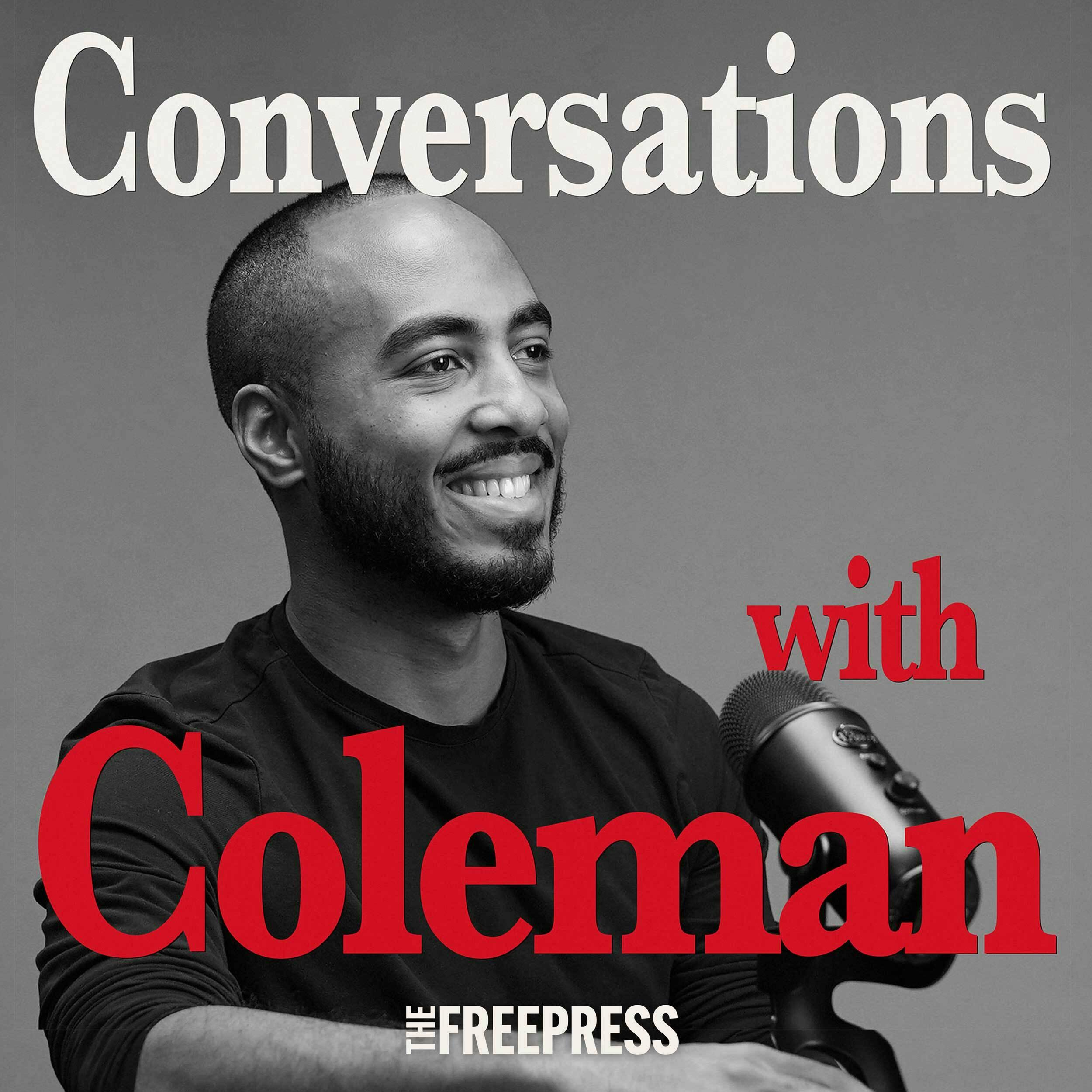
Loading summary
Transcript45 lines
- [00:00]
A
Welcome to a bonus episode of Conversations with Coleman. We release full episodes every Monday, but today we're releasing a mini episode because I had Janiya Thomas on for a shorter than usual discussion. Janiah was the black media director for Trump's 2024 campaign and she's previously worked for the Republican National Committee as well as the campaign for Senator Tim Scott. In this episode, we touched everything from Charlie Kirk's assassination and his allegedly racist comments about black women's brains that weren't exactly what they seemed to Trump's deploy of the national guard in Washington, D.C. if you like little bonus episodes like this one, let us know and maybe we'll do more. And of course we will be back with a full length episode on Monday. So without further ado, Janaya Thomas.
- [00:54]
B
Wouldn't it be great to manage your portfolio on one platform? Well, now you can trade all in one place on Robinhood. That means you can trade individual stocks and ETFs and also buy and sell crypto using seriously powerful and intuitive tools at one of the lowest costs on average without needing to manage multiple apps. Robinhood makes withdrawing and depositing crypto seamless. Send crypto to your Robinhood account or send crypto from your Robinhood account to other wallets without deposit or withdrawal fees from Robinhood. Trade all in one place. Get started now on Robinhood Trading. Crypto involves significant risk. Crypto trading is offered through an account with Robinhood Crypto llc. Robinhood crypto is licensed to engage in virtual currency business activity by the New York State Department of Financial Services. Crypto held through Robinhood crypto is not FDIC and insured or sipc. Protected network fees may apply to crypto transfers. Crypto transfers may not be available to all customers. Investing involves risk, including loss of principal. Securities trading is offered through an account with Robinhood Financial LLC member sipc, a registered broker dealer.
- [01:50]
A
Okay, Janaya, thanks so much for coming on my show.
- [01:52]
C
Yeah, thank you for having me.
- [01:54]
A
So before we discuss some of the news of the of the past few weeks, I want to get a sense of who you are. Where, where did you grow up and what is your story? How did you come to be doing the work that you're doing now?
- [02:05]
C
So I was born in Virginia. I lived there until I was about 8 years old. And I grew up in South Carolina, right outside of Charlotte, Fort Mill, S.C. so it's, you know, one of the suburbs. But I mean, as you know, most people know, South Carolina is a very red state. So when I was in college, I interned at A law firm, and they worked with the state party. And, like, that's how I became, you know, more affiliated with the political world. But for me, it was always more so about the communications journalism aspect of it that made it more interesting to me. So after school, I went to work for the Republican National Committee, and I was our black media coordinator. Then I started doing on the record stuff for the party, and then like, ooh, where do we go after that? Tim Scott I did his campaign when I was there, when he announced, until the end of it. And then I worked for convention for a while as media relations director for the convention, and then went to the campaign and did all of those fun things.
- [03:00]
A
So what is the source of your politics? Were you always interested in politics as a kid, or were there specific events or specific books you read that led you towards the Republican Party as opposed to Democrats or independents or Libertarians or.
- [03:19]
C
So when I was in school, I was taking a black political thought class, and this was, like, around the time of, like, Covid blm, like, all of the, you know, craziness of the news cycle at that time. And I was just like, you know, we have all these different ideologies, but where are we? Like, were we moving with all of these? You know, it's like, what's the point of learning about all this if there's no. Like, black people are better were better off in the 50s than they are now? So it's like, what was the point of all these different ideologies? And that's kind of how I got to the conservative movement, because I feel like as I grew up, you know, all of my family's principles have been very much very conservative. And then also, like, just the neighborhood I grew up in, the, you know, schools I went to, like, we're all very conservative, and that's kind of how I lean more towards the Republican Party.
- [04:00]
A
So you were director of black media for Trump during the campaign. What was your strategy? What were your goals and objectives in that role, and how did you go about achieving them?
- [04:13]
C
I think a lot of times in our party, we haven't always had people in positions that are culturally in tune. So I think that sometimes Republicans miss the mark on how to communicate to specific communities because they don't have always have people that are in tune with the culture. And you could say the same thing about the left, but I would say that my overall goal was, you know, there's certain things that you can say and how you communicate certain topics and issues to black people that you wouldn't necessarily say the same way to somebody else. Like black people have, like, it's been known that black people have a distrust in the media. So I've always thought like our main goal was, you know, reaching black male voters. Every black man I know, all they watch is podcasts. Nobody watches cnn. No one's watching abc. They're all very in tune in the podcast world. And the people, you know, a lot of them go to these podcasts for relationship advice, financial advice, political advice, you name it. So I think, you know, getting more in the weeds of those type of platforms is very useful in the campaign.
- [05:12]
A
And do you think it worked? I mean, do you, do you, how do you account for the, the fact that Trump has been so successful compared to past Republicans, especially with young black men? Do you think that's part of that strategy?
- [05:24]
C
I think it's just the President's nature. I think he's very authentic and real and a straight shooter. And I think people like that. Most people, you know, are tired of the old guard of establishment, you know, political candidates that, you know, like, they talk like a politician, they, they act like a politician. Like the President is everything, you know, he's, he still is a politician, but at the same time, he can communicate to anybody. He can communicate to a 5 year old, he can communicate to a 12 year old. Like, I think his message resonates with people across the board.
- [05:51]
A
What has your experience, like, been like? I'll tell you what my experience has been like. So I'm not a Republican or a conservative, but a lot of my politics, especially on issues related to crime and the police and law and order, are basically conservative in the sense that I think more police is better. I think that crime, in a way should be viewed as what people on the left would call a social justice issue, because the number one cause of death for black men in their 20s has been homicide for a long time. And that's true of no other race. And a lot of what I spent my time doing around 2019 and 2020 was pushing back against the progressive movement, which said that police were basically an arm of white supremacy and colonialism. And the best thing you could do for black neighborhoods is to get rid of the police, defund the police, or otherwise make the policeman's job harder. To me, this seemed exactly the opposite of everything that high crime neighborhoods, which are disproportionately black in the country, need. And combined with that, there was a persistent myth born kind of in 2012 and 2013 with the BLM movement, which was that it's open season on the cops killing black people. And if you actually dig into that issue, it. It happens to black people and white people every year in very small numbers. Akin to getting struck by lightning in terms of how likely it actually is for an unarmed person to be shot and killed by police. And the racial proportions pretty strictly match the patterns of crime in the country to begin with. So for every George Floyd, there was a Tony Tempa who was a white guy that was in the almost the identical situation and on and on. And so to me it seemed like, though on certain other issues I certainly lean liberal, it seemed to me the left had a huge blind spot on the issue of crime and race. And exactly what was happening. And the result of all the 2020 policies that were ostensibly meant to help black people and help black neighborhoods hurt all of those neighborhoods. Not only the riots where you had literally, you have people destroying even black owned businesses in the name of anti racism, or you just have people destroying businesses in black neighborhoods, which means that those neighborhoods are like people aren't going to want to live in those neighborhoods. Right. And so anyway, this is all to say, like, this was a lot of part of my frustration as a writer was trying to persuade people on the left that their own stated values should lead them to be pro law and order. So I'm curious if anything I just said resonated with you.
- [08:56]
C
Well, the beginning of what you said when you brought up the term white supremacy, I really can't stand that term. It drives me crazy because the term supreme has a positive connotation, but the term white supremacy obviously has a negative connotation. But it's like almost like this backwards programming that has made black people believe that someone else is better than you. And I don't like the way that people use that term against black people. But to go back to also what you were saying about the crime situation, a lot of these things I think boil down to family and educational values and how we live in our communities. And then a lot of the things that we see in the news are coming from people that aren't in those communities. The people that don't see that stuff every day. So sometimes when I've talked to reporters, especially D.C. people, like the things that they care about and they talk about aren't reality to the rest of the country. Like if you go to, you know, people in south side Chicago, if you go to people in Bankhead, in Atlanta, like what their reality is and what we see is not the same thing. And so I think that, you know, we all need to, like, take a step back and, like, look at what's real in these neighborhoods and what's real in these, you know, communities. Because a lot of black people want more police in their communities. They want to feel safer in their neighborhoods. Which boils back down to what the president's been trying to do, bringing in the National Guard to protect people in these communities.
- [10:17]
A
Yeah, we'll get to that. A couple other touch points for me, I remember. So in 2014, Michael Brown is killed outside of St. Louis in Ferguson, and there's riots all over Ferguson. And I visited that neighborhood in, I think, 2019. So this is five years after the riot, right? And there were still literally empty mom and pop shops, including, I think, a black owned barbershop that was still vacant to that day five years later as a result of those riots from 2015. And to me, it's like the perfect description of the limousine liberal luxury belief phenomenon, where you would have probably, if you go back to 2014, you probably have some New York Times op ed writer basically apologizing for the riot, basically justifying it. But that same writer is never gonna go back there years later and look at how the ripple effect of that riot has actually affected people that live in that community and aren't gonna leave that community.
- [11:28]
C
Right?
- [11:28]
A
So there's like this. This sense in which the emotions of liberal elites in particular are really served and massaged and tickled in some way by the issue of. Of black poverty and the police. But those politics don't translate into anything that actually helps. Helps those communities. So let's talk about the national guard deployment in D.C. so obviously D.C. has been one of. It's been one of the trickiest cities in America because crime has long been a problem. I mean, we often talk about Chicago or St. Louis when we think about crime. And in the 60s, people used to talk about the Bronx. But D.C. has been almost as bad as those places pretty consistently for a very long time. It's had an incarceration rate that is among the highest in the nation. I remember at some point it was like the balance between black men and black women that lived in the city was extremely lopsided, like maybe one of the most in the country because so many black men were in prison. And so talk to me a little bit about crime in D.C. as a problem. What makes it a unique problem and how do you view it?
- [12:50]
C
I think that what's very unique about the D.C. situation is a lot of it is juvenile offenders and not Adult offenders. And I feel like the city doesn't do a good job of giving these kids more things to do in the neighborhoods. I live in Southeast. But Navy Yard and Navy Yard's where the National Stadium is. And any given weekend at like 7 o', clock, like there's just kids running rampant with no parents. Like where, where are the parents at? And I think, I mean, what's similar to dc, What DC has is similar to other cities is I think a lot of this is a parenting problem and family issue. I mean, we can bring in the National Guard and you know, that's a temporary solution to a long term problem. I think there's a lot more that needs to be done with, you know, raising kids the right way and, you know, prioritizing their education. That the National Guard is, what it's doing is good and people want that in their communities. But long term, I don't think that's a viable solution.
- [13:50]
A
So that's kind of depressing though, because if it's a parenting issue, how does the government fix parenting? The federal government, the state government, the city government can't really force people's parents to become more functional.
- [14:04]
C
I think what the solution could start with is giving real consequences. I've seen, you know, recently they're trying to like change the age range where you can like convict a child that's like. I think they changed it from 16 to 14. I think giving people real consequences will make parents, you know, wake up more and realize they need to be more involved in their kids lives. But I think that's the way that, you know, you balance the government problem with the parenting issue.
- [14:29]
A
Yeah. So what is the. Why is it such a young problem? Because I remember when I was at Columbia, there was an incident where I lived in Harlem at the time on the other side of Morningside Park. I don't know if you know that area at all, but Columbia's campus is to the west. And then there's a park that slopes like almost steeply all the way down. And then Harlem is on the other side. And so I walk that park every day. And there's only like one or two ways to get across the park. There's like one staircase and one day undergrad girl, she was walking down the park and just randomly got stabbed to death by, by somebody. And that was, you know, that was a place I walked by twice a day, like those exact steps where she died. And I remember before they had caught the person who did it, I talked to one of the cops in the park. And it's all anyone was talking about. I asked him, do you have any idea what, like who it might have been or what it might have been? And he said to me, you know, I don't know yet, but it was probably like some 13 year old kid. That was his guess based on the pattern of crime in the area as he knew it. Come to find out a couple days later, it was a 13 year old kid that stabbed her to death. Maybe it was a robbery and then he panicked when she fought back. Or maybe it was some weird gang initiation egging on of a young person situation. Or maybe the kid was just a psychopath who, like, I don't actually know. But what are we supposed to think of situations where we have 13 and 14 year old kids committing crimes? Because on the one hand you want to treat them, you want to treat them like not a fully formed person, you want to give them a second chance because they're young. On the other hand, it seems like you think one of the solutions is to enforce consequences as if they're an adult.
- [16:29]
C
Yeah, I mean, I think when we're talking about certain situations, it's a situational matter, like murder. I think that at 14, you know what you're doing. I don't think that like that, you know, boils down to, you know, they're not fully functional yet. I think we know what's right and what's wrong and I think that's very clear to most people, unless they have a mental disorder and then that's a different situation. But I don't think we all know the answer to that question at the moment. But I do think that, you know, when it comes to certain situations, like having a real consequence will make people more aware. But, you know, I could tell stories about my family members, for example, and from some of the situations I've seen, a lot of this boils down to having, you know, family structure and especially having a father at home.
- [17:20]
B
This episode is brought to you by Progressive Insurance. Do you ever find yourself playing the budgeting game? Well, with the name your price tool from Progressive, you can find options that fit your budget and potentially lower your bills. Try it@progressive.com Progressive Casualty Insurance Company and affiliates. Price and coverage match limited by state law, not available in all states.
- [17:48]
A
Trump's decision to deploy the National Guard has obviously rankled a lot of people, rubbed a lot of people the wrong way. Do you think there's any, any merit to the argument that a Trump's only doing it for reasons of political optics because he thinks. He thinks it's good politics. Right. It pisses off all the right people. It makes him look strong to his base, and it creates the kind of fight that he thinks he can win, as opposed to a genuine concern for crime as such.
- [18:26]
C
That's a tough question. I think the president does have a genuine concern for crime. I do genuinely believe that. I think that if that weren't the case, Mayor Bowser, she extended the national guard being in D.C. because she. We're seeing that it's helping the current situation, but I don't think it has anything to do with politics. I think he's just a strong leader, and, you know, he's using his power as the president to protect communities and make these neighborhoods safer. You know, one of the things he ran on during the campaign was make America safe again.
- [18:56]
A
Yeah. So, I mean, the counterargument to that would be, all of a sudden, on January 6th, he's on the side of the people beating up cops. Right. And so if you look at Trump in his totality, it seems like he's for law and order when his base likes it, and when his base likes chaos, like on January 6th, suddenly he's against law and order and he's pardoning people that assaulted cops.
- [19:23]
C
You know, the president, I think, is leading the way he knows how, and that's being a strong leader. And, you know, some people take that the wrong way, whether that's, you know, how people feel about the January 6th situation or how people feel about, you know, him bringing in the National Guard. I think that what matters at this moment is what he's doing in these communities and what he's doing as the president this time by bringing in, you know, law enforcement to help protect communities.
- [19:53]
A
Do you think there's any argument against it, or do you think it's just a pure positive good?
- [20:00]
C
I mean, there's an argument against everything.
- [20:02]
A
Let's talk a little bit about Charlie Kirk. Did you know him at all?
- [20:08]
C
I think we met, like, backstage behind, like, a rally or something like that, but, like, not like friends or anything like that, Right? Yeah.
- [20:16]
A
What did you think of the reaction to. To his assassination? How people reacted online and in the media?
- [20:29]
C
Obviously, you know, the people on the left, you know, turning this into a whole political thing when it shouldn't be about that, you know, somebody lost their life, someone no longer has a father, someone no longer has a husband. I think turning that into a political statement is very foul. It's distasteful, and it just shows that, you know, this is the Party of. You know, they try to make us seem like we're the lunatics here. But I think that a lot of us, you know, we still value Christian, you know, morals and things. And I think that a lot of the people on the left don't. If they do value that, we don't see it, you know, because if you did feel that way, then you wouldn't respond to someone losing their life the way some of them did.
- [21:11]
A
Right. So I felt, I mean, it was really disturbing to see people on blue sky and left wing spaces immediately celebrate his death. To me, it doesn't really matter whether you agree with what Charlie Kirk said. I agree with many of the things he would talk about on college campuses, and I disagree with other things. I think he was a complicated person because sometimes he would be super warm and super nice and very mature with his disagreeing with people, and other times he would be kind of bitter and kind of really, kind of like acerbic and like poisonous in his, in his, in his rhetoric. But that's true of a lot of, a lot of people in the political commentary space. It's like you catch them in one mood and they're like a total shark, and you catch them in another mood and they're very gentle. And he had all of those multitudes within him. So I've seen people cherry pick bits of his legacy to depict him in the best light and in the worst light. But to me, none of that matters because you can't assassinate people for, for disagreeing with your views. And you can't, you can't, you can't justify that when people do it. On the other hand, I also think, I don't think people on the political right can really be on a high horse about the issue because President Trump is famous for rhetoric that justifies violence, even if it's not assassination. He's at a rally and he says stuff like, well, you know what we do with a guy like that back in the day? We rough him up. Stuff like this. He's a tough talker. And in a way, I can't necessarily see how people on the right feel totally to be on a high horse when Trump talks the way he does and is the way that he is. You don't think so?
- [23:34]
C
You know, I'm gonna be honest. I think a lot of people on our side, we don't always get it right when it comes to stuff like this. I think that a lot of the times some people have, and it's not just the right, the left too, like there's hypocrisy on both sides. Like, you know, you can say what you want to say until you don't like what they're saying. You know, I think a lot of people on our side, especially with this whole cancel culture narrative that, you know, people are trying to go along with, I think we should be better than that. I think that we can't get mad at people, you know, the way they perceive some of the things that people on our side say. And then when it comes to the opposing side saying things we don't like, then, now we're trying to cancel them. At the same time, I think we should be better than that.
- [24:18]
A
So what do you think about the FCC pressuring ABC to basically cancel Jimmy Kimmel show? This happened last night. FCC on TV said something like, we can do this the easy way or the hard way. After Jimmy Kimmel made some admittedly dumb comments about the Charlie Kirk shooter. And lo and behold, Jimmy Kimmel is suspended a few hours later. It's like when the, when, you know, if Biden, if Biden's FCC pick said, you know, I don't. That guy Gutfeld, he's saying some. He's saying some, you know, nasty stuff. We could do this the easy way or the hard way. And then Fox suspended Gutfeld show, it's like, I think the right would be absolutely correct to be up in arms about that. And so there is something very, there's something sinister about it.
- [25:13]
C
I can see why some people feel that way. But to me, I think ABC's, if we're talking about ABC specifically, I think they're full of shit. I don't support the network, can't stand them, don't want to deal with them. But at the same time, I do hear the counter argument of the way the political discourse is going is not going in the best direction. But I also believe that it's journalism as a whole has become like this. And I think that, you know, some of the things, the narrative they try to spin around the President and around people on our side is not always, nine times out of 10, like, they try to make it a negative narrative. And that's like different outlets across the board. And I think that, you know, when you get into the, you know, the YouTube world of people and like the social media world, I think that's when people have more of an opportunity to say what they actually want to say. But at the same time, you know, they've shadow banned people on our side on different platforms. So I'm not really sure. What the right answer is to that. But I could see the counterargument of, you know, the way things are going in the media is not. May not be in the best, you know, light.
- [26:14]
A
Yeah, I mean, I agree with you about the shadow banning stuff, the jawboning thing. I used a hypothetical. But actually, in real life, Joe Biden and or members of his administration did pressure Twitter to shadow ban individuals that they said were spreading misinformation on Twitter. And I think most reasonable people look back on that as a really bad thing to have done. First of all, because the government shouldn't be deciding what's misinformation and what's true. It is true. The networks are all biased towards liberals. Almost every TV channel in America, almost every news show that actually airs on television, is biased towards liberals and biased toward the left. So what should the response to that be from Republicans and conservatives? My view is if. If you start saying it's okay for the administration to intimidate people into agreeing with the administration, well, the left is gonna do that. The moment whatever AOC runs for president, she's gonna say, well, you guys did all the same thing. We have to do it back to you. So the strategy of creating your own institutions that reflect your values is way healthier than trying to use the power and force of the federal government to actually intimidate people.
- [27:44]
C
I think that's why a lot of people on our side are more moving towards the independent space of not focusing too much on the major networks, especially as you've seen, like on the campaign trail, like, you know, the president did a bunch of podcasts. He went into doing more social media stuff that we haven't seen candidates do in the past. And I think it's very helpful because most people have found like a sort of distrust in mainstream news. And I think, especially for what I've done in my career with a lot of black people don't trust the mainstream news as well, you know. So I think a lot of people look towards YouTube and, you know, look towards social media, can understand why they have a distrust in mainstream news as well. Yeah.
- [28:23]
A
You know, one of the things floating around about Charlie Kirk has been his. It's actually a fake quote, but it's a quote that's been circulating all over social media that black women. That black women don't have the brain processing power to achieve all that much absent affirmative action. So it turns out he didn't actually say this. What he said specifically was that Kamala Harris, Ketanji Brown Jackson, Sheila Jackson, Lee and Michelle Obama had all admitted to being affirmative action admits, and he was mocking them, basically saying, well, yeah, those four women are pretty dumb in his opinion. And so it makes sense to me that they needed affirmative action to get into those college. Now, I'm paraphrasing what he said, but he didn't say it about all black women. He said it about four black women in particular. It certainly wasn't a nice thing to say, and it certainly isn't, like, obvious to me that Michelle Obama, for instance, would have been an affirmative action admit as opposed to a meritocratic one. But I think it's also legitimate to. If you think certain individuals in public are stupid and you want to say that, and they admit to having gotten in under these special programs, to me, it's not necessarily racist to point that out. If that's your opinion, it's certainly unkind, and you might be wrong. Like, actually, they might be more impressive minds than you're giving them credit for. But it's not racist per se to point that out. That was my reaction to it. I think people are twisting his words. I'm curious if you've seen this going around and what you think about it.
- [30:12]
C
Of course I've seen this going around, and I agree with what you're saying. You know, I think that's the best way I've heard somebody else put it is, you know, admitting to being a part of affirmative action alludes to the fact that maybe you might not have been as qualified as you thought you were. I'm not gonna speak on Michelle Kendaji or, I mean, Kamala. That's a different conversation. But I don't want to. I'm not gonna say that. Cause I don't know, like, I'm not gonna say that I know that they were hired under affirmative action. That's the only way they would've, you know, made it to the level that they are. But I do believe that, like, what he said isn't racist. Because if you. Like you said, if someone is admitting to this, then it alludes to, you know, this other perception that maybe you weren't as qualified as you thought you were.
- [30:53]
A
Okay, final question. If. Is. If there's one thing you wish people would understand about the situation with the National Guard and crime and law and order and race and police, what would that be?
- [31:10]
C
I don't know. If it's something I would say people would. I need them to understand. But I think it's about accountability. And I think we focus so much as a society of pointing the finger at other people, that we don't want to be accountable for our own situations and our own problems. And some of these things, you know, are a direct result of yourself, you know. So I think that, yes, I support the president sending the National Guard into, you know, minority communities is what the narrative they're spinning is. And I do think that it's useful and it's helpful to provide safer neighborhoods, because that's what he promised and ran on and said he was going to do. But I also think that as black people in these communities, we need to focus on being accountable for our own actions as well.
- [31:50]
A
Okay. Janiai, thanks so much for coming on my show.
- [31:52]
C
Thank you.