Podcast
Cortes Currents
Hosted by Cortes Currents (https://cortescurrents.ca/) · EN
Cortes Currents is a news platform that asks what's current in Cortes and the Discovery Islands. Web articles & radio podcasts: Cortes Island, Quadra Island, Discovery Islands, Campbell River: news, lifestyle, local politics, affordable housing, economy, food security, health, ferries, tourism, history, culture, environmental issues, sustainable forestry, oyster farming, the arts, First Nations, energy, climate change, overshoot
33episodes
Episodes
Newest firstAll episodes
Folk U Radio July 31 2026 Songwriters in the Round
2w ago01:40:07Tap to summarizeJemma Hicken/ Folk U Radio - Thanks for joining us on July 31st, 2026 for the 5th week of our Village Commons Music Series, a simultaneously live and live-broadcast show, happening on Fridays from 1 - 2:30pm on the new Pavilion stage. Stand-in host Jemma Hicken was joined by Rue McDonald, Heather Wolf, and Elizabeth Hodgins, who played an in-the-round show and swapped songs and stories. Listen in for 3 beautiful voices, a dulcimer, a looper pedal, and conversations about the Scottish Gaelic language, starting to play music as an adult, and tour/adventure stories. The Village Commons Music Series is produced by Jemma Hicken, Sean Coyote, and Bryan McKinnon. It is made possible by the Cortes Island Community Foundation, Cortes Community Radio, and FolkU. Folk U Radio is taking old school viral every Friday at 1 p.m. and Mondays at 3 p.m./Wednesday at 6
Transcribe →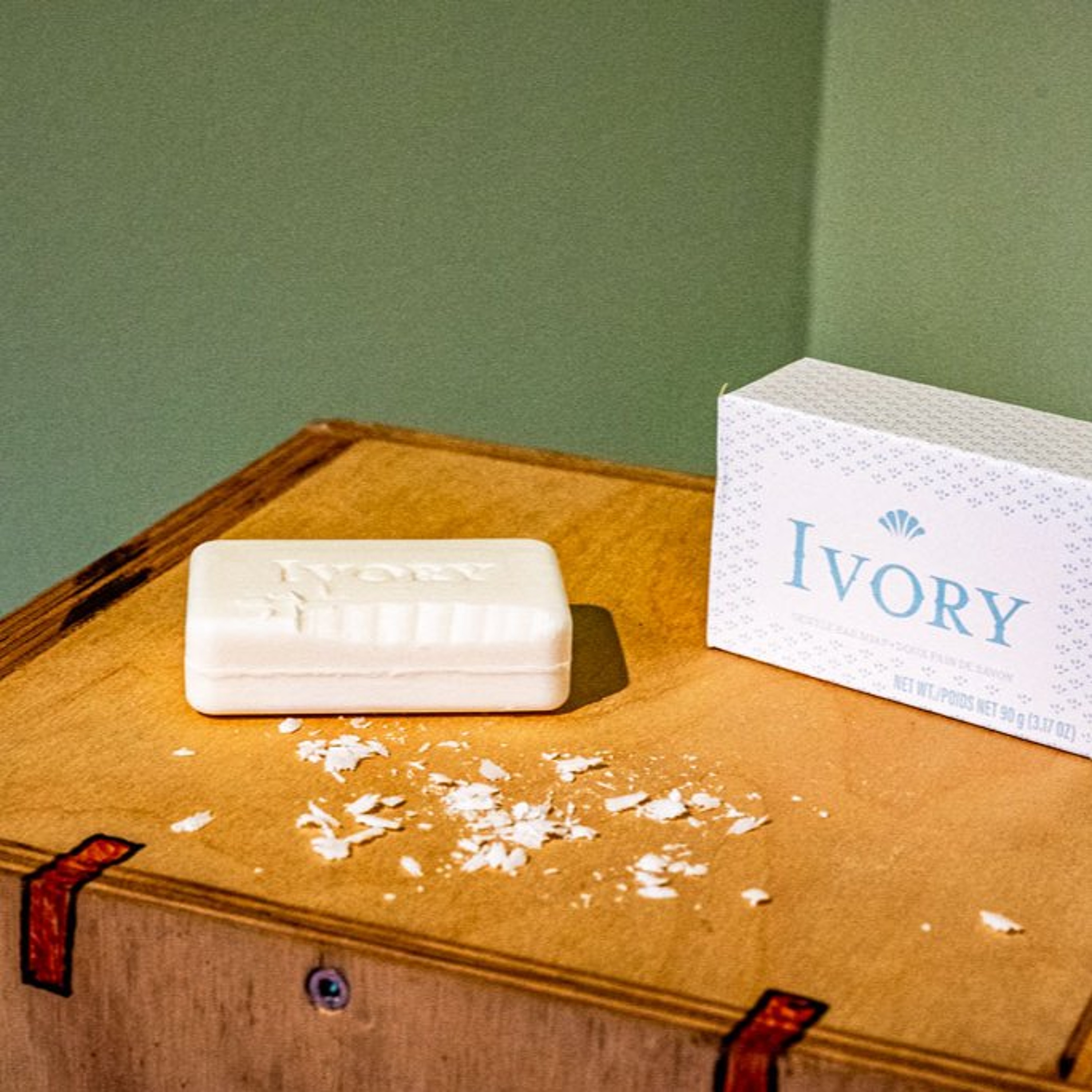
Lee Gass Sculpture Gallery
2w ago00:15:33Tap to summarizeRoy L Hales/ Cortes Currents - There’s a new gallery in Mansons Landing every weekend this summer. Lee Gass and his wife, Lucretia “Lu” Schanfarber, are Quadra Island residents who are well known on Cortes. They have owned the house where the Lee Gass Gallery is located for decades. The sculptures inside are made of bronze, stone, and wood, but they also tell the story of Gass’s life. A series of five female busts enshrines his feelings for Lu. A Love Story Lee Gass: “They are all called Listening to the Wind. That harks back to a day in the Shulaps Range, high up, with glaciers and crags above us and steep slopes below us. Lu and I were sitting under a whitebark pine, listening to the wind. “It was just a wonderful, magical afternoon that changed my life in a lot of ways. We named the sculpture Listening to the Wind to remind us of that day and what it meant to us.” Cortes Currents: “Why is the sculpture's face so pushed in and her shoulders are so pronounced.” Lee: “I don’t have any explanation for this other than she’s got way more brain than will fit in one skull. “I needed this concavity for design purposes. It started out as a flat, slightly convex face, and it was boring. So I just pushed it in. It gives shadows and accentuates the three-dimensionality of it. “The shoulders: Lu is strong. She helped me unload that 600-pound red marble piece there, the one you can see through the rhododendrons, this morning. I’d rather have her work with me than most men I’ve worked with.” Cortes Currents: His wife Lu added another layer to the story. Lu: “For almost the last 25 years, it’s been a love letter. Lee has created something specifically for me, and as part of our history and our future, it’s very grounding. I listen to that voice that says, ‘You’re loved.’” Lee: “You make me cry, Babe.” Lu: “That’s not hard to do, as I recall.” Cortes Currents: “How did the two of you meet?” Lu: “I happened to move in across the street from him in Vancouver in 1993. I would see him out my bedroom window while I was working in my office. He was carving rocks in his garden, and Listening to the Wind was the piece he was working on that I noticed the most. So I got to watch that piece unfold before I ever even met him.” Cortes Currents: “He said he made this for you.” Lu: “He didn’t know that until he met me.” Lee: “I was fully employed, so it took years for me to make one sculpture. The feelings associated with it developed, and the relationship we were beginning developed at the same time.” Lu: “We actually started to hang out together in 1996. Then it took six years for us to decide to put our lives together. The same year we got married was when we bought our place on Quadra." “Two years later, we also discovered we loved Cortes. I came to visit my son Justice and his partner Kirsten. They were stewards at Linnaea, and they had just had a baby, Emmett, who’s 26 now." “I thought, ‘Oh, I’d actually like to have a closer relationship with my family, and especially my grandson.’” How Lee Gass Became a Sculptor A bar of soap and the soap shavings beside it are reminders of how Gass became a sculptor. Lee: “When I was five, my mom and I would sit on the back porch with a newspaper between us. This was 1947, and what Mom was doing was making soap flakes for the washing machine and entertaining this little kid who needed something to do. “She could make giraffes and snakes and all kinds of stuff. She said, ‘Just shave the soap like this, Lee,’ and a big curl would come off. “I’d try to cut a bear. I’d slip and cut myself. She’d say, ‘Oh, I see you cut your finger again today, Lee. Are you going to use a Band-Aid, or do you just want to suck on it like you did yesterday?’ “And I said, ‘Mm, tastes pretty good. I think I’ll just suck on it.’ “That’s how I started.
Transcribe →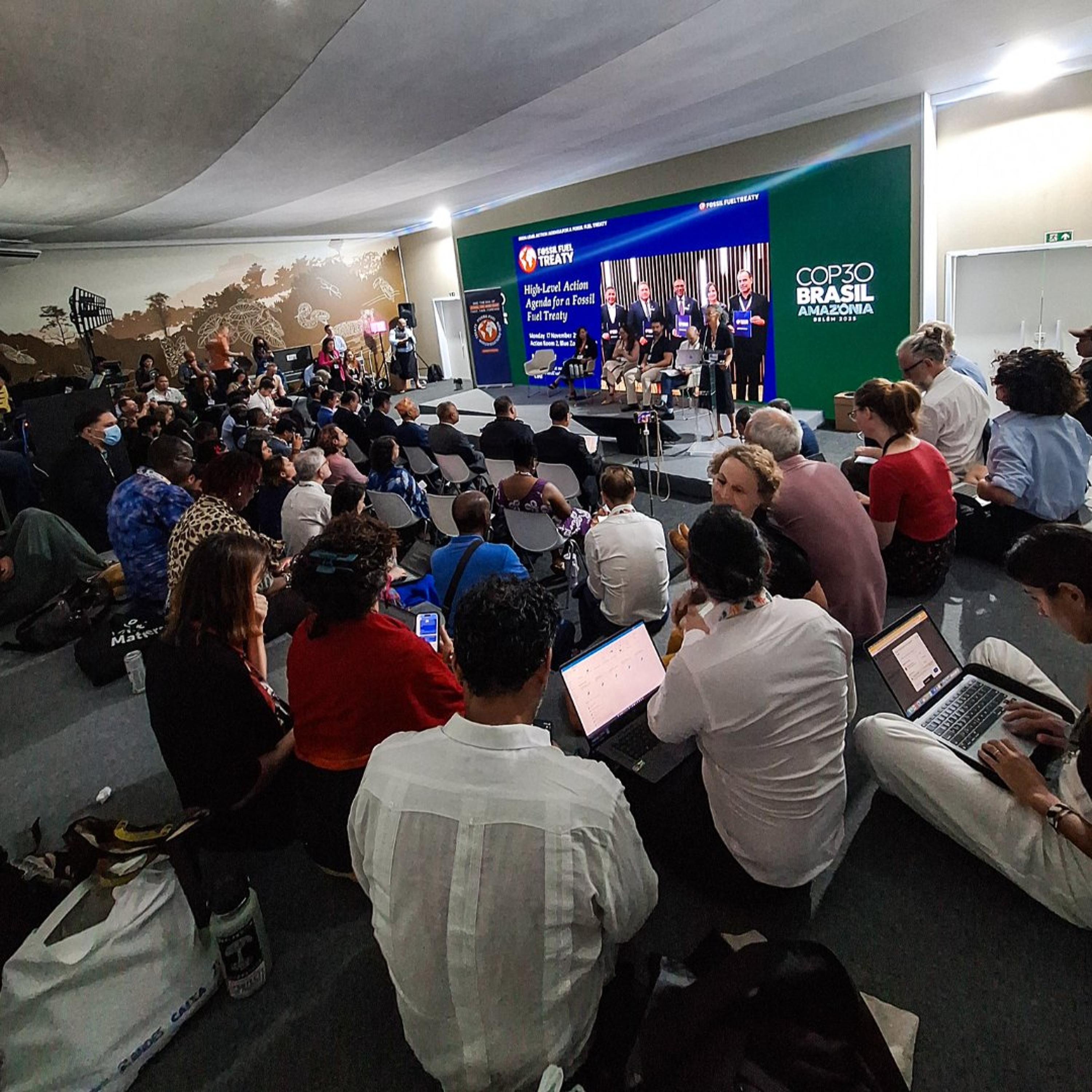
Tzeporah Berman (Part 4 of 4): The Fossil Fuel Treaty Initiative
3w ago00:14:32Tap to summarizeRoy L Hales/ Cortes Currents -
Transcribe →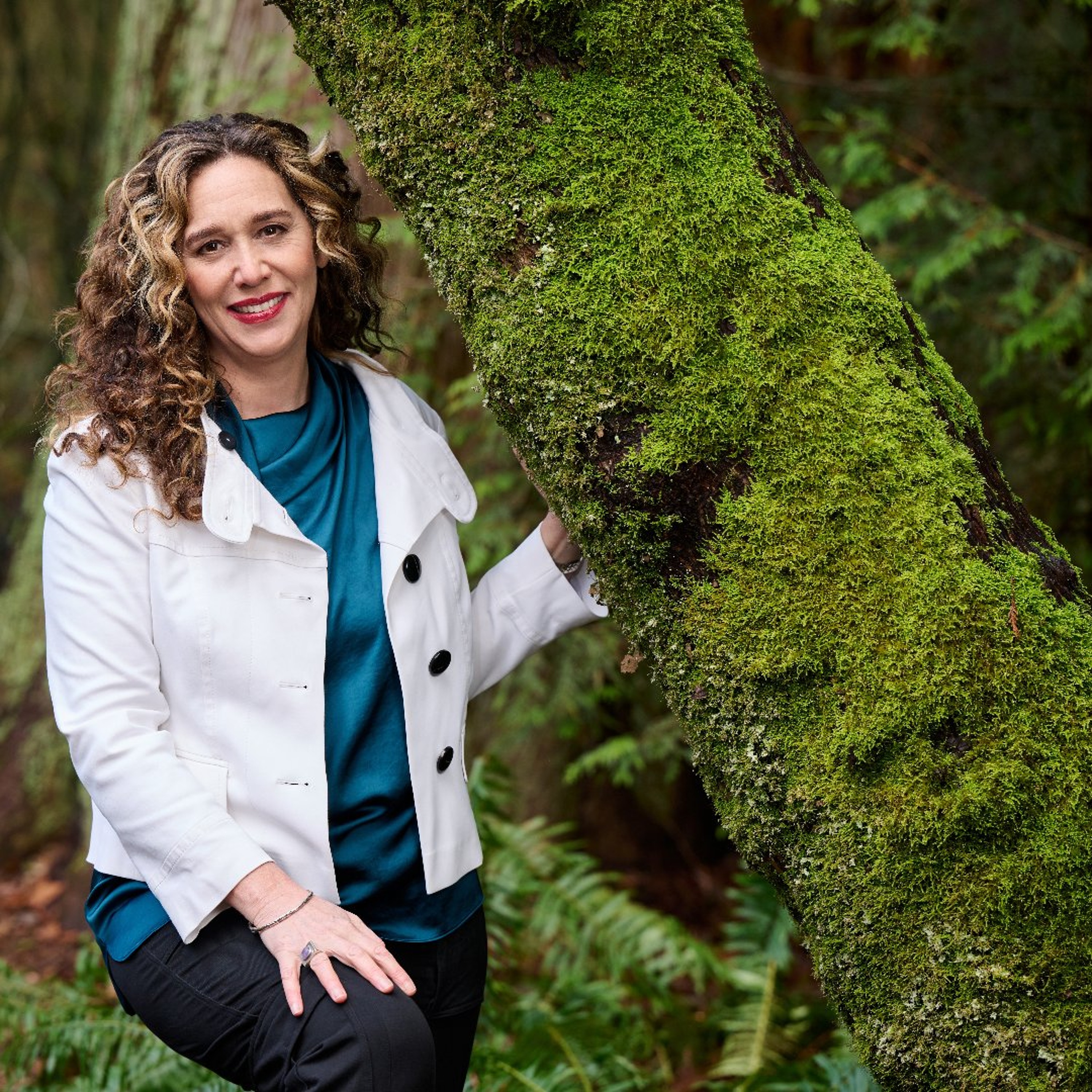
Tzeporah Berman_ On the West Coast Pipeline
3w ago00:20:20Tap to summarizeRoy L Hales/ Cortes Currents - Despite the fact polls consistently show roughly two thirds of the Albertan electorate want to remain in Canada, Premier Danielle Smith - a former fossil fuel lobbyist whose government not too long ago imposed an outright ban on new renewable energy projects for 7 months - is concerned about her province's separatist movement. She and Prime Minister Mark Carney agree that the best way to preserve national unity is to build more pipelines so that Alberta's oil sector can further ramp up production. As the oil sector is not willing to put up the necessary funding, they also agreed that Canadian and Albertan taxpayers can carry up to 90% of the cost of the proposed West Coast Pipeline. Canada is not the only nation racing to sell its fossil fuel resources while there is still time. The 2025 Production Gap report states that their combined increases are "more than 120% above the median 1.5ºC pathway and 77% above the median 2ºC pathway." According to the Fossil Fuel Non-Proliferation Treaty Initiative, "Current fossil fuel expansion plans would take the world past 3 degrees of warming ..." In this morning's interview, Tzeporah Berman, Chair of the Fossil Fuel Non-Proliferation Treaty Initiative, talks about the proposed West Coast Pipeline.
Transcribe →
Folk U Radio, July 24 2026 Awakeneers
3w ago01:34:04Tap to summarizeJemma Hicken/ Folk U Radio - Thanks for joining us on July 24th, 2026 for the 4th week of our Village Commons Music Series, a simultaneously live and live-broadcast show, happening on Fridays from 1 - 2:30pm on the new Pavilion stage. Stand-in host Jemma Hicken was joined by the Awakeneers, who delivered a folk-forward set filled with stunning harmonies, jokes, and existential questions. They chatted about their new album, the challenges and delights of being in a family band, told a few tour stories, and discussed diplomacy, decision-making, and songwriting. The Village Commons Music Series is produced by Jemma Hicken, Sean Coyote, and Bryan McKinnon. It is made possible by the Cortes Island Community Foundation, Cortes Community Radio, and FolkU. Folk U Radio is taking old school viral every Friday at 1 p.m. and Mondays at 3 p.m./Wednesday at 6 a.m. @CKTZ89.5FM or livestreamed at cortesradio.ca. Find repeats anytime at www.folku.ca/podcasts.
Transcribe →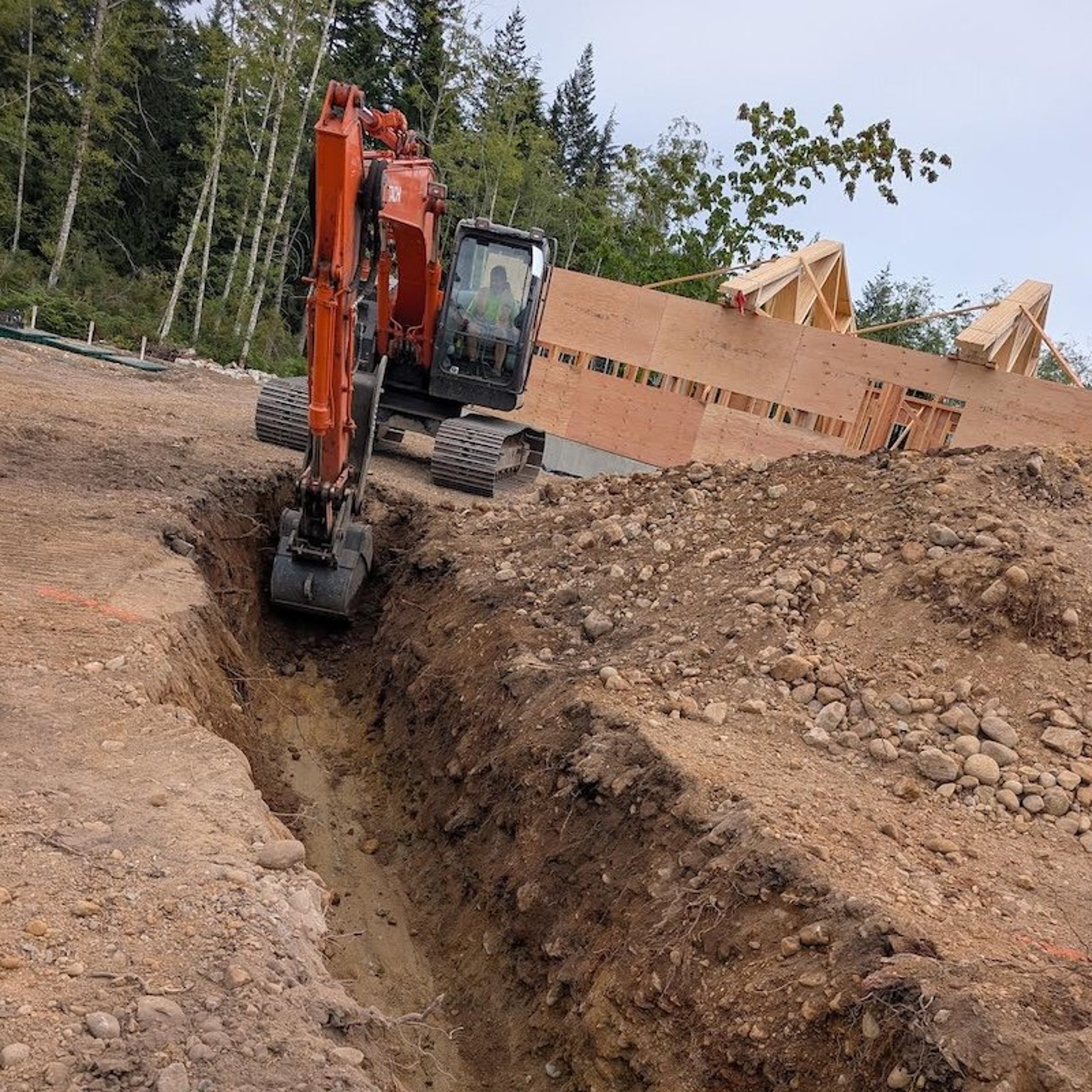
Rainbow Ridge_ Two units rented out; Tours of the site
3w ago00:07:34Tap to summarizeRoy L Hales/ Cortes Currents - The first tenants have been living at Rainbow Ridge for a month, and Cortes Island’s affordable housing complex is now offering tours of the site. There were fifteen of us on Saturday, July 24. Most were curious neighbours, but a couple of people asked about rental rates, and there were also a couple of tourists. One summer resident, who does not have a washer or dryer, was very interested in the laundry club that will operate out of the community building. Mark Lombard, the construction manager, gave Cortes Currents an interview after the tour. Work was in progress in a nearby building and construction noises periodically enter the audio.
Transcribe →
Tzeporah Berman_ Fossil Fuel Expansion & Energy Consumption
3w ago00:14:19Tap to summarizeRoy L Hales/ Cortes Currents - Tzeporah Berman: The Problem With Ramping Up Fossil Fuel Production & Expanding Energy Consumption According to the Stockholm Resilience Centre, "Human activities have pushed Earth beyond its Safe Operating Space. The planet's natural resilience is weakening: Global warming is accelerating, (and) ecosystems are showing clear signs of degradation." In the second of four programs arising from an interview with Tzeporah Berman, Chair of the Fossil Fuel Non-Proliferation Treaty Initiative, she explains that the problem is multifaceted, but two critical areas must be addressed: fossil fuel use and our rapidly expanding energy consumption. The Greatest Cause of Premature Death Tzeporah Berman: “My research makes it very clear to me that fossil fuel use and production is the greatest cause of premature death on the planet and the greatest threat to the majority of the world’s ecosystems.” Cortes Currents: “Prove it to me.” Tzeporah Berman: “Approximately eight million people die every year due to air pollution. Fossil fuels are the majority of that air pollution. Last year, the Lancet Countdown report said that, on average, five million people are dying every year from air pollution due to fossil fuels alone. “When you start adding climate impacts and deaths, the numbers skyrocket. We know now that one person is dying every minute on this planet due to lethal heat, and the primary cause of the dramatic increase in lethal heat is climate change. “Eighty-six percent of the carbon emissions currently trapped in our atmosphere — creating almost like a sweltering blanket around the Earth and causing climate change — come from three things: oil, gas, and coal.” Why Aren’t Renewables Reducing Global Emissions Faster? Cortes Currents: “Given that renewables are the fastest-growing energy sector, why aren’t we seeing more of an impact in terms of global emissions?” Tzeporah Berman: “We’re not seeing more of an impact in terms of global emissions even though investment in renewable energy today is double the investment in fossil fuels. Last year, there was $2 trillion invested in renewables and $1 trillion invested in fossil fuels. “We’re seeing dramatic growth in renewable energy, but we are also seeing continued growth in carbon pollution, emissions, and fossil fuel infrastructure. We can’t solve this just by building the good stuff. We have to stop building the bad stuff too. “What we often see is, for example, Mark Carney, our prime minister, saying, ‘We’re still going to move toward electrification. We’re going to eventually have a low-carbon economy by building more renewable energy and electrification.’ “You hear that a lot. That’s good — we need that infrastructure — but no one ever phased something out by building more of it, and that’s what we’re doing today. “Our country has committed internationally. In Dubai, at the climate change negotiations, 190 countries said, ‘Yes, we know we need to phase out fossil fuels, and that’s a priority.’ Now we’re saying we’re going to build more of them.”
Transcribe →
Tzeporah Berman (Part 1 of 4): Then and Now
3w ago00:21:05Tap to summarizeRoy L Hales/ Cortes Currents - More than thirty years have passed since Tzeporah Berman catapulted into public view as an organizer of the Clayoquot Sound logging blockade. She is the Co-founder and International Program Director at Stand.earth, the Founder and Steering Committee Chair of the Fossil Fuel Non-Proliferation Treaty Initiative, and serves as a member of the Advisory Group for InfluenceMap. She is also an author, former adjunct professor, and has sat on committees advising the governments of B.C. and Alberta. When she's not away speaking at conferences, or in the midst of negotiations, Tzeporah Berman is back in her home overlooking Gunflint Lake on Cortes Island. In the first of a series of broadcasts recorded there, she talks about then - and now.
Transcribe →
Final Interview with Fire Chief Eli McKenty
4w ago00:18:33Tap to summarizeDe Clarke/ Cortes Currents - The last of 4 interviews with Fire Chief Eli McKenty
Transcribe →
Fire Chief interview Jul 2026 part 3_ Tooling Up 20m21s
4w ago00:20:21Tap to summarizeDe Clarke / Cortes Currents - the third interview with Fire Chief Eli McKenty
Transcribe →