← Craig Groeschel Leadership Podcast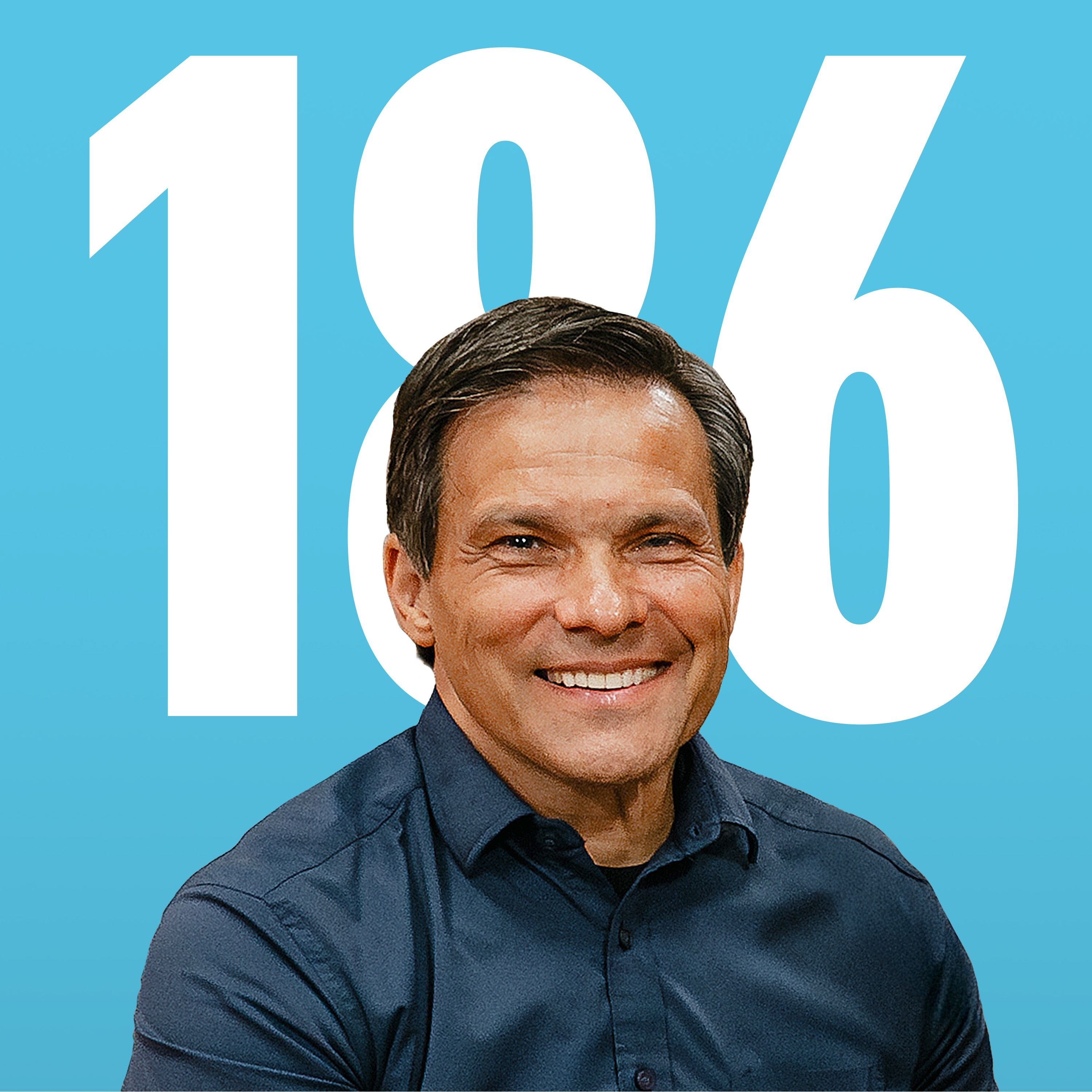
Craig Groeschel Leadership Podcast
The Hardest Part of Leadership No One Talks About | Compassion International CEO Jimmy Mellado
00:54:54
With 30 years of leadership at the CEO level, Jimmy Mellado knows what it takes to lead with courage, hire with purpose, and build a life and leadership that lasts.
Loading summary
Transcript152 lines
- [00:00]
Jimmy Miyato
Leadership is taking you from a known place to an unknown place. If you're a leader and you do not have humility in your leadership, write it down. It's just a matter of time. The clock is ticking. You will find your way out of here.
- [00:19]
Craig Groeschel
Hey, it's great to have you back for another episode of the Craig Groeschel Leadership Podcast, where our mission is clear. We want to help you become a leader that people love to follow. If you're watching on YouTube, tell us where you're watching from and if this content is helpful to you, please give it a rating. Subscribe wherever you're watching it. Share on social media. If you tag us, we might repost you. It means a lot to help get the message out. Now I have a guest today that I promise you is gonna bless you, inspire you and equip you to become a better leader. Jimmy Miyato is a dear friend of mine. I don't know where to start with you.
- [00:54]
Jimmy Miyato
So a couple decades back, the part.
- [00:56]
Craig Groeschel
That'S pretty cool is that you competed in the 1988 Seoul Olympics as a decathlete. 10 different sports. We worked together years ago when you led the Willow Creek association and led the Global Leadership Summit. And so that's where we formed our friendship. You have an MBA from Harvard Business School. How impressive is that? Well, it counts for something. And now my guest leads Compassion International. And of everybody I know in the world, I'm not sure I know anybody that's making a bigger difference in the lives of people that are in need today. And so, Jimmy, it's great to have you on it's genuine honor.
- [01:41]
Jimmy Miyato
Awesome, Craig.
- [01:42]
Craig Groeschel
Really.
- [01:42]
Jimmy Miyato
It's been a while. Been too long.
- [01:44]
Craig Groeschel
We're going to have a good time and you're going to help a lot of people. What I want to do is start. I usually ask our guests, when is the first time that you recognize you had leadership gifts?
- [01:56]
Jimmy Miyato
Wow. I know exactly where it was. Actually, I didn't know you were going to ask that question, but. Nicaragua. I was living in Nicaragua when I was in third grade and I was just. Me and my brother were just walking through the. The. Just the woods there. And I don't even know why he said it, but he looked at me and he said, jimmy, you're a leader. And. And he has been my biggest champion my whole life, my biggest cheerleader. And the reason I get a little emotional is he passed three years ago of cancer.
- [02:27]
Craig Groeschel
So sorry.
- [02:27]
Jimmy Miyato
But he was my biggest champion encourager, paving the way for me and speaking words like that into My life. I see this in you. You're a leader.
- [02:38]
Craig Groeschel
And so why did you believe it?
- [02:41]
Jimmy Miyato
Well, initially I didn't. My first thought was, what does he mean by that? What does it mean to be a leader? What is he seeing in me that would make him say such a thing? Why didn't he say I'm a leader and follow me? No, he said you're a leader. So that's when I became intrigued. What is leadership? What is that effect that a person has on a group of people that helps them get to a better place? And so I've, in my mind, you know, some people say leadership's influence, and I think that's part of it. But I think there's another element that adds to influence that really makes it leadership. And that's courage. Because influence, I can influence you to go from here to there. And they're both known places. That's not leadership. That's influence. Leadership is taking you from a known place to an unknown place. And because it's unknown, it requires courage.
- [03:31]
Craig Groeschel
It does. And I want to hear some about your backstory because if, and I may not get all the numbers right today, but Compassion International, you're going to have over 4,000 employees and then another 120,000 or so people around. Frontline workers. The churches. Yeah, they're going to be frontline workers. Over a billion dollar a year organization globally. And you were raised in how many different countries?
- [03:56]
Jimmy Miyato
Seven.
- [03:56]
Craig Groeschel
Seven different countries. So I want to go back to that and what your brother saw in you, what were some of the maybe early experiences that you had that helped bring about some of the courage that you're able to exhibit today?
- [04:09]
Jimmy Miyato
Well, it really does start with my parents. And living in seven different countries doesn't cover it because in their 65 years of marriage and by God's grace, they're still alive. 95 and 91, but they move 41 times. So I went to, you know, eight different schools before graduating high school, 26 different homes, apartments, whatever. So even when we were in one country, we moved to multiple locations. And it's because my dad was an engineer. So we went from project to project to project. And I got to see the impact and the power of what it means to bring water to people, electricity to people, going to places that didn't have electricity. And my dad's project was to in fact provide that 24, 7. But I saw an even greater power because of my, my parents faith in Jesus. We were always involved in the life of the church. And because my mother grew up in poverty. She would tell us as kids, you know, she was taught early and young how to keep a dirt floor clean and level. That's what she grew up in one toy her whole life. And so because she grew up in poverty, it wasn't that it was anything noble or special for her. We were always involved in the life of the poor because that's what you do, that's what a Jesus follower does. And these are her people. So sometimes we would go to church. This is where some of the courage comes into play. In Nicaragua, I mentioned that earlier, we went to church in the worst part of Managua, Nicaragua. And the name of it, it just is what it compels. The neighborhood was called El Riguero. And it was a mess. It was a troubled area of a troubled city in a troubled country. And they chose to go to church. There was a, because it was trouble. So there's my mom. Sometimes when my dad would be on travel on, on, on a trip and my mom would take us kids, us four kids, you know, like 35 year old woman, four kids, into the worst part of town, going to church and visiting houses. We would go house to house to house. How can we help? So I, but it, it didn't feel that courageous to me because it just felt normal. Later on I began to find out, hey, you know, that was kind of dangerous. But we lived through three coups, earthquakes, typhoons. My dad was arrested by Manuel Noriega when we were in Panama for three days, no explanation, and wondered if he'd ever come out. And he did. But that it was, it was the most amazing adventure. And I, I didn't know how unique it was until a little bit later. I mean, I thought it was normal that every family moved every year. And then a married woman, one life, one house, her whole life. I had no box for that.
- [06:43]
Craig Groeschel
Well, I can see going to new schools, new environments, nonstop, had to create kind of an adaptable spirit. Oh my goodness. You probably had to learn how to develop friendships faster, very fast.
- [06:58]
Jimmy Miyato
And you know, there's a good side to that, bad side to that. There's a lot of books have been written on it. It's called a third culture, kid. You're not in your culture, not the culture of your parents, you're always in a third culture. And, and there are things that happen. And the plus side of that is I can go in and out of cultures very easily. I love going in and out of cultures. And so what I do at Compassion, I have to go in and out of Cultures, super normal. Now, there's a downside to that too, is you learn because you want to be accepted. You learn how to people please. You learn how to want it. You learn how to be liked. And that's not all bad. But in leadership, it can be really bad if you're about pleasing people.
- [07:39]
Craig Groeschel
It's fascinating to think about how your childhood prepared you for what you're doing today. Wow. Like, you could never. You were like, custom designed for the role that you're doing today in what would have been considered maybe a really challenging life. I'm curious, Jimmy, when your brother saw something in you, I'm asking you kind of a stacked questions. What'd your brother see in you that made you think, think that you're a leader? And then once you answer that, what are you looking for when you're identifying leaders today?
- [08:10]
Jimmy Miyato
So I would sense when I was on a sports team or some group or class or whatever, I would tend to gravitate towards something that, like, if it wasn't working well, like, guys, we can do better than that. How about X? Let's do this, let's try that. Instead of just letting it happen. It would bother me that we could do better. And we weren't as a group, as a class, as a team, whatever it was. So it was that setting of this little bit of a. A sense of vision for what could be a discontent with what was, and wanting to help mobilize my friends, people around me toward whatever that direction was going to be. And I guess that's what my brother started to see. Maybe that's leadership.
- [08:55]
Craig Groeschel
Yeah. And then you're looking for leaders today. And so you're leading multiple thousands of team members and you're always looking for the best of the best.
- [09:04]
Jimmy Miyato
Totally.
- [09:04]
Craig Groeschel
What are the qualities today that wouldn't be, hey, it's their education. It wouldn't be the last job they had. But when you're sitting down, talking to somebody, what are kind of the more intangible qualities or some of the soft skills or otherwise that you see? And you go, I like that.
- [09:20]
Jimmy Miyato
Yeah. Okay, so let's start with the easy one. That's competence. You mentioned that. Those are the easy ones. But the thing about competence is you still try to get at it. The resume doesn't tell you the story, so you got to ask questions that get them talking. And if you're in an interview, you don't talk. You get them to talk so you can have more data to make an assessment. So, like, here's a great question. What did you hate about your last job. Use a compelling word like that. What did you hate about your last job?
- [09:48]
Craig Groeschel
Good question.
- [09:49]
Jimmy Miyato
Or if I called you a previous employer, what would they say you need to work on?
- [09:54]
Craig Groeschel
Very good.
- [09:54]
Jimmy Miyato
Okay, so. But that's competence. That's the easy one.
- [09:58]
Craig Groeschel
Let's just stop there for a second because those are very, very valuable. And there are questions like this that the quality of the interview will often determine the quality of the hires. Right?
- [10:09]
Jimmy Miyato
That's right.
- [10:10]
Craig Groeschel
And so those are really, really good questions. Now, can you tell me why? Give me those two questions and tell me why they're valuable? Because I don't want people just to go and ask them. I want them to understand what's behind it.
- [10:20]
Jimmy Miyato
Right. First of all, the word is compelling. I didn't say what did you dislike? What offended your. What did you hate? I mean, it's emotional. There's a thought that's going to come immediately into their mind if there's something they hated about their previous employee, and they're probably going to accidentally let it come out, and you're going to have that data. So what did you hate about your previous? And they'll know that if there's something there. And then the other one is it puts you in the position of saying what someone else would say you need to work on. Because who tells you their weaknesses? Oh, I work too hard. Seriously. But if you say, what would they say? They just might actually say that.
- [11:01]
Craig Groeschel
They might. One of the questions I like asking which is similar is some version of, hey, if things don't work out here and it is your fault, what do you think the reason would be?
- [11:11]
Jimmy Miyato
What would that be?
- [11:12]
Craig Groeschel
Yeah, and so that's another version of that. When you're interviewing today and looking for people, are there qualities that are more important to you today than maybe 10 years ago?
- [11:24]
Jimmy Miyato
Man. Culture. Culture and calling. Those two things particularly for us, there's gotta be a sense of a compelling drive inside. We call it a calling in the faith world of wanting to make a difference in the area our mission is addressing. And we're serving children in poverty. You gotta care. You gotta have a heart that breaks for children in poverty and want to make a difference that matters. I don't need a great accountant. I mean, I need a great accountant whose heart breaks for children in poverty.
- [11:54]
Craig Groeschel
Yes, so.
- [11:55]
Jimmy Miyato
So calling.
- [11:56]
Craig Groeschel
Yes, that's one.
- [11:57]
Jimmy Miyato
But then the culture. The culture fit is so, so important. I have said so many times inside of compassion, if you're a leader and you do not have humility in your leadership, Write it down. It's just a matter of time. The clock is ticking. You will find your way out of here, whether it's us doing it, you doing it. You will not be compatible with this culture if you are not a humble leader. Now you gotta have world class talent at the same time.
- [12:25]
Craig Groeschel
Okay, I'm gonna come back to culture. Cause this is super important. But I wanna just tell our audience, just first of all, summarize what you do with Compassion. So what's the mission and what do you do?
- [12:33]
Jimmy Miyato
Yeah. So our mission is releasing children from poverty in Jesus name. We're 73 years old. We serve 2.4 million children. We do it with 100% in partnership with an indigenous local church in a super hurting community around the world. Typically $3.65 a day is what the earning capacity is or less. Those kinds of communities around the world.
- [12:56]
Craig Groeschel
So for years, Amy and I have supported Compassion Children, some of them all the way through college and different program. We got to meet one of our children that we sponsor on a trip. And so that is really a high calling and a challenging endeavor to take people that are in poverty and bring them to a place where they have their basic needs met. And then we're trying to get them real education and then in a healthy spiritual community. So I want to go.
- [13:25]
Jimmy Miyato
So we're not trying to do one thing.
- [13:26]
Craig Groeschel
No, it's holistic life.
- [13:28]
Jimmy Miyato
That's right.
- [13:29]
Craig Groeschel
Discipleship, development. And so back to culture. Because I wanted them to hear what you do through 4,000 employees and then 120,000 frontline workers. How in the world do you guard the culture of what you're doing with that many different people? What's that look like?
- [13:45]
Jimmy Miyato
Wow. So if you want to know the culture of an organization, watch what they do when they're under pressure. And so I like looking and learning about organizations. And I was taught, if you want to learn about an organization, look at them and ask a lot of questions about when they were going through inflection points, pain points, transition points, points, ask a lot of questions. And so I did that when I came to Compassion about a dozen years ago and asked a lot of questions. And I saw an inflection point. 73 years to 55 years to serve a million children. But in the next 10 years, it went to 2 million in 10 years. Whoa. What happened there? And so I asked that question and my predecessor said that they brought a consultant in and they said, hey, we want to grow Compassion. Great thing. He studied us and he basically said, push compassion. You got A great name. It's exactly what you do. It's compelling. People will like that. But you talk about Jesus too much. Your faith part, tone that part down. Push the faith part, push the Jesus part to the side. Because the caring market is way bigger than the kind of Jesus following caring market. Wes, the former president, was so offended by that, he fires a consultant, and in his words, he said, we double down on Jesus. So if they double down on Jesus, said, we're going to do it in his name. Got it? That's when the mission statement was created. Releasing children from poverty in Jesus name. So what's important to Compassion Jesus? If Jesus is not important to you, you're not going to fit here. You're just not. And our supporters, it doesn't have to be.
- [15:25]
Craig Groeschel
No, you have a choice, and you're clear on the front end. So in that line, if you are bringing, let's say you've got two equally competent, very talented people and you're bringing them in, are you trying to get culture into them or are you trying to find the values they have first?
- [15:44]
Jimmy Miyato
Well, I clearly want to find the values that they have first. So our CIO is a former CIO of AT&T doesn't need to work a day in her life. Okay. She could be retired. She could be having a wonderful time. I felt her 39 years of AT&T could help us scale some technology solutions we had to have inside of Compassion. And I noticed she had all the competency, all the experience, all of that. But then she started to, like, be very moved in talking about children in poverty. And I said, there we go. Okay, There we go. So I said, hey, I don't have much to offer you, but I can give you a chance to impact children in poverty. Would you like to consider joining the team? And she did. She's been with us five years, just celebrated her fifth anniversary.
- [16:30]
Craig Groeschel
So we've been. We've worked alongside each other, not always closely, but in kind of parallel ministries for years. And so I've had a real respect for the way you bring great talent around you back in the. When you were leading Willow Creek association, which hosted the Global Leadership Summit. Still to this day, the organization I serve as, they call me the champion, basically like a spokesperson for it. You brought great talent around you there. The same thing you do now with Compassion. Can you tell me, like, when you're interviewing, what kind of questions do you ask to determine their values?
- [17:10]
Jimmy Miyato
So have a good friend named Henry Cloud, good friend of yours as well. And he tells me Often you can't get to character in an interview.
- [17:20]
Craig Groeschel
Doesn't happen.
- [17:21]
Jimmy Miyato
So I'm like, man, but I got to know character. I mean, if you don't have character, you won't last long inside of compassion as well. So how do you get at that? So I want to ask questions not unlike learning about an organization. I want to learn about you when you're under pressure. I want to learn about that person when they fail. So I asked this question in all my interviews. I want you to think about a time when you went through a very painful, deep, dark valley. It could be a failure, it could be a personal thing, could be a professional thing. I want you to describe that valley as much as you feel comfortable and push it. And then I want to know how that formed who you are today. I want to know how that made a difference in your life today. That's one question. The other question is a little bit on the flip side and this one's really important. There needs to be a certain amount of self awareness that also gives me a sense of their self awareness. When I asked this question. I want you to think about a time when you were most fruitful and most fulfilled in any role in your history and in your vocation experience. Most fruitful, most fulfilled. Got it? Okay. Now I want you to tell me why you think it was the most fruitful and fulfilled season in your life. Because sometimes you had a great boss, great mentor, sometimes you had a great team. Sometimes you happen to fit where that department or organization was in its lifestyle, in its life cycle, startup, plateau, turnaround, fast growth, whatever it could be that the needs of the department or the needs of the organization just happen to fit what you were good at. And so you're riding that momentum. So if you don't know why you were successful there, you will never be able to determine whether or not you could be successful here. And I also say this too, a lot of our corporate folks, because we need again world class talent. We often get them from the corporate world. And I'll say you're not an expert at your thing until you know that thing so well that you know why it was successful. So that you can then, in a new context, know how you need to adjust it to the new context. If you don't know how to do that, you're just a copier doing what you did before and putting it here. We don't need that.
- [19:41]
Craig Groeschel
So super good. Now I want to just talk to our audience and I want you to just. If you didn't listen Carefully to what Jimmy just said. I want you to go back and listen again because the potential of your organization rests on the strength of its people. And what you've got here is you do not have the normal. Tell me your weaknesses, tell me your strengths, tell me your. You don't have that. What you've got is you've got someone who has been successful for decades in more than one global organization that specializes in what I call the story behind the story. You want to find out a deeper level of what makes a person tick, about what value, but how self aware are they? And those are really, really, really good questions. And so you can use those questions, but not necessarily just those, but you want to get in that mindset of trying to determine what drives a person, who are they under pressure. And so I want to piggyback off that and ask you about something that I think is really important to you. And again, you're an Olympic decathlete. That's a pretty. I just got cocky. I like that. As a single sport nai college athlete, I got massive respect for that. And so there are certain disciplines that go into who you are. Any world class leader is going to have consistent disciplines. You say you pre decide microdisciplines. Tell me about what does it mean to pre decide microdisciplines.
- [21:08]
Jimmy Miyato
All right, so I believe that if you want to have the best life that you can bring to this, to your, to your world, to this life, is you're not going to do that by just trying. You got to combine trying with training. And training means you got to pre decide certain things that you're going to do to help you accomplish with which those things that trying alone cannot allow you to accomplish. So it's training and trying.
- [21:33]
Craig Groeschel
Yes.
- [21:33]
Jimmy Miyato
So training is a pretty, the pre decided discipline. So I had a ton of pre decided disciplines across all those 10 events. I would look at video, I would look at pictures. There was one picture I saw of a guy throwing a javelin and I caught something in that picture and immediately made a 20 foot difference in my javelin. So I looked at videos, I studied others, I would train with others and go find myself in places where other people were ahead of me. And coaches, you know, I would go find coaches that could speak into what I needed to, you know, where I needed to grow. So micro disciplines. And then I kind of also use that in the, in the spiritual realm. These are like pre decided little disciplines that are helping me do one of two things. And I define a spiritual discipline as any activity, not just your standard Bible reading and prayer, and that those are good. But any activity that does one of two things stops the natural flow of sin in my life or increases a supernatural flow of the fruit of the spirit in my life.
- [22:39]
Craig Groeschel
Can you say those again? One more time? This is important.
- [22:41]
Jimmy Miyato
Two things. Either stops the natural. Any activity that stops the natural flow of sin in my life. And I'll give you a micro spiritual discipline there. So there are billboards, commercials, magazines, online, stuff that I shouldn't be looking at. Okay. Not good for my character. So I pre decide that when that billboard comes into my eyesight and I can tell that's not the kind of thing I need to focus myself on. Bump the eyes. You know, bump the eyes. Boom. Just bump. So that. That's a. It's a little phrase.
- [23:19]
Craig Groeschel
Yes.
- [23:19]
Jimmy Miyato
That when I see it, I immediately know. Look away, look away, look away. Because if you don't, then you might get sucked into it. So that would be a pre decided spiritual discipline. When I get upset at an email or someone did something, I don't respond immediately. I use the draft function in email to write it first. I don't ever put the name of the person in the send because I might accidentally send it.
- [23:49]
Craig Groeschel
That's really smart right there.
- [23:51]
Jimmy Miyato
Or text. Yeah, I use the notes function on my iPhone first. Then I copy it into text because it's too close to that arrow. I've accidentally sent stuff before that I regretted, so can't afford to do that. So before I respond, when I'm in the heat of the moment, just back off, cool off. Draft. It just drafted.
- [24:15]
Craig Groeschel
Smart.
- [24:16]
Jimmy Miyato
Think about it, and then I can thoughtfully respond to it. That one has saved me a lot.
- [24:22]
Craig Groeschel
How often would you say you send it versus how often is it therapeutic?
- [24:26]
Jimmy Miyato
Oh, that's a great question. You know, I usually end up sending it.
- [24:31]
Craig Groeschel
You do?
- [24:31]
Jimmy Miyato
Okay, it starts out therapeutic and then.
- [24:34]
Craig Groeschel
And how long will you wait?
- [24:36]
Jimmy Miyato
Probably two weeks.
- [24:37]
Craig Groeschel
Okay. So the first thing is it's. It's stopping the natural flow of sin in my life. Sin in your life. The second one is.
- [24:44]
Jimmy Miyato
The second one is. That's just stopping the bad stuff. Having a great life is just not about not doing stuff. It's about doing the good stuff. So that's where. What is the good stuff that I want? Love, joy, peace, patience, kindness, goodness, gentleness, faithfulness, self control through the spirit. I want more of that stuff. So what I have found is that the disciplines, when I'm wanting to be. When I'm wanting to not do bad stuff, I'll do a discipline of abstinence. Because I learned in athletics, I don't compete doing squats and bench press, but I need to do squats and bench presses to strengthen my muscles so that I could throw the shot or the discus or whatever, you know, a long way. So there's a transference of that strength. So if I want to stop doing something, I'll engage a discipline of abstinence. That means I. I deny myself something that I know I can do, say, food or whatever. And then that helps me say no to the other stuff that I'm weaker in because that muscle transfers. I'm learning how to say no to my appetites. Now flip it. I want the good stuff, so I want more of that good stuff. That's disciplines of engagement. So I remember I was in a counselor office one time getting some help, and he said, you know, what is it that brings you joy? And I'm like, ooh, is it the fact that it took five seconds is a problem? So let's think about that. So I actually had to think and literally write down the things that bring me joy. And I wrote. I'm an engineer by training. I love making and fixing things, but my profession doesn't demand that of me. I love working on projects. I love making things, fixing things. And my wife is an ideator, so we're a perfect combination. Our house is filled with things that she dreamed of and I made, and I just love making. It brings me joy. So I have to structure intentionally those activities that bring me joy, and I have to insert it into my life versus thinking, oh, I'll get to it, because you just don't.
- [26:57]
Craig Groeschel
So I love the idea you are deciding ahead of time. You're pre deciding that in certain situations, you're going to have a predetermined action. That's right. And I just came from. Right before doing this, I did a talk with. We have a big group of interns that came in from all of our different locations. If you were talking to them right now, they're all 19 to 24 years old or whatever, and you're going to say, to really be successful today as a leader, here's some disciplines or at least types of disciplines that you'd like used to pre decide. What advice would you give to younger leaders?
- [27:33]
Jimmy Miyato
Man, I. I wish I could talk to myself, you know, as a young leader. So that's what I'm. That's what I'm gonna say. One word. Rhythm. I have. Have rhythms in your life that allow you to differentiate work from recovery in athletics it was critical. I had a very strong workout plan. But our coaches, the good ones, have you have a very strong recovery plan. You have to have a development plan and a recovery plan. But in life we tend and companies, they want their people to have development plans. They don't have recovery plans. So inside of compassion, I taught and want everyone inside of compassion to not just have a personal development plan, but an individual recovery plan. And so that helps you manage the rhythms we're managing meant life is a life of rhythms. And so that's really important for you to understand. I have to separate and distinguish the work from recovery. I run a race across finish line. It's very clear I finished and that's that second discipline. Have decided pre decided finish lines so that you can engage good rhythms. So I have finish lines. Halfway through my day. My staff will tell you I never eat lunch on site. I go off site somewhere and I don't even care if I'm eating a sandwich in the car.
- [28:57]
Craig Groeschel
I never eat lunch off site.
- [28:59]
Jimmy Miyato
Wow.
- [28:59]
Craig Groeschel
Yeah. Yeah. Ever. Yeah. Okay.
- [29:02]
Jimmy Miyato
So anyway, I'm off site because I just want an emotional respite, a reset. An emotional reset. I'm physically out of the building. I'll eat my sandwich or whatever and then I come back. So that's kind of a midday reset. And we have prayer rooms and stuff or quiet places where I'll go at times when I have to stay on site and do that. So that's my half a day. And at the end of the day, it's in my, in my psyche when I'm going to my car. That's my finish line. And I, I, I'll have my iPhone and I turn off all my notifications except for messages and airlines. I don't like missing flights, but everything else. I don't want a number to dictate my schedule. I'm going to open my email or whatever when I want to open my email. So I'll engage this at home as needed. But I do not open, as a general rule, my computer. Because once I open my computer, man, now I'm doing long emails. Now I'm engaging in that. So that's my finish line. Now I'm recovering, I'm not. And I start my day in the evenings. More like the Jewish tradition where I'm, you know, scriptures talk about God created heavens and the earth. They talk about the evening and the morning. Were the first day evening and the morning with the second day. So I end my day really in the evening and I'm starting my next day in the evening and I'm starting with rest and recovery. Then I shift into work mode when I wake up.
- [30:28]
Craig Groeschel
So you're working out of rest?
- [30:30]
Jimmy Miyato
That's right.
- [30:31]
Craig Groeschel
Instead of.
- [30:31]
Jimmy Miyato
I'm making a contribution.
- [30:33]
Craig Groeschel
Yes, exactly.
- [30:34]
Jimmy Miyato
So, you know, so that's the, that's finish line daily. And then I have a weekly finish line Friday night. That's my finish line. And then every quarter I try to take a week off. So I'll have a week of recovery for each quarter. And then in the summertime I'll take a three week deal. And at the end of the year I'll combine Christmas and New Year's and try to take a three week deal. So that. And I try to fill that time with people, places and circumstances that breathe life into me.
- [31:04]
Craig Groeschel
What you said is really important because some people think being away from the office is just recovery. And it's actually, I would suggest most people do get enough time off. They just don't spend their time off in a way that creates recovery, not doing the right things. So I don't think we're most people and not all people. And I want to make too broad of sweeping statements, but most people in today's culture feel overworked and overwhelmed. And it's not in most cases because they're not getting enough time off. It's because they're not doing things that replenish them when they're off. And so that's something you have to discover for yourself.
- [31:38]
Jimmy Miyato
Well, and I had to write down what are the people, places and circumstances that breathe?
- [31:42]
Craig Groeschel
I do the same thing. Or breathing, yes. Like who do I want to be with, what type of environments? Mine is all the way down to where I don't go to big cities with flashing lights and like, I don't want noises and buses and stuff like that. I don't want to go out to the country where there's mountains and skies and such. And so I would just suggest to those listening, if you aren't feeling. There's a difference between being tired and being empty. If you're tired, you can take a nap. If you're empty, you need to refill. And a lot of times we need to refill. So you're gonna say one of the disciplines early is you don't just have a work rhythm, but you're gonna have recovery, recovery rhythms.
- [32:17]
Jimmy Miyato
Recovery rhythms have finish lines and understand that you may want to do things and try, but you've got to have a training, you've got to have a program, if you will, for yourself and I remember someone asked, man, Jimmy, you sure are structured with your replenishment and recovery plans and all that. And he says, how much structure do you need? I said, how much structure do you need? Like, if you can get this stuff without that kind of structure, more power to you. I can't. I need structure because I got my circumstances of my job and my life like a tsunami coming my way.
- [32:53]
Craig Groeschel
Yes. Would you say, let's say there's someone that is, like, generally not type A, not. Maybe they're more creative, more flexible to be really successful, do they need an equal level of structure, or is there a structure going to be different?
- [33:08]
Jimmy Miyato
I'll never forget a conversation I had with the late Bob Galvin, who used to, you know, lead Motorola back in its very, very strong heyday. And he said that some of the best artists he knows and the people that are best at creativity are people that also are disciplined and structured in their creativity, in their art.
- [33:31]
Craig Groeschel
It's Seinfeld that writes comedy every single day.
- [33:34]
Jimmy Miyato
Exactly, exactly. And if you dig into artists and you see the ones that are sustaining contribution over the long haul.
- [33:40]
Craig Groeschel
Interesting, interesting.
- [33:42]
Jimmy Miyato
They've got disciplines in their life.
- [33:43]
Craig Groeschel
Yeah. So I respect. I genuinely respect your legacy of leadership. So it's. For over three decades now, you have successfully led two different global organizations. And when I say global, like, literally global organizations first. And we served together with the Global Leadership Summit and had. By serving. I spoke for you a couple times, and we got to know each other there. And then compassion is just a ministry that's dear to my heart. My family and. And our church have been partners for years. Can you tell me what's been constant over all the years as a leader and what's the most significant change you've seen over the years in your leadership?
- [34:28]
Jimmy Miyato
In terms of constant, I would say, is pressure. Talk to me about never seems to end, and there's always more pressure and tension. I just realized, thinking about it, because the board asked me to even take some extended time off this summer because I had 31 years of my life of being a CEO. More than half my life has been having a board meeting every three to four months. I don't know life outside of that and everything that comes with that. And then the managing and leading of growing organizations, and both the organizations that you're talking about, like Compassion, you know, we've added a million children, you know, in the last decade.
- [35:16]
Craig Groeschel
That's almost doubling. Yes.
- [35:18]
Jimmy Miyato
And at, you know, WCA, that was a very. We grew 15%. No, we grew 20% a year, 15 years in a row.
- [35:26]
Craig Groeschel
So it was a lot almost unheard of.
- [35:29]
Jimmy Miyato
It's just the pressure of that. Because every year is a new year. Every. Every year is a year. You didn't have before that. Compassion. We just celebrated a 20 year.
- [35:38]
Craig Groeschel
Recreating success as pressure.
- [35:41]
Jimmy Miyato
Yes.
- [35:41]
Craig Groeschel
And winning no longer feels like a joy, feels like a relief.
- [35:44]
Jimmy Miyato
Right.
- [35:44]
Craig Groeschel
Yeah.
- [35:45]
Jimmy Miyato
Yeah.
- [35:45]
Craig Groeschel
I'm just relieved.
- [35:46]
Jimmy Miyato
Well, and, you know, of revenue growth.
- [35:50]
Craig Groeschel
Yes.
- [35:51]
Jimmy Miyato
And you go, well, gotta do it again. Whoa. Gotta do it again. Gotta do more, et cetera. So tension, pressure, that's been constant. I would say what's changed is me. What's changed are my disciplines. The disciplines I have today are not the same ones I had before. Some of the ones I'm dealing with now, some predecided disciplines are because I have been in leadership for 31 years. And there are entitlements that start coming my way. And the longer you lead, and the longer you lead in the same place, the more entitlements come your way. Those entitlements aren't often great for your character. They're not often great for humility. They're not often great for you thinking others have a, you know, think better of others than, you know, than yourself. So I've had to object them. Well, so here's the deal. I'm abstaining from certain entitlements as a discipline to help me understand who I am and not get confused about that. I'll give you an example where I'm having to live in this tension. There was some concern around my safety. There was some people asking some odd questions about my schedule and stuff. So they said, jimmy, we want you to park. We want to know when you're on campus. We want you to park in this same spot so that we know when you're on campus, when you're not on campus for security reasons. Great. Good reason. It's reasonable.
- [37:23]
Craig Groeschel
And now you have parking.
- [37:24]
Jimmy Miyato
But they put my parking spot right by the entrance. Like, that's the last thing I need as a leader, which would be almost.
- [37:32]
Craig Groeschel
Unacceptable to our values.
- [37:34]
Jimmy Miyato
I can't do that. So I said, okay, I get your security concerns. Okay, I like living too. So I get them. So here's what we're going to do. You're going to pick that farthest parking lot, that spot over there, put a camera on it, and I'm going to park over there in that same spot. But don't put me near the door and don't put my name on it, and don't put CEO you just know I'm going to park there and you'll know and I'll know. Nobody else needs to know. When I'm on campus, I park there.
- [38:03]
Craig Groeschel
So I want to unpack that a little bit because for some reason I feel the same way. Like I said, refuse a parking spot and like, and some people wouldn't like. Why do you feel like that's important?
- [38:14]
Jimmy Miyato
I felt I could solve their issue without the potential character problem it could create in me. And not only that, not only that, the longer you lead in the same place, and you've led in the same place a long time, you know this to be true. Walls get built up around you. Now sometimes they're not of your making or my making, but rest assured, walls are getting built around you. Every single day another brick gets added to the wall and you cannot, you know, life and leadership is hard. Life and leadership alone is impossible. And if that wall gets fully built around you, you'll be in isolation, you'll end up in a ditch. You'll be making choices you didn't want to make, but you did. So that would that. So I literally, when I walk into work, I have this image of, of putting a hard hat on coming into work. And I'm going to be a wall wrecker today. So how many? Because sometimes other people are building walls around me.
- [39:11]
Craig Groeschel
Absolutely.
- [39:11]
Jimmy Miyato
You know, with good intentions.
- [39:13]
Craig Groeschel
Right, right.
- [39:15]
Jimmy Miyato
And so I'm having to work against that. Here's one of the.
- [39:18]
Craig Groeschel
Sometimes you don't even know they're there.
- [39:19]
Jimmy Miyato
That's exactly right. So here's a pre decided discipline that I do to be a wall wrecker. Anytime someone challenges me personally or privately, I always thank them. I want to thank you for disagreeing with me.
- [39:34]
Craig Groeschel
How many people can challenge you?
- [39:37]
Jimmy Miyato
The ones closest to me challenge me the most. The ones that don't know me as much, they don't challenge me as much. And there's too much fear in the system.
- [39:46]
Craig Groeschel
And I'm assuming you probably had to work hard to create an environment where those close to you feel safe to do that.
- [39:52]
Jimmy Miyato
Yes.
- [39:53]
Craig Groeschel
Crazy important. Very, very, very important.
- [39:56]
Jimmy Miyato
I'm working on.
- [39:57]
Craig Groeschel
And I just want to say too to our audience, if you're a strong leader in the same place for a long period of time and you're not working to empower people to tell you no, you're losing ground, like you're just by the natural inertia goes against it. You have to work at it actively. And if you don't have that, your days are numbered.
- [40:16]
Jimmy Miyato
That's Right.
- [40:17]
Craig Groeschel
Effective days.
- [40:17]
Jimmy Miyato
And I feel like leaders often hide behind the fact that, well, I'm not the one building the wall. Wall, no, they're building the wall. And yet the effect is still the same. The wall is now separating you from them. So you have to intentionally tear that wall down so that they're able to give you their best, not, you know, filtered. And so I love it. And if we're in a group and someone challenges me, I will acknowledge them in the entire group.
- [40:47]
Craig Groeschel
This.
- [40:47]
Jimmy Miyato
This is exactly what we need. Because our titles are checked at the door. We're now trying to solve a problem. So mine's just one of the ideas. So you have to intentionally tear down the walls around you so that they can keep bringing your best, so that your organization can accomplish its mission. By the way, thinking back on those disciplines, talk about rhythms, talk about finish lines, recovery plan, those things. One more bit of advice to the intern. Do not overestimate the power of your will. It's really weak. I was reading a book called Willpower. I'd recommend it. Roy Baumeister is the author of it, and he says that over 90% of our actions in any given day are not driven by discrete acts of the will, but by the inertia of how you did it before. So you've got your patterns on how you did it, decades of it. If that situation comes up, chances are you're going to do it exactly how you did it before, not a discrete act of the will. And here's the thing about the will, and I get this from an athletic point of view. If you were to do 10 curls, you could probably do it fair amount of weight, 25, 30 pounds, whatever. But you couldn't do 100. Why? Because it fatigue. It fatigues. And, and you don't just become slightly weaker, you become completely weak. You can't even do it one time. Your will acts that way as well. When your will is used up, you don't just become slightly stupid, you become really stupid. And really smart people end up doing really bad things, making really bad choices because their will was depleted. So understand that your will is finite. It's finite by day. I don't make key decisions at 4pm in the afternoon.
- [42:41]
Craig Groeschel
Right.
- [42:42]
Jimmy Miyato
I mean, they've even looked at like, court cases where the, the, the judges become. Judges become harsher as the day goes on because they're too tired.
- [42:53]
Craig Groeschel
They get decision fatigue.
- [42:54]
Jimmy Miyato
So, so understand how your will works. It's finite. And use it carefully and on the most important things than on the frivolous.
- [43:05]
Craig Groeschel
Things, yes, really good advice. Willpower wanes and so you want to know when you're at your best and then the whole pre decision thing is massive that anywhere you are weak. Just like people say well how do you eat good all the time? And the answer is I don't. If you put a donut in front of me so I'm pretty young preoccide put the right food in you of front of me and I eat really good. And so that's I love the principle.
- [43:29]
Jimmy Miyato
I'd like to well and that decision turns into a pattern which turns into a habit which turns into your and.
- [43:35]
Craig Groeschel
Then you actually start craving what's better versus and you don't really want the donut but you know if you leave them there in their chocolate cover for too long, I will circle it five times and then probably eat a bite and then eat half and then feel dumb. So I want to get inside your mind and to do so I want to hear a little bit about about what you're working on with compassion right now. And so in your helping release from poverty In Jesus name 2.3, 2.4 million children in countries around the world, what is different? What new challenges are you facing today in this type of ministry and what are you trying to do to solve those challenges?
- [44:17]
Jimmy Miyato
Yeah, so for the first time in at least two decades, the world is going to experience a reversal in progress of releasing people from poverty. So the poverty level in the world, another way to say it, the poverty level in the world, those living on less than 365 a day, has been declining for two decades. We're having a reversal in that because of the events of the last five years. Wars, conflicts, Covid supply chain issues, famine, all of those things are contributing toward 165 million more people now living under the poverty line in the world. Things are getting worse, they're not getting better. And now to compound that problem, many countries around the world, eu, Canada, United States, Australia, the countries that are the most well resourced countries in the world, are pulling back on foreign assistance. And it's the combination of things are getting worse and, and the more powerful countries are pulling back on foreign assistance. I don't want to get into the arguments of why and all of that. That's just a fact. It's just what's happening right now. So I'm sitting in a meeting with the ambassador to the United States from Burkina Faso. And how's it going in Burkina? We're talking, they're fighting terrorism, famine, extremism, a lot of Things it's tough they receive, he tells me, 340 million in foreign assistance from various countries to help out the, the situation. And, and you said United States is 140 million of that. And he knew and told Me compassion is 40 million of that. So we sent about 40 million a year into Burkina Faso. But then he asked me, can you make up for the fact that United states is declining 140 million? Can you make up for that? And I'm like, I can't make up for that in a year, quadruple our investment. Um, so that's really painful. And, and to, to look at. He wasn't kidding either. I mean, he was seriously asking, can you make up that difference? I don't know how we're going to be able to do what we want to do to help people, save people. And that assistance immediately dried up. There was no drawdown. It was, it was immediate. So now we get to serve in Compassion, and we're going to serve those hundreds of churches and those communities as best we can. But I find that there are really only 2 Responses when great need like that confronts each of us as individuals or countries, whatever, and that is we either look away or we lean in. Those are the only two options. I'm going to lean in or look away. And I'll never forget my first experience with leaning in was in Bolivia. I was five years old and we just moved there and we went after dinner to walk around. Often in Latin American countries, there's a central plaza and you go walk around the plaza in the evening. It's great. And so we were there and I noticed a lady laying down some cardboard on the sidewalk. And I thought, what's that lady doing? You know, five year old doesn't know not to stare. So I'm staring. What is the lady doing? She. And then I figured out, oh, she's making her kids bed. That's where they're sleeping tonight, those kids and her, they're sleeping there. I get to go home to a house with a door and a lock and a cushion bed. And the thought came into my mind, there is something wrong about that. And then my natural normal kid response, well, you got to lean in. I don't have any money. I can't help that woman. So I went to my dad and I said, dad, empty out your pockets, whatever you got. They need it more than we do. And so that's just a normal reflexive reaction of a heart that's working well. But now, as I became an adult, I learned how to look Away. I learned how to not want to lock eyes to the person begging at the stoplight. Because if I lock eyes, ooh, I might need to do something. So we learn to look away as adults and it's not the best part of ourselves. The best part of ourselves dies a little bit every time we look away. And our heart grows every time we lean in. So I think now's the time for us to lean in as people, whatever that next step might be for you, for churches to lean in and to lean in, get involved, educate yourself, find an organization like Compassion or Samaritan's Purse or World Vision, any of them. Just lean in, make a difference as an individual and as a church. Because right now, more than more than in decades, the need is even getting worse. And we need, we need the church to, to care, to lean in, to come alive and do what it does best. When it's working. Right. Yeah, it runs to the knee.
- [49:06]
Craig Groeschel
Yeah, I like, I like that analogy because it is easy to look away and you can't lean into everything. I mean, you just can't. But you can lean into something and you should lean into some things. And so our family and our church, we partner with compassion for years. And so we lean in to help with what you're doing. And we're a part of, we're doing it together. If someone wanted to lean in and help you eliminate poverty in the name of Jesus or find out more, what would they do?
- [49:39]
Jimmy Miyato
Yeah, I just invite you to go to compassion.com simple enough, go to compassion.com there will be a child looking back at you from your screen. If you go to compassion.com and I would just ask you sponsor a child, start there. It's just $43 a month that will be transforming that child's life. That 43amonth is going to ensure that there is a local church that is going to connect to that child. And on average that child's going to be in the program 12 years. So it's equipping that church to love on that child and their family during the most at risk years of their life. So that's a simple way to just step in, lean into the life of someone. And if it isn't that kind of a continuous thing, you can also make a one time, $5, $10 do the next right thing for you in leaning in.
- [50:35]
Craig Groeschel
I don't know if it's been 20 or 25 years that we've been supporting children, but we got to meet one of them and it was truly one of the Most meaningful moments can there. There are real people on the other side of that that lives are being changed. Final question. Jimmy, you've accomplished so much. I mean, it's. It's hard to imagine in one lifetime all the difference that you've made. If you'd say, I'm most proud of this, what would you say? What's most special to you in this season of life?
- [51:09]
Jimmy Miyato
I think trying I don't do it perfectly, but trying to pay attention to the people that love me most and that give me the most direct feedback possible that I need to hear. And again, I don't do it perfectly, but I love the fact that they're willing to give me their best. And I felt like, you know, God has used the closest people to me that are willing and courageous enough to tell me where I need to grow and to love me through it, and I love it. Me at my best is when I'm leaning in and not being defensive, leaning in and accepting that. And I want to keep doing that, whether it's my wife, whether it's my family, whether it's employees around me, my staff. I want to be someone that stays more open every day to the kinds of things that God wants to grow me up in, and he tends to do it with the people that are around me and love me most. So I.
- [52:15]
Craig Groeschel
The longer we do this, the more value we truly place on the people that most intimately involved with it matters. More and more and more. I thank God for you. I thank God for your impact and ministry around the world. And then our friendship has been special to me. And so thank you.
- [52:35]
Jimmy Miyato
You're very welcome, Craig. This has been a gift and a blessing.
- [52:38]
Craig Groeschel
Yeah. Well, I just. I want to just talk to our audience for a minute, and I want to tell you thank you. And I pray that you can feel just a little bit of the weight and responsibility that God has called you. And just as Jimmy's brother said, I see a leader in you. What I want you to hear is I believe there's a leader in you, and I want you to hear it and feel it, that you are a leader. And yes, leadership is influenced, but it's even more than that. It's character. It's calling. It's not looking away, but leaning in. And I want you to think about what you heard today, because this can make you a little bit better. And as you know, everyone wins when the leader gets better. So what's the takeaway? The potential of your organization rests on the strength of its people. Don't do Dumb rote interviews. Dig in, ask the deeper questions. Listen. Listen to what's being said, what's not being said. Get to the heart, the character, the values of the people that are around you. And then when you invite them in, invite them into a calling to do something bigger than they could ever imagine. Don't accidentally try to plow through life. Pre decide the micro disciplines that will help keep you out of the wrong things and keep the right things that add value into your life. And then recognize that you were created to do more. If there's something that makes you righteously angry or breaks your heart, feel it, push into it and don't look away. Lean in. And so my prayer for you today is that the spirit of God just does a little bit in your heart and you feel a little bit more inspired to make a difference. You might want to pre decide a micro discipline that might make a big difference. Just pick one and then another year, pick another one, and then another one and another one. And choose what you want most over what you want right now. And you do that for enough days in a row, you become faithful. And if you're faithful, you won't just be trusted with a little, but God will trust you with so much more. So if this episode was helpful to you, and I know it was, please share it with others. And I look forward to joining you on the first Thursday of each month to bring content that I pray helps you grow in your leadership. And guess what? You got better today. And we know that everyone wins when the leader gets better. Well, if you're looking to go deeper with what you're learning about your leadership on this podcast, we've created something just for you. Every episode comes with a free leader guide packed with detailed notes, discussion questions, and additional resources to help you apply what you're learning and to lead more effectively. So whether you're processing the content by yourself or with your team, this guide will help you move from inspiration to action. You can download it all for free@cglp.com just click on any episode and grab the corresponding guide. Again, that's cglp. Com.