Loading summary
Transcript159 lines
- [00:03]
Andy J. Pizza
On the creative journey, it's easy to.
- [00:06]
Catherine May
Get lost, but don't worry, you'll lift off.
- [00:11]
Andy J. Pizza
Sometimes you just need a creative pep talk.
- [00:22]
Catherine May
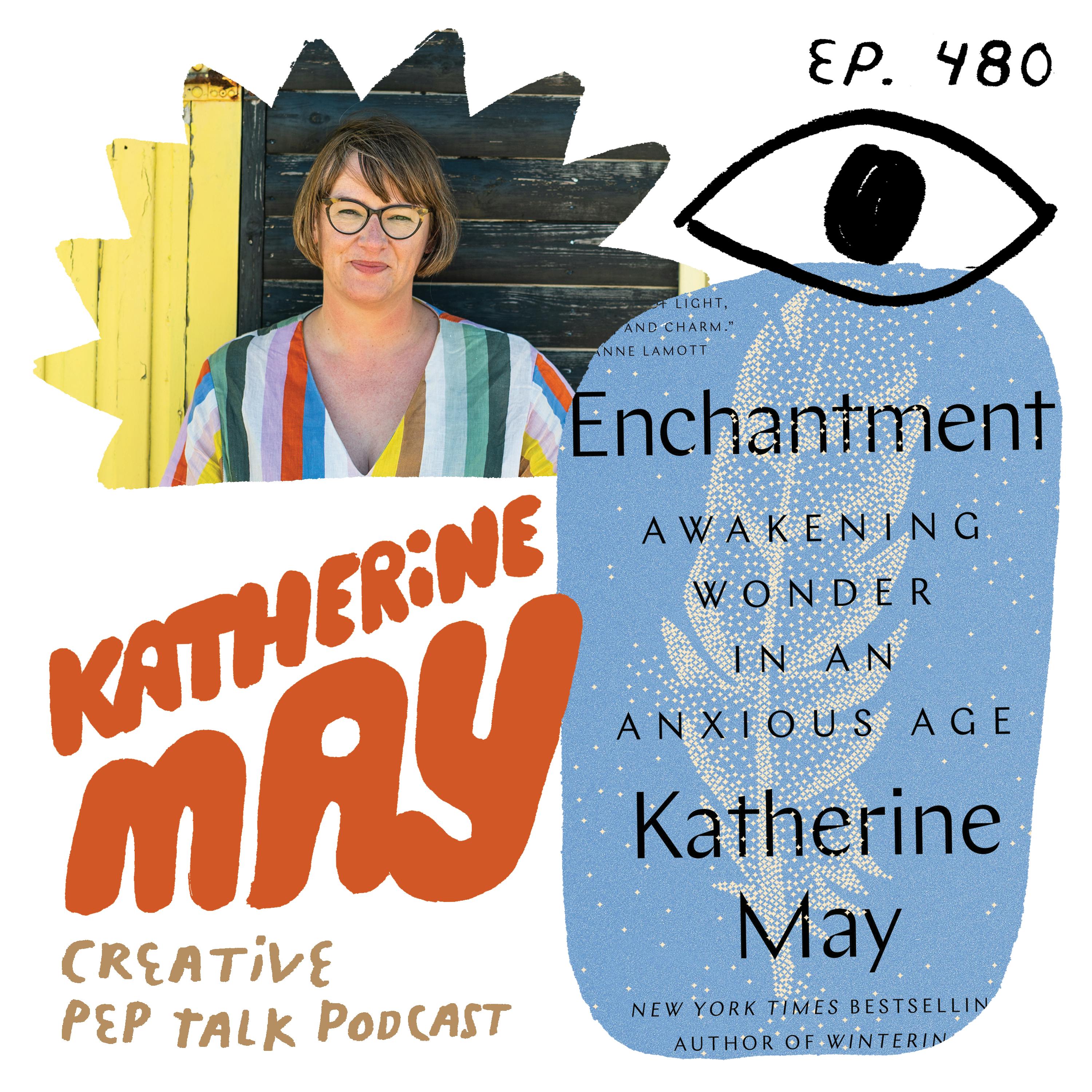
Hey, you're listening to Creative Pep Talk, a weekly podcast companion for your creative journey. I'm your host, Andy J. Pizza. I'm a New York Times Best selling author and illustrator and this show is just everything I'm learning about building and maintaining a thriving creative practice. Let's get into it. Miro is a collaborative virtual workspace that syncs in real time for you and your team so that you can innovate an idea into an outcome seamlessly. We talk a lot on this show about the idea of how creative research shows that playing with the problem is essential to innovation. Now, when I think of play, I don't think of documents and email, so if your team is often working remote, you need something more dynamic and collaborative. I think that Miro's mind maps and flow charts where team members can edit and play in real time, has a lot more capacity for innovation and playing with the problem than traditional ways of collaborating over the Internet. Whether you work in innovation, product design, engineering, ux, Agile or it, bring your teams to Miro's revolutionary Innovation Workspace and be faster. From idea to outcome. Go to miro.com to find out how. That's M I R O.com I'm a believer in the idea of dressing for the job you want, not the job you have. And I have applied this to my creative practice too, which means if you want professional results, you need to present online like a pro. And that means going beyond social media and having a professional website that reflects your style and looks legit. I rebuilt my site this year with Squarespace's Fluid Engine and was so happy with how easily I could build my vision without coding that when they approached me to support the show I jumped at the chance because I love and use this product. So go check it out. Squarespace.com Pep talk to test it out for yourself. And when you're ready to launch your site, use promo code PEP talk all one word all caps for 10% off your first purchase. Thanks goes out to Squarespace for supporting the show and supporting creators all over the world. We have a real treat for you in this episode. It is a conversation with author Catherine May. I have been so excited to share this with you and I was so looking forward to having this conversation. It was such an enjoyable chat and I was really inspired and moved as I am by Catherine's work. I was introduced to Catherine's books by my wife Sophie, who has a aesthetic kinship to the kind of stuff that Catherine explores with going on walks and understanding and feeling the joy of small things and being in your body and all things that honestly, I really struggle with as an ADHD person. And for that reason, Catherine's writing is almost medicinal to me. It has this really profound effect and it can just really hit me and it's very meaningful to me. You might know Catherine from her books Enchantment or Wintering or the Electricity of Every Living Thing. My way in was that book Electricity. I got into it because it is a memoir about her midlife autism diagnosis. And I was reading it to prepare for making our series Right side out about ADHD that we did earlier this year in 2024. And it highly recommend the book. I'm in Enchantment now and it's just bringing me so much life. And so we started the year with this focus on neurodivergence and owning who you are. And we went into the summer with this slow and steady burnout recovery period. And that's really what Enchantment's all about, which is her latest book and it's just given me so much. So I feel like this is the perfect guest for this year the show and it was just an absolute delight. Stick around for the end and I will come back with a CTA that I'm calling Post It Note Ritual. And I'll be back to talk about how you can not add new things to your life or constantly shifting, trying the brand new thing to see if you can feel good again, but how you can bake something, just one thing, into your everyday that might help you recover from burnout and stay more creatively regulated. And so I'll be back for that. In this chat we talk about all kinds of things. We talk about the kind of balance between mystical creativity and systematic creativity. We kind of chop it up around the hero's journey and go with that from two very different perspectives. And we also explore tapping into the creative things that your brain automatically does and how to recognize those things so that you can put the best of that into your work in a way that comes with ease and flow. So look out for all that stuff and I'll be back at the end to give you a creative call to adventure on how to put some of these ideas into practice. I was introduced really to your work by my wife, who is British and also I'm adhd, so I find the world deeply under stimulating and so she helps. She has some other energy that helps me kind of stay present and it's probably a little closer to your way of being. And so she introduced me to your work when I was working on. We were co writing this series about ADHD and neurodivergence and kind of positive self psychology stuff. And it's. And so later I'd like to get into a little bit of that. But it's your, your writing and your work has been really, really powerful for me. So first of all, just thanks for that.
- [07:43]
It's really nice that it lands somewhere, you know, you send it out into the world and you're never sure.
- [07:47]
I know, I know. And it' it's. It's interesting because I. When I first got into your work, I'm about halfway through your latest book, Enchantment, which has been super timely for me. It's what I didn't know that I real. That I needed, but I got into your work from the electricity of every living thing. And it was kind of research because I was doing all this work on neurodivergence and I just. It's so interesting how, you know, my creative practice, there's like, there's the part of it that's like an outpouring of who I am and then there's also part of it that's like self regulating, almost like medication.
- [08:38]
It's not even kind of soothing, kind of. Yeah, yeah.
- [08:42]
But it goes outside of what comes natural. What comes natural for me is, you know, just burning white hot ADHD action all the time. And so I'm really interested in that space between what comes natural and then what you need to do. That maybe it doesn't come natural because you need to add it to your system. And your work is really like that for me. And so I think some people that are like me may not realize how much of a balm your ability to be present is. And halfway through this Enchantment book, I really had to pause because I just had tears streaming down my face because I have such a hard time accessing this and I was just so moved. So thank you so much.
- [09:38]
That makes me really happy. And I, you know, I had to really learn it, you know, like I. My tendency, as with loads of autistic people, is to sort of retreat into my head because the outside world feels so unsafe so often. And I mean, I like, I don't know if this is a proper phrase, but I think that loads of neurodivergent people have got a kind of sensory trauma almost where we have been forced through things that feel uncomfortable or painful so many times or that. That we know feels wrong in our bodies, but we've been told that it's right. You know, like anything from sort of sitting still to being an incredibly noisy room, you know, and you're told that, no, this is just normal and you should be able to cope with this. And. Yeah, my. My default has always been to, like, retreat into my head, which is why I'm a writer, because that's where, you know, that's where I find stories.
- [10:34]
Yeah.
- [10:36]
And I've. Over the last. Well, nearly 20 years now, you know, I took up meditation and I really. I was like everyone else says to me now, oh, I wouldn't be able to meditate. I can't sit still. I can't concentrate. Like, yeah, hi, me too. But I. I knew I needed it. I knew I needed to figure it out. Yeah. And I found so much solace there. And it's. It has. It's changed the quality of my attention. But it's only since I wrote Electricity that I've really, really realized the need to come back into my body and to live there again. And I'm. I'm still in process with that. It's hard. It's. It's hard to be there sometimes, but it's. It is rewarding, for sure, when it. When I manage it.
- [11:22]
Yeah. And the thing that really fascinates me, and this is like an oversimplification, obviously, everybody's experience with neurodivergence, adhd, autism, is very different and nuanced. But I have, over the years, had a lot of autistic friends that I kind of gravitate towards. And the thing that. And this is what. And this is also true about your books. Where I live, my tendency is to live in my head. My tendency is to disassociate in that kind of way, but for the opposite reason. And it's because I find the presence so understimulating that I will be. Yeah. I spent most of my childhood, like, in fantasy. Literally, just like, I'm in class and I'm just imagining things that are way more interesting than what's happening. And so your descriptions and encounters with everyday things. The thing that touched me was I had gone. I'd figured out last week how to get present in taking my youngest kid to the grocery store. And it was. That's a real challenge for me. Not just to do. It's hard for me to do. It's hard for me to enjoy it, but somehow I. I enjoyed it that day. I figured out how to. And you had a line in your book about handwriting, your grandmother's handwriting, and the grocery list, which are really the most important things. And I was just like, oh, my gosh. Like, I had touched that today. But it's so fascinating because it feels like it's coming from the opposite place but finding the right level of stimulation by getting into your body.
- [13:12]
Although I think it is similar. I mean, yes, definitely. Like, I'm often escaping because I'm overstimulated, and I'm like, yeah, I cannot be in here. Everything's clanking, and people are getting near to me, and there's, like, this kind of conflicting information. And, yeah, that's definitely, like, when I curl up in my little snail shell. But I also. I find that the world runs very slowly compared to the inside of my head, you know, And I find a lot of things just incredibly boring. Like, boredom is one of my defining experiences, I think.
- [13:45]
Me, too.
- [13:46]
And when I. Like when I. One of my first realizations when I realized I was autistic.
- [13:52]
Yeah.
- [13:53]
Was this, like, sort of consistent feeling I'd had when I was in a room full of people that everyone else was numb. And, like, of course, that doesn't make any sense because other people being numb is not in the field of my experience. But what I really meant was how unreactive they were to the world from what I could see. So whereas I wanted to kind of flinch and run away or, like, respond to the sensory overload, they were not responding. And. And I couldn't, you know, I couldn't fully make sense of that as a response. And I. And I think on top of that, like, we autistic people are really well known for, like, going straight to the point. Like, we don't. We don't care about small talk. We find it really tedious and really pointless and such a waste of time. And that added to this sense of numbness coming at me from the people, because why do they want to talk about really boring things when we could, like, ask each other about whether we believe in God or, you know, how to solve the massive questions of existence? Like, that's the conversation I care about.
- [15:02]
Yes.
- [15:03]
Yeah.
- [15:04]
That's amazing. And I get you.
- [15:06]
I get your boredom.
- [15:07]
Yeah. And, you know, like I said, I know that there's. It's an oversimplification because there's all this nuance, like, you're bringing into that. But I also. My friend. My close friends that I've had over the years that are autistic, it also feels almost like passing notes to the other part of the brain that I don't always have access to. It almost feels. But there's. There's such a similar quality to that. I think there's the similarity of just not feeling normal, not feeling, like, neurotypical. But then there's also just outsidership. Yeah, yeah. But then there's also just this fast. And that's one of the things that's not boring about those people, is that it's like, oh, I have just no idea where you're going to go with this, because I can't even foresee it. And I love Anders of Quickness. So, you know, I love all of that stuff. But I wanted to talk about your latest book, Enchantment, because, you know, I. We just did a series on the show over the summer, which was the Slow and Steady series. I was publicly trying to come out of burnout in just some difficult spaces in my work. And, you know, my. The obvious answer for that, I think, is slow, slow down. Get, you know, get. Get more steady, all that. And I think those things are true. But I, you know, I started reading your book not thinking of it being connected to that. Not thinking the idea that Enchantment was really connected to that because it didn't seem like an obvious solve. And yet that's kind of what exactly what it's about. And I can see how much that magic is a huge part of what's making me retreat or shut down. So I wanted to see if you could talk a little bit about, because a little bit about what brought you into that space and also why the word Enchantment. I love how authors can kind of imbue new meaning into words. And when you say Enchantment, you're meaning something that wasn't immediately obvious to me, but it also is like a word that I think we need. It's something that's like, this is something we need to be able to talk about.
- [17:30]
You know, it's a slightly tricky word to use in a way, because it's become freighted with like, all this kind of really tackling, tacky sort of Disney fied stuff, like, oh, it's like pink butterflies and sparkles and magic and unicorns. And I, you know, like when. When we were first publishing the book, I kept joking to no one's amusement that I'd love a unicorn on the front of the book, please, and preferably some, like, a nice, foily kind of, you know, holographic background. I wasn't entirely unserious. I didn't get my wish. But I, like, actually, I tried to avoid using it for that reason, but it just kept coming up in. In my language. Like it just. It was this repeated word that I couldn't help but notice. And I. I loved the. The sense that enchantment has got this link to the word song, you know, that it's. It's a sun. A sun kind of spell. And this sense that it's active and passive, that enchantment could be something that lands on you, or it can be something that you do to the world. It's a sort of exchange. I also like the kind of witchy spelling about it too. And I. And as I was writing the book and this never made it in, but I read a Welsh myth called the Mabinogion. And one of the cycles of that is medieval, is that a fog falls over the kingdom and it's like this literal kind of enchantment rolls in. And I sort of connected that to the pandemic, this sense that a fog can roll in to the whole of the world and then you have to find your way back home again, which is what the characters kind of do. Logically, I should have actually written that, but sometimes it's nice to just keep things for yourself and podcast these ideas came together. Yeah.
- [19:30]
And put them on podcasts.
- [19:31]
Yeah, that's right. I mean, it gives you something to talk about afterwards in the long term. But that, that fog is really meaningful to me because of that sense of burnout and that sense that I was in, that my cognition had slowed down to the point where I felt like I was barely able to access my own thoughts. And, you know, it meant that time was skipping in weird ways. And I was feeling kind of physically exhausted, but also just not human, you know, dazed. And that. Yeah, that. That was the. That was the beginning of the book, really. Like, what do. What can you do when you feel this burnt out? Like, how do you recover your sense of self? Because that's what it obliterates. And I realized quite soon on that the answer wasn't just what had happened in the immediate past, but I needed to think about my long standing habits of thought that were keeping me from feeling refreshed on a. You know, like being able to renew and refresh myself.
- [20:36]
Yeah.
- [20:37]
So not many unicorns, tragically, because unicorns.
- [20:40]
You know, that what's really grabbed me about that is thinking about enchantment in two different ways. There, where, you know, there's the enchantment that pulls you out of the fog and then the idea that the fog is an enchantment. And I Reminds me kind of one of my ongoing creative threads because I make picture books. And most of the stuff I do has to do with storytelling is how the conflict and the obstacle is always the means in which the character gets what they need. Maybe it blocks what they want, but it's how they end up getting what they actually need. And it's just interesting to think of, oh, and then the burnout phases are really your body giving you what you need, saying, okay, well, you can't keep doing this.
- [21:38]
You need to stop, and I'm going to stop you.
- [21:40]
Yeah, yeah, yeah, yeah. Instead of seeing it as, oh, just an obstacle in the way.
- [21:45]
Absolutely. There's. If we're going to talk about it in narrative terms. I always love the John York definition of a story, which is. I mean, this is going to be a wild misquote, but it's about somewhat. It's about going into the woods and bringing something back for your home. And I love that little code of for your home at the end of the sentence. You know, it's not bringing treasure back. It's like bringing something back that you need, as you say. And I mean, that's what my book Wintering was about. You know, it was about the. Not these moments, which is often what people assume. It's about, like, these moments when you think, oh, I'm going to have a nice little rest for a while and I'm going to come back having had a spa day. It's like the points when you are taken down by life and often because you've been resisting stopping and thinking for such a long time, and you've been pushing on through, like all the signals that your body sent you and all the signals that your mind sent you, and you've just bloody mindedly kept going on through. I think that's. I think that's my territory because I know it so well, because I've done it to myself so many times. And it's like it fills up my purpose in life to tell people to stop doing it.
- [22:54]
And I love this idea because this is what I assume. People go seek out a book like Wintering because they're like, all right, yeah, tell me how to avoid the winter. Like what? You know, like, you know, in some kind of weird way, I think that that's what I would be thinking, and that is kind of what I was thinking. Entering Enchantment of. I'm not thinking about, like, oh, yeah, let's enter the fog. Like, let's. Let's really go into it, whereas I'm.
- [23:23]
Like, let's get in the fog. Come on. The fog is really good.
- [23:28]
And there is. I mean, it's the only. It's the only way. And I think. Okay, so could you maybe talk a little bit about what your. What enchantment is for you? What? Because I think it's, you know, this is a. Mainly for creative people, and I think that burnout is an ongoing thing, but also as this, like, loss of inspiration, loss of passion. Yeah, I think a lot of that comes through part of just the job and, you know, every day. But also, as you get older, you just lose your sense of magic. Especially in our modern day, we don't have that as much of a ritual in connection to this stuff.
- [24:20]
So.
- [24:21]
Yeah, I don't know if you could talk a little bit about why you needed that and then what. What you came out with and how maybe that relates to also your creativity.
- [24:32]
Yeah, I mean, like, you'll know this better than most people, but children have got this innate sense of magic, and it's not about the big things. It's about the tiny things. You know, like kids, will you walk down the street with them, and before you know it, they've got, like, a tiny, nondescript pebble in their hand, and they're like, their whole life is in the palm of their hand. And, like, you can't. You can't even access that. And I like, yes, we all lose it, but I think we work quite hard to lose it. And I think we're trained very carefully to lose that sense of wonder, you know, from the parents saying, come on, hurry up. You're taking ages. Which God knows, I've done enough times to my own child, to this kind of teenage sense that it's cool to be cynical. And, you know, for me, like, I'm the generation that thought Richard Dawkins was a really great idea. And, yeah, like, all of that stuff I thought was me being a really good, rational adult and learning to grow up. And it took me a long time to feel this real sense of loss over that. And this, you know, this really. This restriction, actually, this. This kind of forbidden space that I wasn't allowed to think in, and I wasn't allowed to engage in magical thinking, you know, And Enchantment was a really hard book for me to write because I felt embarrassed to say, oh, no, wait, I need it. I actually really need this. I need to re. Engage with this sense of absolute awe at a stupid pebble. Like a completely stupid pebble. I need that. I need that feeling, and I'm not willing to wait for it, you know, to go on a holiday of a lifetime and see that I grew fools or something equally expensive. Like, I need it in my everyday. I deserve it. And I actually. I don't think I can carry on functioning without it. And. And I need permission to think in a completely different way, Like a much more symbolic way, a much more ruminative way, rather than carrying on being grown up and practical.
- [26:49]
Yeah.
- [26:49]
And so. Sorry, that's not answering your question. You asked what enchantment is. For me, I think enchantment is like the sort of ongoing practice of wonder, of deliberate wonder, of intentional wonder that, you know, that's there to. To just take great care of you.
- [27:04]
And I'm glad you went into the practice of it, because I want to. I want to. I want to circle back real quick to that. In a second. To that. But, you know, this has been on my mind a lot lately. When I first started the podcast, so I was doing commercial illustration at the time. It was before I really had got much into picture books. I was doing a lot of client work and that kind of thing. Um, and I kind of started it with a. I don't necessarily disagree with this now, but I started it with a feeling that all of the conversation around creativity within creative circles had become so overly spiritualized and like, for me as a person, serious. Yeah. Pure mystery and, you know, mysticism and that kind of thing. And for me personally, that's. That was fine for the most part, because I am prone to that way of being like that. That is my natural gear in life, is to be that way. But I think at the time, I was really frustrated by when. It's when, you know, the pendulum swings back and forth and there's, like, good things that happen as that kind of goes through history and the overly mystical view on creativity. I just felt like there was.
- [28:32]
I know, exactly. Are we about the same age?
- [28:36]
I think so, yeah. I'm 38 and I'm 10 years older.
- [28:41]
Than you, but I can see what you're talking about.
- [28:43]
Yeah. I mean, we're probably right in the same zone with this. And I think that I was just fed up with. In the same thing with like a Richard Dawkins of unchecked spirituality or religion can be. It's so vague and abstract and it's so. In the world of feelings that there's so much manipulation that can happen. And there's. There are a lot of dangers, you know, which I don't have to tell you that. You, you absolutely know that. But.
- [29:16]
And like, it's about democratization as well, isn't it? I think that was, that was often my problem with it. It's like, oh, you know, these people have got this mysterious gift and, and they're not. They're not one of you.
- [29:26]
Yeah.
- [29:27]
And like, I was like a working class kid growing up in a council house and like, we, I knew that wasn't in my house, you know, and actually, like, quite often what was seen as this mystical gift was like a privileged upbringing that made space and gave you money to do that. And I felt full on resistance.
- [29:45]
So true. Yeah, so true. And that's, that's a great example of exactly what I mean of there's so many different or just, you know, that. And also things like the, the more that the people that are established play it up and create the, it creates boundaries of. Yeah. Like, I don't know how it works. It just comes to me and you're sat there like with a pencil, just trying to force something to happen and you're like, well, it can't be that. So there's all these, you know, I was just aware of. So the first. Even though, like, Myth and Journey were big parts of the show all the way from the start, I did. I was always really careful of. I don't want to take that slant. I want to take. I want to talk about research, about creativity and da, da, da, da, all that stuff. But I think over time, both in my personal life and my creative life, I've realized that we could be talking about the same things. We can be talking about reality, but. But we are not going to be able to access the inspiration if we don't do it through the lens of metaphor and symbolism. And, and I don't want to use those words as if they're. That means we're talking about stuff that's not true. It's just a more powerful way of talking.
- [31:05]
Yeah.
- [31:05]
Yes.
- [31:06]
They're part of our toolkit. Yeah. I mean, I have this. Yeah, it's really interesting to hear you say that because I have this, like, still gut reaction against the hero's journey. Like, don't ever talk to me about it. It makes me angry. I've never read it. Like, it just. It's just that all the people that have ever really loved it have pissed me off.
- [31:25]
That's hilarious.
- [31:27]
It's probably great, but when I read Electricity. Go ahead.
- [31:32]
I was just going to say, just for your context, the listeners know that I am a huge hero's journey person. However, I'm also a big heroine's journey person. And I've kind of. That was also about a decade ago. I still love it. I still love it. And I get. I totally understand.
- [31:50]
I don't know why I'm so cross with it, but it's that, like, I understand.
- [31:54]
I understand. I'm just giving you the context of it, but I get it.
- [32:00]
But I. But, you know, like, when I sat down to write Electricity and I realized I was writing about a literal journey and a journey of discovery, and there were loads of the elements, the hero's journey in it. I had this real. Like, I will not do this. I will. I am not going to do this. I absolutely refuse. You know, And I. And so actually, I don't complete the journey. And I was delighted with myself over that. Like, I deliberately disrupted the journey because it's like, I am not doing the heroic thing.
- [32:30]
Yeah.
- [32:30]
And I. Yeah. And I had a similar thing with the artist way, which everybody loves except me.
- [32:38]
Yeah.
- [32:38]
And I read it and found it, like. I think. I think exactly what you're talking about, like, woolly and overly optimistic. And I wanted an account of my creativity that was about showing up and working.
- [32:52]
Exactly.
- [32:53]
And doing all those kind of hard bits and, like, knowing that I didn't have the privilege to just let my creativity flow out there. I had to make it work. I had to earn money from it. I had, you know, all of that sort of thing. And now I think I probably really need to revisit that book because I think I've probably been unkind for it. But at that time in my life, it just. It would never have served me to think in that way. I couldn't leave stuff to enough chance to get involved in this, like, beautiful pink cloud of creativity. I had to find the system and the labor in it and the grunt work. That. That was the only way I knew how to do it.
- [33:31]
Exactly. And I feel. I feel exactly the same. And my response to, you know, the artist way or even things people like Rick Rubin. I don't have a. I just have a. I don't disagree with much I've heard either of those people say. It's just more that. That way of thinking about it. I just had initial, you know, kind of negative reaction for. For all sorts of reasons. And a big part of it is just that a lot of those ideas, if they're unchecked, they can be. They can really take off the responsibility on the artist to have habits and show up and do the work and. And feel the. The difficulty of it, because that's a huge part of it for me. And then, you know, I also. In my time, you know, Hero's Journey was a big thing for me. When I was in my 20s, it kind of was. I didn't even think of it as a creative thing or a writer's thing, even though later it informed a lot of story things. But it was really important to me at that point, almost more as a spiritual thing or a psychological thing. But the further I've gotten into story now, you know, now I've dove into 15 books or something about it and all these different perspectives. I definitely understand people's impulse to push back on. There's some. There's some really. There's some really pervasive kind of like, dogmatism that comes with Hero's Journey. Fanboys, Joseph Campbell fanboys.
- [35:17]
I think it's the fanboys rather than the book that annoy, to tell you the truth. You know, it's this, like, we know everything. We know how stories are made. We've got a system. And every story follows this system. And I'm like, and it's not true. And it's all, watch me break it.
- [35:34]
Yeah. I mean, the whole idea of as soon as there's a right way in creativity, it's the wrong way. Like, you know, that's the whole notion. But, yeah, I totally feel.
- [35:44]
I think what's really interesting to add in at this point, when people do ask me things like, where do your stories come from? I have to say I have no idea. Like, they do. I do often feel like I'm channeling something that I've got no access to, like, no kind of conscious access to. And I. I don't. I don't feel like the inventor of a lot of my work. I feel like. I feel like I create the circumstance in which it can happen. And I love that kind of Picasso quote. I think when inspiration comes, I want it to find me working. Yeah, something along those lines. That's my part, is that I. I show up. But I. I would have to admit that I. I cannot explain a lot of what. What happened, what comes out. Like, it doesn't. Yeah, it doesn't.
- [36:39]
Andy J. Pizza
It's.
- [36:39]
Catherine May
I don't make it in any sort of.
- [36:42]
And I think that is the. I think that is the aim. I feel like all the stuff that I make within that. And so I feel like what's really interesting about this is we're talking a both and kind of way where we're talking about what, as a creative person, maybe grosses us out about systems and logic.
- [37:10]
Yeah.
- [37:11]
Yeah. And then also what can feel that way when it gets overly mystical and that there's this way in between where you don't have to know how it works. Because even as you're saying, you know, I don't know if you feel like this, but having put out a bunch of books and a bunch of podcasts and stuff, you can never put enough nuance into the actual experience of it. And, you know, when you say that it can feel like channeling, I completely agree with that. And I also feel like. And I don't know what it is, but I like. I actually like the idea that I could see it from both angles. I could see it from.
- [37:49]
Yeah.
- [37:50]
What's the same thing that happens when you have a dream is that it's not in your control. It's coming from. It's instantly coming from somewhere else. And we don't. We don't fully understand that either.
- [38:01]
Yeah. I mean, first of all, I'm compelled to say I edit like hell as well, so. I do. I do. Then there's so much of me in that bit.
- [38:08]
Yeah. Hey, in case you don't know, we have a monthly live virtual meetup every last Monday of the month with supporters of the show from Patreon and Substack. We have so much fun on these calls, and they are the warmest, most encouraging creatives that I have ever met. And we also talk real creative practice stuff. We have authors, illustrators, lettering artists, picture book makers, fine artists, musicians, and folks that work in video and film as well. And we have people that are just starting out, people super established in their creative careers and everything in between. For the rest of this year, we're going to chat through our new Journey of the True Fan series, exploring questions and ways to apply these ideas to your own creative practice so that you can leave 2024 stronger than you came in with more visibility, connection with your audience, and sales. Sign up to whichever suits you best@ either patreon.com or andy jpizza.substack.com and I hope to see you at this month's meetup.
- [39:36]
I don't know if you've got to this in Enchantment yet, and I think it's later in the book, so maybe not. But I write about Julian James's book, the Origins of Consciousness in the Something of the Bicameral Mind. It's such a long title.
- [39:49]
I haven't.
- [39:51]
Okay, you're gonna like, you're gonna like this because this, it's like this weird, completely unsupported book about neurology, I guess, where from. Like this is the 60s where James. And it's, the thing with it is it's beautifully written and it's so compelling, but also almost certainly wrong. But he puts forward this, this incredibly well argued theory that when in our early evolution our brains were in two halves, the two halves weren't joined together yet, and therefore we received information from different sides of our brain to the other side of the brain as if they were the voice of God.
- [40:39]
Yeah.
- [40:40]
And so we, so we evolved feeling that we were in direct conversation with God all the time inside our head when it was actually that we just didn't have access to one half of our brain. And loads of.
- [40:57]
I have got to this part. I have got this part. But keep going because it's. I did absolutely love this. Yeah, keep going.
- [41:05]
Yeah. I mean I, I loved it when I first read it. You know, always aware that it wasn't. It's not the gospel.
- [41:12]
Yeah, yeah.
- [41:13]
And loads of neuroscientists do for the same thing. And like what David Eagleman says about it is we don't actually have a better theory. We don't think this one is right, but we don't have anything better. Like it's, it's outlandish, but like it's, it's one of many outlandish theories we have about how the brain honestly operates and how it evolved. But I, I like it on a metaphorical level. I love the way it lets us think, or lets me think about creativity in all honesty, because that's. If you have, if I, if, if I had to pin down a theory of how creativity operates, for me, I would say the bicameral mind. Sure. Why not? Why not? Because where else is it, like, where else is this stuff coming from? I don't know.
- [41:55]
Yes. And just, just so I. Because I want to make sure that I get it and that the listeners get it too. He's saying. And by the way, as an aside, one of the things I think a lot about is what could be a great relationship between creative thinking and scientific thinking. A lot of times I think what a problem that happens is when creatives are trying to say this is literally how it is when it's an intuitive, like, idea or when scientists won't be creative in their ideas. I think most scientists that I have met actually acknowledge the power of intuitive thinking and how much it's led the way through scientific Thought because you need the hypothesis and you need, like, even if it's wrong, it's a way of opening up preconception. So you need that kind of dialogue between these kind of philosophical ideas that are not true, maybe literally or could be. But I think that, to me, as I was going through that chapter, and I absolutely loved it, this is my kind of juicy. As soon as you're getting into it, I was like, oh, man. And. But that we need. To me, it sounds almost like, oh, that's the great. It's not only just an interesting theory. What a great premise for a book. What a great premise for a world in which things work that way.
- [43:23]
Yeah, exactly. Like, it's this great leap of imagination. And it's an attempt. Like, I love attempts. You know what I mean? Like, he's tried to think it through and he's. And also, like, he draws on loads of literary, like, early literature to try and prove his point and gets a load of that wrong, too. You know, because as soon as you examine it closely, what he says happens, doesn't happen. You know, he says that. I think it's the Iliad that. That just, you know, shows that this is happening in those. In the characters in there. And I don't care. Like, I love flights of fantasy, you know, like, it's got no bearing on my real life.
- [44:04]
It's a great meta. It's a great metaphor for thinking about how it is to be and how to. How to be a creative person. And just in case. I want to make sure I get it right, how I'm thinking about what you're saying, as essentially, in the book, you talk about how we take for granted that we have this kind of emergent, one voice that is us in.
- [44:26]
Our brain, a sense of self, like.
- [44:28]
A real sense of.
- [44:29]
Yeah, yeah. Access to all the elements of our thought. Yeah.
- [44:33]
And that these are. And that they're one perspective. Even though, you know, you take the ifs look or you take a little bit further peek behind it, you realize that. That there's many perspectives that are very argumentative, usually at least in my head. And he's proposing that there was a time where there was. We were all hearing voices. We were hearing these different perspectives in our brains, and some of them were attributed to God. We're thinking, oh, God's just speaking to us, essentially. Is that kind of what.
- [45:06]
Yeah. He was saying there's no evidence of this, but that people believe that they were in constant and personal dialogue with God. That was a voice directly inside their head. And I just. Do you know what? I just love the way Julian James's mind works. That book is. I mean, honestly, it's inches fat. It's a labor of love to get through it. But his prose is beautiful. And what you're doing when you read that book is wandering around the mind of undoubtedly a genius. But geniuses don't always get stuff right. Yeah. And I'm. I am deeply okay with that because he didn't get stuff right in a. Not only a harmless way, but in like a really enriching, gorgeous, immersive way. Yeah, it's hard to have that conversation, isn't it? In our current era, it's like things have got to be either right or wrong. Things got to be science or art. Like, actually, no, we could. We can just immerse ourselves in the gorgeousness of some ways of thinking and some ideas, and it's safe for us to do that. Nothing bad happens.
- [46:16]
And I'm very interested in that because of being a creative and also then having a podcast that's attempting to be more nonfiction because it's a delicate space. I think there's something of taking the work seriously and not yourself. That quote at all. Not taking yourself so seriously. So creating. Creating a world where you like. I think your books are great at this. Of like, these are a personal perspective that. Where I'm kind of poetically working through things and it doesn't feel positioned like a journey.
- [46:56]
Yeah. I hate didactic books. Like, I've.
- [46:58]
Yeah.
- [46:59]
I've got no interest in being told. Like, I'm just a horrible, rebellious teenager still. You could never tell me anything and you still can't. I'm sorry. Like, I wanna. I want the experience of learning.
- [47:09]
Yeah.
- [47:10]
I've just got no interest in having it ready made. I tell you. I don't know if you know Kristen Hirsch, the songwriter and musician.
- [47:18]
I don't know if I do.
- [47:19]
Well, she's just, She's. I mean, she was my teen hero and my adult hero too. But I, you know, you have this intense relationship with people. I've just interviewed her for my. For my substack. So excited about that. And she's written a book called I'm Going to Get It Right by Picking it up and the Future of Songwriting. And it's. It's really a book about creativity. And one of the points that she makes in there is that songwriters, and therefore I think writers and artists and every. And creative people are medicine. They are offering medicine. Yeah, but they are. They are not. That's. That you have to remove the ego for that. Like we're just a conduit for that medicine to come to our audience. And that therefore there's, there's necessary humility in that. Like, you have to realize how small you are as the deliverer of that medicine because you're not fully in control of what that medicine is. And that made sense of so many things for me, really. Just this, this feeling of like, what, what am I doing? Like, what is this, what is this thing that I'm doing? Because I don't think I've got the answers. But I know people. I have to acknowledge that people find answers in my book. And I think she has captured that relationship better than anything I've ever read. Honestly. I think she really has thought about her role there and what she offers and what we offer. And it's really gorgeous.
- [48:54]
I love that. I love the idea of the conduit and you're the messenger, but you're not, not creating the message. And there's a good kind of both and way of holding something where you're, you're doing something important, but it's also not you that's doing it fully or, you know, something in that vein. The other thing it makes me think.
- [49:17]
Step down, you know.
- [49:18]
Yeah. And, and I think the other thing it makes me think is I keep thinking about this. I've mentioned a few times in the show I heard Mike Birbiglia on his podcast talking about how essential it is to have stand up friends for him because the best stuff that he does is so natural to him that it feels like nothing. And it gets back to this thing of channeling and that. And when I read your books, there's some things about your way of being that are so different to me that I. And it's funny because nobody thinks of me as a meditative person at all. I'm the opposite of whatever that is. Right. And so, and you know, so in, in my, when I was, you know, in my 20s, I would have not sought out books like yours. And yet there's something so medicinal about it. Like, it's like it hits me on such a, such a hard level and it feels like you say there's definitely a lot of levels to it that feel just you being you and this thing of being able to notice. How have you, what helped you be able to capture those things? Because I think about this. I also heard Jerry Seinfeld say back in the day that he's like a joke Chuck. So there's like woodchucks you just have to figure out, like, what does your. What does your brain do? You know, and then being able to notice what it. What does it just naturally produce. And that also gets to this channeling thing, you know, how did you. How do you. How did you get acquainted? Because it seems even more. As you've gone along, you're more aware of, like, this is what I do.
- [51:17]
Yeah. I mean, I think writing Electricity of Every Living Thing changed that because I'd set out to write a really straightforward memoir about walking, and it was really supposed to be about motherhood and how you come to terms with being a parent and, like, how you process that huge life event. And along the way, I realized I was autistic and realized it was a book about autistic experience, but also about that I was. That I was actually. Literally, I'd put myself in the situation to learn how to cope with being autistic, which I didn't know how to do. And so I sort of consciously started to add in the bits that I'd have probably otherwise edited out. You know, like, my instinct when I write a book is to learn everything about the field and then to just write the core of it. And, of course, for writing that book that included, like, well, who else has lived along this path? Like, what are the. What are the stories here? What are the mythologies? You know, I love. I don't know if you have these in your country, but we. Whenever you. In any tourist destination, if you go into, like, a petrol station, there will be a little rack of kind of thin books of local ghost stories. Someone has really called the market in this. What?
- [52:32]
I don't know. I don't know if we do. At first I was just thinking they're like pamphlets, you know, And I'm like, yeah, we got pamphlets. But I don't think I have seen this.
- [52:39]
No, they're thicker than pamphlets, but they're probably like 50 or 70 pages long.
- [52:44]
Okay.
- [52:46]
And they're always, you know, they've gathered up. And I. I love the. I love these things. Like, I'm. I'm all over them. I've got so many of them. They're terribly written. They're not. I mean, they're probably made up. I don't care. I love them.
- [52:58]
Yeah.
- [52:58]
But, you know, like, so all of that I would do around the route, and I. And I started to think, wait, that is actually if. That. If I've got an autistic brain, then wanting to suck in the knowledge around this place is part of that. That's that's what that leads me to.
- [53:17]
Yeah.
- [53:17]
And so I started to try and include it. And I realized as I was doing it that that was part of my sense making around the world. I was. I didn't want to just think about the basic facts. I wanted to know it deeply. And that's how I approach everything. And so Electricity was still like a pretty straightforward memoir, but it included all these other little stories along the way, like about Gene Reese and about Samuel park and all these quite sort of weird, outsiderish, visionary people that had attract. Have been attracted to this path that I was walking. And I, you know, I felt lineage with them. I came to feel lineage with them. They were attracted to the edge of the world. And so then when I started to write Wintering, I really invited that in fully. I didn't want to tell a story about myself or not solely. I wanted to create the kind of patchwork and I was trying to represent the way I think. And, and that in turn helped me to start to notice that detail, you know, like that's, that's the call and response of knowledge. You know, it's. Yeah, you. You learn some stuff and it takes you deeper and then it raises more questions and you go deeper again. And it's this beautiful cycle. It's, it's, It's a recursive loop. It's, you know, and it's definitely how I, how I absolutely work now. And it's changed the quality of my attention.
- [54:46]
Yeah, yeah, I, I love that. I also, I love that kind of process element. It reminds me of Ira Glass talking about how, for him, storytelling is this thing of, I'm going to tell you a bit about the story, and then I'm going to tell you how I met, how it made me feel, and I'm going to tell you a bit about it. And that, and that is, That's a huge part of storytelling. And it just has this. Yeah, I think it's an interesting way to engage in a text or a body of work or research or whatever your substance is that is kind of the meat of your project, whether it's fiction or non fiction. Yeah. There's also this awareness of, like, okay, you're engaging with something and then you have another layer where you're able to notice, okay, how did that make me feel? What did. What was I doing as I was engaging in that? And then that's part of the work. And then it kind of sort of check in. Yeah, Yeah.
- [55:46]
I mean, I like, in lots of ways, all creative work is a distillation of somebody's quality of attention. So, you know, when I see your work, I understand something about how you perceive the world and, yeah, like, not just visually, but meaningfully. Like, how do you make meaning around what you see? You know, we will see the same thing, and you will construct one set of meanings around it, and I will construct another. And I don't think I'll ever get over the thrill of that, you know, of, like, really encountering someone else's consciousness. I think it's the best. The best we have.
- [56:28]
And that's such a challenge too, because I remember. And I don't know if this was just my own trauma or something as a kid, like, not, like, learning not to trust my own experience or whatever, or if it's just a thing that every artist needs to learn. Because, you know, there's this thing of, like, I imagine young musicians seeing Lady Gaga wear meet dress and think, that's what you gotta do and take the wrong lesson rather than be like, no, what she did was follow. Follow her thing. That. That was her attention. And. And being able to trust and notice where your attention goes. That's such a. Such a difficult muscle to. To learn how to work. But then once you start getting it, I think that's the thing for me is, you know, I'm kind of aware of like, oh, I kind of. I do think I know what my brain does from doing the podcast for 10 years. A lot of these are. Were monologues too. I just got to know, like, oh, that's one of those things that turns into something, but it takes while you.
- [57:30]
Begin to get a feel. Yeah, I've got that feeling. I got that feeling. And you begin to know your, like your. The sort of beats of your creative. Because I'm. I'm like. I don't know. I'd say. I'd say I'm exactly two thirds through writing a book. And I know that because I. Because the day before yesterday, I had the watershed moment, and I knew it had to come at some point. And until then, I was slogging and slogging and slogging towards it and feeling like. Like nothing's working. What is this? What does that mean? What is the answer? And then, like, literally, that is my behavior every evening when I walk away from this. And then yesterday I had a conversation that I thought was entirely unpromising. And I came home and it was like. I mean, I was crying and I was like. My body felt different, and I was like, here it is. This is it. I knew, like, I know my process well enough to know that was going to happen, and I trusted it. But the first few times that happened, I thought I was. I'd gone completely insane. Well, then I know the last third of the book will happen really quickly now that that was because the whole emotional center of it has landed for me.
- [58:35]
Oh, I'm so. I love. I love getting to talk to you in that moment because, you know, the thing I think about a lot when I'm encouraging people to trust themselves, trust that interest or whatever, I'm trying to get across to somebody who's maybe never had that experience that you just described or maybe had it once and didn't realize. Like, I talk about it like a boomerang. Where. Or not a boomerang. What's it called? Slingshot. A slingshot. Where? At a slingshot.
- [59:08]
Which doesn't come back to you, fortunately.
- [59:10]
Hopefully, unless you do it wrong, you can load it wrong and that can happen. But the. But for me, the first time you have that happen, you can think, oh, the moment where everything changes when I let go and totally ignore the fact that, oh, there's all this tension building that was also essential to, you know, that. That kind of thing. So I love that you said this because that. That was. That took me. So it took me. I didn't. I wasted some of my college years in my early part of my practice because I just didn't have the confidence that this would come together, especially when it felt wrong. When you're sometimes in that early process because it's not working, it feels wrong, it feels grim.
- [59:56]
I mean, it is.
- [59:57]
Yeah.
- [59:57]
It feels like the opposite of what creativity is supposed to feel like.
- [60:00]
Yes.
- [60:01]
And. Yeah. And I. And I think probably the truth is that most people who feel like they failed don't push to that point. You know, they get deterred, like, quite rationally, honestly.
- [60:12]
Yes.
- [60:13]
But I. And actually there is a direct parallel with the walk there because I, like, I know when I was walking the southwest coast path and I was finding it so hard and I was doing it through winter and I was alone and I'm not sporty, that there would. There would be this kind of direct process of the first hour or so. It would be all about my discomfort and my doubt. And I'd, you know, stop to relace my shoes and adjust the straps on my backpack and wonder, like, think, I can't do this. I'm too tired. My legs don't feel right. And then I'd hit this kind of flow and sense of, like, slight euphoria. Actually. And I'd call it popcorn brain. And I'd. I'd be having all these ideas, and I'd feel really excited. But then if I pushed on through, past that, which I think probably most people don't walk for long enough in their life to get there, I would hit this place of, like, emptiness, beautiful, serene emptiness that I wouldn't even remember that part of the walk. But in the days afterwards, I'd realize I'd process something massive in that place that, again, I'm back to my bicycle mind.
- [61:24]
Yeah. But, yeah, I love that.
- [61:26]
Creativity is so analogous to that.
- [61:28]
Describe that. And I've. And I can think. And I. As I'm reading, I can think back to the walks I've had where you do, like you say, just become a body towards the end. And it is this. It's really. And creativity is so like that. Yeah. I wondered. I want to be sensitive to your time, and I wanted to ask just one more question, which was, having gone through the Enchantment world, I won't call it a journey, we won't say it was a journey, but it's the enchantment process.
- [62:02]
I might just have to live with that.
- [62:06]
No, it's fine. I genuinely love a pushback. I love it. I need that. Like, I love the. I love both shows.
- [62:17]
It's safe for us to do that.
- [62:19]
Yeah, exactly. And so. And also, there's always new stuff in that. There's always new when someone's like, well, yeah, but here's the problem with that. I. I've learned to love it. I. Okay, so the last thing I was going to say was, in the Enchantment process, the. I wondered if you had any. Any, like, ritual or practice that has been, you know, at least somewhat consistently fruitful for you. Because I think for me, going through burnout, that's the thing that I've been really thinking about. Like, I need. You know, when I go on my phone, there are thousands, millions of new ideas, like new prompts, new ways to do it, all that stuff. And I've realized, like, oh, my dopamine deprived, ADHD brain fricking loves that. Loves a new thing. Let's go. Yeah. But then I realized, I. But my humanity cannot deal. I don't actually need any new thing. I am longing for what Some of the old things where people had the ritual and that worked. You know, even if it just works 20% of the time, even less, whatever.
- [63:45]
But we used to trust the ritual, and now we doubt it before we even get there. And I think that's, you know, like, what I'm trying to learn to do, and my. My new book is a lot about this as well, is to just get into certain habits of undertaking the ritual and to stop questioning it. You know, to stop asking, do I belong here? Will I like it? Will I like the people here? Like, none of that actually matters because the thing that you will ultimately value is that you showed up and that you did it over and over again. Even you. And that you sat through it when it was boring. You know, because. Because we've lost. We've lost community. You know, we've lost the ability to withstand any tension in our lives. And we've walked away for it for really good reasons. But the loss has now become greater than the reasons that made it useful to us.
- [64:42]
Yeah.
- [64:42]
And that means that I am not meaningfully contributing to a community, to any community, because I'm not present in it. Because I've allowed myself to not be present in it. And I am looking for that. That thing that I will just damn well show up to. But if you want, like a. It's not even a ritual, but it's something that I write about. At the beginning of Enchantment.
- [65:07]
Yeah.
- [65:08]
When I was really stuck, when I was really burnt out, I kept a post it note stuck to my screen that said, go for a walk. And when I found myself, like gazing into the middle distance or constantly picking up my phone, you know, that cycle of like, oh, I've opened Instagram. I didn't mean to up close it. Oh, I've opened Instagram. Like, do you do that?
- [65:26]
Yes, I do.
- [65:27]
Roundabout. Like, that post it note was like, right, go for a walk. Even if it's five minutes. Even if it's just. I mean, I've got like loads of little alleyways around my house. Sometimes I just do a loop around those. It's fine. It will change. It will change something up. You'll notice something. You'll bump into someone, you'll pet a cat that you've passed. A new plant will have grown in that familiar place that you walk past every day. The air will smell different. The weather will be doing something, because it always is. Because I'm in England. Like, is always weather to notice. Something will happen. And a lot of the times you'll end up walking for longer than you meant to. But even if you get back home, you'll come back with, like fresh air on your clothes and you will feel differently. Like, it's. It's just do that. Just. Just walk.
- [66:16]
Yeah.
- [66:17]
And it.
- [66:17]
And it speaks to that going to the woods and find something to bring home kind of thing. And it reminds me of, you know, the thing you were speaking to about finding community and habit and ritual, even if it's boring, even if there's problems with it. I think that I'm taking that as a greater theme because I think our age, we have had the spirit of deconstruction and individualism and correcting and critiquing, and that has been the wilderness. And it's been a really necessary thing. I think there's no doubt about it.
- [66:59]
Yeah, no doubt, no doubt.
- [67:00]
But I feel like everybody's hurting for that. That ritual and that connection and that. That thing you're speaking to. So I love that.
- [67:12]
You know what? Like, when I was a kid, I asked my mum if I could take the Hoover apart. And she said, you can take it apart, but you got to put it back together again. And I think, like, yeah, I'm always.
- [67:26]
In the new book.
- [67:28]
No, maybe it will be now, though.
- [67:29]
Oh, I'm telling you, maybe I'll add that. I love it. It's a great. It's a great image.
- [67:35]
Spring of the. Of the hatch and thinking, I can't put this back together, so I get a reverse out of this.
- [67:41]
That symbol is like. Feels like society right now. It's like, okay, we're. We broke it apart. Okay. But definitely there's a deal here.
- [67:50]
You take it apart, but you've got a responsibility to reintegrate it. And I like, yeah, we've got to. We've got to acknowledge that responsibility because we have disintegrated. And it's. We're not okay because. Because of it.
- [68:02]
Ah, I. I love that. Thank you so much. Thank you for your writing. Thank you for your time.
- [68:07]
Thank you.
- [68:09]
Yeah, absolutely. Hope. Hope to talk to you again.
- [68:11]
It was. It was delightful to meet you and. Yeah, thank. I just, you know, it's a nice way to finish my week.
- [68:17]
Aw. Massive thanks to Catherine May for taking the time. I hope that I get to talk to her again because it is just truly enriching, and I'm so grateful for her work. It's really, really powerful stuff. And if you are burnout or you've lost your zest, maybe go check out Enchantment there, or if you're going through kind of working out what's unique about you or even maybe some level of neurodivergence, diagnoses, then maybe check out electricity of every living thing. I also recommend following her on substack catherinemay.substack.com it's called the Clearing by Katherine May and she's really active over there and has a really great community. Yeah, really appreciate you. Thank you for taking the time. And I said I'd be back with a creative call to adventure. Here it is. Post it note ritual. I love this thing that Catherine talked about where she has this post it note that says go for a walk. And I wondered, you know, you could do that, that could be yours, or you could use that as a prompt and say, you know, what needs to be on your post it note, what needs to be a regular everyday thing? What's something that tends to consistently help you regulate or get into your creative brain or get you out of a stuck place or a low place or just an overly stressed place? I started thinking about this for myself and one thing that came to mind was take care of your dog now. Yes, taking care of my dog is something I like to do in many ways, but I mean something different. Which kind comes from a different author, Martha Beck, who is just a real wild individual. I heard her recently say that, you know, you can treat yourself, your body like a pet that you love. You know, instead of waking up and saying like, all right, what does this creature need to get done today? Thinking. Just starting with looking in the mirror and just saying, you know what, what do you need? You know what, when your dog is acting a certain way, you're thinking or misbehaving or even just acting weird or disruptive, your first guess is not, you know, why aren't you being productive first of all. But second of all, you're thinking, you know, what do they need? And if you're waking up feeling bad and feeling out of whack, which I do very frequently, I've tried to, I can't always do it. But even just the self love of looking in the mirror and being like, hey, what do you need today? Man, you're tired. Like, you need to take a nap today. You need to go to sleep earlier tonight. You need some enchantment. You need some. You need to listen to some new music. Whatever it is, whatever it is, I just found it really powerful, like take care of your dog as a reminder to take care of yourself with the love and care that you do your pets and providing their needs. There's so many ways in which I can find myself ignoring my own needs. And so even throughout the day I will think that recently, like, oh, I'm starting to be really unproductive or I'm starting to feel really bad or my brain is starting to spiral out like a dog doing, you know, chaotic zoomies. And. And I instead of just thinking, oh, you better get your crap together, I think, okay man, what do you need? What do you need, dude? What's going on? And that's kind of become a little ritual for me. So that's my call to adventure for you to just think about. What do you need to put on that post it note? What is something that you need as a regular reminder for your practice and wellbeing? All right, thanks Catherine May for being here. Hope we get to do it again sometime. Thanks. Each episode of Creative Pep Talk is designed to help you maintain a consistent creative practice. If you're trying to transform your creativity from an infrequent hobby into a real discipline, sign up to our newsletter@andy jpizza.substack.com so that you never miss an episode. Creative Pep Talk is part of the Podglomerate Network. You can learn more@podglomerate.com Massive thanks to my team, Sophie Miller for content editing and co writing, to Connor Jones of Pending Beautiful for editing and sound design. And thanks to all of you for listening. Until next time, stay pepped up. Hey y'all, one more quick thing. Earlier this year I rebuilt my website using Squarespace's new Fluid engine and I was so pumped about how it turned out that I have been really thrilled to find as many ways to partner with them and tell you about what they can do and bring you discounts as possible. With social media going haywire, I think having a site that feels as unique as your creative work is essential to building trust with your target audience or your clients. I have had several clients point out how cohesive and fresh my site looks lately and if you want to check that out and what I was able to do without any code, check out andy jpizza.com if you want to test it out, go to squarespace.com Pep Talk to test it out yourself. And when you're ready to launch, use promo code pep talk for 10% off your first purchase. Thanks Squarespace for supporting the show and for supporting creative people.
- [74:46]
Andy J. Pizza
I'm Whit Miseldine, the creator of this Is Actually Happening, a podcast from Wondery that brings you extraordinary true stories of life. Life changing events told by the people who lived them. From a young man that dooms his entire future family with one choice to a woman that barely survived her roommate, we dive into what happened and hear their intimate first person account of how they overcame remarkable circumstances. Follow. This is actually happening on Amazon Music or wherever you get your podcasts or listen ad free by joining Wondry plus in the Wondry app.