← Creative Pep Talk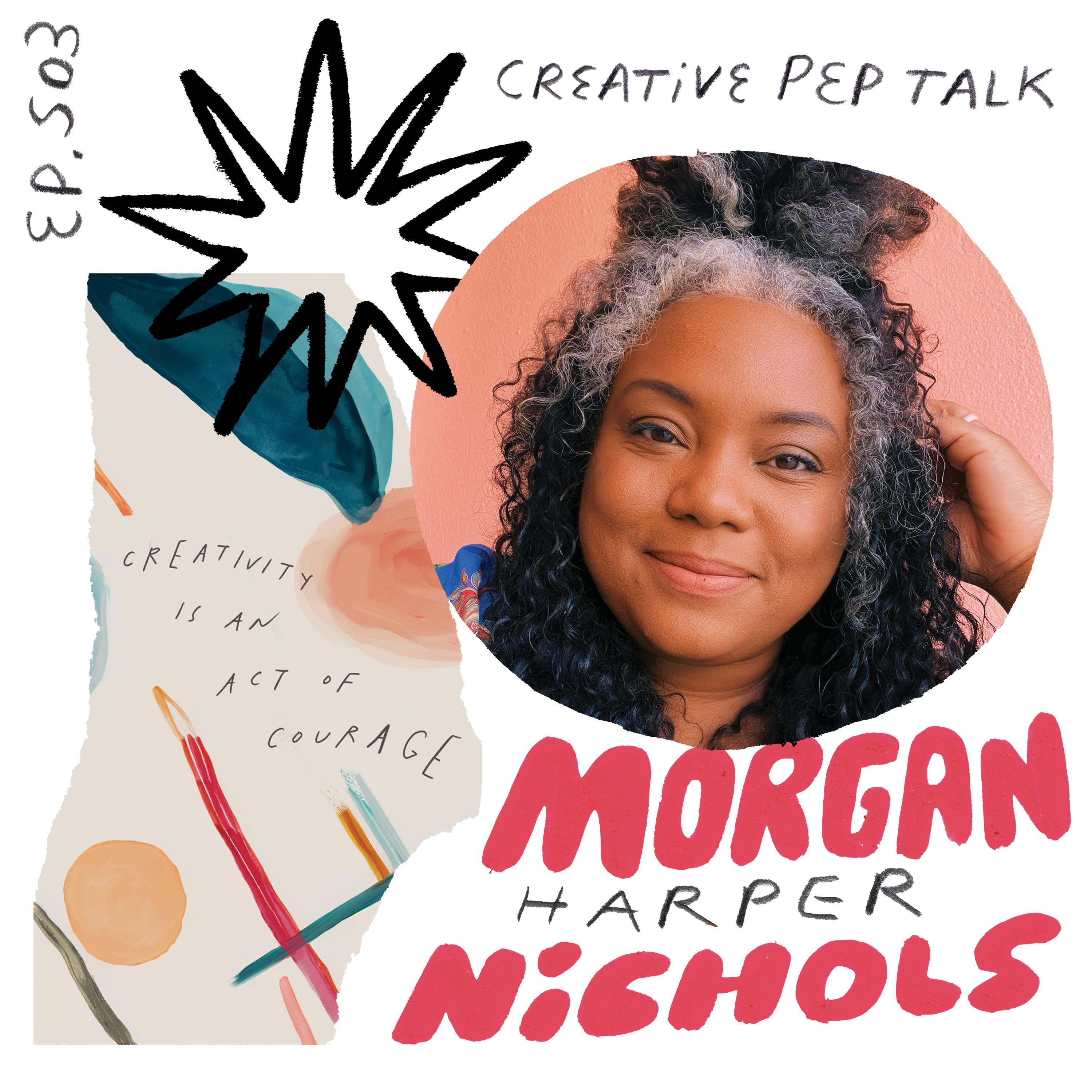
Loading summary
Transcript179 lines
- [00:03]
Morgan Harper Nichols
On the creative journey, it's easy to get lost. But don't worry, you'll lift off.
- [00:11]
Unknown Host
Sometimes you just need a creative pep talk. How do you find that belonging that you're looking for in your creative practice? I remember this moment at a particular conference prior to 2020. We'll say, you know, mid 2010s where it was the after party and I was just feeling in the right place at the right time, just so in sync, just in that sweet spot creatively. And it's an incredible thing. The only problem is that it's temporary, that these spaces change, and what feels right today won't necessarily be where you need to be tomorrow. And so if you're in a place where the platform that used to feel like home feels stagnant or has maybe rapidly changed, or if you feel like the tools and the instruments that used to feel like an extension of your body now feel clumsy and awkward, or maybe you used to work in this medium or industry and it used to feel like a perfect fit, but now it feels like an itchy sweater. If that's you, if you're feeling that chafing and you don't feel that fit in that belonging, what do you do? How do you start to navigate transitions like that? Today on the show, we've got a longtime friend of the podcast and a friend of mine, someone who I just absolutely adore and loved catching up with. Morgan Harper Nichols is back. Poet, visual artist, and just, you know, neurodivergent friend of mine. We just can go into these rabbit holes and just get lost talking about creative stuff, and that's what we did today, and it was tons of fun. Very, very inspiring, and I'm excited for you to dive in. I feel like the conversation just gets better and better and we get some really, really interesting stuff. So stick around for all of that and then stick to the end because I'm going to be back with the cta. The call to adventure, how to put some of this stuff to practice. The CTA this week is called the Five Senses of Belonging. And this was a little exercise that really helped me tap into a surprising insight of where I might feel like I belong today, today, like what I'm going to do today creatively. And so stick around for that. I think it's a really cool exercise that comes from something that Morgan said. But without further ado, let's get into it. Here is my chat with Morgan Harper Nichols.
- [03:22]
Morgan Harper Nichols
Nordstrom brings you the season's most wanted brands, Skims, Mango Free people, and Princess Polly all under $100. From trending sneakers to beauty must haves.
- [03:33]
Unknown Host
We'Ve curated the styles you'll wear on repeat this spring.
- [03:36]
Morgan Harper Nichols
Free shipping, free returns and in store.
- [03:39]
Unknown Host
Pickup make it easier than ever.
- [03:41]
Morgan Harper Nichols
Shop now in stores and@nordstrom.com. i think you're on mute. Workday starting to sound the same. I think you're on mute. Find something that sounds better for your career on LinkedIn. With LinkedIn job collections, you can browse curated collections by relevant industries and benefits like Flexpto or hybrid workplaces so you can find the right job for you. Get started@LinkedIn.com jobs finding where you fit. LinkedIn knows how.
- [04:18]
Unknown Host
Okay, how are you doing?
- [04:20]
Morgan Harper Nichols
I'm doing good. I'm doing good. I'm like counting down the weeks until summer break with school. I'm like five weeks left.
- [04:30]
Unknown Host
That's so funny. I was like, wait, with your kids?
- [04:33]
Morgan Harper Nichols
Like, what? Oh, yeah, for me, your school? Yeah, yeah, for my school. I am ready to be done. I, I, you know, now that like the weather is just getting, getting a little bit nicer, it's just like, yeah, this is, yeah, this is like be outside for a little bit, not do anything weather. So I'm gonna need this to wrap soon.
- [04:53]
Unknown Host
Doing school for a long time, so I kept. Yeah, I couldn't internalize that you were talking about yourself.
- [05:00]
Morgan Harper Nichols
Yeah.
- [05:02]
Unknown Host
That's so funny.
- [05:03]
Morgan Harper Nichols
Yes. Oh, my goodness.
- [05:05]
Unknown Host
You know, one thing I was thinking about, you know, we're going through crazy times in the world. Have been for, you know, most of our adult life, I think.
- [05:14]
Morgan Harper Nichols
Yeah, very true.
- [05:15]
Unknown Host
But, but I was thinking about how you're familiar with like, simulation theory.
- [05:21]
Morgan Harper Nichols
Yes.
- [05:22]
Unknown Host
Yeah. Like we're living in a simulation.
- [05:24]
Morgan Harper Nichols
Yes.
- [05:24]
Unknown Host
And I thought while I have you here, it's off topic, but I thought you could speak to, like, if you were running this simulation and we were putting us through all this crap, like, what would your purpose be? Having been such an avid Sims game player, I feel like you've got some insight into what are we trying accomplish in this society. Throwing all of these things pandemic and just madness, you know?
- [05:53]
Morgan Harper Nichols
Absolutely.
- [05:54]
Unknown Host
Crises after crises. What. What do we think the simulation boss is doing here?
- [05:59]
Morgan Harper Nichols
Yes, I think what we need to do, just like in Sims 4, they have. They have. Well, let me actually go back and my Sims players will know before Sims 4, and maybe this is where things start to change and we need to go back to how it was in this regard, in that you used to be able to build your own world, and now in Sims 4, you have to select areas of the world. You used to be able to, like, shift the terrain and, like, figure out what the landscape was going to be like, what the climate is going to be like. And I think we need to go back to that phase. We need to get everybody in a room. It's like, before you get your ideas and before you start just trying stuff, let's start with the basics. You know, it's like our heads together. Yes. Like, do we need to get some. Some Legos out and work on basic conflict resolution just at that level before we give you more responsibility?
- [06:53]
Unknown Host
How about plan it out? Yeah, that makes sense. Yeah.
- [06:58]
Morgan Harper Nichols
Okay. Yeah.
- [07:01]
Unknown Host
Or whatever it was.
- [07:03]
Morgan Harper Nichols
Yeah. I actually think there's really something to that. How things, like, I. I can't remember, but there was, like, a random hearing in some state where somebody was, like, suing because they couldn't. They couldn't buy the parts to replace his, like, dishwasher or something. And he was like, why was it sold to me, like, all set up in a certain way, like, I want to be able to go in and, like, buy the parts to fix my own dishwasher. And I think about that a lot. It may not have been dishwasher, but it was some kind of something like that. And I think about that a lot. I'm like, yeah, like, we need more. More. More structural, you know? Yeah. To.
- [07:44]
Unknown Host
It's interesting, honestly. We had our dryer fixed because today we had a guy come in and he. He said, you've got pencils in your dryer.
- [07:52]
Morgan Harper Nichols
So that's okay.
- [07:54]
Unknown Host
That's probably my fault as an illustrator. Sophie posted about it, but he was like, hang on to this for as long as possible, because the new ones, they don't make parts for, like, if they break done, it's exact. That exact thing. And so are you saying that. Are you. What are you saying? You're saying that.
- [08:13]
Morgan Harper Nichols
Yes, I.
- [08:15]
Unknown Host
Go ahead.
- [08:15]
Morgan Harper Nichols
Yeah. I think it's like. And I. I say this as somebody who loves technology. I do think that, like, we kind of get sold on the idea of things being smart. Like, smart. Refrigerator, smartphone, smart this, smart that. And it's like, well, okay, I'm cool with you being smart, but can I see how you're smart? You know, because for us humans, we have to. We have to show our work, you know, like, we. To show it. And I think for me, it's like, I think. I think there was, like, this era of, like, being very excited about, like, this f. Futuristic. Like, I don't know if you've seen Xenon sequel. That's probably not the best example for everyone to know, but it was like a very. I would say it leans toward a utopian view of the future. A lot of millennials. If you're a millennial watching Disney Channel, you probably remember that.
- [09:05]
Unknown Host
Xenon.
- [09:05]
Morgan Harper Nichols
Yeah, Xenon the Zequil. Yes. They lived outer space. And yeah, it was just like, oh, y. Good times. The future is going to be great. We're going to live in space. It'll all be fine. Like, everything's going to be figured out. So I, I think there was like, at least for me, I feel like there was like, oh, like these things, they could be so helpful to, to make everything better. But it's like if it's not. If things in the future aren't like, where other people can like be a part of it and like see how they're being made. And I think that that is going to, it just kind of recreates the same problem. So, yeah, I've become, I've become like, like, I'm not, I'm not a very. Like, like, I don't. Like, I feel like the way I'm talking sounds like I want to go outside and like, fix my car, you know, And I'm, I'm not saying that like, I'm like, no, I'm, I'm grateful that I don't have to do like, I feel very privileged that I want to have a car and two like that there's people in the world that can help me figure that out. I, I appreciate that. But I, I also just sometimes like, as an artist and a writer and, and you know, as a parent now, like watching your child, like watching my child just like building block by building block, learn it all. It's like, oh, there's something really to that and like learning the, the, the basics, like one by one. Like my, so my, my son is 5 and he had like a school lesson on like learning about other people's cultures. And it was very interesting to hear that as an adult because it's like you forget. Like, you forget. No, that's something that you have to learn to like, care about other people's cultures and to like, be aware that people are different from you and like, and that they were using like the example of food and like spending a lot of time on that. And I was like, yeah, you know, it's probably a lot of grown ups, you know, just go, Just going back. Yeah, it's like, we need to go back to the, the open world. Let's start with the terrain, get the basics. So. Yes.
- [11:02]
Unknown Host
Yeah, I, you know what? That's really interesting too, because it kind of like, I don't know this super intimately, but I know in a vague sense that like simulation theory, the Matrix, that kind of idea is based on simulacra and this philosophy of you're living in a simulation. But I believe, I think it was. I'm going to make a fool of myself. Jean Bull. I couldn't, I didn't need to go there.
- [11:35]
Morgan Harper Nichols
Like, yeah, or the other. Or the other.
- [11:39]
Unknown Host
I don't know why I should have just.
- [11:41]
Morgan Harper Nichols
French name.
- [11:43]
Unknown Host
I thought I had it right there. And then I was like, no, it doesn't translate to words. But B. Something like that.
- [11:50]
Morgan Harper Nichols
Yeah, something like that idea. Something like that.
- [11:53]
Unknown Host
Something, as far as I understand it, is the unders. The, the simulation that they were suggesting wasn't a literal simulation, but this idea that the world that you were born into is a construction. Just kind of like what you're getting at.
- [12:08]
Morgan Harper Nichols
That, yeah.
- [12:08]
Unknown Host
All these systems and, and rules and buildings and all these things were built that, and, and they, you're brought in and you're told this is the way it is, but it isn't the way it is, it's the way that people decided it would be. And so it, I think it's an interesting realization to be like, oh, you actually have agency to, to reject that, build on it, whatever. But we're living increasingly in a time where our structures are so dense that we don't really see our ability. And, and the thing that's even weirder about that to me is as you're thinking about like, AI, one of the things that they talk about is, I don't know if we're here yet. We might actually already be here. But I know that where they're trying to go is where we don't know. We won't know how the AI is getting the answers that it's getting in terms of. We won't see it showing its work and eventually we won't even know what it's doing really, once it surpasses our computing, you know. And so that's like the extreme case of like, literally, we will not now. We won't.
- [13:20]
Morgan Harper Nichols
It's like a black box.
- [13:22]
Unknown Host
Yeah.
- [13:22]
Morgan Harper Nichols
And I, I, yeah, I, I don't know how I feel about the black box.
- [13:27]
Unknown Host
I don't know about that.
- [13:28]
Morgan Harper Nichols
It's a struggle for me because, and I, I think for me, I, my first, like, realization of, of like, you know, the extremes of what that could Be was with social media. Like, as we know, like, social media has algorithms, which. So a lot of people don't realize, but like, social media is like kind of like all AI. Like, oh, it's all machine learning. Like, it's, it's a different version of. Might not be like generative AI in the same way, but it's like, it does kind of. It has a lot of similarities. And I find that very interesting because it's like, you really don't get a lot of information as to how this thing is structured, and you just get kind of thrown into it. And they give you a few buttons and they say, okay, you can post this here. And then, you know, now they have like, we can get a bonus. And, you know, if you post these many times and all these things and it's like, okay, that's. That, that's nice to have shortcuts and see that. But at the same time, it's like. But we didn't get to decide, like, what the buttons would be. They were metrics based on how people click on a screen or how long you stop on a video, but you didn't like the video. So how are we going to show you the video a different way next time? So that kind of black box aspect of it, to me, I. I do struggle with that. Like, and I, and I think in some ways it's why I have like a. I have like a very, like, mixed relationship with technology. Like, when anything new comes out, I actually go all deep into it. I'm like, I want to know how this thing works, and I want to know what's not being communicated, what's being shared publicly or. And I'm like, that with whether it's social media or AI or. Or whatever, or a fancy smart car, which, I mean, I don't have, but I'm just like, yeah, how. How does this work? I'm very interested in that. And then like, I, I did sometimes it does lead to despair, you know, like, it can lead to like, oh, this is a lot. This is a lot that I don't know. I can't know it all, but I want to know more than I know. But then the other side of it is like, wait, but that's actually my creative process. It's. It's. I don't know, like a lot of times, like, the metaphor I've been using a lot is like, I feel like I swim in pools. Like, so, like, I feel like I swim in pools of images and like, pools of words. And if you're In a pool. Sometimes you're in a part of a pool where it's like, okay, I'm in, like, the. The kids section. You know, I can. I can feel my. Where. Where my feet are. I'm not really thinking too much, but there's other parts of the pool that are deeper. It's like, okay, even if you know how to swim, like, it's still a little bit deeper. You have to pay a little bit more attention. And I've been thinking about it that way in terms of, like. I kind of like. It's not that I don't like the mystery black box kind of thing. It's just. I want to be able to create that in a way. So what I've done. What I've done is, like. I actually have. And it's, like, just out of my reach. Oh. And I started reorganizing it so it doesn't look good right now, but I. I have, like, just, like, a cheap file cabinet box where I started cutting up words. And I started, like, taking my existing work and cutting up words. And, like, I just put the words in the box, and then I, like, shake it up. And it's my own writing, so when I see it, I kind of know, like, okay, I was talking about that. But then I kind of, like, make new combinations, like, out of my own work. And it's just been really, like. It's been really, like, just revitalizing, like, the way I think about how things can be made. It's like, I'm allowed to, like, play with the structure, including the structures I've built. It's like, I have some things I've written. I know it so well off the top of my head. I'm like, I can cut that up, too. Why not? Like, let's cut it up. Let's see. So I've been doing a lot of collage and just, like, allowing myself to, like, play with those, like, structural elements more and. And. And break it apart. And I. I find that to be, like, really freeing because it's like, I'm still on social media. Like, I'm still, like, a lot of times in the same spaces, but it's just, like, a small way that I feel like, well, here's, like, my kind of subversion of it. Like, there's a movie called Ready Player One. I don't know if you've seen it, but there's. I don't think, a little bit of.
- [17:58]
Unknown Host
The book, so I kind of know that.
- [18:00]
Morgan Harper Nichols
Oh, okay. Yeah. I've never read. I don't think. Yeah, I don't think. I'm. Yeah, I'm. I'm intrigued by the book now. So I don't think I'm spoiling this when I'm saying because it happens pretty early in the movie.
- [18:12]
Unknown Host
Right.
- [18:13]
Morgan Harper Nichols
But there's a scene where this. Yeah, there's a scene where the main character. They're getting ready to do a race, and he's in the race, but he decides to start the race by putting in the car in reverse and going the exact opposite way. And he ends up. So I think he wins. I can't actually. Can't remember what happened, but he's still a part of the race. And I love that scene because I'm like, that, to me, is what this moment feels a lot. I'm like, okay, I'm on Earth. I'm not really trying to leave Earth personally. I'm. I'm like, I'm. I'm here. Okay. I've accepted it at this moment. I don't know, a really cool spaceship could come down tomorrow. And I'm like, hey, they. They actually have a great pitch. Let's. Let's go. Let's go to this new planet they. They're discussing. That could happen. Hasn't happened yet.
- [19:03]
Unknown Host
Options open. Yeah, look, I'm on Earth. I'm staying there. Well, maybe not. Okay, exactly. Somebody.
- [19:10]
Morgan Harper Nichols
Yeah, you don't know these days. So, yeah, at the moment, I'm like, all right, I'm here. And. And here on this Earth, there are structures in place, there are systems. There are things that I'm like, okay, all right, I didn't make that. I didn't get to decide on any of this. But I think about, like, well, what's my version of, like, going in reverse? What's my version of, like, cutting things up? What's my version of, like, subverting what is. And. And that has been. That's been keeping me going, I think.
- [19:40]
Unknown Host
Yes. I love it there. I mean, I'm gonna. There's so many things to pull out here. I'll start with. I'm not a huge. I'm not anti. Enneagram, but I'm not a huge Enneagram person. Like, you know, I spent some time, like, exploring it and. And whatever, and there's cool things about it. I like personalities. I do. Like, personality, like frameworks. I do. I'm interested in that same. But I'm open with it. It's more like. It's similar to the way that you're cutting up your poems and stuff. That's kind of how I think about personality tests, where it's like, what can I see in this rather than this is what it is. Like, I don't know if that makes sense, but it's more just like frameworks for, like, thinking through personality. And the enneagram 4, which is like a thing that a lot of artists relate to. They're. They're drawn to what's missing. And I do think artists have a thing of. I think it's why so often the creative thing is the opposite of whatever's happening. It's whatever the mainstream is doing or whatever the dominant worldview is. The creative notion is the thing that's doing the opposite of that or subverting that just like you're saying. And. And so I really relate to that. It sounds like that's a little bit of what you're kind of exploring. And I've had. I've related that this idea of going backwards in the car, like, what is the subversive. Subversive thing to do in a moment where. What's the subversive thing, the creative thing to do when what the mainstream is doing is, you know, quote unquote, being creative with loading the universe with content. Right. So I've had that same feeling over the past few years. At first I was kind of like, well, the opposite of that would be doing nothing. And so that was very uninspiring because you're like, but I am creative. I don't want to do nothing.
- [21:39]
Morgan Harper Nichols
Yeah.
- [21:40]
Unknown Host
And so I think where I've landed now is I've shifted gears to doing longer projects that are much slower, that are much more in depth. And I think nothing I'm making is at the level of severance. But I think severance is a great example of severance feels like the opposite of Internet content because it has. It's gone back to this. Not bingeable, releasing a week at a time, has a strategy and an outline of where it's going, rather than just tripping out stuff as it's. As you're making it.
- [22:17]
Morgan Harper Nichols
Absolutely.
- [22:18]
Unknown Host
I don't know if any of that is, like. Is relevant per se, but that's.
- [22:23]
Morgan Harper Nichols
Yeah.
- [22:23]
Unknown Host
How it relates to. I really relate to this idea of kind of always feeling like, what's the reverse move?
- [22:32]
Morgan Harper Nichols
Yeah.
- [22:33]
Unknown Host
Right now, you know.
- [22:34]
Morgan Harper Nichols
Yeah, yeah. I do relate to that because, like, it. It's. It's like the first. The word that came to mind when you're saying that was format. And it's like, in a way, the traditional format now feels like a subversion of format. Like you're saying, yeah, you have to like, sit and wait for eps. Like, I, I think I remember Apple tv. I remember watching the morning show and that. And, and I was getting used to that, like, waiting every week. I'm like, oh, I, I forgot what this feels like. Like, I forgot what it feels like to not have everything on demand. And we've actually been like, inspired in our house. We' decided that we're going to start like a DVD collection. Like, we were like, we're like, hey, we're going back. I was like, I, I. And, and the only shift there is, like, it's the form. Like, it's a lot of the movies. I could get them digitally, virtually. The movie doesn't change in most of these cases. But the form, the experience of like picking up the disc and putting it in the DVD player and like that whole experience is a subversion in a way. And I, I just think that that is so cool because it, like, it takes the pressure off of like, being an artist. Always need to have to reinvent. It's like, maybe you don't have to reinvent. Like, maybe it's something that already exists, but we've kind of like gotten away from it, like in the name of efficiency or whatever. And you can actually go back to that. So, yeah, I, I find that, I find that very freeing.
- [24:04]
Unknown Host
Yeah, I love that. I think, Yeah, I mean, I think there is a thing about create. I mean, for me, kind of there is the, the reverse move of doing something different to what the culture is doing. And that there's an element of that where it's like keeping it fresh, doing new things. But for me, this is something I almost hear no artists talk about. And so it's kind of a weird thing because it's something that's so central to me. But I sometimes, I usually feel pretty grounded in it, but sometimes I think, why am I, why am I thinking about this so differently than other people? Which is so much of what I feel like I'm doing is almost less of pushing forward and more like tapping into something we forgot. So. Which is not necessarily going backwards, but it's like, it's. Most of what I'm building stuff on is usually something that feels like a. I, I struggle to say fundamental truth because there's baggage with that idea. But. But it is stuff about like, thanks. Yeah. Things that we forgot. And so there's a, there is like a going back thing and not needing to reinvent. But, but, you know, on this notion of DVDs and whatnot. Another thing that I do a lot is I listen to Internet radio. And again, it's like, what my favorite is probably nts, but the lot. Radio is really good too. And they're just web pages that you go to and listen to radio. And there's something about. Again, it was great when you had access to all the world's music and all the control is in your hands, but then at some point that becomes stale and you're like, will somebody else decide what to put on?
- [25:53]
Morgan Harper Nichols
Yeah, yeah, yeah, yeah. I. I totally agree with that. Yeah, it. To me, it feels. It feels like more than. Because I've really been struggling with the word nostalgia a lot lately. Because I feel like sometimes when I say like, a lot, like, that's kind of the. Oh, yeah. Nostalgia. I'm so. And I'm like, I. I think it's more than that. I think it's more than, like, just going back and, like, longing for the past. Like, it's not quite that, but for me it just feels more of like you're. You're on a journey and you collect things along the way on the journey, and some of those things you leave behind, and some of them you carry with you. Like, for me, I mean, it's very cliche, but I like to get postcards when I go places because I'm like, it's really cheap. You can get a postcard for a dollar or less, and it's something you can always have. And I still like to do that, even though I could take my own photos, even though I can find any of the photos online. And it. So it's. It's not. It's just like, this is like a record of, like, the journey that I've been on. Like, it's. It's a. Not just like my artistic journey, but just like, as a human. So why not figure out how to bring those things into the fold? Like, when I was a kid, like, I. I remember being in school, like, I loved when we got to do cool things with paper. And back then it was like origami. I was really bad at it. And then like those little, you know, like, little fortune teller things. I don't know if you remember making those. I was so bad at it.
- [27:24]
Unknown Host
I was making tons of those.
- [27:26]
Morgan Harper Nichols
Oh, I love that. I was. I was so bad at it, but I was so excited about it. So it's not like today I'm not like, oh, yeah, yeah.
- [27:36]
Unknown Host
I'm not good at it, but I'm loving it.
- [27:38]
Morgan Harper Nichols
Yeah, exactly. And that's kind of. And. But what you just said, though, that's kind been my approach now. Like, with this whole collage thing I'm doing. I'm like, I actually don't know if I'm good at this kind of art. And it's not like, oh, I love collage. As a kid, I don't even think I would have known that word. Like, it was. It's not the exact same thing, but there's just, like, traces, and it could just be, like, a flicker of, like, an emotion or, like, a curiosity. And. And I'm really intrigued by that. And I. I don't think those things are, like, stuck with time. I think the same me that was interested in, like, origami as a kid is the same me that was, like, interested in, like, oh, what's this? Instagram app. Let me download that. So it's like, it can change. Like, just. Just try to, like. Just don't limit yourself maybe, like, to this moment. Exactly. There's a poet I really like, David White. Yes. I need to. I need to go actually read the whole thing. I didn't. I turned a short form. Content. I just looked at it really quick. I was like, y. Great thoughts. But he was actually talking about that, and, like, I think he was kind of described. He's like, the limitations of, like, always thinking about the present. He was like, we're. We're made of, like, the past, too. It's like. He's like, the past is, like, right here, and that's something we need to think about. So, yeah, I. I think that, to me, I think that extends a little bit further than just, like, nostalgia. Like, I think that's how it always gets. Not always, but it often gets framed that way. And I'm like, oh, it's. I think it's something more than that.
- [29:14]
Unknown Host
Yes, I. I so relate to that. And I. There's a couple of things going on there that I think are really interesting. One is, like, again, this idea of the artist kind of gravitating towards what's missing. It's interesting that the culture for the past decade or two has been so obsessed with being in the moment, present moment, being in the now. You know, that kind of thing. For artists like you to feel like, well, okay, yeah, great, good. We're doing that. But also the past. There's some. You know, the past is a part of us, and there's value in the past. And. And I. And I love what you said about the nostalgia thing, because I totally. I get what you're saying where it's almost like a way. It's kind of the way that we put a word on something in order to distance ourselves from it. You know, like, again, philosophers talk about, like, the word tree makes you not have to engage with what the tree actually is. You're just engaging with the idea of a tree. And the same goes for, like, you're describing something, some kind of weird encounter or important encounter with the past that you're having, or not even the past, but something true, maybe something timeless, whatever. But because it has to do with the past, people just think, oh, yeah, nostalgia. I love nostalgia or hate nostalgia or what? You know, whatever.
- [30:35]
Morgan Harper Nichols
Yeah, right.
- [30:36]
Unknown Host
Like, I totally get that. But then there's this other thing of like, it's. Yeah. I don't know. It's almost like this feels more vague to me or, like, unclear. But I also think it's kind of like, it's interesting where there's like a conservation of. Because we live in this techno futurism thing, we're assuming that the best, the ideal form is in the future. Whereas, like, what if, like, vinyl was the ideal form for music?
- [31:15]
Morgan Harper Nichols
Yeah, yeah.
- [31:19]
Unknown Host
But we don't.
- [31:20]
Morgan Harper Nichols
Yeah, yeah.
- [31:21]
Unknown Host
Some. Obviously some people do, but a lot as a culture, we kind of think everything that we're. That's worth having, doing, pursuing is in the future.
- [31:32]
Morgan Harper Nichols
Yeah, it's. Yeah, it's. Yeah, I. I've been thinking about that a lot because it's, It's. And I could rant for hours about the whole music thing. Oh. Because so something I've thought about a lot was like. So I used to, like, be a professional musician. Like, that was like. I was like, I want to be a professional. I want to win awards and make albums and do all of that. And I really wrestle with that for a while because I think I became very, like, jaded by the music industry. And I think that that kind of made me not want to make music anymore. And those things aren't the same. Music industry and music aren't the same things. They become the same things in our world. But there's. Music exists outside of industry. And I think that I. I stop even thinking about, like, picking up a guitar, like, or playing piano, because I was. I. I had hooked it on to industry. I make music mean industry. And then I just started thinking about, like, just, just like, historically speaking, like, just within my own, like, family, like, within, like the black community. And how, how important, like, singing was, like, communally and oral storytelling. And it's like all of those things mattered and still matter today even whether or not the recording industry ever existed. I was like, whether or not microphones ever got made, whether or not anybody recorded the song. Like, I can sing songs right now that my mother taught me, that her mother taught her, that her mother taught her, and generations all the way back to like the point of like, where my ancestors were enslaved and here I am today, and I can still carry those songs forward. And all of that is possible without it ever having been recorded. So I think that. I think about that kind of thing a lot because I think it's, it can be very easy to. Like you said, like, we think about the future and like, okay, we've made the best version. And it's like, maybe that's just one version. Like, maybe there, maybe there's something to people just singing a song in a room and the song just happened one time in that room. And, and like, if you've ever listened to like a live recording of an album, like, it, it, it's like a totally different sound than like a studio recording of an album. Like the musicians being in the room together has a different sound than the musicians recording in parts. And I say that as someone who's done both studio sessions and live sessions as a guitar player, it's different. It's a different experience. Like, I personally feel like I play better when I'm in the live room with everybody. And that's not to say that there's anything wrong with the studio and I'm just one person. But I think it's just, I think it could be valuable, like to just stay open to the fact that like, yeah, you might not. We met, we might not always be at like the peak of the thing, you know.
- [34:47]
Unknown Host
Don't miss your chance to spring into deals at Lowe's right now. Get five select one pint annuals for just $5. Plus get a free 60 volt Toro battery when you purchase a select 60 volt Toro electric mower. With deals like these, your yard wins. Shop in store or online today. Lowe's we help you save. Valid to 430 while supplies last. Actual plant size and selection varies by location. Excludes Hawaii.
- [35:17]
Morgan Harper Nichols
Hey there travelers. Kaley Cuoco here.
- [35:19]
Unknown Host
Sorry to interrupt your music.
- [35:20]
Morgan Harper Nichols
Great artist BT Dubs, but wouldn't you.
- [35:22]
Unknown Host
Rather be there to hear it live? With Priceline, you can get out of your dreams and into your dream concert. They've got millions of travel deals to.
- [35:29]
Morgan Harper Nichols
Get you to that festival, gig, rave.
- [35:32]
Unknown Host
Sound bath or sonic experience you've been dreaming of. Download the priceline app today and you can. Can save up to 60% off hotels and up to 50% off flights. So don't just dream about that trip. Book it with Priceline.
- [35:42]
Morgan Harper Nichols
Go to your happy price price line.
- [35:50]
Unknown Host
You know, I'm thinking about this through the lens of anybody that was listening to this as a podcast. And I'm thinking about how as an outsider of this conversation, if I put myself in those shoes, I start thinking about how this relates to their creative practice. And I think that what I find as a creator, inspiring that you're saying is I keep feeling like I will encounter so many artists that are frustrated with how noisy it is on the Internet and how. And longing for a previous version of Instagram or time when, you know, Flickr was around and you could, like, really break in and whatever.
- [36:36]
Morgan Harper Nichols
Chronological feeds.
- [36:38]
Unknown Host
Yeah, like, I can feel that. And there's a feeling of like, well, it's just too late now because you can't get started now. You can't. Whatever it is you're trying to accomplish. And it's. I think there's a through line here of this reverse move. Like, what's the reverse move? It also, I know we're both like storytelling people and it. And so I think you might relate to this. It's also reminds me of like the Joseph Campbell, the Return Home. So there's like a. That's also a reversal. And you talking about, like, there's. And this is what I was going to say is that the great thing about creative practice and creative journey is there's always a place to go because there's always a. A reversal. There's always like, oh, well, yes, okay. Creativity similar to what you're talking about with music being synonymous with industry creativity right now, if you're trying to do creative things, there is a way in which it feels like to me, it's synonymous with being online, maybe even chronically online.
- [37:45]
Morgan Harper Nichols
Yeah, absolutely.
- [37:47]
Unknown Host
Creativity equal. There is no creativity outside of online. Again, this kind of gets this thing of like, people thinking that, you know, like, online versus irl, except most of us live. Like, if it didn't happen online, it wasn't real life. Like, that was where it actually. Where it becomes relevant. Maybe that's because it's like on the world stage. Like, I don't know why, but there's a bunch of reasons. But that's what I hear. And what you're saying is like, okay, yes, the way that we've been going, moving forward, moving in technology, moving in online has become incredibly congested. And, you know, but there's always a move, and that move might not look like Spotify. It might look like being in a room with people. Like, you know, that kind of thing.
- [38:38]
Morgan Harper Nichols
Yeah. And. Yeah, and I, I, you know, as. As an introvert. Yeah.
- [38:45]
Unknown Host
That is.
- [38:45]
Morgan Harper Nichols
That's been hard for me to wrestle with sometimes because it's like Instagram in particular, has been an ideal form for my introverted, neurodivergent self because I can think and publish and share in small parts. And I, I've. It's been helpful for me in that way. And at the same time, like, as a plot. Like, and I wonder if, like, people have different thresholds of, like, where they're just like, no, I think this is becoming harder for me. For me, like, the threshold was when Instagram started, like, mimicking the. The feed where it's like, they're showing your post some more. People who don't follow you. That was, like, a big, like, threshold moment for me because I was like, so much of what I do is, like, about, like, the community that I'm talking. Like, it's hard for me to have to start from scratch, like, every single post and just throw it out into the wild. So that was very challenging for me. And it might sound strange to say, but, like, I've kind of grieved some of that loss of, like, oh, I. I kind of miss that. But at the same time, what's been really. And it took. I would say I've been. I've been, like, wrestling with this for, like, a year and a half, but right now, I'm. I'm working on a new book, and that's been very exciting. And, like, I have been going back through things that I've shared on Instagram as engagement has gone down, as, like, the followers haven't, you know, all that stuff. And I've been letting the comment section, no matter how few comments there were, like, letting that remind me of, like, hey, what happened here still mattered, and bringing that into a book form. And like, seeing, like, when someone mentioned, like, oh, I like that analogy used about the tree or whatever, I'm like, oh, that is, like, evidence of, like, work that I've done. That's valuable. It's not if Instagram went away tomorrow, if I deleted the app tomorrow, that it doesn't lose its value even, because. Because it's changing form. It's like, I can carry that with me even on this very, like, ephemeral, like, temporary form. It's like, back then, when I posted it. Yeah, I was probably thinking about the algorithm and I was probably mad that it didn't perform as well because I spend a long time on my work. I spent a lot of hours like every single word choice, every color choice, like I spent a lot of time on my work. So yeah, it can be a bummer when it's like the engagement's not there. You see the engagement go down. Like I actually feel like the more time I spend on work sometimes like the less engagement against and I'm like, what is this about? But at the same time like even if there were just a few comments or I like sometimes I've been like going through old emails that I've gotten and that's for my mailing list. I love having a mailing list because it's searchable when like people have emailed me. So I've been like just searching for different things of like, like I do a lot with monarch butterflies so I'll like type in monarch butterfly. And I can see from like 5 years if someone mentioned a monarch butterfly in an email to me, they were responding about something. And I take that with me into a new project which is a book, like an old fashioned book that you can print out. So it's, it's all connected and I think that's really cool because it's like even as I think relationship with, with a form, a platform, whatever form changes, you can kind of shift it into, into new spaces too.
- [42:19]
Unknown Host
So I love that. I love, I, I love what you commented on with this change in the form. Everyone I. You're not alone. There's a, there's a lot of grief on the way that the, the platforms have changed, the Internet's changed the, where it's going, what, all that kind of stuff and conceptualizing those changes, verbalizing those changes because there, I think that's one of the things that's so hard about all of this is the thing you were talking about at the start, which is this black box element. One of the things that is creating some level of like micro. It's a, it's like a, it's, it's almost, I wouldn't call it traumatic. That's too far. But there's this thing of where there's a psycholog, there's a psychological war that's happening when you're using these apps and it's a black box element where you're not a. That's one of the things that's so disconcerting about engaging is that you, you. It's not transparent what's happening right like, and in, in other lot, like, it's one of. We're aware of when you go to, to go buy a car. We are aware that this is a psychological warfare. That's why most people don't want to do it. If you're good at it. And you like, my older brother, he loves it. It. He's also this kind of person where. Yeah, he's the kind of person that would sell you a car. He has sold cars. Okay. So he, he likes it. It's a game. Right. But we're aware of those spaces in real life where, oh, this, there's, there's something, there's more going on. And I think that one thing that I thought was really, you know, powerful in terms of decision making and what is the reversal? What is moving forward? What is my reaction going to be? One of the things you got to do is like think about what is happening and conceptualize it. So this idea of there was a time where what you were making was for a community, was for a group of people. And then that shifted to now 80% of the people that see this don't have any context and conceptualize it for me in a, in a way where for a long time you're making a TV show where there's a through line every episode and you can't start on episode 87. You have an understanding.
- [44:54]
Morgan Harper Nichols
Yeah.
- [44:54]
Unknown Host
Whereas then it was overnight. The network said, actually this is a thing where everyone that sees it's going to be expecting this to be self contained. And the thing is there's no, no one's giving you those notes. No one's giving you that heads up. And so that's why I like us talking about it too. Because there's not a space to think about, know about, talk about. And, and so. And we just end up becoming, I end up becoming incredibly suspicious of all of these moves. You know, one of the things that I'm really suspicious about is these platforms giving creators tools and tips and tutorials and trends and investing all of this stuff into helping you. And I'm like, okay, why, why are you doing that?
- [45:44]
Morgan Harper Nichols
Oh, I know.
- [45:45]
Unknown Host
Because you're a TV network that doesn't pay for your shows. That's why you want us to it. And I was thinking about the other day, like, remember when my creative strategy was I'm gonna post a still image on Instagram once a week.
- [46:00]
Morgan Harper Nichols
Yeah.
- [46:02]
Unknown Host
And that was my. You know what I mean? Like, and so it's just. Yeah. I don't, I don't know what I'm Getting other than. I'm just, like, saying what you're saying.
- [46:10]
Morgan Harper Nichols
In a different way, I think. Yeah. And I think you're name. You're kind of like naming the terms, and I think that's what you're. What you're like. And I think you have to kind of name it and start to name it, because if you don't, it just kind of just becomes like this endless, endless, endless thing. And like, one thing that's been helpful for me and like, one. And that's when I mentioned, like, the showing it beyond my community of like. Of, like, it's okay to start with, like, what you don't. Like, like, it's okay to say, like, no, it's that feature that's pushing me to want to delete the whole thing. Like, it's that specific thing. Like, there's some things that don't bother me as, like, a lot of people. Like what? Instagram. A lot of people. For them, it may have been reels. Like, when Instagram reels was launched, they were like, I just can't deal with that. I doesn't bother me as much because I follow a lot of animators in motion graph. And I'm like, this is actually great. Like, I like the feature, but so I think knowing what those things are, because then that helps you. That helps you, like, make connections with what you might want to change. Because it's like, you might not. You don't have to go make your own Instagram. Like, you don't have to go recreate the whole thing. And I'm like, oh, no. The part that stresses me out is the fact that, like, people that. That the stuff I'm sharing is just going to have to go out all over the place. And then I have to manage that. Like, and I even narrowed it down because when I started talking about this, a lot of people were saying, like, oh, don't worry about the haters. And I was like, okay. Yeah. And I realized, like, actually, I've been on the Internet a long time. Like, it takes me. It takes a lot. I don't. I'm like, I'm not worried about that. I'm like, it's the management of it. It's the fact that. That people can come in and derail the whole conversation. I'm like, it's being totally transparent. It's more just annoying. Like, I'm not, like, I'm not offended. I'm like, I'm just annoyed because we're trying to have a conversation.
- [48:01]
Unknown Host
This is not.
- [48:01]
Morgan Harper Nichols
Yeah, exactly.
- [48:03]
Unknown Host
Right.
- [48:03]
Morgan Harper Nichols
Yeah, so I'm like, oh, that annoys me. You know, it's, it's not to say that I don't want to connect with other people out there, but it's like, it's like I, I get to decide what the terms are and in the way that I do that, that. So I've been really. I just started an old fashioned blog again and I've just started scheduling posts on that. And it's one of those things where I'm like, I don't know, like everyone's not gonna come over to the blog, but I'm really excited about the people that do because those are the ones I'm gonna, I'm gonna look forward to talking to the people who are coming over to the blog. And I think it's okay to just shift and change. I'm like, we might, might, we might talk ten years from now or five years from now. It might be totally different. And I think I've just, as I reflect on like how long I have been like a, an Internet infused artist, I'm like, it's changed a lot and let me just focus on like being authentic in all of those changes. It's like, it's like that's the best I can do. And it's like if something is not working the way it used to, you're allowed to name that and say, yeah, yeah, I'm gonna change this part or I'm gonna change all of it.
- [49:12]
Unknown Host
So, yeah, so one thing that I, I've mentioned a bunch of times on the show, but it's something I, I think about probably once a week. So. And, and it's always useful to remember, so I'll say it again, but there's a, there's a part in one of Austin Cleon's books where he talks about this punk band that can't decide on influences because they just, just can't agree. And so instead they decide on what they hate and they're not going to be yes, and I love that. And then I want to. And then I take it in a. The way I use that idea and what I like about it is that it hacks our negativity bias. It's so we, our brains are naturally negative. So it's actually easier to start with what do I hate? Than it is what do I love? And then reverse it and actually think. Even in politics this is. I wish people more did more of this where, yeah, tell me what you're against or know what you're against, but don't stop There hack your brain and say, okay, what's the, what's the reverse? What would this look? Don't. This one of the things they talk about with, like, climate change? What, what was so hard about getting people on board with it is that so much of it was like, don't do this. And it didn't present a vision of the future that was compelling because it didn't. It took the negative bias, but it didn't reverse it. And so I love this thing you're saying where in order to figure out what your creative values are and live into them and know what the reversal move is, you have to know which way is it? Which way is the current going that you don't like? What is it? Don't just feel it, but identify it. I love that you pinpointed. This is where it went wrong for me, because, again, it wasn't what everybody assumed it would be. And so that's a great, like, call to adventure thing of.
- [51:04]
Morgan Harper Nichols
Yeah.
- [51:04]
Unknown Host
Okay, so you don't like where things are going, but that's too general to actually use as a prompt. In order to know what the reversal would be, you need to know what is it that's going.
- [51:14]
Morgan Harper Nichols
A direction.
- [51:16]
Unknown Host
Yeah, I love this.
- [51:17]
Morgan Harper Nichols
Yes. And, and with stories, how many good stories start with conflict.
- [51:22]
Unknown Host
Yeah.
- [51:22]
Morgan Harper Nichols
Present you with a conflict. Very clear. Yeah, it's the prompt. It's that tension point. So it's like, you're allowed to name that. And I, I think that can be hard for, like, artists because I feel like, like, you, you were mentioning, like, all the tools and stuff, the platform. I, it's, there's like this undertone of, like, be grateful that you get to share your work in this space. So I think you just kind of get used to, like, I, I, I feel like I had that posture for a while. Like, I'm so grateful that I got to use Instagram to share my art. And I am grateful. I am. I truly am. And at the same time.
- [52:05]
Unknown Host
Yes. Or whatever you, you know.
- [52:07]
Morgan Harper Nichols
Yes.
- [52:09]
Unknown Host
They can be true at the same time. It can be. Have complaints and gratitude at the same time.
- [52:13]
Morgan Harper Nichols
Absolutely, Absolutely. And there's a conflict. There you go. There's the beginning of a story. So, yes, I, I have been, like, welcoming that. And I'm like, yeah, I can give you a long list, like, those things, but I'm naming it. I'm naming what they are because that helps me figure out where to go next.
- [52:30]
Unknown Host
So, yeah, I, I love that. And I, I've had a similar thing with, with doing substack which feels like it's a reversal into some different.
- [52:40]
Morgan Harper Nichols
Yeah.
- [52:42]
Unknown Host
Blogging. Yeah. Thing and creating community. So, Yeah, I love that. The one question I was going to ask you, that's a question that I think about a lot because I also think it's kind of a seed of a story where it's the idea of like, what did you get wrong that you've changed your mind about. So going back to the start of your creative journey could be like the very start, including music career and all that, or it could be start of Instagram. What is the biggest shift that you've had in how you think about making creative work?
- [53:25]
Morgan Harper Nichols
Oh, that's such a good question. Oh, where do I begin? So many. Yeah. I look back and I'm like, wow, what did. What were you. You doing? What were you doing?
- [53:37]
Unknown Host
Things I got wrong in 10 years of podcast.
- [53:40]
Morgan Harper Nichols
Yeah. Oh, that's good.
- [53:42]
Unknown Host
I've changed my, you know, opinion on as I move through, but yeah.
- [53:46]
Morgan Harper Nichols
Yes. I, I think it kind of. It kind of gets into the, the. I don't know what the word is, but I kind. I kind of got it a little bit when I was saying, like, feeling like I couldn't really say what bothered me and feeling like as an artist and this is true in music and in, in poetry and everything I've done, like, you need to be grateful that you have the opportunity. And not allowing myself to, like, advocate for myself and, and defend myself because I'm like, I'm supposed to be grateful. I'm supposed to be so excited that I get to do a project, but now I, I know how to look at things and say, oh, nope, they're asking too much. I'm not doing that. So I. Yeah, it's. It might sound kind of cliche, but. But when I think about, like, stress and strain and like, things I would tell myself, like, I would. They're like, you have three seconds to talk to yourself. Ten, ten years ago, it'd be like, hey, it's okay to say no. You need to say no more often. Like, you don't have to just, just accept everything because. And, and like, on a personal note, I think that was also true because I was a kid who didn't have a lot of friends growing up, so I had to go. I have been through this, like, friendships and stuff too, where I felt like anybody. I had to just take whatever friends I could get because I didn't have a lot of friends. So I think I also brought that into art as well. It was like, well, you know, that you live in a world where artists don't get paid, where artists can't do this, so you better say yes. And then I'm like, wait, I got paid $50 to do 50 hours of work?
- [55:34]
Unknown Host
Yeah.
- [55:35]
Morgan Harper Nichols
And it's like, that doesn't work either. So you have to. Yeah, advocate for myself. That's been very hard. That's hard for me. I, I, I still think I'm working on that, but I've gotten a lot better and a lot bolder about it. So. Yeah, that's something that I would, that I would encourage people earlier on. Like, yeah, you're allowed to say, like, oh, no. Like, I don't know if I like how this contract is structured. Like, you might not be, you know, you might not know all the, the lingo and everything, but ask somebody who does. Like, you don't have to just, like, accept the structure for what it is. Like, you're allowed to ask those questions early. So. Yeah.
- [56:13]
Unknown Host
Yeah. I mean, I really relate to that. And I think one thing I feel like I had a gift growing up was my dad is an accountant, and he, I could see that he was passionate about business in a similar way that artists are about art. And so I think I realized, like, anybody that's doing what they love or what they want to do taps into that. It's not just artists. Like, he feels lucky to do what he's doing. He feels purpose. He feels creative and expressed. And so I think that I just, I mean, I have the same issues that you do with that. I'm not saying I don't, but I do think I, I think I have this feeling of. Yeah, just because this is, in a way, actually, because I love this, and it gives, it gives me an edge not to be good at it, to be, to take it seriously. It's why you're asking me to do it. I don't need to be selling myself short, actually, because that would be the ideal.
- [57:25]
Morgan Harper Nichols
Yes.
- [57:25]
Unknown Host
And so, yeah, I love that notion.
- [57:29]
Morgan Harper Nichols
Yeah, I, yeah, I had a. I, I think I like that you use the accountant example, too, because I feel like something about accountants and, and like, people working those kind of spaces, they're very clear about what they don't do. Like, if there's not, there's, like, a certain kind of accounting they don't do, they're like, oh, I don't do that. Like, that's it. That's all there is to it. And I think that for us, it can be harder to name that. But, like, I had a big moment, like, That I think maybe like two years ago where I had to realize I was. I went to the MoMA. Or do you say MoMA? Is it the moment or MoMA? I don't know. Never been before, but it was really cool. And I walked out of the moment after years of wanting to make it one, like, top modern art museums in the world in New York. I walked out of there and I was like, oh, that's actually not an ambition of mine.
- [58:20]
Unknown Host
Yeah.
- [58:20]
Morgan Harper Nichols
I was like, I've had that on, like a list of things that, oh, I guess I should do that if I want to have it. And I was like, actually, I don't care. I was like, that was great. But, yeah, I did not feel that way when I walked in. I'm like, I'm somebody who I love to teach. And that might be the total opposite approach of another artist, but when I'm in like, a classroom setting and I'm teaching a workshop, I'm like, oh, yeah, this is. I. I feel like I was made for that. Like, I think about, like a 1992 version of myself. Like, if I were this person right now in 1992, what would I be doing? And I know. I can see. I can almost smell the room. I am teaching a weekly workshop at a local library on how to make collage, poetry, art. That's what I'm doing. That's what I'm doing. I'm like, I'm not in art museum. That's great. That's wonderful. Maybe I go visit it sometimes. Maybe if somebody approaches me and is like, oh, yeah, you really, really want to do it. I'm like, sign me up. That sounds great. That's not what I'm pursuing.
- [59:20]
Unknown Host
Yeah. Around. One of the things that I talked to my high school daughter about now is if you're an intuitive person, you're going to be aware of what the current is. You know, that's a gift. You're lucky to be aware of that if you have that awareness. But it's also a curse because then you have to decide what you're going to do with that information. Are you going to become something you're not just because that's what is cool? Or are you going to be aware of what it is, tap into it if it's interesting and relevant to you, or reverse it if you. If that's not you? And so I love that. So. And also maybe as a another practice that they. That someone could do that, like putting this to work. What did you say about you could be there? Smell like, what the feeling is of. Of, like, where you would be.
- [60:15]
Morgan Harper Nichols
Yeah.
- [60:15]
Unknown Host
Like, how could you talk a little bit about that again?
- [60:17]
Morgan Harper Nichols
Yeah. So, yes, it was. It was. I mean, it sounds kind of sad to say it this way, but it was realizing all the places I felt like I didn't belong and not because of any wrongdoing on anyone's part. Like, I've been in spaces and music and a lot, and it's great. I'm like, oh, these people, they've got a cool thing going. This is great. This is awesome. But it's not me. Like, it's not. I. I don't. I don't sit up and like, oh, I can't wait to come back. I'm like, this is fun. And I. And I started thinking about it. I'm like, so, yeah, it's not. Like I mentioned, like, live music. I love recording live music, but that's not something I feel like I have to do often. Yeah, I, I. And I was like, where do I just want to go? And I keep wanting to go back and back and back, and I'm like, okay, it's not.
- [61:03]
Unknown Host
It's.
- [61:04]
Morgan Harper Nichols
It's not on stage. I'm like, I'll do that. I will be on stage. I'm like, it's not. It's certainly not Instagram Live. I'm like, I'll do. I'll do that, but it's not. I'm not like, oh, I can't wait to do another Instagram Live. Like, that's just not me. I'm like, it's not posting on Instagram. I do it because it's there. But I'm like, it's not that. I'm like, oh, it's the freaking library.
- [61:26]
Unknown Host
Yeah.
- [61:27]
Morgan Harper Nichols
I'm like, that's my spot. That's my place. I'm like, I want to go back to the library. I was like, I. I would just, like, be the lady at the library. Like, do you even work here? No, I don't. Up to scare all the time. So, yeah, it had to. It was a lot of figuring out, like, where I didn't feel like I belonged. Even when the place was nice, even when it was. Even if I spent years there and I'm thinking about it later, I'm like, you know, that was a great time. I learned a lot in that season. But where am I? Where are the places where I feel a little. Just a little bit more free?
- [62:02]
Unknown Host
I. I have. I love this as a pro pumped, because, again, I can't help but conceptualize it through the lens of, like, high school, like, you have. We're more. At least. Maybe it's just me. I don't know. I can't put this on everybody. But we're more aware. We're hyper aware. You go into the lunchroom, which table are you supposed to sit at? Like, what is the table where you. Or you. You're supposed to want to sit there?
- [62:25]
Morgan Harper Nichols
Yes.
- [62:25]
Unknown Host
Right. And, you know, I had this experience in high school where a few years in, I was sitting at the cool table, and then I wasn't happy being there. I didn't. I hated that table. Every conversation they were talking about, I was like, no, I. What did I do? Why am I here? And, you know, for the record, I probably just like, you know, I'm not sure they were thrilled I was there. Okay. It's not. It goes both ways, maybe, but. But so we have this awareness of the peer pressure, what. Where you're supposed to be as an artist and as a picture, just to, you know, relate it so that maybe people could see it from different perspectives for themselves. For me, as a picture book maker, there's, like, the awards and the. The spaces where this is where you should want to be. You should want to get a Caldecott look. Caldecott people, if you're listening, I'll take one. I'm not saying I won't, but I also think, like, you know, I actually feel like I'm. I'm somewhere in between, like, the really artsy picture book people that I love and also the really, like, mainstream stuff, and it's somewhere in between. That's more like maybe in the entertainment space. Right. And it's not the awards and it. And so anyway, I just think it's worth.
- [63:42]
Morgan Harper Nichols
Yeah, absolutely.
- [63:44]
Unknown Host
On this as an artist, because we're. I unconsciously move towards the cool table, trying to. And I think I have to feel like that's natural and that it's worth being like. Yeah, but is that a place where you would feel home or is that just where you're supposed to want to live?
- [64:04]
Morgan Harper Nichols
Yeah, Yeah, I. I think I like that you said unconsciously, because I think that. That it's like you can't. It's hard to ignore, like, this societal thing completely. It's like, if you're making things and you're trying to connect with real people or real industries, it's hard to just ignore them, you know, completely. So, yeah, I think being aware of, like, yeah, I may have. I may have spent time at that table. And now that you've been at that table. You can speak, speak, you could speak the lingo. Like, you, you know the, you know the jargon. Like, you know, how they talk, how they engage. Like, and that could be useful. That can be very useful. And it's also useful when you know your time is up or when you want to expand. It's like, yeah, I'm gonna go over here.
- [64:47]
Unknown Host
Another way this relates back to this conversation or where creative people might be right now is an observation I've been playing with on the show for a little while is, I think a lot of visual artists, myself included, have a grief around online spaces, especially Instagram, because there was this, there was a moment where the, the, these worlds collided, and Instagram was both the visual art platform and the cool kid table. And so what happens, what, what happens is when that's no longer true, do you reinvent who you are to stay at the table or you accept? Like, I'd actually rather be at other tables. I'd rather be at the blog table. You know what I mean?
- [65:43]
Morgan Harper Nichols
That is really good. I'm so glad you said that, because I'm like, oh, I think that's attention I've been feeling.
- [65:49]
Unknown Host
Right.
- [65:49]
Morgan Harper Nichols
Because I'm like, I'm not, I'm not a cool kid table person. Like, I, I, I won't get into my horrible high school stories, but let's.
- [65:58]
Unknown Host
Just say embarrassing for me. I shouldn't have been. Yeah, that was a bad priority.
- [66:03]
Morgan Harper Nichols
Yeah, I, yeah, I, Well, I'll go on and tell. It is very short. I was sitting at the table by myself, and these two kids came to sit with me. And one of the girls, the, the boy goes to sit down and the girl puts her hand on, on his shoulder and looks, looks me dead in the eyes and says, don't sit here. No one is sitting here.
- [66:25]
Unknown Host
Oh, my God.
- [66:26]
Morgan Harper Nichols
I'm like, you didn't have to look at me. So, so, yeah, I, I was not over there. I was like, you could have just left me alone. I was like, I was fine by myself. Like, you didn't have to do that.
- [66:38]
Unknown Host
I spent two months sat by myself when I moved to that high school.
- [66:43]
Morgan Harper Nichols
Yeah.
- [66:43]
Unknown Host
So that was where A lot of motivation to get at the cool table, probably.
- [66:47]
Morgan Harper Nichols
Yeah.
- [66:47]
Unknown Host
So, yeah, I'm just relating to. I know that feeling.
- [66:50]
Morgan Harper Nichols
You know the feeling. Yeah, it's. But I had not thought about what you just said about, like, how Instagram became both of those things at the same time. But it's like, as the platform is shifting, it's like it's like, you kind of have to decide where you're gonna go. And I think that's what I. What I've dealt with, because I'm like, I don't want to go that way. Like, I need my, like, kind of weird kind of space to really say what I'm trying to say. So.
- [67:20]
Unknown Host
Wow.
- [67:21]
Morgan Harper Nichols
I'm gonna remember that I had that.
- [67:23]
Unknown Host
Same thing of my junior year. I was like, actually, the kids that work at the cinema and the theater kids at school, like, I get that they're not what the high schoolers think is cool, but they're so much cooler to me. They're so. I love these people, and. And I would rather sit at a table where I'm having the. Having the time of my life and be where the society says you should be. And I think a lot of artists are having to figure that out.
- [67:53]
Morgan Harper Nichols
Like, absolutely.
- [67:54]
Unknown Host
Because it doesn't. Because also all the. Just like you said, like, you know, going back to old formats, going to different formats, there's all these other industries and worlds that exist that you don't have to be in the hot place at hot times to, you know, make it work for you.
- [68:13]
Morgan Harper Nichols
Yeah, absolutely. Yeah.
- [68:31]
Unknown Host
Massive thanks to Morgan for coming back to the show and hanging and sharing so much insight. She has just got so much depth and is just such a profound and also light human that I just love getting to spend time with. So thanks, Morgan, for giving me some of your time, given the listeners some of that time. I'm back, like I said I would be with the creative call to Adventure Today, the CTA is the Five Senses of Belonging. And here's what we're going to do. This is inspired by what Morgan was talking about, feeling like. Like just imagining a 90s library and just feeling so at home. And I want to think about this idea of, what table at school do you belong in? Not which is the one you're supposed to be at. Like, you know, I remember being at the popular table and feeling the itch, the discomfort. It's what I thought I wanted. But then going and sitting with the theater kids and the kids that loved emo and. And getting into indie music and all that, just feeling like, oh, okay, I feel comfortable here. That is a great feeling. So today, here's what I did. I just stopped and I said, I'm gonna go through each sense and just feel like. Like what feels right right now. And it kind of put me in an interesting spot because I. I really pushed myself not to think of where I'm at right now. Where my studio is, my illustration studio at home. Like, I try not to think about all that. I just try to feel like, what. What would feel good? What would feel right? And I started thinking about smell and interesting. Or instantly I'm thinking coffee. And then I'm thinking, what can I hear? And I'm thinking some, maybe, like, music that's a little bit different, that I don't even know what it is. I'm thinking, what do I see? And I'm thinking, oh, like the feeling of, like, a cool coffee shop. And I go through each one of these and I start realizing, like, oh, maybe what I would like to do is start writing in a coffee shop again. Like, it's been years since I've tried that. And I remembered, like, oh, I really like the stimulation that comes from that. This kind of weird, extroverted, introverted space of being in public but having your own little space and getting into a little writing zone. And so it gave me a little prompt of something different that I could do that would maybe shake up the stagnant or sense of things not fitting, not feeling right it that I've been experiencing recently. And I also thought about last week doing a talk and how being on stage and the little, like, dust of a stage under your feet and the kind of tone and emotion and feedback, you know, verbal feedback that you get when you're on stage. Like, what feels right? What's the right tone? So all of these senses started to kind of tune me into something beyond what my everyday experience is right now, which is the key, because we're trying to see if there's ways to shake up where we're at right now, now. So that is my challenge to you. Go through your five senses and just say what sounds not doable, not what you already have, not what already is an option, but just what sounds attractive, what sounds where you could just, oh, if you were there, your shoulders would drop, your. Your mind might light up and spark. What would be the sensory experience? And then ask yourself, how could you integrate that in a small way this week or this month and creatively inject some newness and novelty and exploration to see if you can find. And it might. You might go do that. It might not be right. You might have to do this a few times. But if you're feeling that chafing in your everyday of your creative practice, you might need to shake it up. And I think this is a good way to explore that again. Thanks, Morgan, for being on the show. Thanks to Sophie Miller for being a producer and editor on the show. Thanks to Connor Jones for video editing, audio editing, sound design. Thanks to Yoni Wolf of the band Y for our theme music and soundtrack, and thanks to all of you for listening. Until we speak again, stay pepped up.
- [73:20]
Morgan Harper Nichols
If you're feeling overwhelmed by the news cycle, you are not alone. I'm Emma Varvalukas and along with Progress Network founder Zachary Carabell, I host what Could Go Right, a podcast that looks.
- [73:30]
Unknown Host
Beyond the headlines to uncover progress happening.
- [73:33]
Morgan Harper Nichols
In the world, even in difficult times. Each week we sit down with experts to discuss today's biggest challenges without ignoring the hard stuff. We bring nuance, insight and a forward.
- [73:43]
Unknown Host
Looking perspective to help make sense of the current moment.
- [73:46]
Morgan Harper Nichols
Fight the urge to do your scroll. Tune into what Could Go Right instead. Wherever you get your podcasts. That finale of the Bachelor was ridiculous. Lest we forget, this past season of Love is Blind. I know. At least there's always sex in the city to keep us warm and fuzzy at night. Always watching it back 25 years later has been the best. Why are we so obsessed with watching people fall in love on tv? Every week on our podcast, Two Black.
- [74:09]
Unknown Host
Girls, One Rose, we break down your.
- [74:11]
Morgan Harper Nichols
Favorite TV shows centering modern dating, love and relationships. Come ready to unpack the mess and have a laugh with us. I'm Justine. And I'm Natasha. See you every week on all podcast platforms.