← Creative Pep Talk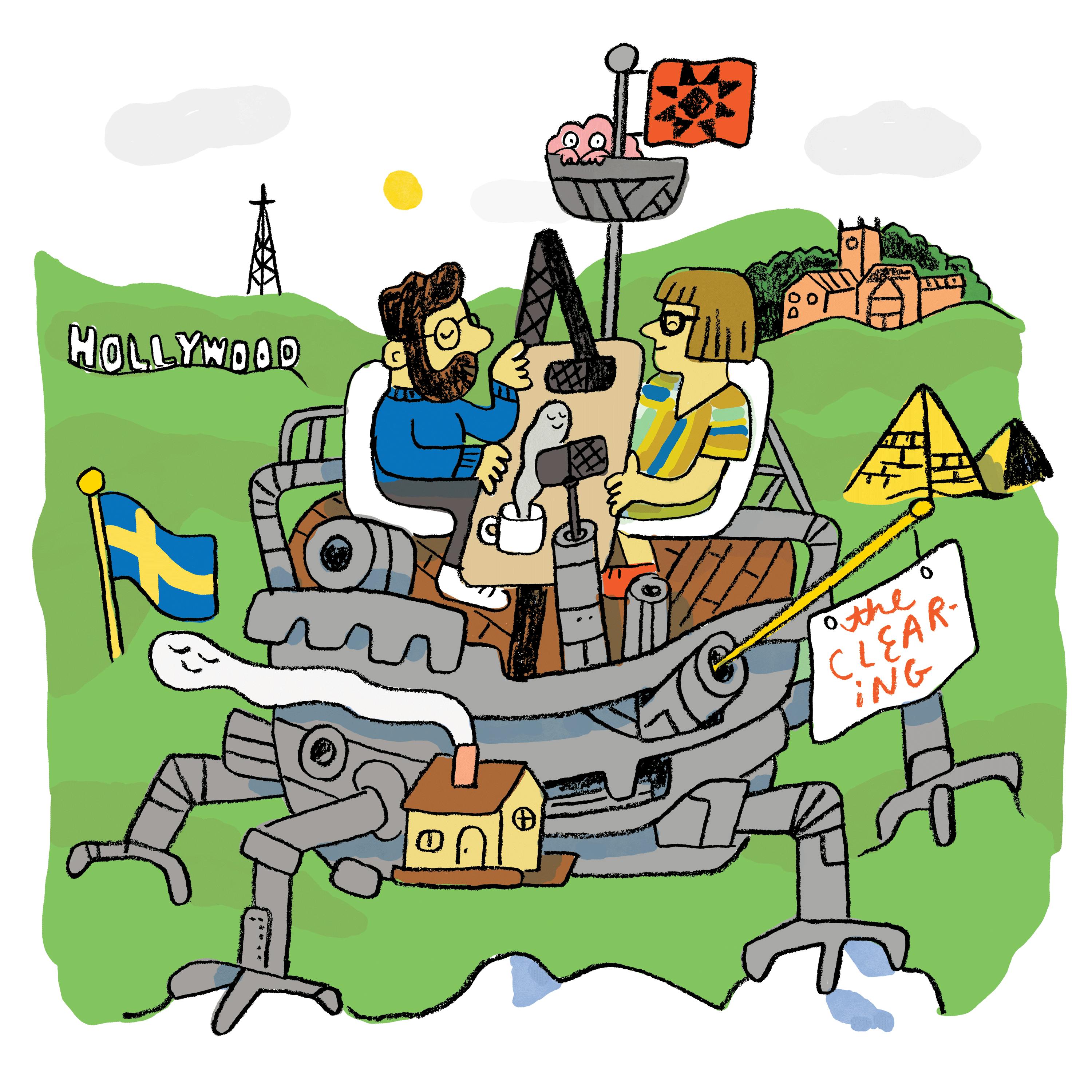
Loading summary
Transcript288 lines
- [00:01]
Andy J. Pizza
Hey, y'. All, I'm just popping in here to tell you this episode is a special, a very, very holidayish special episode where I was asked to be on Catherine May, writer Catherine May's podcast. She has a new podcast series called the Clearing, and it's very appropriate because she's the author of Wintering to do this for the holiday season. We did this cozy chat with this new podcast series is all about retreat and rest and stepping away. And it's basically she invites guests on to talk through their dream retreat. How do they fill up? How do they rest? How do they relax? And that's what this is. And I get into all mine. Half of my stuff is kind of fantasy and then the other half is real. And we get into also what it means to rest and relax and recoup as an ADHD person, neurodivergent person, and a creative person. And I think it is a good one to listen to while you're cooking and doing things over the holidays. And hopefully you get some rest and retreat yourself. All right, we'll be back in the new year. We're gonna take the next week off, but until then, I will see you soon and stay pepped and massive. Thanks to Catherine May for having me on her lovely podcast, Speak Soon. Y' on the creative journey. It's easy to get lost, but don't worry, you'll lift off. Sometimes you just need a creative pep talk. This episode is sponsored by Squarespace. I love Squarespace. I'm a longtime user. One of the things I love about Squarespace is I will use. It's so easy to use that I will use it to create pitches. If I'm pitching a book or I'm pitching something to a client, I will use a Squarespace page in my website and I'll build the whole thing there. Then you don't have these clunky like document PDFs clogging up people's inboxes. And it looks super slick. If you want to see one of those that I use all the time, I did one for my series right side out. Andyjpizza.com RSO and you can see how I create a little pitch summary of that project. Go to squarespace.com pep talk. Get building for free and trying it out and testing it. And then when you're ready to launch, use promo code pep talk all one word for 10% off your first purchase. Thanks, Squarespace. You probably know running is a big part of how I try to keep my brain sharp and creative. So I'm in that creative Runner Venn diagram. And so is Vander Jacket. Why? Because it's the only running apparel company that I've ever known of that was founded by an artist and the unique styles and creations that they make make that pretty obvious. Their unique looks are a product of their admirable and innovative approach to making each piece from dead stock leftover fabrics from larger companies, and it just makes their stuff look really unique and cool. Each piece is made in Denver by the founder and a small team of brilliant clothing construction workers. It's very cool and I don't know any other company that makes the one of a kind garments like they do in these small batches. When I go for a run, I'm hoping my Vander Jacket is out of the wash and ready. With its deep pockets for my AirPods and the thumb holes for cozy hands, I am a big fan. So if you are looking for something special this holiday season, whether your family's gifts need to be local or handmade or one of a kind or repurposed, Vanderjacket checks every box. Head to vanderjacket.com and use code creative all caps creative for 20% off your first order. That's V A N D E R jacket.com, promo code creative for 20% off your 1st order.
- [04:22]
Catherine May
Andy, welcome to the clearing. It's lovely to have you here.
- [04:25]
Andy J. Pizza
I'm very excited to be here.
- [04:28]
Catherine May
I. I feel like we only ever talk through the medium of podcasts. This is how our friendship plays out.
- [04:33]
Andy J. Pizza
I feel like most of my friends are like that now. Yeah.
- [04:36]
Catherine May
Unfortunately, when if we need to advance the conversation, it's like, oh, should we just record something?
- [04:41]
Andy J. Pizza
Yeah, it's true. And then the times you're like, maybe we'll just. What if we just talk and then you don't record and you're like, ah, that would have been the best episode we ever did. Dang.
- [04:50]
Catherine May
It's the curse of Record podcast. You're like, wait, what if I say something interesting accidentally?
- [04:56]
Andy J. Pizza
We gotta make use of this.
- [04:58]
Catherine May
Anyway, I'm so glad you're here and I. And one of the things I was about to say before we press record that I held back from saying is I have a hard time imagine you resting because you are so energetic all the time. You never seem to be off.
- [05:13]
Andy J. Pizza
Yeah.
- [05:14]
Catherine May
Do you take breaks?
- [05:16]
Andy J. Pizza
Yes, I do, but it is very difficult for me, so I'm sure I feel like there's a gonna be a thread through this about adhd, so I might as well just burst that bubble. Right from the start. I think being an ADHD person, I imagine a lot of ADHD people relate to this. Just rest is very difficult where so much of the brain, chemical stuff that I need requires chasing, requires stimulation. I need a lot of stuff going on. So there's kind of a theme here in my own. Like the, the. I've been looking through these questions you sent and I think they're. I think I have learned something about what I need when I step away, even if it's not typical.
- [06:04]
Catherine May
Yeah. Okay. And is it? I mean, a lot of ADHDers and I think a lot of autistic people as well actually talk about kind of resting in motion in many ways. Like we are happiest in our passions and if we're resting, it's about going deep into our passions rather than sitting on the proverbial sun lounger with a, you know, airport novel.
- [06:26]
Andy J. Pizza
Very true. And I think as my, my. All my passions have become monetized accidentally. Some, some accidentally, some on purpose. But then there's all these kind of, you know, hang ups to do with that. That a lot of the things I will do when I'm resting aren't directly related to work, but a lot of them end up feeding into the work that I do. So it's still the hyper fixations and whatnot. That's, that's usually where I go, but if I do too much. Like we, we went on a vacation this summer and it was amazing. It was a big one. We went to Italy. Oh, wow.
- [07:07]
Catherine May
Where did you go?
- [07:08]
Andy J. Pizza
We went to. So my brother in law planned it. He'd been there, um, previously and so he really. And he's a meticulous planner. So he just knocked it out of the park.
- [07:18]
Catherine May
Thank God for those people. We can just hand it over to them.
- [07:20]
Andy J. Pizza
Oh, I would have never had a prayer to be disorganized or see all these different things. But we went to Rome, Florence, Venice and Bologna and it was, it was incredible. But I learned, I always learned the same lessons, like, oh, I can do the low stimulation things like for a little bit like walking around ruins, that kind of thing. Can do that for like two or three days. And it's really good for me. But then after that I'm like, okay, I'm gonna have to take some accommodations. I need to do a lot of different kinds of things to feel okay. So yeah, I do. I can rest. But it, I think it looks pretty different for me.
- [08:03]
Catherine May
And do you. Are you the kind of person who's happy taken out of their everyday context as well. Because I think that's another factor for a lot of us, isn't it? That our homes, our everyday lives are actually what makes us comfortable. So travel can sometimes seem like, not like the opposite of relaxing, actually.
- [08:24]
Andy J. Pizza
Yeah. I think for me it's that it's the actual getting there and the being locked up in an airport, in an airplane and all of that stuff feels so low stimulation that it's panic inducing. I have a real, you know, I heard this thing about ADHD and I thought it's one of the most validated that I've ever felt because I use the same language without any research backed whatever. Like just having the courage to say. I remember telling my dad, like I, I can't explain it to you but like severe boredom. Feels like I'm in pain. That's. And it's, and it's, it is a. There's definitely a privilege to that because some, lots of people are in real pain at different times. I've had real pain in my life as well. But it is very validating to hear that the research confirmed that the pain centers actually do fire when ADHD people are bored.
- [09:22]
Catherine May
That's so interesting. So interesting.
- [09:26]
Andy J. Pizza
It's so annoying too because it feels like there's so many things about ADHD that like if you read the symptoms list, this is like synonymous with what most people consider to be just bad people. Yeah, just like, you know, in so many different ways. And so like this idea of like not being able to be bored can. It just has. There's so many implications and ways that can be understood. And I regularly beat myself up about it. You know, I wish that I had a higher tolerance for that kind of thing for, for a whole number of reasons. But, but yeah, I have to. So yeah, the travel's a real difficult thing, but I personally really feed off the novelty.
- [10:17]
Catherine May
Yeah.
- [10:18]
Andy J. Pizza
And, and so that's really, really good for me. So I do like, once I'm there, but it's hard for me to get myself to do it. Yeah.
- [10:27]
Catherine May
Well, I wonder how we're gonna do today as well.
- [10:31]
Andy J. Pizza
I have some tricks up my sleeve.
- [10:32]
Catherine May
Okay, well, let's get into it then. So welcome, welcome to the clearing. Tell me where we find ourselves, where you might go, what sort of landscape, what sort of place you might go for your kind of rest.
- [10:48]
Andy J. Pizza
So I like the idea that this could be partially fictional. It's gonna be.
- [10:52]
Catherine May
Oh, it can be as daft as you like, my friend.
- [10:56]
Andy J. Pizza
Good O. There's a little bit I found a little Bit of a loophole here. Okay. So I thought what I would like to do is go to. Have you ever seen the movie Howl's Moving Castle?
- [11:10]
Catherine May
Many times. Okay. I mean, only about like 12 times or something.
- [11:14]
Andy J. Pizza
I was afraid. I was like, if I bring this up and you don't know it, I don't know how far we can go.
- [11:18]
Catherine May
I'm a massive Miyazaki fan.
- [11:20]
Andy J. Pizza
Okay. Yeah, me too. So what I. I'm picking Going to Howl's Moving Castle as a kind of bed and breakfast. I mean, I think just alone. That alone is very appealing to me. There's something about those movies that have a flavor of paradise and Heaven to me. Like, I can't hardly describe that.
- [11:48]
Catherine May
I mean, I would say I've geeked out about a lot of Miyazaki documentaries. He's the director of Howl's Moving Castle, Spirited Away, the Boy and the Heron, Princess Mononoke, all of these kind of incredible films.
- [12:03]
Andy J. Pizza
Yeah.
- [12:05]
Catherine May
He is another person who is incredibly easily bored and will be working all the time.
- [12:12]
Andy J. Pizza
He's one of those people that has fake retired like three times. He's like, this is my last movie. I'm not doing it anymore. And then he's back to work. He.
- [12:20]
Catherine May
Bless him for trying. Honestly.
- [12:21]
Andy J. Pizza
He's trying. He's trying so hard. I can't. Im. Yeah. Retirement to me feels. I try to make room for the fact that, you know, as I've gotten older, I'm almost 40, and I. There's so much about being 40 that I could have never foreseen. And as you get older, you realize that you're like, oh, any. I went in my 20s, I was constantly looking at artists and musicians and writers, and I am very fascinated and analytical of their journeys. But I would look at them, be like, I'm never doing that. I don't want to do. Like, there's. I just, like. I don't know what. It was just like complete hubris or something. But as I get older, I'm like, oh, I can't imagine retirement at all. I can't. I don't. I just can't imagine I would do that. But at the same time, I'm like, you know, who knows? I don't know who I will be in that time. But I very much relate to this Miyazaki thing of just not being able to let go of just doing stuff. Like, I love doing stuff well.
- [13:20]
Catherine May
And you have chosen, therefore, something that is not only moving through a landscape. We should. We should take some time to describe how's moving Castle. But let's describe it in your words. How do you see it?
- [13:31]
Andy J. Pizza
See, I love that. And it kind of. It goes right to that thing you said at the start of like resting in motion. So Howl's moving castle is a. It's not. It's kind of a castle. It's. It's a hodgepodge of a bunch of different looking buildings that all look a bit medieval. There's sorcery, magic, and it's on legs. So it's literally moving throughout the Baba.
- [13:55]
Catherine May
Yaga's help to it.
- [13:57]
Andy J. Pizza
It does, yeah, it absolutely does. So it's moving. There's action that you're. If you're looking out the window, having a coff. It's almost like being on a train. But I. That's one of the reasons why I picked it. I like that feeling of even I most rest when like, if I'm on a swing even. I really like that feeling. I like being in the ocean a lot. I can really chill in the ocean when there's just, you know, getting smashed with waves. Like, there's something about that. I can like finally chill out. I need that. It puts me at some kind of baseline. So I like that moving thing. But then also there's two. There's two other pieces to this. The first one is, I think that I was. I was trying to put words to why is it when I almost picked Spirited Away's bath house, but that one might be mine. I love it so much and I would definitely go there, but it doesn't feel like a retreat. It feels because there's a little bit of like a horror.
- [15:01]
Catherine May
There's a lot of drama.
- [15:02]
Andy J. Pizza
Yeah, there's a lot of drama. It's a little bit scary. I would. That would be my first choice to visit, but not for a retreat.
- [15:10]
Catherine May
Fair enough. Wise choice, really.
- [15:13]
Andy J. Pizza
But I thought about, like, what is it about all of my heroes, people like Tova Janssen, Jim Henson, Miyazaki, that really influenced the work and picture books and stuff that I do. All of them create worlds that feel more like home than reality, which is sad to me. I do feel like that is sad. But. And I don't know if it's a neurodivergent thing of just feeling like nothing's designed for me. Nothing feels right.
- [15:48]
Catherine May
I think that's a very neurodivergent thing.
- [15:50]
Andy J. Pizza
And so watching though, there's something about. And even like there's like a spirituality to those movies where it's not. I'm really like. I'm pretty skeptical and Cautious about being overly woo woo about things. I like to entertain a little bit of that. Cause I think it's good for our brains.
- [16:13]
Catherine May
I think it's woo is very cheering. You know, just the right amount. Like, you let the right amount in, don't let it take you over.
- [16:19]
Andy J. Pizza
Yeah. I think having the. The right levels is. With that is really important to me. So I don't just take it at face value, this sort of spirituality or whatever. But there's something about. Those movies are very mystical. Everything is alive, everything's moving. There's a sense that there's a lot more. One of the things I love about Moomin and Jim Henson and Miyazaki is there's always a lot of life and unexplained things in the background.
- [16:56]
Catherine May
Yes.
- [16:57]
Andy J. Pizza
And I love that. That really illustrates how life kind of feels to me. And so I think there's something about that that feels like a type of rest that I couldn't get in the real world.
- [17:14]
Catherine May
That's so interesting. I watched the new Fraggle Rock this weekend. Have you seen it on Apple tv?
- [17:20]
Andy J. Pizza
Yeah.
- [17:21]
Catherine May
My dog is named Fraggle because I'm such a Fraggle fan.
- [17:24]
Andy J. Pizza
My dog is named a massive Henson Fen Moki.
- [17:27]
Catherine May
Oh, lovely.
- [17:30]
Andy J. Pizza
Which is a Fraggle. If you don't know.
- [17:32]
Catherine May
I mean, surely. Surely we can trust this audience to know that. If they're the right people, they'll have known that immediately. But yeah, there. There is. I think one of the things that I really notice watching it, having been a lifelong Jim Henson mega fan.
- [17:50]
Andy J. Pizza
Yeah.
- [17:51]
Catherine May
Is it's the detail. There are little characters everywhere, and I love the way they retain that in the new version, just popping up to say, hi, the moss has a little chat with you. There's a little worm passing that's just got something to say. Like there's. It's like there's infinite life and you've just got to look closely enough. And there's something so beautiful about that.
- [18:12]
Andy J. Pizza
I completely agree. And it's. And I'm. I feel like just to camp out there for a second, I feel like they captured something really true to it. And that is one of the ways that they. It just feels like easy to miss if you were trying to recreate a vibe, if you didn't really get it or understand it. And I love how there's these moments in Miyazaki movies where, like, on Spirit Away, they're on a train. And maybe I've said this to my kids before, like, this might be my favorite part, which sounds like an exaggeration but it makes me feel so strongly where they're on the train and they just go by this house that's, like, in the middle of the water, and they stop. It's not like it's in the background. They stop and look at it. Like the. It hovers on it for, like, two seconds. And that's it. You have no idea what's going on in that house. What. Why is it out in the water? What? There's, like, something in the yard. There's just something about that that feels like it gets at being alive in a way that is hard to describe. I don't know. It's very, like, elusive.
- [19:29]
Catherine May
But it's also that sense that there's actual life happening in that house. You know, it's not a backdrop to a animated sequence. It's like there's a potential other story here that feels like it's ready made and that it has been already imagined, but we're just not being shown it. And I think it's the delight. And it's also the very Japanese sense of which Henson captures too, that the planet itself is sentient. You know, that there's. There's nothing that isn't alive in those landscapes. It's not just the people or the animals inhabiting it. Like, everything is alive.
- [20:08]
Andy J. Pizza
People get. Anybody that listens to my podcast or follows me or anything probably get really tired of me talking about Frackl Rock, because I was such a huge fan of it. But I do feel. I can't help it because I feel like it's underappreciated. And I am one of my.
- [20:25]
Catherine May
It is.
- [20:25]
Andy J. Pizza
It is. I think it probably has something because we had it on. We must have had it on vhs, because I know we didn't have hbo. And so I wonder if that's part of it, is it just wasn't permeating the culture the same way that Sesame street did or the Muppet show did, because it. HBO here was at least like a paid thing that most households probably didn't have at the time that it was on. But it has so much depth. Like, they. The whole idea of the show is that everything is connected. So the Fraggles have the doozers that are kind of smaller creatures, and everything they do impacts each other. And the humans impact the Fraggles and the Gorge. And so there's this huge, lovely web. It is. It's a web. And it's just like this kind of a oneness sense that I really like. So that's kind of why I picked it.
- [21:15]
Catherine May
Let's make this Fraggle Hour. Let's just abandon this premise. Can I tell you. Can I tell you a really fascinating, I think, fascinating fact that nobody else finds interesting me, but I hope, finally, this will work on someone. Your cutaway human scenes were in, like, a carpenter's workshop, right?
- [21:35]
Andy J. Pizza
Yeah, yeah.
- [21:35]
Catherine May
Ours were a lighthouse with a lighthouse keeper.
- [21:38]
Andy J. Pizza
Oh. I knew that they did them different, like, they made them in each culture, but I did not know that that was a lighthouse. That is amazing. I have to tell.
- [21:48]
Catherine May
Cantankerous. Yeah, yeah. Like a cantankerous older man with a lovely white beard and a captain's hat. And he was Scottish, and Fraggle Rock was set in Scotland on an actual rock in the sea.
- [22:01]
Andy J. Pizza
Oh, that's so good. That's so good. And did he have a dog, too?
- [22:05]
Catherine May
He still had sprockets.
- [22:06]
Andy J. Pizza
He's exactly. Still sprocket. Okay, man. Yeah, we had a much, like, from what it sounds like, a much goofier American guy who's kind of like a mad scientist.
- [22:17]
Catherine May
I've watched the American ones, and he's like. He's much more sort of soft and gentle, whereas I was quite angry, which is very British. We were happy with that.
- [22:26]
Andy J. Pizza
That's so funny. That's such a funny. I love. I love to think about the conversations that led to what. What the British version of that would be.
- [22:34]
Catherine May
I love it. In France. It was a boulangerie.
- [22:38]
Andy J. Pizza
Oh, man.
- [22:38]
Catherine May
Yeah.
- [22:39]
Andy J. Pizza
I need to go look at all of these, because I knew they were different, but I never really. I don't think I realized they were in different settings and that they were that different. I figured it was just like a different actor and different language and kind.
- [22:50]
Catherine May
Of, you know, no totally different narratives.
- [22:53]
Andy J. Pizza
That's so cool.
- [22:54]
Catherine May
And, in fact, we like this time with the frag, there's only the American, which is a woman this time, but still like a kind of inventor. And I was watching yesterday going, ha, ha. Well, it all falls away now and it's all revealed.
- [23:08]
Andy J. Pizza
True. Yeah. Yeah. It kind of breaks the illusion. Yeah, that's funny.
- [23:13]
Catherine May
Anyway, sorry, I have to tell you that I thought you'd like that.
- [23:15]
Andy J. Pizza
I love that this has become a Fraggle Podcast.
- [23:19]
Catherine May
Fraggle fancast. Oh, we could do Henson cast, you and me. That would be just great. Just great. I could talk about the Muppets a lot. But let's not. What I'm wondering about Howl's moving castle to go back a long way is. Would it still contain the cast of characters? I mean, do you like solitude? And do you Want those guys around.
- [23:40]
Andy J. Pizza
I think just. I love solitude. I'm a big solitude guy. As long as I've got, like, a door that I can close and they have a great bathtub there. I'm a huge bath taker. Take a bath every day.
- [23:54]
Catherine May
You can have the bath out of my neighbor Totoro.
- [23:57]
Andy J. Pizza
Oh, yeah. Oh, perfect. Love it. Large. Yes, that's what I want.
- [24:02]
Catherine May
Mini swimming pool.
- [24:03]
Andy J. Pizza
I'm gonna build this out in all these different movies. But as long as I have, like, a retreat, I would like to have little weird characters there. Like Calcifer. Definitely Calcifer, who's the fire. Who's, like a personified fire, anthropomorphized, who's played by Billy Crystal in the American version. So, yeah, I'll take that. All of. I love all of that. And then. And so there's. Yeah, like I said, there's something. There's something almost like, spiritual about that that I. I long for it when I go on some kind of retreat. Yeah, I want something. I have this. I'm saying this kind of as an observer of myself because I don't fully understand what it is. And I'm not even sure that I would say that it's good or adaptive.
- [25:01]
Catherine May
Okay.
- [25:02]
Andy J. Pizza
But there's something about. So I'm just doing it kind of in a curious way. I'm sharing this. Of, like. I very much long for direction from the universe. You know, I want. Or at least connection. Just a feeling of even just minor transcendence. You know, anything that's like. Just. That gives me. And. And I feel like I get it. When I sleep, I have really active dreams most nights. And there's something about that that makes me feel better. I don't. I don't know if this. It makes sense to anyone else, but that. That's something that I. I feel like in that space, I would get some of that. And then the other thing that it has. And the other reason I picked it was it has a magical door. And this is a very ADHD thing. So it's got a magical door.
- [25:59]
Catherine May
I was about to ask exactly this question.
- [26:01]
Andy J. Pizza
Oh, really?
- [26:01]
Catherine May
Tell me.
- [26:02]
Andy J. Pizza
Yeah, so, yeah, it's got a magical door that has like. Like this little turny. It's like a little circle dial thing. And it's got four quadrants. And when they spin to a different quadrant, that door leads to a different place. And so I thought since this is my imaginary retreat, I would be able to pick where these doors open up. And I feel like if I. If I could Go on to. As an ADHD person, I want that level of novelty. If I could go to four to.
- [26:40]
Catherine May
That's novelty for you?
- [26:41]
Andy J. Pizza
Yeah, it's very, very ridiculous. I'm just laughing at how grandiose it is, but that's how I feel.
- [26:49]
Catherine May
I love this, but it's so restless as well. It would allow any restlessness you can throw at it, actually.
- [26:56]
Andy J. Pizza
Exactly. So I really like that. So should I go through these four quadrants?
- [27:01]
Catherine May
Yeah, take me through the four quadrants. I love that you've thought this through. This is awesome.
- [27:07]
Andy J. Pizza
I've been thinking about it a lot. I've been thinking about it a lot, too, because as I've gotten older, fun is harder. And that's one of the saddest things, fun, especially for neurodivergent person. I think staying engaged in life, making sure you have those threads that you're pulling and staying interested, staying curious, all of that. It can. Especially when times are the way they are. If you don't have some of that zest, you are dead. You are in bad. You're in a bad spot. And I can find myself in those places. Of course, some of that's very reasonable and necessary, and we need that too. But it gets to be dangerous. Like, it feels like I'm like, losing my energy if I don't have those little things that are. And so I like this activity as a prompt to cultivate all of the things that really make me feel alive.
- [28:15]
Catherine May
Curiosity and fun feel really similar if you're neurodivergent, like, being able to pursue curiosity. I think, like, I don't find stuff fun that other people find fun really always, you know, I always found other people's fun, like, really alienating. And it's been. Finding a neurodivergent community has been so important to me in terms of understanding that my fun is their fun as well. Although everyone's fun is slightly different. But it's the same route, which is like, I want to get deep into something that I love, and that is the most fun thing. But adulthood does disrupt that, doesn't it? All of those duties that we have, all of those kind of domestic demands, work demands, it pulls us away from our fun. And it's not easily solved by, like, going out to a nightclub at the weekend, which is, you know, the sort of societal. Or going shopping at the weekend or something like that. The sort of societal recipe for having fun back in your life.
- [29:16]
Andy J. Pizza
I can also have this thing where I kind of like when you get into a song and you Play it a hundred times and the juice is gone. I have whole threads of my life that are like that, where I'm like.
- [29:30]
Catherine May
The little carcasses that you've sucked dry. Yeah.
- [29:33]
Andy J. Pizza
And so I've had to. I've. I've realized when I've gotten myself into those places where, ooh, I don't feel curious about anything and it feels kind of scary and I can't. And I'm trying all these old things. It's not working. I've realized that I have to be proactive about that. I have to, like, make sure that I don't. That I'm always. If something does grab me, I need to catalog it because I also have an out of sight, out of mind kind of thing. I can forget the threads that I'm, like, pulling. And so, yeah, I like this activity as a means of going over and cataloging and really meditating on what are the things that really do it for me. There was something that you said a second ago that I want to go back to. It reminded me of. I might lose it, but it reminded me of something you said on the first episode of this new. I was listening to one of the first episodes of the Clearing, and you were talking about. Oh, I know what it was. You're talking about how curation has become a big thing when we're being, like, just onslaughted with information and content and all this. And also, though we're in this time where the old forms of curation have. They don't work as well because we don't have that monoculture anymore. Yeah. And we. We are. We have this very specialized taste profile that we have to figure out. Where do we find these things? Because we can't just go searching. We don't have the free time to just find all these things. And as you were saying, this notion of finding neurodivergent community where people. Where. If there's similar types of fun. That's one of my biggest points of grief as an adult in the era that we find ourselves in. That back in college and right after that, we still had enough of commonality that if I would go out with my friends to the bar, what we would be talking about is all of the albums that released that week or. Whereas now it's tough to find people who are watching even the same TV show that you're watching.
- [31:58]
Catherine May
That's so true. There's too much culture, and I love that there's too much culture.
- [32:04]
Andy J. Pizza
Me, too. Me, too.
- [32:06]
Catherine May
I mean, the moment you said you love Fraggle Rock. I was filled with delight because honestly, it's really hard to find anyone that's watched the same thing as you or listened to the same album this year or read the same book even. And I. That kind of puts us into this perpetual state of guilt as well. Like, oh, wait, have I missed something? Have I not caught up with. You know, I read a lot and then I talk to my other friends who read a lot, and I've never read the same books as them, and I'm like, what have I been doing with my time? Have I been slacking on the reading? Am I even a reader? You know?
- [32:41]
Andy J. Pizza
Yes.
- [32:42]
Catherine May
Yeah.
- [32:43]
Andy J. Pizza
And so, yeah, I think maybe that's where the birth of the rebirth of book clubs, they've come back with such fervor because of just that need of a little discipline, that work. I don't know where this is not related to Howl's Moon Castle or my retreat or anything, but it's just something that came to mind as you were saying that.
- [33:02]
Catherine May
So we've got to take you back to your dial. You had your hand on the dial.
- [33:05]
Andy J. Pizza
Did I mention I had adhd? I think I said that at the start. All right, don't have to apologize again for these tangents.
- [33:15]
Catherine May
Please don't be great.
- [33:16]
Andy J. Pizza
Back to the dial.
- [33:17]
Catherine May
We're on the dial.
- [33:19]
Andy J. Pizza
So I've got. My first one would be, I'd like to wake up in la. Now, LA is a controversial place. Not everybody likes it. I see the critiques, okay? I've been there and I. I feel it. There are plenty of things that are. There are plenty of things not to like about la, I feel. But I am kind of a huge fan. And it's something about. I think it's almost as simple as the air when you go outside. There's something about this, the temperature being like exactly where you would set it.
- [34:00]
Catherine May
Right.
- [34:01]
Andy J. Pizza
It feels deeply calming. It feels like, oh, everything's all right. You could be like doom scrolling in your bed and then you walk outside and you're like, like, nope, it's good. We're good. Like, it feels pretty good. So I think that's where I'd go. I'd go there. I'd go to Intelligentsia, get some coffee, go to Squirrel to get my breakfast. And there's just something about that. I feel like waking up in la, that'd be just a great vibe.
- [34:26]
Catherine May
I always, I've never been to la. It always looks from a distance like it's very frenetic. Is it. Is that the experience on the ground.
- [34:33]
Andy J. Pizza
Or you know, I think it's like. I think that what I like about the energy is that, okay, it feels almost like a foil to New York City. So I like going to New York City. There are things I really like about it. There were times where I was like, this is really feeding me. But there's something about. There's like a, A, A callousness to. You better get it together and get on with it. Like. And you better be quick about it. Like, there's something about that that doesn't jive with me. And I think in la, even though that. Okay, so everybody that. Not everybody, but a lot of people you meet are deeply friendly and warm. Yeah. The only little dark side of that is there's a little bit of desperation in the air in la.
- [35:31]
Catherine May
Everyone's got a. An ambition, a goal that they're trying to meet. Yeah.
- [35:36]
Andy J. Pizza
But I. I don't know, there's something about it that I actually, I like this explanation too, of if you're ever doing calls with teams and half of them are New York, half of them are on the west coast, there's just this established feeling that the west coast people are slackers because they're three hours behind. There's just like, they can't catch up right now. Like, we're getting stuff done. So I. There's just an energy of. To me, it feels a lot more laid back, which I like as well. So, yeah, I think that's where I would go. That's my first dial.
- [36:12]
Catherine May
First turn of the dial.
- [36:13]
Andy J. Pizza
Yeah. And then the second dial is Stockholm.
- [36:19]
Catherine May
Oh, nice.
- [36:20]
Andy J. Pizza
Which I just love.
- [36:21]
Catherine May
Big contrast.
- [36:22]
Andy J. Pizza
Very big contrast. Again, this is. I mean, hey, I live in the land of contrast. I love, like, when I. I've developed my taste a bit in terms of music, but when I was younger and I'm still a little bit of a sucker for it. I love the songs where, like, drop after drop after. Like, you thought that was the drop. This is the drop. Boom. It's just like the contrast just keeps going up. And again, it's just the stimulation of that multiple key changes, like, whoa, we're on it. You know, I like that energy. So, yeah, I think that's what is so appealing about this dial. It's like I can be chilling in LA in the warm, nice vibe, and then, boom, Stockholm. And the time I went there, it was super cold, so I even might go in the winter.
- [37:14]
Catherine May
Stockholm in winter is a whole vibe.
- [37:16]
Andy J. Pizza
It is.
- [37:18]
Catherine May
Candles everywhere, gloomy light.
- [37:21]
Andy J. Pizza
Yes.
- [37:21]
Catherine May
Ice in the harbors.
- [37:24]
Andy J. Pizza
Yeah, it was amazing. I fell so in love with that place. Everyone, like everyone was wearing black and no one in the streets. Like the streets are quiet. Like no. Every. If they are talking, you can't hear them talking. It just feels like it felt like an alien planet to me, honestly, coming from America in the best kind of way. And they have such good taste and amazing like design and bookshops and I just love to mull around that kind of space for a few hours. So that's definitely my second.
- [38:00]
Catherine May
Open sandwiches for breakfast.
- [38:01]
Andy J. Pizza
Open sandwiches, yeah. And they have all these every lunch you have, wherever you go. They have like five bowls that you can just pick things from. I love it.
- [38:13]
Catherine May
Heaven.
- [38:34]
Andy J. Pizza
The creative path, like any good journey, requires a guide to help you find your way. You might be thinking, Andy, I don't have access to creative masters, but with Masterclass you do. I loved Amy Poehler's class on improv. I'm a comedy nerd, but also as a public speaker. I wanted to boost my confidence in dealing with all the unexpected situations that I always find myself in on stage. So this class titled Prepare to be Unprepared was just so perfect and inspiring for me. I especially love the lesson on finding the game within improv. I also want to check out James Clear's habits class and Esther Perel's relationships 1. With plans starting at $10 a month billed annually, you get unlimited access to over 200 plus classes taught by the world's best leaders, writers, chefs and more. I love that it has an audio mode so you can listen while doing chores or driving. And there's no risk. Every new membership comes with a 30 day money back guarantee. Masterclass always has great offers during the holidays, sometimes up to as much as 50% off. Head over to masterclass.com Pep Talk for the current offer. That's up to 50% off@masterclass.com Pep Talk masterclass.com. One thing we talk a lot about on this show is this idea of whole self buy in. Like for me to successfully pursue a goal, my mind, body and heart need to be in it or I will keep myself up at night worrying and sabotaging my own self. This is what I love about brands like Avocado Green Mattress. They know that comfort is both a physical thing thing you want a comfortable mattress but also a mental thing. You want to feel good about what you bought. You want the mattress that has your back and the planet's back. Avocado has both. Avocado organic mattresses feature thousands of steel coils individually encased in fabric pockets that Flex independently to reduce motion, transfer and support your body where it needs it most. But they also have the planet's back. The highest standards with the trust tested certifications like gots, the global organic textile standard, EWG Made Safe, O E K O Tax Green Guard Gold and A B Corp. Some of the toughest certifications for safety, non toxicity, social impact and environmental responsibility. Better for you, better for the planet. They have one year sleep trials. Try before you buy easy financing. Don't let your mattress purchase keep you up at night. Head to avocado green mattress.com today and check out their mattress and bedding sale. Yes.
- [41:09]
Catherine May
So we've done two turns of the dial.
- [41:11]
Andy J. Pizza
Two turns the dial. All right.
- [41:12]
Catherine May
In many ways quite opposite paces. Not maybe not opposite but some contrast.
- [41:16]
Andy J. Pizza
Very different. Very very different. And that's what I love about it. That's actually as I was doing this like exercise I'm thinking it's really hard for me to want to go somewhere for very long. Like I, that's, that's. I really would prefer and even any vacation I have I want to think about do they have. Is there a city aspect and a beach aspect? Is there like can we mix it up? Because I really need that third one is the most. This is the third turn of the dial. That one is going to be question marks. Now I have a few places that maybe I could pre select. It's one of these but they're ones that I've never been to and they're. It's either maybe Egypt if I could just go, you know I can imagine a lot all of the travel and airports and all that that would cause. That would it take to get there. That sounds like too much. But if it was just a turn of the dial and it was randomly selected I could definitely show up in.
- [42:20]
Catherine May
Egypt, step out of that door and into Egypt.
- [42:23]
Andy J. Pizza
Would love to see that. What's that? Yeah, maybe, maybe. And then I would say Tokyo and then I had another Germany. So I haven't been to any of these places and I would love not to pick. I would love to. It's just a novelty thing. I turn the dial, don't know which one it is, walk out completely unprepared.
- [42:45]
Catherine May
Wow. Wow. That is, that is not relaxing.
- [42:49]
Andy J. Pizza
No, it's. That's. That's novelty though and that's what it is. It's like, like when I think about retreat I think I'm rarely thinking about relaxing. I'm thinking about filling up my cup inspirationally and feeling have again that zest like that's what I'm. Look, that's what I'm lacking. I think a lot of time when.
- [43:14]
Catherine May
I get burnout, noise, color, stimulation, input, like, I. I often say I need a randomizer. I need something that's a randomizer in my life because I need to not be choosing. Which is exactly what you're saying here. Like, I need stuff to come at me sometimes that is outside of my control. Because when I'm in control of it, I make everything the same all the time, and it's really smooth and lovely, you know, And I read the same kinds of books and I listen to the same kinds of music and I watch the same kinds of tv and everything gets the same. And I, you know, I see my same friends. What I used to love about going to the school gates was, which I don't anymore, my son's too big to, you know, pick him up and drop him off was you'd have chats with people that just randomized your day and they'd tell you something and you'd be like, oh, really? Oh, right. Okay, that's. And then you'd go home and be like, on Google, trying to find out about it. Like, those kind of randomizers are so valuable.
- [44:14]
Andy J. Pizza
Absolutely. I think that I also feel like it's just so important. Like, I think a lot about the different types of creativity. I think when we talk about creativity, I think we're usually talking about one specific aspect of being creative. And often, even when we're talking to people, we're talking about different aspects and maybe don't realize it. Two aspects of creativity that I'm really interested in, and I try to dip into them. I think of them kind of like curious creativity and then strategic creativity. I think they're both super important. You can't really do them at the same time, but they're the opposite. So the curiosity is starting without knowing where you're going, knowing where you'll end up. And strategy, like the definition of strategy is literally the opposite. We're going to start with the end, and then we're going to work backwards. And I actually think you need both of those. We all have those, like TV shows that we loved until the end and then we hated it because they didn't have any of the strategy, you know, they didn't have the strategic creativity. The reason I bring that up is.
- [45:33]
Catherine May
Just let it resolve itself somehow.
- [45:35]
Andy J. Pizza
Yeah, right. And I think I really respect. And I. I love a thing that, like, I think a lot of the Miyazaki stuff is very curiosity Creativity. There isn't a lot of strategy. It's not really clear. It's very mythical, symbolic. It's not very obvious what this is about or what it meant, but it's still you cry or you, you know, feel these big feelings. So it's very effective. I bring that up because I think strategy is so over indexed in both the culture, because of the way the economy is and how much every. We're in that survival mode. So we need to know where this is going.
- [46:17]
Catherine May
We need to know where this is going. We need to. This is going to have an output that is going to be meaningful at the end. Yeah.
- [46:21]
Andy J. Pizza
And then if you're neurodivergent, you have all these ways that you feel the need to protect yourself. For me, that looks like how do I avoid getting in places where I'm in deeply low stimulation because I will feel that pain of boredom in a kind of an extreme sense. I'm constantly thinking about how do I control my life, you know, how do.
- [46:48]
Catherine May
I keep the pace up, how do I like, make sure that I'm provisioned in a way that isn't familiar to other people. But that is my provisioning. I need stuff coming at me.
- [46:58]
Andy J. Pizza
Yes. And so this is ideal.
- [47:00]
Catherine May
You've chosen the ideal.
- [47:01]
Andy J. Pizza
Yeah, I've thought about it now I'm just sad that it's not real.
- [47:06]
Catherine May
But no, I'm actually feeling some grief that we're gonna have to end this conversation.
- [47:10]
Andy J. Pizza
But yeah, I think that I love the randomizer point and it reminds me also of how I will. There are like, I listen to like online radio, different online radio stations now. And I feel like we get in this space where we're very pessimistic for good reason, in lots of ways pessimistic about the world and people. And I get it. I feel it very frequently. But I also think generation to generation, we're more resilient than we give ourselves credit for. And there are a lot of ways in which behaviors that a generation gets sucked into and addicted to, the next generation looks at that and is like, I'm not doing that. We're not going to do that. And so I think in this moment where everything is on demand and we're choosing everything and we're curating every minute of our lives and we're all exhausted of the mental tax of choosing.
- [48:11]
Catherine May
Yeah, choosing is so tiring.
- [48:13]
Andy J. Pizza
It is.
- [48:15]
Catherine May
And the tax of like having to look consistent within that.
- [48:18]
Andy J. Pizza
True.
- [48:19]
Catherine May
My generation was obsessed with that. Like I noticed that generational difference between myself and my son that when I was a teenager, we had to pick a stream and fully commit to it. So, like, if you were like, I don't know, a bit punk, like, I like to be. You couldn't then listen to a dance record. That would be. That would be appalling. That would be like a massive betrayal. I mean, obviously, I've just. To be clear, I have grown out of that attitude, but when I was his age, I was fully committed to that. And now he will. He just doesn't genre. He's really super aware of what the genres are, but it's just like a buffet for him. He's just like, yeah, I can just have. I'm gonna like a bit of opera here and then I'm gonna love some swing and then I'm gonna take some Brazilian funk. He's talked to me about that a lot. I know, I know about funk, guys. I'm not. I'm still with it. But it's like he's got this. This amazing array out in front of him that he's like, yeah, I'll take a little bit of everything. Thank you very much. So different.
- [49:21]
Andy J. Pizza
And I think it is very, very different. I also wonder if with my own kids, their habits are very similar to that. And I've noticed that in their generation that's pretty common. And even the bands coming out of their generation, like, yeah, super into this band, Geese and Cameron Winter and they. They are so eclectic. And they have a. There's a lot of stuff that you recognize, like, oh, there's a Rolling Stones kind of bit. There's a Bob Dylany thing going on, but they do. They're just not beholden to any one way of being. And even track to track, it's just all over the place in a way that's really refreshing. But I see in my kids too, there is a little bit of incoherence in their. Like, who am I? It's not. There is.
- [50:08]
Catherine May
Yeah. We were given identities in a much stronger way.
- [50:10]
Andy J. Pizza
Yeah, I think so. Yeah. I don't know. But that's. Yeah. So that's. My third dial is just random.
- [50:18]
Catherine May
So wait, is there a full turn at the time?
- [50:20]
Andy J. Pizza
Yeah, there's a fourth turn. The fourth turn is I want to go to the hills of Yorkshire. I lived there for five years. I would love to go to home Firth. I've never seen Last of the Summer one, but that's.
- [50:37]
Catherine May
Haven't you ever seen. Oh my.
- [50:39]
Andy J. Pizza
I lived there, though. I lived there.
- [50:41]
Catherine May
Must rectify this immediately.
- [50:44]
Andy J. Pizza
At the time, like living there. That's all. And he was like, oh, that's the summer wine. I'm like, yeah, I don't know that, but I've heard about it and I know a little bit about the vibe, but. But I actually lived it. Lived it. Last of the summer wine. It's where there are a lot of people that retired that go there. We kind of randomly picked it, but it was. It's gorgeous. And it's. I would love to spend the evening going on a Yorkshire hike, ending up in a pub. I have a pub in mind even. No music, no TV's lovely. Just with some friends.
- [51:23]
Catherine May
Yorkshire pubs are little heavens.
- [51:27]
Andy J. Pizza
They are absolutely. So I think those are all my dials.
- [51:31]
Catherine May
This is wonderful. So normally I ask people if they're gonna bring a cultural artifact, but I'm not sure you're gonna need one. Are you like, you can just step out into any major space in the world or do you. In mind.
- [51:46]
Andy J. Pizza
I am pretty busy, but I think that I would probably. I just brought the Little Prince to my last vacation and reread that. I don't reread things very frequently, but that's probably my all time favorite book. And I love that it has this ability like the things we were talking about earlier. And I think all of this is kind of getting at trying to get back in touch with as much of a pure creative side as I can. And I use the word creative, but I actually feel at a loss of words for what this is because there was a period of time and sometimes I talk about it this way, but there's a period of time where it would be called the right brain. But there's so much criticism around how it's really nuanced whether it's left brain, right brain, they're all involved just. And I actually feel kind of annoyed. I get that we want to be accurate and that concept was really useful to me.
- [52:52]
Catherine May
Don't take it away.
- [52:53]
Andy J. Pizza
It was very useful. But to me it's more like, okay, I don't care if they're the hemispheres of the brain. I know the difference between being in this zone and that zone. And I got about halfway through this audio book which doesn't sound very impressive except for it's like a 20 hour book and it's called a master and aary about left and right hemisphere.
- [53:16]
Catherine May
It's trying to be the master's msm. Yeah, yeah, yeah, yeah, yeah.
- [53:19]
Andy J. Pizza
And it's trying to be very nuanced. I think still there's criticisms around like the science of it. But I think And I think the philosophy still holds up and is pretty respected. But he makes this great argument around when you're in what they would call, what he would call the left brain hemisphere, or you're in the mode of. Of parts like pulling things apart, being rational, thinking, probably a little bit more strategic. Yeah, The. The. It's really useful. It's very important. But the problem is you can get stuck there easily. Right. And his argument is that part of yourself doesn't respect the other part, but the other part does respect that, the rational side. So if you talk to creative people. I haven't met very many creative people. It's so true. It's so true. And the more that I've thought about it, the more I've become kind of on a mission to figure out what are the things that snap you back into that other, softer side of you that senses wholeness and has this, you know, in touch with the symbolic and that. So I think that's what this whole thing was about is I. I'm always. And I'm always trying to build into my life things that snap me back because against my will, the world we live in requires so much of the other one. And it's so easy to get stuck there.
- [54:56]
Catherine May
Yeah. Yeah. When did you first read the Little Prince? Was it. Is it a childhood book or is it something you've come to as an adult?
- [55:03]
Andy J. Pizza
So it's something where I think. I don't really remember how I got a copy of it. I know it was from one of my teachers.
- [55:10]
Catherine May
Right.
- [55:11]
Andy J. Pizza
I don't know if they gave it to me or if I accidentally took it. But I have.
- [55:17]
Catherine May
Might have stolen it. Don't.
- [55:18]
Andy J. Pizza
They might have stolen it. I don't know. I can't be for sure. But I didn't read it right away. I don't even remember how old I was when it was given to me in quotes.
- [55:30]
Catherine May
But when it came into your possession. Passive tense is so useful sometimes.
- [55:39]
Andy J. Pizza
So I can't be sure when that happened, but I know I didn't read it then. I didn't read it until I was in high school. I don't remember why. What. Cause I wasn't a big reader when I was a teenager or a kid really. And I read it. I read it in probably, like one day. It's a pretty short book. But I remember feeling like everything had changed. It was one of the first books that I read that had that. I mean, I'm sure everybody can relate to that. You have those books where you're like, the World looks different in a dramatic way. And nobody understands because nobody had that experience. And I love. Every time I dip into that book, I feel like it snaps me back into that other side.
- [56:24]
Catherine May
So there's this kind of pure moment there that's available for you. Presumably, you can't go in there too often. You have to have a little space between it, right?
- [56:34]
Andy J. Pizza
Yeah.
- [56:35]
Catherine May
Yes.
- [56:35]
Andy J. Pizza
Yeah. So I haven't. I reread it this year. I haven't probably read it in six or seven, eight years maybe, but it was effective and I kind of had low expectations because rereading something, even though I would think of it as my favorite book, rereading it, you just don't know how you're going to feel. And, yeah, it definitely puts me in that place. I love the nonsensical stuff of myth and fairy tales. And this sort of creative work does something to you that we're like, oh, this makes more sense than real. And that's.
- [57:19]
Catherine May
Can you outline the story a little for anyone that hasn't read it? Maybe you've got some new converts here. But what's the premise?
- [57:26]
Andy J. Pizza
Yeah, so the premise is the author crash lands in the desert. He's an air. He's a. He's a pilot. And he comes across this little prince who's a boy. And, you know, initially, you're not really sure if this is real or not. I guess he really having this encounter. Is it a mirage? Is it a hallucination? And they spend time while he's fixing his plane over a few days, talking. And. And the little prince is telling him the journey from his tiny planet to Earth. And it's got. It's very melancholy and bittersweet. There's some real tragedy, but there's these little anecdotes as this prince is going from planet to planet. He's encountering these different types of adults. And actually, I feel like each one is kind of obsessed with that strategic brain that we were talking about. They've lost themselves. And so a lot of it is about. It's kind of like. It kind of reminds me of how when you think of Peter Pan versus Hook, that there's these two opposites that are in tension. Like, Peter Pan is about a kid that will never grow up. And obviously it's about all kinds of things beyond that. But then Hook is very much about an adult that's lost their inner child. And I like that tension of the opposites that you. And it's again, back to this, like, strategic brain, curious brain, rational brain, irrational brain, all that, like, there is this. I'm very into the seasonality of that. And I think in this book, it's very much about how you get back in touch with your childhood side.
- [59:20]
Catherine May
It always feels like a book that's really written for adults to me. I mean, I've only read it as an adult, so maybe I don't have that childhood thread to connect me to understand, like, what it would look like then, but it feels like something's being snuck under the fence with this book for me. I really love that. I'm not very convinced by the strong line between children's books and adult books anyway. I think adults who love reading children's books, the best people anyway. But, yeah, interesting that that's your choice. So that's going to reset you and that's going to give you that pure hit of creative thought and just take you back down to get rid of all of that mechanical thinking out of your brain. I love this. And we also asked if there was an artifact that you'd bring with you from home that would either comfort you or just remind you of where you're from or even be pract. Is there something. I mean, is there something this castle really needs? It feels like everything's there, but is there something you'd bring?
- [60:25]
Andy J. Pizza
So I was thinking I would bring probably like a dream journal sketchbook. I love. I mentioned this before. I'm really into dreams on a bunch of levels. I think at the very least, again, it's the same theme. It's getting into that other side of the brain and self. I feel I'm not really. I'd love. I love to entertain the idea that dreams are somehow otherworldly, spiritual. I love it. It feels. It feels true. I don't really know that. I wouldn't really say that it's true, but I like to entertain that. The thing I really love about it, I love about dreams, is that they are an escape. And I guess this whole theme is an escape from ego and control. And. Yeah, and I love how Jungians talk about when they're interpreting a dream, something that I think they get really, really right is that you don't trust your perspective in the dream. That's the ego's perspective. So if you're like, okay, I'm dreaming and there's a bad guy there, then the. The interpreter will look at everything and be like, let's put all the evidence together. What told you they were a bad guy? You were just assuming they're a bad guy. Or when you, you know, you find A monster. And you run from it. Like, how do you know that was a monster? How do you know they were gonna hurt you? Like, and it. And you really. They're trying to encourage a curiosity into your subconscious.
- [62:06]
Catherine May
If it's sort of external to you almost, it's that it's this thing that's happened that you have a perspect, which is. That's quite a surprising idea to me.
- [62:13]
Andy J. Pizza
It is. It's a weird idea. But I think the, you know, I went on one of my big threads and hyper fixations was Jungian thought. And I have kind of have this feeling like that there's a lot of ways where the academic and scientific community really doesn't want anything to do with Jung. And I think, I think they have some good critiques that are very, very justified. Yeah.
- [62:41]
Catherine May
We'Ll allow them. It. It's fine.
- [62:43]
Andy J. Pizza
Yeah, yeah. There's too much there to pull out, but there's plenty. But I almost feel like it's like the kind of medicine that we discovered and we thought it did one thing and then later we were like, oh, this is actually much better at treating this other thing. And so I feel like Jungian thought really got put into psychology and psychoanalysis and, and therapy and that sort of thing. And all of the way it doesn't. Its efficacy rate for that sort of stuff doesn't necessarily.
- [63:16]
Catherine May
Doesn't stand up.
- [63:16]
Andy J. Pizza
Yeah, it doesn't really stand up to a lot of the modern things that we do. But I think in terms of like, if you aren't dealing with a major mental health issue, I have a feeling that if you are stuck in that rational egoic brain, if you're someone that is going to work every day and just going through the motions and trying to make more money and you know, all that sort of thing. Yeah. It's almost a way of engaging in life and art that it's like it's.
- [63:45]
Catherine May
A sort of spiritual and philosophical tool rather. Yeah. Rather than a therapeutic tool in. In terms of like a person in crisis.
- [63:55]
Andy J. Pizza
And it makes me sad that because of its framing it's been rejected because as I've read.
- [64:02]
Catherine May
So rich.
- [64:03]
Andy J. Pizza
It's so rich. It's so interesting too. Just so interesting. And actually think a lot.
- [64:08]
Catherine May
It's like we're allowed just to find something interesting.
- [64:11]
Andy J. Pizza
Yeah. What if it's just. Yeah, it's just interesting. And I get, you know, I get the thing of like. Well, there's a rational critique if people are using this and, and especially the more out there parts of it and it's doing more harm than good on people and people that are sick or, you know, whatever. Yeah, I get all of that. But I think even in terms of like so much of. Of his work, work is so perfect for artists. Like a man and his symbols is really like just an engagement in imagery and what it. The power of it and understanding on a deeper level. It made such a big impact on me as an illustrator. Really, really has in direct kind of obvious ways. But I love that it's full of little nuggets like that around, you know, when you go and when you go into your dream, you think about your dream dream. Just two things that it does. One is like, don't be so quick to identify with the point of view, with the ego that you're moving through.
- [65:07]
Catherine May
Useful tool for life. That's kind of intellectual tool for life.
- [65:10]
Andy J. Pizza
Yes. And then also it's safe to assume that everything in this dream is a part of you. It literally is because it's in your mind, but also it's part of parts of yourself kind of working out things. And so. So the reason I'm trying to remember. Oh. Why I brought that up is because I brought the dream journal. And so I love dreams. I will often take notes about my dream when I wake up. But in my everyday. I really don't have the time. I don't really have the time and it makes me very sad. And so if I had a retreat and I had that space, I would be. I really want to go through a period of time in my life where I'm not. I have a dream journal that's a sketchbook and I'm drawing the dreams instead of just writing about. And the times I have done that, the dream recall aspect is so much stronger. Like if I flip through that, I'm like, oh, I remember feeling that. So that's definitely something I did.
- [66:05]
Catherine May
I spent about six months writing down. I think it was in my mid-20s.
- [66:08]
Andy J. Pizza
Yeah.
- [66:09]
Catherine May
Wrote down my dreams every morning and every day the detail got greater and greater and in fact it became self limiting for that reason because it got to the stage where I was remembering my dreams in so much detail that there was. It would have taken an hour to write it down every day. And one of the interesting. I still sometimes find that journal and I read through it and I am still now seeing ideas come up in my work that are in that dream journal.
- [66:36]
Andy J. Pizza
That's amazing.
- [66:37]
Catherine May
And I've forgotten it consciously, but they're coming up still.
- [66:41]
Andy J. Pizza
And I think that's one of the good critiques of Jungian thought, even though I am a fan, is, you know, he had a psychotic breakup. And I think that. I'm not saying that's directly related to. It could be there. It could be genetic, it could be all kinds of things, but just that, as an example, you writing down your dreams, and they. They get longer and your memory gets more full of them until you could lose yourself in the symbolic side. So I think you could.
- [67:08]
Catherine May
It just became completely impractical to be engaged in it anymore. Like, you just. You had to let it go.
- [67:13]
Andy J. Pizza
It does. So as a retreat, I feel like that's. That'd be a great thing to just get. Just touch base with and get in tune with. And I like. Like I said what I. Dreams, really, Even though I'd love. I love to dabble in thinking maybe they're more than this, but I think they're definitely a picture of how you're really feeling. And it's an ego check in a couple different ways where sometimes it's like you're feeling these big feelings, existential encounters with your shadow and all this stuff, and it's really big. And then sometimes your dreams are really humbling, and you're like, oh, that was about how I forgot the groceries and the car.
- [67:53]
Catherine May
Yeah.
- [67:56]
Andy J. Pizza
Yeah. So I like that. It's just a way to get past your ego. It'd be like, okay, what's going on?
- [68:03]
Catherine May
It sounds absolutely perfect.
- [68:05]
Andy J. Pizza
Yeah.
- [68:05]
Catherine May
And so you're spending your days, you're getting up your dream journaling, you're exploring cities. Anything else you're gonna do during that time. Are you gonna be drawing, for example?
- [68:17]
Andy J. Pizza
I think so. I think so. You know what's interesting about drawing? I feel very much like a writer and an Illustra very in the middle of that. And I think that drawing didn't come from a place of passion. It came from a coping mechanism. It was literally a thing where at any time, almost anytime, I could draw. And that would eliminate boredom. And so for me, I don't know. I guess I don't know if there would be drawing because I'd be trying to fill this up with nothing boring.
- [68:54]
Catherine May
You might not need drawing.
- [68:55]
Andy J. Pizza
Not needing drawing. And now drawing is both. It can be a coping mechanism. So there are lots of times where I'll reach for it when I know, like, oh, there's gonna be a bout of boredom coming up, or it's more like a tool for communicating. Like, I really kind of think of it that way. So I don't know. Maybe I'd take a Break from drawing?
- [69:14]
Catherine May
Yeah. Yeah. Interesting. I have never succeeded in taking a break from writing.
- [69:19]
Andy J. Pizza
Really.
- [69:21]
Catherine May
As soon as I say I'm gonna take a break, I'm. No, I've got to write a huge thing now. Sorry, guys. I'm going to invent a whole new universe.
- [69:27]
Andy J. Pizza
I'm more like that with writing. And I actually think there's something too, about. Like, again, going into so much of creativity for me is like, understanding how to work with your brain. How do you. It's. It's so fickle. It's so difficult to like you. I've. I've thought about it. Like, this came from that book master and his emissary where he talks about creativity is life, like, falling asleep. It's not something that you can force to happen. It's. You can create circumstances where it's more likely to show up. Unfortunately, one of those circumstances is what you just described, which is pretending not to look at it. You know, like, pretend like, I'm not going to do that. And that's exactly when your brain's like, okay, here's a huge creative idea.
- [70:16]
Catherine May
I spend. When I'm, like, turning up at my desk going, come on. You know? And as soon as you go, oh, it's okay. It's like having a cat, you know? You try and make friends with the cat, the cat's like, no, thank you. You're so lame.
- [70:29]
Andy J. Pizza
So true.
- [70:30]
Catherine May
You turn away from the cat, the cat's like, hi.
- [70:33]
Andy J. Pizza
It's so true. And so who knows? I'll bring a sketchbook. I got the dream journal. Maybe I'll probably think of my best idea. In fact, I will say a few of the biggest creative breakthroughs I've ever had came on vacation. Yeah. It's just likely to.
- [70:51]
Catherine May
Well, a work of great genius may be born here. So, yeah, it's time to go home.
- [70:59]
Andy J. Pizza
Okay, I guess.
- [71:00]
Catherine May
How do you know when you're ready? Is there a moment for you when you're like, okay, I'm done? Or do you want to. Do you never want to go? Are you kind of like singing don't stop me now?
- [71:09]
Andy J. Pizza
I think for me, with a retreat, there's three phases. There is the resistance phase. You're like, I can't let go of all the I got. So why am I doing this? All this stuff.
- [71:20]
Catherine May
It's itchy, I'm uncomfortable. Everything's wrong. This is not the right place for me. I made a bad choice. I shouldn't have ever come. Yeah.
- [71:26]
Andy J. Pizza
Yes. And then if you are in it, this is one of the Things. This is a critique of America. America doesn't know how to holiday. They can't. They think they can do it in four days.
- [71:36]
Catherine May
You don't have much time. You've got like two weeks a year or something.
- [71:40]
Andy J. Pizza
No, it's my critique of the system, not the people. They like the first four days. That's your resistant phase. You're like, I can't let go of everything. I don't even like vacations. That's days.
- [71:51]
Catherine May
That's just the beginning. A lot of it's getting into it. That's the onramp.
- [71:54]
Andy J. Pizza
Exactly. And that's why a lot of. I think a lot of Americans think they don't like holidays or vacations because they've only ever had that little section, the first section. The next section is. I don't ever want to go back, you know?
- [72:08]
Catherine May
Yep. These are so familiar to me.
- [72:10]
Andy J. Pizza
You're like, oh, my gosh, I can't believe I resisted. This work sucks. I don't even want to do that. I hate bills. I hate all this. And then, you know you're done when you're like, okay, I need to go back. I wish we could. Could we end this a day earlier? Cause I need to go get on this creative thing. So that's. Yeah, that's how you know.
- [72:31]
Catherine May
So you know you're gonna be really clear. And is there something that you'll bring back home with you? An idea or an item? Back to your home?
- [72:40]
Andy J. Pizza
I would love to just bring back one creature from a Miyazaki world to just be in my house, you know, I. Sorry.
- [72:50]
Catherine May
Excited. Excited.
- [72:52]
Andy J. Pizza
I saw this like, I don't know, short form video, and it was a guy, and he's like looking longingly by a river. And it's got a little voiceover that says. And it repeats it a bunch of times. Man, I wish Pokemon was real.
- [73:14]
Catherine May
My son shares that sentiment.
- [73:15]
Andy J. Pizza
That's me. Like, maybe not Pokemon, but all these different things. I just w. I have this. This feeling that. And it's what my. All my kids books around invisible things are about. I have this feeling that. What I love about that idea is that we're so. We are surrounded by like 95% of the universe is invisible to us.
- [73:39]
Catherine May
Yes.
- [73:40]
Andy J. Pizza
So we are surrounded by weird, almost magic, strange things. And I think we have. Have. When we get into that side of the brain, we get a sense of it. We're like, we know stuff's going on. I've got some sensory things telling me there's stuff happening. And so I would love to Bring back one of those creatures just to be like a little reminder.
- [74:02]
Catherine May
Which one? Are you going to pick one or, or does it matter? I mean, maybe it would, it would follow you home.
- [74:07]
Andy J. Pizza
Yeah. I, I like the ones that don't have names. I like all of the. In the Bath House and Spirited Away. I, I like all the ones we don't know what they are. We never hear anything about them. So be one of those. Or Moomin has that where there's like these little creatures in a tree or something. You don't know what they are. It'd be one of those. It'd be one of these. We don't know what it is. I love that. Yeah. That's what I want. Yes. No Face could. I mean, it was definitely up there. Yeah. No Face is definitely a contender.
- [74:43]
Catherine May
I don't want him to eat me.
- [74:44]
Andy J. Pizza
I don't eat.
- [74:46]
Catherine May
But I just feel like he's a kindred spirit.
- [74:50]
Andy J. Pizza
I absolutely agree. There's something.
- [74:52]
Catherine May
I understand that feeling of wanting to eat the world.
- [74:54]
Andy J. Pizza
I absolutely. I think that's what this whole retreat was.
- [74:58]
Catherine May
That's what it's all about. Yeah.
- [75:01]
Andy J. Pizza
Could I just have the whole world at once, please? Yeah.
- [75:04]
Catherine May
Let me swallow it all. Yeah.
- [75:06]
Andy J. Pizza
Yeah.
- [75:06]
Catherine May
Andy, thank you so much for taking us on retreat with you. It's been such a joy and I really hope you get to do it one day.
- [75:15]
Andy J. Pizza
Me too. Maybe in a dream. Hi, it's Reece Gorman, Congressional reporter and host of the brand new podcast On Notice. This is the new podcast from Notice the nonpartisan News room covering politics and policy in Washington D.C. each week I'll bring you real conversations with members of Congress and those who make the Hill run. And it's packed into just 30 minutes so you can learn a lot without taking too much time out of your busy day. Join me for On Notice. That's Notice spelled N O T u s available every Monday wherever you get your podcast or on YouTube.
- [76:13]
Catherine May
Why have three Gilmore Girls in a.
- [76:15]
Andy J. Pizza
Small town resonated with generations of fans? And what does a TV series that.
- [76:20]
Catherine May
Ended nearly two decades ago reveal about who we want to be?
- [76:24]
Andy J. Pizza
Generation Gilmore Girls is a brand new.
- [76:26]
Catherine May
Three part podcast series that looks for.
- [76:28]
Andy J. Pizza
Answers where it all began in Connecticut.
- [76:31]
Catherine May
Hosted by me, Chloe Nguyen and produced.
- [76:33]
Andy J. Pizza
By Connecticut Public, the same award winning NPR and PBS member station behind the chart topping podcast, Generation Barney.
- [76:42]
Catherine May
This series is about the TV we love and how it shapes us. We'll take you inside the creation of.
- [76:48]
Andy J. Pizza
Gilmore Girls, why we keep revisiting it and the impact the show has had.
- [76:52]
Catherine May
On its home state.
- [76:54]
Andy J. Pizza
Whether you're a longtime fan or new.
- [76:56]
Catherine May
To the show, this podcast offers fresh insights and heartfelt nostalgia. Follow Generation Gilmore Girls on Apple Podcasts, Spotify, or wherever you're at Listening Now. Trust me, it's worth the trip back to Stars Hollow.