← Creator Science with Jay Clouse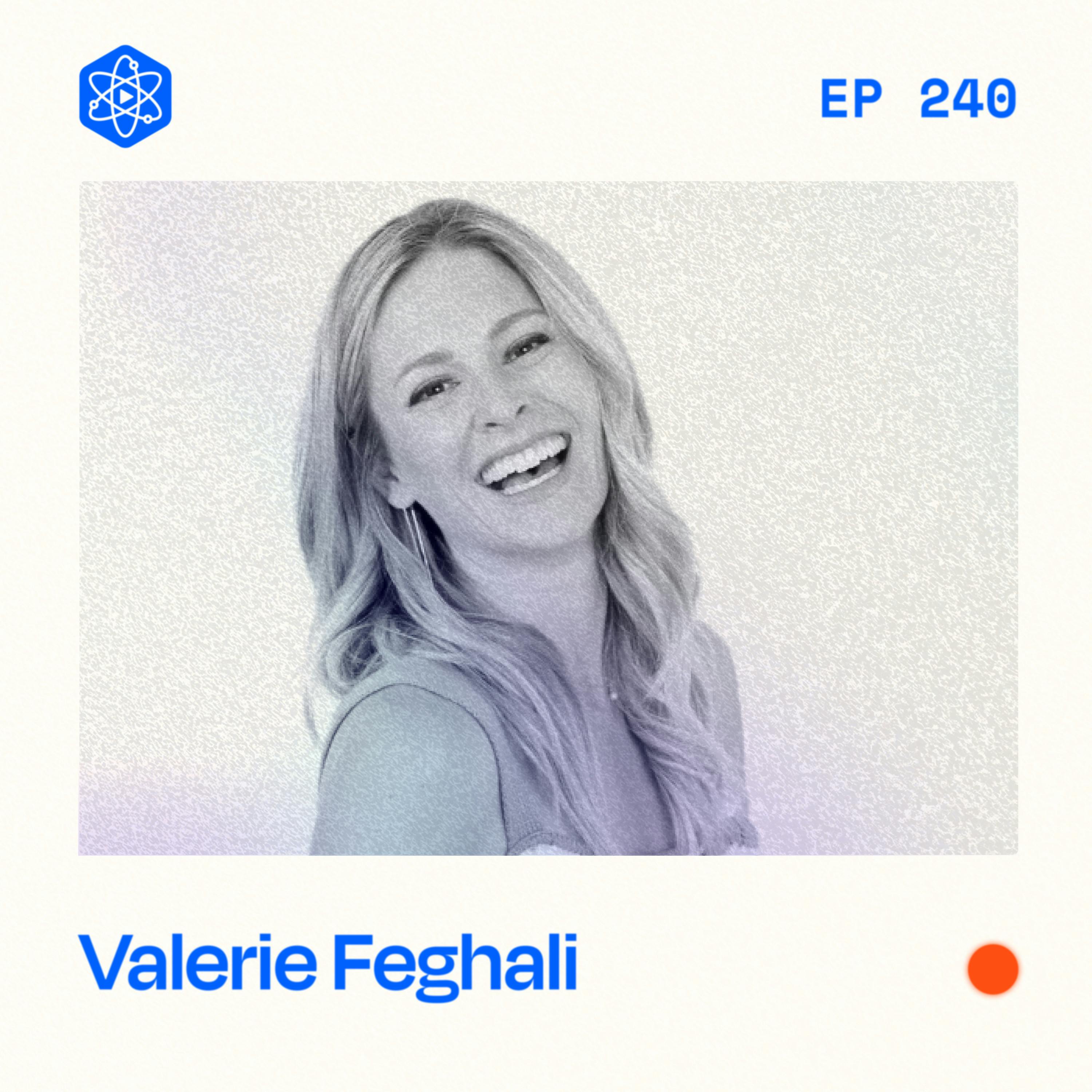
Creator Science with Jay Clouse
#240: Valerie Feghali – Her FAST evolution from coach to creator with custom software
00:57:57
Valerie Feghali is the creator of Wellness Vault, a software membership for wellness coaches
Loading summary
Transcript79 lines
- [00:01]
Jay Clouse
As you start to reach more people, things start to feel more complex, there's more to do and more to keep track of, and it starts to actually take time away from creating content. I felt this struggle personally. The more Creator Science grew, the more it felt like I was dropping the ball. So I did something about it. I built a set of rock solid systems all in notion to support the business as we grew and it worked like a charm. I built Creator HQ to be an all in one workspace designed to save you more time, create more content and drive more revenue. By leveraging Creator hq, we are publishing more than we ever have and we're nearing $1 million in annual revenue because of it. It brings all of your data and processes into one place with custom built dashboards to reduce friction in managing tasks, creating content and collaborating with your team. I've spent more than three years building this and now you can have the same systems that I use right out of the box. If you're new to Notion, don't worry. I've included a ton of specific tutorials to help you learn how to use Notion generally and Creator HQ specifically. I've never seen another Notion product integrate tutorials like we have here. More than 300 other creators are already using Creator HQ and I am not exaggerating when I say I would be lost without this system. As a podcast listener, I'm giving you my best price. You can get 10% off using the promo code podcast at checkout. Just head to creatorhq.co to watch the video and learn more. That's creatorhq.co and use promo code podcast to save 10%.
- [01:28]
Valerie Figali
I don't know what the hell I'm doing. I don't write code. I am in the health and wellness space and now I am a business owner primarily and also trying to create the SaaS platform which was a whole other ball game.
- [01:56]
Jay Clouse
Hello my friend. Welcome back to another episode of Creator Science. Every month we have new creators joining our membership community, the Lab and it's amazing. It never ceases to amaze me just how unique these creators premises are. The different backgrounds, different stories they have, the skill sets they have. And one of our newer members is today's guest, Valerie Figali. I was so immediately impressed by Valerie and during my paternity leave she hosted a workshop inside the lab about how she's used paid ads to grow her business and namely she used paid ads to convert to paying customers for a low priced membership, generating enough revenue to cover the ad spend while also growing her email list. Sounds pretty Incredible, right? Well, her story gets even more incredible because just a few years ago, Valerie was a wellness coach serving clients one to one. But she quickly transitioned from being a wellness coach to empowering other wellness coaches with all of the tools and assets and resources she had built for serving her own clients. Now, most creators would kind of stop here. They would have this online membership that houses all of these materials, probably in something like Circle, as we do in the lab. But Valerie went a step further by turning those assets and resources into a custom built web app that she sells as a monthly subscription. And her retention is through the roof. Valerie has a fantastic story and you're going to hear how she made These transitions from one to one to creator to now SaaS founder, how she thinks about using paid ads, and what it took to get that software built. I've learned a ton from Valerie in her short time in the lab. If you join the lab, you'll have access to her workshop as well. And I think you'll love learning from her just in this episode.
- [03:37]
Co-Host
So let's get into it.
- [03:39]
Jay Clouse
This is Valerie Figali.
- [03:47]
Valerie Figali
The Wellness Vault was really created for a need for health and wellness coaches to get content to be able to use with their clients. Because really their job is to be there for their client, to keep them accountable, to be there for motivation, inspiration, answer questions. And so having to create all this content on the back end, first of all, it takes a little bit of an expertise to do it and to be able to present it in a way that's digestible for our clients. And it's extremely time consuming. So I found that myself when I was working as a holistic health coach. I'm a doctor of physical therapy and I worked as a physical therapist for about 11 years. And I noticed that there was this big gap in healthcare when it came to learning about the foundations of health. Right. People were sent to us in the PT clinic with the expectation that exercise alone and some manual therapy was going to solve all their pain and all their problems. And the reality is, if you don't fix the underlying issues, you can't heal. And so I saw that from inside the PT clinic, and then I saw that from my mother's experience in the healthcare system. She was diagnosed with cancer and she ended up passing away from cancer. But I was disappointed in kind of the way that that all went. There was no emphasis on natural healing, and kind of a lot of the treatments that were given to her were actually contradictory to health. And so, you know, I'm grateful for the treatment that she had, but there was a huge missing piece of it. And so I decided from then on that I wasn't going to let that happen to other people that, you know, I can meet with essentially. And so I got my health, my holistic health certification. And it was a scary jump because going from having a secure career as a physical therapist that paid decent to not knowing what to expect, never having run my own business, I had zero business experience. So it was a little scary. But I did it. It actually worked out well for me in a sense because it was during COVID time. So everybody was kind of moving into the virtual space, which I had initially planned on meeting with people virtually anyways. So that helped me because people knew what Zoom was, they weren't afraid of it. They actually were happy to see someone face to face when they were kind of stuck in their homes. And so that helped me grow my clientele a little bit. But what started happening was that I didn't have the bandwidth to be able to meet with these people, answer all their questions, you know, keep them accountable, and at the same time create the protocols, the guides, the meal plans, everything that they needed to stay on track. And so I noticed that other coaches were probably dealing with the same issue. And I actually enjoyed the content creation piece of it. You know, at first I was terrible at it. I didn't even know what Canva was. You know, I was not in this space at all. Right. Once I started really going with it, I started to really enjoy it, realized that I had kind of a knack for it, and I started to create content for other health coaches. I started just approaching people more organically, you know, coaches that I knew that might be able to use the content and they loved it. And then that spiraled into me running ads, which I think we'll probably talk about a little bit more, but towards, you know, some pre done packages, so meal plans, recipe bundles, that type of thing, which then turned into this membership program and now is the Wellness Vault software, which again, I have no experience in software, but here we are owning a software company and it really just shows that anything's possible.
- [07:18]
Co-Host
What's so impressive about this is we're talking about several different like jumps or state changes in a fairly short period of time. You went from having a full time job to basically building your own client services company to then shifting from like a B2C direct to consumer offering to a B2B offering serving other coaches and then eventually turning that into SaaS. So that's, that's the Context I wanted to set for folks here because in.
- [07:46]
Jay Clouse
Those jumps, those were all new things.
- [07:47]
Co-Host
To you and you've done this in a relatively short amount of time. So on one hand I just want to show people what is possible. On the other hand, I want to dig into all these jumps because I think there's a lot of interesting ground to cover here. It's so relatable to have this business where you have a skill, you are selling it to the individuals who need it, but also you have this need to create resources, content, assets on the back end. Can we talk a little bit about that period of time where you were serving the end consumer and creating assets on the back end and what that felt like and how you were quickly able to say, actually the assets part is what I want to focus on.
- [08:25]
Valerie Figali
Yeah. So when I moved into the health coaching space from having a full time job, I kind of took my hourly rate at my full time work and brought it into my business, which any business knows that that doesn't work. Right. You can't be charging what you want to make per hour because more than 50% of your is going to be spent working on your business instead of actually in your business. And so I was making very little money per hour because I was basically just burning the candle and you know, trying to create all of this content on the back end for a 45 minute session that I spent with the client and I was charging them my hourly rate, very low hourly rate for those 45 minutes and then spending two to three hours creating the content that they needed after that. Right. Because realistically, a client can't take in all of the information that you're giving them in a session and then take action on it if they don't have a clear plan.
- [09:19]
Co-Host
Let me break that down for folks who don't know your business as well and may not be following. You're coaching this person on their health and wellness plan. You have the session, they're hearing you and like that sounds good. This sounds good. Yes, that sounds like a good idea. You're saying at the end of that session you would create a personalized like document to send to that person to explain what you covered. And that was a more time consuming piece than just the one on one time with them.
- [09:44]
Valerie Figali
Absolutely, yes. Because you could say, okay, this person, you know, weighs this much, they should be getting this much fiber because they're lacking this in their diet or they're having these symptoms. So we're gonna add this particular nutrient into their diet. Right. But then when you create that diet, you can't just say, oh, you need to go get omega 3s, right. Like, okay, what does that mean? Right. And so you need to actually create a meal plan or a recipe bundle for them or, you know, a supplement plan for them. There's so many things that go into that, especially when it comes to, like, improving their circadian rhythm. Maybe they're dealing with multiple chronic illnesses that you're trying to manage all at one time. And so they need individualized plans. And that's where it gets tricky with health and wellness, because not everybody is going to need the same thing. So it's not like you can create one program and then that's the end of it. It's. Every piece is a little bit more individualized. And so that's where kind of the idea for templates came in. Because once I created templates for coaches, they had a starting point, they had somewhere to start with, and then they could customize and adjust it. But it was still kind of a pain in the butt to do all this. We were doing it on canva at first. And to make those adjustments, it's not like if you take out the salmon in a dish that it's going to, you know, auto calculate the macros or anything like that. Right. And so we needed a software that could do that for us, that they could customize the plans and that they could individualize the plans. And it's not just meal plans. We have way more than that. You know, challenges, protocols, how to guides, ebooks, but that way that they could actually create their own individual, unique plans within minutes in the vault. And so anyway, that's where I was getting stuck. I was working so many hours creating this content for my end client, and I realized that I can't continue on this unless I charge a much higher fee, which then the end client really didn't think was worth it.
- [11:33]
Co-Host
There would be a point where you've created enough of these individualized plans that the components of this, some of them can be reused and rematched together and mixed together. But we're talking months, years of personalized plans to get there, which you can do as an individual, but now that you've done that work, you can give them to someone else who's providing the same service and they don't have to do the same start from scratch approach is what you identified.
- [11:59]
Valerie Figali
Yeah, and I think a lot of coaches give up before they ever really get started because it's so much work on the front end. So this takes away so much of that time spent needed to kind of build up their toolbox, essentially. And so if they can have access to all this right from the get go, it allows them to actually focus on building a business.
- [12:19]
Co-Host
What's still surprising or uncommon about this point in time for you is that you identified this as a new business opportunity. A lot of people would do this, create the assets, mix and match, realize that my hourly isn't quite working, and that might be the end. Or maybe they kind of like right size how much time they're spending on this. But you seemingly very quickly identified this new opportunity and moved towards it. Can you talk about your mindset at that time or how you made that switch?
- [12:52]
Valerie Figali
Well, it's funny because when I very first started health coaching, I actually had a partner. We were trying to do a program together. And I remember telling her one day, it was like, I only want to do this for a few years and then I want to work for the coach. I always kind of had it in the back of my mind that I wanted to, you know, be kind of the backend person. I don't know why, I don't know where that came from, but I wanted to work with the professional. I think just because it's so inspiring to me to hear from other business owners and see what they're doing and what they're creating. And I knew that I could have a much larger reach if I did that, that my ability to make a difference in X number of people's lives was exponentially more if I could actually work for the coach. Right? And so I always had it in the back of my mind. So I wasn't too fearful of making the pivot. However, there was that imposter syndrome, right? There always is. It's like, okay, yes, I've been in the health space for over 11 years, but I've only been doing health coaching for a couple of years, right? And so there was that feeling of, like, am I the right person to be doing this? Should I be the one that's kind of coaching the coach? But. But the reality is I've had seven years of advanced education in health, and I've worked with countless patients that I could never count how many patients that I've worked with in the clinic. And so I just had to get over that. Right? And it's easier said than done to just say, like, okay, put your doubts aside, you're fine. But once you start kind of going through the motions and you start getting those responses, and initially the feedback can be painful, right? The feedback Initially, when you get started, you're not good at anything until you practice, right? And so in the beginning, I wasn't that good at it. Now, you know, years later, I've kind of honed in on my practice and on my craft. But hearing that feedback is really the only way to get better. And then once you start transitioning into those unsolicited thank you emails telling them how you change their business, how they're about to shut down, and now they don't have to, and that's when the magic happens and you realize that what you're doing is worthwhile.
- [14:55]
Co-Host
At this transition point, two things had to happen. And so I want to talk about both of them one at a time. The first one being you wind down your client relationships. The second one being you're building a whole new business and a whole new customer base. And maybe timing is a part of the story. So I guess I'll let you tell the full story. But how did you wind down your client relationships while also building up an entirely new customer base?
- [15:23]
Valerie Figali
So I basically finished up with the clients that I already had on board. So people I had already sold packages to, I wanted to make sure that I served them and gave them what they deserved and signed up for. So I finished with those clients, but I stopped taking on new clients. And that was hard because it was a cut in my profits. And I would get emails saying, hey, so and so referred you, you know, a past client that I really loved working with. And I would have to tell them, no, I'm not taking any new clients. I'm making a pivot in my business. And so that was hard. It was turning down money, it was turning down opportunity. I didn't know if this new pivot was going to work or go anywhere, but I had to make a decision. I can't possibly, and nobody can do all these things all at once. And I think that's oftentimes where people hit a wall is because they're taking on any and every client, not realizing that if you say no to one opportunity, it opens you up to saying yes to a bigger, better opportunity. And so I, I put my foot down and said, okay, we're finishing up, you know, whatever this 12 week course is or whatever it is that I was doing with my current clients. And that's it. Then we're starting again kind of from ground zero. And it was exciting, but it was also terrifying. And it led to many sleepless nights. But really, Jay, the sleepless nights came when I started developing the SaaS. Program, that pivot was way more, there's a lot more on the line with that pivot.
- [16:49]
Co-Host
In this moment in time, how much pressure was on you? Like, is your whole family depending on this working?
- [16:57]
Valerie Figali
Yes and no. So at that time, when I switched from working with the end client, the actual health coaching, to working with the coach, my family's lifestyle was not on the line. My husband, you know, he still is working a full time job at that moment. You know, we can talk about who was the breadwinner, but we were making, you know, basically equal amount of money. That being said, he could not feasibly support our family in the way we would want it if I lost work. So in some ways, yes, But I also had physical therapy to fall back on. I had done it for 11 years. I knew that worst case scenario, everything falls apart, I lose my investments. I can recoup that pretty quickly if I go back to physical therapy. And so I wasn't, it wasn't so, so scary when I developed the SAS program, that was a different scenario. I was very much at that point the breadwinner, making very good money and moving into that space. It was scary because everything could have fallen apart. And yeah, our lifestyle very much relies on my income at this point.
- [18:00]
Co-Host
So as you wind down your current clients and you move on to this new market, how did you get this in front of people? How did you actually get customers to say, I want this thing that you're selling?
- [18:10]
Valerie Figali
Yeah, because I didn't have those customers. Right. That customers that I had were people who wanted to be coached in their health. And so I had to start over. So I started with ads. It's something I had done before working with my health coaching clients as well. So I had some experience in it. And I just said, you know what we're going to, instead of this slow growth, I want fast paced growth. And that came from paid advertisements. And you know, I very much swear by paid advertisements. If I didn't do this, I would have a very, very different growth pattern. And it's something that I still to this day rely on in my business.
- [18:47]
Co-Host
And are we talking about Facebook in particular or did you also do Google or elsewhere?
- [18:52]
Jay Clouse
What type of ads?
- [18:53]
Valerie Figali
Meta ads are, what have worked well for me. So that's Facebook and Instagram and I've tried Google Ads. I did a very short stunt with YouTube ads. Neither of those produced for me the same way that meta ads do when.
- [19:06]
Co-Host
You'Re approaching paid ads. How did you learn to do it?
- [19:10]
Valerie Figali
So I took a course from someone else when I very first started my business and that gave me the foot in with ads. Now, I still needed to learn a lot from after that course, but I had created my account, I knew how to at least publish an ad. And then from there I really had to learn myself about what worked, what didn't, how to analyze the data. And that was a learning curve. But I'm so happy that I did it myself to begin with because I pay someone to do it now, but God forbid they were to ever leave. I can keep my ads going and I also know what I'm paying for and what to expect from it. And so it's a easier pill to swallow when I know the work that they're doing on the back end and I can also chime in and say, hey, I don't think this is working. Or you know, I need this data for this particular thing and you know, they're able to grab that for me rather than than being completely in the dark.
- [20:05]
Jay Clouse
After a quick break, Valerie gives us her best advice for getting started with paid ads. So stick around. We'll be right back. Hey, it's Jay. And whether you enjoyed episode number 71 with Steph Smith, an indie creator who formerly led trends at the Hustle, or you simply like to keep up with the future, you should check out the A16Z podcast, hosted by Stephen the chart topping show from Andreessen Horowitz features some of the world's most influential people movers who have a track record of being both early and right, like Apple co founder Steve Wozniak, or co founders Marc Andreessen and Ben Horowitz themselves. Not to mention folks you don't typically get to hear from from the very first CTO of the CIA or the chief security officers behind OpenAI, Anthropic, and DeepMind. These guests tackle the most important trends in technology and business, from space to supply chains and beyond. If you want to understand the science and supply of GLP1s, they recently broke this down. If you're curious about the 3 billion record Social Security breach, they've got you covered. And if you're wondering if autonomous vehicles are still miles away, listen in to find out. So go ahead, eavesdrop on the future by following the a16z podcast wherever you get podcasts. If you know me, you know I'm obsessed with branding. A clear, unique brand is such a differentiator in an attention economy that's getting more competitive all the time. Your brand is in everything you do, including your domain name. But when creators start selling products, they often get stuck behind some long awkward URL like courses.creatorscience.com it's hard to say, hard to remember, and ultimately it weakens your brand. And that's where store domains come into play. A.com domain can be anything, but when you hear DudePerfect store, you know it's a store. I picked up my own store domain creatorscience Store, so I can quickly tell people where they can buy some of my most popular products. It's my name, my brand store. And I'm not alone. Store domains are used by more than 1.5 million sellers, including top creators like Mr. Beast, Colin and Samir and Zach King. It does not get more direct than your brand store. And it doesn't just sound cool, it actually helps you sell more. Here's the best part. Store Domains has a special offer for creator science listeners. To secure your branded store domain for just 99 cents for the first year, just visit Creators Store J and use coupon code jay at checkout. That's Creators Store J a Y and use coupon code jay again J a Y to secure your very own store branded URL. And now back to my conversation with Valerie Figali.
- [22:47]
Co-Host
This is just one of the reasons I really value having you in the lab, because this is a seemingly rare skill set that we have in the community at least. But I think even amongst people who identify as creators rather than identifying as like business owners, a lot of creators are really good at the organic approach and discount the paid approach. But I think people who are great at organic content probably have an immense leg up on paid if they take the time to learn. So I didn't know how you had learned. So it sounds like you're self taught. And so if you were to counsel somebody, I mean we could spend an entire like several hours talking about how to do paid ads. That's not my intention. But if you were to counsel somebody who said I want to get started with paid meta ads, what would you give them as an approach to learn this in the most efficient amount of time?
- [23:40]
Valerie Figali
So I would definitely recommend speaking with somebody who knows exactly what they're doing that's an expert in running ads. And there are plenty of paid programs that you can purchase that can be group programs. This does not have to be one on one. This is just kind of learning how do I set up my account, how do I actually run an ad, what am I looking for in the metrics I learned from Ali Bergic? I believe that she still does do some ads training she does bigger courses of how to kind of sell similar to what I do with like a low ticket offer, which we can talk more about that too, if you'd like.
- [24:10]
Co-Host
Can you spell her name?
- [24:11]
Valerie Figali
B, J, E, R, K. Okay. Yeah. Her course kind of taught me just how to like create an account. Right. And how to start, start getting some ads out there. And then what you really need to do as an individual is spend time on testing because not all ads are going to work the same. So you have to try your video ads, you have to try carousels, you have to try still images, you have to try multiple sets of different copy and change one aspect at a time to see what's working. So you don't want to have an entirely new creative, like a new video and new text and new headline all at once. You want to maybe change one or two of those things at a time. The other thing that you have to test a lot and it takes a while to get this is the audience, because you want to direct your content towards the audience that is actually interested in your product and whom are buyers. So you can set your advertisements up for conversions rather than for video views or link clicks. And you want to make sure you're setting them up for conversions because Meta knows that those are the people who actually pay money for products. And so they're going to deliver your ad to people who actually buy on occasion, not just our click happy. And so Meta is very smart, the algorithm is very smart. So if you set it up correctly, you're targeting these people who are actually interested in your product, but the audiences are not necessarily clear. So for example, I'm in the health space, so let's say I had a hormone health product, which I do. I would not be able to find in audiences, you know, people with Hashimoto's right. Like, you can't find like condition specific, it doesn't get that granular. But what you could do is find, okay, people who are interested in a paleo diet, people who are interested, they watch, you know, Josh Axe, who is a holistic, you know, doctor, you know, so you find people like that that could be interested in that space, right? Then you can also find people like, for example, there's a way that you can target people who, a business account online, so you know that those are business owners. So there's ways of kind of narrowing it down and targeting your audience, but you have to try multiple different sets in order to figure out what works.
- [26:21]
Co-Host
And leads to more conversions, one variable at a time.
- [26:25]
Jay Clouse
Very creator science.
- [26:26]
Co-Host
I love that I've heard anecdotally because again, I haven't done ads myself, but I've heard that Meta is seeming to move in a direction where they're trying to do more of the targeting than the individual. Is that true and do you think we should relinquish that control?
- [26:40]
Valerie Figali
It is true. There are now options where you can basically open up your budget to be a little bit more flexible so you're no longer spending like a rigid budget so that if they find somebody who they think is a good match for you, but you're over budget, that they can still kind of send it out to them. Right. And also they're changing so that your audience, you still set your audience, but then they basically widen the audience of people who might potentially be a buyer of yours based on the audience that you set. And so I think there's benefits and downfalls from that. It's still, they're still testing it, I believe. As far as I know, it's a pretty new feature. And so you might be spending a little bit extra money for people who really aren't true buyers. But on the other hand, you know, you might find people that really work well for you that otherwise wouldn't have been in that narrowed down audience. And especially after you start running ads for a long time, you've kind of gotten all those low apples, right? And so that's kind of where I'm at, is that our audience, sometimes we need to expand it because I've gotten all of those people that are kind of like at the bottom and ready to buy. And now I need to expand the audience a little bit more. So the expansion is working well actually for us.
- [27:51]
Co-Host
And what's interesting about your approach, while I was on paternity leave, you gave a workshop in the community how to get thousands of members from paid ads to a low ticket product. And a lot of people, when I talk to them about ads, their whole approach is I just want to capture an email and I want to monetize that person's attention over a longer period of time where you come in and say, no, no, no, let's actually just pay for the ads themselves with a low ticket product. Can you talk about that philosophy and what marks success to you in that world?
- [28:19]
Valerie Figali
Absolutely. And by the way, the lab is an amazing resource. You know, Jay's talking about some of the events I put on, but I've gone to many events that have been incredible. And the one that I hosted in the lab was all about creating a low ticket Offer. And when I say low ticket offer, I mean something under $50 that people can opt into and then they get on your email list. I have not had good success with running ads to a freebie. And the reason for that is you get a lot of people who aren't purchasers, right? They're not people who buy products, they're people who like to create and collect free stuff. And so you pay for all these people to be on your list that then sometimes send you just bam. Then sometimes, you know, never buy from you or are just curious. They might not even be in your space at all, but they're curious about what you're offering. Maybe, you know, I'm offering templates. They might want the design work on the template or they might want a different piece of it. Right? And so they aren't necessarily interested in your product and willing to pay for it. What I do is I run advertisements to something under $50. Most of my programs are under $37. And this is a way for people to get in for a very low cost. So I'm getting people on my list who are truly interested in what it is that I sell and what I offer inside of the membership, the Wellness Vault. And so these people who come in, it's basically a sample of what they're going to get inside of the Wellness Vault. And it's something that they can utilize with their clients that has a ton of value. That's the key. If you're offering a low ticket offer, it can't be something that you can find on a blog. It can't be something that you can find within a podcast. Like, it's not a freebie. It's a really good product that people are paying a very low cost for, but it's essentially paying for my ads. So I consider a success when I break even. Now, we do make a return on investment, which is fantastic. But even if you break even, what you're doing is you're getting a sample of your product in the hands of your potential buyers for free. Right? You're building your email list for free of buyers.
- [30:21]
Co-Host
An email list of buyers?
- [30:23]
Valerie Figali
Yes. Why wouldn't you want to do that? Right? And so I've hosted a lot of courses on how to create these low ticket offers. And I think where people really get stuck is they're like, it's $27, and I put in, you know, 30 hours into building this product. And I'm like, okay, that 30 hours, it's $27. But if 5,000 people buy your $27 product, you know, how much money have you made at that point? Right. And that's the reality of it is. So our low ticket offers, most of them have over six or seven thousand purchases on them. And so I don't think of them as a $27 offer. I think of them as a hundred thousand dollar offer.
- [30:58]
Co-Host
Yeah, I got a small taste of this just this past weekend. I ran a promotion for the first time and most of the list, which is about 59,000 people, got a promotion for Creator HQ and a lot of people bought it. But I also ran a smaller promotion of people who had already purchased one of my products to say you should upgrade to the lab's basic tier. And that was a much smaller segment. It was like 700 people, but it converted over 100 people. I think it was wild. It was like a huge conversion rate. So I'm really coming around to this idea that scale from your list perspective just doesn't really matter unless you're selling ads in the newsletter and basically your unit of measure is number of subscribers. If you are building your own productized business on the back end. And really targeting buyers is a much more efficient approach.
- [31:55]
Valerie Figali
Absolutely, yeah. Otherwise you're just giving free content away. So your email list, I mean, we have a decent sized email list at this point, but our email list, we have over a 60% open rate and our conversion rates are excellent every time we offer a new product. And so we know that the people on our list are interested in what we sell. And I don't feel so bad about, you know, a lot of people don't want to sell through email. Too often. You could go with the Gary Vaynerchuk way of doing, you know, jab, jab, jab, right hook or whatever he says. Right. In which every fourth email you send a sales email. But we really, we send a sales email every week, essentially. We also send out value based only emails with kind of a P.S. hey, if you want more, this is where you can find it. But we send out sales emails quite often because people want it. And so it's actually a disservice to them to kind of hide it in the shadows and only offer it once a month. Like we want to really tell people, hey, this is what we have. If this is going to make your business more smooth and you're going to get more clients and make more money from this like you want it. And all of our offers are actually, we sell all low ticket offers at the moment. And so really they're not making A huge financial investment. So it's something that people are like, yes, tell me what you have, tell me what's new.
- [33:06]
Co-Host
So to pick up back up on your story, when you move from client services where you're serving the needs of the individual to now serving the coaches, you're running your ads to get people in. What did the pre SaaS version of wellness Vault look like as a product?
- [33:23]
Valerie Figali
So very simple. We offered a new recipe bundle, a new meal plan, four client ready guides, which that could be like, you know, a four week clean eating challenge or a liver detox guide. You know, those are the type of guides we offered actually when we first started, that was it. And then we added social media graphics into it, which we do now. So these were all done on Canva and we started making really good traction and we got about 2,000 members in at that point. But then we plateaued and I realized that there are some problems here. There's the problem that the content has to disappear. We took it away after eight weeks because new people coming in. We didn't want somebody who signed up for one month to get access of two years worth of content that somebody else paid two years worth for. And so we had to take it away. And then people were kind of wanting that content back. We were getting so many emails to say like, hey, I saw in previous months you did this, would you be willing to sell it separately? And that was like, you know, a whole thing on the back end. Number one, do we do that or do we keep that exclusive to only, you know, people who were members? And if we do sell it for like one time products, it's just more work for us, right, to do that. And so there were also a lot of problems with the customization of things. Like people really wanted something where if they removed an item from the restaurant recipe bundle that adjusted the macros, that it adjusted the shopping list. I realized that people wanted to make custom plans and so they wanted to just, you know, type into the filters paleo and you know, no fish or whatever and be able to get those recipes and be able to create their own custom plan for their clients who didn't like certain things or had dietary restrictions or needed certain macros. So that's where kind of the SaaS idea came in that we were like, okay, we're plateauing here and, and we're recognizing the needs of our clientele. The only way to do this is through software. And that was when I said, I don't know what the hell I'm doing. I Don't know how a software works, I don't write code. I am in the health and wellness space and here now I am a business owner primarily and also trying to create the SaaS platform, which was a whole other ball game.
- [35:35]
Co-Host
Okay, so I hadn't thought about this. You were selling plug and play resources first and foremost. These are things that I made you as a coach can come in and with your membership fee, you get access to these things that you can use on your own. And if I'm hearing you correctly, this.
- [35:52]
Jay Clouse
Was a membership model, was a recurring.
- [35:55]
Co-Host
Charge for a set number of plug and play things that grew over time. But what you're saying is somebody who started earlier, they're paying more amount of money over time to get the same amount of resources as someone who just purchased later.
- [36:09]
Valerie Figali
They weren't, because we were taking those past resources out of the vault. And then so people who were already in the membership had to have downloaded that month's content, then they can go back to it. So they saved it off site. And that was another problem because now they have a lot of our content that they're downloading off site. Right. And so we had to kind of figure that out too. Yes. And I strongly believe in monthly recurring revenue for many reasons. Number one, you know what to expect every month. It just makes your life so much easier. You know that you're going to have, bottom line, a certain amount coming in every single month and then you're able to really hone in on what your customers want because they're with you for much longer there. It's a membership program, so you can ask them, you can play off ideas. When you show them that they've requested something and now all of a sudden it's available, that's huge for your customer. You'll have that customer for that. Hey, you listened to my feedback and you implemented it. And now I get to benefit from that every single month. And so the connection that you can build with your clientele, even if you're not a community based membership, which we're not, we're a content based membership, but we still have such strong relationships with our clientele because when they send in feedback, they get a response from me. And nine times out of ten, it gets developed. Obviously, if it's this crazy out there idea that nobody else wants, we're not going to develop it for one person. But when three people send me the same request and say, hey, I'm getting stuck on this, or we really liked this and it ends up happening. And so Memberships are such a great way to build your community. A really strong community, a really strong customer base, and at the same time have security in your business.
- [37:55]
Jay Clouse
After one more quick break, Valerie shares the secret ingredients to the ridiculously high retention rate she sees in her membership. So don't go anywhere. We'll be right back. I am once again inviting you to join our membership for professional creators, the Lab. Of course I am biased, but Andrew is not. Andrew has been a member for about two years now and this was a testimonial he sent me unprompted.
- [38:20]
Co-Host
Joining the Lab has been the single best investment I have made in my business and in myself since I started doing this, going solo 17 years ago.
- [38:28]
Jay Clouse
If you benefit from the conversations here on the podcast, you'd love the things we talk about in the Lab. In fact, some of the past guests of this show are members themselves. The Lab helps you keep a finger on the pulse of what's working and what's changing for creators right now. I could tell you about all the things that are included, like all of my courses, including Build a Beloved Membership podcasts like a YouTuber, the newsletter masterclass. You get a complimentary copy of Creator hq, our operating system built in notion. But the best thing is the people incredibly generous, incredibly kind, incredibly smart and accomplished people are in the Lab. I could go on and on about this, but just know there is nothing more important to me than continuing to make the Lab the absolute best community for professional creators. You can join the basic tier now, which is an absolute bargain, or you can apply to join our standard or VIP tiers. Just visit creatorscience.comlab to learn more and get started. That's creatorscience.comlab. it's in the show Notes. I hope to see you there. And now please enjoy the rest of my conversation with Valerie Figali.
- [39:30]
Co-Host
I asked you off air once what the typical lifespan of one of your members is in terms of months. Are you comfortable sharing that?
- [39:39]
Valerie Figali
Yeah. So at the moment we're at about 11 months of the typical lifespan of our clientele, which I think is very good because a lot of these people are brand new coaches and so they don't necessarily even have a functioning business. And so the fact that they're staying with us for almost a year we're really happy about. And then I have people who have been in our community since we launched in 2022 and they'll stay for as long as they're in business.
- [40:05]
Co-Host
I think it's crazy good, which is why I was hopeful you would share it here. Because a lot of times when I talk to people who are running memberships and they're asking, how do I increase revenue from this? A really easy lever to pull is to say, well, how can we increase the lifetime value of your customer? How many months are the typical customer staying a customer now and how can we increase that? And I remember I asked you that and you told me it was like.
- [40:27]
Jay Clouse
A year or more and my mind.
- [40:29]
Co-Host
Exploded because I'd never hear that. What is it that you think has been the key to your retention? Because I would also assume that generally content based memberships would have lower retention than a peer to peer membership. And you're the complete opposite. So what do you think has been key for you in maintaining that retention?
- [40:48]
Valerie Figali
So over 90% of the people who send us a cancellation request, in our cancellation request, we require them to tell us why. And the reason why people cancel over 90% of the time is because they're no longer serving health and wellness clients. They've gone out of business, essentially. And so what that tells me is that the people who are staying in, it's almost essential to their business. They almost can't run their business once they've gotten a taste of it without it, because it's, it adds so much value to what they're doing, it saves them. I mean, I've had people that have emailed me to say this has saved them 20 plus hours a week in their business. And so it's like half the work that they're doing on a weekly basis. The only other thing that people send in sometime is like, oh, I couldn't figure out how to download whatever, right. And they never reached out to us to ask. And so we have those people who just are not tech savvy, which to be honest, you don't need to be with our platform because it is very user friendly. And that was the number one thing when I met with my software engineer that I was like, we have to be very clear on this, that if my client can't use this, it won't work. Like, we will fail. And so this has to be user friendly, it has to be intuitive, it has to be simple. They have to go in here and be like, I want to change out an ingredient. Oh, okay, there's the delete button. Right. And so it's very user friendly. And I think that's part of why a lot of people stay is because it's simple to use, they can implement it immediately. So the day that they get in there, they can Start using it and actually use it. I've had people email me today, say, I signed up today, and I've already sent this out to three of my clients. Right. So they're using it right away, which a lot of times what ends up happening is people purchase products and they don't even start using it for months. And then after that, they're kind of like, over it. You know, they found something different. They started using something different. And with this, it's like they can log in and take action on it immediately and really start making a profit from it immediately, because they can charge for these plans, too, and so increases their profits. It saves them hours and hours every week, and it's easy to implement and then get started right away.
- [42:47]
Co-Host
I'm trying to think through contextualizing this for folks who are not in this exact business to give them the takeaway of how this could work for them. And what I'm hearing is your membership provides real utility, and it's also ongoing. You're not selling information of how to do this. You're giving them a tool for actually plug and play doing something, and that's a task they have to continue doing, and they would need continued access to the tool to do.
- [43:15]
Valerie Figali
Yes.
- [43:16]
Co-Host
And that's a really powerful combination if you can make that work.
- [43:21]
Valerie Figali
Yeah, that's exactly right. And I think that, like you said, like, having it be something that they're already doing and you taking that off their shoulders, that's huge. Like, you're not teaching them a new skill. They're already making meal plans, but it's taking them hours. And so let's just essentially do it for them.
- [43:38]
Co-Host
Okay, let's talk about the transition from the non SaaS to the SaaS moment. What scale was the business at pre SaaS that gave you confidence that we have the capacity or even the budget to invest in developing software?
- [43:53]
Valerie Figali
So we were making over, I want to say, when we switched over, we had a monthly recurring revenue of over about $25,000. And that was just on the membership. Right. Not including the other aspects of the business. And so I knew, okay, we have something here. We have something that people want. We've kind of proven the concept at this point, but I can't charge more because it's only customizable to a certain extent. Right. So there were limitations in what I felt I could charge, and there were limitations in what the client could do with the content. And so that's when I was like, okay, if I really want to scale this, because now we've plateaued. If I really want to take this to the next level, I need to offer them something that, that I can charge twice as much for, which we did, we doubled the price, and they can take this to the next level in their business. So this is something that they almost, again, like, like we said before, they almost can't work without at this point. This is something that once they start with this, they need to have this in their business. And so that was when I said, we've proven concept. SaaS is very expensive to get off the ground. But what's the worst thing that can happen again? I fail, I go back to physical therapy, right? That's the worst thing that could happen. And I think that's where a lot of people get scared to pivot is that they think of, oh, I don't want the embarrassment, I don't want the failure. I'm going to lose a ton of money. But when you really, really dig deep and you go to that worst case scenario, like, how bad is it? Right? How bad is it? Maybe you need to move with your parents for six months. Like, no big deal, right? Just, just go for it. Like, if I end my life not having done the things that I dreamed about, I'll regret it. And I truly think about that often. Like, when I end my life, am I going to be happy with the things that I have done and the choices that I made and the risks that I took? And you want to take calculated risk. You don't want to just go for something that you have absolutely no idea that people want. But I had a strong connection with my clients. I knew what they wanted. I was asking for feedback. This is exactly what they were telling me they wanted. And so I knew that I had people already on board. Could it have gone sour where the software didn't work as we planned, or, you know, the people, they ended up preferring the previous product. And if that's the case, if they preferred the previous product, we'll go back to the previous product, right? No big deal. And so I didn't know what to look for. I actually got on upwork, of all places and started just typing in, like, who do you hire for to develop a software?
- [46:25]
Co-Host
Because, oh, wow.
- [46:26]
Valerie Figali
Yeah, I didn't know what to do. And eventually, you know, I came up across, I interviewed a bunch of people and had them get back to me with kind of a layout and a framework and make sure they understood from upwork. Yes. And, you know, the first several people, I was like, this not gonna work, not gonna work. Right. We're not doing this. And then finally I came across someone that I was like. He came back to me with exactly what I imagined, and he laid it all out. He said, we can do it. I'm like, you know, well, I'm gonna. I'm gonna give this a try. And so we got started. It took twice as long, if not longer, than we thought it would. And the complexity of it is way more than I could have ever imagined. I mean, the number of scenarios that can happen are just countless. So it's been much more complex than I expected, and I expected it to be complex, but we've just been chipping away at it, you know, chipping away one by one. And we finally launched it, and I think we launched it slightly too early, but I am that type of person that just, I'll do things before I'm ready. And so we did it, and I couldn't wait any longer. I was like, we just have to get people in here. We just. We have to know what they want. I'd rather run into glitches where we can take the feedback and change it rather than be so far past that that we're actually creating something that people don't even want. Right. And so we got people in there pretty early. And yes, there were many, many glitches. But now we're eight months past that, and we've worked them out. The software works, and it's amazing.
- [47:56]
Co-Host
How much time did it take from. I hired this person to. We now have a product that users.
- [48:02]
Valerie Figali
Are using over a year. So it took. Oh, you know, I don't have the exact dates for you, but it was just about over a year until we started actually advertising this to people who were not previous members. Now we got people in earlier than that that were still had access to the old platform. So it's not like we revoked their access. And they were only getting access to a software that wasn't fully functioning yet. They were getting access in addition to the older content in case they wanted to just stick with that. And so they were kind of utilizing both and again providing us with feedback. And we're seeing where people were hitting a wall. And so that was maybe about seven to eight months before we got them rolling. And then a little over a year before we started really advertising it to people who were not currently using the old platform.
- [48:50]
Co-Host
That's so much time. I'm curious about your investment to whatever degree you're willing to share of, at least time, you know, how much time are you spending talking to this developer for the 8 to 12 months developing this.
- [49:02]
Valerie Figali
Yeah. So initially we were meeting three times a week. Those were about hour long meetings to really work through the things that we were seeing and needed to change. And then it didn't end there. I also had just a ton of work to do on the back end, organizing all of the material that we were going to be moving in. We had to manually move everything into the vault because there was no simple way of automating that. It would have taken longer to build out the code to automate it, and it probably wouldn't have been 100% accurate. So I would have had to go through every single piece, every recipe, every plan anyway, and edit it. And so I just decided we're doing this manually. And of course I hired help for that, but that was extremely time consuming. And then we, you know, the testing, I can't even tell you, Jay. I wish I would have tracked my hours, but I mean, I was working on this probably a solid 15 to 20 hours a week for a year.
- [49:57]
Co-Host
This is crazy. What can you tell people to help them expect? Like, how much money would I think about investing into an effort to build a SaaS like this?
- [50:06]
Valerie Figali
Yeah, so you want, want to have a starting rate to have about $300,000 to invest. Yeah, it's not cheap. It's not cheap. And it takes time and effort and grit and sleepless nights, but it's. And that's why it's not done that often. Right. That's why not so many people have gotten into this or do more of it. But I think it's getting easier with the way that AI is going and the way, you know, I think that creating SaaS is not going to be as challenging a year from now even than it, than it today. And today I don't think it was as challenging as it was two or three years ago. The only problem with that is everything has two sides of the coin is you also have to provide twice as much value. Right. Because that's what people are starting to expect. Like, it's amazing, Jay. Sometimes every now and then we get a thing like, oh, I didn't think there was enough like XYZ in the vault. And I'm like, oh my gosh, you don't realize, like, we pay just our content Creation team over $6,000 a month just for the content that they're getting for under $40 a month. So people just have these very, very high expectations, especially what I noticed, especially when they're buying into a SaaS program. Because they assume that it's a huge team and it's not. We're a very small team of creators, primarily health and wellness focused people, individuals doing the content creation and a very small, you know, software team. And so people assume that this is like a massive conglomerate company that they're buying from and that, you know, that they're going to get like. Like, yeah, they just. They have these unrealistic expectations sometimes, and that's okay. Those people, you listen to them, listen to their feedback. What is it that you expected? And then know, is that realistic? Is that something that we could actually do? Or is this just someone who's kind of not our ideal client?
- [51:55]
Co-Host
What does customer support look like? Do you spend a lot of time doing support for the users of this product?
- [52:00]
Valerie Figali
We do, and we're going to. That is something that we're working on improving. But right now, whenever people send me in a question, the majority of the time I send back a video demonstrating, you know, what to do, where it is, why we do certain things. And then we also have Q and A sessions twice a month that we just started. So people can jump onto a Q and A session and they can really ask me anything. We start with Wellness Vault questions specific to the software and how to use it, and then we branch out. If people, if there's extra time and they want to ask me business questions or anything like that, you know, I'm an open book, so they can do that as well. So we have those two things in. First, support. And I actually just hired someone who's starting at the end of this month who is going to help me out with that, too. I'm hoping that she can do an additional Q and A session so that we can get it once a week and we are always available. Like, people send in, they can send in their contact form, and we answer within 24 to 48 hours every time.
- [52:54]
Co-Host
Well, it seems like everything just went so smoothly and so quickly. But if you had to do this over again, what would you have done differently in this journey?
- [53:04]
Jay Clouse
Me?
- [53:04]
Valerie Figali
Hmm. You know, Jay, I don't think I would change anything. And I know that that's a boring answer and not probably what you want to hear to help your clients move through it faster, but I. I truly think that the levels of progress that we go through in a business all have a lesson learned from it. Like, yes, you know, when I started coaching people for $40 an hour, like, I was not. That was not a smart move. But what I learned from that was something that I needed to internalize that I needed to learn. And so to take that experience away and say, oh, yeah, I started with a $5,000 product and started selling it automatically, like, I think you end up missing out on a piece. Same with running ads. Was that extremely time consuming and frustrating for me in the beginning? Yes, absolutely. But had I not have that experience and that knowledge of how to run ads, I don't think it would be working as well for me to this day. And so all of the different lessons that I've learned from each aspect of my career, each pivot that I have made, have come with a really important lesson tied to it that I've carried through to what we're doing now. Really, you know, the only thing that I would tell business owners who are feeling stuck is talk to your audience like that. That's the biggest thing that maybe in the beginning I wasn't doing as much of. When I first started out, I was timid. I didn't want to know what they wanted to say. I was afraid they were going to rip me apart. And some people did. Right. And I didn't take that feedback well in the very beginning. Now I think I've grown a thick layer of skin that you can tell me whatever and it'll, you know, I'll learn from it and I'll be happy you told me. But I think in the beginning I was afraid of that. And so I wasn't speaking with my community as much. And I think that's a really, really important part of building a business that a lot of people miss out on. They just want to kind of sell Evergreen or speak only to their clients and, you know, not. Not ask for feedback as often. And when you ask for that feedback, your client feels heard. Your client knows that you are listening to them. And then you can build your product to be so much better because you know what people actually want.
- [55:12]
Jay Clouse
If you enjoyed this episode, please consider leaving a rating or review on Apple Podcasts or Spotify that tells me that you enjoyed this episode. It also goes a long way to helping grow the show. And selfishly, it makes my morning every time I wake up. Look at the new reviews and read them. If you want to learn more about Valerie, visit her website@wellness vault.com that's wellnessvault.com or follow V. Figali on Instagram.
- [55:37]
Co-Host
There's a link to both in the show notes.
- [55:40]
Jay Clouse
And if you want to hear from other members of the lab, check out my recent episode with Ryan Hawk, which I've linked to in the show notes. As well, talking about his membership community that charges $12,500 per year. It's a fantastic episode. I think you'll love it. The link is in the show notes. Thanks for listening and I'll talk to you next week.