← Creator Science with Jay Clouse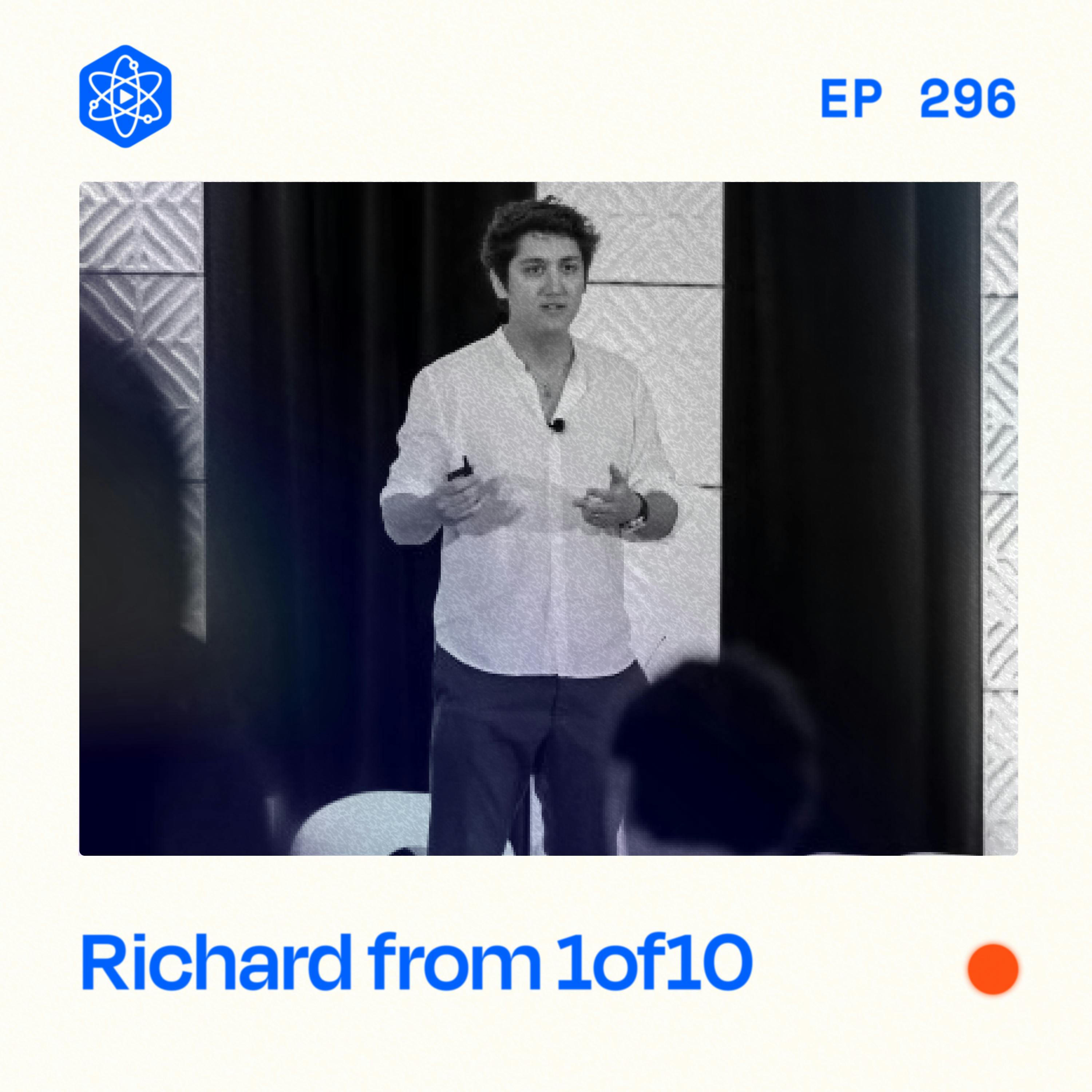
Creator Science with Jay Clouse
#296: Meet The Man Who Solved YouTube (With Data)—Richard from 1of10
00:51:55
Richard is the co-founder of 1of10.
Loading summary
Transcript70 lines
- [00:01]
Richard
So good, so good, so good.
- [00:03]
Commercial Announcer
New markdowns up to 70% off are at Nordstrom Rack stores now. And that means so many new reasons to rack.
- [00:10]
Richard
Cause I always find something amazing.
- [00:12]
Commercial Announcer
Just so many good brands.
- [00:14]
Richard
Cause there's always something new.
- [00:16]
Commercial Announcer
Join the NordicLub to unlock exclusive discounts. Shop new arrivals first and more. Plus buy online and pick up at your favorite Rack store for free. Great brands, great prices. That's why you rack.
- [00:30]
Richard
That got 2 million views when he would average 35,000 views. Angelia Moore, who did I made a clear sandwich. We saw that doing well and we pitched it to Mike and that became him his most viewed video of all time with 25 million views. And that led to a 6 million views video. And then he did one more recently that led to another 9 million views. So that's an extra 15 million views.
- [00:52]
Interviewer
That's Richard, the YouTube strategist. He's the co founder of a software tool called one of ten. And his team has quietly been behind the scenes of some of the biggest channels on the planet, helping them rack up over 2 billion views. And it's not luck. Richard and his team obsess over the data.
- [01:10]
Richard
We went through over 200,000 outliers to see, like what makes a video go viral.
- [01:16]
Interviewer
And in this video, he shares it all step by step.
- [01:20]
Richard
Basically, there are four phases of ideation. Audience research, remix validation.
- [01:25]
Interviewer
You'll even learn how you can get more views out of some of your old videos.
- [01:29]
Richard
Callaway, that video that was stuck in like 10, 20,000 views became 150,000 views video. So it's never too late.
- [01:37]
Interviewer
So strap in, grab a notebook, it's time to learn.
- [01:40]
Richard
Basically, me and my team, we, we try to break down everything. Why does a video go viral? And in the end, like 80, 85% of the reason why a video glows up basically is because of the idea title and thumbnail, right? Basically, there are four phases of ideation which we call arrv, which is audience research, remix and validation. So first things first is audience audience. Basically, as a creator, your goal is to understand exactly who, who, who is watching you, right? Like what are their goals, what are their pain points? Basically why they're watching you. And like that, you'll be able to maximize your views for your audience without going too broad. Give an example. Let's say film Booth, popular YouTube educator, had hundreds of thousands of subscribers and millions of views. But the problem was he was going too broad. He was reaching video editors and beginners when as an educator, his, his offer was more tailored to business people and people more, more advanced in the YouTube space. So what did he do? He just completely stopped uploading on, on that big channel and went in a much smaller one at the time, which had 10, 10,000 subscribers, but only focused on the avatar of his audience, which were business people or professionals, people in the education space. And that led to him going from $100,000 per month to $400,000 per month. And so that shows really the importance of who's your audience.
- [03:16]
Interviewer
This comes up in our community from time to time. People realize that, hey, there's actually a segment of my audience that I want to serve more or focus on, but they're only a segment of my current channel. The hope is they can kind of pivot that channel towards that audience over time because they're afraid of doing this thing Ed did, of losing hundreds of thousands of subscribers that they've worked to build. So when does it make sense in your mind for somebody to rip the band aid and start a second or a new channel?
- [03:47]
Richard
That's a really tough question because it depends. But in the end, if you've been uploading for a while, if you've been optimizing for weeks and months trying to get that market share of audience that you want, then yeah, maybe it's worth to just create a new channel because I've seen a lot of channels where, well, some they've done paid ads, which, which is really bad. Some they, they will have gotten one video that went mega viral but brought in the the wrong audience. And then they've tried for months and even years to try to get out of it and they didn't succeed when they could have started a new channel. And so I would say to, to rip the band aid sooner than later from my experience, from what I've seen out there.
- [04:30]
Interviewer
Can you expand on what happens when somebody has a video that goes really viral but it's the wrong audience and why that's problematic?
- [04:37]
Richard
Yeah, so the thing is, it'll go viral and let's say you're aiming, I don't know, for 35 year old audience, but then that video brought in a bunch of 15 year olds. The thing is, your next videos that are tailored to the 35 year olds will be shown on the YouTube homepage of those 15 year olds and those will not click. And YouTube will see that as a signal that hey, it's actually a bad video, it's not getting those click. People are not watching until the end. AVD is low, CTR is low, everything's low. So then why am I going to push this video? But then if you do that repeatedly by showing to those 15 year olds which YouTube thinks is your audience, then it's a loop downwards, basically.
- [05:22]
Interviewer
So this obviously worked for Ed. He pulled the trigger, started a second channel, literally quadrupled his income per month.
- [05:29]
Richard
Yeah, exactly. So focus all in on that second channel. But really, as you can see with the video titles, it's really just focused to business people and professionals. It made sense with his offer a good product market fit. And that's what's important for your audience basically, especially in the education space, is to always remember who's your audience, who you're targeting, what is the pain point you're trying to find for them, to solve for them. And then you just rinse, repeat. Okay, so here is phase two, which is research. So here your goal is to find outliers on YouTube and see which one have a good format and good interest topics, which I'm going to get to. But first, what is exactly an outlier? So if you think about a channel that normally gets 100,000 views but one gets a million, that's a 10x outlier. And the reason those outliers do well is because of ideas. Title, thumbnails. So here for example on your channel, Jay, this had 200,000 views two years ago. Well, that's when at that time you were averaging 20,000. So then that's a 10x outlier here and then here is a 4.5 million. That's 150x versus the videos around it versus the average of the videos around that video. You need to inspire from those videos that have performed well in the past. They are data backed and see why they did well. And then after phase three where you're remixing into your own style. So again with my team we're broken down into five methods of research of finding those outliers. So you have inside your channel, inside your niche, adjacent niche, outside your niche and external, which I'm going to explain one by one now that you know what's an outlier. For those who didn't know, there are two things when you're looking at those outliers that are important to keep in mind. One is the format. The format is what determines the structure of the video and gives context to the topic. And the interest topic is basically you can see that as something that gets a lot of views inside a niche. Let me give a clear example. Let's say here the format is I tried every, but then the interest topic. So something that gets a lot of views inside your niche. Changes every time from airline to train to Airbnb. And then you can see it the other way around, where interest topic here is water parks. But then the format is changed every time, right? From I tried 5 levels of water park, 24 hour overnight water park and so on.
- [08:05]
Interviewer
So you're saying when I'm looking at these different videos, I'm searching for outliers that I can model my future videos after. And each of these outliers have within them these two aspects for me to kind of play with these levers. You have the interest topic and the format. I need to understand that both of these things can be a lever towards being an outlier. And I can mess with either one.
- [08:28]
Richard
Exactly. Because there's a reason those, those did well. Like I tried five levels of waterpark in the entertainment niche will do well because there's progression, there's natural progression. You want to see from the lowest to the biggest water parks, how cool it is. And waterpark does well because it's so broadly appealing, for example. But those you might not have thought of with a blank sheet of paper. But by researching around, you get to see what has worked and then that inspires you into your own niche. This is in the entertainment niche, but it works in the educational niche as well. So let's start with method one, inside channel. When I joined this, this creator, he, he used to do all kinds of skills type videos. Why I proposed, I tested the world's five deadliest weapons which led to a 2x outlier at 10 million views was because of the phases. I said, so phase one is trying to understand his audience. So I asked him like who recognized him on the streets, who are the people commenting? And basically they were like teenage boys in the end, that was phase one. Then phase two is seeing what has worked in the past and see if there's a ways to, if there are ways to double down. And so here I would see the interest topics of Karambit knife or nunchucks or butterfly knife, all weapon types videos. Right. And I also saw in on the channel that he would try like I tested, I don't know, 126 skills. This is what I learned. And those would get millions of views as well. So I just combined it. Both combined a few weapons inside one video, natural progression. And that led to that 10 million views video.
- [10:24]
Interviewer
I see. So the format is, I tested and the interest topic in his case was some sort of deadly or intense weapon.
- [10:35]
Richard
Yeah, exactly. Because Karambit knife, nunchucks Butterfly knife. They all had like similar characteristics, right? Like weapons types content. So I was like, ah, this could be good if to combine at all with sword and other types of weapon in there. And turned out it worked out quite well. And then that led to doubling down even more inside the channel, turning weapons into ancient weapons. And that led to a 6 million views video. And then he did one more recently, like years after that first video and again with ancient weapons and that led to another 9 million views. So that's an extra 15 million views because we understood who is the audience, what is the format that worked and what's the interest topic to play with.
- [11:19]
Interviewer
It's so interesting that he posted essentially the same video with a slightly different title. Like he didn't put a number on. It wasn't the five deadliest, but it's literally everything else is the same. Different thumbnail. But that video there had 50% more views than the previous version.
- [11:37]
Richard
Yeah, exactly. Because that's maybe like two years apart, those two. And so there's a new audience that came in, right. But still in the same content strategy where it would bring in the right audience. So then with those new viewers that he kept building over time, it made them interested in this type of content. So creators that end up to the next level don't only double down, they triple down, they quadruple down. So like here for example, with hang time, he did I melted every gum that got 11 million views. And so the I melted every is the format that worked and then the interest topic changes every time. Same for I cooked 100 years of school lunch that gets 20 million views. So you take the format of I cooked 100 years of and then just change the interest topic every time. So if you think about it, had these two not done double down, triple down, quadruple down, they would have lost on literally tens of millions of views. So it's super important for any creator listening that once you have a format that works and that makes sense with your audience to really try to think, okay, what are different interest topic that would make sense for that format that work?
- [12:56]
Interviewer
Well, guilty. I've definitely had successful videos. I've been like, okay, well I covered that and moved on.
- [13:01]
Richard
Exactly. All right. Method two is inside your niche. Simple. You look inside your niche and you see what format is working across your competitors or other YouTubers in the space inside your niche. And you see if you can change the interest topic for you. For example, here in the gardening niche you have this format of buried something and then this happened. So buried Common kitchen scraps and then this happened. But then you change the interest topic of kitchen scraps to bananas or to forests in the ashes and then this happened. Or you can see more educational. Six years of trading knowledge in 20 minutes can lead to 27 years of trading knowledge. Like everyone has different ways that they they've grown as a trader or as a crypto trader even. And so that's how you're thinking of format, but then remixing into your own style. Here's more. In the gaming niche where we look at the other way around, where you have the interest topic of let's say Sarah Brainwad or grow garden but then you change the format every time based on the game method three is adjacent niche. Your goal here is to find channels that are parallel to yours. So like similar in characteristics. Let me explain with a few examples. For example, here again, 30 years of business knowledge is in 2 hours 26 minutes that got 15 million views which went insane and got replicated all around. Why? Because it makes sense. It attracts the audience that he's looking for. People are trying to learn, they're trying to make money. And so you in the make money niche, you have investing knowledge, you have sales knowledge that's totally transferable to take that format but then remix it into your own style. Same invent in the YouTube space. YouTube education space, you could see that as parallel. Why? Well, one, you're trying to grow money. Well here you're trying to grow views. And so it's very parallel. And. And maybe there are things in the money making space that would make sense for the YouTube space. Maybe a little less obvious. You have video editing into music production again. At first you might not think you could inspire from one or the other, but when you think about it, it makes sense. Both have similar characteristics. Similar characteristics in the sense that both you're working on the computer, working on the timeline, basically trying to turn raw assets into a finished product. So when you see five different editors, so I hired five different editors on Fiverr and here's the result that can become paid for mixers to mix the same song. And here's the result. And so that's one way, another more concrete way. Basically that's one of our consulting clients in the trading niche. We again turned the YouTube into trading growing views, growing money. So this is boring, but you'll hit 1000 subscribers fast on the left. We took that format, brought it to this scalping strategy is boring, but made me a profitable trader and that led him to getting 300,000 views and a 3x outlier. And so that's one way to. Those are ways to transfer from one to the other using adjacent niches. And then we have method four, which is a outside niche. Basically, you, at this point, you're getting inspired by literally any video out there. You're trying to see if there's a format that will work for you. Here's another example with a client of ours is I tried every legal performance enhancer from Will Tennyson. Got 7 million views. Well, that was actually inspired by the entertainment niche. I tried every legal addiction which had gotten 9 million views. And so by seeing that, and funnily enough, that also led to all kinds of niches. Taking inspiration from those, since they've seen it do well, they just replicated it for them. It worked in the gaming niche. I tried every legal Fortnite cheat or it worked in the beauty niche. I tried every legal beauty enhancement. And even in the criminal niche, I tried every legal criminal activity.
- [17:36]
Interviewer
What does that even mean, every legal criminal activity?
- [17:39]
Richard
I guess that's why I click and turned out to get over a million views.
- [17:45]
Interviewer
So I guess that's why we click. It's a good open loop.
- [17:48]
Richard
Exactly. Or here's another example with a client of ours, Dr. Mike Diamond. So the Japanese rule to staying Lean got 500,000 views. And that was actually inspired by two videos, two outliers. So one, the Chinese Secret to saving money revealed. So we took that format, the Chinese secret, but transform it into the Japanese rule. And then at the bottom, why is it so easy to be thin in Japan? Got 24 million views. So the thin in Japan being thin interest topic combined, both became the Japanese rule to staying lean. So what I said earlier about understanding why an outlier does well here, if you think about it, most people, most of the viewers would think that a Japanese person is thin. So when a person from his audience in the fitness niche sees that title, they're like, oh, there's already social proof in his head that Japanese people are thin. Maybe there's information that he doesn't know on how to be lean. And so he clicks to watch and that gets 500,000 views. And to show how data back also works across all niches. So we saw that doing well for one client and then we transferred it into another channel in the parenting niche and it led to the Japanese rule to obedient children, which got 700,000 views and 4x outlier. And again, if you think about it, most people would think that a Japanese child is discipline in general. And so When a parent sees that title, they're like, oh, maybe there's a way to better raise my child that I've never heard of. So I'm going to click to see what can I learn.
- [19:40]
Interviewer
But even the idea of the Japanese role, I could probably change that to really any culture or country that is not the predominant culture or country that your videos are typically for. Because if my audience was Japanese viewers, they'd probably be like, I already know this rule. But an American audience is probably like, oh, this is like some secret of a different culture that I don't understand. So even this format could have dozens, hundreds of variants, I suppose.
- [20:07]
Richard
No, yeah, exactly. Actually, we saw that recently, like, check this out. So we did that and then we saw other faceless channels taking why Japanese rule did well. And they just did the Korean method to calm tantrums in 60 seconds and that led to a 1.9 million views. And then they went with the French rule as well and I got to 360,000 views. It is quite interesting how once a format works, it can be like you said, you change the interest topic inside of why it did well and try to find interesting way. And yeah, I just want to make it clear that in the outside niche, you can literally transform one format into the other. So like 30 years of business knowledge in 2 hours 26 minutes can become 9 years of photography knowledge, or to music, or even in the gaming niche, 10 years of aiming knowledge at 500,000 views. And from tennis here to filmmaking. And even as niche as nine years of camera setting knowledge in 29 minutes. And so that got 22 million views when he would average 35,000 views. So as you guys can see, you can literally take any niche and then just transfer it into yours. Wow. And then we have method five. Yes, exactly. External, which is outside YouTube. So from movies, TV shows, books, for example, here you've got America's Got Talent that became Discord's Got Talent, or a talk show becoming the hot ones, or cooking shows with the Babish world, and even like the mobile app Tinder becoming a popular format for jubilee sidemen and hundreds of channels out there.
- [21:52]
Interviewer
That's something that I haven't thought about or heard talked about very much at all, is like, can you take formats from legacy media or even just other forms of entertainment and bring them into a YouTube context? I think that's really interesting.
- [22:07]
Richard
Yeah, because the concept of data back works out there, right? Those shows did well, got millions of views on tv, those mobile apps got their hands on everywhere. So you try to understand why outside of YouTube, those things did well and see if there's a way to repurpose into yours.
- [22:28]
Interviewer
We'll hear more about Richard's ideation process after this quick break. I'm sure I don't need to tell you this, but being a creator is really hard. It's hard to attract an audience. It's hard to build and sell an offer that truly helps people. It's hard to fit in with people who aren't creators. And it's hard to weather all the challenges and periods of uncertainty that come your way. And that's why we build the Lab, our membership for professional creators like you. Think of the Lab like a group chat of friends who all happen to be doing the same thing you are. Not only do we share notes and pass along what's working for us, but we also cheer each other on and lift each other up when things are hard. Education is changing, which means your business may be changing. And the way you need to learn is changing too. With the current pace of change, you need to learn by experimenting and sharing notes with others who are experimenting too. I've been doing this creator thing for almost 10 years now, and things have never been changing so quickly. It feels crazy. And yes, the Lab has continued to help me grow, but more importantly, it's helped to keep me feeling sane. It's as much a part of my social life now as it is my professional life. We just announced our next Lab Offline event in June ahead of kit's Craft and Commerce Conference. It's going to be bigger and better than last year and, and we'd love for you to join us, learn more and get started@creatorscience.com lab. That's creatorscience.com lab. And now back to Richard. Okay, so we've looked at our audience. We've found five ways of doing research. What comes next in your process?
- [24:02]
Richard
Yeah, it's remixing. So you have the format, the interest topic, and you can also add a viral vector, which I'm going to explain, which leads to your viral idea. So the three ways of turning those ideas those. Those formats is one is escalation. You can go from, let's say a gym membership that's 30k per year to. To ones that's 10k per month that led to a 7 million views video to a 10 million one. Or you have that Ryan series going one week, 30 days, even 50 days with a different interest topic. Or number two, you can go the other way around. You see a format that's work. Maybe this is a way to inverse it. Here you have the world's largest becomes the world's smallest Nerf gun. 48 million views becomes 74 million views eight years later. And finally you can replace interest topic for the format that you see working, which we've been talking here. And so those three combined plus the viral vector. So just a reminder, interest topic is something that gets a lot of views inside your niche. Well, viro vector is something that gets a lot of views outside your niche. And so for example, Lamborghini works across niches. Squid game at the time when it was super popular, it would work in gaming, food, literally any niche possible. Squid game would go viral. Japanese across the board works well. We saw with parenting, fitness, diy, fast food, even first class. So I want to give a concrete example. I interviewed Dantic and he told me how he got his his most viewed video. Basically he saw the format of I tried every working well for Ryan here. And then he took the viral vector of first class. He knew that that worked across YouTube and then combined with the interest topic of his channel around gaming, combined it all together which led to I tried gaming in every airplane seat which became a 39 over 39 million views video. But here's another example with again Mike Shake that I'm going to explain. Basically the viral format, viral vector here is invisible. Here you have this video, this outlier that got 23 million views. Making transparent wood. We have here Angelia Moore, who did I made a clear Sandwich was a huge outlier for her at the time because she saw making transparent wood on Oneoften.com and that became a huge outlier for her. So we saw that doing well across YouTube, the invisible part and we pitched it to Mike and that became I built a transparent katana which became his most viewed video of all time with 25 million views. So that's like how we think around for the first three phases.
- [26:48]
Interviewer
I really like these ideas for remixing, escalation, inverting, replacing specifically escalation and inversion are things I haven't thought about, which I think could be really, really interesting. We were showing that example of Simon Squibb of X years of knowledge in this many minutes. You try to inverse that and say 30 years of business knowledge in five minutes. How do you make that really small? It's already kind of crazy to say 30 years and 46 minutes or whatever it was. But going smaller, I think people would be like, okay, prove it.
- [27:22]
Richard
Yeah, or like 30 years of business mistakes instead of knowledge. For example so you're like inverting. Okay, that was the pros. What were the cons of running 30 years of business? Knowledge of business. So yeah, it's like trying to see the opposite of it and see if it makes sense for, for your audience. Finally we have phase four of ideation, which is the validation part. So we have a checklist that we'd like to go through. Like is it feasible? How unique is the idea? Is the packaging good for title and thumbnail, which we're going to get to seasonality. For example, you might want to do ideas around fitness. If you're a vlogger or something more at the beginning of the year versus the end of the year, you should try to always experiment. One in four uploads, what does that mean? So basically three videos that you know are formats that work well, that have worked well in the past for you. So inside your channel you just try to keep doubling down on the formats that have worked well, just changing the interest topics. And then one that is like a totally new experiment just to see what happens, because that new experiment then becomes a new format when one of them breaks out. So it's always good to continuously experiment, which I've seen a lot of YouTubers not do. They'll just rinse and repeat what they know work and that just leads to a channel going down over time. So you always need to try to keep fresh and try to basically find more unique angles. And then we'll also have, when you have a bunch of ideas, what is the content for it, what is the video duration for it? And so maybe I can talk a bit about a report we did. Basically using our software, we went through over 300,000 outliers on one of 10 that's worth over 60 billion views, 50,000 channels. To see, like what makes a video become an outlier, what makes a video go viral? And as you guys can see, this is pretty interesting. Okay, at the beginning, if you do too short your videos, they're competing with like shorts, they're competing against other shorter videos. Well that in, in general as a median views, it'll lead to lower views. You can see maybe the sweet spot is between 20 minutes, 20 to 30 minutes. That's basically the time it takes to finish lunch or to quickly over break to watch something. And so that in general will lead to higher median views across all niches. But then what's interesting is when you go over 80 minutes, so the one hour plus videos it picks back up and that's because TV is being pushed a lot by YouTube because if you think about it, it makes sense in the end they make more money with longer videos because people are staying more on tv, there's less distraction. So when you're on mobile, you get notifications from friends, family, there's like a hundred apps that you can just switch to. Whereas when you're watching on tv, well, there's really just one thing that you're doing. So it's a win, win for everyone if it's being pushed to tv. Which is why one of the reasons why longer videos are getting more views in the end, as you guys can see here.
- [30:43]
Interviewer
So interesting. And there's a lot about podcasting right now. A lot of podcasters are doing longer and longer interviews. So I'm looking at the middle of this curve from a podcaster's lens and saying, okay, from about two hours up until almost three hours, that's like the big hump, two to three hours. And then there's this far end which is, gosh, four hours wild.
- [31:14]
Richard
Yeah, but I will say the sample size goes down as, as, as it goes up here. But also you need to think that there's not that many videos at those length that will be high quality, let's say. So if you're one of the ones inside your niche that do a very long video that is high quality, there's more chances that that gets pushed because maybe it's less, it's basically much less competitive. And here you can see, we looked into per niches, basically the video duration per niche, and we could see where it peaks inside each niche. And it kind of makes sense when you think about it. Like for tech, for example, you have 28 minutes versus vlog being 14:28, you want them to be longer because people are watching for those tech reviews, they want the in depth review of a phone that just came out. Same for engineering and DIY at 26 minutes here versus 14, where that's more of a casual entertainment that's bingeable. Same for gaming, around 21 minutes. And so it's interesting to see. And that doesn't mean you have to do exactly 21 minute videos, but just means that maybe there's higher probability of success if you go around that area. Instead of shorter in the end, you try to go for longer in the end.
- [32:39]
Interviewer
Very interesting. I love this data. I love seeing some of these things from your study.
- [32:43]
Richard
That's the goal to help all of you guys use that report and try to grow on YouTube. Finally, on that checklist we have the tab. The total Addressable viewership because you can have a format that work, but how do you know which interest topic to choose as your next upload? So that's where you try to think which ones the which interest topic will maximize views while not going too broad. So here, for example, in the entertainment niche I melted every gum is much more unique, much more remarkable than I mixed every fruit, which sounds a bit more normal. Or here, for example, I cooked 100 years of school lunch is much more relatable to a broader general audience than, well, hopefully than gel food and hospital food.
- [33:34]
Interviewer
Okay, very interesting. I mean this. It's always good to be reminded that so much of what makes a video successful comes down to the idea and the packaging. And so this covered everything around really kind of both idea and packaging. The big question for me still is like, how do I make this process something I can easily do in whatever time I'm able to allocate? And obviously one of 10 was built to make that easier. So could you show us how to use 1 of 10 to do this research process?
- [34:10]
Richard
Yeah, of course. So you can just click random, which I quite like.
- [34:15]
Interviewer
Is there a threshold? And how many views is being pulled in when I just hit random? How does random pull videos in?
- [34:20]
Richard
Random will take any video at all that was an outlier. But then what we do is you can use the filters. And one trick people can use actually is look at let's say sub 50,000 subscribers under 50k that got 100k views and that will probably be at least a 2x outlier. And you look at the last three months and then like that you're able to see what format has worked well for a smaller channel. And maybe that gives you ideas that you would not have thought of. But it's also fresh because if a small channel was able to blow up, then there's a reason that blew up. And maybe there's a way for you to, to. To transform it for you. For example, let's say I have a data analysis channel and I see 10 brain boosting activities to make your baby a genius. That's totally outside your niche. But let's see what comes up. It can become 10 networking tips to propel your data analysis journey. There you go. That's one way or ten resume hacks that will get you a data analysis job. Basically the goal of 1 of 10 is that you keep getting inspired by bouncing around and remixing those ideas that have done well for that niche.
- [35:36]
Interviewer
That's cool. So I can find whenever I hit random or I set My filters here. And it pops up these ideas now, besides just being able to save them and use them as my own inspiration, you add a button there that basically remixes that based on my channel.
- [35:49]
Richard
Yeah, exactly. It's not always intuitive how to transform a format from a totally different niche into yours. So we try to make it as easy as possible for creators to save time. And basically you can, I don't know, generate here Canada tax changes for 2026. What you must know before the new year then becomes for a data analysis channel that is inside your community and that becomes Data Trends for 2026. You need to understand that's maybe a new idea that you would not have thought of or what every data analyst must know about 2026 jobs. Very cool.
- [36:24]
Interviewer
And you guys have now title and thumbnail generators inside of 1 of 10 also. So can you show us how those work?
- [36:31]
Richard
But yeah, there's no point in having a great idea if there's no good packaging. So let's talk about titles and thumbnails. So what I learned from Jake Thomas, I've learned that there are three core drivers of human attention. Fear, curiosity, and desire. Like my team and I, we tried to see if there were like other ways, but really we, we, we quite like this. And basically your goal as a creator is to try to find the highest, find the title that will create the highest level of intensity for any of these three. So like for example, curiosity. Your goal here is to create a curiosity gap, make your viewer wonder, to force them to click for the answer. For example, how does Bluetooth even exist? You read that everyone has Bluetooth on their phones, headphones, and you wonder, oh, how does it actually work? And a more concrete example is the one which I work with, with Mike Shake. How dangerous is a whip? At 8 million views, video, as you guys can see on the right, how dangerous is a whip? How powerful is a whip? How deadly is a whip? All of these could have been a title. How Dangerous is a Whip is the title we win because it's the most relatable and the one that leads to the highest intensity for curiosity. Because when you think about it, everyone watching, you know, what's a whip? You've seen whips on TVs and movies, but 99% of people have never used a WIP. So when they see that title, they're intrigued right away. Then we've got desire. So here you want to sell the result so that the viewer is interested in the process. So for example, higher grew from 0 to 100k subscribers in 5 months, you see that title, you want that outcome, you want that result. So you click to know the process to get to it, and then you have fear. So here your target viewers are clicking because they want to avoid threats or ease their concerns. So like here on the right, my worst financial mistake, you see that from a financial expert, so you click to avoid those financial mistakes. So those are the three ways and your goal is to get as high level of intensity as possible. We have a bunch of best practices like ideas like we try to aim for 50 characters, try to see if the hook would be a good hook for the title you're thinking about and why 50 characters. Again, back to the 1 of 10 report. As we've seen across over 200,000 outliers, if you put more words, basically the median views go down across the board.
- [39:12]
Interviewer
Wow.
- [39:13]
Richard
Five words, six words will be much better than 10 to 15. Wow. And same for characters. I always say 50 and the report really confirms it. If you go from 30 characters to 70 characters, that's 60% less views. So obviously 30 characters is really low. But you can see like from 50 and downwards it really drastically goes down in terms of median views per video. Very cool. Basically in the title phase, you're trying to find as many angles as possible and try to figure out which one will hit one of those core drivers of human attention. And there are three ways to go about it. You can go from question to a strong statement or strong statement to a question. Or number two, you can try to change the words in a title that you have in mind from can be itis said every to I tried every or like $1 versus thousand dollars can become level one to level 1000. And number three, you can also try to add a power word like any of the four videos you see on the right would not have gotten that many views had there not been those emotional triggers like extremely mind blowing, subtle, brutal. And one way that we made it easy to get all those title angles is actually with the 1 of 10 title generator which I can show here. So this one is one of my favorite features on 1 of 10. Basically what we said one is changing a strong statement into a questions. So we can try the video we did earlier. So top data trends for data analysts in 2026. Let's say that's the idea. So you can input either a title or you can put an idea. The idea, the concept of the video. We look at the channels, style that you do your titles and then we try to remix it using the concept. You put in or we looked at the top outliers on 1 of 10 and see if there's one that makes sense with the concept that you have. So. Well, this one's pretty good. Five data trends that will define 2020. What you can then do, which is really cool, is the three methods of changing that title. Then we can go with turn into a question. So not all of these will be good, but that's where you judge which one you think will lead to the most. Click for the audience you're targeting. But that's turning a statement to a question, and you can do it vice versa. Number two is just changing the words. But then number three is add emotional trigger power word and make it capitalized. So we all see it here. Now it becomes five shocking data trends that will define 2026. Just right there. This makes it a lot more appealing than just five data trends. Now it's five shocking. Obviously it doesn't need to be all caps or the future. Like the word future hits. The word powerful hits critical is pretty good as well. So you're trying to find different ways of using those.
- [42:23]
Interviewer
Very cool. I didn't know we could add like this second instruction in the title generator here that's very useful.
- [42:29]
Richard
And here's a proof of why changing titles is so important, basically. And finding multiple variations of a title. For example, this channel here created, I built a tool to predict how much money I'll make. He turned it into I've created a monster. And that led to a video stuck at 10,000 views. You see the immediate change and is actually now at 88,000 views. Or this one, which is a creator we've worked from zero. Actually, Callaway, we basically turned the dopamine ladder trick that gets viewers addicted to your videos turned it into how to become a storytelling genius. And that video that was stuck in like 10, 20,000 views, only a title that's just a title change became 150,000 views video. Always try to understand why things do well right here. Basically, we changed the angle towards dopamine, which is an interest topic that went viral a bit everywhere. But we put the focus on storytelling, which we knew work well in the past, had 2 million views. One of them had 2 million views with the storytelling angle. So we transform it here. But we did keep the dopamine ladders in the title to keep the intrigue. And so combining all that together led to an explosion in views.
- [43:55]
Interviewer
Okay, so now that we've covered research and titles, the obvious next step is thumbnails. So what are the Most important aspects for us to understand about thumbnails.
- [44:05]
Richard
Yes. So when you're looking at thumbnails from videos that have performed well, you're trying to understand why they did well. And there are two things you're trying to understand why. One is what is the composition? And two, what are the elements that are part of that composition? See why they did well and see if there's a way to remix for your own channel. All right, so here you're trying to find a thumbnail, right? So for Mike, with who we worked basically did this video, can you stop a bullet with an arrow? A couple months prior. But what we see in the composition is like Mike the weapon and the object getting crushed. So that was transferred into how into the whip video mic, whip and phone getting destroyed. And fun fact, I still remember, like I was thinking of all kinds of objects. It could have been a brick, a tree, a car, a house that's getting destroyed. But why I chose a phone was because everyone has a phone. Everyone understands how. How hard it is. Everyone has dropped the phone. So you know how solid it is. And so seeing it destroyed like that entices you to. To click more. And so seeing that composition but then just changing the elements in it then became a big stable on. On. On the channel. And that actually led to other channels taking that composition and then transforming into their own style for their own niches. And you have also the next level is what I call which is external. Basically. Here's an example of a scene in an anime called Naruto where I remembered the intensity of it and that I wanted to transfer it for a thumbnail for a client. And that led to this character getting exe you did or this guy going through a hard workout. Basically you're able to transfer literally from anything, just like ideas from anywhere and see if you can replicate it to create the same level of intensity. And you can see it here as well. This movie poster became a 9 million views video once remixed. Or this one became a 3.7 million views for Dotford. That's how you're taking inspiration from literally anything and then taking that data and transforming for your own thumbnail. And just like ideas and titles, we have a bunch of best practices for thumbnails. We try to aim for three main elements. We like to have it as fresh and new as possible as well, while taking inspiration of different compositions all around. The squintest bottom right, you try to not have any text there since there's the timestamp. Little things like that adds more probability that a person will click on that video. Just like titles, you always want to try to find different thumbnails, test them and see what works. For example, here is a video of me interviewing Will Tennyson. It was stuck at literally 3,000 views for the longest time. But then we kept changing titles thumbnails and then I was so bullish on the video and that that led to over half a million views video or here you have the worst enemy of Tesla becoming why Apple and Tesla are scared of this genius. You see the title thumbnail change super simple. And that's literally the only change we did on that channel 180 days after uploading. So after six months. So it's never too late. So doing so led to an extra 2 million views video and so you're really missing out if you're not trying to find like as many thumbnail concepts as possible. And that's also why we built the thumbnail generator which I can show now
- [48:05]
Interviewer
while you're loading that up. Is it really never too late to make these changes? Like we've had some videos in the back catalog that I just look at it, it's like wow, the click through rate on this is so far below what is typical. I worry that it will even get impressions to test new packaging changes. Are there ever times where you think it's just too far gone?
- [48:23]
Richard
No. Yeah, it's true. So first there's we look at if the video had like a good retention, right? If it didn't have a good retention, then there's no point. What I mean by good retention is not again the number, but it's more like was it a flat line? Was it like, was it really lower than most other videos of the same time length? Now if after at some point you've tried a lot, then it's time to move on onto new videos for sure.
- [48:48]
Interviewer
All right, let's see how this thumbnail generator works.
- [48:51]
Richard
Basically we built this thumbnail generator where again you can put in your channel. You can either put your title or a thumbnail concepts or a video idea and you put it in and then you'll get your thumbnail generator in literally one to two minutes maximum. It works in literally any niche and it'll take the context of your back catalog, understand the visual style and then transform it into your next thumbnail. Like we generated this for some in your community. You can put it as much information as possible and they'll lead to create to creating the thumbnail you have in mind. What's really cool is that you can also add in your face. To be sure it takes your face but if not, normally it will take from your back catalog. But another thing is you can add objects or assets that you normally use inside your channel and you add it in and it'll understand that. But also what's cool is you can do the most random sketch on a piece of paper and it'll create a thumbnail from what it understands on the sketch.
- [50:05]
Interviewer
So what I like about this is from a workflow perspective, what you can do is be on the homepage, click random, find an outlier that you think is interesting, remix that outlier from your channel on that, take that idea over to the title generator and play around and find a title that you like the most and then drop that title in the thumbnail at generator here and you have the whole package Exactly. Richard, thanks for sharing so much with us here and showing us how 1 of 10 can make this research process a lot easier. If folks watching this want to try 1 of 10, where should they go?
- [50:38]
Richard
If you want to try it out, we actually have a promo on Oneoften.com where it's $1 for the first month for you to try it out. You can try the Title Generator, Thumbnail Generator, Outlier, Search everything and you'll see that you'll be saving money and time. And if you want more help on a one on one basis consulting we currently have a 30% off where people can again go in the link below to book a call with us. We'll see if we're match to work with you. Cool.
- [51:10]
Interviewer
I'll make sure we have those links at the top of the description. Richard thanks for stopping by.
- [51:15]
Commercial Announcer
Two Good and Co Coffee creamers are made with farm fresh cream, real milk and contain 3 grams of sugar per serving. That's 40% less than the 5 gr. Preserving and leading traditional coffee creamers for a rich, delicious experience. Whether you enjoy your coffee hot, cold, bold or frothy, two Good Coffee creamers Make every sip a good one two Good coffee creamers Real goodness in every sip. Find them at your local Kroger in the creamer aisle. Close your eyes, exhale, feel your body relax and let go of whatever you're carrying today. Well, I'm letting go of the worry that I wouldn't get my new contacts in time for this class. I got them delivered free from 1-800-contacts. Oh my gosh, they're so fast.
- [51:59]
Interviewer
And breathe.
- [52:00]
Commercial Announcer
Oh sorry. I almost couldn't breathe when I saw the discount they gave me on my first order. Oh sorry. Namaste. Visit 1-800-contacts.com today to save on your first order.
- [52:11]
Richard
1-800-contacts.