← Creator Science with Jay Clouse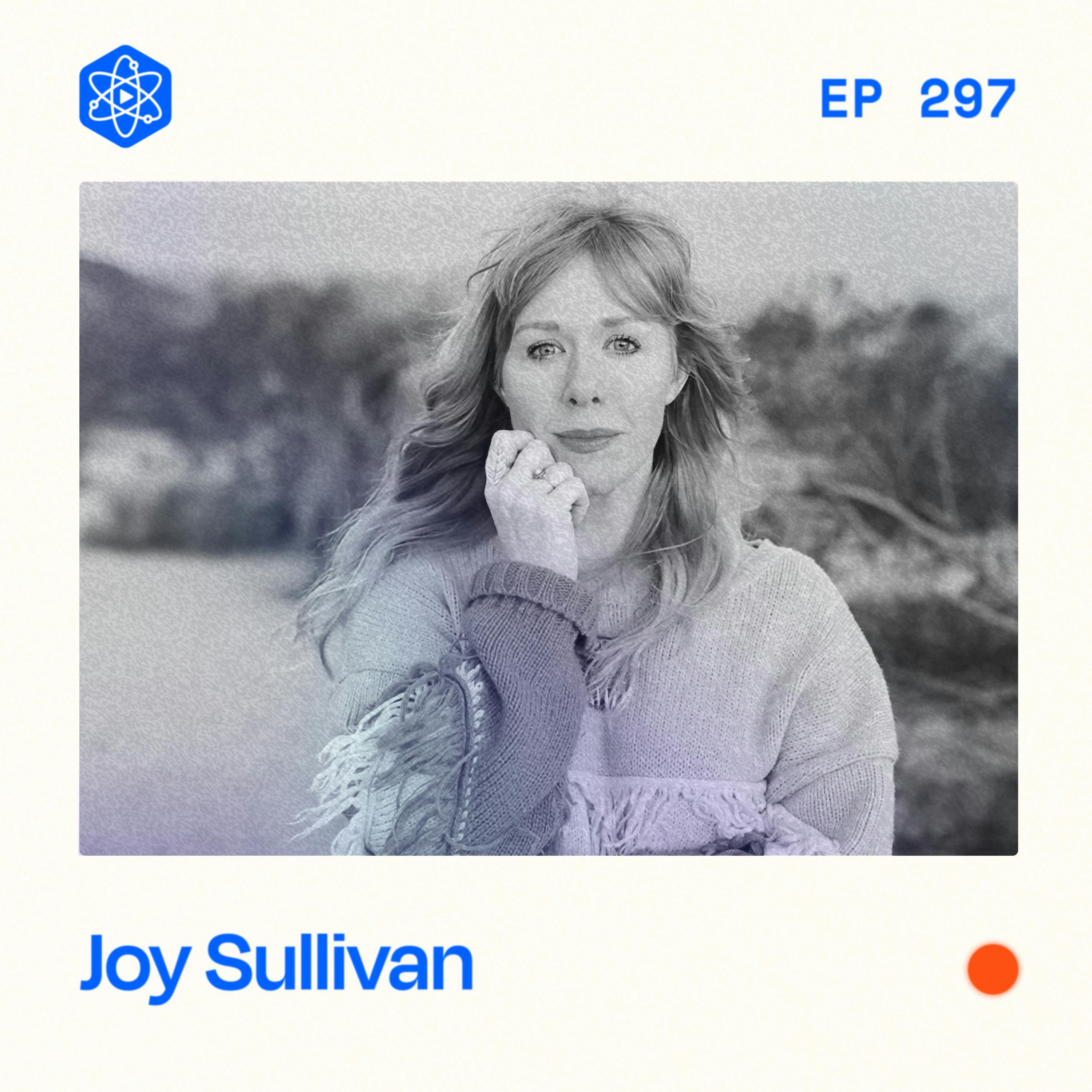
Creator Science with Jay Clouse
#297: Joy Sullivan — How She Built A Living As A Writer On Instagram and Substack
00:52:54
Joy Sullivan is a poet and the author of Instructions For Traveling West
Loading summary
Transcript72 lines
- [00:00]
Joy Sullivan
So if I'm always after more numbers, I actually think that's like a gamble that doesn't pay off. There is no amount of followers that would ever pay off the amount of sacrifice you'd have to make as an artist.
- [00:26]
Jay Clouse
Hello, my friend. Welcome back to another episode of Creator Science. Today I'm speaking with Joy Sullivan. Joy is a Portland based poet who quit her corporate job mid Pandemic to become a full time artist and built a thriving creative business through Instagram, her substack called Necessary Salt, and a paid writing community called Sustenance, which has around 250 members. Joy is also a former member of the lab and I crossed paths with Joy a few times when she lived here in Columbus, Ohio before she moved west in 2024. She published a book of poetry, her first published work called Instructions for Traveling west, that is published with Dial Press, an imprint of Penguin Random House. And I wanted to talk to Joy for a couple of reasons. First of all, I absolutely love her style of writing. I love her voice. She writes fearlessly, aggressively, and yet there's this warmth and relatability to it that I really resonate with. It's very unique, it's vulnerable, and it also makes the reader feel really seen. All the links to her work is in the show notes, by the way, so if you want to check it out, I recommend doing so. Second, she does Instagram so well and she grew her Instagram predominantly through writing and sharing carousels. That's really interesting to me because Instagram, when you think about it, you think reels, you think short form vertical video. And third, she's writing on Substack, but but monetizing with a circle community outside of Substack, which I think is a really smart model. You take all this together and Joy is blazing a path of writing as a living, as a lucrative living, and leveraging discovery platforms Instagram and Substack without necessarily using those platforms the way they incentivize you to use them. So in this episode we talk about her approach to Instagram, her approach to Substack, what she likes and dislikes about both platforms and how you can succeed as a writer on these platforms, what she'd do differently for her second book, and a little bit of a pep talk for me as a writer too. If you enjoyed this episode, tag J. Clouse or Joy Sullivan, poet on Instagram and let us know. We want to hear that you're listening. We'll get to that full episode with Joy right after this. As a starting point, I'm curious How you would describe the landscape for writers today? What do you find writers wanting to do and what are the opportunities available to them?
- [02:50]
Joy Sullivan
Yeah, you know, my background's as a poet. That's primarily who I serve in my writing community. And that's also how I got my big break in the publishing world, was as a poet. And I think that it's challenging, as always, it's really challenging to both have the kind of endurance to bring a creative project into the world. And now writers are tasked with this additional question of how do I build a platform? How do I attract readers? As you probably know, publishers, especially Big five, are looking for writers to kind of be this whole package. Not only do you have to have an amazing manuscript that lands you an agent if you want a big five deal, but then you also have to have a personality that feels really saleable. You have to be able to show evidence that you can do book sales. And I think it's a really tough terrain. It's a lot to ask of a writer, especially those folks with a creative brain. So I am like full of empathy for writers who are embarking on this because it's intense out there.
- [03:49]
Jay Clouse
Totally. From my perspective, my assumption is that most of the folks you work with are not nonfiction. I don't want to say fiction particularly, but I feel like I don't know how you describe poetry, you know, But I'm guessing it's not educational nonfiction that you're typically dealing in.
- [04:07]
Joy Sullivan
Yeah, so I run a writing community called Sustenance, which what I say our target audience is poets and lyrical essays. So, yeah, we're not writing how tos or tutorials. We're in that really murky land of short form, but that's full of poetic and emotional depth. And then we're also trying to navigate how do we produce the best piece of writing from a craft perspective, but also have an audience for it, which I think is sometimes hard to know how to do.
- [04:38]
Jay Clouse
What's really interesting to me is that in my world, most of the people who are drawn to writing, which again, this is mostly like educational nonfiction based writing, the obvious answer is, well, go to a text based social media platform like X or Bluesky or Threads or LinkedIn, but I actually don't think those are the platforms that are most friendly to writers, especially lyrical essayists. It doesn't seem like that's the friendly place. It seems like the friendly place is Instagram. But Instagram is so inherently visual. Do you agree with that statement? And if so, how do we use Instagram? As a writer, totally.
- [05:21]
Joy Sullivan
It's. God, this is a tricky question for me, J. I'm excited to get into it because I have such a weird relationship with Instagram. And over, like, the last five years, I've grown my platform to over 115k, and that's been terrifying and exciting. But I got my start on Instagram during the pandemic, so it was sort of out of sheer loneliness when we were all isolating, I was writing poems. I finally had time to write again because we were all working remotely and I was sharing my work online. And I was kind of surprised that there was even an interest in reading long form, sometimes like multiple slides that you'd have to scroll through. I never had much interest in Instagram because I'm not like a super visual person. So I think I was pleasantly surprised that the platform really supported that kind of interesting inquiry into language. You know, now I publish my substack essays, seven slides on Instagram, and people read it and people share it, and sometimes it goes viral. So I was pleasantly surprised that there is an interest in that. But I think we often begin to talk about these platforms that sometimes we don't consider, like, just the heft of emotional or it almost feels like spiritual struggle that happens from having to be a person invested in telling the truth, having a deep love of craft, really wanting to produce the strongest work possible and also serve the masses and also grow and also also build a platform. And I tell my writers a lot. I think for a while those things are sadly pretty antithetical. I think it's really hard to truly know yourself as a poet and a writer or an essayist and also be sort of serving what gets likes right totally and pandering to what people want. And I think for me, I've had to really reframe my own relationship with Instagram. You know, I used to, like, sell a course on how to an Instagram strategy, and a couple years ago I took it down because I felt that it was unethical to ask artists to approach their. Their craft and their own visibility that way.
- [07:37]
Jay Clouse
Yeah, I'd love to try and eavesdrop on your inner monologue a little bit. This is a line of inquiry that I've been going down a lot with creators all over the place. But I think it's particularly interesting when somebody is so focused on craft versus distribution, let's call it, because a lot of folks in my world, they are creating for social media platforms for the purpose of finding distribution and building an audience. And I get the Sense from a lot of your writing, that is not where it's coming from, but I have to think you're also aware of it. So what is that tension? Like, how do you think through it, reason through it, approach your work? What's your relationship to that?
- [08:21]
Joy Sullivan
So I have a couple of mantras that I tell myself and that I tell my writers when it comes to, like, becoming visible online. Because really, regardless of what direction you go, unless you self publish, which in that case it's also part of the conversation, you really do have to have some kind of platform. So it's a real catch 22. But a couple of things that I tell myself. The first is be a poet, not a preacher. Those of us who have marketing backgrounds, it was really drilled into our head that every time you get on social, you have to offer value. So you become very didactic. You're always teaching, you're always giving tips, you're always the expert. And I think there's a real fatigue around that on social. Now, I don't think people are that interested in how tos. I think they're interested, at least from a poet's perspective, in how to talk about this wild, terrifying, glorious moment that we're in and really having the phraseology to understand that, to understand nuance and complexity. So be a poet, not a preacher is the first thing. The other that I tell myself and my students is my vulnerability is not social currency. So a lot of times when I was first building my platform and I had poems starting to take off, there was just like, oh, I have to keep building this momentum. And I found that when I shared very vulnerable content, very emotional content, I got big reactions, I got lots of follows, I got lots of engagement. And I think that some of that is always part of the game, right? People always want to eavesdrop. We're all a little voyeuristic, right? That's why social media works. And that's also the gift of poetry, is vulnerability and insight into the human experience. But I really had to find that boundary for myself. On what things am I going to keep private? What are my boundaries around social media? And what things am I comfortable sharing for some kind of universal understanding of what it means to be alive in this particular moment in time? And I also am very protective of people in my life, so not wanting to expose them also, you know, without consent to my audience. So that was another big consideration.
- [10:27]
Jay Clouse
Is everything you create for the purpose of expression and you're kind of divorced from the performance, or do you find yourself creating Things for the purpose of social media performance.
- [10:41]
Joy Sullivan
Yeah. I would say I've had to rewire my brain around this because I think it's really tough to get out of that idea of like, oh, I know this is gonna perform or I know people will like this. But I'm just as I've evolved as an artist and a writer, I'm so much less interested in that. So I get. Another thing I say is I wanna be memorable, not marketable. So. And I don't believe that it's like you have to pick between having no following and only producing slop content. I don't think those are the two options. I think thankfully people are really hungry for deeply considered, thoughtful, slow and chewy art that isn't AI driven. Right. We're in this. I know Jay, you talk a lot about and think a lot about how AI is reshaping the creator landscape, but I think it's actually like it's about who are the people you want to attract. And I think sometimes the reframe. We're so hungry when we come to social media of like, please, I need to get followers. I want to appeal to everyone. And I don't think we have enough conversation about who do I actually want to bring into my inner world, who do I want to attract as my audience? Because it's going to fundamentally on a soul level, it's going to shape me as an artist. So if I'm always after more numbers, I actually think that's like a gamble that doesn't pay off. There is no amount of followers that would ever pay off the amount of sacrifice you'd have to make as an artist.
- [12:05]
Jay Clouse
So do you think in 2026, the approach of creating considered chewy art that you enjoy and tickles you, is that a privilege that you have grown into because of your platform or is that a strategy for somebody who is at the ground level today?
- [12:26]
Joy Sullivan
It's a really good question. It's hard to say. Right. Because I built a following and I've also then translated it to substack. So I've got readers when I need them or when I need to approach a publisher. I've got evidence that my books can sell. But you know, I got my, I got my publisher. I think when I had 40k Instagram followers, which I still recognize as a decent sized platform, but I think we sometimes over index numbers. And like when I really pushed my agent on why she picked me up, she was like, honestly, there's just a vibe. She was like, I could tell you were really smart. I could tell you were really thoughtful, and I could tell that people really wanted to listen to what you had to say. So, again, I think we make these gambles. I think we end up sacrificing a lot of mediocre work and kind of like regurgitated content that we know performs to get eyeballs. But I don't think that's that meaningful. And the book deals that come from those kinds of platforms are flashes in the pan. And, you know, my challenge for my next book is, like, I want to get like, a 2.5 on Goodreads. Like, I want it to be so polarizing. I want it to be so controversial. I want people to be, like, arguing in the comment sections. I want it to be really meaty. I want it to challenge people. I don't want it to be palatable art anymore, because that's just not interesting. And I think if you're really in it for arts sake, you just, like, have a fundamental different interest in who is reading you and what their appetite is for, you know?
- [14:07]
Jay Clouse
Yeah, I think if I would have asked you that question two years ago, the voice in my head would have been saying, I think it's a privilege to get to a point to just make what you want to make and know that people will like to consume it. But I think in 2026, it might be the other direction. I really do think that it just really stands out when you're making something that's kind of divorced from what you think will perform. And I even see I've kind of struggled over the last 18 months with my relationship to content, because if I'm honest, I think I had a biological hard reset when we had our daughter. And to continue the business as it has been feels a little bit like I'm cosplaying as a version of myself that no longer exists. And so recently I've started doing some writing on Substack as well, which I'm sure we'll talk about. And I've noticed that when I share that writing, I don't care at all how it goes. It was the experience of making it the pride I felt doing so and sharing it and everything else is a bonus. But when I'm not coming from that place, then I feel like my emotions are so tethered to how something performs. So I am finding that I'm being pulled towards the lighthouse of make something you want to make. And the pride is enough.
- [15:27]
Joy Sullivan
Totally. And I don't think that it's mutually exclusive. I think that we just have to almost retrain. I think literally the gap or the opportunity in social media right now is to kind of be going in the opposite direction, to just be kind of doing a middle finger to what's popular content. I actually think that's what people are very hungry for. And you might not get the. The incredible viral numbers that you see of other people who are hopping on trends, but I just think the quality of your audience improves and that's gonna save your life as an artist who has to be so visible. And I think the other really hard thing about making and sharing art and writing authentically online is that we're so afraid of being canceled for really any transgression. So I've had people angry for me for posting that I've. I'm eating oysters, right, or riding a horse, you know, Cause someone said that was animal cruelty. Or, you know, posting a picture of me and my boyfriend. It really doesn't matter. People are always in that space gonna look for something to criticize. And I think that that's pretty terminal to a young artist is that kind of visibility that early on. And if you have a mass platform that's just attracting anyone from the Internet, I think that that again, on a soul level can really degrade your ability to produce work that you are proud of. So I would say, and I tell my writers, grow slowly. And I know that that might cost you money and time, but energetically, I think it's a much healthier place. I'm doing some research right now for my second book. And it's all about sort of my relationship in many ways with social media. It's all about watching and visibility and eyes. And I am doing all this research into Greek mythology and looking about the story of Medusa. You know, literally if you look upon her and her hair is snakes and that's instant death. And I think about that as an artist and a writer. Like, I don't know that we are meant to withstand the level of visibility that these platforms require of us. And they are toxic systems that are designed to keep us plugged in and addicted. So again, I do have the privilege of already having built a platform, but I think that has to be part of the conversation is how, as an artist, are you going to survive the Medusa that is social media? And to some degree that is substack. And how, you know, I have Instagram bricked on my phone now 24 7. I get on it on my desktop and I get on it to post when I feel like I have something that is worth sharing with the world. But I can't make good art if I'm constantly worrying about how I'm gonna be perceived. And you know, Ellen Bass, who's a very famous poet, she says in order to write poem, you cannot be the hero of your poem. And I think we are terrified of not being the hero on social media. And my God, what boring writing were producing as a result.
- [18:32]
Jay Clouse
I've heard people talk about comedy through the lens of most comedians position themselves in a low status light. And that's part of the reason why comedy is so relatable and it travels so far. And I think sounds like you're saying poetry is similar in that way.
- [18:51]
Joy Sullivan
Yeah. You know, people come to poets and poems to unlock something true about human nature. And when you are always posturing, when you're always being the preacher and not the poet, you're not saying anything new and that you're not really doing the job. That's the task of the poet. And again, I think if you're a writer that's looking to get started on Instagram, I think a couple things can help you. I think slowing down writing work that you're proud of is key. I think also letting people get to know you as a person, especially in the way that AI is driving everything now. It will never have humanity. So I think people also got very attached to me as a person. So I did let people early on. I really shared the process of getting published. I shared the terror of growing visibility. I talked very openly about getting nightmares that I still have every night about being watched online, of just the terror of being visible. I talked and wrote on Instagram and substack of when people first started recognizing me on the street and how uncomfortable that was from a place of someone who's fairly introverted and private. And so I think that in some ways was also trying to reinforce my humanity as I grew on these platforms. It's a sticky thing that everyone's gonna navigate a little differently.
- [20:14]
Jay Clouse
When you have this mantra of be a poet and not a preacher, but you also have a business model that asks you to be a teacher and a model for people who want you to be that, how do you reconcile those things? How do you inhabit that role for people?
- [20:30]
Joy Sullivan
I think it's reducing our chokehold on absolute truth and the models of how we gain wisdom as a collective. You know, I think people want so much certainty. You know, they really do. That's what sells is tell me. Everyone's got a framework, Jay. Everyone's got a blueprint. Everyone's got a trajectory. And the reality is, is that like a poem, if you have a blueprint for a poem, you're going to write a terrible poem. Poems are fueled by uncertainty. If you know where you are going at the beginning of the poem and you end up in that place at the end of the poem, you've written a terrible, predictable, gross poem that's never going to move anybody. And so in a weird way, that's also my business model. Not that I don't promise outcome, but to suggest that collectively we're going to figure out a way forward. And even as a facilitator and a teacher, I very rarely try and say, this is the way forward. I'm your ultimate guide. Even the way that I built Sustenance is very much of a community model where the collective is sort of bringing in real time insights and wisdom to this process of being a creative person in the world. And so I think that helps a little bit, you know, and I think that's also like, maybe in some ways a matriarchal idea. My father was a surgeon, and he grew up his whole life saying he felt this tremendous amount of pressure as a leader in a hospital to immediately have the answer and to tell people what the answer was. And we were talking about it one day and I said, dad, my secret power as a leader and a community builder is that I get to say I don't know all the time. And I just remember seeing, like, relief flood over his body and be like, I had never imagined I could just admit I don't know. And to me, that's the beauty of being a poet. We never answer a goddamn question in a poem. And also in community, it's very much about arriving at truth together versus setting myself up as some kind of cult leader. Even with this long hair. Now, I'm looking a little cultish these days, but I'm just very wary. Even on Instagram, I'm very war of acting like I'm some kind of hovering deity that has a lot of answers. That's terrifying to me.
- [22:54]
Jay Clouse
This is the way the lab has evolved as well. It's like, as I have learned more, I am increasingly certain that I know absolutely nothing. Like, my certainty has dropped so far. The paradox is because people want certainty so badly, people want to put me, and I'm sure you as well, on a little bit of a pedestal. And when I try to collapse that pedestal, I also find that sometimes it does them a disservice because they want me to give them at least A direction to head. And I can do that if I'm on the pedestal. But if I have collapsed that they no longer give that the weight that could push them in the direction they need to go. So it's very conflicting because. And then there's obviously the sales implications, where the more certain you are that you have the answer, the easier it is to sell anything. But I'm viewing certainty these days as an absolute red flag.
- [23:53]
Joy Sullivan
Certainty collapses our ability to be nuanced. And I actually think that that's what our world needs the most right now, is to be able to hold and tolerate our capacity for complexity, because we're always attracted to such a binary. And it's so easy to say what's in and what's out, who's good and who's. And my moral superiority is greater than yours. That's another huge pitfall of social media that silos us right into very separate camps. And so, yeah, I think just expanding our capacity for discomfort. And really, I feel like my work is expanding people's ability to grow, and that I can only do via being able to model it myself.
- [24:38]
Jay Clouse
How do you define the word poetry? I think people hearing this, they're probably thinking, like, certain cadence or rhyme scheme, but I don't think that's necessarily true. Do you have a working definition that you like?
- [24:51]
Joy Sullivan
For this, I should have a really poetic definition of a poem. I talk a lot about walking into a poem and then leaping off a cliff. That's where you've gotten something somewhere interesting. And kind of the, like, shorthand for a poem is a container to hold the unsayable. It's a place to put that which could not be held by any other form that gets to be what exists in a poem. Some people define it as a bird. Some people define it as an ocean. But it is this kind of mysterious, esoteric thing that allows us to. To process some part of being alive that we just don't have a form for. And that's why I think it's so resistant to easy answers. You know, when I started posting on Instagram and building my following, I was a copywriter at a branding agency, right? And I would, you know, I literally hung up a plaque, a piece of paper above my desk that says, are you a copywriter? Are you a goddamn poet? You know, be a poet. Which one are you?
- [26:00]
Jay Clouse
I love that if I were to take away from you either Instagram or substack, you can never leverage one of them ever again, which one Would you have a harder time letting go of,
- [26:13]
Joy Sullivan
oh, that one's hard, Jay. Probably. Well, I'm more attached to Instagram, but I think it's worse for me. So I like it more just as a platform and I'm more addicted to it. So. So I think for my health, I would say, take away Instagram, leave me substack, and let me write slow, chewy art on Substack. But for a while, I used to say that Instagram's my boyfriend. I had a very weird relationship in that, you know, I could kind of post and get immediate validation, immediate empathy, immediate controversy, whatever it is, I could always post. And, you know, people loved watching my stories and loved talking to me in my stories. But I began to see that there was this, like, direct correlation between how fast I was growing on Instagram and how more and more unhappy I was becoming. So I think for a brain perspective, I think for an artist's brain perspective, Substack is a better and healthier platform.
- [27:17]
Jay Clouse
What do you think about the Substack monetization model?
- [27:23]
Joy Sullivan
I feel like I was really attracted to it. When I first got on Substack and I started getting hundreds of paid subscribers, I was extremely motivated to write. And I did, like, a pretty successful series called Woman in the Fill in the Blank. Every month I'd take myself to a new location and be Woman at the Horse Ranch, Woman in the Range Room, Woman in the Sex Club. You know, I've been. It was interesting. I would like, basically be a little detective and I would go to someplace that I was scared to go, and I'd write about it and people loved it. And then I would send people out on their own Woman in the World assignments. And so I was really pumped about it for about 2 years, and I was making about 60k off of the platform. And then I just decided I wanted to write a book. And I felt like my. A second book. And I felt like my best, most creative work was going to substack and not to my book. I needed, for me as an artist at that point, I needed to recalibrate my metabolism around only being able to write when I was going to have the immediate gratification of posting. And so now I'm posting very little to either platform, which, again, is a privilege because I don't have to grow them. But, I mean, I'm also making a decision not to grow them. I have like 23,000 subscribers on Substack, which is not. That's not wild. And I have 115k on Instagram, which I could get bigger. Right. But I've decided that that's, that's plenty for me. And now I just want to focus on really my best, most creative work. Going to the manuscript.
- [29:02]
Jay Clouse
We'll be right back to my conversation with Joy Sullivan after a quick break for our sponsors. I'm sure I don't need to tell you this, but being a creator is really hard. It's hard to attract an audience. It's hard to build and sell an offer that truly helps people. It's hard to fit in with people who aren't creators. And it's hard to weather all the challenges and periods of uncertainty that come your way. And that's why we build the Lab, our membership for professional creators like you. Think of the Lab like a group chat of friends who all happen to be doing the same thing you are. Not only do we share notes and pass along what's working for us, but we also cheer each other on and lift each other up when things are hard. Education is changing, which means your business may be changing. And the way you need to learn is changing too. With the current pace of change, you need to learn by experimenting and sharing notes with others who are experimenting too. I've been doing this creator thing for almost 10 years now, and things have never been changing so quickly. It feels crazy. And yes, the Lab has continued to help me grow, but more importantly, it's helped to keep me feeling sane. It's as much a part of my social life now as it is my professional life. We just announced our next Lab Offline event in June ahead of kit's Craft and Commerce Conference. It's going to be bigger and better than last year and we'd love for you to join us, learn more and get started@creatorscience.com lab. That's creatorscience.com lab protein is now at
- [30:29]
Sponsor 1
Starbucks and it's never tasted so good. You can add protein cold foam to
- [30:33]
Jay Clouse
your favorite drink or try one of
- [30:35]
Sponsor 1
our new protein lattes or matcha. Try it today at Starbucks.
- [30:43]
Sponsor 2
Your little one grew three inches overnight. Adorable. Also expensive. Sell their pint sized pieces on Depop and list them in minutes with no selling fees because somewhere a dad refuses to pay full price for the clothes his kids will outgrow tomorrow and he's ready to buy your son's entire wardrobe right now. Consider your future growth Bird budget secured. Start selling on Depop where taste recognizes taste. Payment processing fees and boosting fees still apply. See website for details.
- [31:16]
Jay Clouse
And now back to the rest of my conversation with Joy Sullivan. When somebody comes to you and they want to be a full time writer. That means that they're demanding income from somewhere. So what is your advice for how they fill the income bucket if they are writing on Substack, let's say.
- [31:39]
Joy Sullivan
Yeah, I think you have to. I mean, you have to do a couple of things. For me, Substack is part copywriting because unfortunately, whether or not you want to admit it, like you're writing for an audience member and they are paying your bills at that point. So you are sort of. It's different than Instagram because if you're monetizing on Substack, they are still paying you. And I think it's something that if you're very motivated by deadlines, if you're very motivated by writing specifically to a target audience, if you feel that you have a lot to share, I think that makes a lot of sense. I'm also an advocate and I know this is going to maybe dodge your question a little bit, but I'm an advocate for people having a really hard conversation with themselves and saying, do I want to make what I love pay my bills?
- [32:26]
Jay Clouse
Yeah, totally.
- [32:27]
Joy Sullivan
Do I want to put that kind of pressure on my art? I don't put that kind of pressure on my art. A lot of people think that I make my money from books. I don't make my money from books, make my money from a community and teaching full time. So I'm actually not somebody who makes my living as a writer because I don't want to write a book every year and have to churn that out to get a payday. So I think there's this illusion that it's very sexy once you get into a creative role, that it pays your bills. But I don't know that that's reasonable to expect.
- [32:59]
Jay Clouse
That's kind of where I was coming from with the question because you mentioned when you were doing paid subscribers on Substack, you were making about 60k a year from them, which is a good living as a writer.
- [33:11]
Joy Sullivan
Totally.
- [33:12]
Jay Clouse
But also requires a lot of subscribers. I think Substack kind of has a ceiling on what you can charge for a subscription for the most part, because it's kind of like going to a bookstore. If I went to a bookstore and I saw one of these books was $500, I'd be like, this is weird. This doesn't fit in the bookstore. All of these are 20 to $40. And I feel like you get the same experience when somebody has a Substack membership for several hundred dollars. It just, it feels off for that medium. It's easy to turn on Substack subscriptions and say you're charging $10 a month, and maybe you have a thousand readers, which is great, and maybe 10% of them become subscribers. And now you have $1,000 a month that you have a lot of pressure to fulfill whatever you've promised to, which I think can be so antithetical to the craft.
- [34:05]
Joy Sullivan
Sort of. The wisdom of Substack is turn on your paid subscriptions immediately. Otherwise you're losing money. That's money on the table. Right. And I didn't do that. I waited to see, because if you turn on paid subscriptions right away, you lose the ability to iterate and experiment in a really simple, safe playing field. So I just messed around on Substack for like, a year and a half, and that's how I found that my Woman in the World Series was taking off. Then I turned on paid subscriptions. Then I came up with a paid model that included teaching quarterly workshops. I also think it's very hard to make a living if you're not doing some kind of teaching, also via Substack. But I think if you're serious, this is another conversation. But I think if you're serious about community building, I wouldn't do it on substack. I'd move it to something like Circle, which we both run communities on. But I think it's very hard to find a lucrative niche if you are trying to monetize it from the very beginning because you miss all of that time of experimentation. It's like, do you want to leave good ideas on the table, or do you want to leave a little money on the table? And I think it would be better to leave money on the table when starting out.
- [35:14]
Jay Clouse
Yeah. The drag of I need to deliver this because I have paid subscribers who I've promised it to can be such a drag depending on the cadence that you're promising, depending on just how much of a engine for creation you are. Some people just churn out writing like crazy, and it's easy for them. And for me, every deadline, I feel at, like, a deep physical level. And there's a decent amount of dread in that feeling. And so I have found that I've needed to leave a lot of money on the table to avoid constant feelings of dread in whatever format that it is.
- [35:54]
Joy Sullivan
Yeah, I would just say if someone's starting off on these platforms, just give yourself, like, maybe at minimum, six months, but ideally a year to figure out who you are in a public platform, what your voice is, why people are Interested in listening to you and experiment wildly. I mean, when I did that on Instagram. Right. And I'm mortified at some of the poems I put out during my first couple of years building a platform. They're things that I would never sign my name to today. Right. But I quickly learned when I was trying to generate viral content how awful it felt and how it made the kind of people who were attracted to that work weren't. My longtime readers, were never gonna stay with me through the next two, three books. So you have to give yourself a little Runway on these platforms of being like, who am I in this space? Do I want this kind of pressure to write on a timetable? Do I wanna have that linked now to my livelihood? And you may very well find that that works for you. But I think you have to have some time of play first.
- [37:00]
Jay Clouse
How much of a graphic designer do you consider yourself?
- [37:04]
Joy Sullivan
I have an amazing community director and assistant who does all of my graphic design. I don't do any of it.
- [37:11]
Jay Clouse
So you have somebody you write on substack, you send that to this person and they make what we see on Instagram.
- [37:17]
Joy Sullivan
Yeah. And it's pretty. It's just Canva templates. Right. You know, I sort of beta test a little bit from a strategic perspective. So I will publish first on substack and I will see which areas people are restacking, what people are talking about in the comments, what they're resharing, and then I will highlight and pull out those sections and I will share them that to Instagram. It will pick up a lot faster. That also trains my Instagram audience that, you know, they're getting rewarded for probably the most interesting work from the long form substack piece. Cause I've already tested it.
- [37:56]
Jay Clouse
How important is it to you to use Instagram as a discovery engine towards the substack?
- [38:02]
Joy Sullivan
It's definitely helped me. I mean, I think I grew like 8,000, 9,000 in my first year from Instagram to my substack. So it definitely is helpful. I think people do substack marketing on Instagram poorly. You know, if you just use the substack templates, it's never gonna take off. People don't wanna read your whole title slide and then five carousels. They wan immediately read the most interesting piece or excerpt and then they're going to keep going. I also write on substack in a way that even though it's long form, I write in sort of brief segmented sections that are very easy to pull and truncate and put on Instagram. And I also think using tools like manychat can, you know, dropping the link directly for people tends to work pretty well.
- [38:54]
Jay Clouse
Can you say more about how you think about the design of your carousels?
- [38:58]
Joy Sullivan
Yeah, so I, I've experienced it a couple different ways. If I have a really great interesting title like I wrote, I wrote an essay last year called Woman and the Manic Pixie Fuckboys. And it was, you know, about dating in 2025. And that's a title that is going to get some traction. Right. On both substack and Instagram. So for my Instagram carousel, I led with that slide. Also pictures of you and an interesting title that's going to perform well on Instagram. And then we got into kind of the takeaways, the sound bites that had performed earlier on substack, like two days earlier on substack. So I probably will do three or four of those in the carousel. And then I always do a final slide at the very end that's like, read more. It's free on substack. And then I point to Substack at the end, I reinforce that. The bio also. And then I either direct them to linktree or I do a manychat, but I let them know that there's like more to have. And especially the pieces that go viral on Instagram, I do get a nice little wave of people who will come to substack. It isn't like insane, but it is enough that it's a good bump. And if it's a good piece of writing, it also helps my Instagram following.
- [40:18]
Jay Clouse
And so do you think about each slide as it should be self contained? That slide alone should be engaging and not necessitate the previous slide especially or the next slide.
- [40:31]
Joy Sullivan
Yeah. And it's kind of annoying because if you're trying to write this deeply thoughtful, complex piece that examines things from multiple angles, it's very irritating when people then don't go and read the free substack essay and want to argue with you in your comment section about the one little snippet that they said. But absolutely to your point, it's got to be self contained or it's got to be interesting enough that people are going to keep swiping on your carousel. But I mean, you would be amazed. I think people really think Instagram is one thing and that people do not have an appetite for interesting, complicated work on there. And they do. You just have to write it in short form. So like I wrote an essay last year when my 15 year old cat died and it literally begins, this is an essay about my cat dying, which I recognize is a weird way to start an essay, but he did die and the house smelled like his dying for days. And that essay got almost 40,000 likes on Instagram and it's, you know, four sections of that long. It also went viral in sub sac. I've noticed that like people have an appetite regardless of, of the platform for some of the similar writing, but you just have to change the format so it's gotta be short on Instagram. It's gotta have a pretty interesting hook and then it has to be to your point, self contained. Each slide.
- [41:52]
Jay Clouse
Such weird synchronicity. Our 15 year old cat died this weekend and oh, Jay, I wrote a piece. Well, I'm halfway through the piece about it and I don't know if I'm gonna share that one. We shared a carousel, just 20 photos of him the day that he passed. And it cross posts to Facebook and Facebook was like, hey, because you had a high performing post, we're showing it to more people. I don't need strangers to see pictures of my cat and send me this. But I mean this is vulnerability and this is the reality of being vulnerable successfully, I suppose on Instagram is you're gonna get a lot of strangers who see it, who comment and I have to imagine that feels weird and uncomfortable.
- [42:36]
Joy Sullivan
Yeah, you know, I felt comfortable doing that about my cat. I didn't feel like doing that when my relationship ended last year. So I'm like you, I'm always weighing what is something that I can handle going out online and having again that sort of Medusa lens of visibility on and what do I deeply need to process myself by myself, for myself. And it's made me a better writer in some ways. Even if it's really painful to be like, I'm going to sit on this insight. I'm going to sit on this beautiful story idea that would have taken off on Instagram and I'm going to put it in a notebook and not share it and give it time to mature into something that's really interesting instead of immediately getting the dopamine hit of sharing it.
- [43:31]
Jay Clouse
How do you feel about the writing advice? Share your scars, but not your scabs.
- [43:36]
Joy Sullivan
I think it's valid. I think that there's, you know, again, my poetry mentors always say there has to be some skin in the game, there has to be some blood on the page. But I don't think that any of us typically have the perspective or the mindset to write very well, inside the wound. I will often write a lot from that place, and then I will set it down. And I think it's Maggie Smith who says time rarely makes anything worse. Right. And I think that that's true, that a lot of times, you know, again, it's like, what kind of writer do you want to be? There is nothing wrong with being a content writer on Instagram. There's not. But if you truly want to be an artist, it's a different game. And I wish I had a better answer for how to do both successfully. But I'm in real time sort of grappling with what is it going to cost me to become a content writer. And I think that what that trains us to do on Instagram is not give anything the time and space. And the publishing industry doesn't help either, because, you know, I think a month after my book came out, my publisher was like, okay, what's next? What do you got? And I'm like, I'm taking a year, I'm taking two years now to come up with the most interesting ideas. And I have an idea, but it's the kind of idea that unless I give it a lot of time and I tell my writers, slow and chewy art, man. Slow and chewy art. Because I think a lot of ideas, when shared early, they just again, they're that flash in the pan. And that's great, if that's what your ambition is, is to have a big following. I'm not even disparaging it, but for me personally, I want to have a really beautiful, meaty second book. And that's a long game.
- [45:22]
Jay Clouse
You just said that you're struggling in real time with the idea of, what am I going to give up by being a content writer? Can you say more about that, what you're working through?
- [45:31]
Joy Sullivan
Yeah, I think it's personal and professional. Right. It's like, what kind of writer? I'm thinking it's Lauren Groff who wrote. She writes her book, and then she throws it away and she rewrites it.
- [45:46]
Jay Clouse
That feels so painful.
- [45:48]
Joy Sullivan
Yeah. And she believes, her philosophy is that anything that is supposed to stick will stay. I mean, I just get like a full body. But that is such a different philosophy. It's a different pay span then this. Capture every good idea, monetize every good idea, expedite and make efficient every good idea. And it's been such a retraining of both my nervous system and also my creative practice to lock an idea in and then not share it and not let anyone look at it and months and months go by, and I'm just adding to that good idea. And pretty soon I have a great idea. I have the staying power. So again, it goes back to that idea. Do you want to be memorable or do you want to be highly marketable? And if you have a really great idea, in the end, it will be marketable. But I think trying to build those things simultaneously, I haven't figured out how to do that fully.
- [46:49]
Jay Clouse
Is there anything you would go back and do differently about your publishing experience?
- [46:55]
Joy Sullivan
I wrote a lot of poems for mass appeal that I don't love. You know, I love my book instructions for traveling West. I've got it next to me right here on the table. Like, I'm proud of it, I stand by it. But I had a lot of pressure to make it a long book. I had to double it for my writing deadline. And, you know, there's a lot of poems that had done well on Instagram that I don't know that I felt like were the best craft perspective. So that's what I'm doing in my second book, which is gonna be more long form, more essays. I mean, I also noticed how, like, my poems in this first book are very, very short because that's the format that I had to use on social media. But now I'm like, going in the opposite direction. What does it look like if I don't post? And I have a lot of room to say a lot of interesting, different things. So, yeah, I think I would make a shorter book and I think I would be more mindful. I would recognize my vulnerability to social media and visibility a lot faster.
- [47:57]
Jay Clouse
I feel like this is an unfair question to ask, but we'll see where we land. Anyway. Do you like working through traditional publishing?
- [48:04]
Joy Sullivan
Yeah. Like, with a big five book deal.
- [48:06]
Jay Clouse
Any book deal. Any. Anyone where it's like you have other cooks in the kitchen, you have other people involved versus just self publishing, you
- [48:13]
Joy Sullivan
know, it's a really good question. And I often tell writers when they're first starting out, like, don't discount self publishing. It's perfectly valid. You can also make more money potentially. But you do have to have a platform. For me, traditional publishing was great. My agent is fantastic. My publisher at Dial Press of Penguin Random House, absolutely wonderful. Whitney Frick. So I had a great team. They designed a beautiful cover. They were very supportive of me. They sent me on a book tour. So, yes, it worked out for me. But I don't think it's the only. There's a lot of great options. For people who are starting off and maybe don't want to play the social media game, I think if you're a poet specifically, platform's really important because it's not the same appetite for, let's say, a novel. So it's harder to sell a book of poetry. So agents and publishers will always want you to have a platform if you're a poet. But there's tons of academic presses, there's write bloody publishing, which picks up a lot of fantastic poets who don't have huge followings. So you could absolutely do contests, university presses, you could do self publishing. You could publish on Substack and serialize it. A lot of people have luck doing that. So there isn't one way and it isn't always tied to have to be a social media Persona.
- [49:29]
Jay Clouse
If you were given the power to change anything about Substack that you wanted, what would you change?
- [49:36]
Joy Sullivan
Well, I would make them stop supporting white supremacists and Nazis by some of their very lax content guidelines. But out of that, the other thing I would probably change on Substack is I think it's just going the same way. Of all the social media platforms, and it was such a haven back in the day, I was the biggest evangelist for Substack. I thought it was the future. And I'm a little worried that now we're getting the influx of video. Now we're seeing a ton of clickbait articles, now we're seeing whole viral articles that are written by AI agents. So I think I would ask Substack to reassert kind of the differentiator that it initially was, that it wasn't social media.
- [50:27]
Jay Clouse
Last question, I guess then is, somebody's listening to this. They aspire to be a writer. Is there anything that we didn't cover that you think they need to hear right now?
- [50:37]
Joy Sullivan
The biggest piece of advice I'd give to a writer is before you worry about platforms, before you worry about visibility or readership, fall deeply in love with your own craft and develop an insatiable appetite for your own excellence on the page. Otherwise, just do copy, just do content. Because that as an artist, it's not worth it. It's too much of a spiritual sacrifice, energetic and emotional sacrifice to write anything for other people that you don't love. It won't make you a happier person. As somebody who's tried and failed and had to come back to herself. Like, the only thing that is interesting to you is your own evolution and like, pushing yourself to have more ecstatic experiences on the page. And tell the truth even more fanatically and more in an interesting way. That's the thing that makes you want to get up and write in the morning, you know, readers be damned. So that's what I would say.
- [51:49]
Jay Clouse
If you enjoyed this episode with Joy, please consider leaving a rating or review on Apple Podcasts or Spotify. We are so close to 500 on Apple Podcasts. We are so close to 300 on Spotify. I want to hit those numbers. Number Go up is my happy place. Those reviews go a long way to helping us grow the show, so thank you for considering. If you want to learn more about Joy, visit her website at joysullivanpoet or find her on Instagram oysullivanpoet. There are links to all of this in the show notes per usual. Thank you for listening and I'll talk to you next week.
- [52:30]
Sponsor 1
Monster Energy Everybody knows White Monster Zero Ultra, that's the og. It kicked off this whole zero sugar energy drink thing, but Ultra is a whole lineup now. You've got Strawberry Dreams, Blue Hawaiian Sunrise and Vice Guava, and they all bring the Monster Energy punch. So if you've been living in the White can branch out. Ultra's got a flavor for every vibe, and every single one is Zero Sugar. Tap the banner to learn more.