← Crime & Justice with Donna Rotunno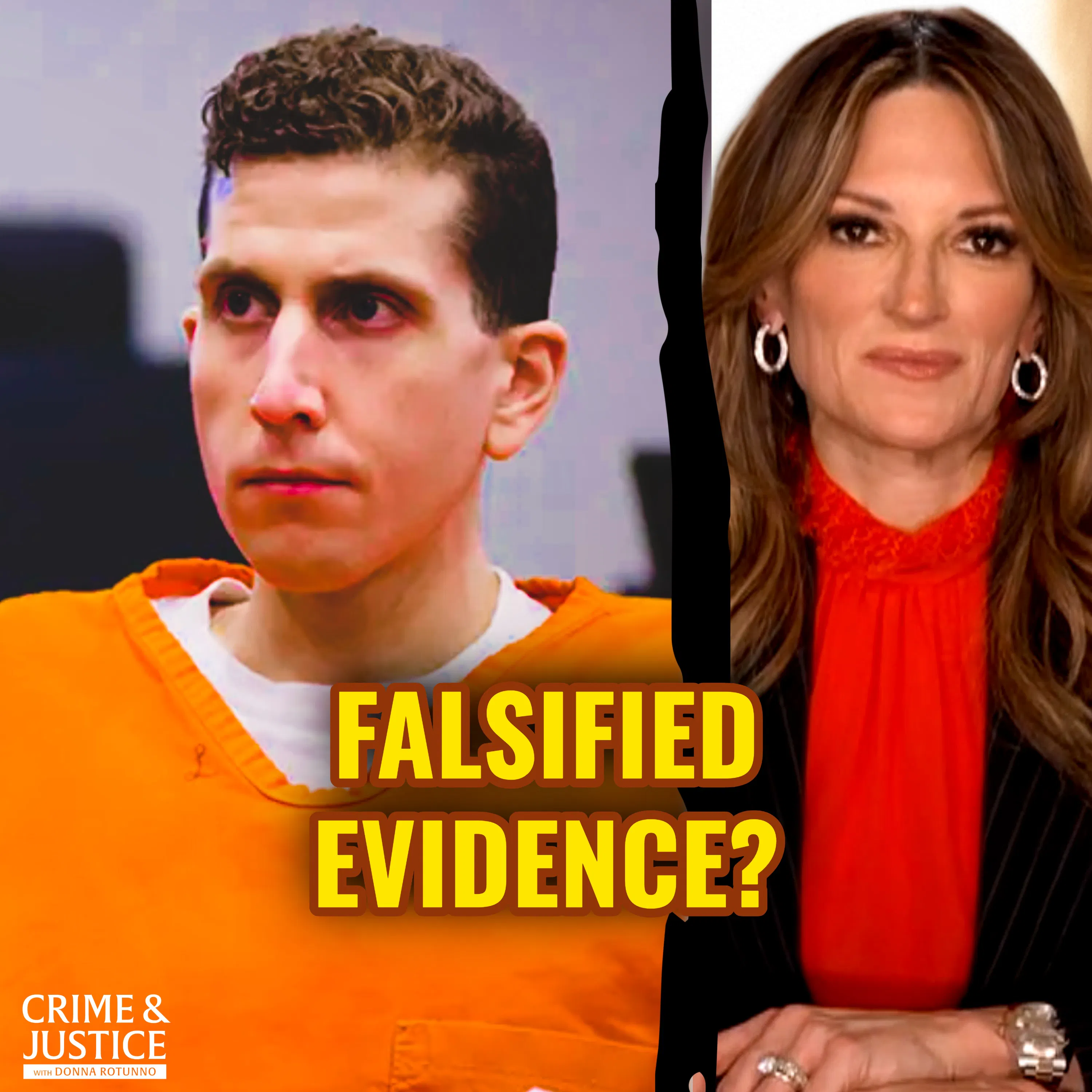
Loading summary
Transcript69 lines
- [00:02]
Dr. Brent Turvey
What they did to your family. You're lucky to make it out alive. Streaming on Peacock.
- [00:07]
Donna Rotuno
These men are going to come after me.
- [00:09]
Dr. Brent Turvey
Taking them out.
- [00:10]
Donna Rotuno
It's my only chance.
- [00:11]
Dr. Brent Turvey
Put a bullet in her head. From the co creator of Ozark. Looks like a family was running drugs.
- [00:17]
Donna Rotuno
Execution style killing.
- [00:19]
Dr. Brent Turvey
It's rare for the Keys. Any leads on who they might have been running for?
- [00:22]
Donna Rotuno
The cartel killed my family. I'm gonna kill them.
- [00:26]
Dr. Brent Turvey
All of them. Mia Streaming now only on Peacock.
- [00:35]
Donna Rotuno
This is Crime and Justice. I'm Donna Rotuno. Before we begin, if you're enjoying the show, please hit the follow button. It's the best way to make sure you never miss an episode. A new book on the Idaho murders is raising questions about key evidence in the case against Bernard Bryan Kohberger. Joining us today is forensic criminologist Dr. Brent Turvey, who testified for the defense. Dr. Turvey, thank you so much for joining me. Well, I just want to get right in because this now, this book was written by Chris Whitcomb. And this book is all about the. The broken plea and Brian Coburger. And the world watched as this case unfolded before our eyes. It got a ton of press, a lot of media, and there was a lot of information put out, information that was leaked, all these things that have gone on. And now after this plea is done, we're able to read in the book, broken Plea about all of the pieces of evidence that are potentially problematic for the prosecutor and things that we all wish a court would have ruled on and then we would have had some answers. So I would love to get into that with you and talk to you. Number one, what was your role and how were you hired to come on to the people of the State of Idaho vs. Brian Coburger?
- [01:57]
Dr. Brent Turvey
Certainly it's a normal involvement for me. Normal, a normal process. It's almost the same every time, but this was just slightly different, slightly more involved. I was originally contacted by Becca Barlow, who's a defense attorney that I have worked with in the past on other cases involving staged crime scenes. And she contacted me and wouldn't let me know what case it was, but said, I'm working on this case. We have a staging potential staging issue. Can you take a look at it? I want you to meet with the defense team. And I can't tell you what case it is. I said, okay. I mean that to me, that's like not a big deal. I have a caseload of about 35 to 40 cases at any given time. So, you know, every lawyer has Their own different way they do things. And so I, I agreed to meet with him via Zoom. I was traveling at the time, I think I was traveling in, traveling in South Korean soul or something like that. So I met with him, there was a time difference and we talked about certain things and they vetted me a little bit and they asked me to take a look at some, some evidence related to the knife sheath. And after I sort of gave a preliminary thought on it, they said, okay, well, what would you need to do to figure out, to fill, to sort of really do a proper assessment of this piece of evidence in context? And I said, well, you have to do a full crime scene analysis. You can't just look at one little piece of evidence out of context. So my role started out just looking at the knife sheath and then it expanded into a full blown crime scene analysis, which includes examining sort of the, the process of crime scene processing and physical evidence collection and documentation and chain of custody and all that good stuff to figure out what had been done, what hadn't been done, and what could still be done with the physical evidence. So my role started out just looking at the sheet and then once that preliminary assessment was done, they expanded that role and I was hired. Let me see. I just want to make sure I get the dates right because I always get them wrong. I was, I was started working on the case formally in October 2024, and I submitted my report in the case on January 22, 2025. And the reason why that time frame matters is because, as is often the case, the defense was under a deadline for disclosure of expert reports. And most people don't realize this because they don't work cases. They think that we have all the time in the world. And the court's very accommodating. That's not true at all. You have the discovery that you have at the moment that's given to you by the state, you examine and evaluate that, and then the court puts in place deadlines for discovery, which very often the prosecution just ignores or blows completely, is not even interested in following that. You have to fight to get the discovery. So by January, we had a deadline and we hadn't received all the, all the discovery yet. So even though I finished my report, which included a lot of different areas of examination and a lot of different areas of, a lot of different conclusions related to the crime scene, related to the physical evidence, I had, I still had, we still were working on material because material was still coming in from the state. Before I wrote my report, though, I went to Moscow and I examined all the physical evidence. And so I had a, I got a. And that contract, you know, you do a contract for each part of your work. You get a contract for X dollars, for X hours, and then you, you finish that and then you determine if you need more, and you keep going until you're done. And the more discovery that's given in, the more time you need to evaluate it. And so there, I think there's a lot of confusion over, you know, why, for example, the, the, like the hair is in the report. That's all in there. And Taylor knew about that, the hair in Ethan's hand. But the.
- [05:43]
Donna Rotuno
Yeah, we'll definitely talk about that.
- [05:45]
Dr. Brent Turvey
Yeah, the chain of custody didn't get mentioned because we didn't discover it until later on as there were subsequent data dumps in subsequent assessments, because, again, there just wasn't the time.
- [05:55]
Donna Rotuno
And I think that's what people don't understand. Right? I mean, when you're, when you're a trial lawyer, especially when you're on the defense side, you're receiving information and they're sending these data dumps to the other side. And they send them whenever they want. And sometimes they don't send them in any rhyme or reason, chronological order. So you get these things that maybe don't make sense, right. Until you get the second dump or the fourth dump or the eighth dump, and then you're putting pieces together. It's almost like jigsaw. And so that, that's a. Definitely a frustrating thing. So when you went to Moscow, obviously everything that you were able to review were the pieces of evidence that were actually inventoried by Moscow police the night of, and then the, the subsequent days that they were in that home. Is that correct?
- [06:42]
Dr. Brent Turvey
That's partly true. Absolutely true. That everything that I was examining in Moscow at the Moscow PD was in a facility that they created just for this case because there was so much evidence. A storage facility just for this case, like a garage. And it was most of, I would say 70, 80% of what was there was what they had collected on their own then. And this is in my report. It's not a secret. It's all part of the files that have been released. There were. They were going to bulldoze the house, and the defense sent their own team out there and recovered other things and took other photos like the bed frame and other bloody items that were in the scene that they were just going to leave there or just destroy. So the defense directed the collection of a bunch of material wisely Wisely so. And so there was a bunch of material that was held there that they collected on behalf of the defense, but that was part of the original crime scene that they had ignored, including the bed frame that, where the hair was
- [07:39]
Donna Rotuno
found with Ethan, let's get into some of the pieces of evidence that really become, I think, the most problematic and some of the issues that you really delved into. And I'm going to lay out three of them because I, I found them to be probably the most significant in reading the book Broken Plea. But then I listened to you do another podcast where you talked about these three issues and I, and I agreed that it's the knife sheath, it's the hair and it's the fact that the, the cleaning up took place, those three issues. So let's focus mostly on those today because I think that's probably the most interesting to the people listening, especially people that listen to this podcast know that we kind of stay on the legal side of things. And then I want to get into the Ann Taylor letter and response after this book came out. So those are kind of the four things I want to touch on today. So why don't you walk me through. So even as, just, you know, obviously I'm an attorney, I tried high profile cases, I've been covering Coburger even. I had a different understanding of the entire way that the DNA was recovered from the button on the knife sheath to what it really sort of became when I, when I read the book. So would you explain to the audience what that DNA really showed, how it showed it and then we'll get into the chain of custody issues on that sheath.
- [09:06]
Dr. Brent Turvey
So there was DNA in, in the form of a few cells, not, not necessarily blood, not blood cells, cellular material, but not blood that was found on the clasp of the K bar knife sheath which was found, which was found, which was documented in two places once. One, it was documented on the floor initially and then it was documented as having been is photographed underneath one of the victim's legs, underneath the comforter. So somebody slid it underneath the victim's leg and other under her thigh. And it was touching the thigh and touching the bed sheet. All right, so the clasp right there, that's the only place there was DNA found that they are trying to, that they tried to link to Coburger. Now what's important in this case is the Franks hearing. Frank's hearing was held to discuss what was going to be admissible, what the DNA meant and all that good stuff. And every single person who testified, testified that this was a good investigative lead, but it wasn't conclusive to anything. All right. And so needed to be run down. However, as you well know, and this is a. This is. This is the problem, the difference between an expert and a lawyer is that when an expert is talking, they're making. Or, excuse me, when a lawyer is talking, they're making an argument, a legal argument. Okay. When an expert is talking, they're giving evidence. There's a chasm, a difference of worlds between those two things. So very often, attorneys will go out and speak publicly about evidence, and it will not match what the experts would actually say. When they're under oath, they're going to give their best version of that to the public. And that's one of the reasons why the judge in this case wisely put a gag order in place to try to prevent either side from trying the case in the media. But what was happening, of course, is that the prosecution was telling everything to the families, and the families were discussing it in Pennsylvania, which was out of the jurisdiction of, you know, the judge. So they were still evident. There's still stuff coming out. And it's like a game of television
- [11:07]
Donna Rotuno
or any other writer who's sitting. Yeah, any other writer or blogger or podcaster who's sitting in the audience at the courthouse and watching or reading a news article and making their own assessment of what they think was happening.
- [11:19]
Dr. Brent Turvey
That's right. And so I have often worked cases where I'm watching a prosecutor talk on television about a case and I'm thinking, where are they getting this information? This is not what. This is not what the reports say. This is not what the police are saying. This is not what the testimony said. But they're giving their best version of it to try to, you know, contaminate the jury pool in their favor, which is. That's what they do. So the DNA in this case, there's no. I'm not aware of DNA that matches Bryan Coburger's. Anything. I'm aware that there's some investigative leads and some thoughts about it. But as. As even the police testified in the Frank's hearing, there was no. This was no better than a lead that should be followed. Nothing conclusive. That was about it. So that's. That's the first thing to understand.
- [12:03]
Donna Rotuno
I know you're not a DNA expert, but tell me how they even got to Coburger. Wasn't it some hit that came back to his father and some database?
- [12:14]
Dr. Brent Turvey
You know, I'm going to leave that for other people because I have Seen multiple versions of this, depending on who you thought that was one of the issues that was going to be attacked in court because multiple versions of how CO Burger became a suspect are on the record, and it's problematic, let's just put it that way. There's. We have multiple versions of that, and it's. I will. As I'm sitting here talking to you, I wish we could have cleared that up with witness testimony on the stand, because it was. It was a. It was a very big problem.
- [12:42]
Donna Rotuno
And that's the thing, right? Well, yeah, we won't be able to do that because of this plea. And so here's my question. So we talked about the fact that the. The knife sheath was found initially on the floor. And you can see that right, in body cameras when officers go into the home. Am I correct on that?
- [13:00]
Dr. Brent Turvey
The body cams don't show it, but one of the officers says he found the knife sheath on the floor. He collected it from the floor. That's the first thing. But the photographs we have are not on the floor. They are of the. Of the knife sheath placed or inserted between the thigh and the bed sheet on the bed.
- [13:17]
Donna Rotuno
And it would make sense, I would assume, based on the evidence alone, that if that knife sheath was there initially, it would have been under the body and it would have been covered in blood or some type of substance. If it had been there the entire time.
- [13:33]
Dr. Brent Turvey
Well, it wouldn't have been. It could not have been there the entire time because of the way things happened. I mean, there's this concept that keeps getting repeated by people who don't know anything about the case or even seen the crime scene photos. Like, the idea is it was dropped or it dropped and was left behind accidentally. No, this knife sheet, brand new, not used, not damaged, not injured, with just a few flecks of blood on it was slid upside down between the victim's thigh and the bed sheet. And it had no other blood on it, just a few flecks on it. All right, but the bed sheet underneath it had a star field of blood spatter that was not damaged or interrupted or. Or impacted by that knife she sliding over top of it. So that means that blood was dry because it didn't get that. Those. Those. That Starfield blood was dry. When that knife she got put in place, it didn't transfer onto the knife sheet. That didn't smear it. It move it. So it didn't get left behind. It didn't get accidentally left behind. It didn't get dropped. Somebody slid it into Place underneath the victim's thigh or that one. Victim's thigh.
- [14:35]
Donna Rotuno
Well, right, that's my point. Because if it was dropped, it would have been covered in blood. And if it was accidentally left there underneath that body, it would have been in a completely different condition.
- [14:47]
Dr. Brent Turvey
Well, it wouldn't have been covered. Let me put it another way. If an offender who had just attacked those girls and killed them and transferred blood all over the bed and all over the walls, if that had happened, there would be blood on their hand and sliding it into that position, there would have been blood on the, there would have bloody contact and transfer from their bloody hand onto the sheath. And that didn't exist either.
- [15:08]
Donna Rotuno
Okay, so now we know that, that, that's an odd thing that should have been either discussed at a pre trial motion and, or a trial if there was going to be a trial on this. But then the other aspect with this knife sheath is not only where it was found, how it was found, but once it was actually recovered. You talk about the chain of custody. And just so people understand, chain of custody is what happens when an officer finds a piece of evidence. And I listen to you talk about the fact that normally it's photographed and sometimes there's a measurement taken of it. They put a ruler next to it. There's usually an evidence placard with a number or a letter on it, a little yellow tent kind of a thing which I see in almost every case I've ever tried. And that's not something that happened here. And then when it was put into the evidence bag and logged in, you're saying that there were things that should have happened that did not happen.
- [16:04]
Dr. Brent Turvey
Well, a chain of custody is meant to be the record of everybody who has had any contact with or touched or examined or removed evidence from a particular item of evidence. Okay? That is a, a sworn sort of document that exists on the evidence bag so that anybody who collects it, they make it, they put their signature on this date, collected at this date, this location, this time by this examiner or this technician or this officer, then it's got blank spaces so that they can then take it to the evidence facility. And the evidence facility receives it in with signature of somebody. And then if somebody goes to that facility and checks it out, there's a new signature and that person receives in on this date and time, then they return it on the date and time and it's received by somebody else. So you know exactly who handled it, when and for what reason. And everybody who handled it is supposed to write a report. You Know, to make sure we know what they did, whether or not they just looked at it or they took pieces off of it for DNA testing, or they photographed it or took measurements or whatever. It's a legal form to. Just to make sure we know everybody who touched it so that we have. So that it can be certain that nobody tampered with it in this evidence form. So the. The Idaho State Police get this bag and they put a barcode on it, which is not the chain of custody. Barcode is for locating the item in. In the facility.
- [17:33]
Donna Rotuno
Right.
- [17:34]
Dr. Brent Turvey
What shelf is it on? What building? What shelf? You know, what name, you know, that kind of stuff. What case? That's what the barcode's for. That's not a chain of custody. That's just for locating it. Right. Who's got it? Where is it at? But when you're handling it, that's where you have to have signatures. Each individual person who handles it checks it out and puts it back in like a. It's like a live. Remember the old days with a library book. It's like that. So you know who checked it out.
- [18:00]
Donna Rotuno
Yeah. And to make sure you have gloves on, right? That you had gloves on that you were. Because, you know, the.
- [18:05]
Dr. Brent Turvey
Well, you're supposed to. You're supposed to. Doc. That's part of it. Where you document your examination for sure. But that's pretty uncommon. It's. Most examinations are done not. Not. Not that. Well, let's forget that. Forget the part of the examination. Let's just talk about physically writing your signature and agreeing that you received this item on this date and then that you gave it back, and the person you gave it back to, they received it from you. It's all about demonstrating the trust of that item of evidence. So you know that nobody tampered with it. Nobody messed with it. And if there was tampering and somebody did damage it or manipulate it or interfere with it, you know who it was. In this case, the Idaho State Police said, sent an email to Moscow PD saying, hey, we don't have a chain of custody for this. Can you give us one? So a couple days later, Moscow PD sends in this chain of custody sticker to put on it. And they have. It's one person who has signed it over for six different people on six different examinations or six different outings for this item. You can't do that. That's called fraud. It's falsification. It's actually a crime when you. When you falsify chain of custody. It's not a small Deal. It's a very big deal. Anybody who's saying this is a small deal is you need to look at all their casework and go, okay, if you think this is a small deal, that means you've done this before. You've manufactured a chain of custody. So we need to look at your work.
- [19:25]
Donna Rotuno
And I, I agree.
- [19:27]
Dr. Brent Turvey
Where is Daredevil a minor? Don't miss the return of Marvel Television's Daredevil Bor. So what's next?
- [19:36]
Shopify Advertiser
I feel liberated.
- [19:38]
Dr. Brent Turvey
We're gonna take this city back over medicated in an all new season now streaming only on Disney plus. They're hunting us.
- [19:46]
Donna Rotuno
It's time we started hunting them.
- [19:48]
Dr. Brent Turvey
I can work with them. This should be tons of fun. Marvel Television's Daredevil born again now streaming only on Disney plus.
- [19:57]
Shopify Advertiser
Starting a business can seem like a daunting task unless you have a partner like Shopify. They have the tools you need to start and grow your business. From designing a website to marketing, to selling and beyond, Shopify can help with everything you need. There's a reason millions of companies like Mattel, Heinz and Allbirds continue to trust and use them. With Shopify on your side, turn your big business idea into sign up for your $1 per month trial@shopify.com SpecialOffer I agree with you.
- [20:26]
Donna Rotuno
I just want to play devil's advocate and ask this question because I know that this is out there and I've heard people talking about this. If an officer, you know, finds something at a crime scene, obviously, and, you know, puts it aside and then later goes back and says, okay, let's talk about who did what with this. Because they're usually not documenting in real time, right. Sometimes they walk around with little notebooks and take their notes or general progress report notes or whatever. Whatever they're taking now, again, those are discoverable and should be turned over. So that's something.
- [20:57]
Dr. Brent Turvey
You mean they put it in their pocket or put it in their trunk or they take it home? Yeah, they can get fired for that. That's a problem if they do.
- [21:03]
Donna Rotuno
Yeah, absolutely. And, and practically speaking, though, we know, and not that they take it home, but practically speaking, a lot of times they recover things from a crime scene and they go to, you know, the trunk of a vehicle. They're supposed to have envelopes and things, right, that they put it in right away. And either, like you said, they take the photos beforehand, then they put it in the envelope, they sign off on that envelope so that that's what they're supposed to do. But if an Officer says, look, I was taking notes on what was happening throughout the course of this day and then later I went back to do it. Is that something that is not allowed just, just for the audience?
- [21:42]
Dr. Brent Turvey
You know, it's sloppy. I mean, you got to do it in real time as you're doing it, so you don't mess up and lose things. Like in this case, they were doing exactly what you were saying. They were putting things off. Like, for example, we have a bloody bracelet that was found eventually in the photographs that were released in the first floor bedroom on the right. This bloody place was photographed in that place. And then somebody picked it up and moved it to a desk in the same room and then they photographed it there. Incidentally, I don't think they knew they were photographing it because they never collected it. They intended to collect it, but they were excited and they forgot because they weren't doing it in real time. So the idea of doing everything at the end, I mean, you see that with people who work drug seizures, but not with people who work homicides.
- [22:28]
Donna Rotuno
We could both agree that this was not a well handled crime scene. Right. These are officers that have no experience in this type of work. They came to that scene thinking they were coming for more of a well being check. And then it turns into this, you know, awful quadruple homicide. And so I think that they walked in completely unprepared, which is not an excuse, it's fodder for great cross examination. But I think that that's what happened. Let's move on to the hair, because I want to get to that, because I think it's really. That to me is even more fascinating, the fact that that's such an important piece of evidence. When you're trying to determine who potentially could have committed a crime. Those types of pieces of evidence are key. So talk to me about the hair.
- [23:13]
Dr. Brent Turvey
Sure. So anytime. And this is not, this is not Brent Turvey's idea. This is, this is something that exists in the world, in the world of criminal and forensic investigation. For example, when you're doing an autopsy and somebody's had a close contact murder, where somebody's like right on top of them, right near them, you want to see if they grabbed at the, at the, their attacker. And you collect fingernail scrapings. We hear about that all the time. You collect anything that might have transferred onto their clothing. Any evidence of sexual assault. In this case, what you have, Ethan's right hand, is a clump of hair in his hand and that hand falls down between the bed Frame and the wall, and the blood goes down his arm, and it essentially seals his hand to the bed frame, sealing hair to the bed frame, sealing the hair to his hand. It's a large clump. It's unavoidable. And then it gets written up in the investigative reports and the autopsy reports as debris, not his hair. There's no. There's no mix of items there. It's just the hair and it's a big clump. So you want to know where that came from? You need to know, because that means that's a last contact sort of issue. It's the same as finding things under the fingernail. You need to know, did Ethan grab out and pull somebody's hair out or was the hair placed there? We don't know. We need to know. We need to find out. We need to test it. And in this case, it was sent to the FBI lab, and the FBI says, oh, we examined the hair and we looked at the physical characteristics, and Bryan Coburger is excluded, but they didn't compare it to anybody else in the house or any other suspects. And then, second thing is, they didn't do testing. The defense didn't do testing, and the prosecution didn't do testing to determine whose hair that was and whether there's a root or not. That's the first thing. But the second thing is you can test the hair itself, the shaft, for mitochondrial DNA and start eliminating people.
- [25:00]
Donna Rotuno
Sure. Let me ask you this. Do you think that for the defense, the fact that it wasn't Bryan Kohberger and the FBI could say, well, we can exclude Brian Kohberger? Do you think that that evidence is enough for the defense to say, look, there was hair in his hand and it wasn't Bryan Coburger? So there's reasonable doubt right there. I mean, I agree that it should have been tested, but I also think that some of that the prosecutor. Right. If they're supposed to be out there trying to figure out who committed this crime, isn't that a better argument for the defense at trial to say, look, they had this evidence. We know it's not our guy? So, I mean, I think on the hair, I almost can give more of a pass in terms of the not pushing to test it once your client was eliminated than I can on not dealing with the knife sheath and the potential DNA and all these other chain of custody issues? On the hair, I can kind of understand maybe saying, as a defense attorney, I have enough of an argument to make there.
- [26:05]
Dr. Brent Turvey
I'm just saying there's a Lot of defense attorneys who think that way. They're frightened of the. Of the unknown question. Like, they don't know the answer. They don't want to know the answer. They don't want to ask.
- [26:14]
Donna Rotuno
I always want to know the answer. So, like, when I put it, when I talk to a client, I always want to know. I don't ever. I don't ever say, I don't want to hear. I don't ever. I'm not the lawyer that says, don't tell me, because then I can't know. I want to know every single thing that I can know. But I'm wondering what? What? Fine, let's say you find out that the hair matches, you know, whoever. Right. How does that change the fact that it doesn't match Brian, Other than to say they completely screwed up, which I think they had a lot of evidence to say anyway, Meaning the prosecutor.
- [26:49]
Dr. Brent Turvey
People ask because they don't. They're watching too many movies and television, which are telling them, oh, lawyers don't want to know the answer to questions that they don't know the already answered to already. You don't ask a question you know the answer to. That is an amateur sort of idea that exists in movies and television. In the real world, this is a real case with a real defendant on trial for his life, and the investigation requires that you actually test there. So the prosecution had an obligation to do this. It's a. It's a important factor. They didn't want to test it. Right, Agree. The second thing is, once you test it and you source it to its origin first, you eliminate people. You say, okay, it doesn't belong to anybody in the house. Now, who's that? Who does it belong to? We need to find that person. Because somehow that hair got into this guy's hand. Once you figure out whose hair it is, you can just determine what the nature of that interaction might be, and you might actually solve the crime. Might be some person who's responsible for the murders. Right. So if you're doing.
- [27:45]
Donna Rotuno
And I agree that that's. The prosecutor should do that 100%, but
- [27:49]
Dr. Brent Turvey
the defense should want to do it, too, because. I get it. I get it. Let me answer your question. The problem is, as an expert, if I'm on the stand and I'm. And I'm saying this hair should have been tested, the very first question the prosecutor is going to ask me is, well, if you thought it was so important, Dr. Turvey, why wasn't it tested? And my answer is going to be, I don't know. And that's going to.
- [28:09]
Donna Rotuno
I think that's fair, especially if you're going to testify. But what, but what if it comes back. What if it comes back to, you know, Brian Coburger's best friend or it comes back to the guy that, you know, was potentially on Brian Coburger's phone list of phone calls. I mean, I'm just saying they're all. That also opens up the door to convicting your client when. So I have to think it through.
- [28:33]
Dr. Brent Turvey
No, no, no. That's fantastical. Brian Coburger didn't have a best friend. And he wasn't talking. He was, he was a loner. You know, he doesn't. In this context that.
- [28:41]
Donna Rotuno
We know that now.
- [28:42]
Dr. Brent Turvey
Yeah, we know that then. Right, but we knew that then. And it doesn't matter. The answer is if you are trying the case on the facts, you want to have all the facts, all right? And you're already out there making the argument that he's innocent. You're already out there making the argument that he didn't do it and there's no way he could have done it, and the timeline's all wrong. If you're making that argument and there's this pertinent piece of evidence that you refuse to test, it's going to destroy whatever credibility you, you've developed as a defense team. And they're going to ask that question. It's going to be a question that gets asked immediately, and it's going to destroy the credibility of everything.
- [29:15]
Donna Rotuno
And I agree that it's going to be asked of the expert. I agree that it's going to be asked of the expert. But I think from a strateg standpoint, these are questions that have to be at least discussed and discussed with the client. And what if the client says, no, I don't want to test it.
- [29:31]
Dr. Brent Turvey
Yeah, well, that. Let's, let's get. Let's answer that question. In this case, we. The argument from the defense publicly, this is not me violating a privilege. The argument from the defense team was that he was mentally infirm, had mental issues, mental health issues.
- [29:46]
Donna Rotuno
Yes.
- [29:46]
Dr. Brent Turvey
And could not really. And if that's true, then you understand that he couldn't. That the belief was from their side, from their opinion, that from their public statements, that he really couldn't participate meaningfully in his defense. He was in his own defense. So he should be taking the advice of experts and the advice of attorneys. Because. And then that the other question is, was he even, was he even aware of that? Because I'LL tell you what's true. I wasn't aware of it until I went to Moscow and examined the bed frame. I didn't even know there was hair because of the way that the. The documents were all written. It wasn't until I went and examined it myself and said, what the heck is this? That this sort of floodgate opened.
- [30:21]
Donna Rotuno
Yeah, because it said debris or something. Right. Didn't it say.
- [30:24]
Dr. Brent Turvey
Yeah, they said it was debris and they were hiding it that way. I'm like, this isn't debris. This is hair. So I think the what if? Problem is subordinate to the issue of let's develop all the facts and evidence so that we know what the strengths of the state's case are. That's the role of the expert is to come in and say, here's what the state has done, here's what they haven't done, here's what we can still do. Here are the strengths of their evidence, here are the weaknesses of their evidence, and here's what theories are supported, and here's what theories are refuted. And the best way to do that is to have as much objective forensic testing of that potentially exculpatory evidence. Let's imagine two years in the future, the Innocence Project gets involved here, and they test it. It comes back to somebody else who's committed similar crimes. Would you then say it was a bad idea? No. You're trying to figure out who did this, and that would be the kind of thing that would overturn the case. So the role of an expert such as myself is to make sure that potentially exculpatory evidence is highlighted and that it is tested to make sure that we're all on the same page. And if the. If somebody's trying to hide that, no matter who they are, that needs to come out. There's a public interest in having that come out. And if I were the one trying to suppress it and not talking about it, it will be my reputation destroyed later on down the line for hiding it.
- [31:40]
Donna Rotuno
Sure. Yeah. And I definitely agree with that. Let me. Let me ask you this. I'm going to move past the cleaning aspect just because of our time constraints here, because I really want to talk about Ann Taylor and Ann Taylor's response. So you spoke to Chris for Chris's book, Broken Plea? Chris has very high regard for you. I've interviewed Chris. He talked about you and your work on my podcast. And then Ann Taylor comes out and says that you violated the attorney client privilege and that you should not have come out and spoken. And it's really the only statement that she has made. So I'm going to let you respond to that and then I'm going to tell you what I think was strange about her. Go ahead.
- [32:18]
Dr. Brent Turvey
Of course. So let's just do a timeline here of events so we're all on the same page. I didn't hold back anything. Everything that I knew, I told Ann Taylor to make sure that she had the best information for decision making. So all the things that have been discussed publicly, she was given that information. So she had it. And she also vetted me and vetted my report. We went through a couple drafts of it where I was adding things that she was questions she was having to make sure that when it got submitted, it was the full breadth of the opinions that she wanted on the record. So that report that got put on the record, the full totally I report like a 27 page report that was something that she screamed, felt was valid and competent and submitted to the court. Otherwise she's doing something wrong or something incompetent. So that's first part. That report gets put in in January 2025. Then the. I don't find out about the plea until everybody else in the world finds out about it. All right? And so once that happens, within a month of that, the judge removes the gag order on the case. Now, what we have signed is an NDA to not discuss things that are work product. And that's pretty normal. I wouldn't do that anyway. I don't really. That's not a thing for me. I, I don't need that kind of attention. But in this case, we have one, the scabbard being the falsified chain of custody, that's a crime that has to come out and nobody's talking about, so it has to be discussed. Two, the fault, the, the, the hair not being tested as exculpatory evidence, potentially exculpatory evidence. Nobody's talking about that. That has to come out. So those things are Brady issues that are required to be discussed and they're not being discussed by anybody. So what happens is in, starting in October, I start, I get contacted by Chris Whitcomb through another, a colleague of mine and he's writing a book on this thing. And so I start talking to him about it and then I start sharing information with him around December or so. And then by January, all these disclosures have already started to come out from the state. So all the information that he's getting is not work product. I don't have access to the defense material to The. Excuse me, to the defense reports, we were all compartmentalized. I have access to mine into the defense pathologist report. All right, that's it. And that gets incorporated into my report. So the timeline is from that point on, all this stuff is being revealed by Idaho State Police and the Moscow pd. It's all coming out, being revealed. All the discovery is being made public. And then in January, I believe there was a disclosure of Paulette Sutton, the state's experts there were her response to my report, a point by point response where she essentially agrees with everything, but says, you know, the way this worked is the guy was probably naked running around the crime scene, which is just sort of nonsensical. But that gets turned into an article that is published in January. I think Fox News did an article about it, about my findings. They didn't contact me or get information for me about it. They just did a report about my findings as disclosed in this document that was released publicly. Right. So I was the only expert for the defense whose findings were made public. Not always the underlying material, but the findings were made public. Then subsequent to that, People magazine apparently got a copy of my report and produced a whole article about it. And remember, Chris Whitcomb's book hasn't come out yet. In fact, it's being. It's. It's being sort of held back because we're waiting for things to come out, or he's waiting for things to come out, I guess because I wasn't involved in the publication process of the writing process. I just sat for an interview or a couple interviews, and by the time his book comes out, all this stuff has already been released and already been discussed in the public. So when Ann Taylor comes out, she's upset, apparently, because she thinks I violated work product. She doesn't say how. She doesn't say what information I released that wasn't already public. And she doesn't make any specific allegations other than to say that because I violated the NDA, which is nonsense. I did not. The disclosures put everything out into the public, so that's already out there. And then there's Brady evidence that needed to be talked about, and you can't hide that. Whatever NDA you have doesn't cover crimes, doesn't cover Brady material. Right. You can't. Can't use an NDA to hide that. All right? So when she comes out and says, you should view his credibility through the lens of his behavior of violating this NDA, and I'm like, yeah, you should, because I'm not the kind of expert who hides exculpatory material. I'm not the kind of expert who hides crimes. I don't do that. And I think she expected that I would.
- [36:55]
Donna Rotuno
I thought it was interesting. I, for me, as a lawyer, if, if I felt that I was attacked in some way. And again, this was. These were decisions she made. And I will preface this by saying this. We have no idea what took place between Ann Taylor and Bryan Coburger. We have no idea why he ultimately decided to take a plea. We have no idea if he confessed to her that he killed four people and that at the end of the day, he made a decision that he wanted to do this. We don't know. And, you know, lawyers and clients decide for a variety of reasons why police should happen. And again, that's completely separate and apart from what we're talking about here. What we're talking about here is the fact that we never got to see this play out because there wasn't a trial. And when there was supposed to be a trial in the 11th hour, this changed. You know, who knows? Did Brian Coburger say, I just want to do anything to avoid death penalty? Maybe we, we. We just don't know. But I will say this. I found the letter that she wrote to be very interesting. And as a defense attorney, if I felt that I needed to respond to something that was being done by one of my own experts, that is absolutely not the way I would have handled it. So that I will say, well, let's,
- [38:05]
Dr. Brent Turvey
let's even do it more differently because let's talk about the data leaks. We have the NBC data leak that occurred prior to, back in 2025, prior to the trial. And the judge appointed a special master to do an investigation of everybody, see who did it. An internal administrative investigation. That investigation included talking to me or getting me to sign an affidavit and agree to certain things and hold material and not, you know, whatever. Everybody involved in the case was required to do that. Then they made a determination of who did it and they wrote a report. And that report was filed under seal. It's still sealed. So the court for apparently has a very clear idea who did this data leak for NBC News. That's one thing. Then right back in, in January of this year, I got contacted by ADA County Sheriff's Department, and they said, we're investigating criminally, not the, not the court, not the administrative investigation, but the criminal investigation. We're doing a criminal investigation into this data leak for two NBC and we'd like to talk to You. And I didn't respond to them because I don't respond to stuff like that. And then within a month, Ann Taylor wrote me for the first time ever since the plea and said, you can talk to the police about whatever you need to talk about, to discuss, to help their investigation. In order to do that, I would have to violate work product rules and attorney client privilege. So she was inviting me to violate attorney client privilege to talk to the police. The proper thing to do in that case would be for defense attorney to say, hey, don't talk to my experts. Talk to me. You don't talk to my experts. You talk to me. And I know that because I contacted about three or four defense attorneys who I work with and said, what would you do in this situation? And they're like, there's no way in hell you'd be.
- [39:48]
Donna Rotuno
No, you're absolutely right. You're absolutely right. Especially given the fact that, as an expert, you're looking at a specific area of a case, and there's probably a lot more that you're not necessarily involved in. And so it's just. It's not the right way to handle it. Dr. Turvey, thank you so much for joining me. This was enlightening. I think our viewers are going to love listening to it. Thank you for your work. I know we'll be watching it on many other cases that you have coming up and love to have you back sometime.
- [40:15]
Dr. Brent Turvey
I really appreciate the time and I appreciate the legal perspective you're giving things. It's. It's very important. People need to be educated about this legal process, and I. I hope we've shed some light on it.
- [40:28]
Donna Rotuno
Thank you for joining me for another episode of Crime and Justice. Remember, we want to hear from you. Send us your thoughts, questions, or theories, and we will answer them on air.