Loading summary
Transcript46 lines
- [00:00]
A
You're in your apartment alone. Then you hear something. You think, was it just the storm? You realize you're not alone.
- [00:11]
B
Your living room is not safe. With Unhinged, the new immersive game experience
- [00:16]
A
brought to you by Netflix.
- [00:18]
B
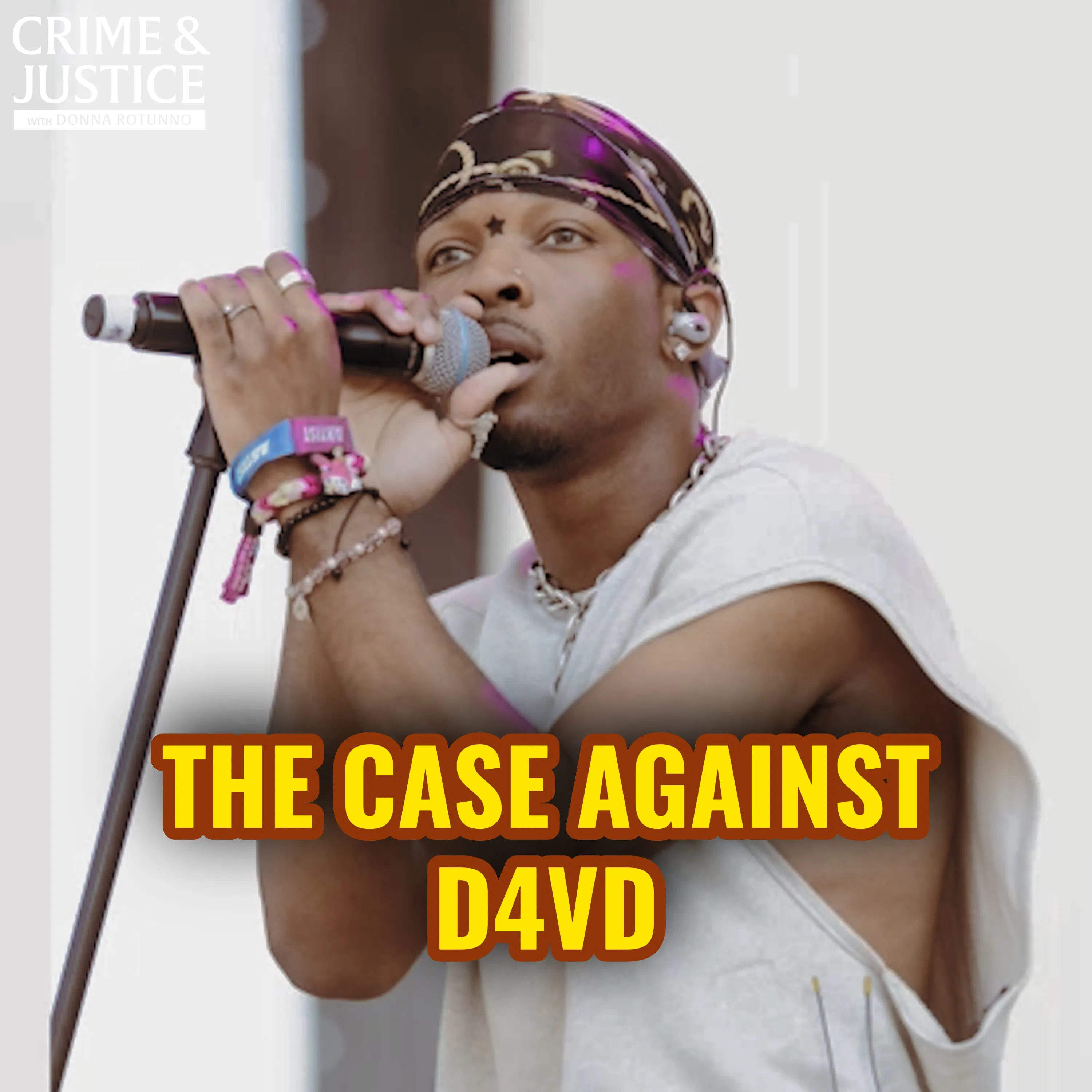
To make it out alive, you must answer the phone. The question is, when your phone rings, will you answer? Tap the banner to play Unhinged now only on Netflix. This is Crime and Justice and I'm Donna Rotuno. A rising TikTok star in the music industry is now facing a murder rap after a 14 year old is found dead in the trunk of his Tesla. David Anthony Burke, AKA David, who is presumed innocent of all charges he he faces, is going to be having a crucial preliminary hearing in July. We want to warn you, today's episode will contain details that are very difficult to hear. Retired LAPD detective Moses Castillo will join us shortly. But first, let's go to Matt Finn, FOX News Los Angeles correspondent. So, Matt, bring us up to speed on where we are in this David Anthony Burke, AKA David case. Tell us what the latest is. What' on. I know there's a preliminary hearing coming up.
- [01:28]
C
Yeah, there is a preliminary hearing in a few weeks. And this is one of those cases that people have been talking about in LA for a while. Just so monstrous and heartless. So David Anthony Burke, known as the artist David, he has been charged with murdering a 14 year old girl, Celeste Hernandez. The details are heartbreaking and gruesome. Investigators say David was 18, Celestial Celeste was just 13 when they allegedly started their romantic relationship. They actually met a few years prior on the online platform Discord, when Celeste was only 11 years old. Now David was an established up and coming music artist, a multimillion dollar career. He's commonly known by his stage name, David, which he spells with a 4 instead of an A. And Celeste was first reported missing by her family in Lake Elsinore in February 2024. That's south of LA. And at that time, the Riverside Sheriff's Department gets a hold of David using phone records. Police even go to David's upscale Hollywood Hills house to question him. But David claimed he didn't know Celeste was a minor or where she was at after that initial encounter. Two days later, Celeste returns home to her family. Well, investigators say David then pays one of Celeste's classmates $1,000 to deliver a cell phone to Celeste so they can stay in touch. From there, the relationship continues. Celeste and David travel to Vegas, London and even Texas to meet David's family. Now fast forward to April of last year. David is preparing to release a big studio album in a few days. But court documents say Celeste and David are arguing over text message. Celeste is upset David is seeing other women, so she threatens to make it public that he has been in a relationship with the minor. Well, David invited Celeste to his home in the Hollywood Hills, and she was never seen again. David allegedly murdered Celeste, stabbed her, dismembered her body in his garage. Investigators say they have evidence that David purchased items online, like chainsaws, cadaver bags, and an inflatable pool. David allegedly dismembered Celeste in the pool. He then stuffed her body parts into bags and that he then placed into the front end trunk of his Tesla. He also allegedly amputated Celeste's left ring and pinky finger because his name was tattooed on her ring finger. Those fingers were not found. Now, David let his car just sit with the body parts inside for weeks or months. He left town to promote his new album, and at one point, he returns home to la, drove his car a few hundred feet from his garage out onto the public street, and it was towed to a lot. And eventually someone at the lot complains, reports flies and a rotting order. And that's when police discovered the body last September. He is charged with murder, sexual abuse of a child, and mutilation of remains. He has pleaded not guilty. Now, if convicted, he faces life in prison and possibly the death penalty here in California. But Governor Newsom has placed a freeze on capital punishment here in California.
- [04:29]
B
Donna, Wow. I mean, the story's just really. It's so sad and yet captivating at the same time. And to see these two young lives just completely, you know, one snuffed out and one completely ruined is really quite something. Matt, thank you so much. I appreciate it, as always.
- [04:46]
C
Cheers to America's 250th birthday. Get 20% off your first purchase at Fox News wineshop.com with code FNRADIO20. 20% discount. Excludes wine club offers and cannot be combined with any other promotion. Expires July 31, 2026. Must be 21 or older. To order. Please drink responsibly.
- [05:02]
B
So now let me bring in retired detective Moses Castillo. First of all, the fact that this relationship, long as it did, and the fact that this young girl just couldn't. Couldn't be protected, right? She couldn't be protected from this man who was too old to be dating her. She couldn't be protected from the family who was clearly trying to keep her from him. And, you know, just to hear these things about she's Traveling with him. And is that also a failure of the government who is watching this minor travel with this person? And I, you know, I'm assuming they were flying in on private planes, but still, you know, you're going to London. I mean, they're. They're checking passports. The fact that this was missed by so many, I, I think is quite tragic. Let me start with the motive in this case. Talk to me about what the prosecutors say the motive was in this case. And we're going to get into, I think, some of the issues they may have with proof and why this case is so circumstantial in some ways, maybe not so much in others. But what is. What is the prosecution labeling as the actual motive in this case?
- [06:14]
A
Yeah. Thank you, Donna. And by the way, you and madam made reference to the relationship and being romantic, but I got to tell you, it is a relationship and romantic in the eyes of David and Celeste. But this is not a lawful relationship. It's unlawful from the very beginning, and you're right, people should have been paying attention to this unlawful relationship that this adult was having with this minor, a child under the age of 14. And there should have been some intervention. But the motive in this particular case is the fact that she was about to go public and expose their relationship, their unlawful relationship, their sex abuse. And that was the motive, is to silence her, to kill her so that this wouldn't be exposed. So his motive was to kill her for silencing her, to prevent any public outcry or tarnish his image and also for financial gain, because if his reputation is killed, no pun intended, then he loses tons of money. And those are the motives that they're using as to why. So this is not a crime of passion, but this is a crime that was planned out deliberately and lying in wait. And all those circumstances, especially the lying wait, makes him eligible for the death penalty.
- [07:38]
B
And the lying in wait here comes into play because obviously he lured her to his house to have a conversation about this. He had made, you know, allegedly plans about what he was going to do. He was setting to go off on tour, and he had to make sure that he was going to really get rid of her, for lack of a better term.
- [07:59]
A
Absolutely. The fact that he ordered an Uber and, you know, had her transported from her place and Blake Elsner all the way to, you know, his place. There's ample of time for him to reconsider what he was about to do, but he stayed on his game plan. He stayed on what he had pre planned, and all that goes through premeditation, lying in weight. So as soon as he got in, you know, people are painting the picture that, oh, maybe they. They had one last rendezvous. We'll never know. And that's one thing. This is not just a story, Darna. This is a real life experience that Celeste lived through, a horrible experience. And when we think about the graphic nature of what she went through, I'm. I'm heartbroken.
- [08:45]
B
Yeah, it's absolutely awful. And when was she first reported missing versus when the Tesla was found towed, and then obviously, several months later, this body's discovered in the Tesla. So kind of walk us through the timeline a little bit, and then I'm going to go through that with you kind of piece by piece in terms of what the police do on an evidentiary level.
- [09:10]
A
Well, as you heard earlier, they actually met as early as age 11. And that's when the grooming process started, I believe. And the grooming process wasn't just only on her. The grooming process was also on the family. So many people are putting some blame on the family, but when you look at the lens of a perpetrator, the grooming process is to build enough trust, not only on the victim that they're targeting, but the victim's family. Because if they could get the trust of the family, that's how he's going to gain access to this child and then get her isolated from the family and in turn commit these crimes of sex abuse. And from there, you know, it could have been groomy. Could be, you know, gaining the trust by saying, she's so beautiful. You know, I'm an artist, music artist. I could make her famous. She's a beautiful singer. She has a beautiful voice. I mean, just, you know, build her up, build her self esteem up and gain the trust and maybe even give her some gifts, some monetary gifts to her and her family. That is to build the trust. And eventually that trust allowed the family to give access to Celeste and isolated from the family where he committed his evil deeds. And so it starts there as early as age 11 and then 13. She reported missing over a year ago. And the initial response was, they located her. The family said, hey, I think she's with David. So the police know where to go. They find them, and within day or two, she's back home with the family. But then again, it reaches out again and starts that whole process all over again.
- [10:46]
B
And when you think about the fact that, okay, so the family, she goes over to his house and this date, what was it, in April? Right. So. Or no, no. When. When was she first. I know they don't find the remains till September, but when does he leave to go off on the tour? When are they claiming that the actual murder would have taken place? Because she was originally. I think it was April. Correct. Was April 2022 or 2025. Sorry, April 22, 2025.
- [11:18]
A
Right. April 2025. The third week of April. I believe that's when they alleged that the offense of murder occurred. And so that was the point where she. They found digital evidence. And by the way, this digital evidence is overwhelming. We haven't even touched on the child sex abuse images that were found. But the digital evidence here is going to tell the story. And I got to tell you that under the law, you're allowed to present either physical evidence to prove a fact or to prove a crime and. Or circumstantial evidence or a combination of both. And they both carry the exact same weight as far as the value of the evidence. And I believe think of it as this big puzzle. And every piece of the puzzle, once they put it together, connect the dots, connect the pieces. Every time a piece is connected, it's showing David's face. And at the end of the conclusion of the case, when they put all the pieces together, we're going to see the person's face of the person responsible. That's David.
- [12:24]
B
So she goes missing, okay? She goes missing in April, and he puts out this new album. Okay, we're going to get into that album in a minute. I want to talk about song lyrics and things like that. But he puts out this new album, he goes out on tour, and it's not until July that his car is parked. Correct. So there's this period from April to July where nobody's really sure what happened here, where this body may be. So he. He parks this car, he leaves the car ends up getting towed. The car goes to a tow lot, and once it's at the tow lot, the car is towed. They find remains inside the front. Inside the front trunk of the Tesla. So once, you know, police are obviously involved when the family reports that she's missing again, police obviously are aware that a car is towed. So talk to me about what that investigation looks like and what's happening during this period of time from April until September when that body's actually discovered in the Tesla at the tow yard.
- [13:34]
A
Well, during that time frame, too, we're dealing with the high amount of temperature that it was. It was hot. And so that actually increases or accelerates the. The decay process of human Remains. And so here we are. And it creates challenges for the prosecutor, but as soon as they find this remains in the front of this Tesla, it begins a crime scene investigation. That vehicle becomes a crime scene, and then they take it, and they start looking at the digital evidence. Teslas are wealth of information when it comes to digital evidence, Whether it's video, the analysis of when the car is open, the doors close, the engine is on, the travel, Everything, I mean, everything is. Is documented really well as far as digital events is concerned. So they're looking at that, and then they're trying to identify the body. But, yes, knowing when they run David and they run his name, they probably will have a connection. He was connected to this missing persons report out of, you know, Riverside County Sheriff's Department. And then potentially start connecting the dots. And then they find the missing person report that was documenting that Celeste was reported as a missing person. And so they began to connect the dots, and now they have to work backwards and create a timeline who was there, who was involved, and kind of go from there step by step. And then once they find a true confirmation that this was Celeste, then they really started digging even deeper and trying to look at all the evidence. So David was a primary suspect from the very beginning. I remember when LAPD would not commit one way or another, if David is a prime suspect or not. They wouldn't even list him as a person of interest, but as an investigator, someone who has investigated crimes against children and adult victims and sexual assault victims. My youngest victim I ever investigated was just six weeks of being born and 92 years old of a sexual assault and everything in between. So I've seen it all. And. And. And so these are very difficult cases, but not impossible to solve. And in this case, everything pointing towards David, and eventually it took a long time to put the case together because no prosecutor wants to prosecute anybody until their cases, they're tight, and then they're ready to make the arrest and file criminal charges.
- [15:59]
B
Let's talk about some of the challenges that you do end up having with physical evidence, not only because of the decomposition and the period of time that went by, but you're talking about chain of custody issues here, too, in terms of who had access to this car. We know that it was parked. We know that it was towed, but once it's at the tow yard, you don't know who goes in and out of that car. I mean, isn't it. I found it strange, and correct me if I'm wrong, maybe it happens differently in Los Angeles. Than it does where I. I'm in Chicago. But normally when they tow cars, they search cars incident to tow, because they. They want to make a list of what was in that vehicle at the time. So when the owner may. May come back and get that car, they can say, well, here, this is what was in the car at the time. And so is it strange that that car was towed and it was never, you know, once, you know, that you never went into the car to. To see what was in that vehicle, is that strange?
- [17:00]
A
Well, that's a very good question. And I'm not. I'm not sure what the source of the initial towing was. Sometimes there is a thing called, you know, a private person tow or somebody maybe was, you know, in a block in somebody's driveway or somebody private. Or if it's. If it's the department of transportation in Los Angeles that they tow it, they might do a cursory search of the. Whatever they have access to open. But if they can't, if they are not able to open the door to do the inventory search as. As we would call that an inventory search, then we would just have to tow it as is. Then just document that we were not able to open the vehicle, therefore, no inventory search was done, so that later they're not accused of anything missing because the document, we were not even able to open the vehicle to do that. And so I think that's probably what happened here, because obviously, had they done the inventory source, to your point, they would have discovered Celeste remains sooner than later.
- [17:58]
B
And, you know, we don't really know. I mean, they. They have said that her cause of death was, you know, severe puncture wounds, which obviously sounds like stab wounds. But I think it's very difficult for them to make any other real determinations given how, you know, dismembered and decomposed this body was. Have they said when they believe she was actually murdered?
- [18:25]
A
Yes, and one of the things I'm hoping to get some answers to is whether or not. Well, two. Two questions. Whether or not the decomposition of the body will somehow limit the ability to check her eyes for evidence of petechia. Petechia is when there's. Your eyes lose oxygen because you're being strangled and the blood vessels explode in your eyes. That would be evidence of someone being strangled and losing oxygen. And so we will see evidence of petechiae. Whether or not that's compromised with the decay process of the body, I'm not sure that's something for a pathologist to a forensic pathologist to answer that question. But I'll be curious to know, because I, I do believe David was trying to dismember the body to kind of get rid of some of the evidence. But one thing he didn't think of was the eyes. And I'm hoping, I believe that the eyes could tell part of the story and maybe she was strangled before he did the evil deed. Nonetheless, it was, I, I, I, I wouldn't be surprised if it's very gruesome, very violent. And, and I noticed that in the complaint that was filed, there's some wording that the, that the prosecutors wrote that he watched her die, that. Wow. I think the only way they probably know that is maybe David was crazy enough, evil enough to videotape himself doing this crap. As you know, a lot of these music videos have very graphic details and visuals of violent murder scenes. And maybe he was relieving that.
- [20:16]
B
No, I guess what I, I guess what I'm also wondering here is, I mean, they believe that she was murdered on April 23, 2025. But I guess I'm trying to figure out if there's a way that they can prove that. And I guess that's one way that they can try to do that. But I guess then my question becomes, we're talking about April all the way to the end of July, when this car was parked with her remains. Where would he have kept these remains for all of these months between April and July? That's a long time to keep, you know, decompressing remains. And I know that there was a search warrant to search the home prior to David's actual arrest in this case. And have we been told whether or not anything from that search maybe answers the question about where these remains were kept from this period of time, from potentially April all the way to the end of July?
- [21:14]
A
Yes. So police officers and detectives, once they serve a search warrant, they have to do what we call a return search warrant document. So it tells the court what were the items that they found in this home and describe where and how. And, and, and so oftentimes that is included in the search warrant affidavit altogether. And, but I believe that's under seal at the moment. So at this time, we don't know those details just yet, but we'll learn sooner. You know, we'll learn them as, as this court process moves forward. And, and that will be very telling as to how graphic this was, but another circumstantial, a piece of evidence as to why they believe it was that date. That's also the date that her cell phone just goes dead.
- [21:59]
B
Got it.
- [21:59]
A
There's no more activity on herself.
- [22:02]
B
Well, that's huge.
- [22:02]
A
Yeah, that's why they're able to add right now.
- [22:06]
B
Let's talk about the, the digital evidence here. You kind of touched on it a little bit that there's a trove of digital evidence, whether it's from the Tesla, whether it's from the phones, whether it's from computers. Talk to me about the types of digital evidence that they have recovered here. Obviously, communication between the two of. So let's, let's look at those, those kind of pieces of the puzzle and how those are going to fit in.
- [22:28]
A
Right. So during the pro because hearing that was in the middle of being presented to a judge, and it's a hearing for the judge to determine whether or not there's enough probable cause to hold this defendant to answer the charges that he's been, that he's been charged with. And during that process, prosecutors began to share that there was some child sex abuse material images that were found in David's digital evidence, whether it was a cell phone, computer, whatever the case may be. And it's described as over 40 terabytes of digital evidence of this material. That's a mountain of video that's roughly like 10,000 hours of HD video equivalent to 416 days of non stop video footage. Can you imagine that? I mean, that's, that's huge. And in my experience, anybody who is in that evil, perverted, sinful, criminal way of collecting this material, this child sexual abuse material formerly known as child pornography, they're not only into collecting this material, but they're into actually doing the acts of molesting children. And so this is why this is so important, because this is going to help them prove the loot acts upon a child charge that he's also facing. And I think they may also may have found something that Celeste detailed in her text messages. Maybe she had a diary or journal, who knows? But maybe she articulated enough information that they have enough information to charge them for lacks of. Upon a child under the age of 14. And that's the least of his worries. But this was damning video evidence that the prosecution was disclosing to the court and to the public. That's why his defense team pushed the pack the panic button and say, hey, your honor, can we ask for a continuance? Because we weren't expecting this.
- [24:38]
B
I mean, he has a good team of lawyers. I've worked with one of them before and they, they know what they're doing. So he will be represented. He'll have his day in court. He'll. He'll get his due process, as he should. But let me talk to you about the song lyrics. So he comes up with this new album. The new album is released right after she is believed to have been murdered. The album comes out. There's lyrics as part of these songs that could potentially go to motive, state of mind, the nature of the relationship between the two of these. What are, what are the odds that a court would allow those lyrics to be entered as evidence and, you know, conclusions made from those lyrics?
- [25:24]
A
Well, I think in this particular case, I think a court will allow it. I am familiar with a particular case where lyrics to a song were introduced and later that was used to kind of overturn the conviction. So I think in that particular case it's still going through the appellate process. But in this particular case, it's specific. Unique to this particular case because of the type of lyrics. So similar in nature to the crime he committed here or is alleged to commit in this case, very similar. And so I think the prosecutor, even if they don't introduce it, I think it's still. Evidence is way overwhelming. But I think they are going to do their very best to introduce it as evidence. And I'm sure the defense will argue not to be admitted, but we'll see. But I think in this case the judge would be correct to allow this evidence to come in.
- [26:22]
B
I think you're right. I'm familiar with that case too. In the past where this has been an issue, but here I think not only the nature of the lyrics close in time to the murder. I also think what's really relevant here is the financial gain aspect because the. The timing of the album being released, her threats to him. I think all of that coincides with exactly what was going on here and that those. Those lyrics would be more prejudicial or, excuse me, more probative than prejudicial. And therefore a court in weighing may. May let him in. So, you know, we'll see. It's almost like if you had a confession in a diary, you'd be able to. To of that would come in as evidence. If you were sitting in front of a detective and you made a confession that would come in as evidence at this case, the lyrics kind of being the same. So we'll see what happens. But I think that's going to be a really interesting evidentiary issue and we'll see where that goes. So they find these rem and to
- [27:23]
A
add to that, I think Go ahead. No, I was going to say. And if. And if you had the timing of his release of this, of these lyrics, to your point, it's close in time. He had the opportunity not to release him, but he did anyways. What does that tell you, right? That he. He really didn't care. He really thinks he was above the law and he could do whatever he wants and just shows how evil, perverted he is that he doesn't even care. And. And he's very narcissistic. So. And you know, we've seen this before. This is not the first time we see these murderers behave this way. It's not surprising.
- [28:01]
B
Yeah, you're. You're absolutely right. Let's talk about the fact that, okay, so they find the remains in September of 2020, get arrested until April of 2026. What's happening in this investigation? Because it would seem to me that you already have a lot of information. You know, that they have been together. You have the digital evidence, you know that they were in communication. The family's able to tell you that, you know, that she goes missing, you know that this car is disposed of, and then you finally find these remains. Why does it take from September to April to place David under arrest? And on top of that, why is he not. Is there not an indictment at the time that he is picked up?
- [28:48]
A
Well, I think it's a strategy on the prosecution and law enforcement officials. And by the way, this investigation was conducted by the LAPD's Robbery Homicide Division, which is the elite team of detectives. And they handle all the high profile, complex cases that get media attention. And they work closely with the prosecutors assigned to Major Crimes Division. And Beth Cran, Beth Silverman, the prosecutor assigned to this case, she is tenacious, brilliant lawyer, and way she handled the, the grand jury process, the hearings was like, brilliant. I mean, I mean, everything worked out. And I think one of the reasons why they wanted to use that process to be able to, one, keep the hearing private, secret, and second, they wanted to use the subpoena power to get people in there to testify and lock them into a statement. Why they chose not to allow the grand jury to issue an indictment, I'm not sure, because it would have been. It would have gone straight to a trial instead of doing a probable cause hearing. But again, the outcome is going to be the same. Sooner or later, the facts were going to come out. So maybe they just wanted to encourage others that may be victims of his 288ludaxa quantile to come forward because somebody like him And Celeste already made reference to it in her Technosys. I would not be surprised if other victims come forward and say, by the way, I was 13 when he did this to me, or I was 14 or 15 when he did this sexual stuff to me. And I think they're going to come forward. And I think by doing this publicly, it might give that courage to those that are afraid to come forward, not say, okay, well, I think they have enough good evidence, but I wanted to be held accountable for whatever he did to me. And then it's probably a vessel for them to use to reach out to those people that have not come forward yet.
- [31:02]
B
Sure. And if anybody's fearful thinking that, you know, you were in a consensual relationship as a minor, there's no such thing. And so, as you said originally when we first started talking, these are illegal relationships from the beginning, but it's illegal only on his end. So if you are, if you are a minor, you are not in any trouble. And if you are somebody who's been a victim of this, you should absolutely come forward and talk about it. I know that we talked about the murder with special circumstances and, and what that means here, but in terms of the penalty, the special circumstances does raise it to life in prison or the death penalty. We know that Newsom has put a moratorium on that death penalty, but the, the penalty here for David, if convicted, would be life in prison, is that correct?
- [31:50]
A
Yes. Life without the possibility of parole would be an option, and worst case scenario for him would be the death penalty. But as you mentioned, the last time there was an execution in California was over 20 years ago. So I doubt it that's going to happen. But that's will be beautiful music to everyone's ears. You know, you've been sentenced to death for what you did to Celeste.
- [32:14]
B
But I mean, if they, if they prove these allegations. No doubt. And what I really want to talk about, too is what they found ordered during the time they believe that this murder took place. Shovels, saws. Talk to me about those Amazon orders that he ordered through what they now can determine were fake accounts or, you know, dummy accounts that he set up. Talk to me about that evidence and why that evidence is so damning to him.
- [32:45]
A
Yeah, so he purchased these items under a fake name, by the way. A shovel, a body bag, heavy duty bags, two chainsaws, inflatable. Inflatable pool, and a bird cage. Wow. Who needs a bird cage in their home? That, that was just to, you know, and I'm only speculating on my end. But he was so connected to Celeste that even post murder, he still wanted her. That's why he never really got rid of the body, because he just. He had that emotional connection. And people always say, how is that possible? How stupid can he be? Well, they don't think once they do the evil deed, and they still. So I'm only speculating, but I believe his intent was. Once he cremated her remains in this birdcage, he was going to keep her ashes in her urn, and that would. That was going to be his. His trophy, if you will, or constant reminder of, you know, reliving his evil deed that he did to her. So that is. That's. That's gonna come out. And I know that there was a talk about, you know, everything happening at his place of residence, and I. That's where they found these items still. And so. Yeah, and. And when they did their. Their full crime scene investigation from, you know, every inch of this property, I'm confident that they probably found some blood evidence that helps tell the story.
- [34:16]
B
Do you think that he acted alone or if there was somebody else involved?
- [34:21]
A
Well, all indications is that he acted alone in the process of the murder, but afterwards, there might be somebody. There might be some people on the hook for accessory after the fact. I wouldn't be surprised if that comes into play. Or maybe. Or maybe some people were already given some sort of, you know, limited immunity kind of thing. We'll soon find out. But I do believe that there might be accessories after the fact. And then, if you remember, once his name started, you know, popping up more and more and connecting them to her disappearance. And now. Now that her body was found, you. You heard reports of him transferring many of his properties to his mom's name, which clearly shows that he's preparing for any civil litigation that he may be facing in the future. And by the way, that would be considered a fraudulent transfer anyway, so. But yeah, so I think that goes again to consciousness of guilt and part of the century after the fact that
- [35:24]
B
I know that there's a mountain of evidence, circumstantial evidence that he did this. And I. You know, I would agree by looking at it. I'm wondering, though, I mean, we just saw a jury in California not be able to make a determination about the fires in California. And. And that was very much circumstantial as well. So I'm wondering if you think that there's any fear on behalf of the prosecution team where they're looking at this and saying, we think we can prove he dismembered this body because of everything he ordered. We think we can prove that, you know, he did all this for financial gain. But do you think that there's any issue there where they're worried about a proof problem when it comes to the actual murder itself?
- [36:07]
A
None whatsoever. Knowing the prosecution team involved in this case and knowing from past experience, when I would present a case to the DA's office for their filing consideration, they would always send me one of three answers. Yes, we're going to file. No, we're not going to file, or I need you to do some more investigation. And I think they already did the more investigation. And when the k. In the times where they would tell me, moses, I. I believe the victim. But we're not going to be able to prosecute. We're not going to file because I have a legal and a moral obligation that if I, as a prosecutor, don't believe that I could prove this case beyond a reasonable doubt, then I must not file this case. So having said that, the fact that they filed it is because they have no doubt whatsoever that they could prove this beyond a reasonable doubt to a jury.
- [36:56]
B
Well, I hope that's true. Given what we see here, I think any other young women out there that may have been victims should come forward. I hope there is justice for Celeste and her family. And I can't thank you enough for joining me.
- [37:09]
A
Thank you, Donna. I pray that if you're listening and you're watching this and you're feeling that, that tingling sensation, don't ignore it. Pick up the phone, call lapd. Call your local advocacy center, Great Crisis Center. They're there to help you every step of the way. You don't have to do this alone, but there are resources available for you,
- [37:30]
B
and we will be watching. July 21, I believe, is the preliminary hearing date to see what comes out of that. And I have no doubt this case will proceed to trial. So thank you so much again. Thank you for joining me for another episode of Crime and Justice. Remember, we want to hear from you. Send us your thoughts, questions, or theories, and we will answer them on air.