← Crime & Justice with Donna Rotunno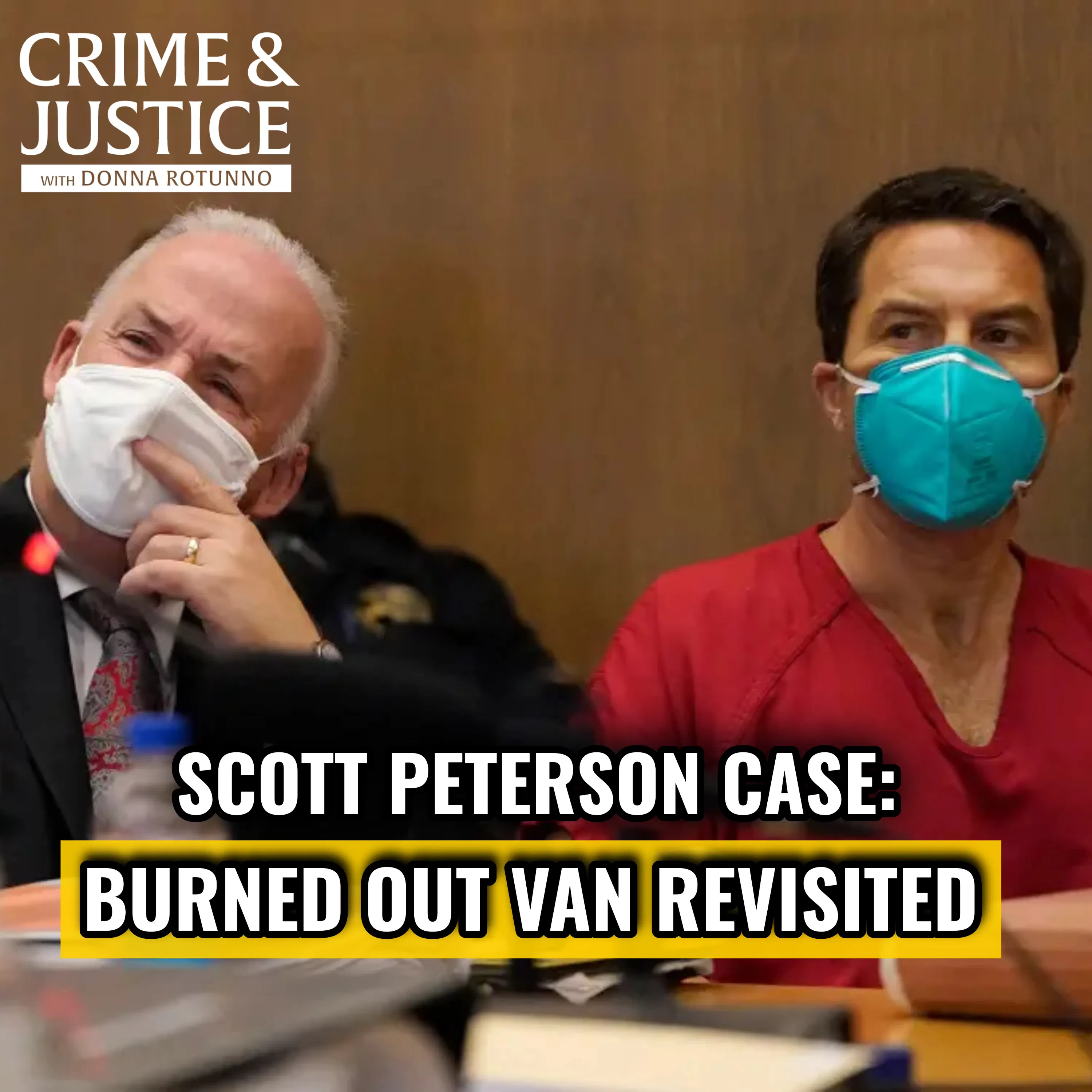
Crime & Justice with Donna Rotunno
Scott Peterson Case | Defense Attorney Floats New Evidence
00:40:27
Loading summary
Transcript46 lines
- [00:00]
A
This is Crime AND Justice. I'm Donna Rotuno. A new docu series on Scott Peterson is raising fresh questions about one of the most infamous trials in modern history. This after a judge rejected all 14 of his claims earlier this year. Today, Scott's defense attorney, Pat Harris, joins us to break down the new claims and what is next for the defense. If you love breaking down these cases with me, Scratch, send me an email with your thoughts, theories and questions, skdonnaox.com and I will answer them here each week. Joining me now is Pat Harris. Pat, welcome.
- [00:38]
B
Thanks for having me.
- [00:40]
A
Well, Pat, I'm so thrilled to have you to talk about Scott Peterson, the case that never seems to leave the true crime. I don't even know what you'd call it, the outer space of true crime that seems to never go away. So I want to talk about Where We Are are now with Scott Peterson. In light of a new documentary coming out in light of the LA Innocence Project and the work that they've done, the fact that the judge has denied, I think it's now, what, 14 different requests to review what, what the defense claims is new evidence. So let's break it down today. Let's go through it, and let's talk about how the current evidence from what the Illinois, excuse me, I'm in Illinois, the Los Angeles Innocence Project. Talk to me about what they have uncovered and how you think that could change the possible future for Scott Peterson.
- [01:43]
B
Well, what they've done and they've done a fabulous job, what they've uncovered is a number of different areas. It starts with the burglary that occurred, which they've now been able to show and can prove occurred on the 24th, December 24th. Modesto police kept saying during the trial it occurred on the 26th after Lacey had disappeared. But in fact, the new evidence shows that it did, in fact occur on the 24th when Lacy did disappear on that day, in fact, that morning. There's also new evidence in terms of the doctors there. The doctor that testified at trial for the prosecution did this femur measurement to show the age of the baby. And there was a scientific sort of formula you could put together to show approximately within a few days of when the baby had died. And his testimony was that the baby was dead sometime between December 24th and 28th, which, of course, could make it so that Scott had, in fact, killed Lacey. There's new evidence now showing there's a new scientific formula that is more exact, showing that, in fact, the measurements now show evidence that the baby was alive. Until January 1 to January 8, somewhere in that time frame. And that's scientific evidence. That's not just somebody's thought process. There's new evidence in terms of the currents and what was going on at the time of Lacy's body being in the bay at the time. They put on a witness who essentially said that the way the currents were set up, that it's exactly correct, that where he dumped her body, where they said he dumped her body, that she would wash up where she did. As it turns out, that was incorrect as well. They've got new evidence in terms of experts on that. So there's a number of new areas. It's not just one or two things. Plus, and this is something that I've been working on the last two or three years with my investigator, and there are witnesses who are coming forward now talking about that they were, in fact, they have spoken to the people who were involved in Lacey's murder, who are now talking about it and giving details of what, in fact did happen that day. So there's a lot of different things going on.
- [04:11]
A
So we know that these things have been out there, and we know that Scott was back in court fairly recently asking for a new trial based on all of these issues that now we're going to talk about today. And the court has denied him. And I know that the Innocence Project has said that they're going to take it to a higher court. Why did the court deny these issues, given the fact that they do seem to be fairly new? And the court is saying, no, these are things that were available to the defense at the time. So kind of talk to me about that, because I think it's tough for people to understand when you hear these things and you think, okay, well, if there is new science or there's a new way to determine things that wasn't available 22 years ago, why wouldn't the court allow the defense to explore that? And so talk to me a little bit about that.
- [05:02]
B
Sure. It's very simple. In California, judges are elected. Superior court judges are elected by the people. There is not a judge in California alive. I believe I shouldn't say that. That's a little bit of an exaggeration. But there are a handful of judges in the state of California who are ever going to overturn Scott Peterson's conviction. You overturn Scott Peterson's conviction, you're going to lose your election if you that simple. And there's no judge who's got that kind of courage or very few that do. I never expect any superior court judge to ever overturn it. I never expect them to do anything positive for Scott Peterson because it essentially means they're going to lose their position. Now, appeals courts are different, as you know, and the Supreme Court is different. You now have judges who are not elected in California, and they have a lot more freedom. And that's where we expect to see something. Some of the things that have been uncovered, that they will in fact be explored and that they will allow Scott, or we believe they will grant Scott a new trial. And I think it's that simple. We've always known, the LA Innocence Projects has known, we've all known that a state court judge in California is not going to wade into the Scott Peterson thing.
- [06:17]
A
Let me talk to you about this burglary, because I think the burglary is something that we all look at and we think that should be very easy one way or another to determine what date it happened. So if throughout trial, number one and for the last 20 plus years, we have been hearing about this burglary that happened at that house on December 26th. I've had detectives from this case on my show talking about the fact that this burglary happened on December 26th. Wouldn't there be police reports? Isn't this an easy thing to resolve?
- [06:54]
B
Well, you know, what happened was they arrested, they found out two of the burglars, and there were many more than two, but they ended up arresting two of the burglars. And the burglars just said, oh, yeah, we were there the January 26th. And they just wrote it in the police report as if that was gospel. They did no investigation. They did nothing to try and disprove that. They just took their word for it. There were some things in the police report that were interesting, but because, for example, one of the burglars, when they asked him, well, why did you break into the house? He said, well, I needed to get a Christmas present for my son. Well, you don't get a Christmas present for your son on December 26th. But beyond that, there were other things that were just.
- [07:34]
A
Well, you could, you could, you could, you just maybe didn't have custody of his son. Maybe he wasn't with his son on Christmas. But. Yes, yes, go ahead.
- [07:43]
B
It would be unusual, let's put it that way. There were things like a safe that was out in the front yard. And on the 26th, the entire street was covered with reporters and people with cameras. And as far as, I mean, you've seen, I think you've even seen members of the Media who have stated on the record that they were there even as early as 3 or 4 in the morning. And if somebody had brought a safe out on the 26th, they would have certainly seen it. That would be an impossibility for anyone not to have seen it. But beyond that, for example. I'm sorry, if you wanted to.
- [08:19]
A
No, no, I was gonna say that fact. The fact about, you know, so many. Cause we know how much news coverage this case got. You and I talked about it before we got on air. The fact that, you know, this case was just something that took fire and it was everywhere, and everybody was talking about it. So I think the best argument there, in terms of the date, if it can't be resolved, has to be the fact that you had all of those media trucks outside. And, I mean, you can't look at any coverage without seeing the fact that that street was covered in vans and media people and everybody out, every journalist with a microphone. So to me, that's probably the most compelling argument on that, on that front, because, like you said, where are they going? Where are they taking things out of the house?
- [09:06]
B
Well, there were some other things as well that have come up now, and we've learned, and it's now been admitted that the Modesto Police Department took the file, the criminal file. Now, keep in mind, this occurred in December, and there was a plea from the two burglars, and they had a file on them, including lie detector tests, including other statements. And this, again, this has now been verified the day Mark Garrigus was hired, that our firms took over. They destroyed the file. That's very unusual. You can talk to any police detective in any department. We know there are appeals. We know there are all kinds of things. To destroy a file that quickly is almost unheard of. We also know that we were not provided in discovery all the lie detector tests. We were told he passed a lie detector test that one of them did. As it turns out, there were at least three of them, and we weren't provided the other two. So we don't know what happened in the other two and how this occurred. But beyond that, we now have at least three and perhaps even a fourth witness who has come forward saying they have talked to people who were there present at the burglary, and they've been given descriptions of exactly what happened. That Lacy Peterson, who was known to confront people in her yard and the street, came across and started confronting them because she knew the family was on vacation and started yelling, what are you doing? Why are you there? Get out of the yard. And these people have said that the burglars told them, look, we panicked. Sorry. We didn't know what was going on. We hit her over the head with a rock and threw her in the van and took off. And this has been relayed by two different people who were present to three to four different witnesses. Now, I need to be very clear on this, because I don't want to mislead the two people. The two burglars, they haven't confirmed this to us, but the people they've told have. And I've actually interviewed three of them myself personally, who said they were these people, have told them the story. And it's almost word for word. Each different witness has the exact same account.
- [11:23]
A
Well, wasn't there some jailhouse phone calls having to do with these burglars?
- [11:30]
B
Well, I gotta tell you that, Donna, that's probably the single most frustrating thing in the case. We were given discovery, and it was. I can't even begin to tell you. There were thousands of pages, because everybody in the country was giving tips. You know, I saw Lacey in Alaska or, you know, have you checked this? Or whatever. And we were going through the tips. Even as the trial was going on, we were still going through them. We came across a tip from Lt. Aponte, who worked at Norco facility. It's a prison down in Southern California. And he had called Modesto police and said he had intercepted a call on tape, basically between a brother who was in custody, a brother who was not in custody. And they were talking, and they started talking about the Lacy Peterson thing, to which the one in custody finally said, just shut up. You know, we can't talk about this. So he contacts Modesto police and supposedly gives them the tape. And at this point, we see this tip. We send our investigator down to talk to him. He's very cooperative. He talks to the investigator, tells him exactly what happened, tells him that he turned the tape over to Modesto police, he believes signs a declaration under penalty of perjury on all this. Again, he's being very cooperative. We turn that over to the court during the trial, Modesto police go down and visit him. And all of a sudden, he changes his tune. He turns 180 degrees, and he's now mad at us. And he's saying, oh, we forced him this. We twisted his words. Well, he read that declaration. It was the words he used. He signed it. And we know from him he gave that tape to Modesto police, which the Modesto police denies. They say they never had it. So they've either kept it somewhere or destroyed it.
- [13:30]
A
So, I mean, obviously, if you're a police officer in this town, you want to solve this crime. She was missing for a period of time before her body turned up. And, you know, it was, as we talked about, such a huge story. But if they had possible evidence of something or someone else, why do you think they were so focused on Scott Peterson? Because if the main goal is solving the crime, who cares who did it? Right? Because if you can solve it one way or another, or you believe that you have enough evidence to lead you down another path, why do you think then they were so hell bent on it being Scott Peterson?
- [14:07]
B
Well, it's interesting. That's a really good question, because if you look at the tape the night of her disappearance and Scott Peterson being interviewed, he was interviewed by Detective Al Brokini. And you watch the interview. Now, this is an interview of a husband whose wife is missing. You can see from the interview almost immediately they believe Scott killed his wife. And the interview from the very beginning is very, and I understand interviews sometimes have to be confrontational. That's one police tactic, as it should be. But this was an interview that was clear that he believed right off the bat Scott was guilty. I will say there was also. There was always this sort of overhanging thing in the trial that really bugged me, which was that the police department, in their sort of discussions and even in some of the writings, sort of referred to Scott as this. Oh, he's a spoiled rich kid. And these are detectives in a small town of Modesto who, you know, they've, in many cases there may not have gone to college or they may have not have. They certainly aren't on the golf course playing golf like Scott does. And there was from the very beginning, there was this attitude, oh, Scott's just a frat boy. He's just a, you know, he's one of those. He's out on the golf course frat boy. I'm sure he killed his wife because he's just that type. Type thing. So from the very beginning, you saw that they felt he was guilty. Now, there was one thing that Scott did that I also think contributed to that because they asked Scott to take a lie detector test that night, and he agreed. And so they set it up for the next morning. And he gets on the phone with his father, and his father calls an attorney, a gentleman there named Kurt McCaskill, Modesto. And Kurt McCaskill got on the phone and said, tell your son he has not taken a lie detector Test, period. So then Scott, after telling him, he would then turned around and said, I'm not going to. And it was on the advice of counsel. So I think that also sort of led them to believe that maybe he was hiding something. So I will say that also contributed to that.
- [16:29]
A
Yeah. And I think obviously the affair. And you know, we'll talk about that in a second. But let's go back to a couple things from the burglary that I think were not talked about much in trial. Number one, and how you think that might affect this. What about this burnt orange van and a bloody mattress? Now, were they never properly tested? Were they never properly inventoried? Talk to me about that and how critical that evidence could have been and why it wasn't handled differently in your opin.
- [17:02]
B
Well, let me go back for just one second because again, what we know now, a particular reporter who I believe is writing a book about this, has done a lot of investigation and determined that there was in fact a van stolen from a particular business that was a little bit of outside of Modesto, and it turns out it connected to the one of the burglars. So he discovered that. And that led us later on then, after that was discovered, to go further down the road on this burnt van. Because what we were given originally were just black and white photos of the van and then told that it was not available. But we were shown black and white where you couldn't tell blood, you couldn't see anything really from what we were shown. But we were also told that certain parts were cut out and sent for DNA testing. The problem was what was cut out, the areas that were cut out, and what was actually sent for testing. Because as a part of the new evidence, one of the Modesto firefighters, the gentleman who actually did the investigation on it, he is now testifying basically on Scott's behalf that he explained to them, no, that's not the area you want to cut. You want to cut up here and send that. And they sent the other area and didn't send the area where he told them that this is what you should be testing. So we had no knowledge of that at the time, but we now know that again. And he is actually, he has now signed a declaration and has stated that he believes that should all be tested now. And there is some testing going on currently.
- [18:50]
A
And obviously all of that was impounded. And it's all available in terms of evidence, correct?
- [18:58]
B
Well, when you say all, not all, but yes, there is some available and that is some. There are enough pieces that can in Fact be tested and are being tested.
- [19:10]
A
So let's go back to this idea of the fetal age and this possible timeline, because I think that's really interesting in regard to, you know, possibly giving Scott an alibi. But if we're going to say that Lacy and Connor were potentially killed later, then does that mean it's not the burglars from the house either? Because whether that burglary took place on December 24 or December 26, where was she? Right. Is there any. Any evidence at all that she was held somewhere? I mean, if there are people talking about what they allegedly did here, have they said that they held her and that she was. She was actually killed later? Do we have any information that corroborates that? Because I understand that that's science. Right? But at the. But at the end of the day, science is not perfect either, and it's. It's never an absolute. So are there ways to say, you know, is there some other expert that's going to say, well, no, that's not
- [20:11]
B
really true at this point, There can't be an expert to say it's not true that. That science isn't true, because it just is. I mean, that's the newest, most available, most up to date. What you asked, though, is an interesting question. Where was she during the trial? I got a call saying, come to the Modesto Prison. There's a prisoner here who wants to talk to you. And I went over and met with him, and he told me the story of what happened. He said, my girlfriend knows the people that basically killed her. Here's what happened. She was hit over the head with a rock. She was thrown in a van. They panicked. They didn't know what to do. They took her to this area, this trailer area that's about 15 minutes or so from where she lived, near the airport district. They kept her there, and eventually they just didn't know what to do, so they killed her and dumped her where Scott had been. Obviously, when you hear that from a prisoner, you're thinking, okay, possibly true, but you're not going to make a great witness. Clearly, you take things with a grain of salt. You hear stories all the time, so you take them with a grain of salt. Then, after we started, ended up having relationships with some of these people who did know the burglars. That's the exact story we heard. And one thing that I do think is fascinating is there was so much emphasis and so much reliability placed to the dogs. You know, there were two dogs that went and were released to smell to See if they could find Lacey's scent. Well, interestingly, one of them went to that area where we now later believe that Lacey was. And as they got close, the person said, no. The handler said, no, this is too far. This is way different direction. She wouldn't have been going this way. So they called the dog off. But it's kind of interesting when you think about it, the dog was actually going where these people are now saying she was being kept.
- [22:18]
A
Yeah, that's definitely interesting. And, you know, again, I guess, and you obviously answered it in terms of the political nature of this, but there does seem to be a lot here to at least say, you know, reopen aspects of this for. For at least a hearing or a post conviction petition. So in looking at this fetal age and timeline, if Connor. If they can prove that Connor died after the December 28 date, then that leaves Scott in a position where he would have had nothing to do with this, because after December 25th or 4th, the police basically knew where he was at all times.
- [23:03]
B
Well, no, I do think it's interesting because the witness they put on, the doctor they put on to discuss this, and he did a nice job. He did it. You know, he was very credible and went through the procedure and he used what was. I'm gonna get the doctor's name wrong, but he used what's called the Dr. Mathis formula for doing the measurement. We tried to contact Dr. Mathis and we didn't have any luck. After the trial, they located him a couple of years later in Germany, and they actually sent him. This is his appellate lawyers sent him the testimony and sent him the information, and he came back and he did file a declaration for the appeal, essentially stating that the doctor had misused the evidence that he missed, that he had done it incorrectly. Not intentionally, but he had done it incorrectly. And that, in fact, if you used his formula, it would have shown that the baby was, in fact, alive after December 29th. So that was interesting to begin with. Then, as time moves on, we have this. Actually, the formula has been changed two or three times. It's been made better as we go along. And as far as. I think the last time was 2018, and that that new procedure now shows that it appears Connor was alive at least January 1st. So that's pretty strong.
- [24:29]
C
Cheers to America's 250th birthday. Get 20% off your first purchase at foxnewswineshop.com with code FNRADIO20. 20% discount excludes wine club offers and cannot be combined with any Other promotion expires July 31, 2026. Must be 21. Order to order. Please drink responsibly.
- [24:44]
A
Sure. And new evidence is something that obviously is important, and any new science is important, and it's. It's obviously something that should be explored. What I look back at this case, and I think about the reasons that Scott Peterson was convicted. And I know he was your client, and I've had clients that have been difficult in terms of the way the public perception is of those clients, and, you know, you have to roll with it. But as an outsider at the time, who was a very, very young lawyer, I was a young prosecutor at the time this happened, watching this, Scott Peterson stood in his own way, I think. And, you know, the fact that he was not upfront with the detectives about the affair in the beginning, of course, puts that level of suspicion, suspicion over you. And the fact that you say you're going to do the lie detector and you don't do it, that puts that level of suspicion over you. And then the way that he is still communicating with Amber Fry and, you know, the phone calls, and while he's standing outside of the vigil for Lacy, he's on the phone saying that he's in Paris. And so he sort of paints himself as a liar. And so that doesn't help his cause, especially when your wife is missing and your unborn child is missing. As lawyers, how did you and Mark talk to him about the way to handle the media? Because you were involved at the very early stages, correct?
- [26:11]
B
We didn't actually get involved until about four months. He'd actually been arrested by the time we got involved. But the thing about it was you hit on the key to the entire conviction, and that was.
- [26:25]
A
And the fact that he was in the car with all the money and the blonde hair, that didn't help either. Okay, go ahead.
- [26:30]
B
Oh, that. That I can tell you is. That I can tell you is total bs. That was ridiculous. But, I mean, you know, we can get into that in a minute. But as far as his phone calls, and specifically the ones that were recorded, that's what convicted him. His demeanor with Amber Frye. I understand what he was doing. One of the weird things about this trial is Amber Fry didn't have a television. She may be one of 10 people in the entire United States that didn't have a television. So she knew nothing about what was going on. So he felt like, okay, I need to keep her from talking, because as soon as this comes out, I'm toast and you're Right. In retrospect, he should have certainly just told the police right off. But he didn't. He was trying to hide it. So she kept sort of talking about them getting together. She knew he lived in Modesto, so the whole Paris thing and the being in Europe thing was designed to keep her because she was talking about coming to Modesto. And of course that would have, you know, caused a problem. So he creates this fantasy that he's in Europe so she can't come to Modesto that way. And that's what that was all about. There was kind of a reason behind it. It was designed to keep her from actually showing up in Modesto. But I will say this, Donna. I tell this story quite a bit. We were given the tapes of the phone conversations, and I was flying to New York to see my wife perform at a concert. I read the transcripts and I got out, I landed and I went, wow, this is not bad. This isn't admit to anything, and this is really pretty good. On the way back, I listened to the tapes and I walked into Mark's office and I said, we're screwed. He's giggling. He's laughing. He's having a good time while his wife's missing. He's sounding like he's having a good time. Now, like I said in his defense, he was trying to keep her sort of out of the picture and keep her happy and so forth. But people forget. This is one of the interesting things about the trial. Three months into the trial, the local papers were saying the prosecution should dismiss that. It's a disaster. The prosecution's case is a disaster. Yep. They put Amber Fry on. They played those tapes. And you just watched the jurors faces turn. I mean, you could just see it. And you know, that's to his own, you know, dug his own grave on that part. And it's. It's bad when you hear him laughing and giggling. And that's really what convicted, I think, more than anything else.
- [29:20]
A
And were you able to get into. Because I don't remember. Were you able to get into some of these alternative theories or because you didn't have enough nexus like you didn't have the information then that you have today. Was it just too far field to, you know, call some guy from the jail to. To testify because you just didn't have enough to connect the dots?
- [29:43]
B
In California, they have what's called a hall. A Hall hearing. H A L L. It's one of the toughest in the country. And that is. It's a standard that you cannot accuse another person or persons of a murder unless essentially you have a great deal of evidence and you have to run it by the judge before you can even do it. Now, we did that. We had what little evidence we had at the time, and we did have some, as we talked about earlier, the safe being on the lawn with all the people out there. So we had a few things. The judge ultimately decided he kind of split the baby a little bit. He decided no, we could not accuse them. We couldn't go into that as a full throw defense. But he did let us tell the jury there was a burglary and that we believed it was on the 24th. And that's as far as he let us go.
- [30:36]
A
That's interesting. So let's talk about the police misconduct and some of the things that were overlooked here. And I know we've heard about these things, but let's kind of get into them. There's claims of destroyed interview tapes and. Talk to me about that. What interviews? And you know what. What do you think we would have gained from the things that were destroyed?
- [30:57]
B
Well, the interviews of the burglars, that was. That's the main thing.
- [31:01]
A
Okay. I didn't know. I didn't know if there were some tapes of that were. I know that they had been talked. They had talked a lot about all the different people in the neighborhood who had come forward. And I didn't know if some of those interviews were. Were destroyed as well. So it's just the burglars. Okay. I wasn't aware of that.
- [31:19]
B
The problem was they didn't interview those people. That was. That's one of the things that I think this documentary points out, that the police just never followed up with anybody that said they saw her.
- [31:31]
A
And why do you think that? I mean, because, you know, obviously if there's all of these other potential leads and potential options, and they had a decent amount of people working on this. I know Modesto was a smaller area and a smaller police force, but they had task forces that came in on this. They had other experts that came in on this. Do you think that they just were so worried about solving it and that Scott, fit enough boxes that they just decided, we're just going to go with this and ignore the rest? Because it's just. It's so hard to fathom the fact that police in a case like this, especially in a little community like that, you'd want to keep people safe. And if there were people really out there that were involved in this and they had other leads, I Mean, you just open up this community to more of this kind of terror. And so it just. I don't know, like, it's just very hard. And we all know that police misconduct exists and we know that it happens, but in a case of this magnitude, it's so difficult for me to believe that they just wanted to turn to blind eye like this. I just. I don't get it.
- [32:48]
B
Well, they did believe Scott did it from the beginning. And the entire investigation was designed to say he proved to prove it. And of course, he gave him that in a silver platter with Amber, and that, of course, shut down. That was about, as I recall, I think, two months. I think about two months after Lacey's disappearance when Amber came out, maybe even earlier, six weeks. And at that point, it was all over. I mean, once Amber came out, they had the motive, they had everything. They decided it was Scott, 100%. Every other lead, every other thing was shut down. But truthfully, they didn't follow up on leads from the beginning. And, you know, you talk about task force coming in, but the problem with their task force was that they kept coming up with no evidence against Scott. And that was a problem for them over and over. For example, where Scott's boat was in the bay, they brought in this sonar device to sweep the entire area. And this device was literally able to pick up things as small as a Snapple bottle cap. They did a one mile square zone around where Scott was. They ran it over and over and over and over. And keep in mind, the prosecution's theory was that Lacey was there and that she was being weighed down by anywhere from four to six weights, concrete weights. They couldn't come up with a single thing. And to this day, 22 years later, not a single weight has ever been found in that bay. And sometimes that tide goes way out to the point where you can walk across where Scott was. You can literally walk across. Now you're up to your knees or so. But you can't tell me that there were wakes, were there? They would not have been found by now. So I think that's yet another.
- [34:43]
A
I definitely agree. So we know how high the bar is for a court to grant a new trial. Do you think that there's one single piece of evidence that they're not going to be able to overlook and they're going to say, okay, we're going to give Scott Peterson a new trial?
- [34:59]
B
Boy, that's a great question. To me, the most compelling thing is the science evidence. I mean, that's. It's hard to argue with science. Yes, as you said, science, science isn't always 100% perfect, but in this particular case, it appears that there's just not much argument. In fact, my understanding is the doctor who testified at the trial was contacted by the LA Innocence Project and he declined. He just said, I'm not going to even talk about this again. So I think if anything does it, it's possible, it's that. But honestly, Donna, I think it's going to be more just the overall, there's so much now that we didn't know about and so many things. And more than anything, what you hear even from people who believe Scott was guilty and a lot of people in the media are now saying, well, I still think he may have done it, but he deserves a new trial. He didn't really get a fair trial back then.
- [36:01]
A
So, yeah, I mean, if anything, that's, yeah, any, anybody that goes through this system deserves a fair trial. They deserve all the evidence to be examined and tested and looked at. What happens here if the judge denies the DNA and evidentiary testing that has been requested? What's the plan B?
- [36:23]
B
Well, plan B, essentially, you know, we keep going up and the way the California system works is once you get to the Supreme Court, it doesn't end, actually, you then have a vehicle for going to the Ninth Circuit. The Ninth Circuit has been notoriously famous over the years for being sort of a liberal court. Now that's changed a lot because Trump's had a number of appointees on the Ninth Circuit, but it's always been somewhat of a liberal court who's interpreted the law and given people opportunities. So I, I think even if the California courts continue to deny it, then I think you'll see the 9th Circuit take a very serious look at this.
- [37:04]
A
And I'm going to ask you one final question, Pat. After being involved with Scott Peterson For 20 plus years now, what do you think is still the biggest public misconception about Scott?
- [37:16]
B
I think the biggest misconception is he's some rich kid who came off the golf course and was sort of a friend, frat boy. And just this idea that he's this image you see of something like out of the movies, that he's just this obnoxious sort of playboy and so forth. Scott and his family are the most down to earth people you would ever meet in your life. They are not pretentious in the least. His father made his money in the storage business, literally working with his hands. The family works tirelessly. They are as good a family as you would ever want to meet in your life. I love them to death. And I think Scott, this conception, he's some sort of spoiled rich kid is so offline. If people knew him, if they really got to know him, they would understand. To this day, when I see him, all he wants to do is talk about me. He just wants to ask questions about me. How am I doing? How's my wife doing? How's my dog doing? He always wants to know about somebody else. And I think that is the biggest misconception.
- [38:24]
A
Well, we'll see what the courts do moving forward. Pat, this was a pleasure. Thank you so much for talking to me about the new information that we have here for Scott Peterson. And I'm sure anybody that wants to know more will watch the latest documentary that is out regarding this case.
- [38:41]
B
Thank you so much for having me.
- [38:42]
A
Thank you for joining me for another episode of Crime and Justice. Remember, we want to hear from you. Send us your thoughts, questions or theories, and we will answer them on air.