Loading summary
Transcript95 lines
- [00:04]
A
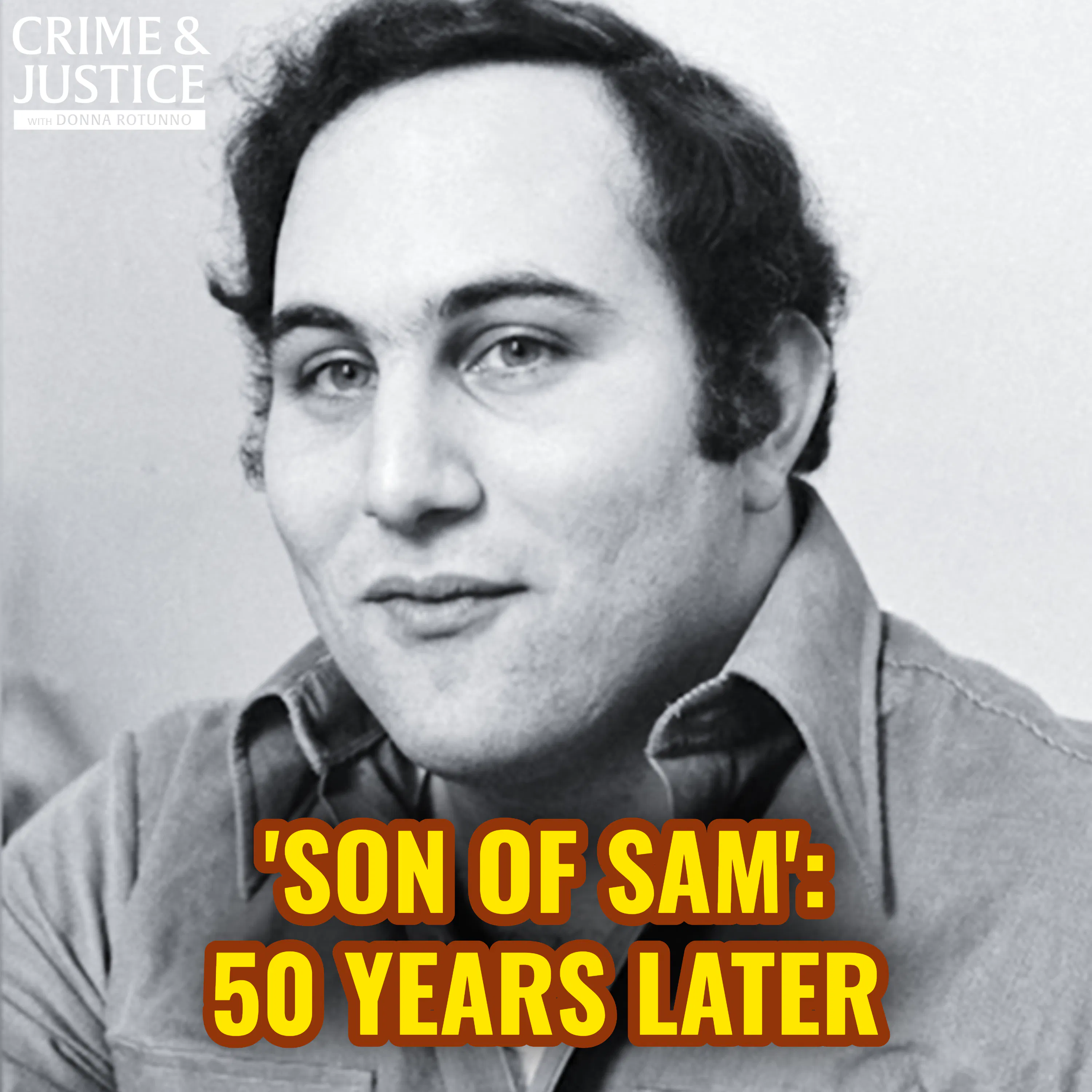
This is crime and Justice. I'm Donna Rotuno. 50 years ago this week, an infamous serial killer began a 13 month terror spree targeting unsuspecting victims on the streets of New York. David Berkowitz, also known as the Son of Sam, has become a fixture in the true crime world in the years since. If you love breaking down these cases with me, send me an email with your thoughts, questions and theories to askdanaox.com and I will answer them right here each week.
- [00:38]
B
Cheers to America's 250th birthday. Get 20% off your first purchase at
- [00:42]
A
foxnewswineshop.com with code FNRADIO20. 20% discount excludes wine club offers and
- [00:48]
B
cannot be combined with any other promotion. Expires July 31, 2026.
- [00:50]
A
Must be 21 or older to order.
- [00:52]
B
Please drink responsibly.
- [00:53]
A
I'm going to bring in our guest today, retired NYPD detective Tom Smith, co host of the Gold Shield podcast. Tom, thanks for joining me today.
- [01:03]
B
It's a pleasure to be here, Donna. Thank you so much for having me.
- [01:05]
A
Thank you. I know we got to see each other at CrimeCon a little bit and get sort of introduced to one another there. So I'm thrilled to see you in New York and to talk about this case on the 50th anniversary of the Son of Sam.
- [01:19]
B
Hard to believe.
- [01:20]
A
It's so hard to believe that 50 years have gone by. I mean, I'm 51, so the fact that. Right. This happened and obviously have read about it over the years and have seen news stories about it over the years, but to think about the period of time that passes is really quite something. And I've always heard the phrase about, you know, when people die twice, once when they die, and second time is when people stop saying their name. So I think it's really important to talk about these cases and remember, I mean, there was what, 13 total victims here. Yeah. So six that died, six that died, and seven wounded. Yeah. So, I mean, this is. This is something that was a really big deal in New York back in 1976, and it kind of spanned a little bit. So why don't you take me back to the time in New York City when these murders were happening and what the atmosphere of that was like in the city.
- [02:16]
B
Yeah, you know, I was young, too. I was. I was 8, 7, 8 years old when that was going on. But my dad was an NYPD detective. And that year, during 1976, at the end of the years when he retired, so I kind of Heard about what was going on with the murders. But to look back on it, you know, you got to remember 1976, there were 1600 homicides in the city. So to have one homicide in the Bronx one night wasn't out of the norm and then another one in another borough wasn't really out of the norm of what was going on in the city at the time. 76 in the mid-70s was horrible here between poverty and crime and the city having no money and cops being laid off. So you compound that with everything going on now. You have the potential of a serial killer running around New York. And I remember the atmosphere of just once it became something and you started seeing it in the paper and on the news and the coverage it got to was given, you started to see and hear about the panic in the city. And I felt it at home because I have four older sisters. So the conversations that my parents were having with them about going out, making sure you're home at a certain time, staying out of certain areas in the city, you know, I remember distinctly remember when that was going on. So, you know, not only was it a city thing, it also was a little personal.
- [03:42]
A
Well, and we were talking before we started rolling today about the difference today in the way people look at these violent crimes versus maybe back then. Right. I just have this vision of this sort of terror kind of falling over the city, especially for certain groups of people, right. Young women, there were women that were cutting their hair because they didn't want to look like the people who were murder. Right. Cutting their hair, dying. And so you think about like, I can't even imagine that happening today. And I was trying to think about why. And I know before we started we talked about, you know, Maybe it's the 24 hour news cycle and the fact that we are constantly being told about what's happening in the world. And therefore either you're less worried about it or you don't have the anxiety waiting to hear about it. Because you made a good point about nightly news and the way we were able to get news. So talk to me about that a little bit. And the way people would actually learn about these things, which is so different than the way we're doing that today. And I think that's important.
- [04:42]
B
Oh, no doubt. You know, now there's no anxiety today with a story because, you know, in a half hour you're going to hear something else about it. So there's no buildup of what's going on, what's going on, because it doesn't Stop. Whereas back in the 70s, like I was saying, the 6 o' clock news was like a TV show in my house, me and my dad would sit down and watch the news every night because that's how you found out what. What was going on. You had to wait all day until 6 o' clock at night. And I sat down in front of Channel 7 and watched the news every night. That's how you found out about. And then once the news was over, if you weren't up for the 11 o' clock news, you had to wait till the following morning to get the paper. Now you want to talk anxiety. You know, you may have some sort of a cliffhanger on that 6 o' clock news of, hey, we'll get back to more information. It then you won't hear anything until the following day and have to read about it. So the anxiety would build and build of what was next and what the front page of the paper was going to be. Because once this became a thing, that was the big focus. What was on the front page? Was there going to be a sketch? Was it going to be another victim? Because when you have things like this, the person's either going to get killed or get arrested, and if that doesn't happen, there's going to be another victim.
- [06:00]
A
Well, and I think that's the thing too. Like now, right? Refresh, refresh. You want to know what's going on. You pick up your phone, you Google a name and things pop up and you can read all these things about it. Then you were just sort of waiting for whatever information was going to be presented to you. And then, let's say you couldn't get ahold of someone, right? You didn't have the phones that you could just call and try to find them or text them or look at their location. You're waiting to see if somebody that you're looking for is the next person on the front page of the paper. So it just. I can't imagine what that felt like back then. And I mean, obviously I was alive at a time when we didn't have these phones. And it's hard to imagine the way life was when we just sort of went out and couldn't be in contact with anyone. So it's just a really. It's a really a different time, especially
- [06:44]
B
in the enormity of the city. Because, you know, at that time, what was going on at that time? Donna. Discos, dance clubs. So. So kids were not. Kids from the Bronx weren't just hanging out in the Bronx. They Were going all over the city to the new club, to the new disco, especially in Manhattan. So it wasn't just a neighborhood thing. They were all over the place. And to think about not having a instant communication with your children like we do today is kind of mind blowing. How we not survived, but how parents at that time dealt with it.
- [07:20]
A
Well, you look at this first victim, right? Her name was Donna Laurita. And you know, I look, there was two Donna's, actually. And I think that that name really was important in the 70s, apparently, because there's not many of us anymore. But. So Donna Lareda was the first victim. And talk to me about the circumstances of her murder and then why the other one started to, you know, the police started to say, wait, there may be some, some similarities here.
- [07:44]
B
Yeah, the, the, the scary part of sitting in a car with your boyfriend or with someone you met or with a friend and just kind of hanging out and then having someone just come up to the side window and start shooting was a terrifying thought to not only that situation, but as it resonated throughout the city. And like I said at the time, it was not to downplay it, but it was a homicide. They had, you know, one or two a day during that time in the city, and some parts of the city even more. So you can understand the police going, okay, what is it? Trying to recover whatever evidence there was. But you think about police work back then, and not even remotely close to the technology we have today. You know, precincts didn't really talk to one another unless you had to. There wasn't a form of communication in the NYPD to hook everything up. Like, hey, like right now I could get a text. There was a homicide in, in Brooklyn, and another detective in the Bronx go, wow, that seems familiar to ours. That wasn't the case unless you had something to really work on. The communication between precincts was very limited. So it just became another homicide until there was another one, and then there was another one, and then it became a monthly thing. And not only in one borough, but now you're stretching out to three different boroughs.
- [09:06]
A
And it's the type of victim, right? I mean, these were young people. They all kind of fit a certain demographic and not really the type of people that just normally end up dead for no apparent reason. Right? So that I think that made sort of the alarm bells go off and these detectives saying, okay, we need to figure this out. And at the same time, they're receiving letters, right? And so talk to me about the letters being sent to the Police and how they were signed.
- [09:36]
B
And yeah, once the. Once the task force got set up in. In April of 1977, Chief Borelli the time was running one of the task forces, one of the teams. And him and Jimmy Breslin, who is a very famous reporter from the Daily News, started to get letters from an individual who was signing them Son of Sam. And they were talking about, you know, certain parts of the crime. And then one in particular that Borelli got was, I am not a woman hater. Sign the Son of Sam, but I am a monster.
- [10:13]
A
Wow. And so they get those. They start realizing, okay, wait, we have these young women that are ending up shot or dead sometimes with their partners or whoever they were in cars with. And I think we. It's also worth mentioning it was a much more common thing in the 70s as part of a night out, spend time in a car. Right. Parking. I mean, that's not something anybody young knows about today, but that was a pretty common thing to do. So here's just young kids going out doing what young kids are doing, or young adults, and here's what happens. And so the one, I think before the letter started going out, the one common theme was that the gun used was a.44 caliber pistol. So that was one of the things that made police say, okay, this, this is all happening with the same type of gun.
- [11:04]
B
Right. And again, ballistics at the time was very slow. They were getting fragments from some of the crime scenes and not even a full round, but they knew the type of round from a.44 revolver, Bulldog of the round that it was. And it wasn't until April of 1977 at the crime scene where they got a full round and were able to match it to the other crime scenes.
- [11:29]
A
And when they matched those back then, because this, I think, would be a real challenge. When they matched those back then, did they just look at them like under a microscope or did they have the technology or similar technology that we have today?
- [11:41]
B
Oh, no, you're getting two microscopes next to each other and looking at the grooves and looking at the twists of. You had experts looking through those microphones, microscopes, but you had to look at the twists and the ridges and all that, and that's how they. They matched it all up. So you think about everything that happened up until April of 77, where there were commonalities and people were worried, but not until that point they actually said, we have a serial killer in New York.
- [12:10]
A
And on top of it, you kind of mentioned it earlier, but they're dealing with a very kind of stripped police department because the police were low on funds, the city didn't have any money. The city was in a really tough spot, and the city came back. And now we're hoping it doesn't go back to that, given where we are today. But the city was in a tough spot. And so the challenges faced by these detectives, not only different bureaus, not only didn't have the technology and didn't even have, really, the phone. Right. I mean, you'd have to leave. You'd have to call somebody at their desk, and if they weren't there, you don't get them. And you just have to keep trying to call. Right. There's no way to contact somebody 24 7. And so there were a lot of challenges here to piece all of this together.
- [12:53]
B
And then you didn't have even the number of detectives there were. The NYPD as a whole were down. There weren't many detectives anyway. And now you're setting up task forces with about 100 detectives in each borough, trying to put this together. And like you said, the communications. I mean, we had dial phones.
- [13:12]
A
Yeah.
- [13:12]
B
You know, and if you weren't there, there were no answer machines. You got a busy signal, you know, and you had to keep calling. So even the thousands and thousands of tips that were coming in had to be written down on a piece of paper, then typed on a typewriter and given to someone, and they were going out. And that's how, you know, how it was back then. It's just. But to us, looking at it now was like, oh, my God, how'd they do it? But back then, that's how they did it. That was an everyday occurrence. And, you know, it was just tough to do it. And then one day they got a break.
- [13:48]
A
And let's talk about that. How did the witnesses play a part in this? Because that was a huge, huge deal.
- [13:54]
B
Yep. July 31, Stacey Moskowitz was killed and her boyfriend severely injured in. In Brooklyn. And at three in the morning. And the detectives went back the next day or they. Or a day or two later and started recanvassing the area, if anyone saw anything. And they had two different things. A couple of people said there were police officers in the area. And then one woman walking her dog was approached by two detectives. And she said, I'm surprised the police officer didn't hear the shots. And the detectives went, what police officers? Well, they were writing parking tickets all around here that night. So what'd they do? They pulled every parking summons going back, probably. I Think a day or two after that. Now think about that. Go to a filing cabinet, pull out a bunch of tickets and start going
- [14:49]
A
through them and be lucky that there's actually a ticket.
- [14:53]
B
Right?
- [14:53]
A
That. Yeah.
- [14:54]
B
And then have to run. You know, the only thing on the summons, on a parking ticket is a plate. So now you're getting all that. Then you're taking those, running them manually on a computer to see where the car is back from. And like you said, a needle in a haystack of getting one summons on one car parked at a hydrant for a $35 summons that was registered to someone in Yonkers.
- [15:20]
A
And when you think about that. Let's talk about that. Like what, what was that technology? Like? Did they even have a computer or were they going to file cabinet?
- [15:27]
B
No, you're going to file a cabinet.
- [15:28]
A
Yeah. So you' a file cabinet to look
- [15:30]
B
up these, these, these plates. Or you call in DMV and they have some sort of system that they had set up, but that would, it's all manual.
- [15:38]
A
And you're hoping you can read the officer's, the officer's handwriting.
- [15:41]
B
Right.
- [15:42]
A
And that it was registered clocked incorrectly. Right. Because wow. I mean, when you really think about that, you know.
- [15:48]
B
And then what did that do that prompted, okay, why is this car from Yonkers parked at a hydrant at 3 in the morning? Then they had a plate. Then they started going and looking at all the crime scenes and all the parking tickets. And I think there was one or two more that, that came out of that with the same plate at the same locations.
- [16:06]
A
And this is why it's important to write those little violations. Right. We live in a world now where people say, oh, forget about the small violations and let the police do the real.
- [16:16]
B
And you know, what part of, part of homicide investigations now that is on a checklist of. Check all the cars in the area, write all the plates down that are in that area because of this case.
- [16:27]
A
Well, and now you have, I mean, they have license plate readers. There's cameras on every street corner in big cities. And so there's way. I mean, it takes a long time to sift through a lot of that sometimes. But there's way to find ways to find paths that cars have taken and you can follow. I mean, look how they found Manioni. Right. A lot of it was the path of travel. And so in the, the eyes, in the sky in terms of the camera. So this is really interesting to think about how they put these pieces of this puzzle together at a time when they just didn't have those resources. And in terms of the period of time that this took, I mean, it seems, looking back on it now, it doesn't seem like it was really that long, but this was a long period of time for communities to feel terrorized by this.
- [17:17]
B
Oh, yeah, well, I mean, it was basically one full year.
- [17:19]
A
Yeah, that's.
- [17:20]
B
That have a year and two days.
- [17:23]
A
And that's a lot of killing and shooting.
- [17:25]
B
Oh, it is, yep. And if you really look at all the, the dates of the shootings, it's, it's, when you look at it, it's astonishing because it's just one month after another, after another after another with six, six victims that died and seven that were wounded. So you look at that mass casualty rate over just one year in New York and what was going on at the time. Don't forget, in the middle of this, we have a 25 hour blackout in New York City, which sent people even more into a panic thinking, you know, what's he going to do now when all the lights are out? So that you want to talk about, you know, panic and anxiety in New York, that enhanced it.
- [18:08]
A
And were there any other notable witnesses as part of this? Obviously, of course, other than the people who lived. Right. I mean, were there any other sort of bystander witnesses? Because again, these were late hours. Right. Usually these things happened at night. And other than somebody saying, I saw these parking tickets being written, was there any other, like key witnesses that came forward that really helped the police here?
- [18:33]
B
Well, there were witnesses who gave descriptions and sketches did go out of an individual, which, you know, if you talk to, you know, my experience, certainly you could have two people at the same exact spot, the same exact time, gonna give two different descriptions of someone. So that's what they had to fight through as well. And again, technology, you're getting a sketch artist, no computers, no AI, no digital stuff.
- [18:56]
A
Right.
- [18:57]
B
Go out there and draw a description of someone, you know, and then that went on the front page of the paper or on the news, you know, so there were people being very proactive with getting as much information as they knew out to the police as they could to help out.
- [19:13]
A
And when you think about the psychology behind, you know, here you have this killer who's running around the city who's really harming very innocent people, and then has the hubris to then sort of taunt the police with these letters, right? Like, what, what did that say to the police about the type of person they were looking at? We heard a lot in the Rex Heuermann case about the fact that he has to sit down with the FBI crim terminology, you know, behavioral unit, and sort of talk to them. And I mean, this is like a pure study. And what was going on in someone's mind at the time that they would sit down and actually taunt the police with letters?
- [19:54]
B
Sure. And it meant he was paying attention. He knew who. He knew who Borelli was, he knew who Jimmy Breslin was. He would often talk about past interviews. They did information that they knew, you know, so you. Not only do you have a psychopath running around, you're shooting people, you have somewhat of an intelligent person paying attention to the investigation. That is always dangerous. It's even more dangerous now, as you know, with press conferences and what to say and what not to say. And we get asked that all the time. Why didn't the police say this? Because bad guys are sitting in front of the TV watching. That's why.
- [20:30]
A
And as a defense attorney, I'm always very grateful that the police are not out there saying more than they should, frankly, even as a prosecutor, because you don't want anything that's said in the media to hurt your case in any way. But as a defense attorney, I'm always grateful because I feel like there should be due process and people should be able to go through the system and it should be fair. And so, you know, I never. Like all those, you know, sort of grandstanding press conferences. Now, is it fair for the public to know what's going on? Absolutely. But I do think sometimes holding back certain pieces of evidence, it's not the public's right to. To know everything about a case, especially while police are trying to solve it.
- [21:07]
B
Oh, I've said that so many times ad nauseum, Donna, of. You know, and I get asked, why didn't they say this? Because you don't need to know that. You know, the public doesn't have a right to know the integral details of an investigation, especially when it's ongoing, because of the way social media is today. The way the media is today. We talked about the beginning of your show. Every half hour there's something else going on. So I understand when there's press conferences and it's for three minutes or five minutes, here's what we got. We'll get back to you with anything else.
- [21:38]
A
Yeah.
- [21:38]
B
And I believe that's the way it should be. I. It drives me nuts when I see press conferences just for the sake of a press conference.
- [21:45]
A
Yes.
- [21:46]
B
You know, if you have something to say that's Part of it. And I think press conferences should be held to get the information of the crime out there so people can help.
- [21:56]
A
Absolutely.
- [21:56]
B
So people can look at their ring, you know, on their door or their cameras, or did they take a selfie somewhere where someone's behind them? Anything like that, I think helps an investigation. So putting that into a press conference, I'm okay with.
- [22:11]
A
So let's talk about the day they actually picked up David Berkowitz, the Son of Sam. They picked him up.
- [22:18]
B
What does he say he was, you know, from the. From the descriptions of the detectives who got him, you know, you got me. I got. Yeah, it's me. And he was smiling and into it. And you see the big, famous perp walk into the basement in One Police Plaza. He is eating up the attention. You know, when you heard. There was one other time I heard from one interview of somewhat of a serial killer said, you know, you're not famous until you get caught. No one knows who you are. You're not famous. So Berkowitz was kind of the epitome of that. Seeing the look on his face when no panic, no head down, like you see so often during perp walks, looking straight ahead in every camera and. And eating it up. And, you know, it was terrorizing. Once the detectives got him and got the gun in his car and the other weaponry that was in his car at the time. Because I remember that one of. One of the writings that they found, Studio 54, was a big target of his, you know, and at that time, that was the center of New York City.
- [23:28]
A
Sure was.
- [23:29]
B
You know, and I know there were a couple of. Of letters written with Studio 54 mentioned.
- [23:35]
A
Wow. And what role do you think the media played in this at the time, other than, you know, what we've talked about in terms of getting the information to people and having it be the only real way people knew what was going on with this. What role do you think it had in terms of maybe Son of Sam, David's desire to be this, you know, this person who was eventually caught and sort of proud of what he did. Do you think that the fact that this did play such a big role in the storytelling every night, that that was a big incentive for him?
- [24:13]
B
Oh, I believe so. Because not only did you have the paper with pictures of him or depictions of him on the front page of papers, they were printing and publishing his letters. There were interviews that were being done of kids recognizing who he was, not who he was identifying him, but as the Son of Sam. So his ego As a serial killer, every time he watched, the news got bigger and bigger because again, not only the paper, not only news anchors, but the public was getting interviewed and talking about him. So he, in his mind was this larger than life figure, you know, and. And that was the insanity of him.
- [24:57]
A
I'm pretty intrigued by the way he has responded in real time, current time today, based on his parole hearings, because odds of him ever getting out are probably slim to none. He knows that he received multiple consecutive sentences that life sentences that he pled guilty to. Right. There was no trial here, so there was a plea. Trial here would have probably been fascinating, but there was a plea here, and I think. What was the total? 365 years or something was the number. So the odds of him ever receiving any parole are probably zero. And he knows that. Right. So he has not attended this last parole hearing, maybe the last couple. Talk to me about the way he. And, you know, usually I don't really like to give too much time to the people who have committed these types of crimes that have pled guilty to them. But I find this fascinating that his responses about not going to these parole hearings and why he's not going, I. I find them pretty interesting. And I'm wondering if there is such a thing as redemption or if this is all just part of the same narcissistic, psychopathic behavior and now it's just another way for it to manifest itself.
- [26:14]
B
I think it's a little of both. Yeah, I think it's a little of both of let me. Let me kind of stay in the. In the limelight. You know, I'm still relevant because he is. I mean, he's one of the most infamous serial killers ever. And he still talked about like we are today. And then there's another part of what can I say? What can I do or say that's going to not just a story of me, something new, oh, I'm not going to go to the parole hearing. I'm not going to any. Feeds into his ego and his narcissism, I think. So I think it's a little both.
- [26:45]
A
Yeah. And it seems like he tries to make these comments that would come from somebody who's trying to be a good guy. But how can you try to be a good guy when you've massacred the number of people that he did and harmed others? And so I just. It's such an interesting conversation, and I wonder what the behavioral units of law enforcement agencies would say about this. Is it a transformation or isn't it so I think it's really interesting to kind of look at that, and I think that that helps the police moving forward if they really kind of study these people and try to learn what really motivates them. Because. What did he say? He said that it, he was a good guy, but it was his neighbor's dog that was evil and he was taking on the Persona. I mean, right, that's, that's what he claimed in one of the letters.
- [27:32]
B
Yeah, that was, you know, that was the other fascinating part of this case. You actually had two investigations going on at the same time about the same person, but they never knew that, you know, he had a disagreement and a neighbor dispute with his neighbor who had a dog named Harvey. But the owner of the dog's name was Sam. So he started hearing these voices from the dog and, you know, came up with the Son of Sam, then eventually actually killed that dog. And that's what prompted those people to actually call the hotline, the tip line for the Son of Sam case. But again, the detectives were more and understandably more attentive to the in city leads that were going on and not something out in Yonkers, you know, when that was going on. Because they did mention this is someone you should look at. He's nasty, he's mean, he could be the Son of Sam. But understandably, with the thousands and thousands of tips that were coming in, they didn't get out there, but got him eventually on August4.
- [28:38]
A
First, I believe anything that the police learned from this in terms of what to do versus what not to do.
- [28:49]
B
Oh, that's a great question. Even, you know what, there's, there's practices that not even on this case, but many cases in the past that lead detectives to be better detectives today, you know, of not, not getting kind of tunnel vision into one particular person. You know, especially when you're dealing with something like this, your mind has to be completely open to, to anything and any person that can be responsible for this. But following up with what you do, follow up on your leads, follow up, take good notes. You know, God, I, I got told that every day, you know, being a detective, make sure you take notes, talk to people. You know, that was one of the biggest things that I ever learned of honing in on your communication skills and being personable to people because they'll talk to you more. And I think that leads to what detectives today do even more. And the one thing I, I always cringe about with today's police forces is relying too much on technology, you know, and not Getting in a car, going to knock on someone's door, relying on, oh, I saw the video of him there. That's okay.
- [29:57]
A
No, well, yeah, especially because somebody like me is going to cross examine you about what you didn't do. Right. Like, obviously.
- [30:03]
B
Right.
- [30:03]
A
Didn't do this. And so I think you're right. I also think that in a situation like this, how did the police make the connection that the letters were actually written by him? Did he admit to that or did they somehow.
- [30:18]
B
I think through some of the questioning and terms that he used in. In his interviews and in the letters corresponded and made sense, and I think there were some that he did admit to and saying that he was the Son of Sam, kind of let the cat out of the bag with the way the letters were signed.
- [30:35]
A
Well, and letters are so interesting. We've been listening a lot about letters and Nancy Guthrie. Right. Of the disappearance of Nancy Guthrie. And are these legitimate ransom notes? Are they not? Is this legitimate correspondence? Isn't it? And so it's interesting because now it's a lot easier to trace that type of communication than it was back then. And they didn't have the technology to do the saliva test and the DNA tests and all these things on envelopes. And so it's just really interesting that they were able to piece this together. And even though it was. It seemed like a pretty long period of time, when you really think about it, in terms of the way some of these investigations go. I mean, look, Nancy Guthrie's been missing six months, and we don't really. At least we don't know if there's a ton of leads out there. We. We haven't been told. So, you know, really, when you think about it, even though there was a lot of carnage here, a year wasn't awful without the use of technology.
- [31:27]
B
Right, right. And what they had to deal with, you know, just not. Not having what we have today and having to rely on detectives in mass going in 10, 15 different directions, and then those 15 detectives having to come back to one spot and share what they got.
- [31:45]
A
Right.
- [31:45]
B
You know, not. Hey, Tom, I got this. I found this. Go check this out over a phone. You know, you had to wait hours till you were done doing your canvases to come back and now sit in a room with five or six detectives and go over all your notes and see what matched up what was similar, what wasn't, what ideas you had, what you heard on the street. You know, so listen, a year wasn't bad with what they were facing.
- [32:12]
A
Sure. Absolutely.
- [32:13]
B
And the time frame.
- [32:15]
A
Talk about the Son of Sam law. Tell me a little bit about that.
- [32:18]
B
Yeah. The Son of Sam law was developed because of this, that, you know, a person convicted of a serious crime cannot benefit or get money from a book, from a movie, from anything. And it was a result of this, and rightfully so.
- [32:34]
A
Yes.
- [32:34]
B
You know, that was one good thing courts came up with of not giving a benefit to. To a maniac to benefit from and having the victims in their mind when they made that decision.
- [32:47]
A
We're seeing a little bit of that, I think, in the Coburger situation now with him trying to withdraw his plea. And, you know, he seems to. To get this back into the media's conversation, and so we'll see what, what happens there. But this was such a fascinating case. Obviously, we're still talking about it. And on the week of the 50th anniversary of these murders and the start of these murders, it's definitely something to keep in mind. And I cannot thank you enough for joining me today.
- [33:14]
B
It was a pleasure. Thank you so much.
- [33:15]
A
Thank
- [33:18]
B
you.
- [33:21]
A
Thank you for joining me for another episode of Crime and Justice. Remember, we want to hear from you. Send us your thoughts, questions or theories, and we will answer them on air.