← Crime & Justice with Donna Rotunno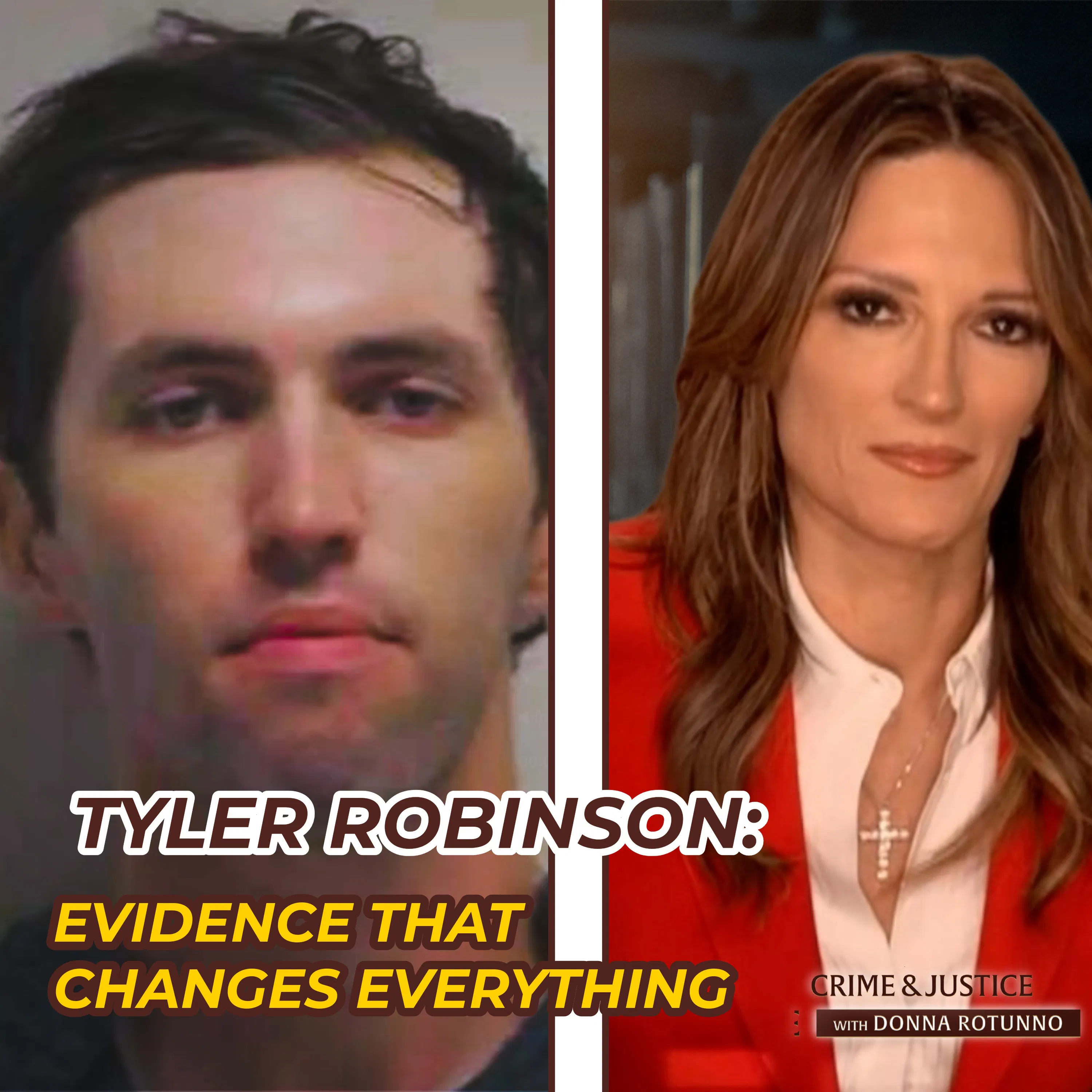
Loading summary
Transcript43 lines
- [00:02]
A
What they did to your family.
- [00:03]
B
You're lucky to make it out alive.
- [00:06]
A
Streaming on Peacock.
- [00:07]
B
These men are going to come after me. Taking them out. It's my only chance.
- [00:11]
A
Put a bullet in her head. From the co creator of Ozark.
- [00:15]
B
Looks like a family was running drugs.
- [00:17]
A
Execution style killing. It's rare for the Keys. Any leads on who they might have been running for?
- [00:22]
B
The cartel killed my family. I'm gonna kill them.
- [00:26]
A
Awesome, Mia. Streaming now only on Peacock. This is crime and justice. I'm Donna Rotuno. Tyler Robinson's defense team is on a mission to keep cameras and their client out of the courtroom. Before we dive in today, if you're enjoying the show, make sure you hit the follow button. It makes sure that all of our episodes end up at the top of your feed. Joining me today is Sky Lazzaro, Utah based criminal defense attorney. Hi, sky. How are you?
- [00:58]
B
I'm doing well. How are you? Thanks for having me.
- [01:02]
A
I'm great. I'm so thrilled to talk to you today. Tyler Robinson is going to court again on Friday. I think it's going to be great to chat with you. And we can get into what's been happening in Utah. So let's talk about the latest defense filings. Now. The defense has continued to file motions to keep camera out of the courtroom and yet we still have not even gone to a preliminary hearing and they are now asking for more time. So let's kind of get into both of those things. Let's first talk about the cameras in the courtroom and, you know, kind of explain to our listeners and our viewers, hasn't this been ruled on? Are we going to have to do this every single time there's a hearing? The judge has already ruled cameras can be in the courtroom. He has ruled that they have certain restrictions what they can and can't video. They can't show him speaking to his lawyers. And, you know, they can't try to read any lips and they can't show any documents. But they can be there to show the public what's going on. Tell me what these motions are about and why they continue to file them even though we've already had a ruling.
- [02:11]
B
It is really an interesting issue, I think because, you know, the judge has ruled the Utah law is pretty clear on the presumption in favor of cameras in the courtroom. And the judge has put, you know, reasonable restrictions on what they can video. Really what the defense is doing is every time one of those restrictions or parameters that the judge has imposed is violated, they're kind of using that or they are using that as a new basis to relitigate the issue, to say, hey, they're not following the rules. They're, they're too doing things that are not only in violation of the court order, but are also detrimental to our client, showing his lips or showing him in custody or things like that. So I think every time something like that happens, we're probably going to continue to see these motions get filed. And unless there's something really egregious, I just, I don't see the judge changing anything.
- [03:11]
A
Yeah, I agree with you. I think the presumption is pretty clear and it's true that this is something that the public should be able to watch and give, given the fact that the world has changed so much and we have the ability to film these things, to put it out on air. You know, just because cameras aren't there doesn't mean that the media is not going to be talking about this. Does it mean that it's still not going to be front page news? So I'm just not sure what the defense is attempting to accomplish by saying, let's leave the cameras out. I mean, you're always going to have press in courtrooms. Courtrooms are open. You can always have the public in courtrooms being able to come out and say what they saw. And so just not so sure why this push for keeping cameras out has become such a thing. And, and now I think they've kind of shifted the reasoning for not having those cameras in to talk about how. Not that they haven't talked about it before, but I think the push now is really being focused on the fact that there will not be able to be a fair voir and fair jury picking process, jury selection process. And I'm just not so sure in today's day and age. I, I think that that's, that's true. And so let's kind of talk about what the defense is talking about when they're saying, you know, oh, algorithms, everybody that that's on their social media is going to see these things and he's never going to be able to get a fair trial. Do you think that that's any different than the days where many more Americans read actual newspapers that were also potential jurors for cases? Do you think that this social media argument that they're making in terms of the cameras in the courtroom are going to make that worse? Do you think that that holds any water? And how do you think that plays out in comparison to the way people used to get their news?
- [05:03]
B
I Don't think at the end of the day it's going to carry the day for him. I don't think it's going to matter. And the reason is, is we have seen a number of really high profile trials over the last couple years with a lot of social media attention. And they were able to seat jurors in those cases. I mean, they sat a jury twice in Karen Reed. And so I don't think this argument that we'll never be able to seat a jury really holds any water. I think the difference with social media and, you know, the Internet and everything today and the live streaming is the public's instant access to what's going on. You know, back in the days of hard copy newsprint, people weren't able to see what was going on in the courtroom and see people question and watch the trial be live streamed or the hearings be livestreamed or the arguments be made. They would just get it in whatever format. You know, the press wanted to put it out to the public, which maybe in some ways is worse, you know, because then maybe it is more skewed than what they get from actually being able to watch it. So really I think that's the difference. But I think in this day and age, we just have to change with the times. And I just don't see judges after having all of these high profile trials that were live streamed all of a sudden say this is a problem because they were able to see jurors in those cases. So I just don't see that argument. I understand making it, but I don't see it really changing anything. And I don't see it excluding cameras. And you bring up a really good point. Just because the cameras aren't there doesn't mean people aren't going to be talking about it. It doesn't mean they're not going to see what's getting filed. So every time you file something as the defense or the state, you have to know that that is probably going to start another discussion by the press and by the public or these streaming platforms or true crime believers that are, you know, given all their opinions in the comments, you know, every time you file something, they're just going to talk about it. So whether the cameras are there or not isn't going to make any difference.
- [07:21]
A
Right. And like you said, the cameras being there show what's happening in real time. It's not. And I think 20, 30 years ago when people relied on the nightly news and or hard print, you know, newspapers, they were relying on a press that was probably a little more neutral in terms of the way that they reported things than today. Today, I think we have a press that is, you know, very politically motivated in many ways, depending on what you read. And so I think that the fact that cameras in the room are really what is showing you what's truly happening. And then it's incumbent upon the viewer, the watcher, the listener, to determine what they think is true. And I think at the end of the day, that is what a jury system is supposed to do. Right? You're not supposed to be influenced by all these other aspects, and you're just supposed to be able to watch and listen to the facts and make a call. And so I guess the only time I really understand it, and I really understand the defense's argument is there are pretrial rulings and motions of evidence that might be excluded. And so for both of us, the that our defense attorneys obviously excluded evidence should not be considered. And it's very hard to unring that bell. However, again, the camera being there isn't changing whether or not that information is reported. That information would be reported. It's still a headline. It's still something that the defense has to deal with in terms of trying a case and picking a jury. So I'm just not so sure this is going to continue to hold water. Do you think that they are going to continue to file these before every hearing, or do you think the judge is going to say, finally, I have ruled on this, I'm not going to take this issue up anymore? Do you think there's ever a point he says, like enough is enough with this?
- [09:07]
B
I think there is a possibility. The judge says that. I think the problem for the defense is if this is something that they want to preserve as an appellate issue, they are going to have to continue to make these arguments and re raise it before every hearing. Otherwise, you know, there's a good possibility our Supreme Court comes back and says, hey, yeah, you made it early on, but you didn't continue to object to it. And I agree with you in these pretrial motions or pretrial evidentiary hearings that that stuff may never come in at trial. So you absolutely don't want it out there. But if it's attached as an exhibit to a motion, it's going to be out there and available to the public anyway, unless there's some reason to keep it private under the rules. So, you know, there's really no way to control that. But I could see the defense saying, you know, even if the judge says hey, stop filing this. I get it. Their response is probably going to be, we feel under the rules, we probably have to continue to object to this. You know, even if they don't object, you know, as boisterously or as thoroughly, if they stop objecting, I could see the appellate court saying, hey, you waive the issue. You don't get it back.
- [10:27]
A
And can't you. But can't you just say before every hearing, you know, we're renewing our objection to cameras in the courtroom, and just. Just to put it on the record, there always have to be this motion, otherwise these filings, but become so laborious for the court. And here we are. I mean, Charlie Kirk was killed September 10th of 2025. We are in April of 2026, and there has not even been a preliminary hearing in this case. I mean, is that unusual in Utah? Because let me tell you, where I practice law, you have to either have a preliminary hearing or an indictment. And I know Utah does not have a grand jury indictment process, but effectually it's the. The same thing. If someone's in custody, you must have that preliminary hearing within 30 days. Unless, of course, the defense is asking for more time. And it would be very unusual for a judge in the jurisdictions that I practice in to give you an extensive amount of time. And at a preliminary hearing level where I practice, the defense is not able to receive any discovery beyond police reports, initial police reports. So there they are trying to talk about the fact that they need all of this evidence in order to be ready for a preliminary hearing. Is that unusual or is this very common in Utah courts?
- [11:45]
B
I don't think it's unusual for this type of case where you have, you know, this is capital homicide case. So it's not unusual for the preliminary hearing to be set out as a significant period of time. We have similar rules here in Utah where the defendant isn't entitled to a preliminary hearing within a certain amount of days. And the only thing that the state is required to turn over within 10 days is the initial discovery packet or what they relied upon in filing the complaint or the information against them, because we don't have a grand jury process. And the preliminary hearing standard is really low in Utah. I mean, it's probable cause. It's everything taken to light most favorable to the state. They're not making big credibility determinations. And judges have started, or at least some judges, you know, don't let you use a preliminary hearing as a deposition or, you know, a discovery tool. You know, they really keep you limited to what goes to probable cause. That being said, I'm not surprised that they're trying to push the preliminary hearing out and get as much information as they can to be ready for it. It is up to the defendant to waive that time period and waive perhaps a speedy trial rights. And the court then has to weigh that, because we've seen in this case where the alleged victim, Erica Kirk, through counsel, has filed a motion asserting her speedy trial rights under the Victims Rights Act. So we kind of have these two competing rights to, you know, not have a process be, you know, drug on for no apparent reason or, or anything, you know, along those lines that would violate her rights.
- [13:34]
A
And obviously she has those rights. And I think she's. She's right to be frustrated because I think just regular Americans listening and watching this are frustrated. It feels like a very slow pace in terms of the way things are being adjudicated and handled in the courtroom. But at the same time, the defendant's rights are always going to trump whatever rights, you know, victims have in the state. I mean, at the end of the day, the defense attorneys have to be ready. And the one thing you don't want to do is build in an appeal and, you know, say we weren't ready and you forced us to go. So, you know, that that's definitely something that the court doesn't want to do. But at the same time, given the fact that, and from what I'm seeing and reading and hearing, the defense already has more discovery than you would normally have prior to a preliminary hearing. And I understand that that discovery is immense in a case like this. I mean, there were thousands of people outside. There are many reports to shift through, sift through. Excuse me. I can't imagine the number of police reports and different agencies that came to that scene and from the body cameras and the police reports and the amount of information to go through is quite immense. But I guess the question becomes this is not a trial, and like you said, this is a very low standard. And the defense isn't going to call witnesses. I would presume at this preliminary hearing that would be very unheard of. And so for the, for the prosecutors, they don't really have to call that many witnesses. So how many people did the. Does the defense actually have to be prepared to even cross examine? I can't, I can't imagine that the state is going to try to turn this into a mini trial. They're going to put on the least amount of evidence they need to to reach that standard.
- [15:18]
B
I think that I Think the state would be foolish to treat this as a mini trial? I would. In Utah, you're only required on one witness and you can have 1102 statements, which, you know, are just the sworn statements written by witnesses under the penalty of perjury. And then you put your case manager up, you know, to talk about, you know, taking those witness statements. And really you probably don't need a lot in a case like this. And I think the state would be smart to put on as little as they possibly can. And the stuff that isn't questionable in order to, to get a bind over. The reality is, is, you know, this case is getting bound over unless, you know, the defense comes up with something that means that Tyler Robinson wasn't there or they have a new shooter or, you know, something like that. A judge is more likely than not, I think, to bind, to bind this case over, you know, just based on what's in the probable cost statement
- [16:22]
A
and just for people listening and watching, to understand bind over means to move the case forward. And you actually have the formal charges that come after a preliminary hearing, which is, which would be the actual formal charges against him. And at that point, after that process,
- [16:39]
B
at that point then he would enter, you know, a not guilty plea so that the case could go forward.
- [16:47]
A
Right, exactly. And then, and then move to a trial, pre trial hearings and a trial posture at that point, which, you know, we saw in Coburger, it took, it took several years in order to get to the point of trial and, or plea which he ended up pleading guilty. Let's talk a little bit about the arguments that the defense is making with regard to, you know, the algorithms and, and what people could potentially see on their social media feeds and whether or not that would rise to the level in kind of modern day trial work in terms of a change of venue. If at some point the defense was to say, look, you've let these cameras be in this courtroom, you've put us in a situation where potential jurors know too much out of this county and we need to move this, this case somewhere else. Now, they did move the case in Coburger, which is fairly rare in today's legal standards. So talk to me a little bit about that and whether you see whether or not that may be an issue moving forward in this case, I think
- [17:48]
B
a change of venue is probably unlikely, given that argument, because where are you going to go when you're talking about what people have access to on social media and algorithms? I'm not an expert in it, but people's algorithms are kind of based on what they see. So you might have people seeing pro Tyler Robinson things or pro Charlie Kirk things. So it probably goes both ways in terms of a change of venue. The argument about social media, I think actually hurts you more than it helps you. Because we're talking about a case. Everybody is getting this, you know, around the world probably. And so where you go, no matter where you live. Yeah, anywhere you go, you can say, oh, well, there's an algorithm and it's on social media, so we can never seat a jury. You know, I think if you're talking about change of venue, the more, the stronger arguments for a change of venue would be, you know, something about the defendant or somebody involved in the case or a witness in the case being so intertwined, entwined in that community or so known in that community that you need to move it out of the community in order to get jurors who would not be biased. I think this idea that it's all over social media is more harmful than helpful to that argument.
- [19:13]
A
Yeah, I agree with that. And I think that really, like you said, no matter where you're going to go, I think it would be a different story if you're talking about a case that maybe did not have the reach and maybe it was a more, you know, regional or county based situation where, you know, something happens to a young child in a high school and, you know, the whole community is rallying against the person who committed a crime. And it's, it's very different in the sense that if you went to another town, I think that that's really, you know, it just makes, it makes it counterintuitive. I don't think it really matters, frankly. And I also think that people like us who are in the news, in the media, paying attention, trying cases that are in the news, we are much more in tune to what is happening. I mean, if you walked out on the street and had a conversation with 10 people, seven of them probably are not really in the know about what's happening every day. So it's really. They may have heard that a guy named Charlie Kirk was shot. They may have an opinion about Charlie Kirk one way or another. They may have watched a couple things about Tyler Robinson and maybe something he said to a boyfriend. But beyond that, if you ask about really specific issues, people normally don't know, and I always will subscribe, and I say it all the time, to the idea that when people are actually seeing seated on a jury, they truly want to get it right. They do listen to the evidence. They do pay attention. They do take those jury instructions in their hands and, and read them and try and try to apply the facts to the law. At least that's my experience. What's, what's your take on that?
- [20:55]
B
I completely agree with that. Every time I've ever talked to jurors or heard jurors be interviewed after a case or after a verdict, it's a renewed sense of belief in our system in a lot of ways, because I agree with you.
- [21:11]
A
Same.
- [21:13]
B
I mean, I never. God bless jurors. I mean, I don't know what else to say, because these are people who are taken from their real lives and are put in a room with a bunch of strangers, and we tell them, you have to listen to the most terrible facts you're ever going to hear in your life. And some of these, these cases, you know, and then you have to make a decision based on it. And every time I hear jurors talk after that experience and about the things that they talked about or how hard it was or, you know, you sit and watch them take notes, you know, I really think that, like you said, jurors want to get it right. They want to listen. They take it very seriously. I have not once in my entire career of trying cases come across a juror who was just flippant and didn't care. Now, you get those responses when you're trying to seat a jury and people don't want to be there or Right. But you get rid of those people, and you're left with the people who I think really want to do the right, do it right.
- [22:15]
A
And even the ones who maybe, you know, initially are like, oh, you know, you always see when those juror numbers get called, call that they've been selected, you kind of see, you know, the air sort of leave their bodies for a second. It's like they're deflated. But once they know that they have a job to do and they've been asked to do that job, and I know a lot of judges will start jury selection by saying there's very few things as citizens that are actually asked of you. And, you know, jury selection is one. And when you put it in context of a draft or going to fight for this country, I mean, sitting on a jury for a couple weeks or a couple of months is not the end of the world. So I, I do think I, I. There's a judge in Cook county who always says that. I often hear people talk about their rights, but not about their obligations. And I think it's really true that, you know, we, we do have obligations as citizens and, you know, and if it was you, you would want somebody sitting there who's going to be fair and at least listen to the evidence and, and give it thoughtful consideration, regardless of all the noise out there, regardless of what you see on social media. And if I'm the prosecutor, I'm getting up and saying that to the jury. I'm saying, you know what, we know you've all heard a lot about this, but we want you to just pay attention to what you hear and hear because at the end of the day, that's what we're going to be asking you about. And the rest of it doesn't, doesn't really matter. So I think it's an interesting topic. But let's talk about some of the new evidence that, that has come out in the last week or so about the DNA, the palm print and that evidence that we're now hearing exists. And, you know, again, waiting this long for a preliminary hearing, that may not be the information that's most helpful to you. And so I guess, you know, the devil's in the details. And the more you wait for more discovery, sometimes it gets better, but sometimes it gets worse. And I, I think now we're seeing this is a situation where this discovery seems to be getting a little worse for Tyler Robinson. What's your opinion on the DNA and the palm print that they found in the location where they're claiming Tyler Robinson was during the shooting?
- [24:20]
B
Anytime they find forensic evidence against your client or that supports their case, it's difficult, especially when you're talking about DNA or, or prints somewhere where your client wouldn't normally be. You know, it's not like this happened in his house and they would have been there. There would have been an opportunity for transfer DNA to get places when it's something that your client wouldn't normally be at or wouldn't have a reason to be at or can't explain it away, that becomes far more problematic for you. And I agree with you. Sometimes waiting it out is not always better. You know, generally speaking, in cases, if they're still digging up evidence, they're going to find more somewhere.
- [25:05]
A
Let's talk about another piece of evidence, which was the bullet fragments that they were able to find and recover from the body of Charlie Kirk. There's been, you know, you see the headlines and the headlines have been, you know, they can't match bullet to the gun. But is that a little bit of a red herring in terms of how powerful or important that evidence is or is not to a case.
- [25:32]
B
I think that's a little. I appreciate that the defense put it out there that way in their motion, knowing that it would get picked up. I think that was probably fairly strategic.
- [25:42]
A
And if it wasn't, which is ironic, given the fact that they don't want them, they don't want the press, it's ironic.
- [25:47]
B
But, yeah, we've all been there. And when, you know you're going to get pressed, you know, you have to try to use it as well. But when we're talking about things like that, it's similar to DNA, you know, saying something can't be excluded or along those lines, like an expert's going to come in and is not going to say it doesn't match. An expert's going to say, you know, can't be excluded or it can be included, and they're going to use language like that. So to be, you know, quite so cut and dry or black and white about it is not the way an expert is going to testify about this evidence because that's, you know, not the accepted format that these analyses are done and then conveyed in scientific terms.
- [26:41]
A
And they're also going to explain that it's difficult when you're talking about a fragment rather than an entire piece to be able to determine certain things. So like you said, you know, not being able to exclude something is different than saying whether or not something can be included. So I agree with you. I think that that was a creative way to put that out there. And it did. It got a bunch of headlines and so much so that I had people know that I know, texting me, asking me, you know, what do you think about this? And is that, you know, is that such a big win for the defense? And it's like, well, no, not really. And so it was a very strategic way. And talking about what ends up on social media, that ends up on social media, and then that starts the conspiracy theories and that starts the conversation, which then goes back to the argument for it's probably better for both sides to have the cameras there so we can all see what's really happening. And that's again, only for the people who are watching.
- [27:38]
B
Right?
- [27:38]
A
There's a lot of people out there who just won't. Won't pay attention because they're living very busy lives. And yet there's us that are dissecting every aspect of it. Let's talk about the letter that was left to his roommate slash boyfriend. What do you make of that letter? And how is that letter going to be used as evidence against Tyler Robinson?
- [28:00]
B
You know, first of all, the state's going to have to lay whatever necessary foundation to authenticate the letter. You know, if we get to trial or if it's used in trial, they're going to have to, you know, connect the dots that Tyler wrote it, Tyler said it, all of those types of things. Obviously, assuming they can do that anytime. I think in a case you have something with your clients or the defendant, defendant's own words, that becomes very powerful evidence against them. Because, you know, when we look at these cases, a lot of it becomes circumstantial or we have competing experts talking about ballistics or DNA or fingerprints or transfer DNA, you know, and the jury, you know, is listening to one expert say it's one way and another expert say it's another way and what all these other people think about things, you know, and then when the state introduces something that is the defendant's words, that becomes hard to explain away. I mean, sure, you know, you can take a different spin on it or explain it in a different way or it was a joke or, you know, whatever it is. But I think anytime there's a letter, there's a text message, there's a jail phone call, anything like that, where the jury looks at your. Looks at the defendant and it says, you said these things, I think that becomes pretty powerful for the state.
- [29:27]
A
Yeah. Much more difficult to explain away those types of things. And like we've seen in so many true crime cases lately, are all the Google searches done on people's own devices. So th. Those are interesting too. I will ask you one final question before we go. Tyler Robinson go. Goes back to court this Friday, April 17th. Tell me what you think is going to happen in court on Friday.
- [29:49]
B
I think the judge is going to take up this issue probably with the cameras. Again, what's interesting about this case, different so than some, and we ran into this in the Richins case when I represented her, is all the pre trial litigation prior to a prelim. That is not something we usually see in, you know, even if it takes us a while to get to a prelim. The litigation part in these motions about evidence generally don't come until after the case has been bound over. You know, we rarely see a lot of this litigation this early. I would expect that they're probably going to talk about preliminary hearing dates. Again, it sounds like those are potentially going to move. So I think the judge will address that. He's probably going to address this camera issue again. And I would expect he's probably going to tell them that we need to move this case along.
- [30:47]
A
I think so, too. Yeah, I think that's what we're looking at. And I think we're all hoping for that because we would all like to have this move on a little bit quicker so we can get some sort of resolution. But, Sky, I thank you so much for joining me. You are a wealth of knowledge for office things, Utah. And we will definitely be coming back to you while this case continues to move through the system. Thank you so much for your time.
- [31:06]
B
Thank you.
- [31:07]
A
Thank you for joining me for another episode of Crime and Justice. Remember, we want to hear from you. Send us your thoughts, questions or theories, and we will answer them on air.