Loading summary
Transcript103 lines
- [00:01]
A
Okay, real talk for a second. We thought we had a pretty good handle on our budget. We track things, we plan things, we think we know where our money's going.
- [00:10]
B
Yeah. And then Rocket Money was like, hey, you sure about that?
- [00:13]
A
Exactly. Rocket Money is a personal finance app that helps find and cancel unwanted subscriptions, monitors your spending, and helps lower your bills so you can actually grow your savings. And what surprised me most was seeing everything laid out in one place.
- [00:29]
B
Yeah, same. I mean, the dashboard shows a full financial picture, including subscriptions. You forgot about bill due dates and paydays. It's super easy to digest, which is important when you're so busy.
- [00:40]
A
And if you see a subscription you no longer want, Rocket Money will help you cancel it with just a few taps. That alone made a difference for us because those small charges really add up over time.
- [00:51]
B
Yeah. One thing I really like are the alerts you get notified if a bill increases, if there's unusual activity, or if you're getting close to going over your budget. It's helpful without being overwhelming.
- [01:04]
A
Rocket Money will even try to negotiate lower bills for you. The app scans your bills for opportunities to save, and it goes to work to get you better deals, including talking to customer service so you don't have to.
- [01:18]
B
And this part is important. Rocket Money has saved users over $2.5 billion, including over 880 million in canceled subscriptions alone. Their 10 million members save up to $740 a year when they use the app's premium features.
- [01:35]
A
If you want to cancel unwanted subscriptions and reach your financial goals faster, go to RocketMoney.com Crimesalad today, that's RocketMoney.com Crimesalad RocketMoney.com Crimesalad kids, they grow up so fast. One day they're taking their first steps, and the next they don't fit into the tiny sneakers they took them in. You blink your eyes and their princess dress is two sizes too small. And their dinosaur backpack isn't cool anymore. But don't cry because they're growing up. Smile because you can profit off of it for real. There are a bunch of parents on Depop looking for the stuff your kid just grew out of. Download Depop to start selling. So good, so good, so good. Give big, save big with Rack Friday deals at Nordstrom Rack. For a limited time, take an extra 40% off red tag clearance for everyone on your list. All sales final and restrictions apply. So bring your gift list and your wish list to your nearest Nordstrom Rack today. Hello and welcome back. I'm Ashley And I'm Ricky, and welcome to Crime Salad. To wrap up the 2025 year, we are leaning into some weird history and ending the year with a bang boom. Now, these episodes might be a little different than our typical format, but you will be getting full, bizarre, dark and unforgettable moments from history. But stay tuned, because in January, we're jumping back into true crime. Also, not sure if you've heard, but we're going to be doing a live coming up in January. That's. That's January 15th. We're planning to do a murder mystery type event. It's gonna be a lot of fun, and we came up with an interesting story to get into.
- [03:31]
B
Yeah. And you can also get tickets right now at Pave Live crimesalad. It's something a little different, but it's seriously gonna be so fun.
- [03:40]
A
I'm really excited. Cause it's not gonna be like your typical live. Like, we're gonna go deep dive into this murder mystery event.
- [03:46]
B
Yeah. I mean, if you bought a ticket, share it on Instagram, share it on Facebook, invite friends. We're going to actually look at case files together and try to solve this thing. So put on your thinking cap.
- [03:58]
A
Yeah. So, yeah. Let's talk about radium. It's strange to look back now, knowing what we know, because radium was once seen as a symbol of hope and progress. It was almost like a miracle that it was even discovered. So let's go all the way back at the dawn of the 20th century, where one of the most radioactive, glowing and mysterious elements ever found was at the time a discovery that was destined to change the world. It captured imaginations, ignited scientific breakthroughs, and launched one of history's strangest and deadliest crazes that quickly hit the shelves of ordinary stores. It showed up in chocolate toothpaste makeup, and was even marketed as a health drink.
- [04:44]
B
Yeah, sounds delicious. And the glow people saw, it wasn't even radium itself. When radium decays, it bombards nearby materials and forces them to glow. It became a symbol of magic, health, and progress. Well, until people started dying.
- [05:02]
A
So the radium mania. It swept America. Workers would inhale and ingest this poison in the name of progress. The wealthy elites who drank it, they believed that it would restore your use. And we're going to discuss the corporate coverups that tried to bury the truth. So here's a little science lesson. Radium actually comes from uranium. As uranium breaks down in rocks and soil over a long period of time, it creates radium. And even though both are radioactive, Radium hits way harder, right?
- [05:35]
B
Radium is much more radioactive. It gives off stronger radiation, and it takes about 1600 years for half of it to decay.
- [05:43]
A
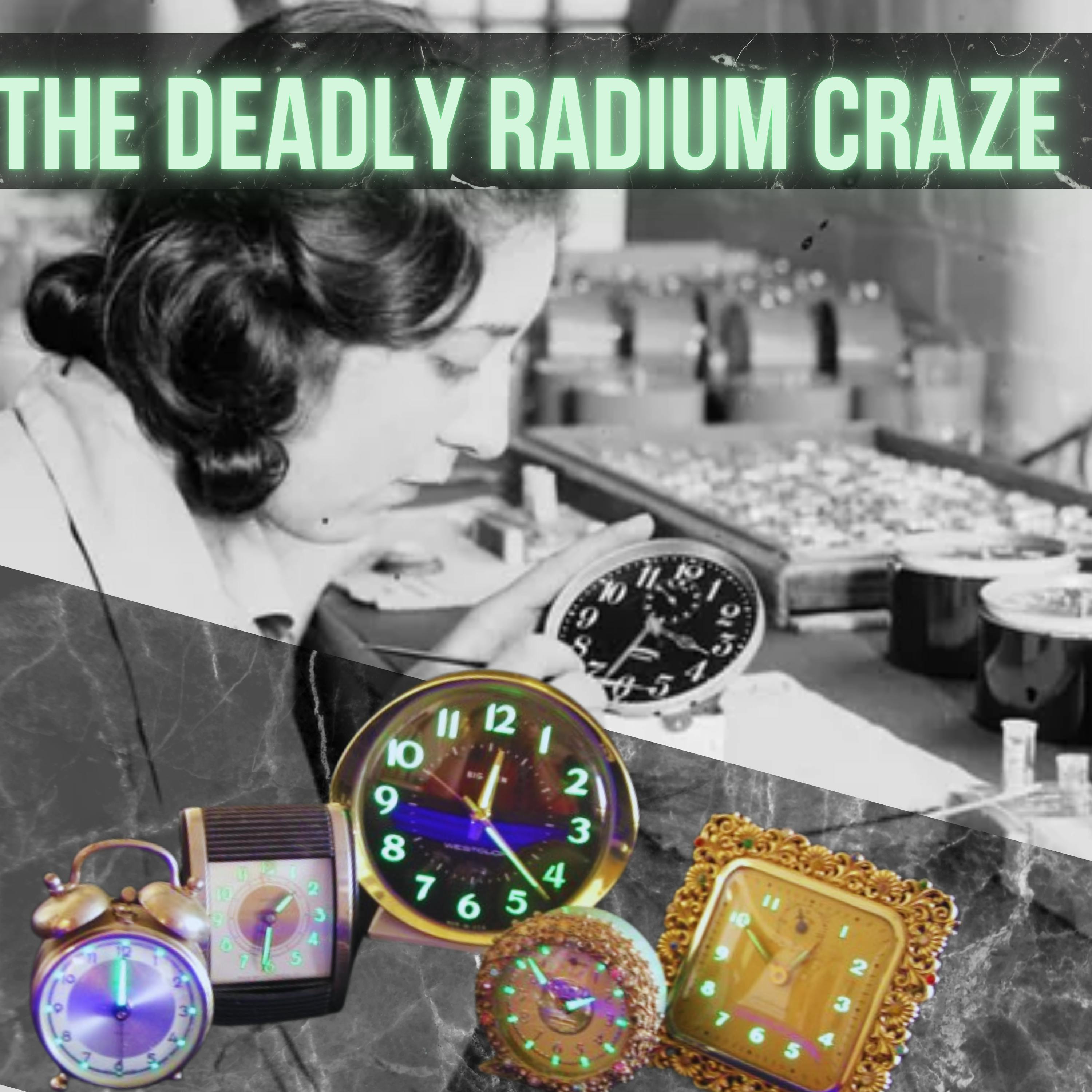
The radium dial industry, it was a thing. And it began during World War I, when companies were hired to make glowing watches and military equipment readable without light for the U.S. army and the Navy. Soldiers needed equipment that could be read in total darkness, where a flashlight or a lit match could blow their cover. So radium paint became a military obsession, and by the 1920s, the industry exploded. Factories across the US hired hundreds of young women to paint these luminous dials using a radium paint called undark. These women became known as the Radium Girls. They were told radium, it was safe, and it was actually beneficial to their health. Some were even told that it would give them rosy cheeks and glowing skin. Supervisors instructed them to lip point their brushes, you know, to shape the bristles with their lips to maintain a sharp point.
- [06:37]
B
Wait, so, like, dip the brush and then lick it? Essentially, yeah.
- [06:42]
A
To get a nice sharp point with whatever they were painting. And each lick delivered a tiny dose of radioactive poison.
- [06:51]
B
Okay, that's a little weird, but. So what was later discovered was that the human body treats radium like calcium. It's chemically similar. So the body absorbs it straight into the bones, especially the jaw, ribs, hips, and legs. And once radium settles there, it stays. It keeps firing radiation from inside the skeleton, destroying bone tissue, weakening the marrow, and slowly turning the bones into something soft and brittle.
- [07:20]
A
And it's crazy that these women were, you know, ingesting this, breathing it in, and had no clue.
- [07:27]
B
Yeah, they were told it was safe.
- [07:29]
A
Yeah, they had no clue that it was literally deteriorating their skeletal. Their whole body, their bones.
- [07:36]
B
And we'll go into examples of that of, like, how bad it really mangled them.
- [07:41]
A
Yeah. And it was actually their jaws that were first to crumble, because every time they would lip point, they were delivering radiation directly to the bones closest to their mouths. And the radium, it just built up until the bone simply disintegrated. And at first, as you can imagine, the job felt glamorous. The girls would leave work with glowing dust in their hair and on their clothes. Some even painted their nails or their teeth with luminous paint for fun. But soon, the glow signaled something far darker. Many workers developed anemia, bone pain, tooth loss, and spontaneous fractures. One woman, Molly Maggia, visited a dentist because she had a toothache. And when he pulled the tooth, part of her jawbone came with it. Her entire lower jaw fell out before she died at the age of 26. Now, here's the interesting part. Her official cause of death was listed as syphilis, a sexually transmitted infection. And Molly was not the only one. Many of women's death certificates were quietly altered to list syphilis, anemia or gastrointestinal problems. Instead of radium poisoning, it was a deliberate effort to basically smear their reputations, silence their families and protect the corporation. Their suffering was turned into a moral accusation, not a medical truth.
- [09:06]
B
Yeah, I mean, they were dying from radiation that was destroying them from the inside. And the official records lied to cover it up.
- [09:14]
A
So as radium accumulated in their bones, the damage spread. Some women's legs snapped while they were walking. Hips collapsed without warning. Spines weakened or curved. Their bone marrow was so damaged, they became severely anemic and unable to fight infection, their skeletons were literally dissolving.
- [09:34]
B
Yeah, and the horror of it all is it's hard to imagine. I mean, these were young, healthy women whose bones just suddenly behaved like brittle chalk, like snap, snap, crackle, pop.
- [09:48]
A
Another painter named Grace Fryer noticed that her jaw was weakening in 1922. Her bones were so hollow and porous that they resembled moth eaten fabric. Doctors did not understand what they were actually seeing until more workers came forward with the same horrifying symptoms. And to investigate, US Radium hired a Columbia University doctor who declared the women perfectly healthy. Only later did the public learn that he was secretly working for the company.
- [10:19]
B
And when the company hired Harvard physiologist Cecil Drinker for an independent assessment, his report exposed catastrophic workplace conditions. US Radium altered his findings, submitted a fake version to regulators, and claimed that everything was fine. And that level of corruption is staggering.
- [10:38]
A
It really is. And when more women fell ill, attorney Raymond Berry filed suit on behalf of Grace Fryer and four other workers in 1927. The press called them the Radium Girls. And their health was failing fast. By the first court appearance, none could raise their arms to take the oath. And US Radium's strategy was to delay. Journalist Walter Lippman condemned the delays in a scathing editorial writing saying, quote, there is no possible excuse for such delay. The women are dying. This is a heartless proceeding. It is unmanly, unjust and cruel. This case calls for simple, quick, direct justice.
- [11:18]
B
And that quote still hits hard. I mean, these women, they were fighting for survival. And the company tried to stall them out. Basically, it was a waiting game for them. Make them wait long enough and they'll just disappear. Die.
- [11:33]
A
Dissolve. And in 1928, the lawsuit settled. Each woman received $10,000 medical expenses and a $600 yearly pension. Most were too sick to even live long enough to collect more than a payment or two. But the case it changed workplace safety forever and exposed corporate deception on a national. What if I told you that 2026 is the year you launch your business? Maybe you've got an idea you just can't shake. Or that hobby that everyone in your life is telling you to sell. Taking that first step and finally taking action can feel impossible. But with Shopify, all you need to turn your dreams into your new future is at your fingertips. Make 2026 the year you transform into the entrepreneur, founder and boss you were meant to be. And the one powerful move to make it all happen is starting your business with Shopify. Shopify gives you everything you need to sell online and in person, giving you all the tools to easily build your dream store. Choose from hundreds of beautiful templates that you can customize to match your brand and you can set up quickly with Shopify's built in AI tools that will help you write product descriptions and headlines as well as edit product photos. Millions of entrepreneurs have already made this leap, from household names like Gymshark and Mattel to first time business owners just getting started. Marketing is built in too. You can create email and social campaigns within Shopify to reach customers wherever they are. And as you grow, Shopify grows with you. The same dashboard that you start with will evolve as your business does to handle more orders and expand to new markets in 2026. Stop waiting and start selling with Shopify. Sign up for your $1 per month trial and start selling today at shopify.com realm. Go to shopify.com realm that's shopify.com realm Hear your first this new year with Shopify by your side. I'm not going back to college to be your friend. I'm going so I can get Uber one for students. It saves you on Uber and Uber Eats. I'm there for $0 delivery fee on cheeseburgers, up to 10% off smoothies and 6% Uber credits back on rides. Just to be clear, I'm there for savings, not whatever you think college is for. Get Uber one for students a membership to save on Uber and Uber Eats. With deals this good, everyone wants to be a student. Join for just $4.99 a month. Savings may vary. Eligibility and member terms apply. This episode is brought to you by State Farm. Having insurance isn't the same as having State Farm. It's like matching with someone who says they're adventurous Only for them to cancel your date because they're feeling too lazy to leave the couch. You wouldn't settle for dull dates, so don't settle for just any insurance. When it comes to getting the help you need, State Farm is the real deal. Like a good neighbor, State Farm is there. So while women were dying in factories, wealthy Americans were voluntarily drinking radium as a health tonic. The most infamous was Radithor. Marketed as perpetual sunshine. Each bottle contained radium 226 and228 dissolved in water.
- [15:01]
B
Yep. So basically, people paid to drink radiation. I kind of feel like it would be, like, monster, but not taste as good.
- [15:09]
A
Would you have been tempted to try liquid sunshine?
- [15:13]
B
100%, yeah. YOLO.
- [15:17]
A
Now, one of Radithor's biggest believers was industrialist Eben Byers. Over several years, he consumed more than 1400 bottles. And at first, he claimed that he felt energized. But by 1932, doctors described his condition as holes forming in the skull. His jaw broke apart, his bones crumbled. A famous Wall Street Journal report said the radium water worked fine until his jaw came off.
- [15:44]
B
Hmm. Yeah, good reporting.
- [15:46]
A
And even decades after his death, his remains were radioactive enough to trigger Geiger counters, which is an instrument that is used to detect and measure levels of radiation.
- [15:56]
B
And that's a lot of radiation. And his case finally woke the government up. It pushed the United States to strengthen early FDA enforcement and cut down on medical quack products.
- [16:09]
A
And we have to point something out here. Looking at the big picture, there were many women who had already died at this point, some with falsified causes of death on their certificates to hide what really happened. Their bones were crumbling, their jaws were disintegrating. And not no one in power stepped in. But when a wealthy man suffered the same fate, suddenly, the danger of radium became a national concern.
- [16:33]
B
Stomp the brakes.
- [16:34]
A
It shows a lot about who society chose to believe back in the 1920s. And Radithor. It wasn't the only product. Tens of thousands of American homes purchased a device called the Revigator. It was a ceramic crock that was lined with uranium and radium ore. And. And you would fill it with water overnight. And by morning, it was infused with trace radium, radon gas, and heavy metals. And families drank this water daily, believing that it boosted vitality.
- [17:04]
B
They were literally sipping arsenic, lead, and radium at the dinner table. And people thought that it was healthy.
- [17:10]
A
And the radium fat it stretched into cosmetics, butter, toothpaste, children's toys, even glow in the dark clothing for performances. Anything that could glow became fashionable. It was marketed as modern, scientific, glamorous.
- [17:26]
B
It's for smart people. And also, I think we left out deadly. But if you looked at the ads at the time, you would have thought radium was a miracle. Beauty ingredient magazines showed women brushing glowing powder across their cheeks. A bright, youthful complexion. Some face creams even bragged that a healthy radiance would shine through the skin. Under dim light, the radium cosmetics gave off a soft, pale glow that looked magical. People had never seen anything like it, so it felt expensive and futuristic. The marketing leaned hard into the idea of a scientific glow. They used words like vitality, rejuvenation, and even mortality, which is kind of ironic. It was the 1920s version of a high end beauty trend. But in reality, the glow was the radiation leaking out.
- [18:19]
A
I mean, imagine getting ready for a night out and your face cream is actually radioactive. It's just wild.
- [18:26]
B
It's like that one song, you know, Radioactive.
- [18:29]
A
Yeah. And cosmetics were only the beginning. In some homes, radium showed up in the pantry too. Like we said, there were butters and creams advertised as energy boosting and glow giving.
- [18:41]
B
Could you have glowing toast? Yeah, I like it.
- [18:45]
A
Now, some companies claimed radium enriched foods would strengthen your blood, help digestion, or even prevent aging. And none of this was true. But the marketing was, you know, totally in on it. They were so convincing that everyday families bought the products without question. Children's toys were another shock. Glow in the dark building sets, paint kits, and even little figurines were sold with tiny amounts of radium mixed into the materials.
- [19:11]
B
It's kind of like ketchup. Remember we had like purple and green ketchup.
- [19:15]
A
Ooh, ah.
- [19:17]
B
That could have been radium and I would have died happy.
- [19:20]
A
Yeah, it would have been, you know, something we just didn't know. And kids, they played with these things right in their bedrooms, probably chewed on them, you know, and parents thought that it was harmless fun because, I mean, glowing toys, they're exciting kids even today. And the radium craze, it didn't stop at makeup or glow toys. Companies were putting this stuff in places that make you wonder who sat in a room and said, let's do this, this is a great idea. I mean, there were radium condoms, Actual glowing in the dark condoms infused with radium.
- [19:56]
B
I don't know. That doesn't sound like a bad idea.
- [19:58]
A
And they were also advertised to boost male vitality.
- [20:02]
B
I mean, that's pretty insane. Imagine you're in a marketing meeting with, like all of these people around you and you're like, hey, guys, have we thought about using radiation?
- [20:13]
A
I mean, it's the latest thing. Let's give it a shot. And it gets better or maybe worse. People had this stuff all over the bedrooms, too. One of the biggest sellers was radium alarm clocks. Those classic metal ones with the little bells on top.
- [20:28]
B
Oh, yeah, those things that they glowed bright enough to use as a nightlight.
- [20:32]
A
Yeah. Everyone kept one right next to their face on their nightstand, inches away all night long. And you roll over, you know, check the time. Basically sleeping next to a radioactive dial. And the wild part is people thought that this was cutting edge technology. Like, look at me, I have this modern glow alarm clock.
- [20:52]
B
Yeah, exactly. I mean, we had light up shoes when we were kids, and that was pretty awesome. Yeah, I mean, anything that lights up is cool. Doesn't mean it's safe, but cool.
- [21:02]
A
I mean, whenever I was a kid, I had this Nickelodeon flash screen. It was like just this plain white screen. And you would play with it in the dark and use, like, a flashlight, and it would flash your silhouette on it and it would glow, and it was just like hours of fun.
- [21:16]
B
Oh, I remember that.
- [21:17]
A
Yeah. Awesome.
- [21:19]
B
I used to use my middle finger.
- [21:21]
A
Oh, my gosh. You were one of those kids.
- [21:24]
B
And what's crazy about, you know, these alarm clocks or whatever these products is that they're humming with radiation for decades. Like decades have passed, and they're still setting off geiger counters today.
- [21:37]
A
Yeah, that's wild. So between the glowing beauty creams, the radium butter, the kitchen, the kids toys lighting up the bedroom, the condoms nobody asked for, and these radioactive clocks shining through the night, families were completely surrounded by radium without even knowing it.
- [21:53]
B
Yeah, I mean, the 1920s, they were pretty wild. It glowed, and people bought it. It's kind of like today I feel like we could repeat this part of history. I'd buy it now.
- [22:04]
A
These stories really reveal how powerful marketing can just override science. I mean, companies were selling hope and beauty in glowing bottles while hiding the danger. And workers were sacrificed for profit. But the Radium Girls, they changed everything, even if it didn't happen right away. For years, no one believed them. Their symptoms were dismissed. Their death certificates were even altered, and their voices were ignored. But their fight eventually forced the legal system to recognize occupational illnesses and created the groundwork for future radiation safety roles. And while it took the very public death of wealthy socialite Eben buyers to make make the government crack down on radium products, it was the Radium Girls who reshaped workers rights so one case changed regulation and the other changed the law. Both were tragic, but the women's courage set the standard for worker protections that still exist today.
- [23:00]
B
That's pretty cool. I feel like World War I, right? All I see is like propaganda posters. I feel like Radium Girls, they should have had their own propaganda poster. Something like Uncle Sam or something, right? Like they were almost superheroes. Like they, they had a real cause. Like they should be more of a part of our history. I said it. I said it.
- [23:22]
A
Yeah, let's cheer for the Radium Girls because they did make change and they freaking were just deteriorating at the age of 20 something. 26.
- [23:30]
B
I agree. I agree.
- [23:32]
A
Oh, it's horrible. Now, people often ask whether today's glow in the dark toys are dangerous. And the answer is no. Modern glow pigments use zinc sulfide or strontium aluminate, which charge under light and are completely safe.
- [23:47]
B
And for items that still need long term glow, like gun sights or watch dials, manufacturers use sealed trinium. It's a radioactive gas. But the beta particles can't even penetrate human skin. So says a smart scientist.
- [24:03]
A
Hopefully that fact stays the same. Now, today, the original radium glow survives only in vintage items like aircraft gauges, military watches, and uranium glass collectibles. The glow fades, but the radiation remains. Even after 100 years, collectors who track.
- [24:21]
B
Down radium watches are literally keeping radioactive antiques in their home. And that's insane to me.
- [24:28]
A
But it's kind of wild when you think about it. Our history, it just has such a haunting and scientific wonder. There's tragedy, misplaced trust. It just reminds us of how far we've come and how dangerous things become when hope and profit overshadow safety. So that was a lot to unpack here. We talked about glowing dials, radioactive cocktails. We didn't talk about that. But yeah, there was those. And it's just crazy to think that this is a part of our history that I never even really knew until we looked into this.
- [24:57]
B
And it's pretty weird. Weird history.
- [25:00]
A
Hmm. I feel like I'm going to have like really weird dreams.
- [25:06]
B
I'm going to have weird dreams about weird history.
- [25:08]
A
I'm going to have weird dreams that my jaw is deteriorating now.
- [25:11]
B
You already have those dreams.
- [25:13]
A
I know, but it's just going to happen. I'm going to wake up and go, ricky, my jaw.
- [25:17]
B
I'm going to go back to bed. I have three hours till I have to get up. But if you like history and you like it weird, this is something that we're going to turn into a full show eventually. So right now we're kind of just doing it as a segment. But yeah, hopefully it becomes its own show and you can follow us over in a other place.
- [25:40]
A
All right. Until next week.
- [25:42]
B
Also, it's almost Christmas.
- [25:45]
A
I want to go to bed. Yeah, it is. Did you wrap any gifts yet?
- [25:49]
B
Oh, that's your job.
- [25:51]
A
Don't worry, I have it all covered. Actually. I've been wrapping them as they come and to the house as they get delivered, I'm just like, all right.
- [25:58]
B
I mean, I normally get them off the porch. So I mean, I did my part.
- [26:14]
A
Where was she? The disappearance of Carrie Farmer was quite unlike any other because Carrie hadn't exactly vanished, but retreated beyond the shadows to release rage in torrents of text messages. And it just went on and on and on. Beyond diabolical, beyond the macabre to murder.
- [26:33]
B
A story straight out of left field.
- [26:36]
A
I'm Keith Morrison, and this is Something.
- [26:38]
B
About Carrie, an all new podcast from Dateline. You're on edge as to what's going to happen next.
- [26:44]
A
Listen now, wherever you get your podcasts.
- [26:49]
B
Right now on the infamous America podcast. The disappearances started with a mother and daughter. They were followed by two sisters from Texas and then three children from the same family. And in between, according to the lore.
- [27:03]
A
There were dozens more.
- [27:04]
B
During a sensational murder trial, the legend of H.H. holmes grew from sleazy con man to one of America's most notorious and prolific killers. But how much was true? The story of H.H. holmes is happening now on the infamous America podcast.
- [27:19]
A
Every horror film hides a secret. Behind the killers, the haunted houses, and the urban legends, there's a true story. Welcome to the Fear Archive, the podcast that digs through case files and cult classics to uncover the real crimes that inspired your favorite horror movies. We're funny, we're obsessive, and we're not afraid. Afraid to get our hands dirty.
- [27:42]
B
Because the films, pure fiction.
- [27:45]
A
But the bodies, they're always real. The Fear Archive, a Violet Hour media podcast. Follow now on Apple Podcasts, Spotify or wherever you listen.