Loading summary
Transcript91 lines
- [00:01]
A
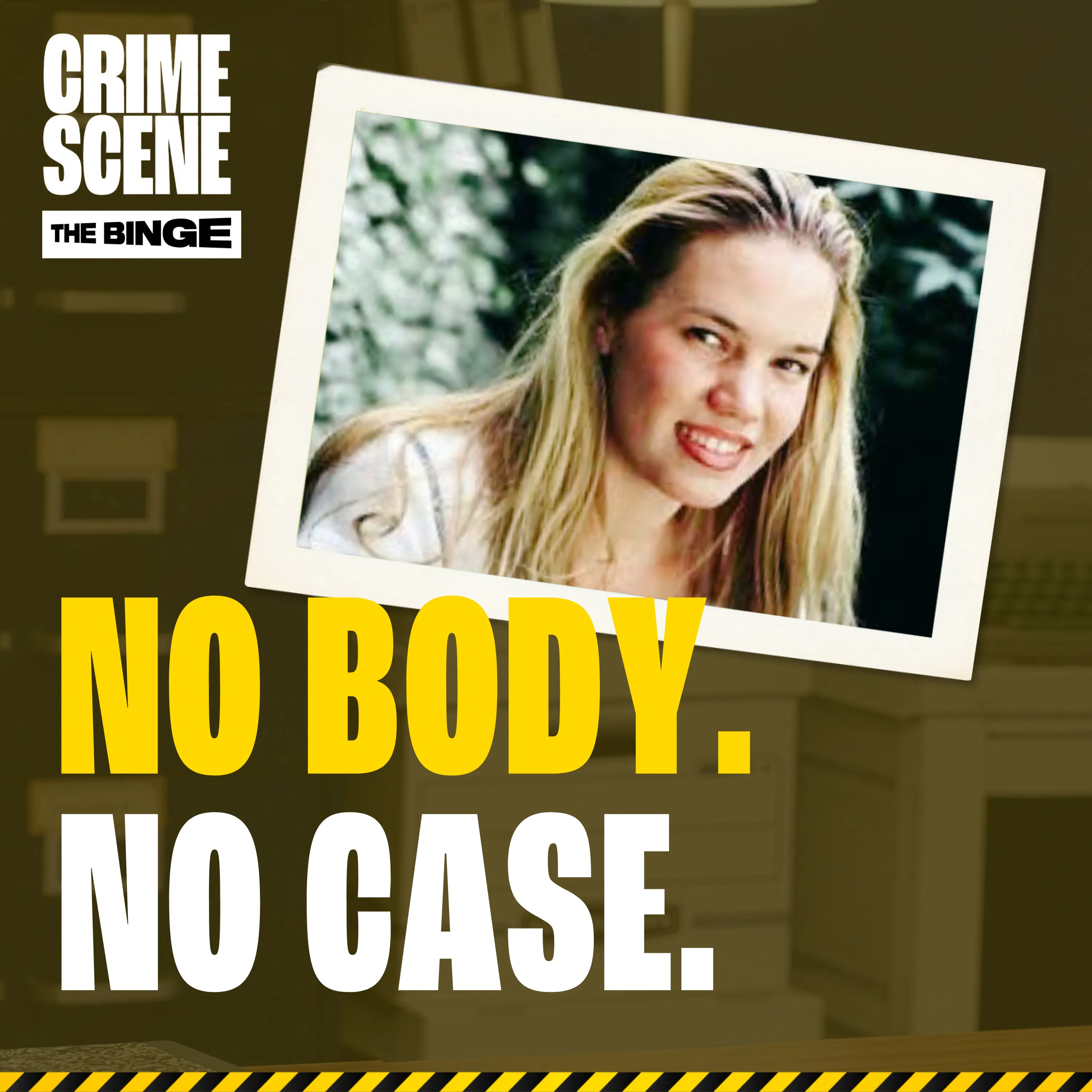
I see you. Fire and Ash is now streaming on Disney. It's the film critics are calling the best avatar yet. A true epic and completely jaw dropping. This is the only pure thing in this world. Return to Pandora on Disney. It will be an adventure for the whole fam. And watch the Oscar winning phenomenon at home. This is sick. Fire and Ash now streaming on Disney. Rated PG 13. On Memorial Day weekend in 1996, a freshman at Cal Poly University disappears. A year later, the sheriff of that county tells the local paper he knows exactly who killed this person. But it would take another 23 years of investigation for this cold case to heat up. Welcome to Crime Scene, the show where we tell the stories behind the world's most unforgettable crimes. This week on the show, the case of Kristen Smart. A college girl goes missing in a small California town. A murder case without a body, and a podcaster who helped to bring a killer to justice. From Sony podcasts and the binge, this is a story we're calling where is Kristen Smart? Hey, all. Welcome to Crime Scene. My name is Jonathan Hirsch. Each week, over three acts, we dive into the most shocking true crime stories of our era.
- [01:30]
B
And.
- [01:30]
A
And each week I am joined by my friend and fellow documentarian, Cooper Maul. Hi, Cooper.
- [01:36]
B
Hey, Jonathan.
- [01:37]
A
Don't forget, this show is a part of the binge, which is the true crime network that I head up. You'll hear Cooper on from time to time. And each month we bring you a new limited true crime series. So go to getthebinge.com if you want to hear more. Okay. I feel very self conscious in teeing up this one, Cooper, because who says that podcasters can't solve crimes?
- [01:57]
B
Yeah, who does say that, right?
- [02:00]
A
This is a case that rested entirely on what people knew or didn't know about the main principles involved because there was no body and without a body, you really, truly don't have any evidence. So to find answers, folks needed to make sense of the story of what happened to Kristen Smart. And a lot of people do know this story, especially the community that we're part of, the podcasting true crime community and where we're from and exactly here in Southern California. So I just want to say that we owe a huge debt to Chris Lambert, who created your own backyard, the podcast, and really put this story on the map.
- [02:47]
B
Yeah, it cannot be understated.
- [02:49]
A
It's an incredible series. Recommend you all listen to it. And the reason I bring all of that up too, is that because this storyteller was the one who finally got the town to talk. And when they did, they started finding answers.
- [03:03]
B
Let's get into it.
- [03:04]
A
All right. So it's the Friday night of Memorial Day weekend, 1996, San Luis Obispo, California. It's the last weekend of Kristen Smart's freshman year at Cal Poly. And Kristen is doing what most students do the last Friday of the school year. She's looking for a party. A house on Crandall Way, a few blocks off campus. Has a reputation for getting rowdy, and she wants to go there. But the other women in the car don't want to. As Kristen climbs out, a friend in the backseat tries to change her mind one more time. That May, Kristen was sort of in the middle of something. She was 19. She just transferred from UCSB Santa Barbara a few months earlier. She was 6 foot 1. She had high cheekbones, dark almond shaped eyes. She looked like a supermodel. In her diary that spring, she'd written she was not sure if Cal Poly was the right fit for her. Friends would later tell police that she started using these aliases. Dyed her hair from blonde to brown for a couple weeks. She started calling herself Roxy. Her friend Margarita Campos, who lived next door, said she was trying to get out of her comfort zone. And Kristen was encouraging. She spoke with 48 Hours about their last night together.
- [04:27]
B
Kristen was like, come on, let's go, let's go. And I was like, nah, I have to study. And so she pulled me into this sort of like, oh, come on, let's socialize.
- [04:36]
A
Margarita and the other girls decided to go home, but Kristen was adamant about going to one last party. Margarita told 48 Hours she will never forget the last time she saw Kristen.
- [04:48]
B
She was absolutely sober when I left her. I'll never forget her shadow against the building, this apartment complex, just standing, like, kind of cross armed with a long leg. And she was just kind of like looking at me like, you're really walking away now.
- [05:00]
A
Like you're really.
- [05:01]
B
You're leaving.
- [05:03]
A
So she walks the two blocks to the house on Crandall Way, alone inside. The people who see her that night will tell investigators that she seemed off flirtatious in a way that didn't match her. Unsteady, almost like she was on something or. She didn't really drink that much. At some point, she pulls another student into a bathroom. She looks at herself in the mirror and she asks over and over, am I ugly? Do you think I'm ugly? Am I ugly? She kisses a basketball player that night. Later, she's overheard insisting that she has to find him to apologize. One student tells police she's drinking tequila. A detective will later say he has information that she is chugging tumblers of vodka. And at some point that night, the host of the party sees another partygoer on top of Kristen in another room, a freshman, also from Cal Poly. The host will say he cannot tell in the moment whether the guest has knocked her down by accident or on purpose. The guest name is Paul Flores. By 2am Kristen has passed out on a neighbor's front lawn. Two students, Cheryl Anderson and Tim Davis, pass by. They recognize her from the dorms. They pick her up, and they start walking her back towards Muir hall, her dormitory. A few hundred feet in, somebody else falls into step beside them. It's the guest from the bedroom, Paul Flores. He says he lives in Santa Lucia hall, the dorm next to Kristen's. He offers to help. Tim peels off first to head to his own place. Then it's just the three of them, Cheryl, Kristen, and Paul, walking towards Santa Lucia. When they get to the door of Paul's dorm, Cheryl asks him to take Kristen the rest of the way to the courtyard. She asks him twice. She has to threaten to do it herself. And before she walks away, Cheryl will later say Paul asks her for a hug and a kiss. She says no. She thinks it's weird. She leaves. Paul Flores walks Kristen across the courtyard between Santa Lucia and Muir Hall. This is the last time anyone reports seeing her alive. Saturday morning came, then Sunday, then Monday, Memorial Day. People in the dorms were coming and going. Kristen's roommate didn't immediately notice the empty bed. By Tuesday, May 28, with Kristen still not back, Margarita walked over to Cal Poly's campus police office and tried to report her missing. They declined to open a report.
- [07:38]
B
They were like, are you sure she didn't go out of town? It's like she has nothing on her. How could she have gone out of town?
- [07:45]
A
6 hours north in Stockton, Kristen's parents, Stan and Denise Smart, had been trying to reach their daughter all weekend and getting nowhere. They drove down to San Luis Obispo themselves before an investigation had even been opened. They would later say the campus police treated their daughter's disappearance, in their words, like a lost bicycle. The very first field report on this case, filed by the campus patrol officer about a week after Kristen vanished, ended with this paragraph, quote, smart does not have any close friends at Cal Poly. Smart appeared to be under the influence of alcohol. On Friday night, Smart was talking with and socializing with several different males at the party. Smart lives her life in her own way, not conforming to typical teenage behavior. These observations are in no way implying that her behavior caused her disappearance, but they provide a picture of her conduct on the night of her disappearance. In any missing person's investigation, the first thing detectives do is talk to the last person who saw the victim alive. So Cal Poly campus PD sat Paul Flores down more than once. He told them he walked Kristen home and turned back. There were details in his account that didn't sit right with investigators. There was still no body. And the trouble was that by the time the investigators were really pressing him, almost a month had gone by. Cal Poly's campus police had not sealed any of the relevant locations, including the dorm room. They didn't get a search warrant. They hadn't pulled physical evidence from anywhere. By the time the San Luis Obispo County Sheriff's office finally took over the case at the end of June 1996, whatever traces of Kristen's last night might have existed once they were, for all practical purposes, gone. Okay, Cooper. By now, I'm sure we're all pretty frustrated hearing this, because it's like you're watching an investigation run away.
- [09:49]
B
It's maddening.
- [09:51]
A
And, you know, we've all heard that phrase, right, that, you know, the first 48 hours are the most important. And, you know, I'm loathe to reissue those things when people who are listening to this are smart. You guys know these things. But this, to me, does feel like the quintessential example of how the first 48 hours of police work potentially could have transformed what had happened here.
- [10:18]
B
Definitely. I mean, detectives know that if within those first two days, they're not getting witness statements, they're going to be chasing memories that are already starting to revise themselves.
- [10:29]
A
Right.
- [10:30]
B
Evidence is degrading, and the suspect in those first 48 has time to, like, clean up, prepare an alibi, get away.
- [10:39]
A
Right? Like, rehearse what conversations they will likely have to have someday about this. And it's also structural, by the way, like how they allocate time so that first 48 hours gets the full bandwidth and interest of a lot of these local police departments. And then after that, it's competing with all these other open files in the cabinet.
- [11:03]
B
And in Kristen's case, you know, the first 48 had ended before anyone was even looking for her.
- [11:09]
A
It's a shame, right?
- [11:10]
B
Like, nobody had called the cops by that Tuesday. They were three days past the first 48. So during that time, the first attempt to open a report failed. So. So by the time this case had a name even, it was past its prime.
- [11:25]
A
Yeah, 100%. And there is some studies also about the first 48. This is not just a subjective thing. Homicides solved in the first 48 hours clear at over 50%. Whereas if you pass two weeks from the date of a homicide, it drops to below 20%. Yeah.
- [11:45]
B
I mean, Kristen's case wasn't passed two weeks. By the time the sheriff's office even had it, it was past a month.
- [11:52]
A
It's insane.
- [11:53]
B
Right? Which means by the math the FBI is running the day this case became a sheriff's office case, it was already a case that statistically was maybe never even going to clear.
- [12:05]
A
Yeah. That's why a case like this needs all the things that happen afterward and why it's so remarkable. And we wanted to share it on the show. It'll take 25 years before anybody in a uniform actually finishes what was started here. But strangely, it won't take 25 years for the sheriff of San Luis Obispo County, Ed Williams, to figure out himself who he thinks killed Kristen. Smart. Coming up, two women come forward. Summer always makes me want to simplify what I'm wearing. Lighter fabrics, classic pieces, things that feel comfortable but still look sharp without a lot of effort. That's one of the reasons I keep going back to Quince. They make really high quality essentials using premium materials like organic cotton, European linen and washable silk, but at prices that are actually reasonable because they cut out the middleman. Right now I'm especially into their organic cotton oxford shirt in the blue university stripe. It's one of these timeless shirts that works for pretty much anything. Casual weekends, dinners out, travel. And the organic cotton has a soft, broken in feel right away. It looks polished but still relaxed enough for summer. I also have a feeling maybe I should get a second one just in case. And Quints keeps their pricing 50 to 80% lower than similar luxury brands by working directly with Ethical Factory. So you're paying for the quality itself, not a huge brand markup. Elevate your summer wardrobe. Go to quint.com Crimescene for free shipping on your order and 365 day returns. Now available in Canada too. That's Q U I n c e.com crime scene for free shipping and 365 day returns. Quince.com Crimescene you know, when people hear that Mint Mobile plans start at just 15 bucks a month, the immediate reaction is always, okay, but what's the catch? But honestly, there really isn't one. You get unlimited talk and text Reliable, fast coverage on the nation's largest 5G network. And you get to keep your current phone and number. Mint basically took everything annoying about wireless plans and made it simple. And one thing I've definitely noticed since switching is just not having that giant monthly phone bill hanging over me anymore. You choose a 3, 6, or 12 month plan up front and then you're done thinking about it. So if you're still overpaying for wireless, it's a pretty easy switch. To get your new wireless plan for just 15 bucks a month, go to mintmobile.com Crimescene that's mintmobile.com Crimescene. Cut your wireless bill to 15 bucks a month at mintmobile.com Crimescene THAT'S IT. No catch. $45 upfront payment required. Equivalent to $15 a month new customers on first 3 month plan only. Speed slower above 40 gigabyte on unlimited plan. Additional taxes, fees and restrictions apply. See Mint Mobile for details.
- [15:28]
B
Okay, Jonathan, so when we left it, Kristen Smart was missing. Paul Flores is the last person to have seen her alive.
- [15:37]
A
Yeah.
- [15:38]
B
Yet Cal Poly's campus police had handed out a cleaned out dorm room and a thin file to the San Luis Obispo Sheriff's office. They have a suspect and a story, but they don't have a body.
- [15:52]
A
Yes. So five years pass from that early period. 10, 15. The Smart family files a wrongful death suit against Paul Flores, the boy who walked her home that night. He invokes his Fifth Amendment rights and the case is dropped. In 2002, on the sixth anniversary of her disappearance, a judge declared Kristen legally dead. The FBI lists her as a high priority missing person. There's still a billboard above the freeway in Arroyo Grande with her face on it. And every year, May rolls around and the local papers run a story. But nothing moves the case until September 2019, when a 31 year old musician from Orchid, California named Chris Lambert publishes the first episode of a podcast that he's been working on alone in his apartment. And he calls it, your own backyard. The Kristen Smart disappearance took center stage on our TV that summer, especially because it happened in our own community.
- [16:55]
B
Kristen Smart.
- [16:56]
A
Kristen Smart. Kristen Smart. Kristen Smart.
- [16:58]
B
Kristen Smart.
- [16:59]
A
Kristen Smart. Then over the next few years, it kind of just stopped. Besides the occasional comparison to later missing persons cases, I didn't hear her name for a long time. So Lambert does what people do when they're beginning an investigation, even though it had been so many years. He starts at the beginning. And about three weeks after Kristen Smart goes missing, it's pretty clear to the people Involved that something bad has happened here. This is not just a runaway situation. We don't know that for a fact yet. But cadaver dogs are brought into Paul Flores's dorm room. And these dogs are supposed to respond or alert when they recognize, like that a body's been there or whatever. They definitely do. They make a beeline for Paul Flores bed. Three separate dogs, each working independently, were brought one at a time down that same hallway and each one alerted at the same time door, which of course is where Paul Flores's room had been. And they all went to the same corner of the room, the left side, where Paul Flores's bed had been. The handler of one of the dogs described her dog's reaction as being quite dramatic. She said that the dog just about broke her neck. A week after that, a fourth handler was brought in as a sort of blind test. She walked her dog down that same hallway without being told which room was important. And the dog picked the room without prompting, walked in and alerted to the same corner. Lambert tracked down those original handlers and they told him the same thing they had told investigators a quarter of a century earlier, which is a body had been there. They couldn't say who. But even that early on, Kristen's case looked like a homicide. Lambert goes back to what the 96 investigators had on Paul Flores and what they did with it. Paul was a freshman from Arroyo Grande, small town just up the coast from San Luis Obispo. By the spring of 1996, he was carrying a 0.6 grade point average. He he had a record before Kristen Smart. In December of 95, a female student called slow police at 1am and hold dispatchers that Paul, apparently drunk, was standing on her balcony, refusing to leave. He's gone by the time the officers arrive in that case. And then in February 96, just a couple of months before Kristen goes missing, he gets a DUI after he was seen blowing through a downtown intersection in his pickup and lost his license. People who knew him called him annoying. He bragged about sexual conquest, though everyone he knew just assumed he was a virgin. In fact, his parents, Susan and Reuben Flores, told investigators they bought him a pool table in high school because they were hoping he'd make friends because he had none. He would get drunk by himself and go out looking for parties. Lambert discovered the early oddities in Paul's own account. He came back from Memorial Day weekend with a fresh black eye. Asked about it by Cal Poly investigators, he gave three different explanations on different days. Paul's roommate told police he had Asked Paul as a dark joke what he had done with Kristen, and Paul answered, she's home with my parents. He said it wasn't serious. Allegedly. Investigators eventually sat Paul down for an interview and recorded it. That you're not an American boy like any of us would be, and you
- [20:47]
B
know, you've got play little kissy face,
- [20:49]
A
little touchy poo, this kind of stuff, you know, if, if you did that, would you tell us about it and not be afraid to tell us? Because it's very important that you tell us everything. Did something like that happen, you know, based on her being a little, little loose or anything?
- [21:05]
B
No.
- [21:05]
A
Never kissed or anything. Did you want to kiss her? No, I, I, I, I didn't feel, I didn't remember, put any traction towards her.
- [21:13]
B
So.
- [21:14]
A
What is striking about this tape, according to the people who have watched it, is his body language. As detectives pressed him, Paul Flores physically pulled his arms inside of his shirt and, like, scrunched over his chair like he was getting into the fetal position. Between you and I, is there anything you're leaving out? No. Think about the party now. There's nothing else. I don't even remember anything. On the one year anniversary of Kristen's disappearance, the sheriff of San Luis Obispo county at the time, a man named Ed Williams, went to the local paper of record with a very strange request, One that perhaps showed how desperate he was. Quote, we need Paul Flores to tell us what happened to Kristen Smart. The fact of the matter is, we have very qualified detectives who have conducted well over a hundred interviews, and everything leads to Mr. Flores. There are no other suspects. So absent something from Mr. Flores, I don't see us completing this case. What sheriff Williams was acknowledging indirectly is that this case now had two possible endings. Either Paul Flores would confess, or somebody would find Kristen's body. Without one of those two, there was no case. So Paul Flores said nothing. For 22 years, prosecutors at various points would offer to talk about a deal. He turned them down. The smarts always said it was his silence that kept him free. But interestingly to Lambert, it was Paul Flores's silence. Sure, that was only part of what kept this case cold. The other part was reluctant witnesses. Once his podcast, your own backyard, started attracting attention, lots of people came forward. Like a young woman named Jennifer Hudson. In the summer of 96, she'd been watching TV with Paul Flores and some of his skater friends when a commercial about Kristen Smart missing came on. Then Paul said this, quote, I was at a party with this, and all she did was lead Me on. I finally had enough of her, so I took care of her. I'm done playing with her when I put her out underneath my ramp. In other words, Paul confessed to taking care of Kristen, killing her. Jennifer knew, but never spoke out until Lambert's podcast. Chris Lambert also spoke with two women who told him Paul had raped them. They asked to remain anonymous. Well, his nickname was Scary Paul.
- [23:56]
B
You wouldn't want to be alone in a room with them. You wouldn't let any of your friends be drunk around him. Those were kind of unspoken things.
- [24:02]
A
In 2008, a woman in Southern California, referred to in court records as Ronda Doe, went on a date with Paul. She would later testify that he drugged her, brought her back to his apartment, and assaulted her. She did not file a police report at the time. In 2011, three years later, another woman, known as Sarah Doe, would testify Paul had violently raped her, but also did not file a police report. It's not overstating to say that Lambert's podcast revived this case. Still, prosecutors struggled to do what seemed nearly impossible, which is build a case against an alleged murderer without a body. What they had instead was a pattern. And in California, prosecutors can put a pattern in front of a jury. Under a state evidence code called section 1108, prior testimony from other women a defendant has assaulted can actually be admitted to show a pattern. Without 1108, neither women would have testified at Paul's trial. They were the closest the prosecution would ever get to direct evidence of how Crystal Smart died in 96. By early 2021, thanks to Lambert, the case had momentum. All right, so let's pause for a second here, Cooper, before we get into our last act here. Let's be clear with everybody, right? No body. Murder convictions are incredibly rare, and until recently, they were considered nearly impossible.
- [25:35]
B
Without a body, you can't even prove a death is a homicide, which I know is a totally Captain Obvious statement, but it could be an accident, a suicide, a runaway. That's going to come back sometime down the line, right? Every Murder 101 question, you know, what killed Kristen? What time? Who left? DNA is answered by the body. So without a body, you have no answers. No answers, no case. Right.
- [26:01]
A
The cops might bring those cadaver dogs in, and they may sense that there's a body there, but what body? Right. It's incredibly complex to try to imagine that moment where you go, something happened in this room where this person was who is the prime suspect in the disappearance of this woman, and get from there to a murder conviction. And that's Exactly. The wall that sheriff Ed Williams hit in 97 when he went to the local paper with that she shocking statement. He had a suspect, he had a story, and he also had nothing to point to on the coroner's table.
- [26:41]
B
We have however, had cases where people are convicted and nobody homicide. So in California, Hans Rer was convicted in 2008 of killing his wife Nina before her body was ever found. In New York, Pedro Hernandez was convicted in 2017 of murdering a 6 year old in path back in 1979. The body has still never been recovered. And there's actually a database for these cases kept by a former federal prosecutor. It logs every American no body conviction back to the 1800s. And the most recent count I believe is something around 600.
- [27:22]
A
Wow. Okay, 600. That sounds like a lot. But I guess over 200 years, it's not that much. And at the end of the day, fundamentally, without a body, there's very few scenarios in which prosecution can go forward. And if you were a killer and you knew where the body was, the best way to stay out of the crosshairs of law enforcement would be to keep shut about the location of that body.
- [27:51]
B
Yet some prosecutors can get convictions on these types of cases. I think what makes a nobody case winnable comes down to three ingredients. A credible motive, a defendant who's incriminated themselves somehow, and a prosecution that is willing to do the work to build an entire narrative around circumstantial evidence.
- [28:13]
A
It's interesting you say that because that's essentially what Paul Flores ends up doing. The body was not in Paul Flores's dorm room. It hadn't been for a long time. It was allegedly at the home of the person in this story who had picked up the phone for Paul Flores in the morning hours of May 26, 1996. His father. Coming up 26 years later, Kristen's case goes to court.
- [28:49]
B
Foreign.
- [28:55]
A
This episode is brought to you by Fox 1. Watch all 104 matches of the FIFA World cup live in 4K for just $19.99 a month with 3 days free. Build your own multi view, choose up to three streams and follow player spotlights. Stay on top of every moment with live stats, highlights and instant replays. The FIFA World cup streaming live on Fox One offers a subject to change. See fox.com for complete terms and conditions. And we're live on matchday as Doug reaches for a buffalo wing.
- [29:27]
B
He's got it.
- [29:28]
A
Oh, and he's gone for a can of Pepsi too. What a finish.
- [29:32]
B
There's no doubt about It.
- [29:34]
A
It just tastes better.
- [29:36]
B
Matchdays deserve Pepsi. Okay to catch us all up.
- [29:40]
A
Yeah.
- [29:41]
B
Chris Lambert, the podcaster, has been pulling witnesses out of the woodwork. Jennifer Hudson has this ramp confession. The Sarah and Rhonda do's and the pattern of drugging and raping young women. And the 23 year old cadaver dog alerts that had never been acted on. So by early 2021, the sheriff's office finally seems like they have enough on Paul Flores.
- [30:06]
A
Yeah. Here's what the investigators had been quietly working on. Alongside everything that Lambert was surfacing, they had pulled Paul Flores's 96 phone records. And those records suggested that the college kid might have had a little bit of help. That moving a body and even fighting it could have been done with somebody else's assistance. In the first week Kristen Smart disappeared, Paul called his father, Ruben Flores, twice. The first call came on the morning that Kristen's roommate reported her missing. The second, right after Paul had been interviewed by Cal Poly's campus investigator in his dorm room. A career prosecutor, his name was Christopher Preval, took on Kristen's case as the investigation began to heat up again. He's a deputy DA. Anyway, Purvel's theory was that Paul called his father, not 91 1, because he needed help getting away with the murder. Purvel suspected this cover up was a family affair. Interestingly, the summer after Kristen disappeared, her father Stan had gone to Reuben's house in Arroyo Grande. He wanted to talk father to father. Reuben didn't even let him near the house. According to prosecutors, when Reuben saw Stan's car pull up, he ran to the middle of the street and he said, quote, you better leave or someone might get shot. It was 25 years later, in March of 2021, the San Luis Obispo Sheriff's county finally got a warrant for Rubin's house. Deputies, archaeologists and cadaver dog handlers showed up at the 710 White Court House in Arroyo Grande. Ground penetrating radar identified an anomaly in the soil under the deck behind the house. Over the next two days, investigators excavated it by hand. Sheriff Ian Parkinson would later call what they found there the epiphany moment of the entire investigation. Quote, just happened to be 6ft tall. Kristen's height just happened to be 4ft wide, consistent with the width of a human body and four feet deep, consistent with a clandestine grave. There was a staining in the soil consistent with a decomposing human body. The samples tested positive for human blood. And this is the detail that really broke the case wide open. The Samples contained fibers that matched what Kristen Smart had been wearing the night she disappeared. Gray top, black shorts, red shoes. They found her clothes in the dirt. The defense brought their own decomposition expert, a man named David Carter, who testified that the staining could be a soil pattern where there's high iron content in the sand. The defense was, in other words, asking the jury to believe that the soil under Reuben's deck, in the exact shape of a six foot grave with the exact fibers of Kristen's clothing on it, was a geological coincidence. Prosecutors had more, though. They alleged that Reuben Flores had guarded that deck for 25 years. He had not let the plumber go near it. He had kept his golden retrievers on top of it. And during the search itself, sheriff's deputies recovered Kristen Smart's missing posters. They found a paper announcing an essay contest in her memory. They found a copy of the Tribune from 2014 with a headline that read that the Kristen Smart case was, quote, back on the county's radar. And this is the one that stops you when you hear it. They found what looked like a to do list with three words at the top. Dig the yard. Toward the end of the search, after officers presented a warrant that included the names of Paul's mother, Susan and her boyfriend. Paul's dad was caught on a recording saying this. Well, they haven't committed no felonies. He corrected himself almost immediately. He says he meant that they haven't been arrested, only me. The defense at trial would later characterize this as a slip of the tongue. But that does not explain how they found actual evidence. The fibers. Then there's the deposition. What is your understanding of what your son. He's alleged to. How done to cause someone to pay a settlement on his behalf? Where was this at? Well, you had indicated that there was a settlement. Yeah, in a case. But I don't understand. We're talking about the same thing. What are you talking about? I want to know what your son did to make somebody pay money to somebody else. Where was this at? Well, was.
- [35:04]
B
Were there.
- [35:04]
A
Was there more than one settlement? Where was the one? You're speaking about a settlement? Are you speaking about Pacific Settlement?
- [35:12]
B
Yes.
- [35:12]
A
And what settlement is this? The settlement that you told me was paid long before he ever sat in a Salinas courtroom. Reuben had been on record about Kristen Smart. In a sworn civil deposition years before the criminal case. Reuben answered question after question with some version of. I don't remember. I gotta tell you, this has to be one of the most frustrating depositions I have ever listened to in my Life. And the first time I encountered it on Chris's podcast, I felt so frustrated and enraged listening to those recordings because it's almost as if you're hearing somebody evade the truth, the truth that they know in their heart. And I guess we'll never know for sure, but it certainly feels that way when you listen to them. One month after the dig, on April 13, 2021, father and son are arrested. Paul gets first degree murder. Rubin on being an accessory after the fact. The trial was moved up the coast to Monterey county for impartiality purposes as two juries heard the evidence in parallel, one for Paul, one for Reuben, so that the material admissible against one defendant but not the other, could be excluded cleanly. The trial was incredible. The case against Paul was built on the cadaver dogs who had alerted in the dorm room that night. The two rape victims who showed Paul's pattern of behavior. And then lastly, the forensic findings under Reuben's deck, including those fibers from Kristen's outfit and that damning dig the yard to do list. On the witness stand, Reuben testified he had not seen his son Paul that weekend until Sunday. That he had not said what the only ME recording said. He said his testimony mirrored the deposition he gave more than a decade earlier. I don't remember. After 12 weeks of testimony, on October 18, 2022, Paul Flores jury came back guilty of first degree murder under California's felony murder rule. Murder committed during the course of an attempted rape. Ruben Flores jury came back with a different answer. Not guilty. The man who by prosecution's theory had helped Barry Kristin was acquitted. Paul was convicted of her murder on a theory his father's jury had refused to find. On March 10, 2023, Judge Jennifer O' Keefe sentenced Paul Flores to 25 years to life. She called him a cancer to society. She ordered him to register as a sex offender. Kristen's mom Denise spoke directly to Paul at the sentencing. It's clearly too late for us, Paul. It's not too late for you to tell the truth. To free your soul and your heart from the weight it must be carrying. You are, after all, a human being. Please look within your heart and consider helping our family through this tragedy. He was sent to California State Prison in Corcoran.
- [38:34]
B
He.
- [38:34]
A
He's appealed his conviction all the way to the state supreme court and been denied. Kristen Smart's body, though, has never been found. Recently, the sheriff's office did something that they hadn't done in the 26 years of investigating this case. They knocked on Paul's mother's door. Susan Flores, Paul's parents have long been divorced and in fact, Reuben had died soon after his son's conviction. On the morning of May 6th of this year, deputies executed a search warrant the East Branch street home. The team included specialists in human decomposition. We believe that based on what we're looking at, evidence wise, scientific evidence, that a human remains were there at one time or still there. So we can't call it Kristen, but you know, we think there's, there's evidence to support human remains there at one time. San Luis Obispo Tribune would later report that the soil vapor signal in one specific area of the Susan Flores property was, quote, very Strong. On Saturday, May 10, the Sheriff's Office cleared the site. They did not recover Kristen Smart. Okay, Cooper, I just want to step back from the smart case for a minute because Reuben is not the only parent in recent American memory to find out about an adult child's violent crime and seek to help them.
- [40:11]
B
Yeah, I mean, two recent ones come to mind for me. You've got Mackenzie Shurilla, the Ohio teen who drove her Toyota Camry At 1,100 miles per hour into a wall, killing her boyfriend and friend.
- [40:25]
A
The most hated subject of a crime story in America right now.
- [40:30]
B
Yeah, definitely. And of course, Brian Laundry, the Florida fiance who murdered Gabby Petito on a cross country road trip in 2021 and returned to his parents house without her.
- [40:42]
A
And those of us in the true crime community who have seen the documentaries all remember the correspondences between the family and Brian and how chilling that was. You're right. What these three cases have in common are what happens directly after the crime itself. Right. Reuben Flores, by the prosecution's theory, buried something under the deck within hours of his son calling him Natalie Sharilla, while her teenage daughter is being interrogated in a Strongsville police station, speaks to her in pig Latin. So to keep the investigators from understanding, you think you could have used a slightly rarer language there, but you know. And Christopher Laundrie, Brian's father, gets a phone call from Brian late in August of 2021 in which Brian says, gabby's gone. But then the laundries take Brian camping for a weekend and they wait nearly two weeks to report her missing. They do not ever tell Gabby Patito's parents what Brian had admitted.
- [41:56]
B
Yeah, and all three of these parents are involved within the first like 72 hours of these crimes.
- [42:03]
A
And they make the choice to protect their children.
- [42:07]
B
And none of them have faced anytime.
- [42:10]
A
It is so infuriating that civil litigation seems to be the only way for there to be recourse in a scenario like this.
- [42:20]
B
Yeah. Because the way the law is currently sees these cases that we've cited here is, yeah, they're looking. They're seeing these parents as kind of making a parenting choice or seeing this as parental instinct.
- [42:32]
A
Right.
- [42:32]
B
And I think we haven't culturally or legally kind of decided on whether this is parental instinct to protect your child or aiding and abetting.
- [42:40]
A
Right. Yeah. And the accessory to murder charge in the Paul Flores case is probably a good example of how complex this gets, because how do we prosecute an accessory to murder charge? And I'm not a legal expert, so I don't want to assume here in all of these cases that it's consistent. But to an extent, you're saying somebody was complicit in a murder they didn't carry out. And so the absence of the physical evidence tied to a body in this case makes that exceptionally difficult. But it's crystal clear to me in listening to those recordings that this man had a vested interest into protecting his son's future and keeping him out of jail. And to the extent to which he was involved in the disposal of a body, potentially, I guess we'll never know until that body is found.
- [43:36]
B
Yeah, I mean, Paul Flores was convicted of murder, Ruben Flores acquitted of helping hide the body. Susan Flores was never charged at all in this. So I'm curious for our listeners, if you had been on this jury, right. I mean, which way would you have voted?
- [43:53]
A
And which, Flores, does this look like aiding and abetting to you?
- [43:58]
B
Yeah, let us know. Can't believe I'm saying this, Jonathan, but it's July already.
- [44:02]
A
We are in the heat of summer, so.
- [44:05]
B
But in Los Angeles, new month, new binge, and this month we have a title out called the Poet.
- [44:11]
A
Okay. Yeah. I've been really waiting for this story to come out because it's about. It's kind of about a story that we all know, but in. In a way that will surprise you. So episode one of the Poet begins in 1977 in Wichita, Kansas. Folks are already kind of living in fear of the BTK killer, who was an active serial killer at this time. And that is when a woman named Ruth Finley gets a phone call from a man who threatens her life. This person continues to stalk her and terrorize her. He calls her names, he sends her poems, and he describes how precisely how he plans to kill her. And he also, based on her account, starts to follow her in the streets. She approaches the police about it, and they begin to believe that this might be the work in fact of the BTK Killer. If you want to hear the whole thing right now, you can subscribe to the Binge to unlock the whole series early ad free. You can subscribe on Apple Podcasts by searching for the Binge channel and hitting subscribe. Or you can go to Patreon or you can also listen on Spotify. Just visit getthebinge.com to listen to
- [45:26]
B
Hey y'. All.
- [45:27]
A
Thank you so much for joining us on Crime Scene. Just a reminder here, you can watch or listen to us on Spotify or wherever you get your podcasts. This show is a production of Sony Podcast and the Binge. Thank you to everybody who makes this happen week in and week out. Also, we're journalists. We love journalism. These stories have been deeply reported, the ones that you hear on the show. And you can find an extensive bibliography by going to the show notes of this episode and to every episode to learn more about the reporting that informed all of the great stories you hear on Crime Scene. And just one last note, you can get exclusive content from us and the binge over 60 jaw dropping true crime stories bingeable and ad free right now by signing up for our patreon@getthebinge.com so go to getthebinge.com to get access to our entire catalog of stories, but also to get behind the scenes access to all of the stories that Cooper and I are working on. To join us in the conversation about these cases, go to getthebinge.com to learn more. This episode is brought to you by Google Chrome. You think you know a browser, but Gemini and Chrome? That's new. It can help you with practically anything on the web, like restoring a vintage motorcycle from a 50 page restoration block. Or finally break down that long article you've had open for weeks. Gemini and Chrome is here for it, ready to make anything online make sense. There's no place like Chrome. Check responses, setup required, compatibility and availability various 18.