← Crimes of the Times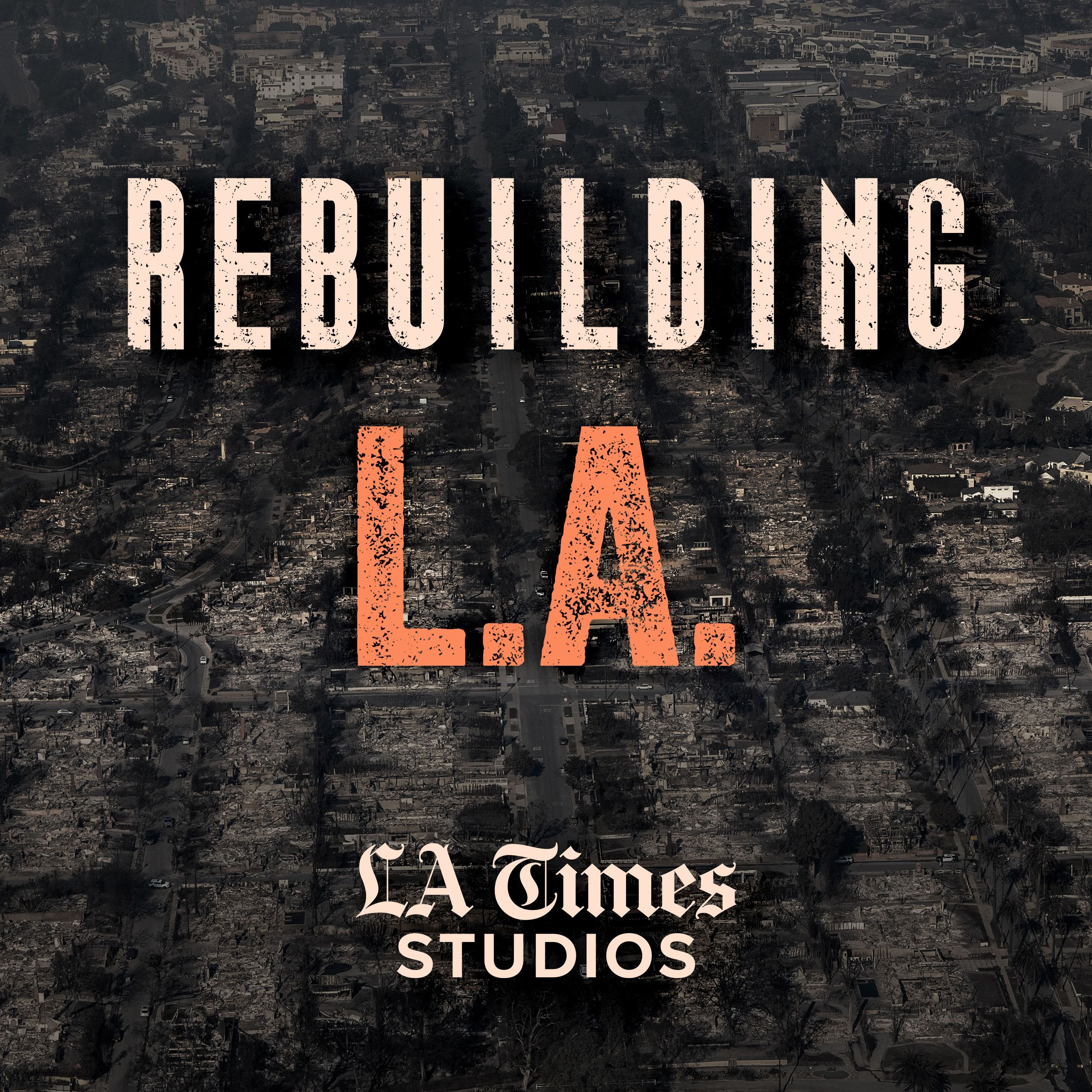
Crimes of the Times
Featuring: Rebuilding L.A.
01:08:26
Please enjoy this specially featured episode of LA Times Studio's Rebuilding L.A. What’s next for L.A. in the wake of its recent wildfires? In “Rebuilding Los Angeles,” broadcast journalist Kate Cagle examines the systems that failed us, the path forward and the innovative fire recovery efforts making L.A. more resilient. This episode features prominent city developer Rick Caruso and a conversation about his role in the rebuilding efforts as the Palisades try to find their new normal nearly a year after the fires.
Loading summary
Transcript175 lines
- [00:01]
David Goldblum
I was like possessed in the best way to just be of service to this community.
- [00:08]
This is so much bigger than just like what I thought it was going to be. I was really like giving a voice to all these people who just felt unheard.
- [00:19]
If somebody just stepped to the table and said, I messed up, I didn't do my job or I failed as a leader, I should have done better.
- [00:30]
It doesn't seem like anybody has done that in LA in terms of leadership.
- [00:40]
I'm David Goldblum, I'm a filmmaker and I was a resident of the Big Rock community in Malibu. I was making my way more and more towards Malibu over the years. I've been in LA for 16 years, but finally got to Malibu in 2024 and was like, I'm home for the first time really ever. And then I met the community and I was like, these are my people. It was like this perfect paradise. But I heard while filming this movie, it's like the price of paradise is the other side of it, which is the natural disaster.
- [01:22]
The night of the fires, I hadn't had any communication. I didn't get an evac warning. I looked out the window and I saw the huge fire cloud coming from the Palisades. And I just jumped in my car and like drove off. I went into fight or flight. I didn't have a to go bag. I made it to a hotel and really lost everything. But I didn't know what was happening. Even the apps, they weren't delivering the right information, at least in Malibu. So nobody really knew what was happening. And a WhatsApp group was like formed within hours from people in the community. And quickly, like 200 people were on this WhatsApp chain. And that's how we were getting information out to each other from the people who stayed behind. They were going around from house to house saying like, your house didn't make it or your house did make it. There was somebody who couldn't find their mother and people were really just sticking together and trying to do whatever they could to help each other and praying for each other. It was a really beautiful unfolding of the best of a community during a crisis.
- [02:30]
But the general theme in the WhatsApp was like, nobody came for us. Like there weren't any firefighters that came to the mountain. Then we heard there was a stand down order. Two people didn't make it. They lost their lives on the mountain. And I just kept hearing about people fighting the fires with garden hoses. And I was like, this is like, this is really insane. And People just kept saying, we have to get this story out there. Like, we were abandoned.
- [03:01]
Eventually, my intuition just kept getting louder and louder to, like, step up. And somebody in the WhatsApp group sent this long, like, beautiful essay about how now is the time where everybody just needs to do what they do best to help the community. And after I saw that, I was like, okay. I sent a message to the WhatsApp, and I was like, I'm a filmmaker and I know this is raw. It's like three days after the fires. But if we want to tell the story, I will shepherd this.
- [03:34]
And really, if one person said, I don't think you should do this, I wouldn't have. And I think within three hours, 40 people reached out to me and they were like, whatever we can do to help, please, we're on board. Sign us up.
- [03:50]
Within a couple days, we went back to the mountain and over 40 people who had lost their homes came on board and. And we told this beautiful story, which became Big Rock Burning.
- [04:04]
Rick Caruso
I decided since I'm 80, that I don't really want to start from scratch with another house.
- [04:11]
Kate Cagle
All right.
- [04:11]
Rick Caruso
A fire impacted Big Rock. There were some things exploding around. Felt like war.
- [04:17]
David Goldblum
She went boom, boom.
- [04:21]
Rick Caruso
It wouldn't stop.
- [04:24]
I literally thought, we're going to burn alive. I mean, I thought it was gonna be a catastrophe.
- [04:38]
David Goldblum
I would wake up every day just with this purpose of, like, I just need to do this for the community. And eventually it got to a place where it was like, I can't let people down at this point. We're in too deep. So I have to, like, see this all the way through. So I think the project for me gave me a compass to get through that. One of the hardest times of my life.
- [05:01]
The first time we played it was at Malibu City hall, and it was sold out. And I think over, like, half the people there had lost their homes, not just in this fire, but in other fires. And people were crying and they were just thanking us for giving them a voice.
- [05:20]
I would love the film to change people's policy around land management. Just the route that the fire took, like, to start in the Pacific Palisades and to make it all the way through the Palisades and then to go down the PCH and basically burn down as much of Malibu as it did, like, that is a crazy 12 mile trip. And along that trip, there was brush that kept feeding the fire. So as the fire got further and further along, it got bigger and bigger and more explosive. And if that brush wasn't there, I Don't think the fire would have been as destructive as it was.
- [06:04]
I was living in a hotel in Beverly Hills and that you'd go to Malibu, which is only like 35 minutes from Beverly Hills. And everybody was having this collective experience. Even if you didn't lose your home, if you go to a store or if you went anywhere, people are hugging. There's this real communal experience of loss. And then you go to Beverly Hills and it's like going to Disneyland and nobody is having that experience. And there's music playing and people are happy. So it was very confusing, I know. Not just for me, but for a lot of people. Like, where are you supposed to go? You don't want to go somewhere where everybody's just like, happy. Eventually, as I got through that period and I got into editing the film, I was like, I just need to go somewhere. Not in Beverly Hills, not in Malibu, just different. So I went back to New York. I'm a New Yorker, I'm a die hard Knicks fan. So I went for like the playoff run last year and I was like, let me just stay while I'm editing the film. I don't know what I'm going to do, actually talking to so many people. Like, I just don't know what's next or where I'm supposed to be.
- [07:23]
I've had to come back to LA at least like every month. This month I've been here twice. And it's kind of like you're dating somebody but you. You've seen the real them for the first time. And once you see them, you can't like unsee what you saw at that, like, Thanksgiving dinner. And it's kind of like, I don't know anymore. Like, I don't know if this is where I want to live forever. Once I've seen like, what could happen.
- [07:56]
We've screened it kind of all around the country and the response has been incredible. And it's made me see that it's so much more than a Malibu story or an LA story. Like, it's really a story about how communities need to stick together during these disasters. And I think everybody's waking up to the fact that we can't assume that the government's going to help us. So we need to be more resilient as communities.
- [08:26]
I was just in Savannah, Georgia. They have hurricanes like New York. There's just different types of disasters, but the impact is the same. Like, people need to wake up.
- [08:56]
Kate Cagle
Night had barely fallen on January 7 when the finger pointing already started. There weren't enough firefighters in the Palisades, not enough water, the hydrants were empty, the evacuations chaotic. Most of the criticism was directed at Los Angeles Mayor Karen Bass. And one of the most critical voices was the guy who had run against her just a few years before.
- [09:21]
Rick Caruso
Before.
- [09:22]
Kate Cagle
From LA Times Studios, this is Rebuilding la. I'm Kate Cagle. Rick Caruso has not been shy in his criticism of how the city has handled the Palisades fire and the recovery that's followed. His family lost three homes that night. And if it was not for private firefighters that he had hired, Caruso's business in the Palisades village might have also burned down. He's a billionaire real estate developer, the creator of the famous Grove shopping mall in la. He's also a Palisades Brentwood area local, a fire survivor, and because of all that, he's taken on the title of champion for a lot of people in the Pacific Palisades. Just weeks after the January fires, Caruso launched the nonprofit Steadfast LA to help rebuild all of the affected neighborhoods in Altadena, Malibu and the Pacific Palisades. And to talk to us about all of this, we're sitting down with the man himself at his offices in the Grove. Mr. Rick Caruso, thank you so much for being here.
- [10:28]
Rick Caruso
Thank you for having me. Welcome.
- [10:30]
Kate Cagle
Well, we've detailed a little bit of your resume. You're a developer, you're a somewhat of a city insider, you know how Los Angeles works, and you happen to have a resume that seems to be very much in demand right now. So where do you see yourself right now in this moment of LA history, recovering maybe the greatest disaster the city has ever seen?
- [10:55]
Rick Caruso
I view my role as a role of supportive, of wanting to be there to get people back in their communities as quickly and safely as possible to help support the city government, state in the county. It's a massive disaster that happened in Altadena, Malibu and the Palisades, and it's bigger than government can take on on its own. So I feel very strongly, and history has borne this out, you really need to have public private partnerships and working together to get areas rebuilt, get businesses reopened, get people back working again, and get people back in their homes. And that's the role I'm playing along with my team at Steadfast, which I'm very proud of, the work they're doing.
- [11:39]
Kate Cagle
Well, we're going to get into all of it, the events of January 7th, your political future. But first, I want to start with this moment that we're in right now. We're coming up on what will be one year after the fires in January. First, we have to get through the holiday season, which is going to be painful for a lot of people.
- [11:58]
Rick Caruso
Very much so.
- [11:59]
Kate Cagle
At last check, more than 1,000 rebuilding permits have been issued as of mid November. Do you see that number as good or bad?
- [12:09]
Rick Caruso
Well, I think it's hopeful, but, you know, government should be doing more. I think if you ask anybody that's going through the process. And literally this morning at a breakfast meeting, I was sitting at a sidewalk cafe and six people walked up to me, introduced themselves and said, we've lost our home and we're struggling to get back in. It's still taking about, what, 10 weeks to get a permit? It's just way too long. And we delivered steadfast, delivered this AI model to expedite it, which will plan check in a matter of hours versus a matter of weeks. So I want to remain optimistic. I want to remain hopeful. I think that's the number one thing that people in Altadena and Malibu and the Palisades need. But we also need to be realistic and keep asking ourselves. The city needs to ask themselves and the county, what can we be doing better? How can we be doing more? Because people have lost everything. And it's not just losing your home. You've lost your lifestyle, your school, your park, you've lost your friends. So many people, thousands and thousands of people have lost their jobs, and businesses are suffering. There's a lot to do, and I think government could be doing a lot more.
- [13:20]
Kate Cagle
Is that AI system being implemented right now?
- [13:24]
Rick Caruso
Not fully. Not as much as we'd like to see it implemented. It's a phenomenal system, so it should be implemented. Everything the city should be doing needs to be marked by, we've got your back. We want you to come back and we've got your back. So we're going to make it easy for you. And I don't think that's the lens that's being used in making decisions. But part of the problem is this is an intensive management process, not just to manage the city, which is intensive, but lay on top of it to rebuild 300,000 acres.
- [13:58]
Kate Cagle
Right.
- [13:59]
Rick Caruso
And the leadership isn't there to do it. We don't have a rebuilding czar that we were promised. We don't have a company that's overseeing the logistics of the rebuilding that we were promised. We had a company that came in a lot of fanfare and has left. We had a czar that came in with a lot of fan Is that Hagerty, Hagerty was paid $10 million for what? Does anybody know what it was doing? Right? And then now there's another company that's come in, aecom and they're a great firm and Hagerty is a well regarded firm. I don't know Hagerty as well as aecom but they're not being managed properly. You know, what are their duties, what are their tasks, what are their assignments, what are their goals? How do we mark success? Because we need to get people in and people, everybody that's lost something just needs to be given the hope that it's going to come back within a reasonable period of time. And the longer that goes the tougher it is for people to stay hopeful and I think to come back well.
- [15:01]
Kate Cagle
And then there's the fear of the people who are on the track to come back quickly. What am I coming back to? My neighbors aren't going to be there. The shopping centers that, I mean your shopping center will be reopening next year. But that sense of community, the schools, you know, some of the schools aren't ready yet. But is speed always the best metric? Because we've also covered some homes that are coming back because the homeowners are building like for like and it's a wood frame house or maybe now it'll have a metal roof and they're doing fewer vents or better windows. But do you feel like enough is being done to rebuild in a way that the community will be safe from another fire?
- [15:43]
Rick Caruso
It's a really good question. You know a lot of that are personal decisions by a homeowner. But a big part of that which we've been advocating steadfast is to upgrade all the infrastructure and to do it now make sure that all the water mains are upgraded, all the fire hydrants are upgraded, all the reservoirs are upgraded so this can't happen again. Vegetation is managed properly. We have an after action report that came out that again your newspaper has done a very good job reporting on. We have a lot of follow up information from that. What I'd like to see is a report that says here's all the problems that happened and here's all the solutions that we've now implemented so it doesn't happen again. But that's where management skills come into play and that's what we're missing right now. Now I will tell you that I think there's some, I think the school district I'm very impressed with. You know the high school is going to reopen in January, one of the grammar schools did reopen. They're working hard on getting Palley elementary open. A couple of the private schools have been reopened. Those are the most important things at Steadfast. We're working at getting the park reopened and completely rebuild without using any taxpayer money. We want to have areas reopened that people have a sense of community. Just like our property will reopen, our neighbors around us, the commercial district is all starting to reopen. So little by little that's going to happen. But we want to. It's not necessarily to do it sort of quickly or rush, but I do think there needs to be a sense of educated urgency, making smart decisions, good decisions, but making decisions. And let's go testing them out when they don't work right, let's pivot and let's do something different. And I don't see that. I hope that happens. But I do believe that the love of the community of the Palisades, the love of the community of Altadena and of Malibu, those communities are going to push back and go around the inefficiencies of government because there's so much desire to rebuild what they loved.
- [17:52]
Kate Cagle
Well, and when you built Palisades Village, I mean, we're going to talk about the private firefighters and what they were able to do on January 7, but that building itself is also non combustible and built to withstand a fire. Do you think other properties will be built up to those same standards?
- [18:12]
Rick Caruso
Now.
- [18:14]
If I was able to sort of.
- [18:18]
Move around a wand having trouble saying that, I would have given incentives to have people building with more non combustibles, not demand it or require it because that's tough to do at this stage of the game. But you could have had incentives and people that are taking the time to really think that through. I ran into a family over the weekend that's building an all steel home. But we need to give people a reason to do it and we need to be able to educate them why they should do it. And it will certainly help them not only in terms of withstanding a fire, but also reducing their insurance costs, which are important because that's one of the biggest problems people are having now is insurance. And we need to solve that. The state needs to solve that problem.
- [18:58]
Kate Cagle
Yeah. What are your thoughts on insurance? Because so many homeowners are telling us even if they had private insurance, it's not going to cover the full cost of building a brand new house in Los Angeles. You also have the increased demand with so many people going after the same contractors and supplies as we build back altogether. Of course, the California Fair Plan has been an absolute disaster for folks who are on that.
- [19:23]
Rick Caruso
Yeah.
- [19:24]
Kate Cagle
What's the solution?
- [19:25]
Rick Caruso
Fair Plan has to step up and the state has to step up. I mean, my recommendation to the governor is the answer is yes. Somebody has a claim, and the answer is yes. I mean, this is the highest calling a state could have, is to give people the resources they need to rebuild in their community. And I think it's really disgusting that that agency has been fighting people. It's just wrong at every level. Every insurance company that's doing that is wrong at every level. You paid your premiums. They should go above and beyond the call of duty in releasing money to get people back in their homes, get back to rebuild, and at some point, it may not cover everything. And one of the things we are doing at Steadfast, we have helped support what's called the building alliance that we just announced. So it's 10 home builders that have come together. They've pooled resources, pooled buying power that's going to reduce the cost of building a home. So hopefully that will narrow the gap between insurance proceeds and the cost of building a home. And I think that's going to be very helpful to people.
- [20:29]
Kate Cagle
So people will be able to go to those contractors and build back more efficiently.
- [20:35]
Rick Caruso
More efficiently. They're also going to have choices of design, they're going to have choices of layout, so it's going to be easier to do it. Most people have never built a home, so it's. It's. It's daunting to even think about. Right?
- [20:47]
Kate Cagle
Yeah.
- [20:48]
Rick Caruso
So they'll go on the website, they'll. They'll pick a home, they'll pick a floor plan. It will be sized to their lot, it will price it out for them. And the pricing is pretty aggressive. And there's different tiers depending on the different levels of home that you want. But again, it makes it easier, it makes it quicker, and it narrows the gap in terms of the cost.
- [21:07]
Kate Cagle
Steadfast LA is everywhere right now.
- [21:11]
Rick Caruso
I hope so.
- [21:11]
Kate Cagle
Well, there's a lot of space.
- [21:12]
Rick Caruso
I want us to be everywhere.
- [21:14]
Kate Cagle
Yeah. You have Malibu, you have the Palisades. You were talking about how you were just in Altadena giving away homes with so much need. How are you prioritizing who to help?
- [21:26]
Rick Caruso
We are doing a lot of things at one time because we have to, but that's what good management does. I've got a great team, a great leader named Nick Geller. He's a seasoned Professional, a seasoned executive. So we're managing hundreds of things, but we've got to do that. You know, you got people really hurting out there. And when you're good at management like Nick is, it's actually not that complicated. It's a lot of work. But this is also a mission we're on. And one of the things that I feel so fortunate and grateful for is that we actually can lean in and do this, that we can help people. Last week, when I met five families that were giving a home to at no cost, I came back to my family. I said, I don't think I've ever had a better day in my life. I mean, maybe, you know, the birth of my children, obviously, but in terms of my private sector life, and to listen to people about their homes and what they lost, and it's heartbreaking. I understand that feeling because I watched my daughter's heartbreak and my son's heartbreak. And these are people, though, that don't have a choice. My family's lucky. We have options. They have no options. And so the level of gratitude that they had that actually somebody cared. But I left there thinking to myself, why aren't there a line of agencies and other people who care? Why is Steadfast standing out there alone?
- [22:58]
And what we need to do a better job of Steadfast is encouraging more agencies, federal, state and local to come to the rescue and help people out. And the private sector, well, and to.
- [23:12]
Kate Cagle
Not forget, because the news moves on quickly, but unfortunately so well taken.
- [23:18]
Rick Caruso
That's right.
- [23:18]
Kate Cagle
We've had enough of these major fires to know the trajectory.
- [23:24]
I think in five years, we might see a third of the people come back. If it shores up how it has in after Santa Rosa, it'll be more optimistic. After paradise, you're more optimistic.
- [23:35]
Rick Caruso
And so that's why it always, you know, amazes me when we have somebody at the city saying we're doing better than they did up at Santa Rosa. Well, okay, that's not a good comparison. We need to just do better and be measured on our own. I. I think that the force of nature of these communities are going to propel these communities back. I really do. There's a lot of energy behind it now. There's also a lot of people who are disheartened. And so a big part of our job at Steadfast and others is to keep people hopeful and optimistic about it. And that's why when we reopen the park, Disney announced they're helping to rebuild a park in Altadena, which is Great. So you see some other companies coming into play. Every one of those things gives people a little bit more hope and they say, okay, we're going to be there, but government has to signal. Like I said, we've got your back here and we're going to support you getting back into your community.
- [24:36]
Kate Cagle
What do you think of this framing of developers as also a villain in all this? And the fear of deep pocketed developers coming in, buying up properties, building expensive homes and pushing out the community in that way, is that something that you also worry about?
- [24:55]
Rick Caruso
Yeah, I mean, you know, it's sort of funny, you know, I'm a developer and that's supposed to be a bad name.
- [25:00]
David Goldblum
Yeah.
- [25:01]
Rick Caruso
I think I've developed nice places with my team that have added, you know, good things to the community. But I understand how the name for some reason has a negative connotation. There's a lot of really good developers out there. The 10 home builders are developers that have come together and they're going to make a profit, as they should, but they've come together in a way to help the community, not to take advantage of the community. So there's really good developers out there and we want to thank them, applaud them and encourage them to get more involved. We want more good developers to come in. I haven't seen people yet now, maybe I've just missed it. I haven't seen people move into the community to take advantage of the heartache and the pain and what's happening in the marketplace. And I certainly hope that doesn't happen. And I think there's enough people watching in the community that will push back on that. We certainly would push back on that. I would personally push back on that because these communities are too important. We want to rebuild them in a way that was so dear and that was so beloved by the community, but at the same time do it in a way that has all the benefits of a new community in terms of infrastructure and how those two can marry together and still have a community that feels like the community they lost. Everybody wants to go back to January 6th, including me. Everybody in the world wants to go back to January 6th. So how do we get there?
- [26:33]
Kate Cagle
Well, and how do you preserve those people who were middle class? Maybe they bought their home in the Palisades decades ago. Maybe they didn't have insurance anymore because if you paid off your home, you don't have to have insurance. How do you make sure those folks are able to come back and able to withstand the years that it might take until they can come back.
- [26:54]
Rick Caruso
Yeah. And that's the really tough part. That's the tough part. And that's why the program that we have at Steadfast la, which we're giving away in conjunction with Samar, they're our partner on this, that's been very generous, giving away homes. They're, you know, about a thousand square foot modular homes. They're moved onto their property. Everything is done. The yard is done, the driveway is done, everything is hooked up. You get handed a set of keys for your front door and you have a home. That's how you solve that problem. And we need to ramp up so we can be doing hundreds of these homes and more companies getting involved and more donations to support that. That home costs about $600,000. This is one of the wealthiest regions in the world. We've got to be able to do that for maybe 1,000 people. I don't know how many people are out there that need it, but whoever needs it, we should meet that need. And that's what keeps me up at night. How do we meet that need? I ran into a gentleman at church on Sunday, 85, 86 years old, to your point. Lived in the Palisades for 60 years in the same home, raised his family there, lost his home. We got to get that man a home. And we're working hard on Samarra to get him a home there.
- [28:16]
Kate Cagle
I want to ask you about the Palisades Bowl. I don't know how aware you are on the situation that was.
- [28:22]
Rick Caruso
You're talking about the mobile home park.
- [28:23]
Kate Cagle
The mobile home park that was right there on pch.
- [28:26]
Rick Caruso
Right.
- [28:26]
Kate Cagle
They haven't even had debris cleared at this point. It's been hard to track down the owners to get them to make a decision on what they're going to do. I wonder how you look at situations like that. Preserving affordable housing, rebuilding apartment complexes, getting some of those middle class families, renters back.
- [28:49]
Rick Caruso
Critical, critical because you want to have that diversity in the community. You have to have different levels of income, you have to have different ages, different backgrounds. That's what makes a community special, is the diversity. We did meet with some of the owners of the mobile homes there and they are in distress. And we've offered to help any way we can.
- [29:11]
I don't understand what's happening with the ownership there, but it needs to get rebuilt. In my opinion, as a mobile home park, it needs to look like it did on January 6th in terms of the income levels and the cost of being there. This is not an opportunity to take A piece of property with a great view of the ocean and turn it into market rate housing. It's got to go back to what it was. We've been very clear about that.
- [29:35]
Kate Cagle
You said that you're more bullish on the timeline. So what do you see the timeline for recovery? When do you think that there will be some sense of life in the Palisades again?
- [29:46]
Rick Caruso
I think there's going to be a good sense of life. Short of a year. I think the park is going to get rebuilt, the village is going to reopen. Our commercial neighbors are all starting to reopen now. Schools are reopening. Met with the Catholic school and the leadership there last week. They're starting to rebuild their school. The church burnt down, but the school remains. So they're going to upgrade it. So when those community based operations are open again, you'll start seeing life. We're investing a lot of money into the streetscape around us. So the downtown that survived, that our private firefighters saved, is all going to be upgraded at our cost. And new street trees and new sidewalks and new flowers and it's going to be a charming, much smaller downtown, but it will be a place for it to grow from and it will be a place for people to gather and we're excited about that. So I think I look at it a one, three and five year. In one year you're going to have a lot of the community coming back, maybe to go to school, to go to the park, et cetera. And homes are hopefully going to be finished. Three years, you're going to see a lot of the homes coming back. I believe in five years it's going to feel pretty active. And you have to remember.
- [31:09]
All of the Riviera survived it. The Palisades, Riviera, fortunately, that's to the west. People have moved back into their homes. The Huntington to the south survived it, People have moved back into their homes. The Highlands, most of that survived it. People have moved back into their homes. So there's a good amount of the population that's come back. Visually, you drive up there and you still see all of this devastation and it's tough to take in. I mean, even though I'm up there every week, I still can't get my head around it. But behind all of that you have a lot of people living. So once there's a place to go and hang out, you're gonna see a lot more life and activity coming.
- [31:49]
Kate Cagle
Well, I want to ask you about those private firefighters and the events of January 7th. So let's take a quick break and then we'll be back with Mr. Rick Caruso.
- [32:00]
Shopify Advertiser
Cold Mornings Holiday Plans this is when I need my wardrobe to just work stuff that looks sharp, feels good and I'll actually reach for. That's why I go with Quince plus. It makes gifting easy when everything's worth keeping for yourself. By partnering directly with trusted factories that maintain high standards for craftsmanship and ethical practices, Quint's cuts out the middlemen and markups. That means premium quality at half the cost of other high end brands so you can give luxury pieces without the luxury price tag. I'm not lying when I say there's something for everyone at Quints. You want proof? I got nearly all my loved ones a gift from there this holiday season.
- [32:33]
Mark Dunkelman
Shh.
- [32:34]
Shopify Advertiser
Don't tell them. Cashmere gloves for under $30 candles made by master perfumers for $24 waffle throw blankets made from organic cotton. The list goes on. Get your wardrobe sorted and your gift list handled with quints. Don't wait. Go to quints.com crimesofthetimes for free shipping on your order and 365 day returns. Now available in Canada too. That's Q-U-I-N-E.com crimesofthetimes free shipping and 365 day returns. Quints.com crimesofthetimes you know that feeling when you're doomscrolling and suddenly it's an hour later and you feel even worse? Been there. But lately I've been swapping that habit for something that's making me feel so much better. Masterclass With Masterclass, you can learn from the best to become your best. With plans starting at $10 a month billed annually, you get unlimited access to over 200 classes taught by the world's best business leaders, writers, chefs and more. With Masterclass, you get thousands of bite sized lessons that can fit into even the busiest of schedules. Explore how to spot a liar with criminal profiler John Douglas, learn hostage negotiation techniques with FBI legend Chris Voss, and be the smartest person in the room with declassified techniques from former CIA officers. Plus, every new membership comes with a 30 day money back guarantee, so there's no risk. Masterclass always has great offers during the holidays, sometimes up to as much as 50% off. Head over to Masterclass.com Crimesofthetimes for the current offer that's up to 50% off at Masterclass.com Crimesofthetims Masterclass.com Crimesofthetimes during one.
- [34:09]
Southern California Edison Representative
Of the most severe windstorms Southern California experienced in more than a decade. The Palisades and Eaton fires ignited, leaving heartbreaking losses in our communities. Now, as we build back, we're building stronger, cleaner and more resilient in communities most vulnerable to dangerous weather conditions and wildfires. Southern California Edison is placing power lines underground, hardening the electric system by installing wires with protective coating, and adding advanced technology to help keep communities safe. So when Southern California faces the next storm, the next most severe event, we'll be ready. Learn more@sce.com disasterrecovery and if you were impacted by the Eaton fire, you may qualify for direct compensation through Southern California Edison's Wildfire Recovery Compensation Program. File your claim directly with no legal fees, no litigation, and receive payment in months, not years. To file and learn more, visit sce.com.
- [35:07]
Mark Dunkelman
Directclaims it used to be that America could do big things. We built the interstate highway system. We did NASA. We built housing all over the country. We built enormous water systems and dams. We're not building big things anymore.
- [35:21]
John Swatolski
Mark Dunkelman's recent book, why Nothing Works, examines why it is so difficult to build the critical infrastructure we need. From convoluted laws to overlapping regulations, Dunkelman looks at why the building of public infrastructure is more difficult here than in other developed countries.
- [35:36]
Mark Dunkelman
We built up a series of checks within the system that now are so oppressive that even when someone comes with a good project that almost no one can object to, someone will find an objection.
- [35:49]
John Swatolski
Rebuild SoCal Partnership met Dunkelman at Brown University in Providence, Rhode island to talk about the infrastructure needs of California and the nation and how government reform can make public decision making more efficient. To dive deep into the conversation, stay tuned for the end of the episode.
- [36:07]
Kate Cagle
All right, we are back with Rick Caruso. All right, so let's talk about these private firefighters and what I've read is this is not the first time that you have deployed private firefighters. That this is something that you've thought through in the past. So when did the alarm bells start going off for you and your company that something bad could happen?
- [36:34]
Rick Caruso
The minute we got the wind warnings. So that was about what, three days before?
- [36:40]
I don't know about you, but I've never gotten a warning on my phone that said catastrophic life threatening winds. I've never heard winds described like that.
- [36:47]
Kate Cagle
Right.
- [36:48]
Rick Caruso
So you didn't have to be a genius to figure out something really bad could happen.
- [36:52]
Kate Cagle
It was called a particularly dangerous situation.
- [36:56]
Rick Caruso
And it sure was. And so the minute that happened, our team that we have here, they moved in on plan A and plan A. We learned from when we were building up in Montecito, there was the fire there while we were under construction. And I asked one of my senior executives, what do we do to protect the property? Because the firefighters up in Montecito or anywhere, first and foremost, they should be protecting homes. And that's where they're going to go. They're not going to protect structures. Especially ours were just in framing and they came back with the idea of private firefighters. So we hired private firefighters at the time and mobilized them up in Montecito along with water and along with retardant. Fortunately, we didn't need to use them. The fire didn't advance that far and the fire department was able to put it out. So we put that plan on the books. We knew when we were building in the Palisades, we were in a fire prone area. And it started with the design to design it with non combustible materials. So even what looked like wood was concrete. It just looked like wood and painted like wood. It didn't have vents where an ember could get in, which the majority of the homes burned from inside out. So it was well designed and thought out. But the minute those warnings come out, the plant pulled into play and they were mobilized and the firefighters were mobilized, the water was. And the retardant trucks and they were stationed there.
- [38:27]
Kate Cagle
So they brought in their own water.
- [38:29]
Rick Caruso
We brought in our own water. Yes. If we hadn't brought in our own water, we would have suffered the same fate that most everybody else did. And we were using our water to save the apartments that we have there where people were living, obviously. And all the commercial across the street from us and then down the street from us. We actually started loaning our equipment to LA Fire Department because they were so short of equipment, which is something that I couldn't even believe was happening out there.
- [39:00]
Kate Cagle
I don't think a lot of people realize also that January 7th is your birthday.
- [39:04]
Rick Caruso
Yeah.
- [39:05]
Kate Cagle
So you were home in all this?
- [39:07]
Rick Caruso
We were home. We were home as a family. You know, we were gonna have dinner that night. We were gonna go out. We decided to stay home because of the fire for dinner. But in the daytime, you know, my daughter obviously was very nervous. She wanted to get back to her house to get things. My son was very worried, wanted to get back to his house. He couldn't get back to his house because of the traffic. I mean, the evacuation plan was so terrible. There wasn't a plan, you know, that we. And we saw people abandoning their cars and then the cars Being burned out. My daughter, fortunately, was able to get back to her house to get some things, but her home was completely burned down, so she lost most everything. So we were together and then we finally evacuated our home in Brentwood because we came under evacuation orders. Right when the power went out. We were all just finished dinner and the power went out. And my wife said, that's God's sign of saying we need to go. And then we left as a family.
- [40:03]
Kate Cagle
And then that night, you infamously now call into Fox 11 to report. What you were hearing was that firefighters had run out of water.
- [40:13]
Rick Caruso
Right. Because I got a call from our senior person who was in the command center out in the field actually at the time, and he called to let me know that Gianna's house was fully inflamed. And I said, how did this happen? And he said, you can't believe it. They ran out of water and all the firefighters are standing here with dry hoses and the fire just started spreading. And that's when I called Alex. I mean, can you imagine in the second largest city in the country that you run out of water? I mean, it's just. It's mismanagement and incompetence at a level never seen before in city leadership.
- [40:53]
Kate Cagle
I will read what you recently wrote. This was a failure of government on an epic level, starting with Mayor Bass. Her and the city's incompetence, mismanagement, and failure to plan, prepare and pre deploy directly led to people dying. Thousands of lives being upended and put on full display the consequences of ineffective and incapable leadership. Those are strong words.
- [41:21]
Rick Caruso
Truer today than the day I wrote it. Based on everything we now know. Fire completely preventable had the job been done right.
- [41:30]
Kate Cagle
Mayor Bass has put the blame on the fire chief at the time, Kristen Crowley. Mayor Bass says she was not made aware of the extensity of the danger from the wind situation and that she was not involved in pre deployment plans that didn't happen. Not involved in the decision to allow firefighters to go home, whereas the county kept their firefighters on. What do you think when you hear that response?
- [42:02]
Rick Caruso
You just admitted you didn't do your job. You just admitted you failed. If you're the mayor of Los Angeles and you get the same wind warnings that millions of other people got, the first thing you would do is you would say, every department head in my office in 15 minutes and walk me through everything you're doing to make sure that we're ready to fight this fire.
- [42:25]
Wasn't done. First of all, she left in spite of those warnings. But if you're the mayor, if you're the head of any organization, any company, anything, you would sit down and have a very definitive plan. We did. We had a plan. The city, had they done their job right, would have put out the original fire. The one on the seventh would have never happened. So let's go back to that. You guys broke that story at the LA Times. We now know that LA firefighters were reporting that the area was still hot. They did not want to leave where the original fire started on January 1. They were ordered to leave and that's what restarted on the 7th. So had they not been ordered to leave, if they would have stayed there, if they would have put it out properly, you wouldn't have had a fire on the seventh then go to the seventh. Had you pre deployed like you should have. And if the mayor would have said, give me your pre deployment plans. I want to make sure we're doing everything we need to be doing, plus 100% because of the wind warnings. We're going to over skew to make sure we save a community and save lives. There would have been fire trucks there when it ignited. It would have been put out. The winds were not blowing then. We know that too.
- [43:57]
So there. She needs to own this. That's just the way the world works when you're a chief executive, you need to own it.
- [44:06]
Kate Cagle
You faced some pushback, that you were too fast to criticize the city, that you were out there criticizing the city while the disaster was still happening. Mayor Bass said recently that you're exploiting the tragedy. She called you sad and bitter. Do you have any regrets about the timing of when you spoke out?
- [44:25]
Rick Caruso
Everything I said has been proven out. I don't take any comfort in that.
- [44:31]
I'm sad about what happened. Beyond belief. Mayor Bass, to say he was sad. Hundreds of thousands of people are sad. People are devastated, wiped out. Of course people are sad. And I think sadder and angrier now than ever because we know it could have been prevented. So I don't take any great pride or joy at all in that. I was right. It's not based on me trying to beat up the mayor. I'm not trying to beat up the mayor. I just want the mayor to be held accountable. I want the head of Department of Water and Power to be held accountable. I want the people at the fire department that called off those firefighters to be held accountable. They owe that to the residents of Los Angeles. And it's not just a problem with the Palisades fire. What it Demonstrates to me is that there are management problems throughout the city. Because if you can't manage a problem that you've been warned of, how are you managing things that aren't expected? And their number one priority has got to be the welfare and the safety of the residents they serve.
- [45:36]
Kate Cagle
The top 10 most destructive fires we've seen in California have all come in the past decade or so. They are getting bigger, they move faster, they have destroyed thousands of homes in our state. And some of that is because California is built to burn. How does that influence your thinking as a developer about where we should be building, whether or not it's safe to build in some of these areas?
- [46:06]
Rick Caruso
Yes, we need to be very mindful of where we're building. We need to be very mindful of climate change. Climate change. Climate change is real. So we need to build in a way that takes that into account, but we also need to manage resources. We can't have brush that's 40 years old in an area that's susceptible to fires. But that's what we had in the Palisades. And by the way, I live in Brentwood. We have the same 40 year brush. It's been 11 months, it still has not been cleared in Brentwood. So the same conditions could happen in Brentwood that happen in the Palisades. And that's just bad management. There are ways around it though. And so you build with non combustible materials, you design in a way that doesn't allow the embers in. You make sure you have enough water, basic resources for it. Right. And people also need to be incentivized to build with non combustible, but also do things like have pumps that can take pool water and you can wet your house down. You know, there's other things that you could be doing and we just as a society haven't been thoughtful enough about it. But it's really not complicated. The science is pretty clear around it. We did it on our property and fortunately we were successful in saving it. So that's a good model to look at as a case study and say what worked at the village, what could be copied by residents up there incrementally. Not much more expensive to build with non combustible. People think it is and it's actually not. And the insurance industry should be encouraging that with much lower rates because at the end of the day they pay the bill.
- [47:51]
Kate Cagle
Given what we've talked about with pre deployment, the water, the reservoir being empty, yes, all those things did happen. But you also had those hurricane force winds and firefighters will tell you no urban water system is designed for a hurricane of fire. Is it fair to say that once the fire did take off that it was unstoppable?
- [48:17]
Rick Caruso
The problem with that logic is you're looking at it from the back end. The fire wouldn't have happened. Right. And so.
- [48:30]
You do get to a point. It would have been very difficult to put out. But I think when we continue to learn more, what we saw up there was firefighters standing down.
- [48:43]
I know in Malibu, firefighters were parked. Firefighters were not being engaged. When we lost our home in Malibu, there were no firefighters around that neighborhood. I'm not one to find a lot of benefit in looking at it the way you sort of structured that sentence, because it gives people an excuse. And I think people need to be held accountable and really answer up to what happened. And that hasn't happened yet. We still don't have answers on everything yet.
- [49:18]
Kate Cagle
Do you feel like we will get answers?
- [49:21]
Rick Caruso
I think there needs to be an independent private investigation.
- [49:26]
Years and years ago, to use a corollary, there were the terrible riots from the Rodney King beating and the city brought in Warren Christopher, right? Well regarded, independent gentleman who put together a team who did an independent investigation of what happened and listed a whole bunch of recommendations to make sure it never happened again. We need to use that model again, and the mayor should be calling for that to happen.
- [49:57]
Kate Cagle
I think people wrestling with the fundamental unfairness of how things played out on January 7th. Have you felt the anger from people that your property was saved, given the private firefighters, when so many people's homes burned down?
- [50:18]
Rick Caruso
You know, early on after the fire.
- [50:23]
I read a number of comments where people were upset and I understand that. Listen, I was upset I couldn't save my daughter's home, right? I was upset I couldn't save my son's home. I was upset I couldn't save my own home. We couldn't mobilize to do that.
- [50:43]
But over time, what's happened is that that village is now becoming a beacon of hope and renewal and rebirth because it's going to be the place where the community can gather. On December 6th. We're lighting the Christmas tree. That whole center is being decorated for the holidays as if we were open for the very reason we want to have the community come together. We're having a menorah lighting there like we have done every year for the last six years for the same reason. So my perception is that people have changed their thinking on that and.
- [51:24]
That gives me hope and I'm grateful for that. And I wouldn't have done anything different other than in hindsight, probably have more firefighters to save more of the area around us. I wish I could have done that, but we did the best we could and I'm proud of what my team did.
- [51:42]
Kate Cagle
Let's take a quick break and then we'll come back and talk about where you go from here.
- [51:46]
Shopify Advertiser
Okay, all of that 2025 is coming to a close and what better time to start prepping your business goals for the New year. Don't just start thinking about launching your business in January, launch your business in January. And the most powerful move to make it all happen in 2026 is to start your business with Shopify. Shopify gives you all the tools to easily build your dream store. Choose from hundreds of beautiful templates that you can customize to match your brand setup is fast with Shopify's built in AI tools that write product descriptions and headlines and help you edit product photos. Marketing is built in too. Create email and social campaigns that reach customers wherever they scroll. As you grow, Shopify grows with you. Handle more orders, expand to new markets and do it all from the Same dashboard in 2026. Stop waiting and start selling with Shopify. Sign up for your $1 per month trial and start selling today at shopify.com Crimesofthetimes Go to shopify.com CrimesofthetTimes that's shopify.com CrimesofthetImes Hear your first this new year with Shopify by your side.
- [52:49]
Jordan (LA Times Studios Producer)
Hi, my name's Jordan and I'm a producer at LA Times Studios. I'm here to talk to you a little bit about our new sponsor, Ollie. Like many dog owners, my dog Zooms has become like a child to me. And with that type of responsibility comes the constant need to keep them happy and healthy. One way I make her mealtime a little bit better is through Ollie. Ollie delivers clean, fresh nutrition in five drool worthy flavors, even for the pickiest eaters. Made in US kitchens with the highest quality human grade ingredients, Ollie's food contains no fillers, no preservatives, just real food. And here's the Healthier food means a happier puppy, more energy, shinier coats, better poops, and more excitement at mealtime. Fill out Ollie's 32nd quiz and they'll create a customized meal plan based on your pup's weight, activity level and other health info for any first timers. Ollie will send out your pup's first box with two weeks worth of meals, a free storage container for mess, free serving, and a guide of how to gradually switch them over to their new diet. Dogs deserve the best, and that means fresh, healthy food. Head to ollie.com rebuildingla Tell them all about your dog and use code rebuildingla to get six 60% off your welcome kit. Plus, they offer a happiness guarantee on the first box. So if you're not completely satisfied, you'll get your money back. That's o L-L-I-E.com rebuildingla and enter code rebuildingla to get 60% off your first box.
- [54:06]
Kate Cagle
We are back with Rick Caruso. So I think this is the first time I've ever interviewed a candidate who I didn't know what they were running for.
- [54:15]
Rick Caruso
I'm not a candidate.
- [54:16]
Kate Cagle
You're not a candidate.
- [54:17]
Rick Caruso
I'm not a candidate.
- [54:18]
Kate Cagle
What's your thought process right now?
- [54:20]
Rick Caruso
You know what? I worked for three mayors, and I worked for Tom Bradley, who I loved. I worked for Dick Reardon, who I loved. And I worked for Jimmy Hunt, who I loved. And I learned so much from those three mayors. I learned about good management in a government setting. And they did really great things. And honestly, I got the bug for public service from them. And I think it's a great thing to be able to do, is to be able to give back. And I want to be able to give back in some form or fashion at the sort of the capstone of my life. I've been very fortunate in my life, and I've loved being involved with the city and supporting it for the last 40 years. And so if there's an opportunity to do more at the city level or the state level, I want to do that. And so I'm assessing what the opportunities are.
- [55:13]
David Goldblum
Right.
- [55:13]
Kate Cagle
So we should be clear. People have floated you as a potential candidate for mayor, a rematch against LA Mayor Karen Bass, or that you might wade into the race for governor, which right now seems pretty wide open. The recent it was the LA Times Ipsos poll found that you don't seem to have a lot of name recognition in the state. I think it was like you were polling at like 4% in that.
- [55:41]
Rick Caruso
In that Southern California, very strong. Northern California, not so much.
- [55:46]
Kate Cagle
And would you want to move to Sacramento?
- [55:49]
Rick Caruso
Well, I think Sacramento is a great town. Why wouldn't you want to move to Sacramento? But to me, that's not the question. The question in my mind is, where can I go do the most good.
- [56:01]
In the shortest period of time? I was sort of run by the sense of urgency, as you probably know now. And I like getting things done and I want to give back. I Want to go help people. We got a state that's suffering. We got a state that's too expensive to live in. We got a city that's too expensive to live in. You know, somebody mentioned last night, and I looked it up again today, their number was a little bit up. 65% of the people in Los Angeles are renters. Yeah. 10 years ago, it was under 50%.
- [56:33]
So. And this year, in the last 10 years, the lowest amount of housing is built in the city of Los Angeles. The city has failed to build housing, which has pushed the cost of housing up and forced people out of the city. It's just things like that drive me crazy. We need to reduce the cost of housing. We need to reduce the cost of living. And so I love tackling problems. And I had three mayors very grateful to that gave me really tricky problems to fix. They trusted my judgment to do that and build a team to do that. And I was successful under those three. So if I have an opportunity to bring that skill set to the state or the city, I'd like to do it. And I'm going to decide relatively soon. I'm coming in for a landing on the decision, but it's been a tough decision for me, to be honest.
- [57:30]
Kate Cagle
Have you given yourself a timeline? Not.
- [57:33]
Rick Caruso
Not really. I feel that it's better to really look at all of the issues, all of the data, make the right decision before I make a final decision and jump into it and obviously spending a lot of time with my family, who's been really supportive.
- [57:50]
So, you know, we'll see how it plays out.
- [57:52]
Kate Cagle
Well, I'm glad to hear you talk about affordability like, I'm a millennial, and my generation has had a rough go of it. Right. Like graduating during the Great Recession. That was an opportunity to buy housing. So we were too young for that one. If people. There was an opportunity during the pandemic when interest rates were low, but now interest rates are like 6%. And trying to make it all pencil out when now maybe you've got kids or you're still paying off your college debt. So how has this disaster and the need to buy, the need to build housing so quickly, has it influenced your thinking on the housing crisis and the affordability crisis? And do you think that there could be some solutions that come out of the disaster that help that crisis as well?
- [58:40]
Rick Caruso
Could be. I've been thinking about this for a long time because I've run large organizations that have a lot of young people working in them that have struggled to find housing and are forced to drive two hours to work and two hours home. That's unsustainable. When I ran LAPD as the president of the police commission, we have officers going 2 hours. Can't do it. Same with LA Fire. Same with most of the teachers. Workforce housing is critically important and we're doing it as a company. We're building workforce housing and we're going to be charging very, very low rates to live in those apartments to help people who live closer to their job. I think more companies need to be doing that. So I look at these things from a business standpoint, but also from somebody who ran a lot of organizations who want to see people get home ownership because it provides stability for the economy and it allows businesses to grow tough to grow a business in the city of LA or the state of California when your employees can't afford to live close to the business.
- [59:47]
Kate Cagle
Well, Mr. Caruso, thank you so much for your time today. We've really appreciated. I'm glad we were able to talk about some solutions after the wake of all this and we hope you'll come back once we're in year two of this recovery because it's coming up fast.
- [60:01]
Rick Caruso
It's coming up fast, but thanks for having me. Appreciate it.
- [60:06]
Kate Cagle
That was real estate developer Rick Caruso, who also heads up some Steadfast la, the nonprofit he started to help rebuild the Pacific Palisades, Malibu and Altadena. We spoke with him before the Thanksgiving holiday. During our interview he mentioned Haggerty Consulting, the firm the city of LA hired to help with the initial phase of disaster recovery. To clarify Haggerty's current status with the city, we reached out to the office of Mayor Karen Bass, which told us the firm's contract officially ends next February. Bass office wrote us to say that Hagerty is quote, minimal staff working with the city to complete final reports and deliverables related to the city's short term recovery efforts. Another company, aecom, was hired in June to oversee the long term recovery. We have requested an interview with Mayor Bass for this podcast and are still in talks with her office about making that happen. In the meantime, you can find all of our past episodes anywhere you get your podcasts. We're also on YouTube. Thank you for listening to this conversation. We'll be back next week. Now a word from our sponsor.
- [61:19]
Shopify Advertiser
The following is a paid Message from Rebuild SoCal Partnership sponsor has no editorial oversight.
- [61:25]
John Swatolski
Mark Dunkelman is a Fellow in International and Public affairs at Brown University in Providence, Rhode Island. In his recent book, why Nothing Works, he explores the barriers to building the infrastructure that could match the scale of what we need as a country. Dunkelman sat down with John Swatolski, executive director of Rebuild SoCal Partnership, to talk about our response to the devastating fires and the policies we need to rebuild efficiently.
- [61:51]
Interviewer with Mark Dunkelman
The title of your book is why Nothing Works. Can you tell us what isn't working and what why not?
- [61:57]
Mark Dunkelman
It used to be that America could do big things. We built the interstate highway system, we did NASA. We built housing all over the country. We built enormous water systems and dams. We're not building big things anymore. That's because we've created a system where there are so many vetoes. No one has the authority to sort of say, here are a whole bunch of costs and benefits to doing this big thing. I will weigh them against each other other and make a decision. And that's because of reforms that we've made basically since the 1960s and 1970s.
- [62:29]
Interviewer with Mark Dunkelman
In Los Angeles, we are now rebuilding. In the communities of Altadena and Pacific Palisades, we hear that the cleanup is being done efficiently. Does it seem like that kind of efficiency is only done in time of emergency?
- [62:43]
Mark Dunkelman
The other major example of that is rebuilding of 95 in Pennsylvania after it collapsed. There was a moment in time when people with too much discretionary power abused it and did things to people who were powerless that were outrageous. But we've now overcorrected. And so in too many cases, absent a crisis, you've got a situation where it's almost impossible to get good projects done.
- [63:09]
Interviewer with Mark Dunkelman
A central critique in your book is how we approach infrastructure as a society. Why is that?
- [63:15]
Mark Dunkelman
We built up a series of checks within the system that now are so oppressive that even when someone comes with a good project that almost no one can object to, someone will find an objection. Because at root, our movement is the one that wants to do big things for working people, and we're not able to accomplish that. So we are culpable for our own frustration.
- [63:38]
Interviewer with Mark Dunkelman
You argue in your book that people don't like concentration of power. Can you talk about how that impacts infrastructure?
- [63:46]
Mark Dunkelman
And then we got to a point in the 1960s, 1970s, where we saw that the people who had been empowered to make decisions were making bad decisions. The lesson that progressives took from that was that powerful individuals couldn't be trusted. But if you're going to do a big project, there are going to be costs and benefits, and someone needs to be able to weigh them. We need to make it so that everyone has a voice, but that no one has A veto.
- [64:11]
Interviewer with Mark Dunkelman
What happens to a society that can no longer build what it needs?
- [64:16]
Mark Dunkelman
We're in a situation right now where we can't build what needs to be built. We were in a similar situation at the turn of the 20th century. Corporate titans and robber barons and they stopped projects from happening. And eventually the public interest rose up and said, no, we are going to empower someone to make these decisions. But the core elements are the same. We've got too many vetoes in the system. And if we're going to get things done, we're going to need to empower someone to make these decisions.
- [64:43]
Interviewer with Mark Dunkelman
We are going through a period of government reform in Southern California. What advice can you give to streamline the bureaucracy?
- [64:51]
Mark Dunkelman
Even if I don't get the outcome that I want, what would be a process that would make me feel as though my concerns were heard and I will accept the outcome. At the end of the day, as we re engage the public and they see that the government does work, there will be sort of a virtuous cycle of people saying, I understand how that worked. I can imagine giving government power to do more in the future. We need to set up systems through charter changes, through changes of law, through changes in the way we do litigation that make it clear to people who ultimately has the power to choose.
- [65:27]
Interviewer with Mark Dunkelman
What new story do we need to tell so that people realize that infrastructure projects can be built and have a positive impact on their lives.
- [65:35]
Mark Dunkelman
The projects to clean up parts of Southern California that burned six months ago, that that's an efficient, effective use of public power and that people see that as the norm. The people that they look to to source solve those problems are efficient, effective government bureaucracies that can get through all the objections and get us to the best outcome. And so I think that's a slow process of our rediscovering the power of government to do good.
- [66:04]
Interviewer with Mark Dunkelman
What are the costs of infrastructures in other modern countries compared to the United States?
- [66:09]
Mark Dunkelman
What's so remarkable in the United States is that our infrastructure is orders of magnitude more expensive than other places that are also developed. The distinction is about the process we use to make decisions, these soft costs. And it's something that we really need to grapple with.
- [66:25]
Interviewer with Mark Dunkelman
We're cleaning up the fires in la. We're rebuilding. What general advice do you have?
- [66:30]
Mark Dunkelman
LA is going through this torturous period where you're trying to rebuild from these devastating fires. And the challenge for us now is, is to say in a moment of deep communal need, can we have the wherewithal to make decisions expeditiously and ultimately most everyone has the community's best interest in mind. People have different ideas about the way moving forward, and the thing that you need is ultimately to have someone be able to make the decision of which way we're going to come.
- [67:08]
Kate Cagle
Rebuilding LA is hosted and reported on by me, Kate Cagle. Our Senior Producer and showrunner is Megan Larson. Our associate producers are Jordan Patterson and Megan Botel. Our camera operators are Michael Siegel, Carter Wells and Peter Grayson. Our Director of post Production is Patrick Steward and our senior Sound Recording Engineer is Nick Norton with audio engineering help from David Iskadarian and motion graphics by Dougal Hankin. Our video editors are Daniel Flesher, Michael Ray, and Peter Grayson. Ben Church is our senior Coordinating producer, our podcast Marketing Manager is Bryn Jura and our Product Marketing Director is Becca Dorman. Our General Counsel at the Los Angeles Times is Jeff Glasser. Special thanks to President and Chief Operating Officer of the Los Angeles Times Times, Chris Argentieri, and the Executive Editor of the Los Angeles Times, Terry Tang. And one final thank you to all the residents of Altadena, Malibu and the Pacific Palisades for sharing your stories with us. Rebuilding LA is co created by LA Times Studios President Anna Megzanian, an executive produced and co created by Darius Derekshawn.
- [68:27]
Rick Caruso
Just because you can't see it doesn't mean it isn't still here.
- [68:30]
David Goldblum
It is Smog.
- [68:34]
Rick Caruso
I'm Pat Morrison and I've been breathing LA smog for, well, a long time.
- [68:39]
David Goldblum
Join me to find out how this airborne garbage finally changed and how it changed us. With scientists, innovators, comedians, politicians, and a gal who drove around LA with her convertible top down and her gas mask on, Smoglandia will be available soon everywhere. You listen to podcasts.