← Criminal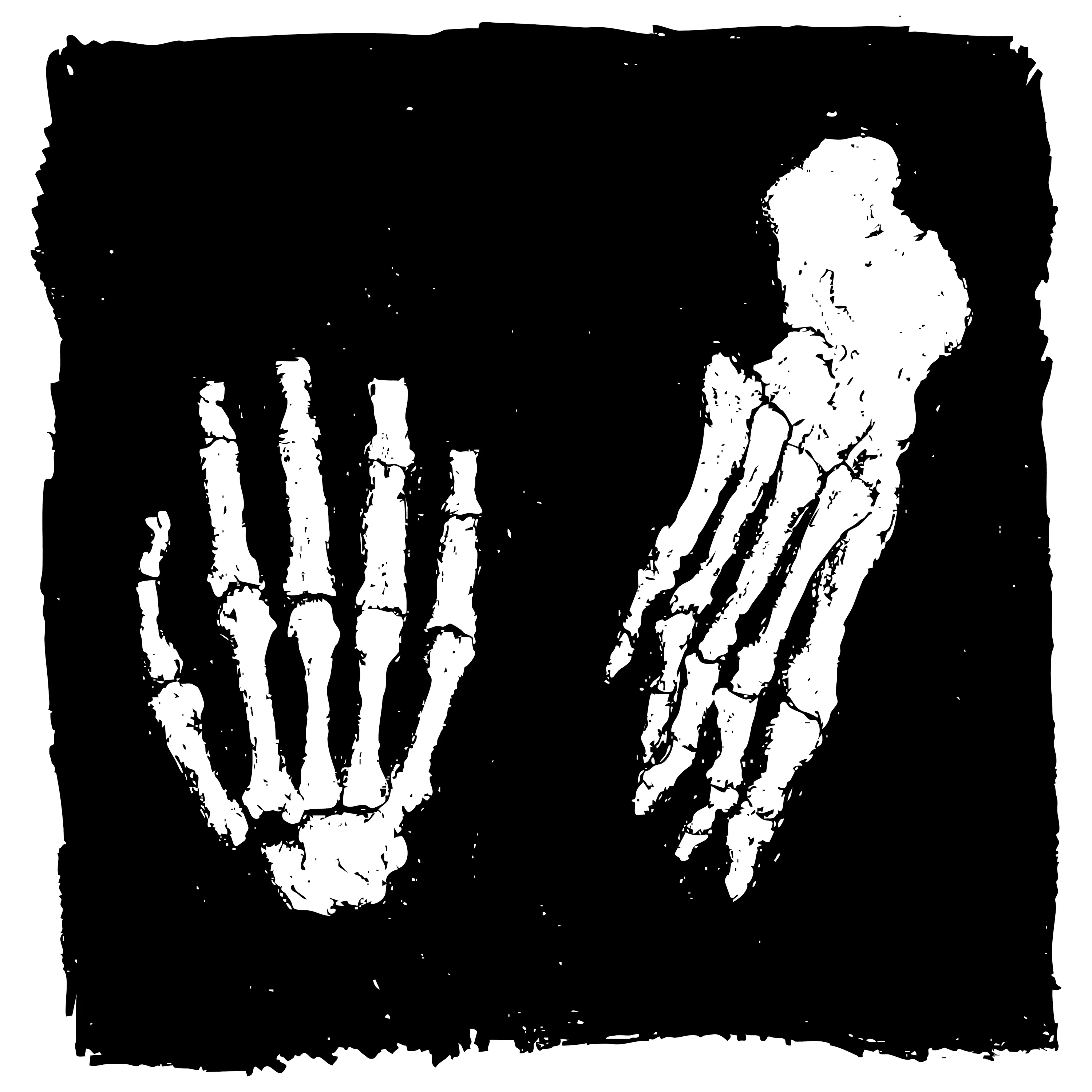
Criminal
All the Time in the World
00:30:40
The “body farm” at Texas State University is a place almost no one is allowed to see, because it’s one of very few places in the world that deliberately puts out human bodies to decompose in nature. We asked if we could visit, and they agreed.
Loading summary
Transcript135 lines
- [00:01]
Phoebe Judge
Support for Criminal comes from Squarespace. If you're a business owner, you know that it matters how you present your business online. Squarespace has the tools you need to customize your website and advertise all the kinds of services you provide. Plus, you can choose the colors and fonts you like. Go to squarespace.com criminal for a free trial. When you're ready to launch, use the offer code criminal to save 10% off your first purchase of a website or domain. Support for Criminal comes from Fetch pet insurance. Every six seconds, a pet owner in the US Gets hit with a vet bill over a thousand dollars. Fetch pet insurance can help. Fetch is a complete pet insurance for dogs and cats. You get paid back up to 90% of vet bills. You can use Fetch for any vet in the US and Canada. All vets are in network. Go to fetchpet.comsave right now for your free quote. That's fetchpet.comsave this week, we wanted to share one of our very favorite episodes. We released it back in 2017, and people still write to us about it all the time. And I still think about the day we recorded it. What is that you're holding?
- [01:24]
Dr. Daniel Wescott
This is a mandible, the jawbone.
- [01:28]
Phoebe Judge
Oh,
- [01:32]
Dr. Daniel Wescott
let's see.
- [01:34]
Phoebe Judge
And that skull is in half.
- [01:35]
Dr. Daniel Wescott
Yeah, this person was autopsied. This is an autopsy cut.
- [01:40]
Phoebe Judge
Interesting.
- [01:41]
Dr. Daniel Wescott
So that they can examine the brain.
- [01:46]
Phoebe Judge
There's a little bag here that says hands and feet. Do those usually get separated?
- [01:51]
Dr. Daniel Wescott
Because it's just there, lots of little small bones. So we put them in a separate bag just so that they don't get scattered out throughout the box. It's easier to keep them together.
- [02:05]
Phoebe Judge
This is Dr. Daniel Wescott, the director of the Forensic Anthropology center at Texas State University in San Marcos, Texas, about 30 miles from Austin. We met with him in a nondescript building, a warehouse really, so plain. We drove right past it twice. But when you get out of the car and walk to the door, you see a small paper sign with a vulture and a skull and you know you found it. There are very few places in the world that do what they do here.
- [02:37]
Dr. Daniel Wescott
While you would think that we would know a lot about how bodies decompose, it actually turns out that we really know very little about what's going on. So the work that's done here is pretty vital to that.
- [02:48]
Phoebe Judge
At Dr. Westcott's center, they deliberately set out human bodies to decompose in nature. Most of the bodies are lying on the ground face up with their arms at their sides. But researchers also place bodies in Trunks of cars, wrap them in tarps and bury them in shallow graves.
- [03:10]
Dr. Daniel Wescott
As a culture, in some ways, we actually are kind of scared of death. And, you know, we embalmed bodies so that they don't decompose as fast. And we don't want to see that process going on, but that process does go on, and we need to be able to understand how it works.
- [03:29]
Phoebe Judge
How big is the facility and how many bodies are here?
- [03:32]
Dr. Daniel Wescott
The facility is 26 acres and it sits on a 4200 acre ranch. And we get about 70 donations a year. So. And then the bodies are usually left to decompose for about six months to several years, depending on the research protocol. And then the skeletons come back here. And so we add about 70 skeletons per year to the collection.
- [03:57]
Phoebe Judge
So if you had to guess how many bodies are in some state of decomposition here right now, do you know?
- [04:03]
Dr. Daniel Wescott
Probably about 60.
- [04:06]
Phoebe Judge
The bodies are donated. They're called gifted bodies. And the people who plan to donate themselves to the research when they die are called living donors.
- [04:16]
Grady Early
You know, if they want to do something like put me in the trunk of a car to see what happens there, or under a tarp or a slab of concrete, I got no problem with that.
- [04:27]
Phoebe Judge
This is Grady Early, a retired computer science professor who decided long ago that he wanted his body to go to the Forensic Anthropology Center. Why did you decide to become a donor?
- [04:40]
Grady Early
I think that everyone should be useful in life, and if you can be useful after death as well, so much the better. After all, which would you rather do? Wind up in a box in the ground, just wasting real estate, or be in a box in the lab and at least potentially useful to a researcher sometime in future?
- [05:09]
Phoebe Judge
Grady early remembers when the facility was getting established more than 10 years ago, and the university was struggling to find the right location. They needed enough space, but they also needed a place that wouldn't freak people out.
- [05:22]
Grady Early
We looked at a site out at the airport. Some of the neighbors didn't like the idea, and they said, well, that's going to attract vultures, so we'll have birds interfering with the aircraft over behind the outlet mall. And there were some people that were unhappy with that idea. There's always nimbys around.
- [05:48]
Phoebe Judge
He's given money to the facility and become fascinated by what he describes as, quote, helping bones tell their story. When his body eventually becomes part of the research, he'll be joining his mother. She's already there.
- [06:03]
Grady Early
It was an astonishing thing, although in retrospect, I suppose it shouldn't have been. When I told my mother what I was planning on doing. She, being a fairly practical woman, said, that sounds like a wonderful idea. Sign me up. So I did.
- [06:24]
Phoebe Judge
She died at 102. Grady says he doesn't really care what happens to him when he goes into the field. So some bodies are placed in the open with the vultures and coyotes, and some are protected by long, low cages. Some are clothed and some aren't. It all depends on the nature of the experiment. It's odd to think that if all goes as planned, Grady early will one day return to the very building where he sat and talked to us, packed in cardboard with the bones of his hands and feet in a small paper bag.
- [06:58]
Grady Early
What I would really like to do is have my skeleton articulated and hung up somewhere in the facility so I can keep my eye on what's going on.
- [07:10]
Phoebe Judge
In his work at Texas state, Dr. Wescott is following in the footsteps of his professor, the biggest name in this field, Dr. Bill Bass. Dr. Bass opened the University of Tennessee Anthropological research facility in 1981. It was the first of these so called body forms, although we learned no scientists call them that. And he pioneered the idea that we needed a death database if too much time has passed. When law enforcement encounters a body, they have no way to tell when the person died, much less who they were or what happened. And the only way to answer these questions is to put a body outside and and watch it decompose. I'm Phoebe Judge. This is Criminal. We'll be right back to listen without ads. Join Criminal plus.
- [08:18]
Grady Early
Foreign.
- [08:26]
Phoebe Judge
Thanks to Squarespace for their support. Making a website can be intimidating, especially because it's often the first thing people see about your business. If you want to build a website that makes a great first impression on people, you don't need years of coding experience. You just need Squarespace. It's the all in one website platform made to help you stand out online. Squarespace has the tools you need to make your website look exactly how you want it to look, sell your services and get paid. No matter what business you're in. You can choose from a library of templates designed by professionals. Or if you don't want to scroll through all the template options. Squarespace's blueprint AI can build a website for you in just a couple of minutes based on a few prompts. It'll pull from different templates. To create the website you need, go to squarespace.com criminal for a free trial. When you're ready to launch, use the offer code criminal to save 10% off your first purchase of a Website or domain. Support for Criminal comes from Boland Branch. We all need a good night's sleep, but it's not always easy to get it right. Boll and Branch is giving you the chance to start investing in your sleep. With Boll and Branch you can upgrade your bed and find everything you need to get better sleep. Like their signature organic cotton sheets, soft blankets and temperature regulating comforters. Everything is made to create a that supports good sleep and built to get better over time. I've tried their bedding myself and I've been enjoying their signature sheets and organic cotton. They're crisp, lightweight and breathable and they come in a range of colors so you can create the kind of bed you want. Sleep cooler this summer with Bolen Branch during their annual summer event. For a limited time, get 20% off site wide at bolenbranch.com criminal with code criminal that's Bolenbranch B O L L A N D B R-A-C-H.com CR code criminal to take 20% off bolandbranch.com Criminal code criminal exclusions apply here's what happens when you die. After your heart stops beating, your muscles start to stiffen and rigor mortis sets in. Over the next few days, the bacteria that's already in your body just starts to take over.
- [10:48]
Dr. Daniel Wescott
And so as they do, they start to produce gases. And these gases initially will just kind of work their way through the arteries and veins, stuff like that, and you get what's called marbling. And then it also then the next kind of step to this is that that gas starts to build up and causes the bodies to go through what's called a bloat stage. So they'll actually kind of puff up.
- [11:13]
Phoebe Judge
How long after death does that happen?
- [11:15]
Dr. Daniel Wescott
It depends on the time of year, but it can range from three or four days to a few weeks. Usually here, probably within about five days they're going into bloat once that happens. So then the other thing that's happening is that you're also getting flies that are attracted to the body and those flies are laying eggs and they tend to lay eggs in natural orifices. So they like the eyes, ears, nose, mouth, stuff like that. And then they. So those maggots will hatch and there again depends on the species and the temperature depends on how long it takes, but usually a few days to a week or so and they start feeding on the body as well. So you've got that process going on and then you've got the internal organs are decomposing and so those internal organs are kind of liquefying. And with the gas that's building up, that liquid gets pushed out, and that's what we call the purge phase. So you get what's called purge fluid. And so it's just a dark fluid?
- [12:32]
Elaine Walker
Dark.
- [12:32]
Dr. Daniel Wescott
Yeah.
- [12:33]
Phoebe Judge
What is it? It's not blood. What does it mean?
- [12:36]
Dr. Daniel Wescott
No, it's just a combination of all the internal organs that have decomposed.
- [12:51]
Phoebe Judge
This is a big place.
- [12:52]
Dr. Daniel Wescott
It is a big place. All right, so here we turn between the two. First two telephones.
- [12:58]
Phoebe Judge
The bodies are placed on Freeman Ranch, which sits off a small highway just a few miles from the lab. Once you pass through the gates, you see what I only imagine you might see on any number of ranches in Texas. Cactus, tall green grass, and cows. We just kept driving down a dirt road, taking a left or right whenever we were told to, and then we arrived. There you go. The only difference between this part of the ranch and any other was the giant fence and locked gate.
- [13:41]
Dr. Daniel Wescott
So our first stop will be at the shed there to put on booties.
- [13:46]
Grady Early
Okay.
- [13:47]
Dr. Daniel Wescott
And in reality, what the booties are for is so that in case you actually step in something, you don't drag it back to your car.
- [13:55]
Phoebe Judge
Are you. Wow. Are you kidding?
- [13:57]
Dr. Daniel Wescott
That's exactly why everybody thinks it's so that it's like protecting the scene, but it's actually so that you don't drag home decomp fluid on your shoes, the
- [14:05]
Phoebe Judge
purge fluid right into the back into the minivan.
- [14:09]
Dr. Daniel Wescott
Right. All right, let's see. We'll start this way. So typically, the way that this works is the way the bodies are placed depends on what research protocol they're being used in. But typically they're left uncaged on the surface, caged on the surface, buried, or wrapped in something. So this is one that's left on the surface.
- [14:38]
Phoebe Judge
Only a few feet from the gate sits the first body. It was hard to pick out at first because of the tall grass around it.
- [14:46]
Dr. Daniel Wescott
And this individual was originally clothed. And then the scattering is from the different scavengers that have come.
- [14:56]
Phoebe Judge
So we can see a pair of sneakers and a pair of pants and a sock. But then the bones are all kind of broken apart.
- [15:05]
Dr. Daniel Wescott
Yeah, they're kind of pulled apart at different places.
- [15:08]
Phoebe Judge
What animal did this?
- [15:10]
Dr. Daniel Wescott
Well, mostly it started out with vultures, and then probably you've had some raccoons and other things come since then, but most of this is vulture activity.
- [15:19]
Phoebe Judge
I had no idea what to expect when we walked into that field. I was nervous about a lot of things. Wondering whether I'd be able to get these images out of my head that night when I went to sleep, Trying to figure out how I'd carry on an interview while not breathing through my nose, Regretting not bringing a change of clothes. But this actually seemed okay. That first body hadn't been that bad. And then we turned a corner.
- [15:46]
Dr. Daniel Wescott
All right, so the area that we're getting ready.
- [15:48]
Phoebe Judge
Oh, look at this.
- [15:50]
Dr. Daniel Wescott
The area we're getting ready to pass is actually. This right here is a researcher, actually, from New York that's here. So she's got bodies on the surface and bodies that are buried.
- [16:02]
Phoebe Judge
Oh, this is really something. So there was a field of bodies under cages. And unlike what we had just seen, these bodies seemed kind of new. All were unclothed. I could see one man in a cage out of my right eye. His stomach was so bloated that it almost touched the top of the cage. And his limbs were spread out to the sides. His skin was a mix of black and brown and purple splotches. I was trying to stay back, but Dr. Westcott went straight for him.
- [16:36]
Dr. Daniel Wescott
You can see the maggot's pretty active.
- [16:40]
Phoebe Judge
Yeah.
- [16:42]
Dr. Daniel Wescott
At this stage. And then. So this person has gone through bloat. You guys all right?
- [16:49]
Phoebe Judge
Yeah, but this is wild stuff. This is wild stuff. I don't think many people in their lives see stuff like this.
- [16:57]
Dr. Daniel Wescott
So you can see I was talking about the skin kind of becomes really dark associated with the sulfuric gas that's produced by the bacteria and stuff. And then you get the active maggot masses going on.
- [17:11]
Phoebe Judge
He kept drawing our attention to things that none of us actually wanted to see up close. So we were trying to stay with him, but also just trying to keep our eyes straight ahead. It was hard to know what to do. And it was hot over 90 degrees. And then Dr. Westcott took us to a row of bodies under cages and. Which seem to be showing a progression
- [17:36]
Dr. Daniel Wescott
going through time, in a sense. And you can see that they've gone through bloat. They're actually starting. And you can see they're starting to dry out.
- [17:49]
Phoebe Judge
Yep. So this is. We're kind of going through the process here, Walking down the line.
- [17:55]
Dr. Daniel Wescott
Yeah. So you can see these are starting to get skeletonized.
- [18:02]
Phoebe Judge
How long have these guys been out here, do you think?
- [18:04]
Dr. Daniel Wescott
Well, these have been out here probably a little over a year. But you can see now you can't even see the cadaver decomposition. As a matter of fact, you can barely see the body anymore because of all that vegetation.
- [18:13]
Phoebe Judge
Around it, purge fluid is so nutrient rich that it acts like a super fertilizer. And so bodies in the final stages of decomposition are surrounded by bunches of these tall, healthy wildflowers. The flowers are back.
- [18:30]
Dr. Daniel Wescott
The flowers are back, yeah.
- [18:33]
Phoebe Judge
Dr. Westcott is working on a new project that uses drones and infrared cameras to detect how much organic material is in the soil. If law enforcement is trying to locate a missing person in a huge area, 5,000 acres, they can use the drone technology to narrow things down, looking for spots with a lot of organic material. They're also working with police dogs. Most cadaver dogs are trained with small tissue samples, but it turns out the dogs don't always know how to react when they encounter a whole body. So police bring their dogs to the ranch to get used to finding the real thing. These different experiments are spread around the ranch, and Texas State collaborates with other facilities. Dr. Westcott showed us an experiment where three different centers across the country placed a bomb body on the exact same day to compare regional differences. So the body that we're looking at right there seems to me to be rather new.
- [19:41]
Dr. Daniel Wescott
Yeah. This individual was probably placed yesterday.
- [19:44]
Phoebe Judge
Oh, that's a brand new body.
- [19:46]
Dr. Daniel Wescott
Yes.
- [19:50]
Phoebe Judge
Oh, isn't that something? We'll be right back. Support for Criminal comes from Bombas. If your sock drawer could use an upgrade, Bombas has a range of well designed socks like their sport socks, which are made with a cushioned sweat wicking design that also stops them from sliding down your foot while you're in motion. And Bombas has more than socks. They also make soft and breathable basics, including underwear and T shirts. This spring, I look forward to going on longer runs wearing my new Bombas run socks. They're soft and lightweight, made with a mesh knit that makes them breathable. And they're designed with cushioning in the heel and toe to protect your feet. Bombas also has a mission. For every item you purchase, they say they donate an item of clothing to someone facing housing insecurity. They say they've made over 150 million donations and counting. You can go to bombas.com criminal and use code criminal for 20% off your first purchase. That's B O M-S.com criminal codecriminal at checkout.
- [21:05]
Dr. Daniel Wescott
We've all been there. You pop into the shop for five minutes and all of a sudden you've forgotten where you parked.
- [21:10]
Grady Early
Car.
- [21:11]
Dr. Daniel Wescott
Car. Unfortunately, that lost feeling is what it's like trying to manage your policy with other insurers here. Car. Come out, come out, wherever you are. Please. With Geico, you can use the app to easily manage all your policies in one place.
- [21:26]
Phoebe Judge
Did this parking lot have a waterfall?
- [21:28]
Dr. Daniel Wescott
I think you've wandered too far, mate. It feels good to find what you're looking for. It feels good To Geico, our last
- [21:36]
Phoebe Judge
stop was a clearing with three shallow graves. On the day we visited, they were in the process of excavating the skeletons. The excavation was being done by more than 20 students, all women. A lot of this work is done by women. Dr. Westcott is the only male director in the country, and almost all of his colleagues and his graduate students are women. Dr. Kate Spradley was in charge of the excavation.
- [22:04]
Dr. Kate Spradley
It's interesting, I think, to do this kind of work, to look at all of these dead bodies, basically, and all of these human remains in the lab. I see a skeleton. I see a task at hand. I see a job that I have to do, particularly with the forensic cases that come in. We have a job to help identify those. So going in there, analyzing the skeleton, that's what we do. For me, it's different when I walk out to the forensic anthropology research facility where people donate their bodies. Because here, when I see remains, I see people who donate their bodies. This was their last wish. This is what they wanted to do. So for me, it's very nice coming out here, seeing them in their final resting place. And it's very natural. They just return to the earth.
- [22:50]
Phoebe Judge
Are you a donor?
- [22:52]
Dr. Kate Spradley
I am a donor.
- [22:53]
Phoebe Judge
Are other members of your family?
- [22:56]
Dr. Kate Spradley
No. Nobody else wants to do this but me. My husband is pretty uneasy about it, but I've looked at so many skeletons. I built my career on looking at skeletons, so I think it's only right that I give back.
- [23:14]
Dr. Daniel Wescott
Just listen to the birds.
- [23:19]
Phoebe Judge
Yeah. It's incredibly peaceful.
- [23:20]
Dr. Daniel Wescott
Yeah, it's a beautiful place to be.
- [23:24]
Phoebe Judge
On our way out, we made one last stop, the same stop that all the bodies make before they leave the ranch. The processing lab. What does the kettle do?
- [23:38]
Dr. Daniel Wescott
It just. It just simmers them for a little bit. It loosens up all the soft tissue. Yes. They really are just giant soup kettles. But then what's the.
- [23:52]
Phoebe Judge
The crock pot for?
- [23:53]
Dr. Daniel Wescott
Small hands and feet and stuff like that and small bones. A lot of times it's easier to finish them off in there and then. So they're cooked in here, and then they're brought over here and they scrub them all down.
- [24:08]
Phoebe Judge
What are these little guys down here?
- [24:09]
Dr. Daniel Wescott
Tips of your fingers.
- [24:11]
Phoebe Judge
That's a fingertip.
- [24:12]
Dr. Daniel Wescott
Yep. And these are all toes. And you can see the Little teeny. And then these little things right there, these are actually extras. They're not even included in the 206.
- [24:24]
Phoebe Judge
It looks like wood. This bone almost looks like wood.
- [24:28]
Dr. Daniel Wescott
Yeah. It takes on the color of the soil.
- [24:32]
Phoebe Judge
We saw two complete skeletons laid on metal gurneys and organized anatomically. It's amazing to see how fragile our ribs are. We were very lucky to be permitted to visit, but normally only law enforcement and researchers are allowed in. Even if you decide to donate your body, you'll never be able to see this place while you're alive. But people do ask.
- [24:57]
Lauren Meckle
Well, usually when someone calls, they say something along the lines of, I'm interested in donating my body to science. And I hear that you take bodies.
- [25:06]
Phoebe Judge
If you call for information, you'll speak with Lauren Meckle.
- [25:10]
Lauren Meckle
And so I let them know about the Forensic Anthropology center and how their body can help identify missing persons. And they usually get very excited about that, and they ask about some of the research projects that we're doing, specifically about the vulture studies. People are really interested in vulture consumption of human remains.
- [25:34]
Phoebe Judge
Like, they want to be part of that study, or they do not want to be part of that study.
- [25:39]
Lauren Meckle
Many people actually are very interested in being part of that study. They see it as a sky burial. So it's something that seems peaceful.
- [25:51]
Phoebe Judge
I suppose you can actually make requests, and they'll try to honor them. You can ask to wear a certain item of clothing or a piece of jewelry. You can ask to be placed under a tree. One man asked to be placed with a cell phone, and they did it. People also called to ask about the status of a friend or family member. So people will say, I'm just wondering if they're all decomposed now and they're back inside. Yes, I think I would. That's the question. I would want to know, too, if someone was. If you had got them off the ground and back in the box.
- [26:26]
Elaine Walker
Yes.
- [26:26]
Lauren Meckle
And usually people are surprised by how long it takes, too, because sometimes it can be six months. If we're doing a study where someone dropped in a tarp, for instance, and they skeletonized really quickly, and then we can pick them up really fairly soon after their death. But for the most part, they stay out there for about two years.
- [26:47]
Phoebe Judge
Many of the donors have spent their life in education and see this as a way to continue teaching after they've died. And many work in law enforcement and have seen the value of the research firsthand.
- [27:00]
Elaine Walker
I kind of see it as an extension of being an investigator.
- [27:04]
Phoebe Judge
Elaine Walker is a retired Private investigator. And last year she made the decision to donate her body to the Forensic Investigation Research Station in Colorado. How do you like retired life?
- [27:19]
Elaine Walker
It's the best job I've ever had.
- [27:21]
Phoebe Judge
Oh, good.
- [27:22]
Elaine Walker
I loved my job, but this is the best job I've ever had.
- [27:27]
Phoebe Judge
May I ask how old you are?
- [27:29]
Elaine Walker
67.
- [27:30]
Phoebe Judge
You're 67. But why not donate your body to science in another way, like an organ donor? Is there something about the. I guess that there's no investigative quality when you donate your liver?
- [27:42]
Elaine Walker
Well, no, but I am an organ donor. However, at my age, some of my organs are, you know, wouldn't really work out in somebody else's body. They're a little on the old side.
- [27:56]
Phoebe Judge
How do you imagine the body farm? Peaceful. Have you seen pictures?
- [28:00]
Elaine Walker
No, I haven't seen pictures. I would imagine it's peaceful. It is out, away from civilization. And I imagine that there are just bodies laying there and birds coming in to feast on them. That doesn't bother me at all that I'm going to be eaten.
- [28:23]
Phoebe Judge
That's a wild thing to be talking about, isn't it?
- [28:25]
Elaine Walker
Yes, it is.
- [28:29]
Phoebe Judge
What did you tell your family when you signed up? How did they respond?
- [28:33]
Elaine Walker
My husband isn't very excited about it, but he respects that that's what I want to do.
- [28:39]
Phoebe Judge
What will your husband do when he dies?
- [28:44]
Elaine Walker
That's a good question. Because he won't discuss it. He's so terrified of death, he won't discuss it.
- [28:51]
Phoebe Judge
Wasn't that interesting? It's like opposite ends of the spectrum.
- [28:55]
Elaine Walker
Yes, it really is. But I did tell him that I was going to send him off the cheapest way possible if he doesn't tell me what he wants. But he still won't tell me what he wants.
- [29:06]
Phoebe Judge
Elaine was the fourth person we spoke with who planned to donate their body to a body farm, but whose spouse refused to even talk about it. Even Dr. Bill Bass, the pioneer of the body farm, is leaving the decision up to his wife. Since that trip, I keep thinking about one particular part of Freeman Ranch. A patch of woods off the main path. It was greener than other places. Shady Dr. Westcott stopped us there and asked us to listen to the birds. Right in front of us, there was a body under a tree, protected from the sun. Someone who thought they might be able to do some good. Someone who agreed to be placed outside under the trees with the bugs until they disappear. Criminal is created by Lauren Spore and me. Nadia Wilson is our senior producer. Katie Bishop is our supervising producer. Our producers are Susanna Roberson Jackie Sajiko, Lily Clark, Lena Sillison and Megan Kinane. This episode was originally mixed by Rob Byers. Our show is mixed and engineered by Veronica Simonetti. Special thanks to Sergeant Zachary McBride of the Guadalupe County Sheriff's Office and Alice Wilder. Julian Alexander makes original illustrations for each episode of Criminal. You can see them@thisiscriminal.com and you can sign up for our newsletter@thisiscriminal.com Newsletter we hope you'll consider supporting our work by joining our membership program Criminal. Plus you can listen to Criminal, this is Love and Phoebe reads a mystery without any ads. Plus you'll get bonus episodes. These are special episodes with me and Criminal co creator Lauren Spore talking about everything from how we make our episodes to the crime stories that caught our attention that week to to things we've been enjoying lately. A while ago we even talked about what it was like to visit the Body Farm and we caught up with Dr. Danny Wescott. That episode is called Back to the Body Farm. To learn more, go to patreon.com criminal we're on Facebook at thisisCriminal and Instagram and TikTok at Criminal underscore podcast. We're also on YouTube at YouTube.com criminalpodcast Criminal is part of the Vox Media Podcast Network. Discover more great shows@podcast.voxmedia.com I'm Phoebe Judge. This is Criminal. When I got a new car I thought my insurance premium would increase and empty my bank account like if a tween won the lottery. I've invested most of my winnings in chicken tenders because they're bomb. But bro, I bought a house and it's sick bro. I'm thinking the floor is going to be all trampoline, bro, with the helipad on the roof. The contractor said it's structurally unsound, but they're just being babies. But switching to Geico saved me hundreds so my bank account is safe.
- [32:17]
Dr. Daniel Wescott
It feels good to save some hard earned cash. It feels good to Geico.
- [32:24]
Phoebe Judge
This episode is brought to you by Google Chrome. You think you know a browser, but Gemini and Chrome?
- [32:28]
Dr. Daniel Wescott
That's new.
- [32:29]
Phoebe Judge
It can help you with practically anything on the web, like restoring a vintage motorcycle from a 50 page restoration block. Or finally break down that long article you've had open for weeks. Gemini and Chrome is here for it, ready to make anything online make sense. There's no place like Chrome. Check responses set up required compatibility and availability various 18.