← Criminal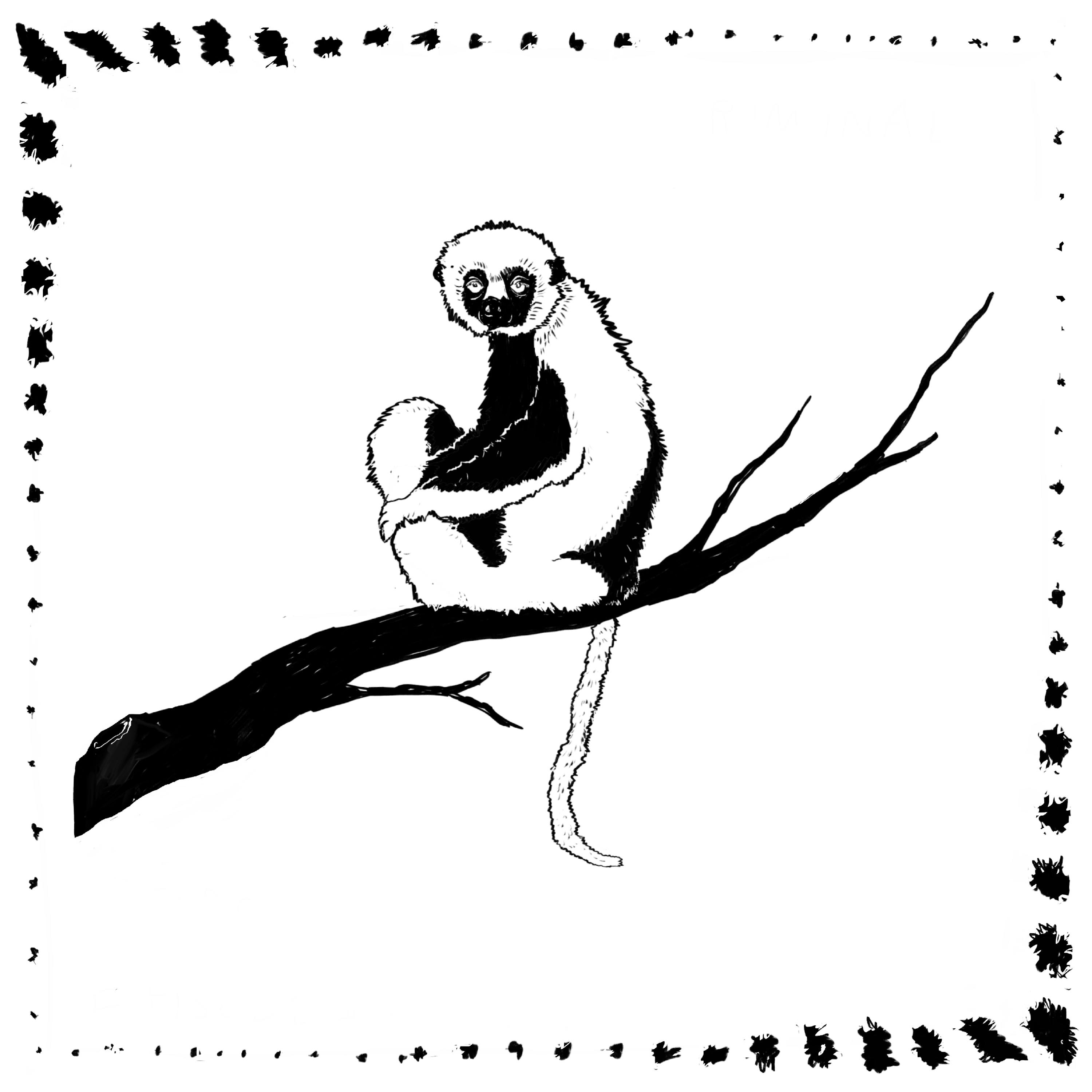
Criminal
Professor Quaalude
00:35:10
John Buettner-Janusch was one of the first Americans to study lemurs. He held prestigious faculty positions at Yale, Duke and NYU, before surprising everyone with a series of increasingly bizarre crimes.
Loading summary
Transcript64 lines
- [00:01]
Phoebe Judge
Support for Criminal comes from Squarespace. Squarespace is the all in one platform designed to help you make a great website. Whether you're just starting out or trying to grow your business, Squarespace gives you everything you need to choose a URL, show off what you're selling, reach more customers, get paid, and do it all while looking professional. Everything in one place check out squarespace.com criminal for a free trial, and when you're ready to launch, use the offer code CRIMINAL to save 10% off your first purchase of a website or domain. Support for criminal comes from BetterHelp. Research shows that every year in the U.S. 6 million men struggle with depression and that men are less likely than women to try to get help with mental health problems, especially depression. This June, BetterHelp is recognizing men's Mental Health Month. If you're struggling, therapy can help. As the largest online therapy provider in the world, BetterHelp can provide access to mental health professionals with a diverse variety of expertise. Talk it out with better help, our listeners get 10% off their first month@betterhelp.com criminal that's betterhelp.com criminal hi, it's Phoebe. Before we get started, I wanted to let you know that we have a special bonus episode that we think you'll be interested in hearing after you've heard this episode. We got up close and personal with some lemurs. So we're inside of the fence. We're like a lemur now. Hello. What she's doing right now is trying to figure out what your fuzzy she thinks I'm holding a lemur. My microphone's kind of like her tail. You can hear all about our visit with the lemurs in our latest Criminal Plus Bonus episode. Learn more at ThisIsCriminal.com/ or just click the link in the show. Not.
- [01:52]
Peter Koebel
There really wasn't any place for.
- [01:54]
Phoebe Judge
His lemurs At Yale in 1959, an anthropologist named John Buettner Janisch started making trips from New Haven to Madagascar to collect lemurs.
- [02:08]
Peter Koebel
And there are all these very funny stories, local stories in the New Haven Register about the lemurs getting out of their cages or the labs and climbing up to the top of some of those beautiful buildings and crying out. So people were getting very impatient with all of his lemurs.
- [02:33]
Phoebe Judge
We're hearing about John Buttner Janish. Everyone called him BJ and his Lemurs from author Peter Kobel. According to one story in the New Haven Register, a pregnant lemur once escaped and crawled out the window. She climbed up a drainpipe to a fourth story ledge. BJ tried to lure her down. He was terrified. Eventually, the fire department was called and she was rescued. Lemurs are only found in the wild in Madagascar. Many lemur species have become extinct, and in 2012, they were named the most endangered mammals in the world. There are more than 100 species of lemur. They can be as little as 1 ounce or as big as 20 pounds. Some have long black and white striped tails. Some are kind of bald. Every lemur I've seen has round, expressive eyes. BJ was one of the first Americans to study lemurs, and he's inspired generations of lemur researchers since. In 1964, he visited Duke University in Durham, North Carolina, to give a talk about lemurs. A biologist named Peter Klopfer attended that talk. Back then, he was a newly tenured Duke professor. His field of study was mother infant bonding, mostly in goats and deer. Peter Klopfer says he didn't even know what a lemur was, so he was surprised how much he enjoyed BJ's talk. He was so intrigued that he introduced himself to bj. After the two men hit it off, they talked about research. Peter invited BJ to visit the land where he studied his goats and their babies. BJ was amazed the Duke gave Peter so much space to keep his animals. All he had for his lemurs at.
- [04:41]
Peter Klopfer
Yale were cages, and he knew that they weren't behaving normally in the cages. And he'd seen them in the wild in Madagascar. The aesthetics of a caged animal that you've known in the wild are not pretty. And he said, wow, you've got all this space. I've got these animals in tiny little cages because Yale won't let me have any space for proper facility. If I let you use my lemurs for, for your study, will you let me have space to house them?
- [05:16]
Phoebe Judge
He wanted to give them some freedom.
- [05:18]
Peter Klopfer
Exactly.
- [05:19]
Phoebe Judge
Peter Klopfer and BJ came up with a plan to work together. It took about a year to put in motion. BJ got a job teaching at Duke, and Peter continued researching mother infant bonding, but in lemurs instead of goats. BJ brought about 90 lemurs to Durham and put them in a goat barn on Peter's research land. Then they had to figure out a way to make the land safe and workable for 90 active primates. A much harder challenge than dealing with a bunch of goats. Lemurs are good climbers, which makes them very good at escaping. And some, like mouse lemurs are so small they can easily slip through cracks.
- [06:06]
Peter Klopfer
Took almost a year. We got the facility built with sizable runs both indoors and outdoors, and fencing that allowed us to let the larger lemurs loose altogether in the forest, which we were able to properly fence and lemur proof.
- [06:28]
Phoebe Judge
That was the beginning of what is now called the Duke Lemur Center, a sanctuary dedicated to research and preservation of lemurs, complete with a breeding program. Peter Klopfer has been there since the very beginning in 1966. He's still there these days. He studies sleep patterns in fat tailed dwarf lemurs. His hand raised generations of lemurs, some the galagos, in his home.
- [07:00]
Peter Klopfer
Well, back in the day, before the federal regulations on animal care and use became as strict as they now are, I would walk down the corridors with lemurs on my shoulder. We had bush babies running loose in my house. My children grew up with them as playmates.
- [07:20]
Phoebe Judge
Well, that sounds fun.
- [07:21]
Peter Klopfer
Oh, it was great fun. Although it was also costly fun. The galagos are urine markers. When they urinate, they put their hands and the urine and then mark.
- [07:36]
Phoebe Judge
You really like lemurs?
- [07:37]
Peter Klopfer
Oh, well, I'm totally sold on lemurs. Yes.
- [07:41]
Phoebe Judge
Peter Klopfer says that he and BJ were building something extraordinary. It was exciting. But BJ was not an easy person to get along with. Peter describes him as egoistic and says BJ tended to dominate conversation. According to author Peter Coble, BJ stood out at Duke. He dressed up for everything. Bright suits from Saks Fifth Avenue, huge horn rimmed glasses. His short hair was dyed blonde. He often wore a large button that read I'd rather be in Paris. Here's Peter Klopfer.
- [08:19]
Peter Klopfer
He was the sort of person who captured your attention and was always on center stage, loud, ebullient, conspicuous. He dressed in a very flashy manner. He never saw neckties as brilliant as his. And one day it would be in conjunction with a formal three piece suit. And the next day he would be wearing a nero jacket with a brightly colored sash. He was colorful.
- [08:53]
Phoebe Judge
During his time at Duke, BJ's career took off. He wrote two successful anthropology textbooks. Students loved him, voting him among the best professors on campus. He sometimes signed his letters Lemur, logically yours. Things were going well for him at Duke, but BJ didn't like living in Durham much. He said it was a cultural backwater. His wife Veena agreed. They got out of town as much as they could, often flying to New York just to see an opera.
- [09:29]
Peter Klopfer
The relation with Veena was More akin to the relationship between two Siamese twins. You almost never, ever saw them except together.
- [09:42]
Phoebe Judge
Veena and BJ met in school. She'd always outperformed him. She went on to become a biochemist. She'd published some papers on her own. But most of her work appeared to be behind the scenes in her husband's lab. Author Peter Koebel wonders if Veena was in fact doing most of the work that BJ got credit for. BJ himself gave her credit for the success of his most famous textbook. She supervised all of the research in his lab. Some of his students said he was rarely there. Some of his students said BJ seemed much more interested in having a social life. Veena was the one who kept the work moving forward and kept her husband in check. Peter Kloepfer remembers that BJ had one of the biggest personalities imaginable, that he would dramatically demand money from the department, even banging his fist on the table.
- [10:44]
Peter Klopfer
Banging on the table, saying, I need another half million dollars or I'm gonna leave this place. And he did that once too often. He went to Professor Roberts, who was head of the anatomy department. Said, I've gotten this offer as the chair of the anthropology department, New York University. Unless you give me such and such, I'm gonna go. And Robertson had heard this once too often and, I am told, responded by saying, well, John, I'm sure we all wish you well at your new job.
- [11:20]
Phoebe Judge
In 1973, BJ left Duke. He and Veena moved to New York. Taking the job at NYU meant leaving the lemurs behind. He would still study them from a distance and would occasionally return to Duke to collect blood samples for his research. BJ and Veena got an apartment overlooking Washington Square Park. They hosted elaborate parties and were regulars at the New York Philharmonic. By all accounts, their life was where they wanted it to be.
- [11:53]
Peter Klopfer
So when Veena had an abdominal complaint that couldn't be diagnosed and it was suggested that she undergo an exploratory surgery from which she did not recover, it was a stunning, stunning event. I mean, all of us were shocked because Veena gave every impression of being hale and hearty. She just had abdominal pain that wouldn't go away, and no one thought it was anything really serious. And then she died on the table.
- [12:29]
Phoebe Judge
What was he like after she died?
- [12:32]
Peter Klopfer
Well, that. That's. That. That's where I think the problem arose.
- [12:38]
Phoebe Judge
I'm Phoebe Judge. This is Criminal. We'll be right back to listen without ads. Join criminal+ this is criminal.com/ thanks to Squarespace for their support. Squarespace is the all in one platform designed to help you make a great website. Whether you're just starting out or trying to grow your business, Squarespace gives you everything you need to choose a URL, show off what you're selling, reach more customers, get paid, and do it all while looking professional. Everything in one place no matter what you're working on, whether it's a podcast, a special event, photography services, or a consultation business, you can customize your website to reach the right people. If you're creating video content like online courses, tutorials or workshops, Squarespace has built in ways to support that. With Squarespace, you can upload your videos into an order organized paywalled library, and they make it easy to collect payment with thoughtfully designed invoices and online payments. Plus, they have tools that make it convenient for people to keep in touch with you. Tools that help you send emails to potential customers or that let your customers schedule their own appointments. Check out squarespace.com criminal for a free trial, and when you're ready to launch, use the offer code criminal to save 10% off your first purchase of a website or domain. Support for Criminal comes from netsuite. If you run a business, economic uncertainty can be scary. It can also force you to learn to adapt. But you need the right tools to help you do that. Tools like NetSuite by Oracle. Over 41,000 companies use NetSuite to manage their businesses. It's a cloud ERP that helps you run every part of your business. That means accounting, financial management, inventory and HR all in one place. Netsuite helps give you the point of view and the easy control to make the quick decisions that you need to in stressful times. And with AI tools built in, it also makes it possible to automate everyday tasks, save time for yourself and your teams, and stick to a strategy. Netsuite helps you figure out what's stuck, what it's costing you, and how to quickly and confidently make a change of plans. If your business's revenue is seven figures or more, download the free ebook Navigating Global 3 Insights for Leaders at netsuite.com criminal that's netsuite.com criminal After Veena died, BJ's research nearly slowed to a halt. The National Science foundation withdrew funding. BJ was furious. His work in the lab at NYU continued, but now on a much smaller scale. On paper, BJ was still studying lemur blood, but in practice, no one working in the lab was quite sure what he was doing. One of his graduate students described him as A social gadfly, he started spending a lot of time in Greenwich Village going to gay bars. His hours at work became unpredictable. And when he did come into work, his behavior was odd. One of BJ's research assistants was an undergraduate student named Richard Macris. One day, BJ asked Richard Macris to meet him at the lab. It was a Saturday. There weren't many people around. When Richard got to the lab, BJ announced that they'd be making something called and acetylanthrenylic acid. BJ said it was for lemurs. Richard didn't believe him. He started taking detailed notes of the goings on in the lab. He told another professor what BJ was doing, and that Professor Clifford Jolly snuck into the lab to take photographs and collect chemical samples. He sent them to the DEA to be tested. BJ was making methaqualone, better known by its brand name, Quaaludes, a sedative that was very popular in the 1970s. Sometimes people called them disco biscuits. The DEA immediately began an investigation. Besides Quaaludes, they found traces of lsd, including something BJ allegedly planned to sell as a, quote, chemically pure form of synthesized cocaine. He'd been using NYU's lab to make party drugs. And his students were helping him. Some knowingly, others not. BJ knew his students would be interviewed by law enforcement, so he gave them some advice.
- [17:47]
Peter Klopfer
He called our students together and said, if you are quizzed by the prosecutor before he interrogates you, go ahead and take some tranquilizers, because then you can deny charges without giving yourself away, even if you're taking a lie detector test. Well, one of the students was wired.
- [18:15]
Phoebe Judge
The student wearing the wire got BJ on tape, which meant that BJ was now not only charged with manufacture and possession of illicit substances, but also with obstruction of justice. He denied everything. Here's Peter Koebel.
- [18:33]
Peter Koebel
He spread this story that he was making, quote, neurotoxins, unquote, to experiment on his lemurs, and they were going to be used for. For behavior modification.
- [18:51]
Phoebe Judge
So basically, when BJ's caught, he'd say, well, what's the big deal? I'm making drugs for lemurs.
- [19:01]
Peter Koebel
Yeah, that's. That's what he said. And the whole lewd's and lemurs defense strikes me as patently ludicrous. No one had agreed to allow him to test his drugs with lemurs. The whole thing just doesn't hold water for me.
- [19:26]
Phoebe Judge
BJ continued to stick to his story and said he had planned the Experiments with his Duke Lemur Center Co founder, Peter Klopfer.
- [19:34]
Peter Klopfer
I wasn't exactly delighted at being implicated, but at the same time I figured, well, okay, they caught him with illegal drugs. He needed an excuse.
- [19:47]
Phoebe Judge
What do you think was going through BJ's head?
- [19:51]
Peter Koebel
I think that he was able to justify just about anything he did. The sense of entitlement was overwhelming.
- [20:11]
Phoebe Judge
He thought he was a genius and could get away with whatever he wanted.
- [20:15]
Peter Koebel
I think he did, yeah. And not even that he was a genius, but he was a man of privilege, beyond reproach and above suspicion.
- [20:33]
Phoebe Judge
Over the years, BJ's former colleagues and students have come up with all kinds of theories about why he did what he did and how he became so self destructive. Some say he just wasn't himself. After Veena died, he became too overwhelmed with grief. Others have suggested that after she died, he realized she'd been the one doing all the work, that she'd been the real genius. But others say he was just trying to make money and have fun. A brilliant widower trying to entertain himself.
- [21:10]
Peter Koebel
You just have to pick, pick your explanation.
- [21:17]
Phoebe Judge
BJ was convicted of conspiracy making illegal drugs. In lying to federal investigators. Federal judge Charles Bryant presided over the trial. He sentenced BJ to five years in federal prison at Eglin Air Force Base in Florida. BJ worked on the prison newsletter called the Doan Times. Peter Koebel writes that BJ turned his cell into a tiny office. He reviewed book manuscripts for friends and continued to work on scientific papers. When a friend visited the prison, BJ introduced his fellow inmates as his colleagues. But BJ continued to say he'd done nothing wrong. He wrote many letters to friends outlining the ways in which he believed he'd been wronged. In one letter, he wrote that upon his release, quote, I will certainly take the most awful revenge upon certain people. The Greeks are correct. Blood is a corrective for many wrongs. We'll be right back.
- [22:42]
Unknown
Support for this show comes from pure leaf iced tea. You know that point in the afternoon when you just hit a wall. You don't have time for sel care rituals or getting some fresh air. So maybe you grab a beverage to bring you back, but somehow it doesn't do the trick or it leaves you feeling even worse. What you need is a quality break, a tea break. And you can do that with pure leaf iced tea. Real brewed tea made in a variety of bold and refreshing flavors with just the right amount of naturally occurring caffeine. With a pure leaf iced tea in hand, you'll be left feeling refreshed and revitalized with a new motivation to take on what's next. The next time you need to hit the reset button, grab a pure leaf iced tea. Time for a tea break. Time for a pure leaf.
- [23:31]
Phoebe Judge
McCrispy strips are now at McDonald's. Tender, juicy and its own sauce. Would you look at that? Well, you can't see it, but trust me, it looks delicious. New McCrispy strips now at McDonald's.
- [23:44]
Peter Klopfer
Bottom of.
- [23:47]
Phoebe Judge
BJ was released from prison on parole in September 1983. He went back to Wisconsin, where he grew up. He wrote in letters to friends that he spent his time baking cakes, gardening, and taking trips to Lake Superior. He wrote that he planned to return to Madagascar and that he was applying for a grant, but no university would hire him.
- [24:10]
Peter Koebel
And for some time, he was sort of an intellectual hobo, sleeping on people's couches, house sitting pets. And then about four years after his release, this is the second crime.
- [24:28]
Phoebe Judge
On February 19, 1987, BJ went to an opera at the Met. He saw Mozart's La Clemenza Di Tito, an opera about revenge and attempted murder. After it ended, he headed home. He was house sitting for a friend in Greenwich Village. When he arrived at the door, he was met by a group of police officers and arrested. A few days earlier, on Valentine's Day, a woman had received a box of Godiva chocolates in the mail. They were addressed to her husband, Federal Judge Charles Bryant. Inside the package there was a Hallmark card signed only with a question mark. The judge's wife ate four pieces of chocolate and became extremely sick. She lost consciousness and wasn't found until Judge Bryant came home from work and rushed her to the emergency room. She was in critical condition for several days, but survived. The FBI determined that each piece of chocolate in the box had been poisoned with a different toxic substance. One piece, uneaten by the judge's wife, could have killed her. And when the FBI tested the outside of the Godiva box, they found a fingerprint.
- [25:54]
Peter Koebel
He started making these candies and he always fashioned himself as a gourmet cook and he made these candies. He also fashioned these poisons for. From fairly esoteric substances. And he made these candies and put them all in a Godiva chocolate box and sent them to the judge out in Westchester on Valentine's Day in 1987. So it'd been about four years since he'd been released. So it just goes to show, you know, how long he could hold grudges.
- [26:43]
Phoebe Judge
Police later learned that BJ Had Sent boxes of chocolate to several other people he felt had wronged him, including someone who'd once denied him tenure. In the end, everyone recovered. At BJ's arraignment, the new York Times reported he was weary, looking apparently ill, and wearing a hearing aid. He pled guilty to the attempted murder of Judge Bryant. Peter Klopfer wonders if this was all part of some kind of plan. Do you think that he wanted to get caught?
- [27:19]
Peter Klopfer
Oh, I. There's no doubt in my mind he was inviting. I mean, this was a. This is a brilliant man. Whatever else you may say about you, don't send poisoned chocolates to a federal judge and stay free on the street to talk about it. Not if you send them in a way that invites discovery and arrest. Which is what he did, of course. He practically had his return address on the parcel in the apartment kitchen. All of the poison paraphernalia and the chocolates, they were laid out as if on display that, furthermore, the package was mailed from a mailbox at the corner where his apartment was.
- [28:07]
Phoebe Judge
Why did he want to get caught?
- [28:09]
Peter Klopfer
My guess is that he just. Nina's dead. My life is over. Let's end it. And so he sends these poisoned chocolates, knowing that that's going to send him up for life because he did it in a way which invited discovery and arrest. This is not a mistake.
- [28:32]
Phoebe Judge
BJ was sentenced to 40 years in prison. He was sent to the supermax prison in Marion, Illinois, the prison that had been built to replace Alcatraz. He started working on a new book about the lemurs of Madagascar. And like before, BJ stayed up to date on the latest scientific journals, subscribed to Opera News, and exchanged letters with his friends, especially with Peter Klopfer. What was his mood in those letters?
- [29:03]
Peter Klopfer
He was clearly despondent, but mind still actively working, still coming up with ideas. Kept asking me to look up particular papers, summarize the contents for him. I did ask him, what on earth led you to do this? And he said, I really don't have any recollection of having done it, but if I did do it, I deserved to be into prison.
- [29:34]
Phoebe Judge
Even though BJ had tried to implicate Peter in his quaalude making scheme and had attempted to. To murder a federal judge, Peter says he wasn't angry at his friend. He felt sorry for him and says BJ needed to be protected from himself. They'd write long letters reminiscing about their trips to Madagascar. Peter would update BJ about what the lemurs were up to in Durham. One day, Peter got a different kind of letter from bj.
- [30:07]
Peter Klopfer
And so he wrote to me one day and said, I've just discovered that I'm HIV positive and probably have aids. This was back when there was no antiviral medication and you had AIDS. You had a death sentence.
- [30:27]
Phoebe Judge
BJ died at the age of 67 in a prison hospital. He was cremated and his ashes were spread on Cranberry Lake in Wisconsin, near where he grew up. When was the last time you heard from him?
- [30:41]
Peter Klopfer
Just about the time he entered the hospital with his final bout of pneumonia just before he died.
- [30:50]
Phoebe Judge
What did he say?
- [30:52]
Peter Klopfer
He knew he was dying. He said, I have severe pneumonia and I don't expect to recover. Then he went on to talk about one of the scientific issues we'd been discussing.
- [31:08]
Phoebe Judge
You know, the people throughout your lifetime there may be five or six that are real characters that you come across. Would you say that he's up there as being one of the.
- [31:18]
Peter Klopfer
Oh, he's the most egregiously colorful character of any of the many I've known. No, no doubt about it.
- [31:29]
Phoebe Judge
BJ's obituary ran in the American Journal of Physical anthropology. It's almost two pages long. Almost all of it speaks to BJ's professional accomplishments, the strides he made in the anthropological world, the love his students felt for him, his award winning textbooks and articles. It only briefly mentions his two convictions. The obituary ends by saying that BJ quote made a strong impression. Sometimes good, sometimes bad. Some of his actions were and will remain unfathomable to us. The world is a sadder and duller place without him. Today, the Duke Lemur center is is home to the world's largest and most diverse collection of lemurs outside of Madagascar. You can visit and take a tour. This episode first aired in September of 2019. Since then, we've wanted to visit the Duke Lemur center and we finally got a chance to go. You can hear all about our visit with the lemurs, including the story of how producer Susanna Roberson got trapped with a bunch of very curious lemurs in our latest Criminal plus bonus episode with Criminal plus. You can also listen to Criminal. This is Love and Phoebe reads a mystery without any ads. To learn more go to thisiscriminal.com Criminal is created by Lauren Spohr and me. Nadia Wilson is our senior producer. Katie Bishop is our supervising producer. Our producers are Susanna Roberson, Jackie Sajiko, Lily Clark, Lena Sillison and Megan Kinane. Our show is mixed and engineered by Veronica Simonetti Julian Alexander makes original illustrations for each episode of Criminal. You can see them@thisiscriminal.com and you can sign up for our newsletter@thisiscriminal.com we're on Facebook, criminalshow and Instagram at criminalpodcast. We're also on YouTube@YouTube.com criminalpodcast criminal is part of the Vox Media Podcast Network. Discover more great shows@podcast.voxmedia.com I'm Phoebe Judge. This is Criminal.
- [34:20]
Unknown
Support for this show comes from Pure Leaf Iced Tea when you find yourself in the afternoon slump, you need the right thing to make you bounce back. You need pure leaf iced tea. It's real brewed tea made in a variety of blends, bold flavors with just the right amount of naturally occurring caffeine. You're left feeling refreshed and revitalized so you can be ready to take on what's next. The next time you need to hit the reset button, grab a pure leaf iced tea. Time for a tea break. Time for a pure leaf. Support for this show comes from Pure Leaf Iced Tea. When you find yourself in the afternoon slump, you need the right thing to make you bounce back. You need pure leaf iced tea. It's real brewed tea made in a variety of bold flavors with just the right amount of naturally occurring caffeine. You're left feeling refreshed and revitalized so you can be ready to take on what's next. The next time you need to hit the reset button, grab a pure leaf iced tea. Time for a tea break. Time for a pure leaf.