← Criminal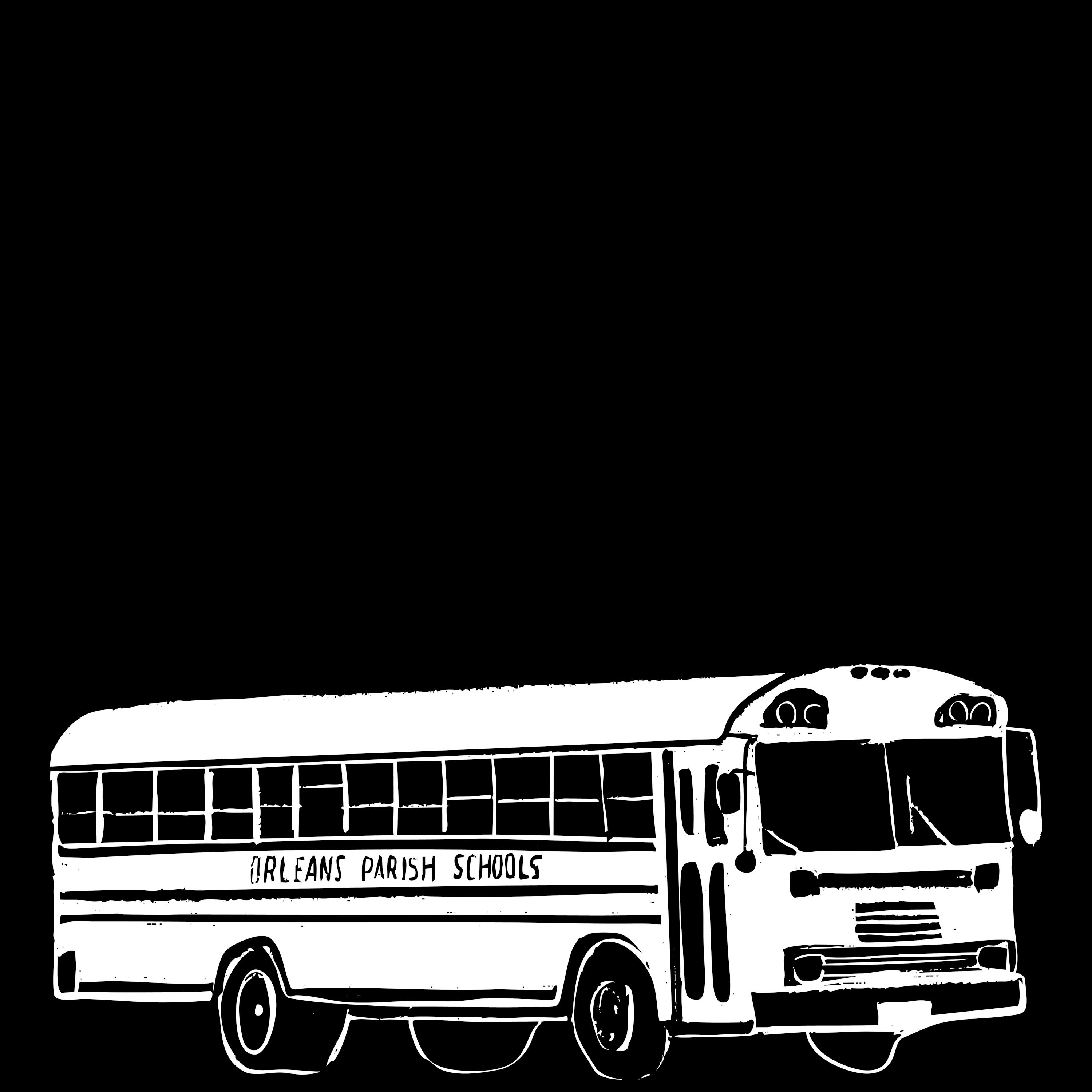
Criminal
The Bus Ride
00:32:01
Two days after Hurricane Katrina hit, people who lived in the Fischer Housing Projects were still trapped – and it didn’t seem like anyone was coming to help. So 20-year-old Jabar Gibson came up with a plan.
Loading summary
Transcript83 lines
- [00:01]
Phoebe Judge
Support for this show comes from pure leaf iced tea. When you find yourself in the afternoon slump, you need the right thing to make you bounce back. You need pure leaf iced tea. It's real brewed tea made in a variety of bold flavors with just the right amount of naturally occurring caffeine. You're left feeling refreshed and revitalized so you can be ready to take on what's next. The next time you need to hit the reset button, grab a pure leaf iced tea. Time for a tea break. Time for a pure leaf.
- [00:33]
Joel Anderson
Avoiding your unfinished home projects because you're not sure where to start. Thumbtack knows homes. So you don't have to don't know the difference between matte paint, finish and satin or what that clunking sound from your dryer is. With thumbtack, you don't have to be a home pro, you just have to hire one. You can hire top rated pros, see price estimates and read reviews all on the app. Download Today. There wasn't an official evacuation order until August 28th, and that's when Katrina turned into a category five. The mayor of New Orleans at the time, Ray Nagin, on that day, he issued the first ever mandatory evacuation order.
- [01:18]
Phoebe Judge
This is reporter Joel Anderson.
- [01:21]
Joel Anderson
And he called it at the time, he said it's the storm that most of us have long feared and that it was a once in a lifetime event. And so the city did start trying to make some plans for an evacuation. They did the contraflow lane reversal on i10, which is the highway that runs east and west through New Orleans, and on I55 and 59, which goes north out of town. And then at that point they decided to turn the Superdome into sort of a refuge for folks who couldn't leave town. But keep in mind, getting out of town, like is one thing to tell people to leave, but actually going through the process of evacuating, you know, hundreds of thousands of people out of an area in one day, that's really, really difficult. And it's not a surprise that it didn't quite work out like everybody expected. So what ends up happening is that you got hundreds of thousands of people that are unable to evacuate and have to stay there.
- [02:19]
Phoebe Judge
One of those people was a 20 year old named Jabbar Gibson. Jabbar lived with his family in the Fisher Housing Projects, a complex of 15 apartment buildings on the west bank of the Mississippi River. Did the majority of people at Fisher leave or did people stay?
- [02:36]
Joel Anderson
Yeah, Jabbar stayed and the majority of people at Fisher stayed. I Mean, consider this is public housing. These aren't people that have a lot of access to wealth. Where are they going to go? Like, even if they had a car and a lot of people did not have cars, we. Where are they going to go? Where are they going to evacuate to? Who has the money for a hotel? Maybe you don't have family anywhere else. So, I mean, what you're looking at is a really poor area with really poor residents who don't have the means to go. And so they sit there and say, well, people are saying this hurricane is bad. We've heard this before. We're just going to wait it out. And it's not like they had any other options at that point.
- [03:18]
Phoebe Judge
It was 6am on Aug. 29, 2005, when Katrina made landfall in Louisiana. I mean, Ray Nagin had said, this is it. This is the worst we've ever seen. But when did it start to become clear that that wasn't just him saying the mayor saying that, but that things had gotten bad and were gonna continue to get worse?
- [03:41]
Joel Anderson
It was pretty clear, like, right after the storm hit and the levee started to fail. And, you know, it wasn't the initial, you know, landfall from the hurricane that created all the damage. It was the flooding. And so as people realize, oh, snap, the water is rising, we've got nowhere to go, that is when, you know, sort of the danger of the situation really starts to come through.
- [04:06]
Phoebe Judge
Decades earlier, Congress had authorized what they called the Hurricane Protection Project, which involved the construction of a system of levees and flood walls to try to protect the city from both the Mississippi river and Lake Pontchartrain. One report estimated that When Katrina hit, 60 to 90% of the project had been completed. But before Katrina even made landfall in Louisiana, the levees started failing. Soon, at least 80% of New Orleans was underwater as much as 20ft deep in some places. It's been called the worst engineering catastrophe in U.S. history. What did residents at Fisher tell you about how dire the situation was becoming?
- [04:53]
Joel Anderson
They talk about, you know, that the drainage ditches got swollen, that, you know, tree branches and debris had, you know, broken windows, knocked down doors. And then keep in mind, like, the storm, the storm passes through, the heat comes back up. Well, now you don't have electricity, you don't have running water, you don't have anywhere to go get food, your toilets don't flush. If you have a health issue, you can't refill your prescriptions because nobody's running any other drugstores. So it was really dire. There People were in really bad. In a really bad situation. And at that point, you know, people are getting really desperate. I mean, you know, some people call it looting, but other people were just trying to get access to food, water, clothing, any other things that they ordinarily would not be able to get because they were basically abandoned in a drowning city.
- [05:46]
Phoebe Judge
And 20 year old Jabbar Gibson was in the middle of it. Jabbar was the oldest of four siblings. Their father wasn't around and their mother wasn't all the time either. So Jabbar often took care of his family as best he could. When he was in 10th grade, he got kicked out of school for fighting. So he spent his time working odd jobs and selling drugs.
- [06:10]
Joel Anderson
And Jabbar, you know, like any other kid, he. He sees all these kids that have nice things and wants them for himself and his family. So, you know, he hustled. Not only would he buy Jordans for himself, he would buy them for his family. You know, his brother, his younger brother Troy told me that, you know, Jabbar regularly bought him and his friend brand new pairs of shoes for their youth basketball games. His sister said that, you know, he would often give her stuff that his mother said that she couldn't have. He got Christmas gifts for them. He took care of dinner a lot. He just gave them cash. He was just sort of. I mean, in a way, he was sort of a parent, but. Or, you know, I guess maybe a better way to put it is sort of of like an adult figure in the house. It's not like he was, you know, making kids go to school and tell them to do whatever, but he tried to fill in the gaps when his mother and aunts couldn't be there.
- [07:07]
Phoebe Judge
Joel says Jabbar would try to make it to every single one of his brother Troy's basketball games. Troy told Joel Jabbar was my father, even though he was only two years older.
- [07:17]
Joel Anderson
Talking to people that knew Jabbar at that time, they said that he just seemed a lot older than his age, even though he didn't look it. I mean, he looked like a little boy. But even as a teenager, you know, he had a way about himself. He seemed much older than he was in terms of his personality and his bearing. You know, his sister told me, it feels like he's a mastermind. Everybody listens to him. And this is. We're talking about a teenager here.
- [07:46]
Phoebe Judge
Two days after Katrina, people in the Fisher projects were still trapped. No food, no water, no electricity. And it didn't seem like anyone was Coming to help. So Jabbar Gibson and his friends came up with a plan. I'm Phoebe Judge. This is Criminal. We'll be right back to listen without ads. Join Criminal plus Support for Criminal comes from Thrive Market. If you're feeling daunted by getting back into the routine of packing lunches for school that will keep your family excited, check out Thrive Market's Back to School sale. And if you're not heading back to school, it's still a great deal. With Thrive, you can shop online for quality food, snacks and vitamins. They have all kinds of options for kids with different dietary restrictions. And they have healthy, natural sweets that you can feel good about giving them and eating yourself. Plus, you can buy other things you need too, like skin care without leaving home. When I started trying Thrive Market, I realized they had prices lower than what I saw shopping in person. Thrive made everything a lot simpler and saved me money and time. Now's the best time to try Thrive market. You'll get 25% off select items and new members get 30% off their first order plus a free gift. Go to thrivemarket.com criminal to start saving. The sale ends August 31st. Don't miss it. Support for Criminal comes from Greenlight. It might be summer break, but you can still teach your kids something important they don't usually learn in school. Real world money skills Greenlight makes it easy. Greenlight is a debit card and money app made for families, and it can help kids learn how to save, invest, and spend wisely. Parents can send money to their kids and keep an eye on how much they choose to spend or put in a savings account. It can also help with weekly expenses like school lunch. You can set up automatic transfers to make sure they'll have the money they need. My niece worked her first summer job this year and we made a plan for her to save up to take driver's ed. Greenlight makes it easy to track her progress and give her advice along the way. You don't need to wait to teach your kids real world money skills. Start your risk free Greenlight trial today@greenlight.com Phoebe that's greenlight.com Phoebe to get started greenlight.com Phoebe.
- [10:32]
Joel Anderson
So they're sitting there in the fissure, you know, a couple days later, and they realize, well, you know, it's getting hot. We don't have any water, no food. And so they just said, well, we gotta figure something out. And so Jabbar actually had the idea to go get some, to siphon some gas. And so they Siphoned some gas out of a car, and then they had a truck that they thought they were gonna be able to use to escape, but it wasn't reliable enough and it just didn't work. So they had to abandon that plan. And so what happens then is that they're sitting at the Fisher and they notice a school bus coming down the main drag that runs through the Fischer projects. And you know, Jabbar goes up to that bus, flags the people down, and says, hey man, where'd you get that bus from? And he said, hey, bro, I found that bus down at Algiers Point. It's about two miles away from the Fisher and which is kind of a few blocks away from the Mississippi river itself. And so Jabbar gets the bright idea, hmm, I've got some gas, maybe a bus will do the job.
- [11:36]
Phoebe Judge
Had he ever driven a school bus before?
- [11:38]
Joel Anderson
No, absolutely not. He'd never driven a bus before. He figured out how to drive a bus the moment he got behind the wheel of a bus.
- [11:47]
Phoebe Judge
Jabbar and his friends went to Algiers Point and found a barn filled with park school buses.
- [11:53]
Jabbar Gibson
And I thought about it. I'm gonna see, can I drive one of these buses?
- [11:58]
Phoebe Judge
Here's Jabbar.
- [11:59]
Jabbar Gibson
I decided right then and there that I was going to drive one of these buses, but I didn't know how.
- [12:05]
Phoebe Judge
Jabbar and his friends found bus keys in an unlocked office nearby, so he started trying them. It took 30 minutes to find a bus that would even start. Finally, one did. Orleans Parish school bus number 232.
- [12:21]
Jabbar Gibson
They had a full tank. I started it up, didn't know what to do. Need the air brakes. I pulled the air brakes off, the bus went to moving. I kind of figured it out from there.
- [12:36]
Joel Anderson
And then they drive back to the Fisher, and so they get back to the Fisher. By this point, everybody kind of has an understanding of what is going on. They knew that Jabbar and some of his friends had gone looking for some transportation. And so there are people at the Fisher that are like, okay, we're gonna wait on this guy. Like, maybe he'll be ready. And so when they get back, all hell breaks loose.
- [12:56]
Jabbar Gibson
Everybody was just standing out there ready to leave. Like every neighbors, people coming from different parts of the project ready to leave. Just was basically ready to pack up and go.
- [13:08]
Joel Anderson
There's people waiting in line with all their stuff on them and just waiting to get on this bus. Cause of course they were desperate.
- [13:15]
Phoebe Judge
People immediately started getting on the bus, but then the police showed up.
- [13:21]
Jabbar Gibson
Cause no, that's actually we still in the bus and we didn't have authorization to take those buses. But at that time I didn't care. It was a stated emergency.
- [13:32]
Phoebe Judge
But still Jabbar was nervous to be around police.
- [13:36]
Joel Anderson
Even at that very moment that he's corralling this bus and trying to get all these people there. He's also facing a pending charge of possession of crack cocaine.
- [13:45]
Phoebe Judge
And a few weeks earlier, Jabbar had been arrested after leading police officers on a high speed chase. It had ended with a crash. Some of the officers suffered minor injuries.
- [13:57]
Joel Anderson
So, you know, Jabbar is thinking, oh man, the police are looking for me or this is some sort of problem. Cause also Jabbar had had several run ins with the police by that time. So he had a lot of stuff going on and he was well known to the police. So when they showed up, it made sense that he figured that he better get out of there.
- [14:14]
Phoebe Judge
The police took the keys to the bus and made everyone get off. But Jabbar's mother tried to convince them to give the keys back.
- [14:23]
Joel Anderson
Well, what she told me was that, well, look at these people, they're desperate. There's nowhere else to go. Nobody is coming to save them. Nobody's doing anything for them. Bringing them goods services, they don't have water. She said, look, we need somebody here to help these people. And for whatever reason, the officers listened to her and gave him back the keys and told them to get on the bus and don't stop.
- [14:48]
Jabbar Gibson
Y' all get on the buses, y' all have to leave now. And he let us take them and leave out.
- [14:55]
Phoebe Judge
People got back on the bus about 60 in all. There weren't enough seats for everyone. So people sat on each other's laps and stood in the aisle.
- [15:05]
Jabbar Gibson
We got it done. Some people. And some people were scared. Some people were scared. I didn't know if I can drive that bus.
- [15:13]
Phoebe Judge
Someone took a photo of the bus with Jabbar behind the wheel.
- [15:17]
Joel Anderson
So you've got Jabbar who as he says, he looks like he's 12 years old. It's looks like he's got a middle school student behind the wheel of a bus. And there's a woman holding a toddler in her arms right next to him. And it is crowded. Like it does not look like there's a lot of room in this tight little yellow school bus. And you've got this young looking Jabar Gibson staring right ahead driving a bus for the first time in his life.
- [15:44]
Phoebe Judge
Were you. Do you remember being scared? You know, as you Were driving off thinking, I've got all these people's lives in my hand here on the bus.
- [15:52]
Jabbar Gibson
Yes, I was. I was scared.
- [15:58]
Phoebe Judge
What was Jabbar's plan? Where was he headed?
- [16:01]
Joel Anderson
He didn't really have one. Now, he had heard from some people in the fish here and around about going to Texas, where some of the Katrina evacuees were already headed. So, you know, he figured that's as good a place as any, and that's probably far enough away from where the storm is going to be. So he gets on the freeway and gets the hell out of there and starts heading west on the freeway. But even before they get on the freeway or the highway, they're pulling up to State Highway 90. And this is the only route off of the west bank in the New Orleans area. Like, it's the. You know, there's only one way in and one way out. And so there's a barricade there that the police had set up for whatever reason. And right there at that barricade, the cops are standing outside with several people who had had similar ideas to Jabbar. Apparently, they had taken a few mail trucks and were trying to get away. So the police are dealing with these people at the barricade. And Jabbar, seeing that these police are preoccupied with the people at the mail truck, just gently glides by the barricade and gets onto the highway. And the officers never bothered them. They just let them go. And so they kept on going and headed west.
- [17:15]
Phoebe Judge
Jabbar says the roads were packed. Cars were lined up bumper to bumper and moving slowly. There were also people trying to evacuate on foot. Eventually, Jabbar started taking on more passengers.
- [17:29]
Jabbar Gibson
Anyone that was on the side of the road, and they would flag me down, I stopped.
- [17:33]
Joel Anderson
He told me about that, that the bus is already crowded. There's a lot of need on there. It's just chaotic, right? But yet Jabbar sees people walking along the highway and he starts picking them up because he said he just couldn't leave them behind. And consider. I mean, some of the people that are on there, they're dealing with the trauma of the hurricane. They're sick, disabled, some were pregnant. So Jabbar just told me, he's like, I just could not let those people stay there. I had to bring them with me. So he picked up at least several people along the way, which is quite the generous thing. I mean, it's not like they had a lot of space on that bus already.
- [18:11]
Phoebe Judge
Did they have any water or food?
- [18:13]
Joel Anderson
Not really. Or not at first. But when they did get food and water or surprise, it was Jabbar who took care of that.
- [18:21]
Phoebe Judge
Every time they stopped, Jabbar was the one who got off the bus to buy whatever people on the bus needed.
- [18:27]
Joel Anderson
And Jabbar told me there's a reason he did that. He didn't want a bunch of people running off the bus trying to get stuff. Like if, you know, if they had to stop and go to a convenience store or go to a restaurant or, you know, meet each person's individual need, that probably would draw a lot of attention to law enforcement. And as we mentioned earlier, he had stolen a bus. So he figured that I'll be the one to take care of everything. I'll be the one to buy stuff for people, and especially as one of the few people with money on there. And so that's the way that it worked. He bought snacks and diapers. He told me that he thinks he spent about $1,200 during the trip.
- [19:07]
Phoebe Judge
They also had to get gas, which Jabbar says was hard to figure out how to do with a school bus.
- [19:12]
Jabbar Gibson
You know, sometimes kind of pull up and get gas and don't know how I'm gonna pull up to the gas pump. Like, I don't know if I can do this.
- [19:23]
Phoebe Judge
It must have been a terrifying ride. I mean, you knew you were getting to safety of some sort, but also just total confusion.
- [19:32]
Joel Anderson
Yeah. No, I mean, imagine being driven from your home and not knowing what comes next. Right. You know, it's terribly traumatic. Scary. You don't know what the future is, because in addition, I mean, you're leaving. You don't know if your home is going to be there. The way that the forecasts were going. Like, you don't know if it was going to be ruined by floodwater. So you've got all your belongings there. You don't have a job. You may not know anybody in Houston, and also, you've been split up from your family. And so you're worried about the people that you can't get in touch with. And did they make it out safe? If they did make it out safe, where did they go? And, yeah, so it was very, very tough. Very scary.
- [20:13]
Phoebe Judge
Jabbar drove for hours, and a little over halfway to Houston, they stopped in.
- [20:17]
Joel Anderson
Lake Charles, Louisiana, and Jabbar is getting a couple chests of ice and some water for the people on the bus. And it was the cashier there who told them that the Astrodome in Houston, which. The Astrodome, first indoor stadium in America. I have to say that as a proud Houstonian. But the cashier told them the Astrodome was being opened as a shelter for Katrina evacuees, and he says maybe that's where we need to go then. So they head on to the Astrodome from Lake Charles.
- [20:54]
Phoebe Judge
We'll be right back. Support for Criminal comes from Bombas. If you're looking for new socks that are good for every summer activity, you might want to check out Bombas. If you're a runner, Bombas socks are built to keep you cool, help sweat evaporate quickly and prevent blisters. They also have pairs specialized for hiking, tennis, golf and more. And if you have any plane travel ahead, putting on a pair of Bombas compression socks for the ride can help prevent aches and pains in your legs. Plus, if it's a wedding, you're headed to Bombas. Ruffle and dress socks will help you stay comfortable no matter how late you keep dancing. I've tried socks from Bombas myself for running, but also for getting dressed up. Thanks to Bombas, I finally have no show socks that don't slip down and they that don't stretch out in the wash. You can head over to bombas.com and use code criminal for 20% off your first purchase. That's B O M P-A-Com code criminal at checkout bombas.com and use code Criminal. Hey, it's Ryan Reynolds here for Mint Mobile.
- [22:07]
Joel Anderson
Now I was looking for fun ways to tell you that Mint's offer of.
- [22:11]
Phoebe Judge
Unlimited Premium Wireless for $15 a month.
- [22:13]
Joel Anderson
Is back, but so I thought it.
- [22:15]
Phoebe Judge
Would be fun if we made $15 bills, but it turns out that's very illegal. So there goes my big idea for the commercial. Give it a try@mintmobile.com Switch upfront payment of $45 for a three month plan equivalent to $15 per month required new customer offer for first three months only. Speed slow after 35 gigabytes of network's busy taxes and fees extra. See mintmobile.com do you remember as you were getting closer to Houston thinking, I'm going to make it, this bus is going to make it. We're going to be okay.
- [22:42]
Jabbar Gibson
Yes, and a truck driver guided me there. Like when I stopped at a truck stop and I was asking where the Reliance center was at.
- [22:49]
Phoebe Judge
The Reliance center was very close to the Astrodome.
- [22:53]
Jabbar Gibson
Guided me all the way there.
- [22:56]
Joel Anderson
They get there late at night and they're the first bus to arrive at the Astrodome. Now Jabbar could not have known this at the time, but there was a plan that was already being run concurrently by FEMA to. To bus other people into the Astrodome at that point. But Jabbar didn't know that. And he shows up at the Astrodome, the first bus, beating all these other buses by several hours. And they get there and initially the people told them, no, you can't come in. Cause they said, we didn't know anything about this bus. Nobody told us about this bus in particular. They said that the Astrodome was reserved only for those who were being evacuated from the Superdome in New Orleans. But eventually Jabbar and some other people were able to talk to the people at the Astrodome and some Red Cross workers, and they said, okay, come on in. And they welcomed them to the Astrodome.
- [23:45]
Jabbar Gibson
They let us in. We was the first, like 71 people there.
- [23:50]
Phoebe Judge
So you've got all these people at the Astrodome waiting there for these thousands of people that are going to start coming from New Orleans on FEMA buses and on hired buses. And then the school bus pulls up. The first one.
- [24:04]
Joel Anderson
Yeah, yeah. It's sort of curious about how that happens because according to Jabbar and all the other people that were on the bus, this is a 12 hour bus ride they were on. And for people that are familiar with that drive from New Orleans to Houston, it's like five hours normally, like, it's a very quick ride. But the bus was kind of beat up. You know, it wasn't in great shape. Takes a very long time.
- [24:27]
Phoebe Judge
Later, it was reported that the bus was overdue for several repairs. What was their time at the Astrodome like?
- [24:37]
Joel Anderson
Jabbar and his friends hated it. And after a few days, they were sort of ready to move into one of the nearby hotels. Jabbar told me that inside the Astrodome was really kind of scary and really kind of dangerous and filthy. And so, you know, after a few days, after he was able to sort of corral the rest of his family, they were able to move into a hotel room just a few blocks away from the Astrodome with money given to them by fema. And it didn't take long before reporters and TV cameras find Jabbar, this guy who looks like a baby. And he was the, you know, the driver of what people have started calling the renegade bus. And so they decide this person is as good as any to tell what happened. And so he starts talking about his story of stealing that bus for all the major cable networks and a bunch of other media outlets, you know, the, the Houston Chronicle, you know, cnn, whatever, whatever, you know, whatever major media outlet There was at that time that was there, Jabbar Gibson talked to them.
- [25:36]
Phoebe Judge
And how was he portrayed?
- [25:39]
Joel Anderson
Well, you know, it's interesting. You know, the news media understandably created an elaborate, uncomplicated portrait of him as a hero. Right. Like, just think about it. There's this man, barely out of his teens, who did what the government failed to do. He rescued all these poor people from impending disaster, and he did something for the public good, while a lot of people there were focusing on looting and all this other stuff, like, he actually had looted a bus. But he did it for the public good. And so that bravery, that courageousness, that earned him a kind of admiration that not many people in government or law enforcement got during that time. He was willing to do things that a lot of people more powerful positions did not do. So finally, this kid that had sort of made a way for himself since he was very little, taking care of himself and his family, his resourcefulness is being recognized for something good. And for once, people are talking about how smart he was, how courageous he was, instead of focusing on his rap sheet. In fact, his hometown newspaper, the Times Picayune, wrote this. And, you know, this is maybe almost two months after the storm hits. They wrote, to some, he is a thug. But to the 60 people on the school bus he commandeered as a. As Hurricane Katrina's floodwaters rose, Jabbar Gibson is nothing short of a hero. So imagine that, you know, this kid who's a high school dropout, has all these problems with the law, and now he's being called a hero. It was. It's pretty remarkable.
- [27:18]
Phoebe Judge
Was there any concern that the police were going to bring charges for the stolen bus?
- [27:26]
Joel Anderson
No, it actually seemed like they weren't going to create a fuss about it. You know, the department spokesman told that the Times Pitcairn that they weren't looking for him, but they did kind of give this, you know, ominous warning. You know, he could go from a thug to hero, from hero to thug again. So, you know, they weren't gonna pursue him on his active charges at the moment, it seemed like. But it seemed like they were gonna be keeping an eye on him regardless.
- [27:51]
Phoebe Judge
Along with his arrest for the car chase, Jabbar had the pending drug charges from earlier that summer. How long did he stay in Texas?
- [28:01]
Joel Anderson
A couple of months, which is long enough to get tired of Houston and want to go back home. You know, Jabbar fundamentally is a homebody, and so is his family. They love New Orleans. They did not like being in Houston. You know, he talked about the food was bad, that you had to drive everywhere. Because keep in mind, I mean, we talked about how in New Orleans at the Fisher, that a lot of these people didn't have cars or even driver's licenses, and they kind of depended on public transit and the little taxis around there. When Houston, that's much more difficult in. Jabbar wanted to start making some money. You know, he didn't have a job, and so they were there, you know, until October. And then he says, you know what? Let's go back home to New Orleans. And so that's what they did.
- [28:45]
Phoebe Judge
What happened when he got back home to Fisher?
- [28:48]
Joel Anderson
So he went with a BBC TV crew that wanted him to lead them back into New Orleans. And when he got there, they discovered that the rescue workers had basically moved in. You know, I mean, and it makes sense, right? All the residents had vacated, and few of them were going to be coming back anytime soon. So his home wasn't quite his home. But, you know, he still managed to figure it out. And it didn't take long before he got back into, you know, some of the things he'd been doing prior to the storm. He got arrested in November of that year. So this is, what, three months after the storm, he was arrested by New Orleans police on charges of possession with intent to just distribute heroin. And then he got arrested again a couple months later, again for dealing cocaine and heroin. And this is the time that he gets sent to prison because, you know, I mean, he had that pending case, and these are really serious charges. And so this was. This was the case that ultimately puts that hero story to bed for a little bit. And by this time, when people start talking about Jabbar because, you know, he was a minor celebrity, he was one of the few people that covered himself with glory during Katrina, you know, just sort of a citizen hero. But when the media wrote about him and his arrest this time, you know, they put hero in quotation marks, you know, and so by that time, it's sort of, you know, the Katrina stories and headlines faded from the daily news cycle. It was clear that Jabbar wasn't getting any sort of special consideration. And at the moment that he was considered, you know, a hero had kind of passed.
- [30:20]
Phoebe Judge
By this time, Jabbar's mother, Bernice, told Joel, they can say he went from a hero to a zero or whatever they want. He saved my whole family's life, and he saved everyone in the Fisher, and the world should know it. Today Jabbar is 40 years old. He's in prison on drug charges. He spoke with us from the Federal Correctional Institution in Berlin, New Hampshire. Do you still think about that drive sometimes? I mean, you're all the way up in New Hampshire now, but do you sometimes think about being that 19 year old driving that big school bus full of people.
- [31:03]
Jabbar Gibson
Think about it all the time.
- [31:24]
Phoebe Judge
Criminal is created by Lauren Spohr and me. Nadia Wilson is our senior producer. Katie Bishop is our supervising producer. Our producers are Susanna Roberson, Jackie Zajiko, Lily Clark, Lena Sillison and Megan Kinane. Our show is mixed and engineered by Veronica Simonetti. Julian Alexander makes original illustrations for each episode of Criminal. You can see them@thisiscriminal.com and you can sign up for a newsletter@thisiscriminal.com Newsletter we hope you'll consider supporting our work by joining our membership program Criminal. Plus, you can listen to Criminal, this is Love and Phoebe reads a Mystery without any ads. Plus you'll get bonus episodes. These are special episodes with me and Criminal co creator Lauren Spohr talking about everything from how we make our episodes to the crime stories that caught our attention that week to things we've been enjoying lately. To learn more, go to thisiscriminal.com we're on Facebook @criminalshow and Instagram and TikTok criminalpodcast. We're also on YouTube at YouTube.com criminal podcast criminal is part of the Vox Media Podcast Network. Discover more great shows@podcast.voxmedia.com I'm Phoebe Judge. This is Criminal.
- [32:58]
Jabbar Gibson
SA.