← Criminal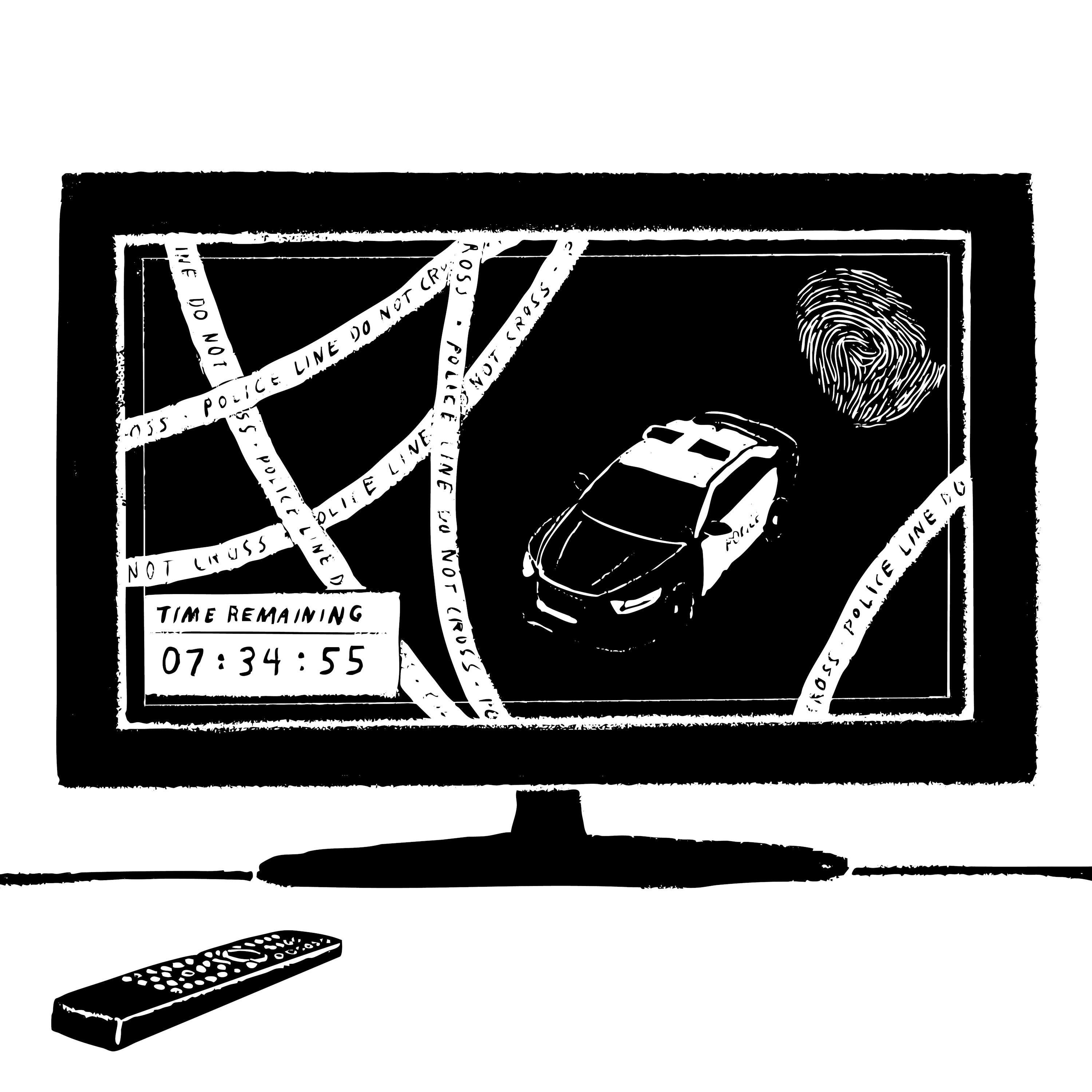
Criminal
The Clock Starts Ticking
00:35:09
On October 11, 2008, an 18-year-old was shot by someone firing a gun from the back seat of a car. A couple of hours later, homicide detectives arrived on the scene. And so did the camera crew for a reality television show.
Loading summary
Transcript99 lines
- [00:01]
Phoebe Judge
Support for criminal comes from BetterHelp when you decide to do something to improve your mental health, it's easy to feel overwhelmed by picking a therapist who's the right fit for you. BetterHelp has over 30,000 therapists and they'll help recommend you someone to match with. And if your first match isn't perfect, you can switch therapists at any time. Talk it out with BetterHelp. Visit betterhelp.com criminal to get 10% off your first month. That's betterhelphelp.com.
- [00:33]
Pure Leaf Advertiser
Support for this show comes from Pure Leaf Iced Tea when you find yourself in the afternoon slump, you need the right thing to make you bounce back. You need Pure Leaf iced tea. It's real brewed tea made in a variety of bold flavors with just the right amount of naturally occurring caffeine. You're left feeling refreshed and revitalized so you can be ready to take on what's next. The next time you need to hit the reset button, grab a Pure Leaf iced tea. Time for a tea break. Time for a pure Leaf.
- [01:05]
Phoebe Judge
Who was Jesse Michaelson?
- [01:07]
Jessica Lessenhop
Jesse was an 18 year old high school kid. He was an aspiring musician. He was kind of getting a kind of a little rap career off the ground. He was characterized by some of the detectives who wound up, you know, investigating what happened as just a pretty good kid.
- [01:26]
Phoebe Judge
Jesse Michaelson lived on the south side of Minneapolis with his family. On October 11, 2008, his family was throwing a party for his cousin's 13th birthday. A bunch of the kids were playing at the top of the alley behind his house, throwing a football around.
- [01:44]
Jessica Lessenhop
Across the alley from Jesse's family's house was the house of a high school classmate of Jesse's, somebody he recognized.
- [01:53]
Phoebe Judge
Jessica Lessenhop is a reporter for ProPublica.
- [01:57]
Jessica Lessenhop
He sees this person he knows from high school. He goes over there. He crosses the alley to go say hi.
- [02:03]
Phoebe Judge
His classmate was with some friends. A car then turned into the alley. It stopped in front of them and then a passenger in the back seat reached his arm out of the window and started shooting. One person was shot in the leg and Jesse was shot twice. One of the bullets hit him in the heart. A couple hours later, the homicide detectives from the Minneapolis Police Department arrived. We know what happened next because they were being followed by a reality television show. Here's how the episode began.
- [02:40]
Narrator
For homicide detectives, the clock starts ticking the moment they are called. Their chance of solving a murder is cut in half if they don't get a lead within the first 48 hours.
- [02:54]
Jessica Lessenhop
The hell's so fast?
- [02:55]
Sergeant Gaiters
Hello, Bob.
- [03:02]
Phoebe Judge
The show was called the First 48. I'm Phoebe Judge. This is criminal.
- [03:15]
Jessica Lessenhop
Each episode typically centers around one or two homicide investigations. And sort of by the end of the episode, typically in. In many of the episodes, there is some kind of a resolution. So someone has been arrested, someone has confessed. And so in that way, it is different than the sort of run and gun street cops. It's, you know, these more elite homicide detectives who are trying to, you know, solve a mystery. It's a very popular show. It's been on for 20 years, which is an incredibly long run for a television show.
- [03:47]
Phoebe Judge
And police departments agree to this, agree to be followed around?
- [03:54]
Jessica Lessenhop
Yeah, it's an agreement made between the show and the police department. The police department signs a contract with the show. The contract gives the show a lot of freedom. They're allowed to be in the police department building. They're allowed to ride around in police vehicles. They're allowed to be on the scene of homicides, crime, crime scene. In crime scenes that are very active, that, you know, things have just happened, people have just died. Those camera people are allowed to, you know, get this really up close glimpse of investigations that, you know, typically the public is not allowed to see.
- [04:34]
Phoebe Judge
Over the course of the show, the First 48 has entered into agreements with over 20 cities. They started filming with the Minneapolis Police Department in 2007, three years after the show first aired. And when Sgt. Robert Dale began investigating Jesse Michelson's murder, a camera crew was in the car with him. Sergeant Dale was new to the homicide unit he had joined just six months earlier.
- [05:01]
Sergeant Dale
This is my first homicide investigation in which I'm one of the lead investigators. Admittedly, I'm a bit anxious about it, but at the same time, I'm also eager to get started with the investigation.
- [05:16]
Phoebe Judge
In the episode, you can see Sergeant Dale arriving at the scene where he meets with the other investigator, Sergeant Christopher Gaiters. The episode shows clips from the crime scene. It's roped off with caution tape. There's a shot of a football in the grass. Jesse's body is blurred out. They zoom in on his shoes.
- [05:38]
Jessica Lessenhop
There's, you know, people taking crime scene photos there. They, they interview Jesse's family and that's kind of how the investigation kicks.
- [05:47]
Phoebe Judge
Here's Sergeant Gaiters.
- [05:49]
Sergeant Gaiters
Looks like it's a drive by with some kids who are playing football out on the street.
- [05:57]
Phoebe Judge
Sergeant Gators was also new to the homicide division. He had recently transferred from the gang unit. Sergeant Dale is shown interviewing the woman who called 91 1, Jesse's cousin. She says she saw the car. They offer their condolences to the family and eventually head back to the station to interview potential witnesses about the shooting. The camera crew films Sergeant Dale as he drives. He talks to them about what he thinks might have happened.
- [06:27]
Sergeant Dale
The neighborhood has seen a increase in gang activity. You know, this was a drive by shooting, bullets flying everywhere.
- [06:38]
Phoebe Judge
After the detectives interview the witnesses, the narrator on the show announces that no one was able to identify the shooter.
- [06:45]
Sergeant Dale
We believe that this might be gang related, and that could be the reason why they might be scared to come forward. We'll give the kids a little time for it to sink in that Jesse's actually dead. You know, maybe then they'll be more open to telling us what happened.
- [07:04]
Phoebe Judge
There's a 48 hour countdown clock in the corner of the screen. When there are just under 28 hours left, the detectives pay a visit to Jesse's father.
- [07:14]
Sergeant Dale
He was such a good kid. He didn't get into trouble. He hung out and did positive things, and I was very proud of him. You shouldn't have to bury your kids.
- [07:31]
Sergeant Gaiters
I can promise you this. We're gonna work on it very hard, okay? Make sure justice is served. Okay.
- [07:38]
Sergeant Dale
Thank.
- [07:41]
Phoebe Judge
The next day, with less than five hours left on the countdown clock, Sergeant Dale and Sergeant Gators are shown interviewing one of the witnesses. Again, they press him for more information. After a back and forth, the witness says that the shooter was someone named Smokey. With less than two hours left on the 48 hour countdown, the investigators start following this new lead.
- [08:06]
Jessica Lessenhop
Detective Gator says, let me call my friend over in the gang unit and see if he knows any smokies. And they pull up, you know, every Smokey that they can find in that database.
- [08:18]
Sergeant Gaiters
Hey, question for you, Smokey. Did I ring a bell with you? You know his real name by chance? Edgar Barrientos. All right, thanks, brother. All right.
- [08:40]
Phoebe Judge
Sergeant Dale and Sergeant Gators get a photo of Edgar Barrientos. And with less than 15 minutes left on the clock, they present a lineup to the witness. He identifies Edgar Barrientos as the shooter. With just minutes to spare, Sergeant Gators makes a declaration.
- [08:59]
Sergeant Gaiters
Looks like. Looks like we have our guy. So we're very happy about that.
- [09:05]
Phoebe Judge
The police arrest Edgar and bring him in for questioning.
- [09:09]
Sergeant Dale
I'm excited. It's the best part of the job, you know, interviewing suspects.
- [09:14]
Jessica Lessenhop
They interrogate him for many, many, many hours. He denies the whole time that he had anything to do with it. They lean on him very, very hard and he says, you know, I had nothing to do with this, with Jesse's death. And then he also keeps saying, you know, I was in the suburbs. I was in Maplewood all weekend.
- [09:36]
Narrator
Smokey says he was out of town staying with a family friend at the time of the murder.
- [09:42]
Jessica Lessenhop
Well, she can tell you I was there all day. Part of his problem, though, was that his memory was a little shaky. You know, obviously it was consistent that he hadn't had anything to do with this. But then when he couldn't precisely remember where he was at every point in time, that wound up being a problem for him later on. The detectives wound up interpreting that as being evasive and untruthful. And then you see the detectives leave the room and say, well, we're going to make a phone call. We're going to call the woman he was staying with, this, quote, family friend, and ask her if he was really there the whole weekend.
- [10:14]
Sergeant Dale
It's not looking so good for Smokey. She said that he was there the whole time except for a four hour span which coincides with the time of the murder. And she also believes that he was in Minneapolis at that time.
- [10:32]
Phoebe Judge
Edgar says he's innocent. The episode cuts to him being handcuffed.
- [10:38]
Jessica Lessenhop
The show implies that with this single phone call, Edgar's alibi has completely fallen apart. You know, it just seems so clear cut. It seems very definitive that they've obviously got the right person here.
- [10:49]
Phoebe Judge
Then Sergeant Dale and Sergeant Gators go to see Jesse Michelson's family.
- [10:54]
Sergeant Dale
We wanted to let you know before y' all wake up tomorrow and see it on the. On the morning news. We have made an arrest. Yeah, okay.
- [11:04]
Phoebe Judge
Thank you.
- [11:04]
Sergeant Dale
Yes. You know, maybe a little bit of closure here, but just trying to keep in mind that there is still some.
- [11:12]
Sergeant Gaiters
Work to be done here so we can just hold. Hold steady, right? Hold steady steady.
- [11:25]
Phoebe Judge
The episode aired In April of 2009, a month before Edgar's trial. What did you think about the episode with Jesse and Edgar?
- [11:35]
Kerry Sperling
It was a complete misrepresentation of what happened and a dangerous one.
- [11:46]
Phoebe Judge
We'll be right back to listen without ads. Join Criminal Plus.
- [12:03]
JCPenney Advertiser
This episode is brought to you by JCPenney. And if you've been to JCPenney recently. Yes, JCPenney, you'll know it's becoming the way to find good clothes for prices that still make sense. They've got hidden gems for everyone and every budget with deals and rewards that actually make a dent. If you already shop JCPenney, you feel like you know a secret. But if not, it's time to ask. Wait, am I sleeping on JCPenney? Shopjcpenney.com, yes, JCPenney right now at the.
- [12:34]
Narrator
Home Depot, you'll find storage solutions made to fit your needs. Grab an HDX Tuff tote to protect your tools, or keep your sports equipment contained with reinforced snap fit lids. Or stack up and make better use of your space with bins and totes built to last. Whatever your story, we've got the gear to keep it organized and protected at the Home Depot. How doers get More done.
- [13:03]
Phoebe Judge
Kerry Sperling is an assistant Attorney General at the Minnesota Attorney General's Office. She started looking into Edgar Barrientos Quintana's case in 2021. One of the first things she did was watch the first 48 episode. I mean, how close would you say the episode was to the reality of the investigation?
- [13:25]
Kerry Sperling
Well, I mean, let's start with the premise of the first 48 between the time that the crime occurred and when Barrientos was actually arrested was 10 days, not 48 hours. And this 48 hour model that the first 48 has, I guess it's good TV, you know, and it fits their title and their premise. But nothing about the case fit that premise. One significant thing that's missing from the first 48 episode is that every witness who saw the shooter the day of the shooting described him as bald. Barrientos at the time had a full head of dark hair. So when something like that doesn't fit, you have to ask yourself, well, is there more that doesn't fit?
- [14:25]
Phoebe Judge
In the lineup where Edgar Barrientos had been identified as the shooter, investigators used an old photo of him. In it, he had a shaved head. The episode also didn't mention that at least some of the people who were at the scene on the day of the shooting were affiliated with a gang clique called Southside Raza. Jess Classmate, who he had recognized the day of the birthday party, was the leader of the Southside Raza, a clique within a gang called Serenios 13. He was 16 years old and went by the name Puppet. Puppet had formed the Southside Raza without permission and was fighting with other groups in Minneapolis because of it. Just five months before Jesse was killed, Puppet had been shot in the same place. Sergeant Dale and sergeant Gators started their investigation, focusing on Puppet and his friends. They were questioned for hours, none of which was mentioned in the episode. Puppet told detectives that he'd heard that the shooter was a rival gang member named Sharkey and that he fit the Description witnesses gave he was bald. The day after Jesse was killed, someone on the police force suggested another name. A Serenos gang member nicknamed Sandwich. Sandwich lived a block away from where the shooting happened. Sergeant Dale and Sergeant Gators kept interrogating the Southside Raza members and Puppet named another suspect, someone named Smokey. Then Puppet's brother told Sgt. Gators that Smokey was the one who had been in the back seat of the car that day and shot Jesse. Did the detectives follow up on any other leads? You know, this guy Sandwich or Sharkey?
- [16:17]
Jessica Lessenhop
Yeah, so they. They did do a lot of interviewing and talking to people. Sharkey became. Sharkey became a really important witness to the crime. I would argue that he was. You could almost see him as the star witness of the ultimate trial against Edgar.
- [16:35]
Phoebe Judge
Sergeant Dale and Sergeant Gaiters interviewed Sharkey three times. In the first interview, he said he hadn't heard that Edgar was involved. In the second interview, they told him he could either be a witness or a suspect. If he was a suspect, he could spend a lot of time in prison. But if he was just riding in the car and saw the shooting, they would help him out. In the third interview, Sharkey said he had been in the back seat and that Smokey was the shooter.
- [17:09]
Jessica Lessenhop
At some point, the detectives really did seem to make up their mind that, hey, all roads lead to Smokey. And so we're just going to use Sharkey as sort of a witness and someone who's going to help us convict Smokey. He was the only person who said, I was in the car. I saw Edgar do it with my own eyes.
- [17:30]
Phoebe Judge
Another problem that Kerry Sperling found was that the detectives had discounted Edgar Barrientos alibi. Edgar had told detectives that he'd been in the suburbs all weekend with someone who the First 48's narrator described as a family friend. But his family friend was actually his girlfriend. Her name was Itzel. And she'd also been involved with Puppet. Recordings of calls made in jail from Edgar to Itzel showed they were trying to remember what they did on the day of the shooting. Itzel remembered that they had gone to Cub Foods that evening, a grocery store to pick up limes for her mother. Edgar asked his attorney to get video footage from the grocery store. The video placed Edgar and Itzel in the grocery store at 6:20pm about half an hour before the shooting.
- [18:29]
Kerry Sperling
They didn't get the video until months later. And the video at Cub Foods is so essential because not only does it show him with Itzel and with you know, a full set of hair, but just walking slowly, laughing, joking. It looks like, you know, just kind of walking out of the store with a bag of limes. And to think that he goes from there, changes clothes, dumps his girlfriend without a ride home, and takes off as fast as possible to south Minneapolis to carry out a shooting. It just doesn't fit. It doesn't fit the scene at all.
- [19:23]
Phoebe Judge
The detectives hadn't requested the grocery store video footage during their initial investigation.
- [19:29]
Jessica Lessenhop
Like, the whole premise of the first 48 is that all this stuff is happening in the early days of this investigation, and those are the most important days. Those are the most important hours. And in a way, that kind of discounts everything that you're going to find out afterwards, which are. Which sometimes are going to be pieces of evidence that take a while to develop, such as security camera footage. What Edgar's case sort of illustrates is that, you know, a really important, key piece of evidence may emerge months later.
- [19:54]
Phoebe Judge
The trial was scheduled for May of 2009. At this point, the investigation had no physical evidence connecting Edgar to the crime. The murder weapon had never been found. At the trial, prosecutors argued that Edgar had shot at Puppet and his friends because they were part of a rival gang and also because his girlfriend Itzel had been spending time with Puppet. What did the defense say happened?
- [20:25]
Kerry Sperling
Well, that's one of the problems in this case. The defense really dropped the ball. They didn't seem to have investigated the case. You could tell reading the transcripts that they were caught off their feet many, many times in trial. They didn't really have a strategy. They just were kind of absent. It's a serious, serious case. And he had really just no representation.
- [20:58]
Phoebe Judge
After three days of deliberation, the jury found Edgar Barrientos guilty.
- [21:04]
Kerry Sperling
He was sentenced to life without parole.
- [21:11]
Phoebe Judge
We'll be right back.
- [21:30]
WhatsApp Advertiser
On WhatsApp, no one can see or hear your personal messages. Whether it's a voice call message or sending a password to WhatsApp, it's all just this. So whether you're sharing the streaming password in the family chat or trading those late night voice messages that could basically become a podcast, your personal messages stay between you, your friends and your family. No one else, not even us. WhatsApp message privately with everyone.
- [21:59]
Kerry Sperling
It's Wednesday Addams. I see you're trying to distract yourself.
- [22:03]
Phoebe Judge
From your own banal thoughts. Let me help.
- [22:07]
Jessica Lessenhop
Here's a recording thing made of my latest root Canal.
- [22:22]
Phoebe Judge
Wednesday. Season two begins August 6th only on Netflix. Keri Sperling had been reinvestigating Edgar Barrientos case for Minnesota's Conviction Review Unit, a unit that looks into the cases of people who claim they were wrongfully convicted. And when you looked at his case, how long had had he been in, in prison for?
- [22:51]
Kerry Sperling
He had been in prison for about 12 years, I think.
- [22:56]
Phoebe Judge
Keri Sperling and her team put together a report. It was 180 pages. It listed a number of issues with the investigation and trial. One was that the first 48 had been filming during the investigation and that they had aired Edgar Barrientos's episode before his trial.
- [23:20]
Kerry Sperling
The first 48 set up a narrative that the prosecutor really had to follow because it was aired. And so you have this trial where they're having to sort of fit everything into this narrative that played on TV just weeks before the trial, because presenting it any other way would call into question the entire investigation.
- [23:53]
Jessica Lessenhop
It airing before trial was sort of a huge problem kind of for everybody. Jessica lessenhop it wasn't just a problem for Edgar. The prosecution was actually very dismayed. It turned out it caused all kinds of problems for them. And we know that because the Conviction Review Unit was able to obtain a memo that they wrote where they outlined a bunch of different issues with the episode coming out ahead of the trial. For instance, they had a witness they intended to put on the standard. That witness saw clips of the show and got so scared that he ran away from home and left a note for his parents saying, I'm too scared. And when they managed to track him down and arrest him, he still refused to cooperate because of the effect of just seeing, like, oh my God, like this case is getting so much publicity. This is really, it's really scary for me. And so he wound up not testifying.
- [24:45]
Phoebe Judge
In their memo about the episode, one prosecutors also mentioned that the show had presented footage of the investigation out of order, which distorted how the investigation unfolded. And they decided not to have Sergeant Dale testify, quote, in hopes of avoiding cross examination that would have been damaging to our case. Kerry Sperling's report added that parts of the episode had also been staged.
- [25:15]
Kerry Sperling
They could not put on the lead detective, couldn't put him on the stand at trial because he had staged certain things in the first 48 and had read a script that they provided him for part of it. And the prosecutors felt like, you know, he could be impeached on that. But what happened as a result is they put on the other investigator who often wasn't there, like for particular interviews, or wasn't the one doing the things that he said he was doing at trial. And the defense didn't do a good job of making this jury question, why wouldn't the lead investigator who did this be here testifying before you or objecting to the things that the other detective did that he didn't really do? And so it was damaging in so many ways.
- [26:25]
Jessica Lessenhop
You know, it had the potential to be a real problem on cross examination. If you have a detective saying, oh, yeah, and also a television producer was telling me what to do while I was investigating this case. So normally you would have someone like Sergeant Dale testify at trial. And he didn't. And he didn't testify at trial directly because of the first 48 and concerns about whether or not they had, again, quote, scripted things for him to say.
- [26:51]
Phoebe Judge
The report called this play acting.
- [26:54]
Jessica Lessenhop
It does have a theatrical quality to it when they're saying things like, I think we've got our guy. And, you know, one of the most disturbing things about sort of the theatricality of it is that final scene where the two detectives go and inform Jesse's family that they have caught the person responsible for killing their son. There's something sort of performative about that and really sad. Of course, that was the news that they wanted to hear most, you know, in the middle of this awful tragedy was that somebody was going to be held accountable. You've got this scene where they're so grateful and they're so, you know, sort of relieved. It's just heartbreaking.
- [27:35]
Phoebe Judge
It took three years for the Conviction Review Unit to complete their report. The report recommended that the charges against Edgar Barrientos be dismissed. Minnesota County Attorney Mary Moriarty dismissed the charges in 2024. Edgar had been in prison for almost 16 years. Here's County Attorney Mary Moriarty at a press conference.
- [28:03]
Jessica Lessenhop
We are sorry to both Mr. Barrientos Quintana and his family and to the family of Jesse Michelson. There was no physical evidence, no fingerprints, no DNA, no gun tying Mr. Barrientos.
- [28:17]
Phoebe Judge
Quintana to the crime. How did Jesse's family react to the exoneration?
- [28:32]
Jessica Lessenhop
The person who I spoke to the most was his sister Tina. Tina Rosebear. Tina was really, really, really affected by Jesse's death and, you know, really had a lot of anger and hatred towards Edgar and was actually a fan of the first 48. So one of the ways that she sort of honored Jesse's life is she had all these copies of the episode. And on the anniversary of his death, or when she was just sort of feeling like she was missing him, she would watch the episode and she told me it actually, you know, brought her a sense of comfort. So, you know, in many ways, you might think she's the last person who would be, you know, excited to hear that Edgar. That Edgar's case is getting another look. And in the early stages of the review by the Conviction Review Unit, I think that she did feel very concerned that Edgar was going to get out. But when she first got a copy of the Conviction Review unit, it's a 180 page document. And she told me that by the time she got to page 40, she was already thinking, I don't think Edgar did this. And she just sort of saw the facts of the case in black and white and then just pretty quickly was like, yeah, I don't think he did this. And since then, I think she's become really one of Edgar's biggest supporters at the press conference when he was released. And I think she feels, you know, it obviously wasn't her fault, but she feels really bad about that.
- [29:56]
Phoebe Judge
No one else has been charged with Jesse Michaelson's murder. The first 48 episode has been removed from some, but not all, streaming platforms. The episode still includes a title card saying that Edgar Barrientos was convicted of first degree murder and sentenced to life without parole.
- [30:17]
Kerry Sperling
One other thing that I think is dangerous about it is that, you know, these detectives become stars, and that's also not a good thing. Detectives should be working not to become TV stars, and thank God most of them are doing that. And I'm not saying any of this is intentional. It's just human bias, right? If you're on tv, you act a different way, you do things a little differently when you know people are going to be watching you. For entertainment.
- [30:55]
Phoebe Judge
Minneapolis did not renew its contract with the first 48 when it expired in 2016. Earlier that year, the county attorney had requested footage from the production team for ongoing cases, but they didn't release it. Jessica Lessenhop says the show claims that they normally delete all of their raw footage after an episode is completed and that they also generally decline any subpoenas citing the First Amendment.
- [31:26]
Jessica Lessenhop
I was shocked by how many times in other cities prosecutors have openly said, I don't know why we're cooperating with the show. Police chiefs had said, hey, I think we kind of made a mistake here. You know, people who are on the law enforcement side of things saying, this show is a real problem. And I don't know why we're cooperating with them, because it's interfering with our cases. It's interfering with the fair administration of justice. And this just feels like a mistake for kind of everybody involved.
- [31:53]
Phoebe Judge
Other cities have also ended their relationships with the first 48 Memphis, New Orleans, Detroit and Miami. In 2021, Texas Governor Greg Abbott signed a bill into law banning reality television shows from working with law enforcement. Both Jessica Lessenhobb and Kerry Sperling say that they've heard that the show has also caused problems in jury selection. In one case that had been covered by the first 48, potential jurors were asked whether they'd seen the show.
- [32:29]
Kerry Sperling
Once you ask the jury that question, one, you know everyone's going to rush home and try to watch it. Two, even if they don't, they've been told this is a really important case. It's on the first 48. And if they're first 48 fans, you know, then they're likely to buy into the fact that you can solve a crime in first 48 hours. No problem.
- [33:09]
Phoebe Judge
Criminal is created by Lauren Spore and me. Nadia Wilson is our senior producer. Katie Bishop is our supervising producer. Our producers are Susanna Roberson, Jackie Zagiko, Lily Clark, Lena Sillison, Megan Kinane and Arlena Revolo. Our show is mixed and engineered by Veronica Simonetti. Julian Alexander makes original illustrations for each episode of Criminal. You can see them@thisiscriminal.com and you can sign up for our newsletter@thisiscriminal.com Newsletter we hope you'll consider supporting our work by joining our membership program Criminal. Plus, you can listen to Criminal, this is Love and Phoebe reads a Mystery without any ads. Plus you'll get bonus episodes. These are special episodes with me and Criminal co creator Lauren Spore talking about everything from how we make our episodes to the crime stories that caught our attention that week to things we've been enjoying lately. To learn more, go to thisiscriminal.com we're on Facebook at thisiscriminal and Instagram and TikTok at criminal underscore podcast. We're also on YouTube at YouTube.com criminalpodcast criminal is part of the Vox Media Podcast Network. Discover more great shows@podcast.voxmedia.com I'm Phoebe Judge. This is Criminal.
- [34:44]
Teffy
Hi, I'm Teffy. Maybe you've seen me on TikTok or TV or interviewing celebrities on the red carpet. But before all that, I was just another girl running late to her desk job, transferring calls, ordering printer ink. I don't miss that. But I do miss nothing. Working at work, gossiping with my co workers about celebrities. What's the latest with Bieber, Where's Britney? And which Jonas brother is which? That's what I want my new podcast to feel like. Like you and I are work besties. We'll chat about celebrities we're obsessed with. How could you be registered to vote.
- [35:21]
Jessica Lessenhop
And not know who Jennifer Aniston is?
- [35:23]
Teffy
Look up their star charts. Sagittarius and a Capricorn. They do clash and have so much fun avoiding real work together. I'm having a silly goose of a time. Teffy runs.
- [35:35]
Phoebe Judge
Teffy laughs.
- [35:36]
Teffy
Teffy overshares, Teffy explains. But most of all, Teffy talks from me. The Cut and Box Media podcast. This is Teffy Talks.
- [35:49]
Jessica Lessenhop
Let's go.