
Podcast
Cryptocurrencyteens
Hosted by Abigail Li · EN
Cryptocurrencyteens aim to educate teens about cryptocurrency and financial literacy, and encourage teens to study cryptocurrency / blockchain at top colleges. We offer a scholarship contest, podcasts, and conduct research into teens’ preferences for investing in Bitcoin, Ethereum, NFT, DeFi. For the podcast, we will interview thought leaders in the cryptocurrency / blockchain space.
10episodes
Episodes
Newest firstAll episodes

#43 Interview with Syed Muntasir — Innovation Strategy at Oxford & Director General, Bangladesh Foreign Affairs Ministry
Feb 13, 202301:49:08Tap to summarizeIn this episode, Dr. Syed Muntasir returns to the Cryptocurrencyteens podcast to reflect on the current political and economic landscape, specifically from his perspective as Director General at the Bangladesh Ministry of Foreign Affairs. He discusses his high level thoughts on the macro level economic issues faced by the global business community and Bangladesh, explaining the ways in which Bangladesh was affected by many of the global economic issues of recent times. He touches on ways that global supply chains have been impacted by what is going on in China and how blockchain can be utilized to improve global supply chains. Another area that holds potential promise for cryptocurrencies to improve financial inclusion and the financial systems is in the area of Central Bank Digital Currencies, also known as CBDCs. China, Bahamas and Nigeria have launched high profile CBDC pilots, and many other countries are seriously studying the potential for CBDCs and considering pilots. Dr. Muntasir elaborates on Bangladesh’s stance on CBDCs and shares his own ideas regarding the potential for CBDCs. In our discussion of the global economy in the face of COVID-19, the Crypto Winter, and the current US recession, he shares his thoughts on whether or not he believes that cryptocurrencies are correlated with interest rates and the stock market. In addition, we get to hear his thoughts on the rebound of Bitcoin and other Altcoins, and how the potential rebound of the cryptocurrency market could help the overall American or global economy to recover. This episode also examines the impact of blockchain and cryptocurrencies on innovation and entrepreneurship, exploring the roles blockchain and cryptocurrencies can play in spurring economic growth and mitigating challenges in the global market. Other illuminating areas of discussion include the Metaverse and its potential, the role of cryptocurrencies in providing a payment infrastructure for the Metaverse, and his response to its critics of the Metaverse. Dr. Muntasir last joined our podcast in April, over a year ago, to discuss his role as the Director General for International Trade, Investment & Technology at the Bangladesh Ministry of Foreign Affairs and his work with Innovation Strategy at Oxford University, his book “BLOCKCHAINS: Gaming and Collusion: A Reading in Political Economy (Political Economy of AI),” his insightful advice for teenagers, and more. Check out that podcast episode here. Dr. Syed Muntasir is a financial analyst-turned-diplomat. Holds a Ph.D. in Regional Economic Integration and is an alumnus of the Saïd Business School, University of Oxford. He comes from St. Hugh's College and is professionally qualified in peacekeeping, peace-building, maritime security, international humanitarian law, and laws of armed conflict. He has worked with the University of Oxford for designing innovative models for connecting markets and easing payments. As a career Foreign Service Officer, Dr. Muntasir is the Director General for International Trade, Investment and Technology and also the ICT for the Government of Bangladesh. A native of Bengali, he speaks French, Russian and Arabic and has held policy positions on India, China, East Asia, and the Pacific theatres. His academic interest lies in Blockchains, FinTech and AI. Dr. Muntasir has written extensively on strategy and innovation - particularly in reference to the political economies of South, East and Southeast Asia. Remedying institutional voids in the emerging markets and in Bottom of Pyramid (BOP) markets with the innovative use of information, communication and digital technologies is a forté. Inclusivity and justice in the design space are objectives.
Transcribe →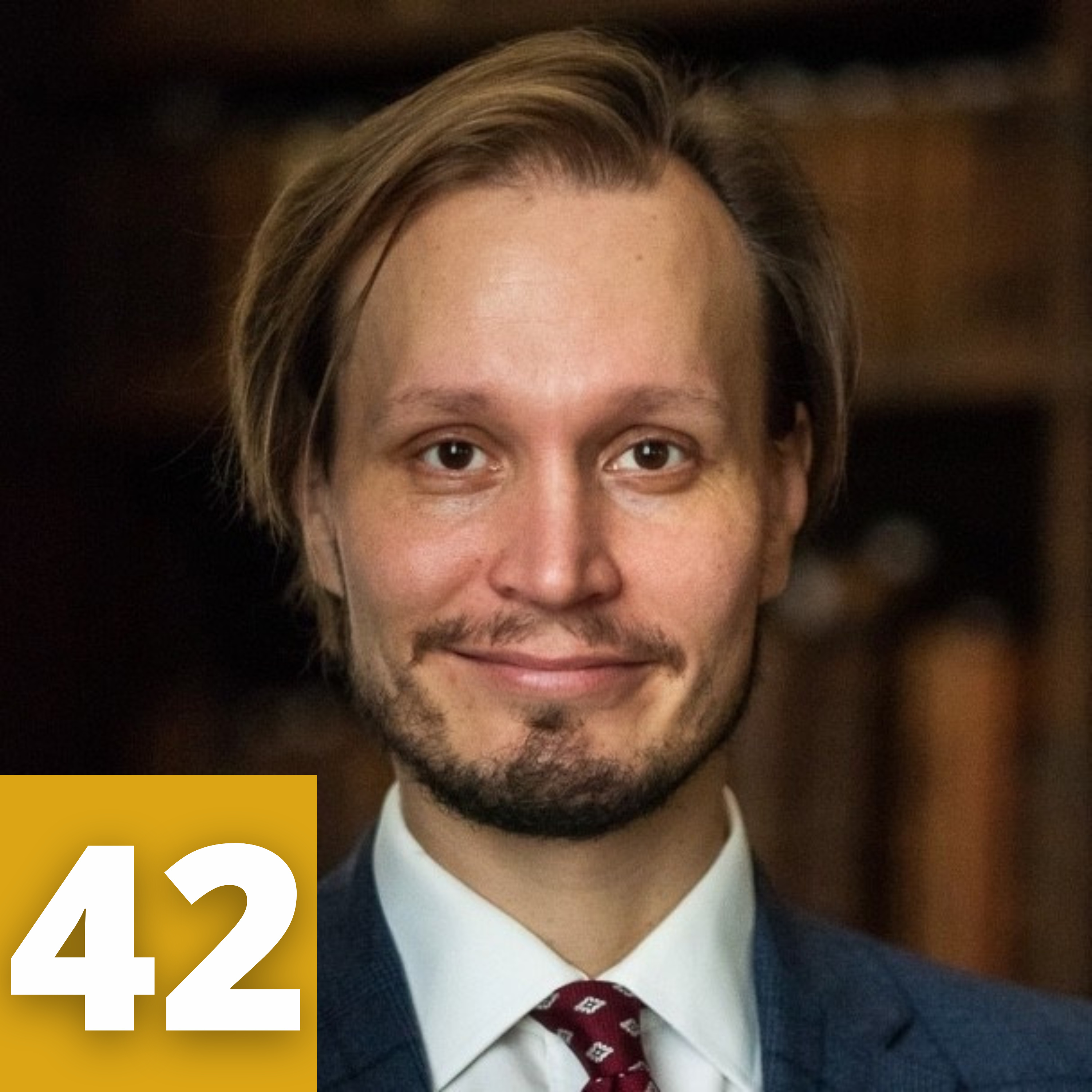
#42 Interview with Vili Lehdonvirta — Professor of Economic Sociology at Oxford University, Author of “Cloud Empires”
Sep 25, 202200:31:42Tap to summarizeIn this episode, Vili Lehdonvirta joins the Cryptocurrencyteens Podcast to discuss his role as a Professor of Economic Sociology and Digital Social Research at Oxford University. He recently wrote a new book “Cloud Empires: How digital platforms are overtaking the state and how we can regain control" which is coming out from MIT Press in a few days, on September 27. Vili shares his research and work as both a researcher and an author, explaining his view on the viability of Crypto and how his book explores flaws within the Crypto industry. Description of “Cloud Empires: How digital platforms are overtaking the state and how we can regain control” on MIT Press: “The rise of the platform economy into statelike dominance over the lives of entrepreneurs, users, and workers. The early Internet was a lawless place, populated by scam artists who made buying or selling anything online risky business. Then Amazon, eBay, Upwork, and Apple established secure digital platforms for selling physical goods, crowdsourcing labor, and downloading apps. These tech giants have gone on to rule the Internet like autocrats. How did this happen? How did users and workers become the hapless subjects of online economic empires? The Internet was supposed to liberate us from powerful institutions. In Cloud Empires, digital economy expert Vili Lehdonvirta explores the rise of the platform economy into statelike dominance over our lives and proposes a new way forward. Digital platforms create new marketplaces and prosperity on the Internet, Lehdonvirta explains, but they are ruled by Silicon Valley despots with little or no accountability. Neither workers nor users can “vote with their feet” and find another platform because in most cases there isn't one. And yet using antitrust law and decentralization to rein in the big tech companies has proven difficult. Lehdonvirta tells the stories of pioneers who helped create—or resist—the new social order established by digital platform companies. The protagonists include the usual suspects—Amazon founder Jeff Bezos, Travis Kalanick of Uber, and Bitcoin's inventor Satoshi Nakamoto—as well as Kristy Milland, labor organizer of Amazon's Mechanical Turk, and GoFundMe, a crowdfunding platform that has emerged as an ersatz stand-in for the welfare state. Only if we understand digital platforms for what they are—institutions as powerful as the state—can we begin the work of democratizing them.” Learn more: Vili Lehdonvirta (guest): https://www.linkedin.com/in/vililehdonvirta Cloud Empires: How digital platforms are overtaking the state and how we can regain control: https://mitpress.mit.edu/9780262047227/cloud-empires/ Abigail Li (host): https://www.linkedin.com/in/cryptocurrencyteens About Cryptocurrencyteens: https://www.cryptocurrencyteens.com/
Transcribe →
#41 Interview with Christos Makridis — Adjunct Associate Professor at University of Nicosia and Chief Technology Officer, Head of Research, and Co-founder at Living Opera
Sep 25, 202200:28:08Tap to summarizeIn this episode, Christos Makridis joins the Cryptocurrencyteens Podcast to discuss his role as the Adjunct Associate Professor at University of Nicosia and Chief Technology Officer, Head of Research, and Co-founder at Living Opera. He explains what his company, Living Opera, aims to achieve — inspiring and supporting musicians and artists. Additionally, Christos shares information on the University of Nicosia and his advice for teenagers. Learn more: Christos Makridis: https://www.linkedin.com/in/christosmakridis Abigail Li (host): https://www.linkedin.com/in/cryptocurrencyteens About Cryptocurrencyteens: https://www.cryptocurrencyteens.com/
Transcribe →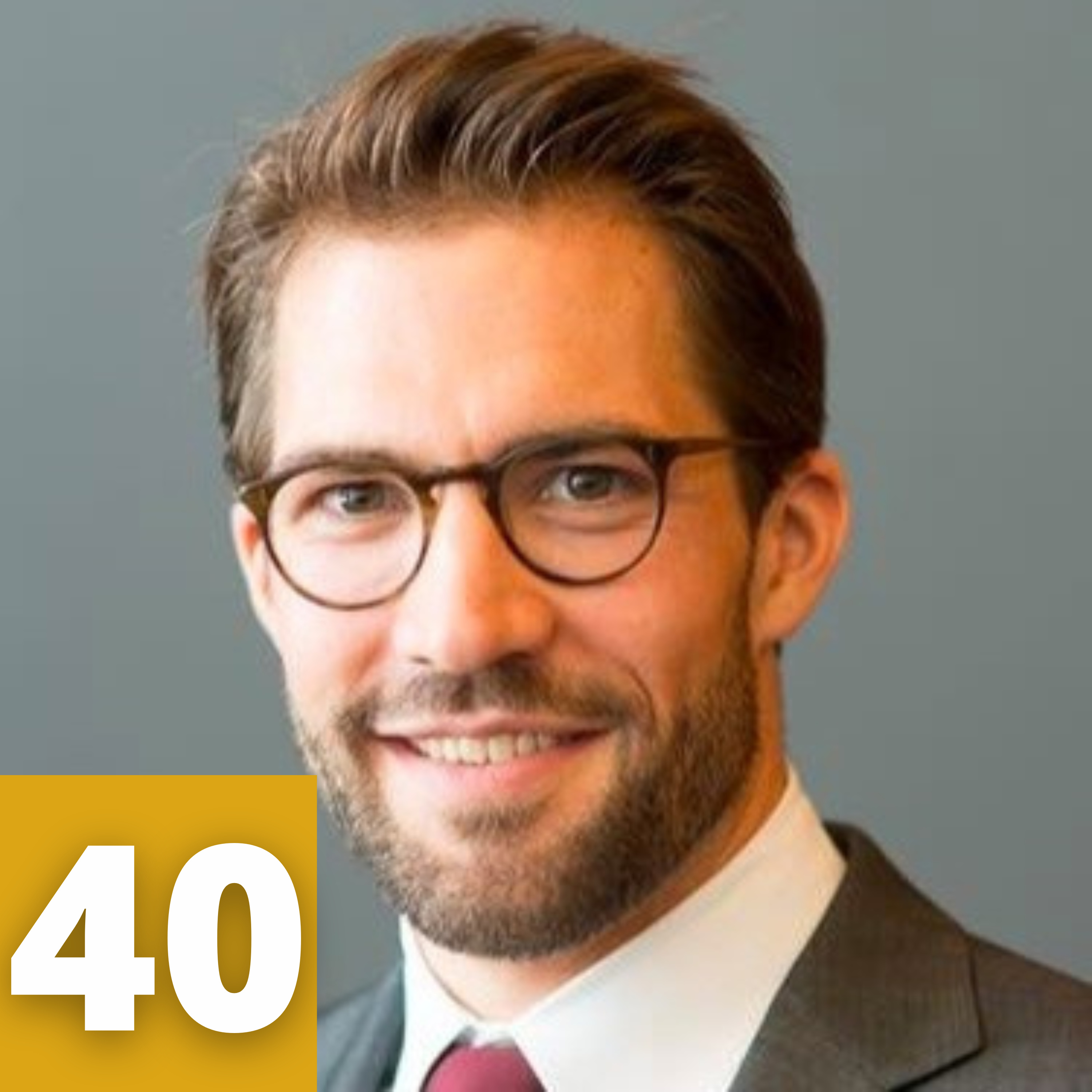
#40 Interview with Martin Schmalz — Professor of Finance and Economics at Oxford, Academic Director: Blockchain Strategy Programme, and Co-Director: Artificial Intelligence and Open Banking Programme
Sep 24, 202200:38:16Tap to summarizeIn this episode, Martin Schmalz joins the Cryptocurrencyteens Podcast to discuss his role as a Professor of Finance and Economics at Oxford and the course material he develops, the Academic Director of Blockchain Strategy Programme, and Co-Director of the Artificial Intelligence and Open Banking Programme. Additionally, Martin shares key points from the book that he co-authored “The Business of Big Data: How to Create Lasting Value in the Age of AI,” and offers insightful advice to his students. Martin Schmalz is Professor of Finance and Economics at Saïd Business School, University of Oxford, where he is the Academic Director of Oxford’s Blockchain Strategy Programme, and co-director of the Open Banking & AI in Finance Programme. He co-authored “The Business of Big Data: How to Create Lasting Value in the Age of AI”, and was featured as one of the “40 under 40” best business school professors worldwide at the age of 33. He was invited to present to regulators and policy makers across the globe, including the US Department of Justice, The White House Council of Economic Advisers, European Commission, European Parliament, OECD, various central banks, and at universities across America, Europe, Asia, and Australia. Excerpt from “The Business of Big Data: How to Create Lasting Value in the Age of AI” on the Amazon website: “If you’re a sentient human these days, you’ve heard people talking of the phenomenal riches promised by the power of big data. Over the past decade or so, the world around us has undergone a staggering transformation, and great things have been promised to anyone able to ride the AI wave. But how exactly do you catch that wave? What does all this mean for you, whether you’re an investor choosing among thousands of possible investments, a manager deciding where to allocate your capital, or a student wondering how to ensure there’s good work out there for you by the time you graduate?*The Business of Big Data* will show you how to think strategically about the economic impacts of AI, how to complement AI instead of competing against it, how to reap the rewards of the AI revolution, and how to find your place in our brave new data-driven world. Along the way you’ll find out how AI is like (and unlike) an ox, why your bank cares how fast you fill in a form, why your car insurer judges you by your email address, and why everything you do is data — from what time you first check your phone in the morning to where you sleep at night.” Learn more: Martin Schmalz: https://www.linkedin.com/in/martin-schmalz-19060a5 Abigail Li (host): https://www.linkedin.com/in/cryptocurrencyteens About Cryptocurrencyteens: https://www.cryptocurrencyteens.com/
Transcribe →
#38 Interview with Jonathan Rufrano — Program Manager at Stanford Future of Digital Currency Initiative
Sep 24, 202200:48:50Tap to summarizeIn this episode, Jonathan Rufrano joins the Cryptocurrencyteens Podcast to discuss his role as the Program Manager at Stanford Future of Digital Currency Initiative and his work as a Web3 Advisor at the United Nations. This interview explores topics like the correlation between cryptocurrency and public policy, how Cryptocurrency can be used to increase financial inclusion, and the importance of financial regulation. Jonathan shares his inspiration behind reviewing and advising on Crypto research through lenses of financial inclusion, interoperability, scalability, and security of technical systems being developed and their relation to existing financial regulations. He elaborates on his work crafting regulatory standards for Central Bank Digital Currencies related to monetary policy, payments, securities, capital markets, and integration within financial systems. Finally, he explains insightful findings of his research into Crypto. Jonathan was introduced to Bitcoin and blockchain in college while studying international relations, the geopolitical impact of emerging technologies, and the growing geopolitical power of the tech giants developing businesses around new technology. He first read the Bitcoin white paper in 2012 and was fascinated by bitcoin for its ability to impact and reshape geopolitics just like Facebook, Microsoft and Apple were doing in the early 2010s–as well as blockchain's ability to create databases and communication networks that couldn't easily be censored by any of the increasingly authoritarian governments around the world. He started his career in grassroots activism and advocacy before pivoting into public policy. Now he’s all in on web3, and has been in crypto professionally since early 2019. Learn more: Jonathan Rufrano: https://www.linkedin.com/in/jonathan-rufrano Abigail Li (host): https://www.linkedin.com/in/cryptocurrencyteens About Cryptocurrencyteens: https://www.cryptocurrencyteens.com/
Transcribe →
#38 Interview with George Kushner — CEO at H2cryptO
Sep 24, 202200:23:27Tap to summarizeIn this episode, George Kushner joins the Cryptocurrencyteens podcast to discuss his role as the Chief Executive Officer at H2cryptO, his career journey, his advice for students, and more. George Kushner is the Chief Executive Officer at H2cryptO and an established professional with over twenty-seven years of demonstrated experience in the financial services industry in Alternative Investments, Capital Markets, Fixed Income & Derivative product sales, Private Equity, Real Estate, Fund of Funds, Hedge Funds, Private Banking, Blockchain/DLT & Cryptocurrency. He has experience in product management, business development and relationship management. George has worked for firms such as Merrill Lynch’s Hedge Fund Development & Management Group, Man Group, BlackRock & Wells Fargo Private Bank to name a few. George is a self-starter who strives to be naturally curious, entrepreneurial, relationship building and a problem solver. Finally, George holds a Bachelors of Arts from Georgia State University and an MBA from the Goizueta Business School at Emory University. Learn more: George Kushner (guest): https://www.linkedin.com/in/george-kushner Abigail Li (host): https://www.linkedin.com/in/cryptocurrencyteens About Cryptocurrencyteens: https://www.cryptocurrencyteens.com/
Transcribe →
#37 Interview with Spyros Galanis — Professor of Economics at Durham University Business School
Sep 24, 202200:27:01Tap to summarizeIn this episode, Spyros Galanis joins the Cryptocurrencyteens Podcast to discuss his role as a Professor of Economics at Durham University Business School. Spyros is the author of the book “Six Easy Models of International Trade Theory” and discusses key takeaways of his book and what drew him to conduct research on public finance. He also shares what he teaches in his Blockchain and Cryptoccurencies Economics, Finance and Law course and some of his most interesting research findings in finance, decision theory, and game theory. Spyros is Professor of Economics at Durham University Business School. Previously, he was Associate Professor and Head of the Department of Economics at City, University of London, and Associate Professor at the University of Southampton. He received his PhD from the University of Rochester. His research interests are in the areas of decision and game theory. In particular, he examines under which conditions trading takes place in financial markets and whether the prices of assets reveal the private information of traders. Spyros is also an economic consultant for Aaro Capital since 2018, a fund of funds which specialises in investing in crypto assets and distributed ledger technology. Description of “Six Easy Models of International Trade Theory” from the University of Southampton Institutional Repository: “This book provides a short and concise introduction to the main theories of international trade, addressing the following questions. Are there gains for a country that engages in free trade? Which goods does it export and import? What happens to its income distribution? What are the implications for consumers and producers when it restricts trade, for example by imposing import tariffs?” Learn more: Spyros Galanis (guest): https://www.linkedin.com/in/spyros-galanis-a864712 Six Easy Models of International Trade Theory: https://eprints.soton.ac.uk/425732/ Abigail Li (host): https://www.linkedin.com/in/cryptocurrencyteens About Cryptocurrencyteens: https://www.cryptocurrencyteens.com/
Transcribe →
#36 Interview with Natalie Brunell — Anchor of the Hard Money show & the Coin Stories Podcast, Adjunct Professor at USC
Jul 21, 202200:26:15Tap to summarizeIn this episode, Natalie Brunell joins the Cryptocurrencyteens Podcast to discuss her work as the Anchor and Managing Editor for the Hard Money Show, the Host/Creator of the Coin Stories Podcast, and her role as Adjunct Professor of Advanced Video Storytelling & Communication at University of Southern California. Natalie shares her career journey—from working as a journalist to entering podcasting. She also discusses what she has learnt conducting interviews of leading voices in the crypto space. Learn more: Natalie Brunell (guest): https://www.linkedin.com/in/nataliebrunell Hard Money; https://www.youtube.com/watch?v=0QNhZ06VACg Coin Stories Podcast: https://podcasts.apple.com/us/podcast/coin-stories-with-natalie-brunell/id1569130932 Abigail Li (host): https://www.linkedin.com/in/cryptocurrencyteens About Cryptocurrencyteens: https://www.cryptocurrencyteens.com/
Transcribe →
#35 Interview with Daniel Rose — Founder & CEO at Doshi
Jul 12, 202200:18:30Tap to summarizeIn this episode, Daniel Rose joins the Cryptocurrencyteens podcast to discuss his work at Doshi, his career journey, and his advice for teenagers. Daniel Rose is the founder and CEO of Doshi, a crypto wallet made for teens. Before starting Doshi, Daniel was working as an innovation consultant building new business models for IKEA and King Games. He quit his role to trade crypto full-time, but soon realized that his passion is in building businesses. When he met his business partner and came up with the idea of building a crypto wallet for teens, he immediately jumped at the opportunity! Daniel speaks 4 languages (German, English, Cantonese, and French) and holds an MBA from Imperial college. Learn more: Daniel Rose (guest): https://www.linkedin.com/in/danielrose1 Abigail Li (host): https://www.linkedin.com/in/cryptocurrencyteens About Cryptocurrencyteens: https://www.cryptocurrencyteens.com/
Transcribe →
#34 Interview with Dora Tang — CEO at eXchangily DEX and Professor at Cleveland State University
Jul 12, 202200:22:13Tap to summarizeIn this episode, Dora Tang joins the Cryptocurrencyteens podcast to discuss her work at Exchangily, her career journey, and her words of wisdom for teenagers. Dora Tang is the CEO of Exchangily, a decentralized crypto exchange and co-founder of 7StarPay. Exchangily won the "Top 10 voted company" out of a hundred startups at the Oracle sponsored FUND Conference in 2019, and was voted one of the top 20 technology startups in Ohio. Dora is a part-time professor at Cleveland State University, where she teaches Blockchain Technology and Application. She has a master and bachelor’s degrees in International Finance, an MBA, and an ABD in Information Systems, focusing on blockchain application research. Learn more: Dora Tang (guest): https://www.linkedin.com/in/dora-tang-b0342bb Abigail Li (host): https://www.linkedin.com/in/cryptocurrencyteens About Cryptocurrencyteens: https://www.cryptocurrencyteens.com/
Transcribe →