Podcast
Building 32 from MIT CSAIL Alliances
Hosted by Building 32 · EN
Welcome to Building 32 from MIT CSAIL Alliances. Building 32 is the iconic Stata Center, home to the MIT Computer Science and Artificial Intelligence Laboratory (CSAIL) where hundreds of curious researchers are building the future of computing. On Building 32, we go behind the research to explore the ideas, breakthroughs, and people behind MIT's largest lab, from technologies already shaping our lives to the discoveries still ahead. Stay ahead of the curve on AI and the future of computing with new episodes released the second Monday of every month.
20episodes
Episodes
Newest firstAll episodes
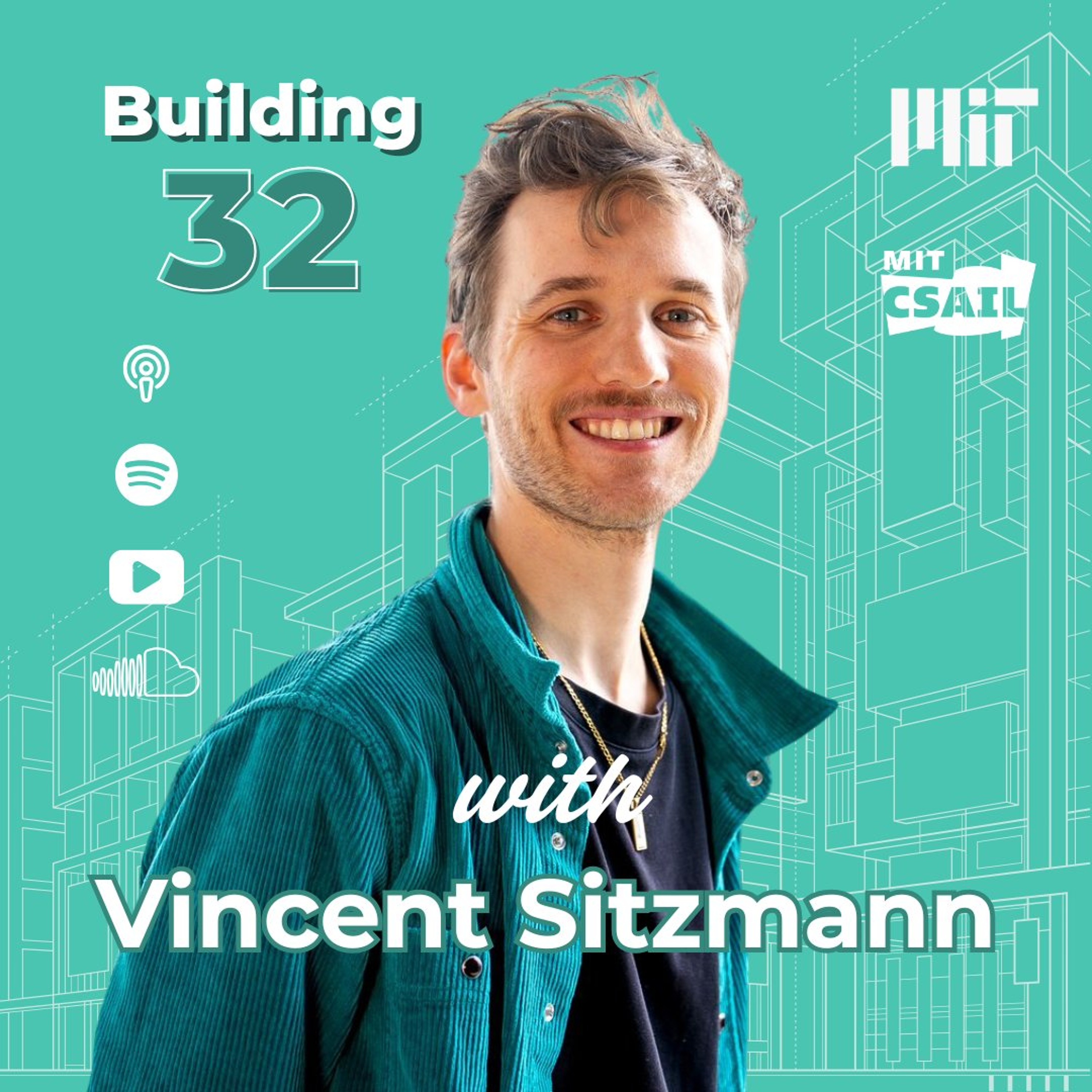
Why AI Still Can't Load the Dishwasher
4d ago00:28:21Tap to summarizeWhen The Jetsons imagined life in 2062, Rosie the robot maid seemed like pure science fiction. Today, chatbots can answer questions, analyze data and even crack jokes. But they still can't load the dishwasher. In this episode of Building 32, MIT CSAIL associate professor Vincent Sitzmann explains why building AI that understands and interacts with the physical world is a fundamentally different challenge. Sitzmann explains why today's AI still struggles with seemingly simple physical tasks and how researchers are teaching machines to see, predict, and interact with the world around them. In this episode: 00:00 - Intro 03:50 - From electrical engineering to computer science 05:05 - What is computer vision? 08:32 - Limitations of computer vision 09:41 - How do we fix the limitations of computer vision? 12:41 - Why can’t LLMs solve computer vision? 18:31 - How robots can learn like babies 20:57 - The future of robots in homes 23:59 - Continual learning and exploration 27:25 - Outro Episode Resources: 😃Learn more about Vincent Sitzmann: https://www.vincentsitzmann.com/ 🎥And the Scene Representation Group: https://scenerepresentations.org/ 📖Read the Nature article Karen referenced: https://bit.ly/45NzH7q 🤖Watch the Jetsons and meet Rosie: https://bit.ly/4bzEHjB Building 32 episodes, meet the host, and more: csail.mit.edu/podcast Connect with CSAIL Alliances: On our site: cap.csail.mit.edu/about-us/meet-our-team On LinkedIn: linkedin.com/company/mit-csail #MIT #CSAIL #Building32 #ArtificialIntelligence #Robotics #TechInnovation #FutureOfAI #Podcast
Transcribe →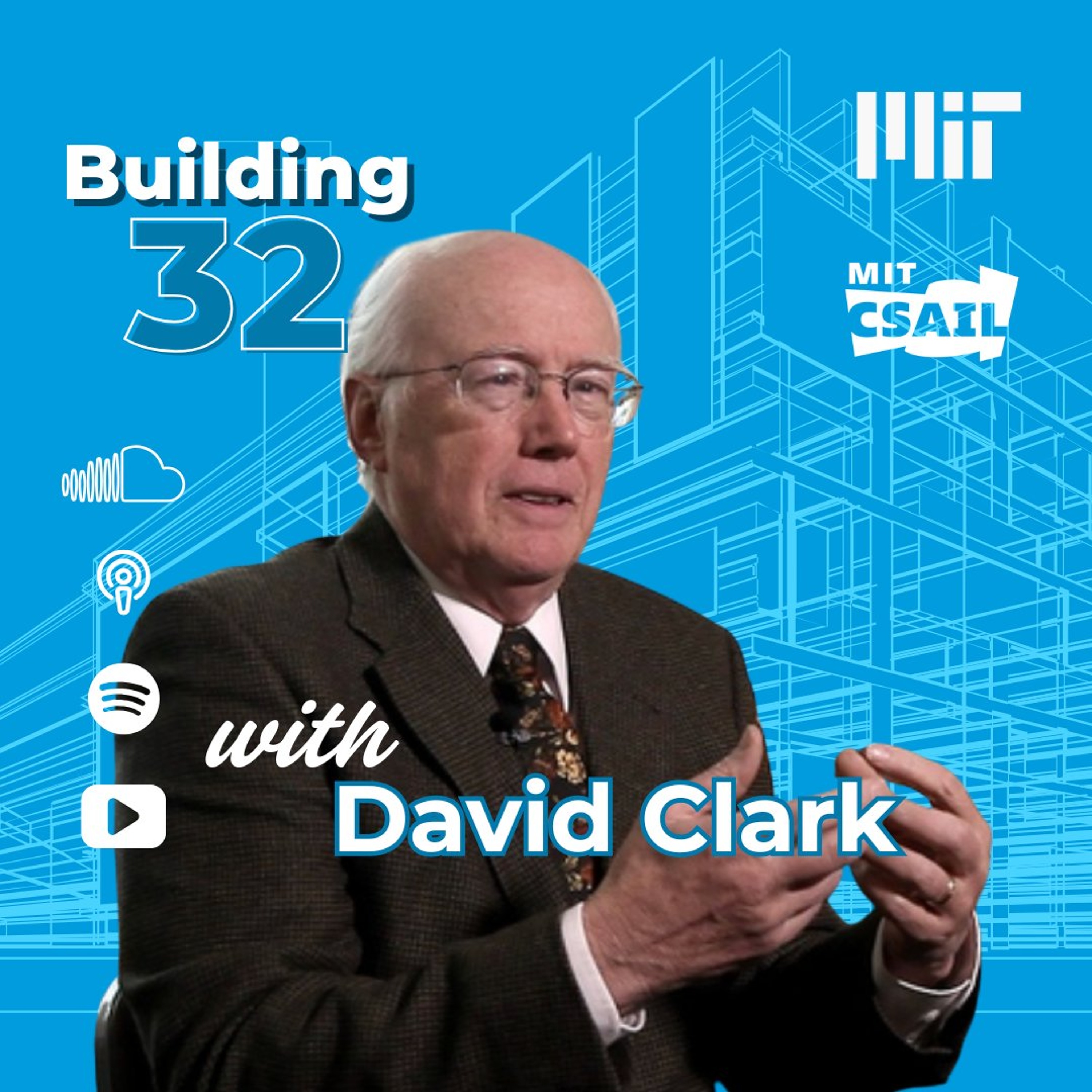
Internet Pioneer David Clark’s Lessons for the AI Age
Jul 1300:32:22Tap to summarizeLong before smartphones, social media, or ChatGPT, researchers at MIT Computer Science and Artificial Intelligence Laboratory (CSAIL) helped lay the groundwork for the modern internet. In this episode of Building 32, MIT CSAIL senior research scientist, internet pioneer and former Chief Protocol Architect David Clark reflects on those early days and explains how a network designed to connect computers became a force that reshaped society. More than fifty years later, Clark is applying those same instincts to Artificial Intelligence. He argues that the biggest challenges aren't about algorithms—they're about power, incentives, and human behavior. Episodes, listener discounts, meet the host, and more can be found here: csail.mit.edu/podcast Connect with CSAIL Alliances: On our site: cap.csail.mit.edu/about-us/meet-our-team On LinkedIn: linkedin.com/company/mit-csail #MIT #CSAIL #Building32 #ArtificialIntelligence #InternetHistory #TechInnovation #FutureOfAI #Podcast
Transcribe →
Announcing Building 32, from MIT CSAIL Alliances
Jun 2900:02:02Tap to summarizeMIT has a new podcast. Announcing Building 32, from MIT CSAIL Alliances. Behind every technological breakthrough is a story. From email to the fax machine to the Roomba and even OkCupid, innovations that shape our daily lives trace back to MIT's Computer Science and Artificial Intelligence Laboratory, or MIT CSAIL. And technology that is years ahead of the market is being developed in CSAIL labs now. Tune into Building 32 from MIT CSAIL Alliances, hosted by Karen Given, to hear the stories of CSAIL. Each episode features conversations with pioneers who helped define the digital age or researchers shaping tomorrow’s AI, robotics, computing, and beyond. Subscribe now. The first episode launches July 13, 2026. Learn more: csail.mit.edu/podcast Connect with CSAIL Alliances: On our site: cap.csail.mit.edu/about-us/meet-our-team On LinkedIn: linkedin.com/company/mit-csail #MIT #CSAIL #ArtificialIntelligence #Robotics #ComputerScience #TechPodcast #Innovation #FutureOfTechnology
Transcribe →
How Enterprises are Getting AI Wrong with MIT CSAIL Armando Solar-Lezama
Apr 2100:36:08Tap to summarizeProfessor Armando Solar-Lezama, MIT CSAIL Associate Director, says there are currently three camps in AI discourse: the utopian thinkers, the alarmists, and the skeptics. And all of them are wrong. Plus, hear his thoughts on AI Agents, neurosymbolic programming, vibe coding, and more. In this conversation, Professor Solar-Lezama explains how "vibe coding" is transforming daily productivity for those who already know how to code, why software development is becoming a capital-intensive business for the first time in its history, and why the developers who benefit most from AI tools are the ones with the strongest foundations. He also offers a warning on AI agents: that simple attacks have been patched but major vulnerabilities remain, and deploying agents in high-stakes environments without understanding those risks is a gamble organizations shouldn't take yet. Plus, get a closer look at emerging technologies like neurosymbolic programming and areas where human expertise will be more important than ever. Episodes, listener discounts, meet the host, and more can be found here: csail.mit.edu/podcast Connect with CSAIL Alliances: On our site: cap.csail.mit.edu/about-us/meet-our-team On LinkedIn: linkedin.com/company/mit-csail #ArtificialIntelligence #AITrends #MachineLearning #TechPodcast #FutureOfWork #SoftwareDevelopment #AIEthics #Innovation
Transcribe →
Chalk Radio: MIT Economist Andrew Lo on Finance, AI, and Human Behavior (Guest Episode)
Mar 200:39:29Tap to summarizeThis month we’re featuring a special guest episode from our friends at MIT OpenCourseWare's Chalk Radio. Host Sarah Hansen sits down with Professor of Finance at the MIT Sloan School of Management and CSAIL PI Andrew Lo for a wide-ranging conversation about money, learning, and making financial advice accessible to everyone. Andrew Lo explains why he believes finance is a language we all need to speak and that an advanced math degree is not required to be successful. Exploring how money quietly shapes nearly every path we take, Professor Lo reflects on his work with MIT OpenCourseWare which reached millions of learners worldwide and why breaking down “impenetrable” financial concepts has become central to his mission. And of course, he tackles the timely question: Should you use ChatGPT to plan your retirement? For many people, hiring a financial advisor might be a financial impossibility, but Professor Andrew Lo and his colleagues are working to develop an AI financial advisor that not only gives ordinary people access to sound financial advice, but ultimately acts with the best interest of the user. Andrew Lo is the faculty director of FinTechAI@CSAIL, a research initiative with CSAIL Alliances. https://cap.csail.mit.edu/members/initiatives/fintechaicsail Find episodes, listener discounts, meet the host, and more: https://csail.mit.edu/podcast For more episodes from Chalk Radio: https://chalk-radio.simplecast.com/ Connect with CSAIL Alliances: On our site: cap.csail.mit.edu/about-us/meet-our-team On LinkedIn: linkedIn.com/mit-CSAIL License: Creative Commons BY-NC-SA #CSAIL #ChalkRadio #FinancialEconomics #FinTech #AIandFinance #PersonalFinance #LifelongLearning
Transcribe →
AI and Our Time at Work: Featuring MIT Neil Thompson and David Autor
Jan 500:48:21Tap to summarizeWhat does AI really mean for jobs, productivity, and the future of work? Recorded with a live audience at the MIT Museum! In this special live taping of the CSAIL Alliances Podcast, host Kara Miller explores big questions on AI and the future of work with two MIT researchers leading research on technology and labor—David Autor, MIT economist and coauthor of The Work of the Future, and Neil Thompson, Director of MIT FutureTech. Together, they unpack what the evidence actually says about AI and work—cutting through hype, fear, and speculation. The conversation explores how AI is reshaping tasks (not just jobs), why productivity gains have been uneven, and what history can teach us about today’s moment. From software development and medicine to insurance, law, and gig work, Autor and Thompson explain when AI acts as a powerful collaborator—and when full automation simply isn’t realistic or cost-effective. This episode offers a grounded, thoughtful look at how AI is actually being used today—and what that means for workers, organizations, and society going forward. Further reading: Joint research paper: https://www.nber.org/papers/w33941 Vox: Here’s a glimmer of hope about AI and jobs: https://www.vox.com/technology/470688/ai-jobs-chatgpt-bubble Episodes, listener discounts, meet the host, and more can be found here: https://csail.mit.edu/podcast Connect with CSAIL Alliances: On our site: cap.csail.mit.edu/about-us/meet-our-team On LinkedIn: linkedIn.com/mit-CSAIL #AIandWork #FutureOfJobs #ArtificialIntelligence #EconomicsOfAI #FutureOfWork #MITCSAIL #TechnologyAndLabor #AIResearch
Transcribe →
The Future of Robotics: Hype, Breakthroughs, and Challenges with Professor Russ Tedrake
Dec 100:38:51Tap to summarizeHost Kara Miller sits down with MIT Professor Russ Tedrake, a leading researcher in robotics and AI at CSAIL to explore the rapidly accelerating world of humanoid and intelligent robots. Tedrake takes us behind the scenes of the robotics revolution—from the cultural resistance and skepticism, to the moment everything shifted. Today, major tech leaders are declaring humanoid robots “the biggest product in human history.” But is that true? Is it hype, or are we on the edge of a real technological turning point? Topics Include: 01:00 - The Ramp Up of Robots 03:00 - Where Will We See Robots? 07:44 - Will Robots Replace Humans Soon? 13:02 - Robots Entering the Workforce 15:32 - Robots and Low Birth Rates 20:06 - Robots and Humans Working in the Same Space 24:57 - AI Changed the Trajectory of Robots 26:42 - The Barriers of a Personal Robot 31:37 - The Relationship between Academia and Companies 35:37 - Will You Have a Robot in the Home in Five Years? They explore why COVID fundamentally changed how the world views automation and robotics, and dive into the hardest technical challenges in robotics, revealing why the real world is nothing like chess or chatbots. We talk about how AI, control theory, and physical dynamics must work together to create true intelligence, and discuss why humanoid robots may soon become as common and transformative as smartphones. Finally, we examine the growing gap between digital intelligence and embodied intelligence in the physical world, and what it will take to bridge it. Episodes, listener discounts, meet the host, and more can be found here: https://csail.mit.edu/podcast Connect with CSAIL Alliances: On our site: cap.csail.mit.edu/about-us/meet-our-team On LinkedIn: linkedin.com/company/mit-csail #Robotics #ArtificialIntelligence #HumanoidRobots #FutureOfWork #AIInnovation #TechPodcast #MachineLearning #Automatio
Transcribe →
Bridging the AI Gap: Inside MIT’s Systalyze Startup with Associate Professor Manya Ghobadi
Nov 300:06:55Tap to summarizeIn this episode of MIT CSAIL Alliances, host Kara Miller sits down with Professor Manya Ghobadi, a researcher and entrepreneur bridging the gap between academia and industry. Ghobadi, who has worked at Microsoft Research, Google, and now leads her own startup Systalyze, explores why so many companies struggle to efficiently deploy AI — and how her team is creating the “AI doctor” enterprises didn’t know they needed. From hospitals sitting on mountains of private data to banks seeking smarter fraud detection, Ghobadi explains how better infrastructure and smarter tools can finally unlock AI’s full potential. Tune in for an inside look at how innovation moves from lab to launchpad — and what it takes to make AI work in the real world. Topics Include: 00:07 - Origins of Systalze 01:40 - AI systems are difficult to build 02:53 - Systalyze is like an AI doctor 03:38 - How AI can transform the health care industry 04:41 - When companies unlock their AI potential 05:13 - Academia as an enterprenuer Episodes, listener discounts, meet the host, and more can be found here: csail.mit.edu/podcast Connect with CSAIL Alliances: On our site: cap.csail.mit.edu/about-us/meet-our-team On LinkedIn: linkedin.com/company/mit-csail #MITCSAIL #AI #Education #MIT #GenerativeAI #Leadership #Technology #csailpodcast
Transcribe →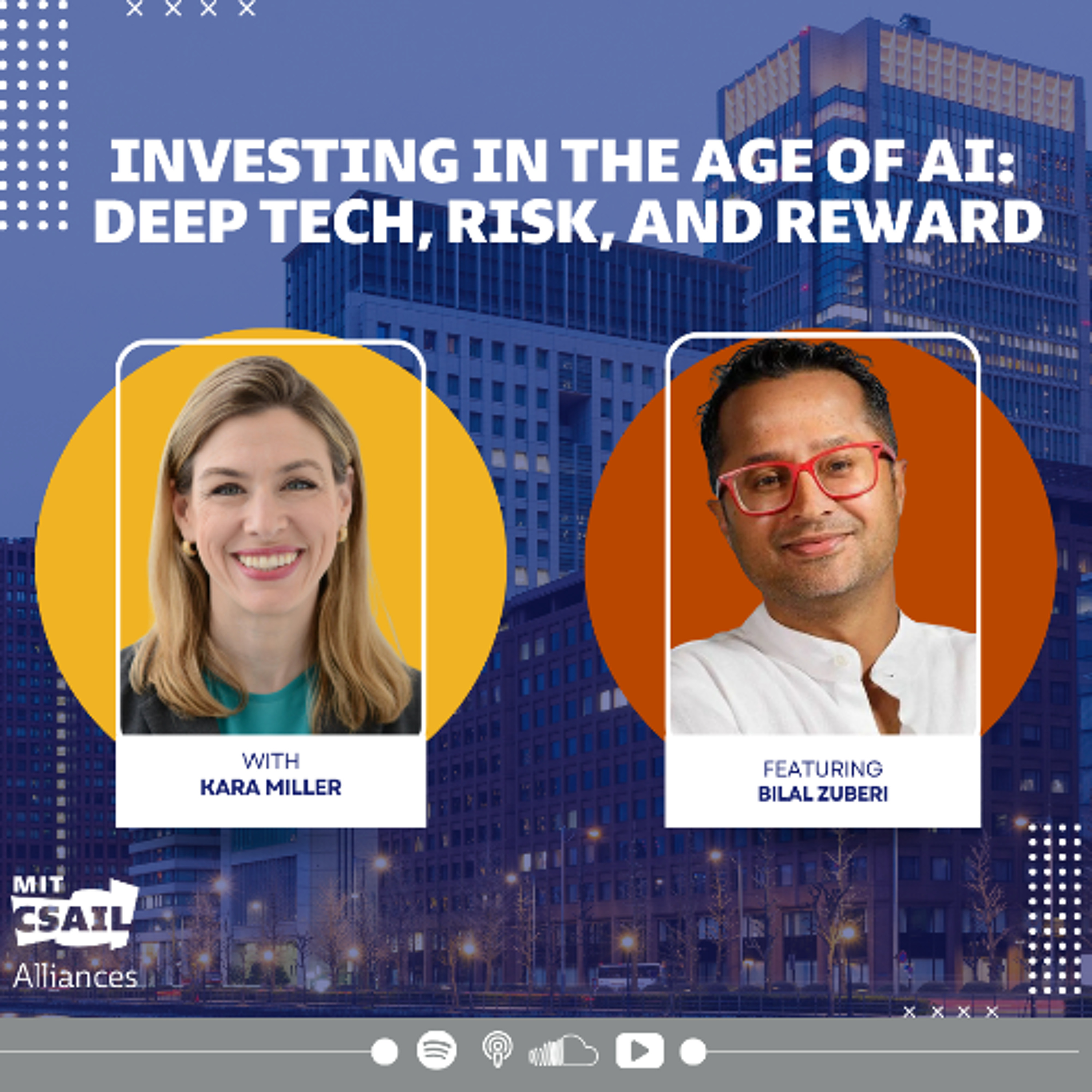
Investing in the Age of AI: Deep Tech, Risk, and Reward with Bilal Zuberi
Oct 600:37:36Tap to summarizeHow will AI reshape the future of deep tech, industry, and investment? In this episode of the MIT CSAIL Alliances Podcast, host Kara Miller speaks with Bilal Zuberi, founder and managing partner of Red Glass Capital. A longtime venture capitalist, Zuberi explains why AI isn’t just changing apps and SaaS tools—it’s unlocking massive sectors like manufacturing, healthcare, energy, and defense. He shares why he sees AI as the new “cost of intelligence,” what deep tech really means, and how breakthrough innovations could create trillions of dollars in value while tackling humanity’s toughest challenges, from climate change to healthcare. Tune in for a conversation on the future of innovation, the shifting role of academia, and why Zuberi believes we’re moving from being AI consumers to becoming AI creators. Topics Include: 02:39 - Introduction to Bilal Zuberi 04:43 - What is Deep Tech? 06:16 - Using technology to solve important problems 10:45 - AI granting access to old dreams and new jobs 12:56 - How helpful is AI as a tool? 14:52 - How AI is changing the world 19:04 - Academia’s role in AI 26:09 - The value of venture capital 30:12 - How AI will influences jobs 33:46 - What will be mainstream in five years? 36:13 - Outro Episodes, listener discounts, meet the host, and more can be found here: https://csail.mit.edu/podcast For Danny Weitzner’s episode: https://soundcloud.com/csail-alliances/how-companies-can-rebuild-trust-around-data-with-danny-weitzner Connect with CSAIL Alliances: On our site: cap.csail.mit.edu/about-us/meet-our-team On LinkedIn: linkedin.com/company/mit-csail #MITCSAIL #AI #Education #MIT #GenerativeAI #Leadership #Technology #csailpodcast
Transcribe →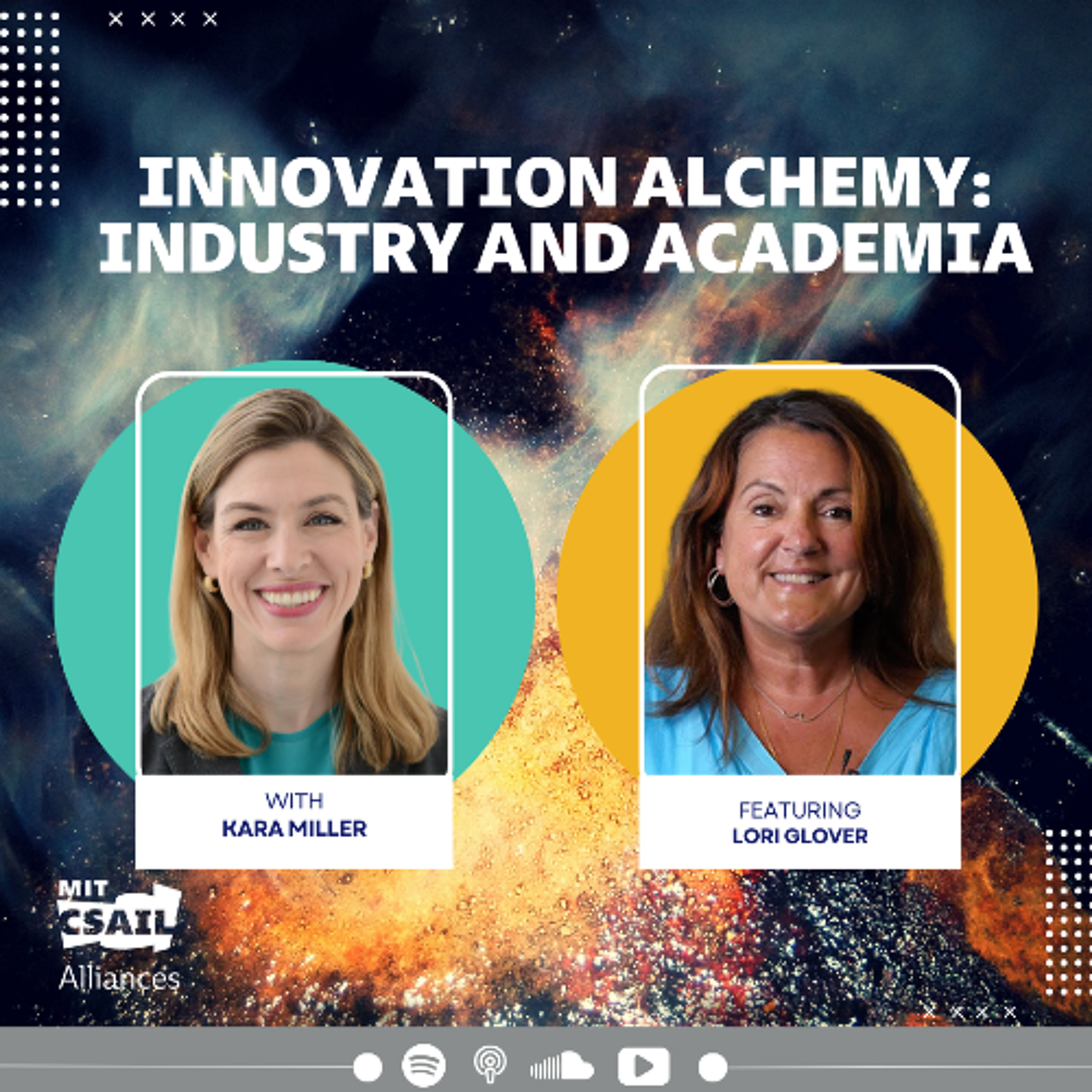
Innovation Alchemy: Industry and Academia with Lori Glover
Sep 200:31:09Tap to summarizeFrom sports drinks to self-driving cars, some of the most transformative innovations have emerged when universities and businesses join forces. In this episode, host Kara Miller talks with Lori Glover, author of Innovation Alchemy and Managing Director of Global Strategic Alliances at MIT CSAIL, about the surprising ways academic research and industry collaboration shape technology, talent, and the global economy. Together, they explore stories from the invention of Gatorade to modern AI research, the challenges of aligning two very different cultures, and how partnerships can spark unexpected breakthroughs, sometimes changing entire industries. Whether you’re curious about how new ideas move from the lab to the marketplace or want to learn why companies and universities need each other more than ever, this episode offers a deep look into the evolving innovation ecosystem at the juncture of academia and industry. Episodes, listener discounts, meet the host, and more can be found here: https://csail.mit.edu/podcast Connect with CSAIL Alliances: On our site: cap.csail.mit.edu/about-us/meet-our-team On LinkedIn: linkedin.com/company/mit-csail #MITCSAIL #AI #Education #MIT #GenerativeAI #Leadership #Technology #csailpodcast
Transcribe →