
Podcast
CSPI Podcast
Hosted by CSPI · EN
Discussions with CSPI scholars and leading thinkers in science, technology, and politics.
www.cspicenter.com
www.cspicenter.com
17episodes
Episodes
Newest firstAll episodes

The Threat of AI Regulation with Brian Chau
Mar 18, 202401:12:49Tap to summarizeBrian Chau writes and hosts a podcast at the From the New World Substack, and recently established a new think tank, the Alliance for the Future.He joins the podcast to discuss why he’s not worried about the alignment problem, where he disagrees with “doomers,” the accomplishments of ChatGPT versus DALL-E, the dangers of regulating AI until progress comes to a halt in the way it did with nuclear power, and more. With his background in computer science, Brian takes issue with many of those who write on this topic, arguing that they think in terms of flawed analogies and know little about the underlying technology. The conversation touches on a previous CSPI discussion with Leopold Aschenbrenner, and the value of continuing to work on alignment. Brian’s view is that AI doomers are making people needlessly pessimistic. He believes that this technology has the potential to do great things for humanity, particularly when it comes to areas like software development and biotech. But the post-World War II era has seen many examples of government hindering progress, and AFF is dedicated to stopping that from happening with artificial intelligence. Listen to the conversation here, or watch the video here. LinksDonate to AFFAFF manifestoBrian on diminishing returns to machine learning, and discussing AI with Marc AndreessenVaswani et al. on transformersLimits of current machine learning techniques Get full access to Center for the Study of Partisanship and Ideology at www.cspicenter.com/subscribe
Transcribe →
Ideology, Trade, and War | Andrew Roberts & Richard Hanania on Napoleon
Jan 22, 202400:47:10Tap to summarizeAndrew Roberts (website, follow on X) is a historian, Visiting Research Fellow at the Hoover Institution at Stanford University, and a member of the House of Lords. He joins the podcast to talk about his Napoleon: A Life. The conversation begins with a discussion of different counterfactuals regarding ways in which Napoleon might have been able to stay in power, which leads to Roberts explaining his view that the wars of the era could be understood at least in part as resulting from a rejection of free trade. Other topics include:* Meritocracy as a guiding principle of the French Revolution and a justification for Napoleon’s regime* Napoleon’s personal magnetism and why men were willing to follow him* The relationship with Josephine, and whether or not it influenced any of his political decision* Whether Napoleon was in fact the greatest general of his timeSee also Hanania’s audio review of the Ridley Scott film, and Roberts’ reviews in Commentary and The Times. For an edited transcript of this conversation, see here. Get full access to Center for the Study of Partisanship and Ideology at www.cspicenter.com/subscribe
Transcribe →
Heading Towards the Fiscal Cliff | Brian Riedl & Richard Hanania
Nov 20, 202300:54:04Tap to summarizeBrian Riedl is a senior fellow at the Manhattan Institute, focusing on budget, tax, and economic policy. His previous jobs include chief economist to Senator Rob Portman (R-OH), and positions on the Marco Rubio and Mitt Romney presidential campaigns. He joins the podcast to talk about the financial future of the United States, with a special focus on entitlements. Medicare is projected to run out by 2031, and Social Security only two years later. Because of politicians kicking the can down the road for so long, this will mean that the federal government will at that point have to either implement massive benefit cuts for seniors or significantly raise taxes across the board.Brian talks about his experience in Washington, the history of negotiations over the debt, and what politicians say when you bring up these facts. We appear to be in an undesirable equilibrium, where everyone’s incentive is to ignore the issues involved, while the status quo is leading us towards disaster. Despite liberals wanting to tax the rich and conservatives calling for a cut to foreign aid and non-entitlement forms of domestic spending, the numbers for such proposals don’t add up. We will either get entitlement spending under control, or become taxed at the level of Europeans.In one important way, we will actually be worse off than Europe, because their welfare states pay for services and benefits that go to families across a wide section of the population. We are potentially building a US welfare state that will have high taxes primarily to funnel money to the elderly. The fact that older Americans are richer than those who will be supporting them makes the future we are moving towards even more absurd. LinksBrian Riedl: chart book on spending, report on the limits of taxing the rich, CNN op-ed on interest rates, NYT op-ed on Biden’s promises on entitlementsBrian’s X page, Manhattan Institute website This is a public episode. If you would like to discuss this with other subscribers or get access to bonus episodes, visit www.cspicenter.com
Transcribe →
No Need to Argue. Just Build | Niklas Anzinger & Richard Hanania
Oct 30, 202300:57:46Tap to summarizeNiklas Anzinger is the founder and General Partner of Infinita, the first Próspera-based VC fund, which invests in founders overcoming regulatory capture in crypto, biotech and hardware through network states and startup cities. He’s also one of the 100 or so residents of Próspera.This was quite an optimistic conversation. The title of the podcast comes from the last thing Niklas said, which was that you don’t actually need attention or to talk about grand projects, but just to show the world what you can do. Niklas is part of the charter city movement, which seeks to build hubs of innovation and progress while bringing the rule of law and economic development to poorer regions of the world. In this eventful conversation, Richard and Niklas touch on* The mechanics of governance in Próspera* Getting around red tape and becoming a hub of medical innovation* Amenities and quality of life in the city* Upcoming conferences and eventsDespite a new government in Honduras that is hostile to charter cities, Niklas is optimistic that they will be able to continue operating. He and Richard also talk about potential medical breakthroughs that Próspera might help bring about, like bacteria that remove cavities from your mouth, and a currently available gene therapy that may make your muscles and bones stronger.LinksNiklas on X, his Substack, RSS for his podcastThe Ultimate Guide to PrósperaAlex Ugorji on XPróspera websiteCiudad MorazánInfinita ManifestoScott Alexander on Próspera, Part I and Part IIMark Lutter on the CSPI podcastMarc Andreessen, The Techno-Optimist ManifestoDocumentary on medical tourism in Próspera; DW report, with appearance from NiklasUpcoming EventsNov 3-5: Crypto Futurism & Legal Engineering 2023 - A Próspera Builders’ SummitNov 17-19: DeSci & Longevity Biotech 2023 - A Próspera Builders' Summit Jan 6-Mar 1: Vitalia - Starting the Frontier City of Life This is a public episode. If you would like to discuss this with other subscribers or get access to bonus episodes, visit www.cspicenter.com
Transcribe →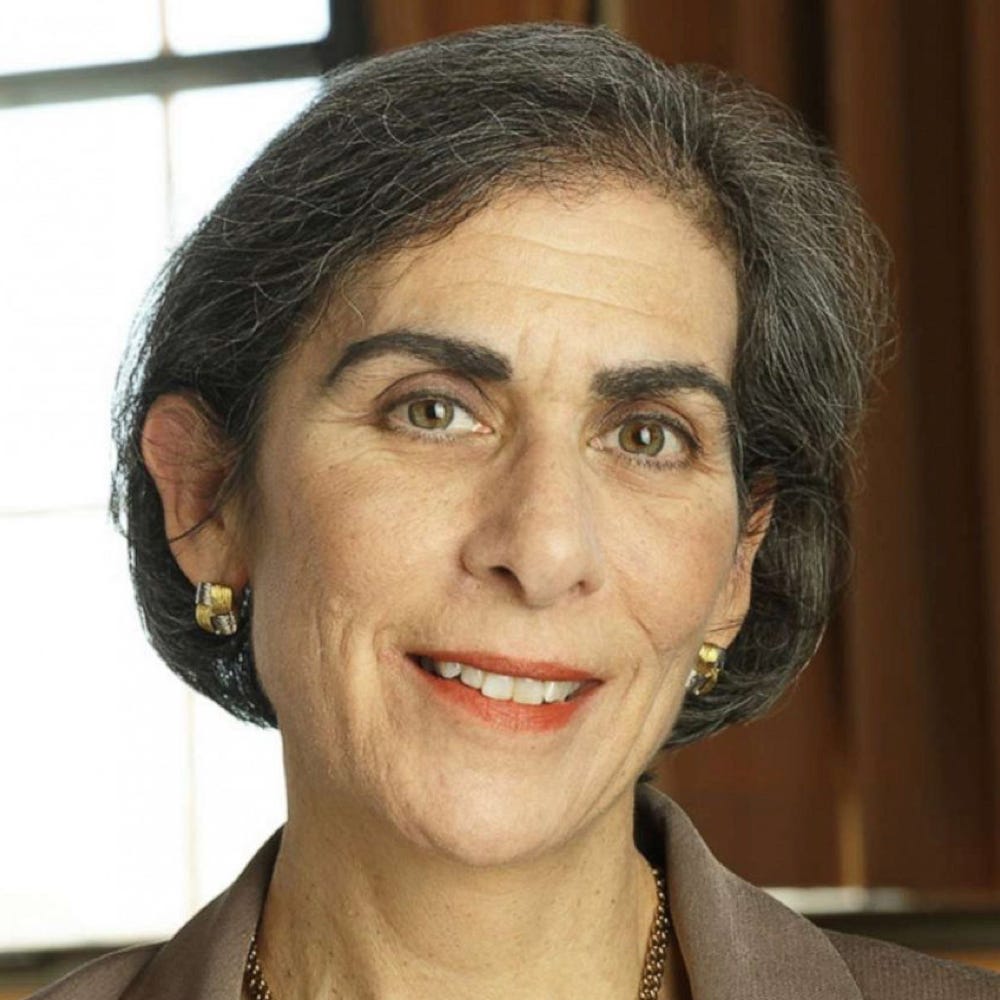
Diversity, Debate, Decline | Amy Wax & Richard Hanania
Aug 29, 2022Tap to summarizeAmy Wax is the Robert Mundheim Professor of Law at the University of Pennsylvania Law School. She joins the podcast to talk about the ongoing attempt to cancel and possibly fire her for making politically incorrect remarks. Usually there is some pretext that a professor actually engaged in forbidden conduct in these kinds of investigations, but this is as clear an example as one can find of a university trying to punish speech. This leads to a conversation about whether higher education is worth saving, and if it is, the best way to go about doing so. Amy has also gotten in trouble for her views on immigration and growing racial diversity in the United States. She also talks about that topic here, and much of the discussion centers around the concept of “Western culture” and the extent to which it is threatened. Richard argues that the post-1960s West has seen such a break from its past that this perspective assumes a cultural continuity that no longer exists. This leads to a discussion of whether and how conservatives can appeal to immigrant voters.Listen in podcast form or watch on YouTube. You can also read a transcript here. Links:* Amy Wax Defense Fund (tax-deductible)* Amy Wax Legal Defense Fund (GoFundMe)* UPenn Law Deans Report Regarding Amy Wax * Michael Anton, “That’s Not Happening and It’s Good That It Is.”* Richard Hanania, “Women’s Tears Win in the Marketplace of Ideas.” * Richard Hanania, “Terms of Surrender” [Review of Jonathan Rauch’s The Constitution of Knowledge].* Jon Marcus, “Why Americans are Increasingly Dubious About Going to College.”* The Glenn Show, “Contesting American Identity | Glenn Loury and Amy Wax.”* Glenn Loury, “Amy Wax Redux.” [interchange with George Lee] * Education Realist* Amy Wax on Tucker Carlson Today* Richard Hanania Survey Results II: Likes and Dislikes This is a public episode. If you would like to discuss this with other subscribers or get access to bonus episodes, visit www.cspicenter.com
Transcribe →
"The Pressure to Conform is Enormous": Steve Hsu on Affirmative Action, Assimilation, and IQ Outliers | Steve Hsu & Richard Hanania
Mar 14, 2022Tap to summarizeSteve Hsu is a Professor of Theoretical Physics and Professor of Computational Mathematics, Science, and Engineering at Michigan State University. He returns to the CSPI Podcast for a wide-ranging discussion of various personal, political, and technical topics, including his attempted cancelation from Michigan State, thoughts on Russia-Ukraine, affirmative action, macroeconomics, and why top physics talents prefer theoretical over practical pursuits (If you haven’t seen Steve’s first appearance on the podcast, click here to watch or listen). The conversation begins with Steve explaining what it was like growing up one of the few Asian kids in a predominantly white town and reflecting on the nature of assimilation. He and Richard continue their discussion of the Russia-Ukraine war and European geopolitics before moving on to affirmative action and civil rights law. They talk about the Harvard Asian case, the highly subjective nature of legal decisions, and whether employment markets are rational enough for the college degree to lose value if universities scrap standardized tests.Next, Steve tells Richard about his attempted cancelation from Michigan State, where he was pressured to step down from his role as Vice President of Research after a leftist student group attacked him on Twitter over his blog posts and podcasts. They talk about the intrusion of activists into academia, and how this has negatively impacted the STEM fields and social sciences. This leads to a discussion of whether economics is a more valuable and rigorous social science than the others, and whether micro and macroeconomics are comparable or reconcilable.In the last part of the podcast, Steve and Richard talk about what traits and dispositions lead some people to go against the crowd and resist conformity, and why the path to scientific and technological innovation is laden with disbelief and ridicule from peers. Using the examples of Jeff Bezos and Richard Feynman, Steve explains how those with exceptionally high IQs are often able to effortlessly solve problems and optimize systems with little to no background or technical knowledge. They conclude by considering the possibility that policy should be oriented towards recognizing and rewarding the few geniuses and innovators whose work leads to disproportionate social and material gains.A transcript of the full conversation is available here: https://richardhanania.substack.com/p/assimilation-football-affirmative?s=r Sign up for CSPI’s Substack newsletter: https://cspi.substack.com.Follow CSPI on Twitter: https://twitter.com/CSPICenterOrg.Subscribe to our YouTube for video podcasts: https://www.youtube.com/channel/UCvs4ugq0xSvbvwArpFJG6gA.Learn more about CSPI: https://cspicenter.org.CSPI Podcast, “The Future of Humanity is IVF Babies and Chinese Domination | Steve Hsu & Richard Hanania.”Richard Hanania, “Lessons from Forecasting the Ukraine War.” Adam Tooze, “Putin’s Challenge to Western Hegemony.”Rob Lee. “Moscow’s Compellence Strategy.”Anatoly Karlin. “Regathering of the Russian Lands.” Steve Hsu, “Joe Cesario on Police Decision Making and Racial Bias in Deadly Force Decisions (Manifold Episode #11).”Steve Hsu, “ManifoldOne Podcast Episode#3: Richard Hanania on Wokeness, Public Choice Theory, & Geostrategy.”Steve Hsu, "Manifold Podcast #6: Richard Sander on Affirmative Action, Mismatch Theory, and Academic Freedom.” Alan Sokal, “Sokal Hoax.”Wikipedia, “Grievance Studies Affair (Sokal Squared).”Eric Kaufmann, “Academic Freedom in Crisis: Punishment, Political Discrimination, and Self-Censorship.”Steve Hsu, “Bezos Quotes.” Get full access to Center for the Study of Partisanship and Ideology at www.cspicenter.com/subscribe
Transcribe →
The Future of Humanity Is IVF Babies and Chinese Domination | Steve Hsu & Richard Hanania
Feb 14, 2022Tap to summarizeStephen Hsu is a Professor of Theoretical Physics and Professor of Computational Mathematics, Science, and Engineering at Michigan State University. He is also a serial entrepreneur and has published on genomics, in addition to blogging on a wide range of topics from econometrics and geopolitics to mixed martial arts. Hsu joins the Podcast, where he and Richard begin by talking about the Russia-Ukraine crisis and American military power relative to that of China and Russia. What would a Chinese attempt to conquer Taiwan look like, and what would the US be able to do in response? This is followed by a long discussion on the strengths and weaknesses of the Chinese system and its differences with the democratic capitalist model, including the former's high level of reliance on standardized tests and institutions designed to evaluate and promote government officials. The conversation closes on the topics of genomics and embryo selection, including the state of the technology, its current uses, and cross-national differences in attitudes and regulations. A full transcript of the conversation is available here.Sign up for CSPI’s Substack newsletter: https://cspi.substack.com.Follow CSPI on Twitter: https://twitter.com/CSPICenterOrg.Subscribe to our YouTube for video podcasts: https://www.youtube.com/channel/UCvs4ugq0xSvbvwArpFJG6gA.Learn more about CSPI: https://cspicenter.org.Ezra Voegel, “Japan as Number One.”John Dower, “War Without Mercy."Dan Wang, ”2021 Letter.”Dan Bell, “The China Model.”Richard McGregor, “The Party.”"DNA Dreams" (documentary film).Richard Hanania, “The Inevitable Rise of China.”Richard Hanania, “Fertility as the Final Boss in Chinese Development, and Richard Hanania Prediction Markets.”Steve Hsu, “Sustainability of China Economic Growth.”Steve Hsu, “Les Grandes Ecoles Chinoises.”Francesco C. Billari, Hans-Peter Kohler, Gunnar Andersson and Hans Lundström, “Approaching the Limit: Long-Term Trends in Late and Very Late Fertility.” p. 163. (On Swedish Fertility, Extreme Births)Steve’s Podcast, “Manifold.” Get full access to Center for the Study of Partisanship and Ideology at www.cspicenter.com/subscribe
Transcribe →