← Cuerpos especiales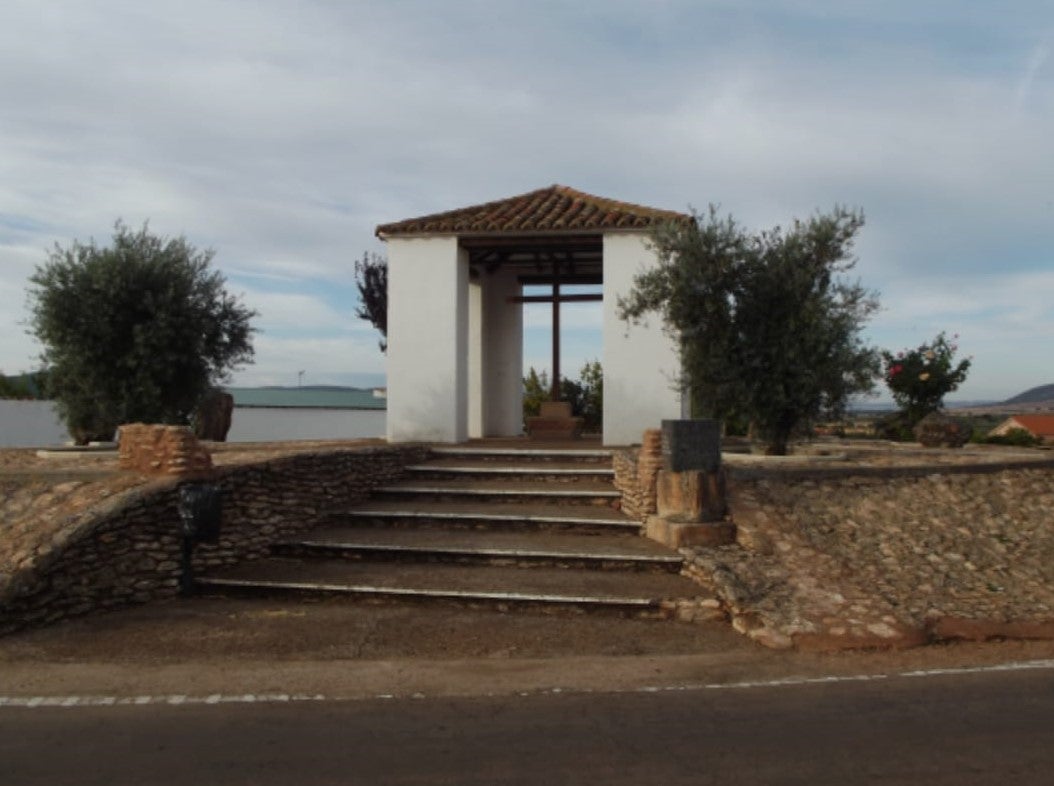
Cuerpos especiales
Cristo del Espíritu Santo (Ciudad Real)
00:05:12
Población - 148 habitantes | Reclamo - dicen que se apareció la imagen del Cristo en un paraje y se hizo una ermita y un santuario | Otras cosas típicas - el sepulcro visigodo descubierto por una pandilla de adolescentes, la romería de mayo, los juegos...
Loading summary
Transcript53 lines
- [00:00]
A
Estás escuchando Cuerpos Especiales en Europa FM. Y ahora empieza la sección donde te pones moreno sin ir a la playa. Llega Pueblos Especiales.
- [00:07]
B
Hoy vamos a hablar con el tercer pueblo de la semana. Ya sabéis cómo va la cosa. Cuando terminemos de hablar con el último, el viernes abriremos votación en EUROPCM. Com para que el representante del pueblo que más votos consiga se lleve un kit de pueblos especiales.
- [00:20]
A
Y ya tenemos a Labla, nuestra embajadora rural de hoy. Buenos días, Susana, ¿Cómo estás?
- [00:24]
C
Buenos días.
- [00:25]
A
Hombre, Susana, ¿Qué pasa? ¿Cómo estás?
- [00:27]
C
Felicidades.
- [00:28]
A
Muchas gracias. Susana, es mi cumpleaños. Gracias.
- [00:32]
B
Decir que Susana y Eva no se conocen de nada, que os habéis saludado como si fuerais amigas de toda la vida. Susana, dime que la sigo en Instagram
- [00:39]
C
y a ti también. Entonces, claro,
- [00:42]
B
como si nos conociéramos, pero Susana, totalmente.
- [00:45]
A
¿Tú desde dónde nos llamas?
- [00:47]
C
De Madrid.
- [00:48]
A
Vale, pero ¿De qué pueblo nos vas a hablar?
- [00:50]
C
Vale, pues mi aldea se llama El Cristo del Espíritu Santo.
- [00:53]
B
Venga. El nombre tiene nombre de que todos los días un rayo de sol la ilumina directamente y se oye totalmente. En Ciudad Real.
- [01:06]
C
Ciudad Real pertenece a Malagón.
- [01:09]
A
Vale, ¿Y qué tenéis allí? Cuéntanos un poco a nivel arquitectónico, gastronómico. Cuéntanos un poco de El Cristo del Espíritu Santo.
- [01:19]
C
Pues mire, ayer, bueno, allí apareció, dice, apareció la imagen del Cristo en un paraje y después levantaron una cruz y ahí pues apareció, Se hicieron una ermita, un santuario y luego ya el pueblo, lo que es el pueblo, creció alrededor. Empezamos fuertes, con misterio incluido y qué Jiménez de repente. Pero bueno, ojo que debajo de ese mismo sitio que es la cruz, había más historia porque había un sepulcro visigodo enterrado.
- [01:44]
B
Hola.
- [01:45]
C
¿Y quién lo descubrió? Pues nosotros, una pandilla de adolescentes, porque te hablé hace ya muchos años. Sí, sí, yo tengo unos cuantos años ya, pero esto fue como en el año 90. 89.
- [01:56]
A
¿Qué dices?
- [01:57]
C
Y estando ahí en la cruz, porque era un sitio que no solamente se iba a rezar, se iba a hablar.
- [02:07]
A
Hablar de adolescentes.
- [02:08]
C
Sí, claro, exacto. Las estrellas y demás. Pues ahí vimos como unos huesos, empezamos a encontrar huesos y nuestra conclusión fue muy rápida y muy científica. Vaya, que esto era un asesino en serie, una cosa común, lo normal.
- [02:21]
A
Me encanta, o sea, lo primero, una
- [02:24]
C
película entera en cinco minutos. Vamos, que no era Netflix, era historia, la verdad.
- [02:30]
B
Y era un asentamiento visigodo.
- [02:32]
C
Sí, eso es un enterramiento visigodo. Luego ya entregamos todos los restos al museo que está en Ciudad Real y bueno, pues pasamos del CCI Rural a colaboradores involuntarios arqueológicos.
- [02:45]
A
Qué fuerte. Pero me gusta mucho, tiene bastante trama. Perdona, Susana, ¿Cuál es el gentilicio del Cristo del Espíritu Santo?
- [02:54]
C
Pues los Cristeros.
- [02:56]
B
¿Cristeros?
- [02:57]
A
¿Te lo acabas de inventar?
- [02:59]
C
Creo que sí.
- [03:01]
B
Y una pregunta, ¿Tenéis pillado?
- [03:04]
C
Me van a matar, me van a matar.
- [03:07]
A
Siendo tú de allí, no creo que nadie te diga nada, pero me gusta mucho que en un momento de 3. 2. 1 hayas dicho por los Cristeros.
- [03:15]
B
¿Y tenéis rivalidad? ¿Tenéis rivalidad con algún pueblo de alrededor?
- [03:20]
C
Bueno, no especialmente. Es que es una pedanía de Malagón. Quizá con Malagón, que Malagón es un pueblo ya grande, pero no mucho. Nos quieren mucho. Es que somos muy divertidos. Tenemos una romería maravillosa en mayo. Tenemos unos juegos de verano en verano, que nos lo pasamos mejor los padres que los niños.
- [03:38]
B
Hay mucha vidilla llamándote el Cristo del Espíritu Santo. No te puede llevar mal con nadie.
- [03:44]
C
Con nadie. ¿Sabéis cómo nos llaman a nuestra panda? La panda del botellín.
- [03:49]
A
Porque entiendo que os gusta mucho la botella chiquitita de coleccionista o algo así.
- [03:54]
C
Nos encanta luego ir a Amistad, después allí a ver al Cristo.
- [03:56]
B
Hombre, seguro que sí. Susana, se nos acaba el tiempo, pero te vamos a dejar que tu alegato final para explicarle a toda la gente que nos está escuchando por qué deberían votar por el Cristo del Espíritu Santo en Ciudad Real como mejor pueblo de la semana en pueblos especiales.
- [04:10]
C
Tu alegato comienza ya, qué es mi aldea. Tenemos de todo. Apariciones, visigodos, teorías absurdas sobre adolescentes, una romería maravillosa, unos botellines fresquitos, rutas de senderismo muy bonitas y agua casi milagrosa que está en la Fuente de la Teja. Muy recomendable. Casas rurales preciosas y un paraje maravilloso. Y la gente muy divertida. Así que os invito allí.
- [04:36]
A
Qué maravilla. Qué rápido, qué conciso.
- [04:38]
B
Nos están diciendo por el pinganillo que creemos que el gentilicio de tu pueblo es cristeros o cristeños. Perdón. Cristeños.
- [04:46]
C
Ay, perdón por. Lo siento, chicos.
- [04:50]
B
Pasa nada. Tú puedes. Tú eres de allí. Tú puedes.
- [04:52]
A
Escúchame, Susana, si alguien se puede equivocar en el gentilicio de repente. Apropiación cultural. Has quitado el nombre a un pueblo. ¿No te da vergüenza?
- [05:00]
C
Ay, por favor,
- [05:05]
A
Susana, que te mandamos un besito. Gracias por participar en Pueblos Especiales. Suerte.
- [05:09]
C
Gracias a vosotros. Un beso, que tengas buen día.
- [05:11]
B
Chao.