← Cuerpos especiales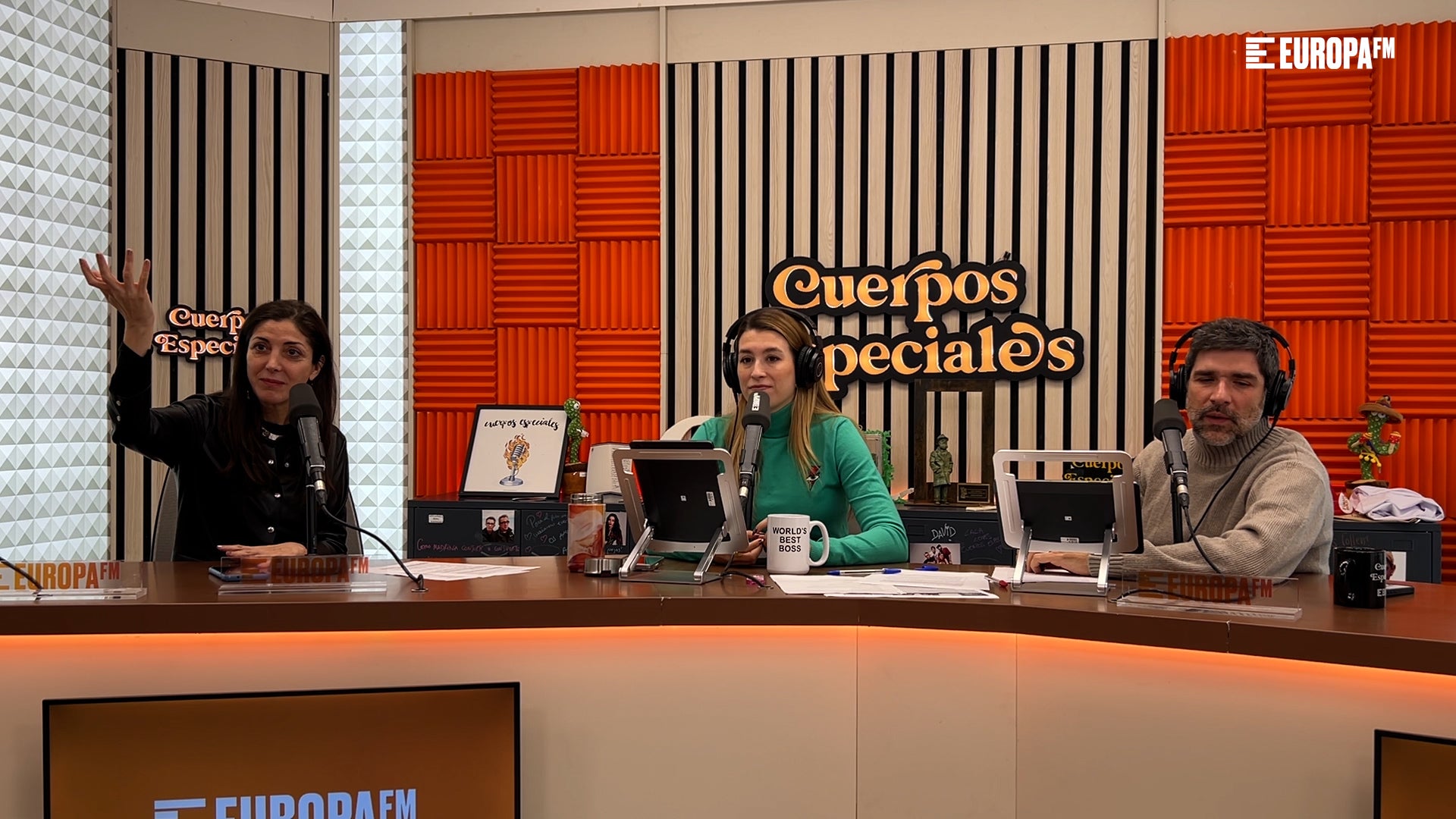
Cuerpos especiales
Espido Freire compara 'Danza Kuduro' de Don Omar con la relación de Lorca y Dalí
00:05:47
Espido Freire se ha tenido que enfrentar al análisis de Danza Kuduro de Don Omar, tema en el que ve claramente una representación del surrealismo español, con mención especial a relación de Federico García Lorca y Salvador Dalí en los años 20. "La cola...
Loading summary
Transcript60 lines
- [00:00]
Ignacio
Ganadora de un premio Planeta. Y es que si Stephen King es el maestro del terror, ella es la maestra de analizar canciones trucha. Pero solo en este programa. Ella Espido Freire. Buenos días.
- [00:10]
Maruja
Buenos días. Porque sí tengo otras habilidades.
- [00:12]
Espido Freire
Claro.
- [00:12]
Ignacio
Por eso. Solo en este programa.
- [00:13]
Espido Freire
Solo en este programa.
- [00:15]
Ignacio
Reducirte solamente a que analices canciones trucha me parece algo terrible para una persona. Para una persona como.
- [00:21]
Maruja
Check. No vamos a mentir. No vamos a mentir. Pero yo regreso a esta sección y me encuentro a Ignacio con un año más. Ahí va. Más hermosa y joven que nunca.
- [00:30]
Ignacio
Gracias.
- [00:30]
Maruja
Eso hay que destacarlo.
- [00:33]
Espido Freire
Eva más hermosa que nunca e Ignacio con un año más.
- [00:36]
Maruja
Pero a ti te sienta bien eso, lo mismo que a ella le sienta bien la belleza.
- [00:39]
Ignacio
Gracias.
- [00:40]
Maruja
Ya está. Y con una canción ya estamos contentos. Y con una canción que es ya un clásico y que nos llevará a hablar de. Qué nos llevará a hablar. Pues sí, niños y niñas, hoy vamos a hablar de Danza Kuduro de Don Omar, de esa colaboración de origen angoleño con Lucencho o Lucenzo, no sé cómo se dice.
- [01:04]
Ignacio
Lucenzo.
- [01:05]
Maruja
Lucenzo. Y tras ver de nuevo y no poder desver el vídeo.
- [01:14]
Espido Freire
El vídeo yo no lo he visto.
- [01:16]
Maruja
Eres un ser humano feliz.
- [01:17]
Ignacio
Es increíble.
- [01:18]
Maruja
Es muy alucinante.
- [01:19]
Espido Freire
Hay un antes y un después. No entiendo.
- [01:21]
Maruja
Incluso el canon de belleza de las modelos que están tendidas estratégicamente por medio del yate y tal, ha cambiado. Es decir, es que han pasado muchos años. Han pasado 15 años. Y en todo eso, sobre todo la parte glutear, ha variado mucho en las modelos. Después de no poder desver ese vídeo, mi mente ha saltado rápidamente a otra relación creativa y emocionalmente muy intensa, vamos a decirlo ahí, clave en la historia del arte en español, la que se vivió entre Federico García Lorca y Salvador.
- [01:48]
Espido Freire
Dalí, que es que siempre estuvo ahí.
- [01:50]
Ignacio
Y nadie lo supo ver.
- [01:52]
Maruja
A ver, es que si lo veis, es evidente. Es evidente.
- [01:55]
Ignacio
Hasta que no te lo cuentan no es tan evidente.
- [01:57]
Maruja
¿Cómo se relacionan ambos? ¿Cómo veis a esas chicas sin sombrero, casi sin bikini, casi sin nada, Es decir, de todo? Y no es una locura. Bueno, sí, pero es una locura con fundamento. Porque Vamos al texto. ¿Recordáis lo que dice Danza Kuduro? La mano arriba, pintura sola. Y básicamente eso es, en una sola frase, el surrealismo español.
- [02:17]
Espido Freire
Pero es que según lo dices, pido, tiene sentido Totalmente.
- [02:22]
Ignacio
Claro, es que en el momento en el que se te abren los ojos. Hemos estado todo el rato ciegos ante la evidencia.
- [02:28]
Maruja
Yo digo sí, en esas bodas, dando vuelta tras vuelta y mira, sin darse.
- [02:33]
Espido Freire
Cuenta de que ¿No es esto el surrealismo español?
- [02:35]
Maruja
Pues sí. Pensemos en Lorca y en Dalí en esos años 20. Jóvenes brillantes, provocadores, encerrados en la residencia de estudiantes, rodeado de poesía, pintura, deseo reprimido y una España que no sabía qué hacer con tanta intensidad junta. Bueno, básicamente. Luego se los cargó. ¿Pero eso no era una estancia universitaria? Sube un poco la música. Ahora de repente brasilero, la mano arriba. Dalí, el gesto, la pose, el espectáculo. El bigote. Antes el bigote otra vez. Tenemos la cintura sola. Lorca, el duende, el cuerpo, el temblor, la carne atravesada por símbolos. Verde, que te quiero verde. Y por último.
- [03:24]
Ignacio
Me gusta porque estás como desencriptando un jeroglífico.
- [03:27]
Maruja
Y por último yo.
- [03:28]
Espido Freire
¿El qué?
- [03:29]
Maruja
De repente, el surrealismo, metáforas ahí a lo loco, imágenes sin explicarse, poesía que no le va a gustar a tu madre. No es de ese estilo.
- [03:36]
Espido Freire
No, no lo es. No es ese tipo de canción. No, no lo es.
- [03:40]
Maruja
Porque la colaboración entre Lorca y Dalí fue exactamente un Q duro creativo.
- [03:49]
Espido Freire
Es verdad que yo nunca he tenido un buen Ku duro.
- [03:51]
Ignacio
El Q duro está bien.
- [03:53]
Maruja
Un choque de estilos, una tensión constante, una atracción intelectual algo intensísimo. Y que a ver, ¿Quién tenía entonces y quién tiene ahora herramientas para gestionarlo?
- [04:01]
Espido Freire
Nadie.
- [04:01]
Ignacio
Nadie, la verdad.
- [04:02]
Espido Freire
Nadie está preparado para un buen kuduro.
- [04:06]
Maruja
Y ojo, que aquí viene la parte incómoda. Hasta ahora todo esto era nada.
- [04:09]
Ignacio
¿Ah, sí?
- [04:10]
Maruja
Cuando danza Kuduru dice Ay morena, ven y baila conmigo. Eso es Lorca diciendo no puedo leer esto en voz alta, pero te voy a rear una metáfora.
- [04:21]
Ignacio
Te voy a rear una metáfora. Me parece increíble.
- [04:24]
Maruja
Idalí, perfecto. Pero yo soy muy de que se me quede ahí el reloj. Uf, Yo estaba ayer por la noche intentando ver y entender algo de ese vídeo y lo primero que se me ocurría era eso.
- [04:38]
Ignacio
El reloj blando, los relojes derretidos.
- [04:43]
Espido Freire
Mucha gente le pasa.
- [04:44]
Maruja
Y esa especie de tensión sexual no resuelta que había entre los cantantes que se acercaban y en medio las chicas.
- [04:51]
Ignacio
Como expresando una masculinidad que al final no es real, porque es como esa impostación de la masculinidad que no es cierta.
- [04:56]
Maruja
Hola, ¿Qué tal? Soy Maruja. Mayo. Nos da igual. Un poco así. Bueno, total, El surrealismo español no fue solo una vanguardia artística, fue realmente una coreografía emocional entre gente demasiado lúcida para el país que les tocó vivir. Como nosotros, básicamente. Así que la próxima vez que suene Don Omar y alguien levante la mano en la discoteca, pensad, por favor, niños y niñas, dilectos oyentes en Lorca, en Dalí, en la poesía surrealista y en lo peligroso que es juntar talento, deseo y censura. Porque al final los franceses inventaron el surrealismo, pero nosotros, amigos, nosotros lo bailamos.
- [05:28]
Ignacio
Qué maravilla lo que has tenido que.
- [05:29]
Espido Freire
Inventar tú hoy para sobrevivir a esta sección. Speedo no lo sabe nadie.
- [05:34]
Maruja
A ver, ha sido duro, pero hay que reconocer que ha habido momentos mucho.
- [05:37]
Espido Freire
Más duros en esta sección.
- [05:39]
Ignacio
Pero más duro ha sido la danza.
- [05:41]
Maruja
Kuduro, que dura y dura.
- [05:43]
Ignacio
Muchísimas gracias por traernos este pedazo de análisis y mafia.