Loading summary
Transcript116 lines
- [00:00]
A
If you're an experienced pet owner, you already know that having a pet is 25% belly rubs, 25% yelling drop it.
- [00:06]
B
And 50% groaning at the bill from every pet visit.
- [00:09]
A
Which is why Lemonade Pet insurance is tailor made for your pet and can save you up to 90% on vet bills.
- [00:14]
B
It can help cover checkups, emergencies, diagnostics, basically all the stuff that makes your.
- [00:19]
A
Bank account get nervous. Claims are filed super easily through the Lemonade app and half get settled instantly.
- [00:24]
B
Get a'@lemonade.com pet and they'll help cover.
- [00:27]
C
The vet bill for whatever your pet.
- [00:29]
A
Swallowed after you yelled drop it.
- [00:34]
C
Culpable is released every Monday and brought to you absolutely free. But for early binge access, ad free listening and exclusive content, subscribe to Tenderfoot Plus@tenderfootplus.com or on Apple Podcasts.
- [00:52]
B
The views and opinions expressed in this.
- [00:54]
C
Podcast are solely those of the individuals interviewed and participating in the show and do not represent those of Tenderfoot tv. All individuals described or mentioned in the podcast should be considered innocent until found guilty in a court of law. This podcast contains subject matter such as violence, drug use, and other graphic descriptions which may not be suitable for all audiences. Listener discretion is advised.
- [01:24]
B
It's always there at some level, this loss, the mystery that we've lived under. There's so little you can control. There's so little you can do. It's hard when you're expected to be the one with the answers and you don't know.
- [01:44]
C
Have you developed any sort of theory on what might have happened?
- [01:52]
B
For a long time I thought, you know, that he had choked and that was where the asphyxiation came in, but I don't really think that's the case anymore.
- [02:04]
C
I'm sure at some point you had to also strongly consider that it could have involved drugs and money owed. Is that not something you feel strongly about anymore?
- [02:16]
B
You know, that's possible, too.
- [02:19]
C
I just don't know. But you do feel confident there was foul play?
- [02:25]
B
Yes, I do. Where he was found, there was something there that was not correct. There's a reason he was found out in that field.
- [03:18]
A
Morning.
- [03:18]
C
Morning.
- [03:19]
B
Morning.
- [03:20]
A
Oh, Sherry's. That was a good choice.
- [03:22]
C
Oh, okay. You familiar? So I do need a little bit of clarity, though, because it seemed like there was like two coffee shops in Sherry's or something. It's been a few weeks since we last visited Danielle and Eric, and upon entering their home, I can tell just how busy they've been. On a desk beside the table rests a cardboard box filled with Pictures of Danny, courtesy of Jane. And propped against the wall are several justice for Danny yard signs, the ones I mentioned seeing around town. But what stands out the most is a stack of three ring binders on the kitchen table, all color coded and labeled with tabs. It takes me back to that first conversation I had with Drew some time ago and that lone binder he brought with him that read like a stream of consciousness. I gotta say, it's pretty astounding to see the evolution. As you know, Danielle and Eric have played a pivotal role in all of this. Not only helping to obtain and organize the mound of information between the covers of those binders, but also spreading awareness and getting the folks of Willard talking about this case once again. Here's a little more on how they became so invested in this.
- [04:29]
A
Eric brought up what happened to Danny every fall since we met. From the beginning, something about fall just has had Danny on his mind. So he told me about it for, I mean, many years. And of course I thought it was sad, and I kind of thought that he experienced it from a teenage perspective. And they're, you know, if the cops are not treating it like it was a homicide, you know, they must know something that never reached the teenagers at that time.
- [05:05]
C
Danielle tells me it still seems unbelievable that she never heard about Danny's case prior to meeting Eric, seeing as she lived just 15 minutes outside of Willard. Then again, for the longest time, there wasn't much to say about it, as so much was unknown. She admits that for the longest time, she didn't even suspect foul play. It was just a tragic story she'd be reminded of on social media every fall. She cared about it, but she wasn't invested in it. Or to put it another way, she sympathized with nanny's family and friends. But she didn't empathize. Not yet, at least. That changed in 2016, when, sadly, Danielle and Eric suffered their own loss of a child.
- [05:49]
A
So Ashlyn, she was four months old. She was healthy. You know, I had went back to work after six weeks, so she was at a babysitter. And I got a call that something happened to the baby. That's all. They. They said something happened to the baby and you need to get to the hospital. And, you know, of course I called Eric and I was like, something's going on. We gotta get to the hospital. I was like, on my lunch break, I didn't even go back to work. I just. I just left. And when I got there, Eric was there, and she was already gone.
- [06:30]
C
Later, they'd learn she had passed before ever making it to the hospital. When the babysitter went to wake her from her Napoleon, she was already gone. Of course, they immediately thought sids or Sudden Infant Death Syndrome. After all, it is the leading cause of death among infants. But when they got the autopsy a few weeks later, they learned it was a different kind of freak accident.
- [06:54]
A
She had a. Just like a common virus. And she had a rare reaction where her throat closed. So, like, kids get croup, they cough, that narrowing of the airway. Except Ashlyn's just. Just shut off. So, yeah, that's what happened. I mean, it was very unexpected.
- [07:13]
C
And she wasn't sick.
- [07:14]
A
She wasn't. And that's. I remember being very like, how did I miss that she was sick? How could I have left her at the babysitter when she was sick? You know, these kind of things. Like, if you think if I just would have changed one part of my day, I could have made this.
- [07:30]
B
Yeah.
- [07:31]
A
Made a difference.
- [07:32]
B
That those thoughts went on for a while.
- [07:35]
A
They do. And they're, like, debilitating. I mean, it's so hard to lose a child. And, like, you really do feel like I failed my one job. Like, I didn't keep my child safe. And then the guilt, like, what could I have done differently? Could I have done something to change it? So I guess experiencing that and then thinking that this family has lived all these years and have experienced that, like, that never ended for them.
- [08:15]
C
It's been a long grieving process for Danielle and Eric. But one thing they recognized in all of it, that silver lining, you could say, is that they at least had answers. They knew what caused their daughter's death. No room for ambiguity. They can only imagine how much harder it would have been if, like, Danny's family, they were left to question it for all these years, to find out.
- [08:38]
A
What happened to him and who was involved is, like, the ultimate goal. But a lot of what drove me at first is just correcting the narrative around Danny's death. And I feel. I don't want to speak for Jane, but from talks with her, you know, and seeing the articles that were out and hearing people's. What they heard happen to Danny, they shamed her. They victimized Danny all over again by portraying him in a way that he asked for this, by the life that he was living. And, you know, I'm sitting next to somebody right now that could have easily been. Could have easily been Danny doing the same things, running in the same crowds. Danny didn't do anything to deserve this. He didn't put himself out there in any way that any one of his friends wasn't. And they weren't bad kids.
- [09:36]
C
She's right. To this day, there still seems to be some confusion over how Danny ended up dead in that cornfield. To be fair, when your cause of death is asphyxia and your manner of death is undetermined, that does leave room for questions. Here's what Huron County Lt. Bill Duncan had to say in a meeting with Drew back in November of 2023. These are areas where I call medical examiners, I call coroners, but from what I've been able to gather, you can have a ligature mark on your neck without it causing death. There are some indications when we see a manual strangulation death. There are other indications that go along with that that aren't present in Danny's autopsy. I wasn't there. I didn't see what the coroner said. I. I respect their opinion. Looking at the pictures, it's not glaringly obvious. The way that they describe. They describe it accurately. That is what it looks like. But it's also like it could be something else. We have to be open to the fact that he may have experienced a seizure that resulted in him choking and asphyxiating. While Duncan admits that he's talking outside of his expertise here, he suggests that Danny's death may have been accidental and that he could have asphyxiated by other means than a ligature, namely a seizure. Which is true. There are several ways that one can asphyxiate. I even spoke on this in the last episode. Of course, this is just Duncan's opinion, but lead detective Jim Gillum seems to align with him for the most part. Here's what he had to say with the autopsy. My interpretation of it is that it's asphyxiation. I don't think the ligature strangulation caused the asphyxiation that the coroner ruled the death of. There was some discussion whether the line on his neck was caused by a ligature mark or whether it was his skin folded over and then him beginning the decomposition process. And I'm not saying this is how it occurred, but if someone overdosed and they fell forward to where they couldn't breathe, you're no longer able to breathe, so you're going to die of asphyxiation because of that. If this was all Danny, if he was in some drug induced frame of mind at the time, and nobody drug his body out there, nobody drove his body out there, nobody ripped the money up with him, Nobody did anything to his body but him. Unfortunately, this went with him to his grave. And that's the unfortunate part for everybody in here is you don't get the answers. While I find it hard to believe this could be the case here, taking into account everything I've learned thus far, Gillum is just trying to keep an open mind, just like Duncan is. We can all sit around and speculate, but at the end of the day, they make a good point. There are professionals who are equipped to make these types of decisions. So to take their advice, let's talk to a coroner about this. And not just any coroner. The one who performed Danny's autopsy many years ago.
- [12:44]
B
They got a young kid in the middle of a cornfield. He's got a ligature mark around his neck. He's got some bruising, but most of it is post mortem artifact. And I have a tire tread on him. I said you need more investigation. That's where it ended. I never got any more investigation.
- [13:13]
A
Buying a car in Carvana was so easy. I was able to finance it through them.
- [13:17]
B
I just.
- [13:17]
A
Whoa, wait. You mean finance? Yeah, finance. Got pre qualified for a Carvana auto line. Entered my terms and shot from thousands of great car options, all within my budget. That's cool that financing through Carvana was so easy. Financed. Done.
- [13:29]
C
And I get to pick up my.
- [13:31]
A
Car from their Carvana vending machine tomorrow.
- [13:33]
B
Financed, right?
- [13:34]
C
That's what they said.
- [13:34]
A
You can spend time trying to pronounce financing or you can actually finance and buy your car today on Carvana financing. Subject to credit approval. Additional terms and conditions may apply.
- [13:43]
C
Hey, it's Ryan Reynolds here from Mint Mobile. Now I was looking for fun ways to tell you that Mint's offer of.
- [13:49]
A
Unlimited Premium Wireless for $15 a month is back.
- [13:52]
C
So I thought it would be fun.
- [13:54]
A
If we made $15 bills.
- [13:57]
C
But it turns out that's very illegal.
- [14:00]
A
So there goes my big idea for the commercial.
- [14:02]
C
Give it a try.
- [14:03]
A
@Mintmobile.Com Switch upfront payment of $45 for a three month plan equivalent to $15 per month required. New customer offer for first three months only. Speed slow. After 35 gigabytes of network's busy taxes and fees extra see mintmobile.com Tron Ares has arrived.
- [14:16]
C
I would like you to meet Ares. The ultimate AI soldier. He is biblically strong and supremely intelligent.
- [14:23]
B
You think you're in control of this?
- [14:26]
C
You're not. On October 10th.
- [14:29]
A
What are you?
- [14:30]
C
My world is coming to destroy yours. But I can help you.
- [14:34]
B
The war for our world begins in Imax, tron. Ares.
- [14:38]
C
Rated PG13. May be inappropriate for children under 13. Only in theaters October 10th. Get tickets now.
- [14:48]
B
Hello. Hi. That's what I call punctual.
- [14:51]
C
I'm very punctual. I try to be. Dennis, nice to meet you. Meet Dr. Diane Scala Barnett, who I'll refer to by her first name. Diane was the coroner who performed Danny's autopsy all the way back in the fall of 98. It's been a long time since she worked on this but interestingly, she seems just as eager to speak with me as I am with her. After a few minutes of exchanging pleasantries, she wastes no time pulling out a stack of Polaroid photos from Danny's autopsy and spreading them across the table.
- [15:22]
B
I have a body with tire tread. See? Looks like something has driven over him. I couldn't rule it out. Let me say that that's a pinch abrasion where when the thing is around your neck and the skin pinches, that is.
- [15:43]
C
As I alluded to before, it was almost as if she'd been waiting for an opportunity to talk with someone about this case. There's a lot to get into here. But before we get lost in the weeds, first I wanted to know a little more about her background.
- [15:57]
B
My name is Dr. Diane Scala Barnett. I was the deputy coroner of the Lucas County Coroner's Office and this was one of my daily autopsies that I received on November 5th of 1998.
- [16:18]
C
Diane tells me that Lucas county acts as a regional medical examiner's office. So many of the smaller surrounding counties, like Huron, for example, have them do their autopsies which is her main job as a forensic pathologist. When we sat down, I learned that she had recently retired after spending 38 years working for the coroner's office. And while she's tried her best to put her past behind her and enjoy the retired life she tells me that Danny's case is one she's never stopped thinking about.
- [16:45]
B
I don't like loose ends. I don't like having cases out there that I think are solvable and they never come to fruition. This was one of those cases.
- [17:01]
C
When you receive Danny's body and you start your examination of it, you know what first stood out to you?
- [17:11]
B
What first stood out to me is you have a young man, an adolescent, in the middle of a cornfield. He's half clothed, no shirt, he's not really that decomposed. He's in pretty good shape.
- [17:30]
C
Along with Danny's autopsy report, we also received a copy of an entomologist report performed by Dr. Neil Haskell, who was able to narrow down a time of death based on decomposition. While it's hard to assert exactly when the body ended up in the field, Haskell was able to determine that Danny died within hours of his last known sighting on Saturday night, the same day he went missing. Haskell determined that at the absolute latest, Danny was dead by sunrise the next morning. As for how he died, that's what I'm hoping Diane can explain.
- [18:03]
B
He's got post mortem and pre mortem injuries. One of the pre mortem injuries was a ligature mark around the neck. But unlike most ligature marks, it didn't go straight around. It diagonally went up behind the left ear. But usually when marks go up, they're more consistent with hanging than they are with strangulation, which goes totally around straight. But then I have the dilemma. If he did hang himself, there's nothing in the middle of this cornfield to hang from. So that was part of the undetermined process. Is this a suicide or is this a homicide? Is this foul play? I don't think this is accidental. You don't accidentally get a ligature mark around your neck. So I have two possibilities. Please investigate. You never want to rule on a case based only on your autopsy findings. You have to consider the scene. You have to consider the. The facts that are given to you. Because you're not at this scene, you're in a different county. And every time I would go to Huron county to testify on another case, I would say, hey, what about the kid in the cornfield? Nothing.
- [19:40]
C
Diane remained patient with law enforcement for many years, hoping for a breakthrough in the investigation, something that could lead her to change the manner of death from undetermined. But unfortunately, it never came. While she can't speak on the investigation itself, what she can say is that she wasn't kept in the loop about it. She made her ruling, and that was that. Years ago, I worked on another series, aptly titled Undetermined. And in doing so, I was able to learn a lot about this manner of death and some of the obstacles it creates for authorities. It's like a game of tug of war. Law enforcement depends on the coroner for a ruling that could inform their investigation. The coroner depends on law enforcement for leads that can inform their ruling. For victims families, it's more equivalent to being stuck in limbo. Diane recognizes that, which is why it pains her to see that same manner of death all these years later. But when it comes to Dani's cause of death, she was able to make more definitive ruling asphyxia. Yet somehow even that left room for debate. For obvious reasons, it's important that we know exactly how it happened. Can you definitively say that it was by strangulation?
- [20:52]
B
I can definitively say he's got a ligature mark around his neck and there's no other reason for him to be dead. We've ruled out everything. There's no indication under his lips or in the buccal mucosa or anything that something was pressed over his face. I mean, you have to go with what you have at the autopsy.
- [21:17]
C
Looking back on it now, as a retired forensic pathologist, can you, can you say or theorize what might have been used to strangle him?
- [21:27]
B
Well, by looking at that ligature mark, I know that it is two straight edges. See, that speaks to me as something rigid rather than a cloth of some kind or a necktie even. This is a very definitive two edged pattern that goes up behind the left side of the neck and again becomes interrupted here because maybe the skin was compressed over itself, but is going up.
- [22:08]
C
This marking here, I can't unsee a buckle. I just, I can't, I can't get around the idea of feeling like that it was a belt.
- [22:18]
B
That's not a buckle mark, that's a pinch.
- [22:23]
C
So I was wrong about the buckle impression. But to be fair, she tells me I'm not totally off in my assessment.
- [22:30]
B
I think it's a belt, if you want to know the truth. I think it's a stiff belt, not a cloth belt. And I think it's smooth because it has no sub pattern. This is such a nice ligature mark. If this was a belt that had like a weave in it, I would have picked that up. You would see it. I don't have a buckle mark, which makes me think two ends are being held.
- [23:00]
C
Another thing to point out is that the width of the ligature mark is about 1.8 inches from everything I've read online about belts. And after measuring the ones in my closet, that seems to be roughly the average size. And when you take into account the photos of Danny before he was undressed, you'll see that he wasn't wearing a belt. Jane tells me that Danny sometimes wore a belt, but not always. And she can't say if he was wearing one the last time she saw him. One can only speculate over what tool was used to kill Danny. But Diane does believe he was strangled to death nonetheless, which does provide us some much needed clarity. And there's still a lot more information in the autopsy that we need to consider here. What about all the other little abrasions on his body?
- [23:43]
B
There's some slight bruising on his hands as well as some little abrasions. Now, these are pre mortem. When you cut into this, there's hemorrhage underneath in the subcutaneous tissue. So, you know, he was alive to have that.
- [24:03]
C
The bruising and minor abrasions on Danny's hands does make Diane question whether or not he could have been involved in a fight. Though typically the injuries would be more telling. And when you take into account that Danny was a wrestler and was said to have been flailing his arms around during a seizure he suffered Friday night, how could you ever be certain? That said, Danny also had post mortem injuries, which in some ways are more concerning.
- [24:27]
B
I noticed he had a very definitive treadmark, like, consistent with a tire tread across his upper torso and even on his flank. The farmer who found him said he did not go over the body, but something has gone over this body after death.
- [24:54]
C
It's hard for me to fathom how any vehicle that might have that kind of tread pattern wouldn't have broken his bones rolling over him.
- [25:05]
B
I thought the same thing, because a heavy piece of equipment like a tractor, you'd think would break his ribs. But, you know, he's young, he's pliable. I've actually seen this happen before where kids or adolescents are run over and the ribs just. They collapse and they re. Expand. I mean, there's no broken bones. It can happen.
- [25:34]
C
Okay, so it's possible that, say, an ATV or something, a dirt bike or something like that wouldn't. Wouldn't it. It's possible that it wouldn't break.
- [25:44]
B
I never thought of a dirt bike. You know, that's an interesting thought because you don't see the second tire like on an automobile. There's two tires. You've only got one tire tread. Most of the abrasions are post mortem, and they've got mud impacted into them. Some of it is drying also, just from being exposed to the air, which means he was face down at some point. Point the body, I think, was found face up.
- [26:26]
C
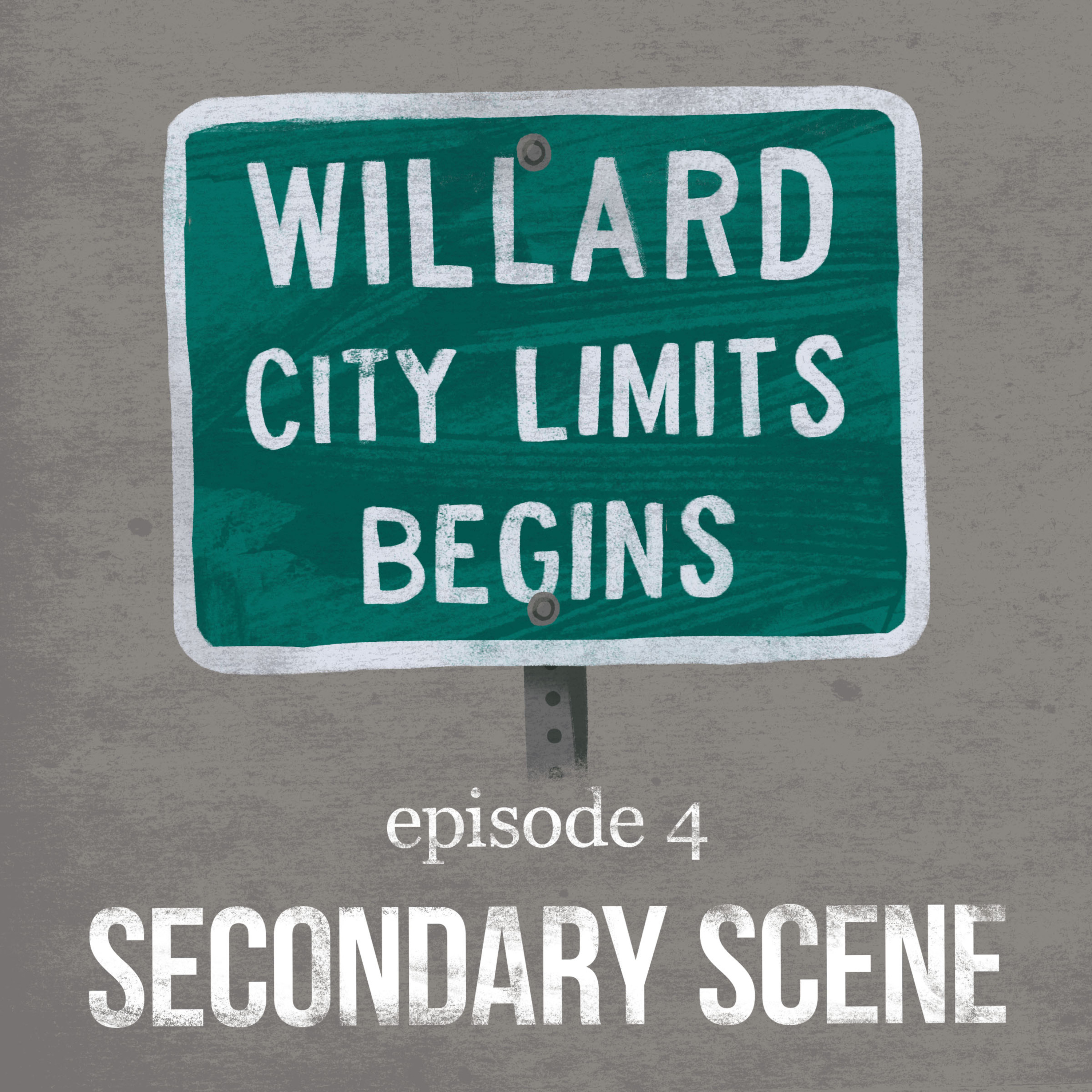
In other words, what Diane is saying here is there is clear evidence that Danny's body was moved after death. And that's not just based on the post mortem injuries she describes. Even something like the ligature mark is pretty telling. If Danny was found in the supine position, how would he get a mark that wraps around the backside of his neck? Another thing to consider is the fact that his shoes were untied. Possibly a coincidence, but it could also be evidence that he was redressed at some point. And then you think about the scene itself. Why in the world would he be nearly 500ft deep in a cornfield in the first place? A question I've been asking for some time now. It's so weird because like it's the most random of places. It's interestingly right outside of the city limits. So there's lots of reasons there to to make me think that it's a dumping ground.
- [27:16]
B
It's a secondary scene and he's got no drag marks. He wasn't dragged through the field. And then did they get scared and have to dump the body? Was this just all good fun that went bad? I don't know. But I think you have to keep an open mind for this that cuz if you are doing acid, God knows the different possibilities. When did making plans get this complicated? It's time to streamline with WhatsApp, the secure messaging app that brings the whole group together. Use polls to settle dinner plans. Send event invites and pinned messages so no one forgets mom 60th and never miss a meme or milestone. All protected with end to end encryption. It's time for WhatsApp message privately with everyone. Learn more at WhatsApp.com.
- [28:27]
A
Imagine fast hydration.
- [28:30]
B
Combined with balanced energy.
- [28:33]
A
Perfectly flavored with zero artificial sweeteners. Introducing Liquid Ivy's new energy multiplier.
- [28:39]
B
Sugar free.
- [28:41]
A
Unlike other energy drinks, you know the ones that make you feel like you're glitching. It's made with natural caffeine and electrolytes so you get the boost without the burnout. Liquid IV's new energy multiplier. Sugar free hydrating energy. Tap the banner to learn more.
- [28:57]
C
In 1988, a small new Jersey town is shaken by horror. A devoted mother murdered, satanic symbols scattered throughout her home. And her teenage son vanished without a trace. Was this a demonic ritual or a calculated act of evil? Horror master Eli Roth unravels a terrifying truth in Let the Devil in now streaming new episodes Sundays exclusively on mgm. While there are a few different theories as to how Danny's body ended up in the position and condition that it was found in, one way or another, Diane believes someone moved it there after death. One of the few things she could speak on with a high degree of confidence. In addition to him being strangled to death, as she mentioned before, you can only work with the information you have. And the fact of the matter is, she's always been very limited in that respect.
- [29:54]
B
Do you have seen pictures? Yes, cuz I've. I don't.
- [29:59]
C
Do you not have those?
- [30:00]
B
I don't have seen pictures.
- [30:02]
C
So you've never seen them?
- [30:04]
B
Ah, look at that. Is that money?
- [30:11]
C
$6 ripped up. It was found several yards off of his body in his wallet.
- [30:16]
B
I mean, is that a you or what is it?
- [30:19]
C
I don't know. You know, they confirmed that the kid he got the acid from fronted it to him and that he owed him money. But from what we've gathered, he owed him like $80. This isn't like thousands of dollars, you know. So on one hand there's a theory that that kid from Galleon came here to get his money and maybe Danny only has $6 on him and it's like a. This doesn't cut it and he rips it up and he kills him. But like, let's be honest, like the way I think about that, I think like that just sounds like some out of a movie. Like who's gonna sit there and rip up $6 and throw it on the ground. It's obviously ripped by hand. For the longest time we had heard about this, but we hadn't seen the picture so we assumed it was chopped up. It's clearly hand ripped. They're perfect little squares.
- [31:06]
B
So there could be touch DNA or prints on that money.
- [31:09]
C
Yeah, you would think so.
- [31:12]
B
And where's her shirt?
- [31:15]
C
She brings up a good point here regarding DNA, which is another topic we discussed during our sit down. She was curious if any evidence had been tested throughout the course of the investigation. And you should know, there were actually several Items that the BCI tested from as early as 1999 to as recent as 2024. I want to take a minute to run through first. No DNA was found on Danny's socks and shoes. However, they were able to find DNA on his other items of clothing. They also tested some of these items for the presence of bodily fluids. His genes tested negative for the presence of semen, but there was a possible presence of blood found toward the back right side. Experts used a traditional swab method to obtain DNA, but the profile was not of sufficient quality for comparison. The next item, his shirt, tested negative for the presence of blood and semen. Again, they used the traditional swab method, but the profile was not of sufficient quality for comparison. Next up was his underwear where there was no presence of semen, but a presence of blood was found in the front underneath the waistband. Though in the end no foreign DNA was obtained. Furthermore, experts tested Danny's wallet and the Contents inside it for fingerprints, but were unable to find any. They also took fingernail scrapings from both of his hands. On the left, they found no foreign DNA. However, it's important to note that on the right they found a mixture containing foreign DNA, with Danny's being the major contributor. Unfortunately, the sample was not of sufficient quality for comparison. The last thing they tested is arguably the most interesting and is one that Diane happened to know a little about. During the autopsy, she did a swab of Danny's rectum which tested positive for the presence of blood and semen. The rectal swab was split into two parts with and without sperm on the sample. Without it, no foreign DNA was found on the sample width. There was not enough to conduct a comparison test. If you're alarmed by the presence of semen found in Danny's rectum, I understand. Trust me. I was too, when I first read about it. Of course, my instinct was to justify it and assume it must be his, not someone else's. And as it stands, the results from testing have given no reason to believe that the semen came from anyone else but Danny. I actually asked Diane about this during our interview. What do you make of there supposedly being semen found in the rectal swab?
- [33:48]
B
If you told me it's his semen, I wouldn't be at all surprised because sometimes there is some leakage post mortem of ejaculate and it just rolls down. Now, the thing that goes against that is this is high up. I put my swabs high and usually if it's drainage, it's just superficial. Does it go all the way up? So I don't know whose sperm it is.
- [34:24]
C
Like she said, as it stands, we simply do not know. But what I actually found more interesting than the presence of semen itself are some mentions throughout the files, namely in the VICAP report, that seem to allude to it in a roundabout way. The VICAP report, which was submitted by Detective McLaughlin, refers to the Violent Criminal Apprehension Program, which is maintained by the FBI. It focuses on violent crimes, particularly ones that suggest a serial pattern. The program helps law enforcement agencies identify potential links between cases. In the VICAP report, under probable crime types and or motives, McLaughlin checks three boxes. The first two, conflict and drug related, are not surprising. But the third box was sexual motivation, which I found very surprising based on my research. Furthermore, under the category of general lifestyles, he checked bisexual rather than heterosexual. But not a single person that I or Danielle or the family have spoken to have confirmed this. If anything, what I've Heard from people close to Danny and even throughout the interviews we were given access to suggests he was heterosexual. So I'm really not sure where this came from, but I'll keep an open mind that they could know something I don't. And there's one last thing I want to share from this report. For the question of whether or not there's evidence of sexual activity. He checked. Yes. And underneath, where it asks the type, he checked anal. Now, it's possible that this was all informed by the presence of semen found in that rectal swab. And by that alone, it is fair to question whether or not this could have been sexually motivated. At the very least, McLaughlin seemed to consider it. But in speaking with Diane, she sees it differently.
- [36:11]
B
I would not have come to the thought that this was a sexual assault because I saw no injuries. This is a pretty detailed report. Do they think I wouldn't mention that if there was injuries to the anus? You can't make up something that's not there.
- [36:33]
C
She's right. You can't make something up that's not there. The body showed no injuries that would suggest sexual assault. And ultimately there was no foreign DNA found in the rectal swab or on Danny's clothes. You name it. Apart from the mixture found on his right fingernails, the testing of evidence was pretty much a strikeout for authorities. But Diane tells me there's still reason to be optimistic.
- [36:55]
B
As part of my duties as a deputy coroner, I was on the cold case squad. It was a task force that we have here in Lucas county. And we would meet once every two months maybe, and we would go over cold cases and find out where the weak links were. What could we do? What was out there that we haven't done, what could be looked at. And many of those were developed within the task force, and many of those were solved by DNA or whatever that wasn't done in the first place. Because a lot of these cases, there was no DNA at that time. But they were able to find evidence that was still retained, and they were able to come together and we made decisions if the evidence is still available. It takes less now to develop a DNA profile than it did 25 years ago. Now, is that a deal breaker? I don't know, but it might give you more information.
- [38:09]
C
The good news is the evidence in this case has been preserved. That said, getting it funded and retested with more advanced methods would be a challenge, though not impossible. At this point, the BCI have exhausted their efforts and do not plan on any additional testing. But it is something that the Violets have considered. They realize that if a foreign profile were to ever be recovered from any of the items, it could potentially help change the outcome of this case. But according to Diane, it's not the end all.
- [38:42]
B
I still believe that there's a way to solve this case. It's just finding the person that knows what happened. And then you put that account together with what you have here and the scene investigation, the scene pictures, you can make a knowledgeable ruling. Undetermined ruling leaves it open. If anything more develops, it's easy to change an undetermined to homicide or suicide, whatever might come up. It only takes one person to come forward with a little piece of information that you don't have. That's the beauty of the cold case investigations.
- [39:27]
C
As I've mentioned before, cold cases like this one present some challenges, namely due to the passing of time. But ultimately, history has proven it's never too late to solve them. Which is why many investigative agencies have divisions that focus specifically on these types of cases, just like Diane alluded to. In fact, these days you can even find schools and colleges that are doing the same. If you remember, in a previous episode, I spoke with Professor Michael Curtis from Tiffin University where he runs the Cold Case Fellowship, a group of students tasked with investigating cold cases. This year, one of the cases they'll be helping to make a difference in is Danny's. We are independent investigative branch. Our goal is to take this case. It's not revisionist history. It's not hindsight 20 20. It's fresh eyes, fresh perspective, and to develop new leads to pass on to these agencies to follow up on. If they're going to give me that case, I want to give them something back. I think we have very good, solid three theories, and three theories are a lot better than 10,000. But there are absolutely people that I have a very strong interest in. That's next time. Culpable is a production of Tenderfoot TV in partnership with Odyssey, written and hosted by Dennis Cooper. Our senior producer is John Street. Our producer is Jamie Albright. Edit, mix and sound design by Dayton Cole. You can follow us on social media ulpablepodcast. And lastly, you have any information about the death of Danny Violet, please fill out the form on our website culpablepodcast.com or contact the Huron County Sheriff's Office at 419-668691. A new episode of Culpable will release next Monday, but you can binge additional episodes right now ad free by subscribing to Tenderfoot plus on Apple Podcasts or at tenderfootplus.com hey, culpable listeners, I want to tell you about a show that I've been enjoying that you need to put on your radar. Buried Bones is a podcast about the forgotten crimes that history has tried to leave behind. Each week, journalist and historian Kate Winkler Dawson and retired Cold Case investigator Paul Holes re examine these cases with fresh eyes, because even centuries later, the details still matter. New episodes drop every Wednesday on the Exactly Right network. Follow Buried bones on the iHeartRadio app or wherever you get your podcasts.