Loading summary
Transcript81 lines
- [00:01]
Narrator
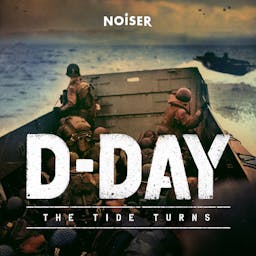
This episode is brought to you by Lifelock. It's tax season and we're all a bit tired of numbers, but here's one you need to $16.5 billion. That's how much the IRS flagged for possible identity fraud last year. Now here's a good number. 100 million. That's how many data points Lifelock monitors every second. If your identity is stolen, they'll fix it, guaranteed. Save up to 40% your first year@lifelock.com podcast terms apply. It's 5:30am on the 6th of June 1944. A choppy morning in the English Channel. A flat bottom boat about 40ft long and 10ft wide is being tossed this way and that. It's what's known as a landing Craft assault, or lca. Earlier that morning it was lowered from the side of HMS Empire Battle Axe. Now it's heading in the direction of northern France. On board are three dozen young men, A Company, 2nd Battalion, East Yorkshire Regiment. They stand shoulder to shoulder, grim faced, exposed to the elements. The boat rocks and pitches. Waves spit up and hit them full in the face. Vomit pools on the floor around their feet. But these men feel they're lucky to be alive. Though they fear they might not be much longer, they know they've got another hour of this misery, after which something far worse will rain down upon them. A familiar voice comes over the Tannoy, their company commander. But they can't work out what he's saying. He sounds strained, impassioned, theatrical. Are these orders being issued or something else? Is it Shakespeare? We few, we happy few, we band of brothers. It's a speech from Henry V. The moment when the young English king inspires his tiny group of warriors to victory on French soil. For he today that sheds his blood with me shall be my brother. The appeal to comradeship is well placed. The men on this boat will stick together through thick and thin. Right now, though, they're seasick, sodden, scared. Shakespearean verse might not be quite the thing to lift their spirits. And what they are about to endure on the beaches of Normandy will be no battle of Agincourt. Instead of archers arrows whistling through the air, there'll be a deafening naval bombardment. There'll be no noble steed scalloping onto the battlefield, only hulking tanks lumbering up the beaches. And as for the happy few, the men on this boat are just a tiny sliver of a truly colossal invasion force, almost 200,000 strong, carried across the sea by one of the most detailed military plans ever made. In one hour from now, the first men will begin leaping out of their boat, ready to liberate Europe from the Neuser network. This is D Day. As they make their way across the Channel, the men of the East Yorkshire Regiment are surrounded by thousands of other ships. Up close, it's overwhelming, a seemingly haphazard collection of vessels. Zoom out and the logic reveals itself. Nick Hewitt is a naval historian and the author of Normandy the Sailor's Story.
- [04:17]
Giles Milton
Neptune is still the biggest, most complex amphibious operation in history and, and amphibious operations generally are the most complex operations that armed forces can do because it's like a gigantic game of Tetris. You know, you're moving around ships and aircraft and soldiers and trying to get them all in the same place at the same time. The fleet that's used for Neptune is ranging from tiny little assault landing craft of the kind that you see in Saving Private Ryan, right up to really significant sized converted liners that are being used as landing ships.
- [04:48]
Narrator
Historian and author Giles Milton.
- [04:51]
Nick Hewitt
The armada had been divided into five separate fleets, each bearing the initial of the beach in which they were heading to. So the armada heading to Sword beach was known as Force S and you'd have Force U for Utah. To keep a fleet of thousands of ships together for each of these five fleets, in rough weather and in darkness with very limited communications was extremely complicated. And it was a testimony to the seamanship really of the men in charge that for the most part they did manage to keep the fleets together.
- [05:24]
Narrator
In charge of this elaborate jigsaw puzzle is Admiral Sir Bertram Ramsay of the Royal Navy.
- [05:31]
Giles Milton
Ramsay is Naval Commander in Chief. He's a bit of a genius. He's the man who organized the evacuation from Dunkirk back in 1940 and has had extensive experience on assault landings in the Mediterranean. So he really knows what he's doing.
- [05:43]
Narrator
In total, Ramsay's plan calls for 7,000 vessels. Among them more than a thousand warships, plus a similar number of merchant ships acting as cargo carriers, hospital ships and other vital transportation. Some of them will be carrying state of the art technology, top secret new inventions intended to support the beach landings.
- [06:10]
Nick Hewitt
When the infantry came ashore, they needed big gun support and this would require tanks and heavily armoured vehicles to come ashore at the same time as the troops. Now, how to do this? You needed to have an element of surprise. So they called upon the services of a fantastically eccentric British maverick called Sir Percy Hobart. And he came up, he dreamed up these weird and wonderful machines which became known as as Hobart's Funnies because they wear comical, although not if you were a German about to face them.
- [06:43]
Narrator
Hobart's most famous invention is the so called floating tank.
- [06:47]
Nick Hewitt
This was literally a tank that swam ashore. It had vast flotation bags attached to it and the Germans couldn't see it coming. The first thing they'd know that these tanks were coming ashore was as they drove up onto the beach, they'd simply emerge from the water and come up onto the beach.
- [07:05]
Narrator
But that's not all that Percy Hobart has up his sleeve. There's also the flailing crab whose rotating chain can detonate mines on the beaches. The bobbin, which lays a carpet of reinforced matting to support the weight of heavier vehicles. The armored ramp carrier which can plug holes in the ground allowing other tanks to drive right over it. Even the Canal Defence Light or cdl. It can dazzle enemy troops with the equivalent of a 10 million watt bulb. Getting all those across the ocean is no mean feat and nor is transferring a vast army of men from ship to shore without them becoming sitting duck. Before World War II, no military had the capacity for something like this. Andrew Whitmarsh is curator at the D Day Story Museum in Portsmouth and author of the book D Day Landing Craft.
- [08:11]
Nick Hewitt
The older style of landing on a beach would often be that you would have most of the troops in basically large rowing boats which might be towed by a smaller number of motorboats. When you got to the beach, the heavily laden troops would have to climb over the sides of these boats. They might well end up in quite deep water and it would all be basically chaos. It would be quite a slow process, you know, even admitting the enemy. It was a difficult process.
- [08:37]
Narrator
But in the last few decades a breakthrough has emerged and from a rather unlikely source, the swamps of New Orleans. Back in the prohibition era in America, Louisiana boat designer Andrew Higgins developed new flat bottomed vessels that could operate in shallow water. They proved a hit with the US Coast Guard, perfect for chasing rum smugglers through the bayou. Although according to some reports, Higgins did good trade with the smugglers too. Associates describe him as a slippery businessman with a foul mouth and a taste for bourbon. Others praise his diverse racially integrated workforce, the first of its kind in New Orleans. Either way, once the war begins, this larger than life industrialist is co opted by the US Navy. The result is the Higgins boat, a lightweight high sided shallow draft boat made largely from plywood with a propeller at one end and a drop down ramp at the other. Some call them motorized bathtubs, others liken them to giant shoeboxes. But these simple vessels are transformative. General Eisenhower will later describe Higgins as the man who won the war for us. By 1944, Higgins isn't the only innovator in town. The British have developed their own landing craft along similar lines.
- [10:11]
Nick Hewitt
Probably what many people think of when they think of landing craft is the start of Saving Private Ryan, delivering Tom Hanks and his troops to the beach. But those small landing craft were only one of many types and they were much bigger craft, which played a really important part.
- [10:26]
Narrator
In fact, there are specialized landing craft for carrying jeeps, tanks, anti aircraft guns. All in all, Ramsay's plan calls for more than 4,000 purpose built vessels. Some of the larger types will travel all the way across the channel under their own power, but most will be attached like lifeboats to the sides of bigger ships. A few miles from shore. The soldiers will clamber into them and then speed off towards the beaches.
- [11:02]
Giles Milton
When you think about super successful businesses that are selling through the roof like.
- [11:06]
Narrator
Heinz or Mattel, you think about a great product, a cool brand and brilliant marketing. But there's a secret the business behind.
- [11:13]
Andrew Whitmarsh
The business making selling simple for them and buying simple for their customers.
- [11:17]
Giles Milton
For millions of businesses, that business is Shopify. Upgrade your business and get the same.
- [11:24]
Narrator
Checkout as Heinz and Mattel.
- [11:25]
Andrew Whitmarsh
Sign up for your $1 per month.
- [11:27]
Narrator
Trial period at shopify.comprint promo all lowercase.
- [11:31]
Giles Milton
Go to shopify.com promo to upgrade your selling today.
- [11:35]
Narrator
Shopify.com promo this episode is brought to you by Selectquote Life insurance can have a huge impact on our family's future with Selectquote Getting covered with the right.
- [11:47]
Andrew Whitmarsh
Policy for you is simple and affordable.
- [11:50]
Narrator
Selectquote's licensed insurance agents will tailor your experience to find a life insurance policy for your needs in as little as 15 minutes. And selectquote partners with carriers that provide policies for many conditions. Selectquote they shop, you save. Go to selectquote.com SpotifyPod today to get started. Great days start with great underwear and Tommy John makes the greatest.
- [12:14]
Nick Hewitt
With Tommy John you make each day.
- [12:16]
Narrator
Better than the last. And with over 20 million pairs sold and thousands of five star reviews, guys everywhere love their Tommy Johnson. Plus you're fully covered with Tommy John's best pair you'll ever wear or it's free guaranteed. Grab 25% off your first order now at tommyjohn.com Spotify Save 25% at tommyjohn.com Spotify See cypher details by the last week of May, preparations for Operation Neptune are complete. The plan runs to over a thousand pages at this point. D Day is still Scheduled for Monday 5 June, the weather is balmy and pleasant. All along the south coast, soldiers have been confined to their barracks. Nobody has told them what's about to happen, but everyone knows. Vehicles and weapons have been waterproofed. Ports are filling up with ships of every conceivable variety. The anticipation is intoxicating. Private Tom Renouf served with the Black Watch Infantry Battalion.
- [13:24]
Andrew Whitmarsh
By that time, we were all down in the south of England and there was a magnificent, a wonderful feeling of hope of victory there. Everybody was waiting for the big day that was going to come along. All the towns there were saturated with soldiers of all different sorts. You brush shoulders with Canadians, Americans, French, everybody, but everybody down there had this wonderful attitude, this wonderful sense of big things were going to happen.
- [14:03]
Narrator
On Sunday 28th May, naval personnel up and down the country are sealed in their ships. Three days later, the first soldiers begin to board. Such is the complexity of the operation that embarkation is spread across five days. On 2 June, the first vessels get underway from Scotland and Northern Ireland. An array of battleships, cruisers and destroyers begin to converge on the channel. Two X class midget submarines also take up their positions 30ft below the surface. The crew in these tiny tin cans must bide their time, waiting patiently. On D day, they will rise to the surface and hoist lights and radio beacons to assist the armada. As the tension mounts, so too does the excitement. In fact, it's even affecting the Prime Minister. Churchill, it seems, has become gripped by a heroic vision. He wants to join the invasion force and sail on the British flagship HMS Belfast. The military commanders don't like this idea one bit. Neither does the King.
- [15:20]
Giles Milton
It's inevitable that Churchill's gonna want to go, isn't it? This is what Churchill does. It would have been a grossly irresponsible thing for him to do. And the King recognizes this. The King has been a sailor. The King was, you know, serving naval officer. And it's a difficult enough operation without having the respons of the Prime Minister on board your ship.
- [15:38]
Narrator
On Friday 2 June, King George writes a personal letter to Churchill, all but commanding him to stay home. He even employs a bit of emotional blackmail. There is nothing I should like better than to go to sea, he tells him, but I have agreed to stay at home.
- [15:55]
Giles Milton
What the King was doing was basically saying to Churchill, well, if you want to go, you're not the head of State, I'm the head of state, so if you go, I have to go. Knowing that Churchill would then see that as A clear no, because what you can't have is the King there. And so I think what he was doing was very discreetly and very subtly nudging Churchill away from this really foolish decision.
- [16:20]
Narrator
Reluctantly, the Prime Minister backs down. He returns to the safety of his personal armored train, which is currently chugging along the south coast. Admiral Ramsay breathes a sigh of relief. By the evening of Saturday the 3rd, almost all of the soldiers are boarded. On most vessels, conditions are cramped, the atmosphere is intense. Sergeant Charles Eagles of the Durham Light infantry has been cooped up on his ship for two full days now. The men of his battalion are wired. The ship is oppressively hot, the stench of sweat and engine oil sickening.
- [17:07]
Andrew Whitmarsh
We were just allocated spaces, you know, on the floor, you know, you just put your gear down and that was it. We literally lying like sardines. And I thought at the time, I thought, hey, don't like this. If we ever got it, we'd never get out of this.
- [17:23]
Narrator
On other ships, men stay above deck the whole time. Out in the open air for days on end, card schools spring up. Usually, gambling is strictly forbidden in the military, but officers turn a blind eye. Day by day, anticipation builds. Then, on Sunday 4 June, word goes around D Day has been postponed. Allied weather forecasters are predicting high winds and poor visibility, conditions that would make invading on Monday morning horribly difficult. The men on the ships are like coiled springs. Being cooped up this long isn't good for the morale of an invasion force. But it's taken five days to get everyone aboard their ships. There's no point in getting them off again now. All they can do is wait. Then, the following day, a new message comes through. D Day is back on, just 24 hours behind schedule. The atmosphere on the ships is electric. The soldiers are choking, cheering, overflowing with nervous tension.
- [18:42]
Andrew Whitmarsh
We still had this enthusiasm, this tremendous enthusiasm.
- [18:48]
Narrator
But the vanguard of the invasion force isn't the ships packed with soldiers. First up are the minesweepers.
- [18:56]
Giles Milton
There are very significant mine defences between Normandy and the south coast of England. Not just enemy mines, friendly mines too. There are extensive Allied minefields along the south coast of England. You can't clear those, because if you clear them, it's like putting up a great big sign saying where you're going to invade. And then you've got German minefields doing the same function on the French side. So it's the largest force of minesweepers ever assembled and the most complex minesweeping task ever carried out.
- [19:27]
Narrator
Rather than clear the minefields altogether, the sweepers Create safe shipping lanes that run right through them, carving out a route for the rest of the invasion force to follow. Most mines float just below the water, anchored in place by cables that lead to weights on the ocean floor. The job of the minesweepers is first to cut the tether and then when the mine bobs up to the surface, detonated with rifle fire.
- [20:01]
Giles Milton
The minesweeping operation is incredibly successful. There's only actually one sweeper that's lost, USS Osprey, and she actually hits a drifting mine. So it's not part of a field, it's broken loose. Mines have a habit of doing that. And the sailors who were lost with the Osprey are the first Neptune casualties. Actually, all the rest of it is successful. It's incredibly dangerous. You know, it's really, really difficult, complex work that they're doing in the dark in huge formations, but very, very successful.
- [20:32]
Narrator
As the minesweepers clear safe lanes into the channel, more and more ships press onwards. On board, the soldiers prepare themselves in whatever ways they can. There are impromptu religious services. Some men obsessively check and clean their weapons. Others try to teach themselves French from the phrase books they've been issued. By now, wartime rationing has gone out of the window.
- [20:58]
Andrew Whitmarsh
We were treated to all sorts of luxuries. Meals of bacon and egg and whatever you wanted. Chocolate. I remember stocking up with Mars bars. That was my favorite.
- [21:12]
Narrator
Some American ships have even more impressive menus. The cooks on one transportation vessel prepare a lunch featuring breaded pork chops, candied yams and spaghetti. Then for dinner, there's steamed frankfurters, sauerkraut and rice pudding. But despite the celebratory atmosphere, everyone knows this may be their last hurrah. Some men scribble heartfelt diary entries or goodbye letters to their loved ones to be delivered if they don't survive the next 24 hours. Others withdraw into a world of private thought.
- [21:51]
Andrew Whitmarsh
And I remember one guy in particular kept pulling his wallet out and going through his family forest and you see he was really physically upset, you know, and he'd be an old guy because he'd be about 30, you know, to.
- [22:05]
Narrator
A 19 year old like Charles Eagles, a man of 30 is positively ancient. But Dennis Bowen of the East Yorkshire Regiment is even younger, just 18. This will be his first experience of combat.
- [22:21]
Andrew Whitmarsh
I remember one of the old guys saying to me, get your body down into the heads and get a shower and get some clean underwear on. And so in my ignorance, I said, what for? And said, listen, kiddo, if your body's clean and Your clothing is clean, your underwear is clean. If you get hit, meaning a bullet or shrapnel, it's gone through a lot of clean stuff, you'll be okay. But if your skin is dirty and you're wearing dirty underwear, infection will set in straight away. These are guys who knew what it was all about. And they know that when you do get hit, there isn't always somebody there to clean you up.
- [23:06]
Narrator
By the early hours of Tuesday morning, the Allied armada is motoring steadily towards France, a vast mobile city bobbing on the waves with 7,000 ships on the move. The rough waters of the Channel are packed. One busy stretch of water has acquired a nickname, Piccadilly Circus. Once they've passed through it, the seamen know they are on the home strait, heading in formation to Normandy. The order in which ships will proceed has been carefully choreographed. But that's nothing compared to the elaborate dance being performed elsewhere in the Channel. Two additional decoy fleets are advancing on Boulogne and the mouth of the Seine. Or so it seems. In fact, it's another ingenious deception, courtesy of Operation Fortitude. These phantom fleets are nothing more than strips of foil known as window, dropped at carefully calculated intervals by Allied bombers. Author Joshua Levine.
- [24:18]
Andrew Whitmarsh
By dropping tin foil, called window, this.
- [24:21]
Narrator
Would be sort of picked up by.
- [24:23]
Andrew Whitmarsh
The enemy radar and you could simulate an invading fleet. The way you would do this was to fly your bomber aircraft in a particular direction towards the French coast.
- [24:34]
Narrator
You would then drop lots of this.
- [24:36]
Andrew Whitmarsh
Tin foil, this window, and then your aircraft would sort of start to turn.
- [24:41]
Giles Milton
And go back and come back forward.
- [24:45]
Narrator
And go a little bit beyond where they had last dropped the window and drop it again. And you'd keep going in these kind of circles and you would simulate a.
- [24:55]
Andrew Whitmarsh
Fleet moving forward at something like six knots.
- [25:00]
Narrator
Meanwhile, on board the real invasion ships, emotions are running high. For some men, excitement has given way to terror. There are reports of soldiers deliberately wounding themselves to escape what they know is coming. When dawn breaks, everyone knows the death toll on D Day is likely to be high, and there's no mollycoddling from their commanding officers. On the HMS Empire Javelin, Colonel Charles Cannon briefs his men on their mission. They will be storming Omaha beach, one of the two American landing sites. He tells them that two in three of them will never see the United States again. Titanic Ship of Dreams, the new podcast from the award winning Noiser Network. Join me, Paul McGann, as we explore life and death on Titanic. I'll delve into my own family story following my great uncle Jimmy as he Tries to escape the engine room. We'll hear the harrowing tales of the victims and the testimonies of the lucky survivors.
- [26:09]
Andrew Whitmarsh
I saw that ship sink. And I saw that ship break in half.
- [26:13]
Narrator
Titanic ship of dreams. Listen wherever you get your podcasts. As the morning of D day approaches, the men receive a more optimistic pep talk. General Eisenhower's order of the day is read aloud over the ship's tannoys. You are about to embark on the great crusade, the supreme commander declares. The tide has turned. The free men of the world are marching together to victory. But that night, sleep is rare and fleeting, and not just because of the monstrous events due to take place in the morning. Harold Addy is on a Royal Navy ship transporting tanks and Canadian soldiers to Juno Beach. A seasoned sailor, he's concerned at how poor the weather is. Perhaps that 24 hour delay wasn't enough.
- [27:07]
Andrew Whitmarsh
The weather wasn't all that much better. To me, it didn't seem any different. It was wild, wet, windy.
- [27:15]
Narrator
At least his years in the Navy have given ADI sturdy sea legs. For the landlubber soldiers preparing to go ashore, it's a very different story.
- [27:24]
Andrew Whitmarsh
I remember it being a horrible night. Many of the lads were sick not once, but several times, you know, till they got nothing inside them. And I can't help feeling sorry for the soldiers because for us, in theory, our job was finished once we'd landed. They had to fight on top of this. After a night like that, I got the impression they'd be only too glad to land and get off the sea, you know, in spite of what they had to face.
- [27:49]
Narrator
Either way, they won't have long to wait. On some ships, breakfast is served as early as 1am for the American soldiers preparing to storm Utah and Omaha, it's a slap up meal, providing their stomachs can handle it. Steak, bacon, chicken, eggs, donuts, coffee. A feast worthy of kings. Or a generous last meal for the condemned. For the Brits, things are a little less indulgent. Corned beef sandwiches, tea and a swig of rum. Up on deck, in the dim early light, Tom Renouf gets his first proper look at the rest of the armada. What he witnesses is almost magical, like a vision glimpsed in a dream.
- [28:49]
Andrew Whitmarsh
The number of the armada that had arrived there was just unbelievable. You couldn't believe what you were seeing. Seeing. Everything seemed to be so quiet and peaceful, nothing taking place.
- [29:04]
Giles Milton
There is a single kind of turn of phrase that almost every veteran who remembers it and who took part uses. And it's a sea of ships as far as you can see as far as the horizon. All you're seeing is ships. And actually, although the weather is ghastly, the crossing is often described as very quiet, because obviously they're all told to be quiet. So vast numbers of ships as far as the eye can see, proceeding across in silence.
- [29:31]
Narrator
But the perfect illusion is soon broken. Around 4am, soldiers begin boarding their landing craft. And in rough weather, this is no easy task.
- [29:43]
Nick Hewitt
If you're lucky, you would simply step from your ship down a few steps into your landing craft, which was winched up on davits on the side of the ship, and then the whole landing craft with all the troops on board, would be lowered into the water. Some of the other experience that happened, particularly on some of the American ships, was that the landing craft would have to be lowered first and then the troops would climb down, netting down the side of the ship. The small landing craft would be leaping up and down in the water, and you'd have to choose the right moment to let go to jump, timing it as the landing craft is coming up at its high point and hopefully land safely in it.
- [30:21]
Andrew Whitmarsh
That was one of the most terrifying experiences of my life. Now, you were carrying your full kit, you had a big pack and a small pack, water bottle and this massive rifle swung over your shoulder. You had to start cramming down the nets. And all of a sudden, I found the weight was almost unbearable. I just didn't think that I was going to hold on. I thought I was going to be falling off the net down into the water, and of course, that would have been the end of me. It took me every ounce of strength and willpower that I had in my body to get down that scrambling net. An experience I. I will never, ever forget. That was worse than going ashore.
- [31:15]
Narrator
Unsurprisingly, there are multiple injuries, sprained ankles, broken bones. But for some soldiers, an even worse ordeal. Sir Anthony Beaver, one of the landing.
- [31:29]
Andrew Whitmarsh
Craft, was being lowered on davits from one of the transport ships, which was actually manned by the Royal Navy. And these were American troops. Unfortunately for them, the davits jam the landing craft stuck just beneath the heads, that is the lavatories. And they didn't realize that just below them were all of these American soldiers who were literally being shat on. And as the American officer involved, he said, you know, we shouted, we cursed, we also laughed. He said, here were the British doing what they'd been wanting to do since ever since 1776.
- [32:14]
Narrator
With the landing craft filled, the final leg of the journey commences a two hour Race towards the beaches. The small flat bottomed vessels are buffeted by the waves. Plenty of soldiers regret the rich meals they've been eating recently.
- [32:31]
Andrew Whitmarsh
The decks of the landing craft were as slippery as anything from vomit all over the deck. They were given paper bags to be sick into, but I mean of course they were all soaked in water and collapsed straight away. So most of them were being sick into their helmets which they tried to wash out when a wave came over the side. It also meant that many of them were totally exhausted from all this vomiting by the time they hit the shore.
- [32:57]
Narrator
Shortly before 6am the naval bombardment begins. Already before dawn, Allied pilots have been pounding key defenses from the sky. Now the armada's heavy guns, each with a range of several miles, begin to take aim. The soldiers in the landing craft crouch awestruck as deafening fire is launched over their heads. Huge craters erupt on and around the beaches. Bombs and shells pile into the German positions. For those about to go ashore, the only question is has the earth shattering bombardment done enough? Around 6:30am the first landing craft reached the shore. Starting with the American forces it Utah and Omaha, followed by the British and Canadians at Gold, Juno and Sword. For men like Charles Eagles, it's a sensory overload.
- [34:05]
Andrew Whitmarsh
It was utter chaos on the beach. It was, it was utter chaos. Shells dropping around and a horrendous noise of course, the cruisers and the ships firing over the top of there. But the sea was just black with boats.
- [34:20]
Narrator
Crouched in his landing craft, Eagles waits anxiously for the ramp to go down. But when it does, his D day almost comes to an end. Before it's begun, the Americans dropped the.
- [34:33]
Andrew Whitmarsh
Front door so we could run down the ramp. I must have had over 100 weight of high explosives on me as I stepped off. I just went down, I thought, wow, I'm gone. And I just unclipped my belt and I come popping up. So I lost all my gear before I even land on the shore.
- [34:55]
Narrator
Others are less lucky. Not just soldiers, but whole armored vehicles sink under the water. Not least the so called amphibious tanks which don't always live up to their name.
- [35:08]
Nick Hewitt
Famously, the weather was terrible, the seas were extremely rough and these amphibious tanks had not been designed for very rough seas. I read a number of accounts of some of the tank drivers who were actually there on D day going ashore and they are absolutely terrifying. About 2000 meters offshore they literally drive forwards and tip into the water and the men on board are praying that the flotation tanks are going to work. But unfortunately the waves that were so big that morning, the sea was so choppy that many of the flotation tanks were swamped. And this happened in a matter of seconds. The waves would crash over the flotation tanks and, you know, this tank weighs tons and will sink straight to the bottom. Invariably, they'd flip upside down. So even if the men could try and get out of the escape hatch, well, that was impossible because that was lying on the seabed. A large number of men drowned, and it was awful for the men who witnessed this because these were their comrades, their friends. They'd been training with them for the better part of two years. And before they even get ashore, before they even have a chance to fight, they've died, they've drowned. I think that was the first realization of just how dangerous things were going to be.
- [36:28]
Narrator
Right now, though, there's no time to stop and mourn the men who never made it to the shore for their comrades in the landing craft. The D Day story continues on the beaches. At 7am, Harold Alley and his friends arrive at Juno. But they're scarcely prepared for what they find there.
- [36:49]
Andrew Whitmarsh
The noise was tremendous. There was noise and smoke everywhere because of the storm. We drifted out of position. We landed in front of the German machine gun positions, and a lot of the men we had, as they were dead within seconds of leaving the craft, you know, they just didn't stand a chance. And to have to see that, I'm sorry about that. It just brings it back.
- [37:25]
Narrator
In the next episode, American forces land on Omaha, the most deadly of the D Day beaches. So many are killed in the first few hours that a US General almost calls off the attack. For the Allies, it's the closest D Day ever comes to failure. That's next time. A special thanks to Legacy for the use of their archive of personal recollections from the men and women who witnessed D Day.