Loading summary
Transcript17 lines
- [00:01]
Advertiser
This episode is brought to you by Progressive Insurance. Do you ever find yourself playing the budgeting game? Shifting a little money here, a little there, and hoping it all works out well? With the name your price tool from Progressive, you can be a better budgeter and potentially lower your insurance bill too. You tell Progressive what you want to pay for car insurance, and they'll help you find options within your budget. Try it today@progressive.com progressive casualty insurance company and affiliates price and coverage match limited by state law. Not available in all states.
- [00:36]
Paul McGann
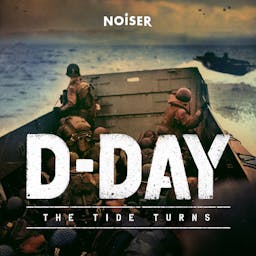
It's early morning on June 6, 1944. We're on Gold beach, near the former resort town of Paramouche. A Royal Navy Commando, just 20 years old, is making his way up the sand. And he has a vital mission.
- [00:56]
Stephen McGann
To.
- [00:56]
Paul McGann
Set up a radio station that will feed the Allied ships key information, enabling them to target German positions more effectively. Under heavy machine gun fire, the young man fights his way forwards. He's making good progress, but looking down, he sees his radio has been shot to pieces. So much for the mission then. As the saying goes, no plan survives contact with the enemy. But D Day requires improvisation as well as planning. And this young man has been trained well. He grabs a gun off another soldier and begins firing. Soon he's made it all the way to a German defensive emplacement. Along with a group of fellow Brits, he and his comrades contemplate their next move. But before they can get any further, disaster strikes. One of his mates shouts at him to move. The others hurl themselves to the ground. Too late. The young man sees the danger. A German stick grenade heading right for him. All he has time to do is turn his body away from it, shielding his head from the impact. It explodes. Shrapnel rips through his body. More than 50 wounds, all up one side. He lies on the sand, bleeding out as his friends try to help him. Before long, the young man has lost consciousness. It's a story I've heard for almost 60 years, ever since I was a boy. Because that young commando, Joe McGann, was my father. From the Noiser network. This is D Day in my family. Our dad's story has always fascinated us children. For years he hardly ever spoke about the war. We've had to piece things together bit by bit. My brother Stephen is the family's unofficial historian. You might know him as Dr. Turner from the BBC drama called the Midwife. He's also a writer. In his book Flesh and Blood, he told the story of seven generations of McGanns, including our father's brutal Experiences on Gold Beach. Stephen spent a lot of time talking to our dad about his D Day experiences before he died. So for this episode, I'm going to pass you over to my brother to share our dad's story. The story of one young man among more than 100,000. It went ashore on D Day and came back changed forever.
- [04:06]
Stephen McGann
My dad's story. My father was born in 1924 and he was all working class, hard working, young, shy, bookish child. He lived in a part of Liverpool in a place called Upper Frederick street, which ran right down from the cathedral right down to the docks. They were rented houses and his mother worked as a laundress. His father died when he was only five years old and left them destitute. This was the years before the welfare state. She had to work every hour. God sent in a laundry, a local laundry called Dexter Laundries. She had to work entirely herself to support the three children when they were young and they were pretty, pretty poor. They were what you would call nowadays latchkey kids. The mother would be disappeared for many, many hours. My father was a bright boy. His brother and sister said, you know, you could always find him in the cellar reading books. He gained a scholarship to one of the finest grammar schools in Liverpool. But there was no way, Lizzie, his mother, could afford that. It was simply no question of being able to do that. And what he actually did was he left school at 14 and he worked for the railways. His uncle got him a job as a railway porter. He would have been 14, 15 when the war broke out. So when he became a later teenager, before he became conscription age, he helped out the ARP wardens during the Liverpool blitz in 40, 41, volunteering with the ARPs. There was always a keen sort and had an incredible sense of duty. My father, he had a great, great pride in duty and he described to me how on his bicycle he used to go down and inspect buildings during air raids and he only just escaped one day in the business quarter of Liverpool when German bombs bombed out an entire row of office buildings. And he described that and he said, I don't know how I managed to get away so fast, but I heard the noise that bombs make when they come down. Came to 43. And when he came to conscription age, I think it was a bit of a no brainer for him to go in the navy. He was very proud of Liverpool's place in the Second World War as the Western Approaches. He'd often tell me about Liverpool's larger part in the Battle of the Atlantic. Liverpool became very, very valuable in the war effort. Liverpool was a great place with massive docks to bring in American convoys to bring in essential supplies from the Empire and from Americ, military as well as civilian. And also his father was a merchant seaman. So the idea of going to sea was, was absolutely fine for him. His first assignment was in a holiday camp, billeted in a holiday camp in Skegness and he was trained up there and he must have shown a talent as radio sparks. He always called himself a spark. So he was, he was a telegraphist and he would describe to me during the war how he was put onto trawlers in the North Sea and they would accompany the Archangel convoys, the convoys out to Russia. But something fateful happened to him in 1943 and it leads back to his brother Jimmy and a story he told later. He was older than Joe and Jimmy had signed up regular raf, so he was actually ground staff raf. He worked in RAF Wittering during the Battle of Britain. The key thing was his big brother was more hard bitten. He was regular services. He knew the strokes, he knew the things you should ask for. The times to keep your head down, the times to volunteer. Jimmy said to me later, long after my dad had died, he said, look, I was regular RAF and my little brother was always keen and now I knew the first thing he would do is bloody well volunteer for something. He said, I remember old Nim said, whatever you do, don't volunteer for anything. You're doing your duty, just keep your head down. If they ask for a man to step forward, stay where you are. And when I'd asked my dad years ago about this, said, yeah, yeah, yeah, no, he did, he nearly took my head off for that later. I said, so what did you do? And my dad said to me at the time, he said, well, because I was a kid at this time, and he said, well, I fancied being a submariner. I got this idea in my head. So he said, I went to my commanding officer and said, I'd quite like to work in submarines, sir. And he said, well, next thing I knew I was shipped off to Scotland and he ended up in Ayr, in Troon, in Ayrshire. And he'd been assigned to something called Combined Operations. He was an Allied Forces Combined Operations soldier about to be trained to be what they call Royal Naval Commandos, RN Commandos. My father went to a base called Dundonald, which was in Troon, and he adored the training, he adored the top secret training of being a telegraphist. He was assigned to Signals and these Particular commandos will have to go onto the beaches and they have to take their radio packs on their back, go in the first wave, establish a listening station, and then radio to the troop ships. Not only coordinates for the missiles, but important messages back about the state of the beaches. So he was training there. He was learning a lot of folk songs. It was the happiest my father ever was. The training involved working alongside the hardest sort of pre SAS elite troops. They'd go up to a place called Achna Carry in Scotland, and they would have to drop them off in the middle of nowhere in the mountains. And they have to survive or they have to be found, or they have to run incredible distances. And so on top of the other skills he needed to have, he was absolutely a trained commando. And I think it brought him alive in a way. He was a very fit man. Probably, I suspect it was the happiest my father ever was. One of my most precious possessions is this photograph. I actually have it in front of me here of my father sitting in front of a troop of men just before they went down south towards the Normandy beaches. He titled this picture the Liberators. And he is right dead center in this troop photograph. He's beefy like I never saw in beefy. And he has this fantastic grin, like he was sort of in a. In a terrible way. He knew his place better than at any time in his life. This young man, 20 years old. My own son is 27 now. You know, he was 20. He was a child. Sometimes with an assault like this, you needed people like my father. And my father did have that. That religious sense of duty as well. I mean, this was a fight against people who were manifestly wicked, if you want to use a mild word for it, evil to him. And so that was a good fight. I remember reading a passage from an American commander, and he said it was a terrible, grim reality that probably the best people we could have to go on are the ones who weren't battle hardened, are the ones who didn't realize what they were going into. They got posted down to Sussex. He was in camp then, top secret. Because they closed off the south of England. Things became tighter and tighter, and he couldn't get out of the camp. They knew it was going to come very, very soon. It got, you know, May got into June. He was told he was joining Force G, which he was going out to Southampton, and he was going to land on Gold beach, near the little village of Aromanche, right on the end of the British flank. Before you get to Omaha and Utah, the American beaches. And my father was told he was dispensable. His first wave attack as a commando had to succeed even over his dead body. This was the classic speech where a guy said to them, it's a suicide mission. You have to get your heads around. You know you're gonna die. And if you don't die, you're dispensable. We're gonna. The tanks are gonna go over you if they have to, because that's how we're gonna win. There's nothing else we could do. This is what you're going to do. He knows this is a rough deal. This is a really rough one. And so he's got to prepare himself. I said, how did you prepare? And you know what he said? He said, I told myself, you're already dead. So what you do now is your duty, because you're a corpse. So you do your duty.
- [13:34]
Narrator
When you think about super successful businesses that are selling through the roof like Heinz or Mattel, you think about a great product, a cool brand and brilliant marketing. But there's a secret, the business behind the business making selling simple for them and buying simple for their customers. For millions of businesses, that business is Shopify. Upgrade your business and get the same checkout as Heinz and Mattel. Sign up for your $1 per month trial period at shopify.com promo all lowercase go to shopify.com promo to upgrade your selling today. Shopify.com promo McDonald's meets the Minecraft universe.
- [14:13]
Stephen McGann
With one of six collectibles and your choice of a Big Mac or 10 piece McNuggets with spicy nether Flame sauce. Now available with a Minecraft movie meal at participating McDonald's for a limited time.
- [14:24]
Advertiser
A Minecraft movie only in theaters.
- [14:27]
Narrator
Spring Fest and Ego Days are here at Lowe's right now. Get a free select EGO 56 volt battery with purchase of a select trimmer blower or mower kit. Plus, shop today for new and exclusive items you need for your lawn. So get ready for spring with the latest in innovation from Ego, the number one rated brand in cordless outdoor power only at Lowe's we help you save. Offer valid through 4 2. Selection varies by location while supplies last.
- [14:56]
Stephen McGann
When he knew they were going to go out the next day and he knew they were all locked into camp and he told one story to me I find very moving. He was very religious, he was a devout Catholic and he was so wanting to have holy communion to make his peace with God before he went that he did a very uncharacteristic thing. He leapt over the fence and went AWOL and went to a nearby church he knew as a Catholic church. He said, I just had to do it. I had to do it. And he went over and he had mass and he had Communion and he came back to the gate and they said the whole, who goes there? So what the hell are you doing out, Scouse? Because that's what they used to always call him. And he explained, and the guy just said, quick, get him. But then he's floating around in the middle of the channel and it's terrible weather, so they delay for a day. He said, the poor soldiers who were coming with us from the 50th, they were seasick as anything you find gradually when it's time to go in the morning, he's due there only 30 minutes after, at zero hour. So they drop them down from the ship into the landing craft and then they set that about five, six miles out. Then they send them in. So they're down, they're approaching the beach. They're all down. They're coming towards the Aromanche area on Gold. And the first time he encounters war, the first thing, he hears shells coming over and he talks about the heat off the shells coming from the HMS Ajax landing over there, and that's very encouraging. But then the mortars and the bullets start. He said to me, when you look through the armor plating, it's like balsa wood. It was like balsa wood inside. He thought, this isn't going to do any good. We got to get out of here, you know. So now as they're approaching, they're under fire. They've pitched too far out and they have to open the hatch. They're under fire and they have to open the hatch when they're still out and they pitch right into the water. They have to go over into the water. And so my father talks about the friends of his who died. So the very, very first experience with the reality of war is such a common one. Absolute horror and confusion. He said, I got into the water and managed to hold my gun up. Some of them didn't. I watched some with very heavy packs drown. So that's before he even gets out of the. He gets to the. To the beach, gets behind one of these triangular things on the beach and keeps his head down. I said, what was that like? What were you seeing? What were you? And he. The thing I never forget is he took a breath in and he paused and he took another breath in. He said, son, war is a terrible Thing, a terrible, terrible thing. I have never, to the day I die, I never forgotten. The way he said that became an act of. So you think about people's almost performances in that moment, what they see in their eyes, the horror they truly recall. He watched a good friend of his take a bullet in the back by accident from the British. Because it's utterly said, it's utter confusion. There's horror, there's people running around, there's people screaming. Everybody's hiding behind these defenses. There's already wrecked tanks, there's bits and pieces on the beach, the beach is a mess. So what he then has to do that classic thing. And it was, it was brilliantly put once by Max Hastings and he described what it must take for a young soldier to be on the fire like that in Normandy and to have the courage to put their head up. When every human instinct in your body says, stay where you are, stay exactly where you are, you might get away with this. You might get to see your mum, you might get to breathe the air again. And what he did is he stood up, turkey's gone. And he started to move forward. The stories then come thick and fast, which he told, which I put the pieces of the jigsaw together over the years. But he managed to get up to. I don't know if there were walls or dunes actually, he managed to get up to somewhere where he then said there was a point of attack where the Germans were not far away. And so there was an attack on. He checked his radio and it was shot to bits. So his radio was useless. So his primary function of setting up a beach signal station was spent. And so then the most useful thing he could do was take that off and offer any soldiering and assistance to anybody else there. And that's when he, in great Liverpool fashion, managed to bag and nick some booty from the day, because he managed to procure. This is how close he was to the enemy, because he managed to procure. Procure German field goggles. And my father always loved the binocular. All of his life he loved the nice binocular. But listening to him was quite funny because in the days when he was more light hearted, if you like about it, he said, you know what, these were great binoculars. They were great, these binoculars, proper Nazi binoculars. So he was obviously, from what I know, he was up there with the enemy. They're engaging with people over the way and a stick grenade comes over and the people next to him shouted a danger sign. He saw it too late. He turns his body in a defensive position. But they. The grenade explodes nearby him. He gets 50 separate shrapnel wounds up his. Up his body. When I was a kid, he used to show me he still had the scars at the top of his body. He turned in a natural defensive posture, took all of this pretty much full force on the side of his body. And then he was bleeding out on the beach and he was in big trouble. The next is understandably confusing, but he said, I remember coming in and out of consciousness and he said every time he cried out, everyone has these battle rations of morphine. They have these little morphine files. And he'd say, some bloody medic had given me morphine every time. And it's a funny truth that when he got back to Britain, he said, you know what Nelly did for me, lad, don't you? I said, what? He said, I had to cold turkey when I got back to Britain. Some nurse, he said there was a nurse from the Caribbean, like a West Indian nurse, who had to sit with him for days while he cold turkey because he was addicted to the opiates that in a battle situation they just, just fed him with loads of. No one was taking like a log of any of these things. So he was in a haze of opium and confusion. The next thing he really knew, he wakes up in Leicester Royal Infirmary and there's been a clerical error. Instead of Liverpool Infirmary, they sent him to Leicester Infirmary. So his mother and his brother thought he was dead. When he woke up, he was in a ward with different servicemen. From what I can make out, his mum didn't know where he was. But over the next few days, the servicemen around him were all witness to what they all knew was a miracle happening. My father was a recipient of a top secret drug that literally saved his life. He woke up in a hospital, which was one of those nominated by the Ministry of Defence by the top secret penicillin program for the stocks of treatment. Lucky him. He woke up in this infirmary where they did happen to have treatment. And he said, what happened was they used to sit on each other's beds and they'd look at each other's wounds on their arms and on their legs and the wounds would be healing. There's this wonderful image of all these guys going, have you seen this, Scouse? Look at this. They were the first vanguard of the antibiotic age. They were the first ones whose bodies were completely open to it without any antibiotic resistance to it, so miracles could take place. Then he was deeply wounded and this thing saved his life and he held it all of his life that this miracle had been given to him and gifted to him, you know. And this conversation I had with him once began with you lot, your generation, they don't understand. They don't know they're born. You know, the classic old person. He said, you pop these pills for antibiotics like they're going out of fashion. He said, you don't understand what you've got in your hands. But alongside all of this, the shadow of all of this to his duty, his work, his service, his wounds. And, you know, nearby me now, right next to me, I have his wounding certificate, you know. And they describe the injury. Shrapnel wounds of the left arm, left leg, right thigh and abdomen. Very terse, very simple. And that gave him certificate to be demobbed. But in the shadow of all of that was something he could never talk about, something they called anxiety neurosis. What happened to him then? The aftermath has happened now. We understand it so much. In post traumatic stress back then, they didn't treat anybody. So you come and you do your duty, you go through this tumultuous experience. You're a kid of 20. Next thing they're. They're stamping something on his form which they don't understand very well, they don't treat very well. And for my father, in his almost Victorian sense of rectitude and duty is an appalling stain on him. The idea that it was any weakness or inferred frailty or weakness in him was frankly a secret he carried to his grave. I found most of those things out indirectly through my mother. And later through some of the research I did. My mother discovered something about his medical record which were imparted against all kinds of medical confidentiality. The doctor of the time tried to give a context to help my mother understand my father's depressive moods. My father's rigidity with certain ways in which he had to code. He had to sort of make strict behavior in the house. He had to control the house in a certain way or felt it was a question of control. He felt more in control of the thing. This is my own feeling, but it's a terrible. A terrible injustice in a way that what happened as a natural consequence, what maybe therapy could have helped or a little bit of normalization afterwards could have helped. He was scarred with for the rest of his life and carried a kind of shame for it, an undeserved shame for it, which he took forward, which I never really understood when I was younger, but took forward on his. On his service on that day. He never kept hold of his medals. He had a funny relationship with them, like many servicemen do, and part of it was this shame. And if you think about those experiences, 24 hours in a young man's life could have such a shadow of. Across an entire life. And that's my dad's story, that's the way he had to go on. Because what they did in their generation was they had to go on with him through all the pain that was suffered and a marriage that was sort of overshadowed by depression and melancholy in that way later on, through all of their good days and their bad days. When he was on his deathbed, my mum said, he took my hand near the end and he held it tightly and he said, I'm sorry, love, I'm really sorry. And she said, joe, you don't have to apologize. You don't have to apologise for anything. And it's making me tear up now, because he really didn't have to apologize for anything. That generation, that generation and what they then were told they had to do. The disparity between the shibboleth they'd been given about what a daring do empire man has to do, and the complexity of their life and their service and their courage and their. It's just appalling, you know. And what she was saying to him was that. And I can honestly say that at least they did make real peace with that at the end. They did understand that. And my pain is that he didn't quite live long enough to really understand our advances in knowledge. He would have heard, for instance, the way people like the British Legion and the ex servicemen are now able to talk about these things. I think he would have grown very proud of his service. I think as he would have got older, I think he would have been someone who would have made peace with that. I think he would have found a way back to put it all in place. I think it would have been nice if he'd had that. One other sad upshot of the antibiotic age he was a vanguard of. For him, it was just slightly ultimately too late. My father was born in 1924 and I found out to my agony much later in my research that what killed him, what actually killed my father, was a disease that started in his system when he was a child, and it was called rheumatic heart disease. Way back when he was a kid, in the little tenements where he lived, where his mother worked as a laundress, he must have got streptococcal throat infection. Simple. My son got that infection and you take him down to the doctor, you get some antibiotics, it goes away and we go on with our lives. It's every day to us now. But back then, a minority of the kids the streptococcus would travel down to make rheumatic fever a more substantial problem. So a minority of those kids would get rheumatic fever and a minority of those kids, the rheumatic fever would damage the heart valves and they work like a time bomb. When he was 60 years old, he died too soon because is Mitchell valve gave way. And what you've got to understand is this was a commando. This is a man who'd had a problem with his heart from childhood and had done all those exercises in Al Makary, had gone onto the beaches, had played football and even when he was 40, so 50, he was a fit man. But he was struck down by something. And the only reason is ultimately he wasn't lucky because he was born in 24 rather than 64.
- [31:41]
Advertiser
More rewards, more savings with American Express Business Gold. Earn up to $395 back in annual statement credits on eligible purchases at select shipping, food delivery and retail subscription merchants, including the $155 Walmart plus monthly membership credit and $240 flexible business credit. Enjoy the benefits of membership with the Amex Business Gold Card. Terms apply. Learn more@americanexpress.com Business Gold AmEx Business Gold Card built for business by American Express. This is a message from sponsor Intuit. TurboTax Taxes was getting frustrated by your forms. Now Taxes is uploading your forms with a Snap and a TurboTax expert will do your taxes for you. One who's backed by the latest tech which cross checks millions of data points for absolute accuracy. All of which makes it easy for you to get the most money back guaranteed. Get an expert now@turbotax.com, only available with TurboTax Live full service. Seek guaranteed details@turbotax.com guarantees Titanic Ship of.
- [32:42]
Paul McGann
Dreams, the new podcast from the award winning Noiser Network. Join me, Paul McGann, as we explore life and death on Titanic. I'll delve into my own family story following my great Uncle Jimmy as he tries to escape the engine room. We'll hear the harrowing tales of the victims and the testimonies of the lucky survivors.
- [33:03]
Stephen McGann
I saw that ship sink and I.
- [33:05]
Advertiser
Saw that ship break in half.
- [33:07]
Paul McGann
Titanic Ship of Dreams. Listen wherever you get your podcasts.
- [33:11]
Stephen McGann
I'm 61 now. When I was a child, there was a Sort of veil thrown over the Second World War. Your aunties were bombed. My mother was bombed out when she was 6. So the war was something which came into your front room, especially if you were urban and working class. It was everywhere. It was. It was there with you. You could still be killed. Your auntie, your uncle, your granddad could be killed, yet your son could be killed on the field. The veil was thrown over by that generation. Part of that mass trauma was to move on, was to move on and move upwards and forget. And part of it for the kids who followed was to say, listen, you, when I say it was the war. It was the war now shutting. And you learned as kids that the war is the end of a conversation, it's not the beginning of one. The men they all served, they hardly ever spoke about it, but it would come out in strange ways. When I was a child, one charming way that my dad used to betray his war experience in the Navy was he could do Morse code. But the greatest party trick he'd do for us when we were kids was we would throw sentences at him and he might be there, ready to bet on the 4:15 on Saturday's race. So he'd have the little pencil behind his ear and we'd say to him, oh, go on, dad Dumour's coat. So he would. He would go, da, da, da, da, da, da, da, da, da. Whatever you threw at him. But the best one was when he tapped with his little pencil that he'd used for the horse races and he'd tap on his chair. The other one was if you'd watch a war film with him every now and again, you could get him to talk a little bit. And a film specifically about D day of great film of the time was the Longest Day. And it even features what they call a beachmaster, which is the commander of his particular type of service as a beachhead commando. And so he would start to open up a little on his Normandy experience, but never very much. He knew I was always interested. So throughout my childhood, I was like one of those boys. I'd read Commando comics. Cause boys of that generation was steeped in this daring do of the British always winning and the. The Germans always saying very cod German things. Schnell, schnell. And all of this sort of very pastiche war. And a lot of his generation used to laugh out the corner of their mouths and not say very much. He never went abroad is another strange thing. He never took us away. He never went even to France, not for a day trip. And he'd say, well, the only time I ever went abroad, they tried to kill me. So I've stayed behind ever since. I remember one day on the carpet in front of him as he had one of his Saturdays in the armchair, putting out my little toy soldiers into a battle. And because I knew my dad had been, indeed had all my British soldiers on one side and the little German soldiers on the other. And then he opened up a little. He said, no, no, that's not. That's not how. How it was. What it was was I remember. And he then start to remember certain things, like the. The naval shells coming in from 17 miles away off the coast, and the. And the. The heat of them as they. As they came in. He would talk about things like that. But his actual day only came much later on in his life when I would tease him for details and he'd open up a little bit more. And the stories, the parts of his story were like a jigsaw. He'd only give me a piece of the jigsaw every so often, but then he might come back to that jigsaw if I asked him, and he might add another piece. Gradually, I filled in that jigsaw and the final part of the D Day story. I was called away from London when I was 20 because he suddenly became very ill. He survived that night, but he lived for about another week. But he knew he was dying. And in the hospital bed, in the ward in the hospital he was in, he would see us sometimes as children, one at a time. And in those last few days, he was strangely serene. And I sat down with him in the hospital bed and I said, dad, will you tell me a story again? And he smiled at me, said, what? The D Day story? And he said, yeah, you know, tell me what happened. And he knew I was asking for the last time. And that one time he told his story basically all the way through his war story, right through to the end, as he could remember it, of his day on the. The beaches. And that's what I've held together and held as a basis for any more research ever since. And it's that which I've sort of come to you with today, really. There are so many D Day stories. It was the greatest battle of its age that we'd ever known. Hundreds. Hundreds of thousands of men involved. If you melt all of that battle for Normandy down to a few heartbeats, in a few moments, it's my father in that landing craft with bullets going above his head. Everything melts to the experience of these boys. And what they do in the next few hours is everything or nothing. If we can't break the number North Atlantic wall, this will go on for 30 years. This will go on to, you know, nameless. Countless more millions will die. And that was those kids. That's what they did.
- [39:32]
Paul McGann
In the next episode, we follow D Day from the German perspective. When the first Allied troops arrive in Normandy, the fearsome Desert Fox General Rommel is 500 miles away celebrating his wife's birthday. Other German top brass are at a war games exercise, ironically preparing for a cross channel invasion. And Hitler. He's fast asleep after staying up late with his cronies the night before. Will anyone dare wake him before the longest day is over? That's next time.