Loading summary
Transcript72 lines
- [00:00]
Paul McGann
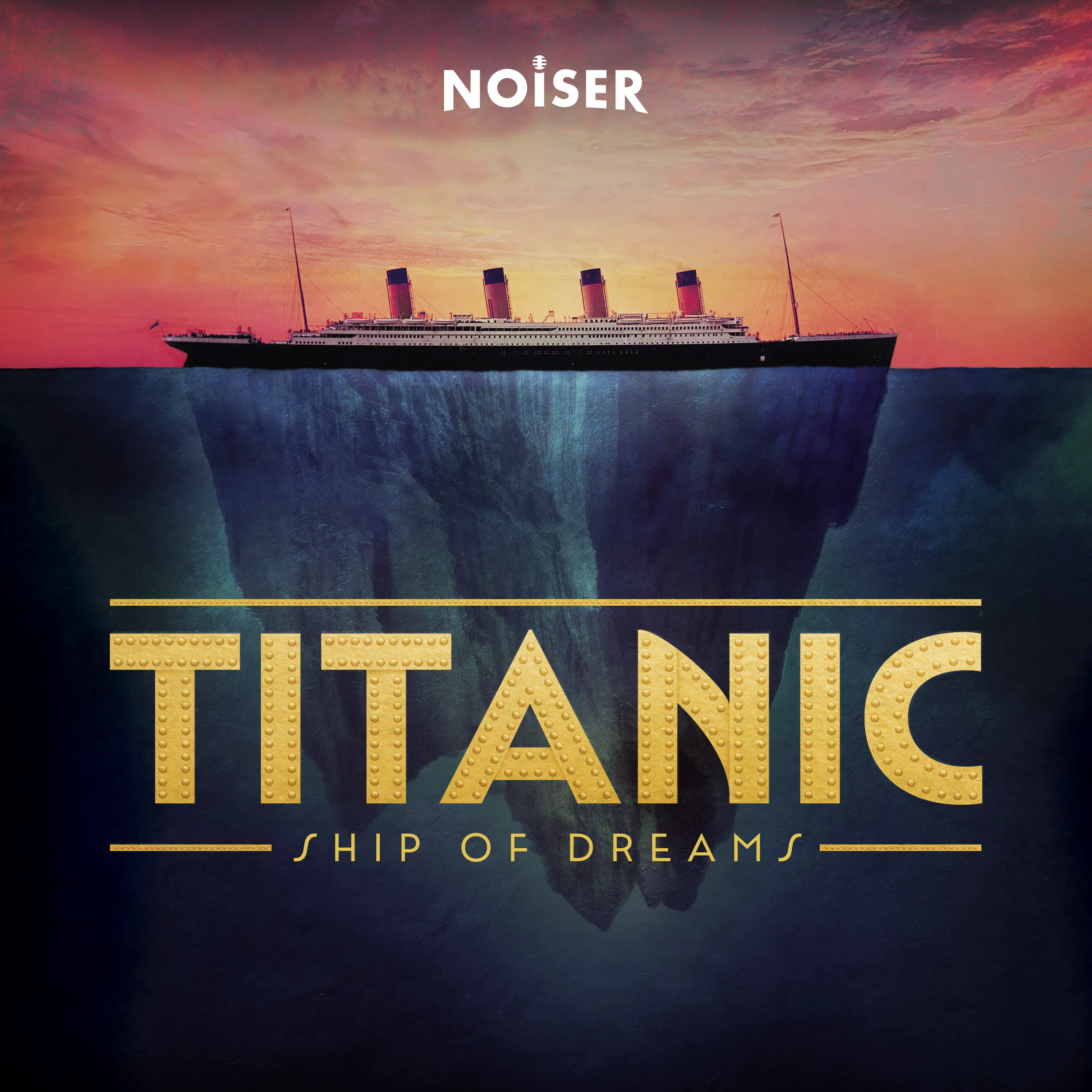
Hi listeners. Today we wanted to give you a preview of a brand new show from the Noiser Podcast network, hosted by me, Paul McGann. This is Titanic Ship of Dreams. Join us as we explore life and death on the most famous ship in history. From the opulent dining rooms, Turkish baths and squash courts of first class, to the raucous parties and Irish hoolies down in steerage, we'll be right there on board, setting sail from Southampton, chugging across the Atlantic, striking the iceberg and descending into the icy depths. We'll hear the harrowing tales of the victims and the testimonies of the lucky survivors. If you enjoy this Taster episode, search Ship of Dreams in your podcast app and hit follow. You'll find part two waiting for you now. It's May 31st, 1911. We're in Belfast, the heart of Britain's shipbuilding industry. To be specific, the north yard of Harland and Wolf's vast 80 acre construction site. And for the tens of thousands of men who work here, it's a red letter day. Up in the grandstand, specially built for the occasion, a 74 year old man takes his seat. He's an imposing figure, six foot two, with broad shoulders, piercing eyes and a fearsome walrus mustache. Not to mention a bulbous purple nose. The kind generally attributed to excessive drinking. Not that anyone seated around this gentleman would dare suggest anything of the kind, because he also happens to be one of the richest men in the world. John Pierpont Morgan, otherwise known as jp. He's come to Belfast especially to get a good look at his latest investment. It's the biggest sea going vessel ever built. In fact, the biggest movable object in history. And today, it's about to move. For the first time, 100,000 spectators are lining the banks of the River Laagen. All eyes are on slipway number three, where the magnificent new ship stands bolt upright, perfectly still. A giant black hole glimmering in the midday sun. To the Harland and Wolff shipwrights, she's known as SS401. To everyone else, Titanic. Even without her four majestic funnels. Those will be winched into place later. The new liner is an overwhelming sight. She towers 100ft from top to bottom and almost 900ft long. Her rudder alone is the size of a cricket pitch. Those who weren't lucky enough to score an official invite have climbed onto the nearby rooftops to get a good view. Others have scaled the masts of the smaller ships bobbing in the Laagen minnows to this hulking leviathan all of them waiting with bated breath to see the giant ship. At 12:05pm a red flag is flown at Titanic's stern. The 10 minute countdown begins. In Titanic's shadow, a small army of men are hard at work. Ant like they scurry back and forth getting everything ready. The slipway has been coated with 21 tons of grease. Now burly shipwrights are getting ready to knock out the giant timber stays that hold the vessel in place. A rocket fires signaling five minutes to go. Then another 60 seconds left. Now this is a precision operation, the Edwardian equivalent of a NASA launch at Cape Pinavaro. Finally, the moment of truth. There's no champagne bottle smashing. Titanic's operators, White Star, don't believe in such archaic superstitions. Only the sound of hydraulic triggers firing. Everyone holds their breath for a moment. It looks like she won't move after all. Freed from her wooden moorings, the giant ship stands stock still, a towering immobile monument. Then, almost imperceptibly, she begins sliding towards the water, gradually picking up speed. 5, 10, 15 miles per hour. Finally, after the longest 62 seconds in history, Titanic floats freely for the first time. But while all eyes are on the ship in the Laagen, there is a crisis playing out.500 meters away at the top of the slipway, under the giant gantry that until a minute ago housed the Titanic, 43 year old shipwright James Dobbin lies seriously injured. He's been crushed under a heavy wooden support. His pelvis is shattered. While James wife Rachel watches the launch with their son Jimmy. Enchanted by the sight of the great ship floating for the first time, his colleagues are hauling him out from under a heavy weight of timber. James is bundled into a Holland and Wolf car and taken straight to the nearest infirmary. While JP Morgan and his fellow VIPs enjoy a slap up lunch before embarking on a pleasure cruise to Liverpool, the doctors at the Royal Victoria Hospital are doing all they can to save James Dobbin's life. Ultimately, their efforts will prove futile. Even before touching water, Titanic has claimed her first victim. From the Noiser Podcast network, this is Titanic. Ship of Dreams Part 1.
- [07:04]
Tim Maltin
Titanic is this metaphor for the whole of mankind. I think the reason ultimately why we're talking about Titanic today is because it speaks to the human condition.
- [07:15]
Klaus Joran Wetterholm
There is only one more story that is more popular in the history of mankind and that is the story of how Jesus was crucified.
- [07:25]
Susie Miller
It became known as the Ship of Dreams, the largest and heaviest moving man made machine built to date. And this Complex and ancient relationship between.
- [07:37]
Paul McGann
Man and technology has always been captivating.
- [07:41]
Susie Miller
Here you have the biggest ship in the world, carrying the richest people in the world and also the poorest. And this supposedly unsinkable ship sinks on her maiden voyage.
- [07:53]
Stephanie Barchevsky
It's such an unbelievable story. There's so much material there to impose so many symbolic meanings on it.
- [08:03]
Julian Fellowes
As always, the truth is a little bit more intricate.
- [08:12]
Paul McGann
The story of R.M.S. titanic is defined by how it ended at 11.40pm on 14th April 1912. An impact that would reverberate for more than a century. A hundred years later, state of the art submarines pay visits to Titanic's final resting place. Almost 4,000 meters below the surface of the Atlantic Ocean. This mass grave has become a magnet for ultra wealthy tourists, those who can afford the quarter of a million dollar ticket price, desperate to see where the ship of dreams ended its first and only voyage. Peering through the murky depths, they can just about make out the rusty barnacle clad remains of the once grand and glittering vessel. The end of RMS Titanic is a story every school child knows. But where exactly Titanic began, that's a little harder to pin down. In this series, we'll take you right through the Titanic story. From first designs through the years of construction, to the fateful voyage that sealed the ship's fate and beyond. We'll consider some of the questions that still haunt Titanic scholars more than a hundred years later. Did White Star bus Bruce Ismay really order the captain to increase speed? Why were so many iceberg warnings ignored in the lead up to the collision? And with almost 1200 places available in the lifeboats, why were only 700 people saved? We'll look at Titanic's storied legacy in the years following the disaster. From the 1958 blockbuster A Night to Remember and James Cameron's $200 million epic four decades later, to the Oceangate disaster of 2023. But we begin our story in 1907, five years before the fateful collision that ensured the ship's place in history. In fact, before the iceberg that sank the Titanic had even begun forming in Greenland. It's a balmy summer's evening in London. We're at Downshire House, a white colonnaded building in Belgrave Square. In Monopoly terms, this is very much purple territory. Smartly dressed waiters carry drinks on silver trays, passing them round to wealthy men and women in their best Edwardian formal wear. The scent of fine cuisine wafts up from the kitchens. Downshire House is the opulent London pad of Lord Pirrie, the 60 year old white bearded chairman of Harland and Wolf. And this evening he's hosting a dinner party. Among Peary's guests is White Star chairman J. Bruce Ismay. At 44, Ismay has been running the company for the best part of a decade. Ever since the death of his father Thomas five years earlier, he oversaw the sale of white star to J.P. morgan's International Mercantile Marine for an eye watering $32 million. He now holds the top job in both companies. But despite his business acumen, Bruce Ismay is an awkward, unclubbable man. He's never quite emerged from his father's shadow. Domineering, bombastic, even brutish at times, Thomas Ismay was what you might picture as a titan of industry. Bruce very much the eldest boy who just happened to succeed him. Nonetheless, he has big plans for White Star. And they hinge on the company's long standing relationship with Lord Pirrie's Harland and Wolfe. Thanks to a deal struck 40 years earlier, the two firms have an exclusive relationship. White Star entrust all their big construction projects to the Belfast firm and in return, Harland and Wolff promise not to build ships for their competitors. It's an arrangement that has seen White Star's fortunes rise to become a major player in the transatlantic passenger trade. After dinner, Ismay and Piri sit up smoking together. And it's here, at least according to Titanic mythology, that they first come up with the idea for a new kind of liner. Not quite scribbled down the back of a napkin, but not far off it either. This new vessel will need to be bigger, better, more luxurious than anything passengers have seen before. The dream of Titanic is born. Well, sort of. In fact, according to most modern experts, plans for a trio of plus size liners must have been underway well before Pirie's party in London. The huge new gantries required to build them were already under construction. What exactly Piri and Ismay discussed that evening, like so many of the key moments in the Titanic story, is shrouded in mystery and myth. What we do know is that sometime around 1907, both white star and Harland and Wolf begin laying the groundwork for Titanic along with her two sister ships, Olympic and Gigantic. And both Ismay and Piri are heavily invested in ensuring that they get the new ships right. White Star's market standing depends on it. Professor Stephanie Barchevsky is the author of A Knight Remembered.
- [14:08]
Stephanie Barchevsky
So the Titanic is very much the product of a maritime arms race. The big ocean liner companies of the time. So in Britain it would have been Cunard and White Star are competing on this kind of sliding scale. Cunard has sort of won the race to build the fastest ships, right? They have launched a few years before the Lusitania and the Mauritania 2, also of the most famous ocean liners of this kind of golden age of ocean liners. White Star decides not to compete on speed. They decide that you're not going to beat the Lusitania and the Mauritania for speed. They're going to go for luxury.
- [14:44]
Paul McGann
Klaus Joran Wetterholm is the author of five books in Swedish about the Titanic disaster and the curator of the exhibition.
- [14:54]
Klaus Joran Wetterholm
They had been testing a lot and realized that the cost for driving a ship so fast to beat Lithania and Mauritania was impossible because the cost was far too high. So it was decided that they should not build high speed vessels. It was safety, luxury and comfort which was the important main issues when building these ships.
- [15:20]
Paul McGann
Titanic and her two sisters will be part of a major play by White Star for domination of the lucrative transatlantic passenger route.
- [15:30]
Stephanie Barchevsky
They are largely competing for two groups of passengers, so they're competing for upper class wealthy passengers. They're also competing though for this is the age of immigration. So they are also carrying large numbers of steerage passengers across the Atlantic on one way voyages to permanent new lives in the United States. This means that they need to be big because they need to hold a lot of steerage passengers and because they need to provide luxurious accommodation for the upper class passengers. And it means that they need to be fast because the first class passengers want to get where they're going. They want to know that they're going to leave Southampton at whatever 5pm on a Friday and they're going to get to New York at 5, 5pm on a Wednesday or whatever the timing of the particular voyages. It used to be that you'd take off across the Atlantic and you know, it might take two weeks and it might take six weeks. Who knows? Right now this idea that these ships can power themselves across the Atlantic on a very regular schedule is important.
- [16:28]
Paul McGann
With three brand new ships plying their way back and forth across the Atlantic, the hope is that White Star can outdo Cunard's slightly faster two ship offering. And even if one of the three is put out of action, the weekly service won't be interrupted.
- [16:44]
Stephanie Barchevsky
You know, Whitestar has always been a little bit to Cunard, the sort of second shipping line in Britain, right. It starts out not being particularly prestigious at all, right. And then the Titanic, you know, sort of represents the pinnacle of, oh, White Star's finally sort of caught up to Cunard. They've built these fantastically luxurious ships and are finally going to be like just the equal to Cunard in terms of the rivalry. And then it's not like they go out of business after Titanic, but they don't. They're not really going to fully recover from the most famous maritime disaster in history.
- [17:14]
Paul McGann
Not that anyone before 1912 is particularly worried about maritime disasters. By the early 20th century, travel by sea is safe, as safe as it's ever been.
- [17:26]
Stephanie Barchevsky
I think everybody, you know, had great faith in the ability of these ships. So just had not been a major kind of maritime passenger disaster in a very, very long time. The size of these vessels had been expanding dramatically, right? So we're talking about them going from, you know, Wilbert Orville Wright's first biplane to a modern Boeing transatlantic jetliner, right. The difference in scale over say 20 years had just become enormous. We are constantly told that sort of flying on an airplane is the safest way to travel.
- [17:56]
Veronica Hinkey
Right?
- [17:56]
Stephanie Barchevsky
You're in more danger driving to the airport than you are, you know, being on that actual plane. And I think very much the same thing was going on with luxury liners.
- [18:05]
Paul McGann
In fact, by March 1909, when Titanic's keel is laid at the Harland and Wolff shipyard in Belfast, you're more likely to die building one of these ships than sailing on them. The tragic end of James Dobbin crushed under a wooden stay during Titanic's celebrated launch is just the latest fatal accident involving the new Olympic class vessels. Harland and Wolff record 246 injuries during the construction of Titanic alone, 28 of them classed as severe. Several workers have died after falling from the scaffolding surrounding the ship, the youngest just 15 years old. Nonetheless, for the working men of Belfast, Harland and Wolff are considered a top employer. Susie Miller is a Belfast tour guide whose great grandfather worked for the company.
- [19:03]
Susie Miller
It's hard to believe now just how important Belfast was at the turn of the last century. It really was a huge industrial hub. My great grandfather was a guy called Thomas Miller and he grew up just outside of Belfast, a little town with the lovely name of Bonnie before. It's more of a collection of houses really than anything else. And that's about 15 miles north of Belfast on the shores of Belfast Loch. So, you know, his childhood, he would have been watching big ships come and go up and down the loch in front of his house. So, you know, maybe that was part of the reason why he wanted to get involved in ship building. Harland and Wolf employed at its height, over 40,000 people. And it was like an army of men going into work for 6:30 in the morning. You didn't need an alarm clock in this city because the tramp of boots on the cobbles would have woken you up as those men streamed into Queens island to start their long day down in the shipyard. And, you know, it was fairly well paid, especially once you got yourself established. So for my great grandfather, for example, he was able to provide his children and his wife with a good standard of living. So, yeah, a very important place back in the day. And Harland and Wolf, which is still on the go today, the biggest shipyard in the world.
- [20:22]
Paul McGann
As one of Harlan and Wolff's most experienced engine builders, Tommy Miller is asked to work on the company's latest prestige project, Titanic.
- [20:33]
Susie Miller
My great grandfather used to come home after his long shift in Harland and Wolf and to talk to his two sons about what he was working on. He obviously had a great deal of pride in that and he instilled that in his two sons, you know, telling them that this was something special that was going on a couple of miles away and that they should be very proud of their father for being part of the team that was building these massive ships.
- [20:57]
Paul McGann
And Tommy's not the only one who feels a surge of pride at the thought of the new Olympic class vessels. His boss at the shipyard, another Thomas, is the man responsible for designing Titanic and her sisters, giving form to the dream conjured up by Lord Pirrie and Bruce Ismay.
- [21:17]
Susie Miller
Overseeing all of this was Thomas Andrews, who's very famous in the Titanic story. He's always portrayed as the hero in the movies about Titanic and he was the head of the design department and very much a hands on manager. So, you know, he spent long days and nights down at the shipyard overseeing what was going on. There's a story about him taking his wife down there one time and saying, there go my boys, Nellie, and showing her again with this wonderful sense of pride how Titanic was coming along. So, you know, he's an integral part of the ship from start to finish and that's why he was so important when things started to go wrong.
- [22:01]
Paul McGann
Hi listeners, I hope you're enjoying this episode of Titanic Ship of Dreams. Search Titanic Ship of Dreams in your podcast app to find and follow the show. You can listen to episode two straight after this one. Despite all the fanfare surrounding Titanic's launch, the ship that slides into The Laagen on May 31, 1911, is far from complete. It'll be almost another year before the ship of dreams is ready for her passengers. In the meantime, it's her elder sister, Olympic, that will carry White Star's fortunes across the Atlantic. Just two weeks after Titanic is launched in Belfast, Olympic sets off on her maiden voyage to New York. Meanwhile, Titanic is towed to a special fitting out berth to begin her transformation into a floating luxury hotel.
- [22:59]
Susie Miller
It gets launched and it's just empty at that point. So it goes down to what's called the fitting out wharf, where all the special stuff happens. You know, all the craftsmen get on board and it turns into a luxury liner. And that's where the engines and the boilers are put in and the funnels put on top. And then the final stage is just a brief spell in a dry dock just to finish off the hull of the ship, to paint it, final bits of electrics and plumbing and that sort of thing.
- [23:25]
Paul McGann
Once completed, Titanic is pretty much Olympic 2.0. Taking everything that works from her sister ship and then improving it with small adjustments. She's very much the pro version of the new model, or as she's known at the time, Olympic perfected. Strictly speaking, she's also a record breaker, the biggest ship ever manufactured, but only because minor changes to her layout and interiors add extra weight compared to Olympic to the tune of about half a percent. Tim Maltin is the author of 101 Things. You thought you knew about the Titanic but didn't.
- [24:11]
Tim Maltin
Titanic is more or less a carbon copy of Olympic. The only difference visually really is that on the Olympics maiden voyage, some of the first class passengers complained about spray from the bow waves washing over the promenade deck. And so they therefore decided to enclose the promenade deck, which gives Titanic that slightly more modern look. Internally, her area was the same. The reason why they could say she had a higher tonnage than her identical twin sister ship is because they rearranged the accommodation on the ship and tonnage was actually calculated by accommodation. So she was said to be the biggest ship in the world, but actually she was the same as Olympic. And almost all photographs of Titanic being built and you know, her staterooms coming together, almost all of them are actually the Olympic, because Harland and Wolf completely documented the building of Olympic all the way. They then didn't need to document the building of Titanic very much at all.
- [25:10]
Paul McGann
In the years following the Titanic disaster, the similarity between the two ships will lead to some interesting theories. Even today, some people believe that it's Olympic and not Titanic that ended up at the bottom of the ocean.
- [25:26]
Klaus Joran Wetterholm
I love conspiracy theories. I think they are great. They say more about us than about the Titanic. There were two British journalists who wrote a book about it, Riddle of the Titanic and the second one was called the Ship that Never sank because those books sold so wen, although they have to be looked upon as fairy tales, they sold so well as many people ran them and some people even believe in this. One of those stories is that because of accidents that happened with the Olympic, she was so damaged that they couldn't repair her and therefore it was decided they would be swapped to Olympic and Titanic and that the Olympic, now called the Titanic was to be sunk in the mid Atlantic. It's a very far fetching theory, Very interesting.
- [26:15]
Paul McGann
Far fetched. It may be, but for those who were familiar with both ships, the similarity between them must have been uncanny. More than two decades after the Titanic disaster, Olympic was still ferrying passengers across the Atlantic.
- [26:31]
Stephanie Barchevsky
It must have been always very weird, right, if you happen to be a survivor of the Titanic and to see the Olympic, right, because again it looked almost identical to the Titanic.
- [26:42]
Paul McGann
All of Titanic's most iconic design features are shared with her sister ship, including the magnificent grand staircase immortalized in James Cameron's 1997 movie. The elegant seven story staircase runs right through the first class section of the ship, providing access for White Star's richest passengers to their luxurious dining and smoking rooms. In fact, Titanic actually has two almost identical grand staircases, one near the bow of the ship and another towards the stern. It's the former, which stretches all the way down to the dining saloon on D deck that gets most of the attention. Because this staircase is more than just a means to an end, it's a destination in itself. Veronica Hinkey is the author of the Last Night on the Titanic. Unsinkable Drinking, Dining and Style.
- [27:44]
Veronica Hinkey
This staircase adds to the theater of what the Titanic truly was. It was a place for people to go and to meet their friends or make new friends. As you were dressing up in your cabin, you'd be thinking about how am I going to look on the grand staircase tonight? And it was just a really special gathering place. And we see that in the details throughout the staircase. The cherub statues, the scrolling stair rail and the beautiful ornate design of it. And then very subtle but yet thoughtful floor design where you see a square pattern repeated throughout. And again, discreet windows that aren't just like a porthole, a round porthole that you'd expect to see on a ship, but they are arched windows that let the light in. Those were the things that made the Titanic special.
- [28:43]
Paul McGann
And then there are the dining facilities themselves. Not just the three giant saloons were first, second and third class, each with their own all inclusive set menu. But for the richer passengers, two stylish cafes. The airy Palm Court and Veranda Cafe on the promenade deck at the top of the ship. And one floor below on B deck, the French inspired Cafe Parisian with its wicker furniture and white trellises covered in ivy. But the ship's boldest culinary innovation, nestled behind the aft grand staircase on B deck is the intimate a la carte restaurant for Titanic's well heeled elite. Paying extra to order off the menu is seen as a mark of luxury.
- [29:33]
Veronica Hinkey
The Titanic was a ship of firsts in many ways and one of them was the a la carte restaurant. It was a much smaller area, but it still had a lot of the same types of features as the first class dining saloon. A little more floral, this was a more feminine room. Pink throughout, lamps with little shades around them, mirrors on the walls to give the same type of Versailles type of impression, to make that French influence throughout.
- [30:07]
Paul McGann
All in all, the vibe for the first class passengers at least is that of a five star hotel. One that just happens to be floating on the ocean somewhere between the Ritz in London and the Waldorf Astoria in New York.
- [30:23]
Klaus Joran Wetterholm
You could actually sail on the Titanic and not until you reached harbor you'd realize you'd been on a ship. Because the interiors were so great, they had spent an enormous amount of money to make it look like a palace.
- [30:41]
Paul McGann
In the years following the disaster, questions will be raised about whether Harland and Wolff may have scrimped on some aspects of Titanic's build. In fact, thanks to the company's long standing relationship with White Star, if anything they're encouraged to overspend.
- [30:59]
Tim Maltin
What they did was Harland and Wolff were paid on a cost plus basis, which meant that instead of White Star giving them a budget, really what they did was they just said, look, show us your books, open books and show us what you spent and then you know your profit will be 5% more than what you spent. So actually, in a way, hardens and walk was incentivized that the more money they spent on the shit, the more money they would make. There was no incentive to cut corners.
- [31:28]
Paul McGann
Every element of Titanic's interior has been debated in minute detail. Every high end supplier carefully vetted to ensure their products reach the highest possible standards. The candelabras that adorn the grand staircase come from Perry and Co, Bond Street, Chinaware from Royal Crown Denby, as one senior Harland and Wolf designer would put it later. We spent two hours discussing carpet for the first class cabins and 15 minutes discussing lifeboats. After almost a year in the fitting out berth, at last Titanic is ready to set sail, joining her elder sister Olympic on the transatlantic passenger route. But first she must pass a series of sea trials to check that everything is working as it should be. In charge of the operation is one of White Star's most senior officers, Captain Herbert Haddock. No relation to Tintin's hot tempered friend, this Captain Haddock is a 51 year old former navy officer who's been commanding White Star ships for almost two decades. In other words, a safe pair of hands. Starting at 6am on 2 April 1912, Haddock puts the new ship through her paces. First in Belfast Loch, then out in the Irish Sea. Over the next 12 hours, with the help of a 119 man skeleton crew, haddock drives the ship at various speeds, practices turning to port and starboard and even has a go at an emergency stop, which in the case of a ship this big, takes over three minutes to accomplish. At the end of a long day, the Captain is satisfied that White Star's latest vessel is fit for purpose. But he won't be commanding Titanic's maiden voyage. That honor goes to an even more senior White Star employee, Commodore of the Fleet, Captain Edward Smith. Smith is the archetypal British sea captain. Trim white beard, crisp blue uniform and a pair of gleaming military medals. Less Captain Haddock, more Captain Birdseye. As far as White Star are concerned, Smith is the cream of the crop. His easy way with the company's wealthiest passengers has seen him. Nicknamed the millionaire's captain. At 62 years old, he has a glittering career behind him. In fact, this voyage will be his last before retirement. On Thursday April 4, Haddock is formally relieved by Captain Smith. While the White Star Commodore settles into his new position on Titanic, Haddock heads over to Smith's previous command, RMS Olympic. With Titanic about to begin her maiden voyage, Olympic has just dropped down a peg to number two. Captain Smith wastes no time in reshuffling the chain of command. He brings trusted officers over from Olympic and demotes or fires others already assigned to Titanic. But something is lost in the shuffle. A pair of binoculars earmarked for the lookouts in the crow's nest. The only man who knows where they are, former second officer David Blair is no longer on board. Julian Fellows is the award winning creator of Downton Abbey, the Gilded age and the 2012 miniseries Titanic.
- [35:25]
Julian Fellowes
He'd been responsible for bringing everything aboard, checking it off, storing it, and so on. One of the funny things about the Titanic, given its size, was that the storage was in rather short supply. You often come across theaters that have been built with too few dressing rooms. The Titanic was quite similar. It was built with too little storage, and so things were sort of shut here and put in there and in this drawer and that cupboard. And David Blair knew where everything was and they sent him off.
- [36:02]
Paul McGann
How much of an impact the missing binoculars will have on Titanic's fate is debatable even today. Would seeing the iceberg a few seconds earlier have given the crew time to avoid it? Jerome Chertkoff is professor emeritus of psychological and brain sciences at the University of Indiana. His books include Don't Panic, the Psychology of Emergency Egress and Ingress.
- [36:30]
Stephanie Barchevsky
When they left Belfast for Southampton, the second officer left and nobody got the binoculars from him. Nobody came up with another set of binoculars for the lookouts. The lookouts didn't have binoculars. The lookouts testified at the Senate hearing and the Board of Trade that in their opinion, if they had had binoculars, they'd have seen the iceberg sooner and that they would have been able to avoid it.
- [37:01]
Julian Fellowes
I mean, I don't really subscribe to the theory that the Titanic sank because nobody had any binoculars, but I do think the fact of getting rid of the officer who knew where everything was was a mistake.
- [37:21]
Paul McGann
Built in Belfast and registered in Liverpool, Titanic will in fact set sail from Southampton, although the journey to New York would be a hundred miles shorter from White Star's headquarters on Merseyside. These days, all transatlantic passenger trips depart from the southern English port.
- [37:40]
Stephanie Barchevsky
Passenger shipping had shifted from sailing out of Liverpool to sailing out of Southampton quite recently because Southampton has the advantage. Because of the Isle of Wight, there's a double tide in Southampton, so ships can get out of Southampton twice a day rather than just once a day out of Liverpool.
- [37:55]
Paul McGann
As a result, it's from Southampton that the majority of the ship's crew are recruited. 431 men and women in the catering department alone, 290 stewards and stewardesses and. And 280 of the city's strongest, toughest men to work in the engine rooms. But not all the new recruits are born and bred Southerners. One recent addition to the roster is Tommy Miller, the Belfast man who helped build and install the ship's engines for Harland and Wolff. After a personal tragedy, Tommy is looking for a fresh start and he's pretty sure he's found in America.
- [38:37]
Susie Miller
My great grandmother Jeannie died in January of 1912 and she'd had TB, so she died pretty suddenly. And it seems that everything happened pretty quickly because within three months there was Tommy signed up as the assistant DECA engineer on Titanic. Really his motivation was to give a change of scene to the family. He wanted a fresh start and here was the opportunity. He was qualified to do the job. And he probably saw himself working for White Star for many years to come. But just based on the other side of the Atlantic.
- [39:12]
Paul McGann
As a deck engineer, Tommy will be responsible for much of Titanic's onboard machinery. Winches, cranes, even the davits used to lower lifeboats in case of emergency. But for now at least, he'll be traveling solo.
- [39:27]
Susie Miller
There was no way that he could have brought his two sons with him on that voyage because he would have been working the whole time. He was going to go first, get himself organized and settled, and then come back and get his two sons. So it's just as well that they weren't on board with him because otherwise I probably wouldn't be here today. Just before he boarded Titanic, he took them both to one side and then he gave them each two 1912 pennies. And he said, don't spend those until we're all together again. My grandfather remembers being given those pennies and standing on the shores of Belfast Loch later that evening and watching as Titanic disappeared. And he said he was clutching his pennies in his hand so tightly that the date of 1912 was nearly burnt into his palm. So, you know, these became a symbol of the connection between father and son. And of course, you know, with Tommy not making it off of Titanic, he'd been told to keep the pennies until they were all together again. That wasn't going to happen. And so he was true to his word. He never let them go. And they've been passed down through the generations.
- [40:47]
Paul McGann
Like many of his fellow crew members, when Titanic hits the iceberg, Tommy will still have work to do.
- [40:54]
Susie Miller
I'm sure that Tommy was still doing his duty, trying to help others, so he would have had no chance of getting into a lifeboat. And you know, he probably couldn't swim. So it was just either the cold or going under the water that got him.
- [41:08]
Paul McGann
As a deck engineer, Tommy will be working hard throughout the four day voyage maintaining the equipment on board ship, but at least his hands will stay relatively clean. The same can't be said for the 250 odd men who will power the massive engines. Tommy helped build their work. So grimy and Filthy that they're kept well out of view. Among them is a 29 year old Liverpool lad recently returned from a voyage to South Africa. His name, James McGann, my great uncle. In my family he's known as Titanic McGann. But Uncle Jimmy was already an experienced sailor when he signed up for the new ship's maiden voyage. Born in the slums of Liverpool's north end to a family who'd fled the Irish potato famine two decades earlier, Jimmy had gone to sea in his twenties, traveling to ports as far afield as Cape Town and Sydney. I never met Uncle Jimmy, he died almost half a century before I was born. But my brother Stephen, you might know him as Dr. Turner from call the Midwife, has managed to piece together his story.
- [42:25]
James McGann
Jimmy was born with his brother Joe in a place called Porter Street. Clay street actually around the corner from Porter street and it's literally down at the end of the street you reach at that time one of the richest stretches of dockland in the world. The second docks of the Empire. A place which housed vast amounts of cotton going out, huge amounts of wealth coming back in. Yet they lived in levels of poverty you have never seen in your life. And the descriptions and the are practically are toe curling. They were in one of the most appalling, described as the worst street in the Empire. Amongst their uncles and aunts, at least half of them died of disease. People who lived that kind of a life, it molds you. The engine rooms of the British Empire took quite an astonishing percentage were not simply British working class men, but they were Liverpool Irish. So it's like one tiny ghetto became the veins of the Empire. These same people were so hard, so roughened to dock life and gradually to merchant sea life. These were your perfect people to go down into the bowels of the ship to trim coal, to stow coal, to be the firemen, to actually stoke the engines, the trimmers to worthing an appalling weather in filthy darkness. These guys would do it without complaint and do it well. They were rowdy, they were hard to discipline, but they were the only people to do the job. They were all part of what they call the Black gang.
- [44:06]
Paul McGann
For all the finery up above in first class, the liners of the Edwardian age rely on back breaking manual labor. Down below in the bowels of the ship, far away from the eyes of paying customers, it was such exhausting work.
- [44:22]
James McGann
At the end of their four hour shift, these bulldog fit men had nothing left. They had to be dragged and laid onto the deck. They were like this sort of rot violers that you could put down in this cage and they would do the job. And this was the fraternity of my great uncle.
- [44:43]
Paul McGann
By rights, Uncle Jimmy should have nothing to do with Titanic. When White Star's newest vessel is originally scheduled to depart from Southampton, he is thousands of miles away working as a fireman on the Kin Fawns Castle, sailing home from the Cape of Good Hope. But a three week delay in the new ship's maiden voyage means Jimmy is in the right place at just the wrong time.
- [45:10]
James McGann
What happens to Jimmy is he comes up and about two weeks before the Titanic sails. I trace him coming back into Southampton. He's got filthy lodging somewhere in Southampton. They get drunk to have fights, they turn around, they get back their pawn suits or whatever, off they go again trying to get another ship. There was a problem. There was a huge coal strike, so nobody could get coal, but apparently there was this brand new ship which had managed to wangle the coal. So amongst all the black gangers, they must have been saying, yeah, but have you heard about this new one? Because apparently they're saying there's loads of jobs there for us, like 250 odd firemen and trimmers. This is a big old ship and so if you can get on that one that's got its coal, we'll get paid, would go out, go to America, five days to New York. It got on the ship as a trimmer, not as a fireman. And that ship was the Titanic.
- [46:12]
Paul McGann
It's not just the Black Gangas whose lives are affected by the coal strike. Ordinary passengers too find their travel plans changing.
- [46:20]
Klaus Joran Wetterholm
Unexpectedly, there was a strike in the British coal mines. Because of these, coal was transferred from other ships to the Titanic. This maiden voyage they didn't want to store. Because of this, these ships were laid up and quite a few people were transferred from these ships to the Titanic.
- [46:49]
Paul McGann
Among those unexpectedly bumped onto the new vessel is Eva Hart, one of the youngest survivors of the disaster. Eva is just seven years old when she boards the ship with her parents. And while her father Benjamin is thrilled about the change in their travel plans, her mother, Esther has a bad feeling about the voyage.
- [47:12]
Eva Hart
My mother had this dreadful premonition. She'd never had one before and she never had one after. But she said, no, we can't do this, it's quite wrong. Something dreadful will happen. For her to behave like that was absolutely unbelievable to everyone.
- [47:29]
Paul McGann
Eva's father has little time for his wife's superstitions. As far as he's concerned, his family have just scored the ultimate upgrade. Even in second class, Titanic offers unparalleled comfort. More like first class and most other liners. On April 10, 1912, the Hart family catch a train to Southampton, ready to board the biggest ship in the world. On arrival, they're awestruck at the scale of her to little Eva. She looks less like a boat, more like a floating apartment building. But even as the family make their way up the gangplank, Eva's mother is still begging her husband to turn around.
- [48:19]
Eva Hart
The first time in my life I saw her crying. That's something I'd never seen before. And for the first time also in my life, I heard my father raising his voice to her sometimes, which I'd never heard before. And she was so desperately unhappy about the prospect of going.
- [48:35]
Paul McGann
Mrs. Hart can't fully explain it, but she's being gripped by an unshakable conviction. She tells her husband emphatically that ship will never reach the other side. But Benjamin Hart is unmoved. The tickets are paid for. There's no turning back now.
- [48:54]
Eva Hart
We went down to the cabin and that's when my mother said to my father that she had made up her mind quite firmly that she would not go to bed in that ship. She would sit up at night and I remember my father saying to her, well, if you want to be so stupid, I can't stop you, but I don't know what you think people will say. And she said, I don't mind what they say. That's what I'm going to do. And there was no further argument about it. She decided that she wouldn't go to bed at night and she didn't.
- [49:27]
Paul McGann
Everyone knows that Titanic and her sisters are the safest ships that have ever been built. The press have made a big deal about the Olympic class's state of the art safety features. So much so that Titanic has been called practically unsinkable. But to Mrs. Hart, that's just the point. It's overconfidence bordering on blasphemy. This is the ship they say is unsinkable, she tells her husband, and that is flying in the face of the Almighty.
- [49:58]
Klaus Joran Wetterholm
The engineer of the day 1912 was the high priest in the society when churches had begun to lost their grips on human souls. Instead it was the engineer who stepped in and proved that everything was possible. This was the belief back in 1900, 1912, yes, we can conquer anything. Everything is possible. Part of this story is the story of what the old Greeks used to say call as one of the death sins, which was hubris. You don't think that something so horrible can happen as this big ship to sink? It's too large, it's too big. Our technology has come too far, G.B. priestly has written. There are many places that should need big signs saying remember the Titanic.
- [50:53]
Paul McGann
In the next episode, Titanic is cleared for departure by the British Board of Trade, but no one tells the inspector that a fire is raging in one of the coal bunkers. White Star's state of the art safety features are put through their paces as the ship undergoes its first and only lifeboat drill. And on the way out to Southampton Harbour, there's a nail biting near miss. One that almost scuppers the maiden voyage before it's begun. That's next time. Thanks for listening. We hope you enjoyed this first episode of Titanic Ship of Dreams. To hear more, just search Titanic's Ship of Dreams in your podcast app and hit follow or listen@noiza.com Episode 2 is waiting for you now, with new episodes every Tuesday.