
Podcast
Dakota Live! Podcast
Hosted by Robert Morier · EN
The Dakota Live! Podcast is designed for your fundraising needs. The goal of this podcast is to help you better know the people behind the investment decisions. Dakota connects investment salespeople with leading investment decision makers, ensuring you always know who to call and how to approach the markets you are targeting. Dakota Live! presents investment sales people industry and marketing expertise to make their jobs easier.
52episodes
Episodes
Newest firstAll episodes

Why Great Investors Fail to Raise Capital | Jason Howard Explains "Fundability"
2d ago01:08:37Tap to summarizeEvery allocator says they're looking for great investors.Jason Howard argues they're actually looking for something else.In this conversation, the founder of New Catalyst Strategic Partners introduces an idea that deserves far more attention in institutional investing: fundability.Some investors generate exceptional returns but never build enduring firms. Others create organizations that attract capital for decades. The difference isn't always the track record. It's the ability to build trust, communicate a vision, develop a culture, and convince institutional investors that what you're building will outlast you.Jason's perspective comes from years spent backing emerging private equity managers, but the lessons extend well beyond GP seeding. Drawing on experiences at GCM Grosvenor, Goldman Sachs, Disney, and now New Catalyst, he explains why the best investment firms resemble great film productions more than they resemble lone geniuses. Producers assemble talent. They create alignment. They help others become successful.We discuss:• Why investment skill and fundability are two different things• What LPs are really underwriting in first-time funds• GP seeding, GP acceleration and strategic capital• Why distribution remains one of the industry's greatest competitive advantages• Building firms that survive long after their founders• Culture, leadership, resilience and trust in private marketsIf you've ever wondered why one emerging manager raises billions while another with an equally impressive track record struggles to get a first close, this conversation offers a compelling answer.
Transcribe →
Private Markets, Fund of Funds & the Future of Wealth Management with Samir Kaji of Allocate
1w ago00:57:17Tap to summarizePrivate markets are moving deeper into wealth management. But access is only part of the equation.The harder questions are: Which managers should you invest with? How should you construct a private markets portfolio? And when does a fund of funds actually justify another layer of fees?On this episode of Dakota Live!, Robert Morier sits down with Samir Kaji, Co-Founder and CEO of Allocate, to discuss the rapidly changing intersection of private markets, wealth management, manager selection, and technology.Samir has spent more than 25 years in and around private markets. Before founding Allocate, he spent nearly 22 years in venture banking at Silicon Valley Bank and First Republic Bank, working with hundreds of venture capital and private equity firms. Today, Allocate serves roughly 400 wealth advisory firms and has approximately $5 billion of assets on its platform.Our conversation gets directly into an issue facing RIAs, wealth managers, family offices, and private markets allocators: as more capital moves into alternatives, access alone isn't enough.We discuss why Samir believes manager selection matters so much in private equity and venture capital; why track record can become a trap in due diligence; and how Allocate evaluates emerging managers, spinouts, established firms, and the people actually making the investment decisions.We also spend time on fund of funds.Samir makes a compelling case for where the structure can still work: when it saves an investor from making 20 separate allocation decisions, simplifies administration, and provides access to managers or companies an investor would have difficulty accessing independently. In highly dispersed asset classes, that access and manager selection can potentially justify the additional layer of fees.We also discuss:• Private markets and the growth of the wealth management channel• Fund of funds and private markets portfolio construction• Emerging managers versus established private equity and venture capital firms• Why track record is only the beginning of manager due diligence• GP staking and GP seeding• Co-investments and creative fund structures• Private markets liquidity and the growth of secondaries• AI and technology in private markets• Why storytelling matters when raising a fund• Why Samir looks for “high agency, low ego” when building a teamWhether you are an allocator evaluating private equity and venture capital managers, an RIA building a private markets program, an emerging manager raising a fund, or simply trying to understand where wealth management and alternatives are heading, there is a lot here.
Transcribe →
BNY's $175B CIO Chris Vella on AI, Manager Selection & the Future of Investing
2w ago01:00:23Tap to summarizeFew investment leaders have spent more than three decades selecting, evaluating, and overseeing the world's best investment managers. Even fewer have done it while leading one of the industry's largest multi-asset investment platforms.In this special episode of dakota live!, Robert Morier sits down with Chris Vella, Managing Director and Chief Investment Officer of BNY Advisors, who oversees an investment organization responsible for more than $175 billion in client assets across institutional investors, RIAs, wealth managers, family offices, and intermediaries worldwide.Chris rarely appears on podcasts, making this an uncommon opportunity to hear directly from one of the industry's most respected allocator voices.Chris shares how BNY approaches manager research, portfolio construction, asset allocation, and private markets—and why the future of investing will be shaped as much by artificial intelligence as by traditional investment skill.Topics include:How BNY evaluates nearly 900 investment strategies and builds its high-conviction manager listWhat separates exceptional asset managers from average ones Why consistency often matters more than brilliance The future of OCIO, manager research, and institutional due diligence AI's impact on investment research, operations, and portfolio management Active ETFs, model portfolios, and the evolution of wealth management Democratizing private markets while managing liquidity risk Building investment organizations that scale without sacrificing research qualityWhether you're an asset manager, allocator, investment consultant, family office, RIA, institutional investor, or finance student, this conversation offers a rare look inside the investment philosophy of one of the industry's leading CIOs.If you enjoy conversations with the people behind investment decisions, subscribe for weekly interviews with CIOs, manager research leaders, consultants, endowments, foundations, pensions, family offices, and the investors shaping global capital markets.
Transcribe →
How Elite RIAs Evaluate Private Markets | Dhruv Maniktala, CIO of True North Advisors
3w ago01:02:08Tap to summarizeThe lines between institutional investing and wealth management are disappearing.In this episode of Dakota Live, Robert Morier sits down with Dhruv Maniktala, CFA, Chief Investment Officer and Partner at True North Advisors and CIO of Western Alternative Strategies, to discuss how a nearly $6 billion wealth management platform evaluates private markets, constructs institutional-quality portfolios, and sources differentiated investment opportunities.For asset managers, consultants, RIAs, family offices, endowments, and institutional allocators, this conversation provides a rare behind-the-scenes look at how one investment committee evaluates managers across private equity, private credit, venture capital, hedge funds, infrastructure, and real assets.Among the topics discussed:How institutional due diligence differs from traditional RIA manager selectionEvaluating more than 1,500 managers annually to identify only a handful of investmentsBuilding an institutional private markets platform inside a wealth management firmPrivate equity, private credit, venture capital, infrastructure, real estate, and hedge fund allocationWhy liquidity management matters more than most investors realizeThe growing convergence between institutional allocators and sophisticated RIAsGP seeding, GP stakes, co-investments, and negotiated fee structuresHow AI is changing investment research—and where human judgment still creates alphaWhy emotional intelligence, humility, and process matter in manager selectionDhruv also shares thoughtful perspectives on private market access, investment committee decision-making, governance, behavioral finance, and why many private wealth solutions simply repackage institutional products without adapting them for taxable, high-net-worth investors.Whether you're an asset manager raising capital, an allocator evaluating managers, or an RIA building a modern alternatives platform, this episode offers valuable insights into how sophisticated investment organizations think about manager research and portfolio construction.
Transcribe →
From Spanish Teacher to $18B OCIO CEO | Tim Yates, Commonfund OCIO
Jul 801:13:58Tap to summarizeOn this episode of Dakota Live!, host Robert Morier sits down with Tim Yates, President & CEO of Commonfund OCIO, whose path to leading an $18 billion investment platform is anything but typical — he started out teaching Spanish and Italian at Fordham Prep in the Bronx.Tim shares how a rotational analyst role pulled him into private equity, what emerging markets investing in Latin America taught him about risk and currency, and how the 2003 market dislocation gave birth to Commonfund's OCIO business.He and Robert dig into how endowments and foundations actually think about return objectives, risk budgeting, and illiquidity, why Commonfund backs specialist managers over sprawling firms, and what the NACUBO-Commonfund Study of Endowments reveals about how nonprofits invest.They close on private credit, talent and culture, and managing portfolios in a "VUCA" world.Commonfund was founded in 1971 with a grant from the Ford Foundation as a mission-driven nonprofit built to serve nonprofits. Commonfund OCIO focuses exclusively on the nonprofit world and oversees more than $18 billion (as of 3/31/26) on behalf of foundations, endowments, and other mission-driven organizations.
Transcribe →
Operational Alpha in Private Markets: Manager Research, GP Staking & Succession Planning with Chris Brimsek
Jul 101:03:48Tap to summarizeOn this episode of Dakota Live!, Robert Morier sits down with Chris Brimsek, Founder and Managing Partner of CAB Advisory, for a deep discussion on one of the most important—and underexplored—topics in private markets: how great investment firms are built.Chris advises founders and senior leadership teams across private equity, venture capital, real estate, infrastructure, private credit, and GP solutions. His work focuses on the organizational, strategic, and human capital questions that often determine whether a firm can scale, attract talent, retain LP trust, and sustain long-term success.This conversation goes beyond traditional manager research and due diligence. Instead of focusing solely on performance, Robert and Chris unpack what allocators, CIOs, and GP staking firms should really be evaluating beneath the surface.Key themes include operational alpha, GP seeding and staking, succession planning, team development, and the future of fundraising in alternatives.Chris shares why the best firms are focused on making investors, not just making investments, and why this mindset increasingly separates enduring franchises from firms that struggle to scale.Topics include:• Why operational alpha matters more than ever in private markets• How LPs should evaluate manager quality beyond track record• What allocators miss in manager research and due diligence• The evolution of GP seeding and GP staking as an asset class• Key underwriting questions minority investors should ask GPs• Succession planning and leadership transitions inside investment firms• Why private equity is still underinvested in talent development• Lessons private markets can borrow from professional sports teams• Delegation, decision-making, and building next-generation leadership• The future of fundraising across institutional and wealth channels• Emerging trends in private markets, alternative investments, and GP growth strategiesChris also shares insights from his experience at The Carlyle Group, where he worked closely with senior leadership and helped oversee large-scale investment platforms, giving him a unique perspective on how top-performing firms evolve from successful partnerships into scalable businesses.For allocators, asset managers, placement professionals, and anyone involved in manager selection, this episode offers a rare look at the hidden drivers of long-term firm success.If you work in private equity, venture capital, hedge funds, institutional investing, or alternatives, this conversation is essential listening.
Transcribe →
Inside Modern Wealth Management: How Top RIAs Build Portfolios, Select Managers & Manage Risk
Jun 2400:56:06Tap to summarizeThe RIA landscape is changing fast.Today’s top wealth advisors are doing far more than traditional portfolio management. They’re acting as investment committees, tax strategists, coaches, and long-term partners helping families navigate increasingly complex financial decisions.In this episode of dakota, we sit down with Fulcrum Capital’s Kathryn Fisher, Chief Wealth Strategist, and Hans Krippaehne, Director of Investments, to explore how modern RIAs are evolving to meet that challenge.We discuss how Fulcrum integrates holistic wealth planning with institutional-quality investment management—bringing together portfolio construction, manager selection, due diligence, tax efficiency, liquidity planning, estate strategy, and long-term family stewardship.Topics include:• How the RIA model has evolved from traditional brokerage to fully independent fiduciary advice• Why manager research and due diligence matter more than ever in today’s investment environment• How RIAs evaluate active managers across mutual funds, ETFs, and private market strategies• The growing role of tax-efficient portfolio construction and asset location• Managing liquidity needs while increasing exposure to private markets• How advisors balance long-term discipline against near-term market narratives like AI, private credit, and thematic investing• Why transparency and investor education remain central to client trust• The future of active ETFs and what they mean for wealth advisorsHans shares how Fulcrum approaches underwriting external managers, building portfolios with fewer but higher-conviction allocations, and maintaining discipline in an increasingly crowded investment landscape.Kathryn explains how true wealth management extends beyond investments—covering tax planning, estate considerations, philanthropy, and multi-generational decision-making.And in one of the most memorable moments of the episode, the conversation becomes personal.Joining us as student co-host is Drexel University student Carter Garrison—who also happens to be Kathryn’s son.What begins as a deep conversation about portfolio construction and investment due diligence ends with something even more important: a discussion about family, financial habits, and the lessons parents hope to pass on to the next generation.Because at its core, wealth management isn’t just about growing capital.It’s about building trust, preserving optionality, and creating a legacy that lasts beyond markets.
Transcribe →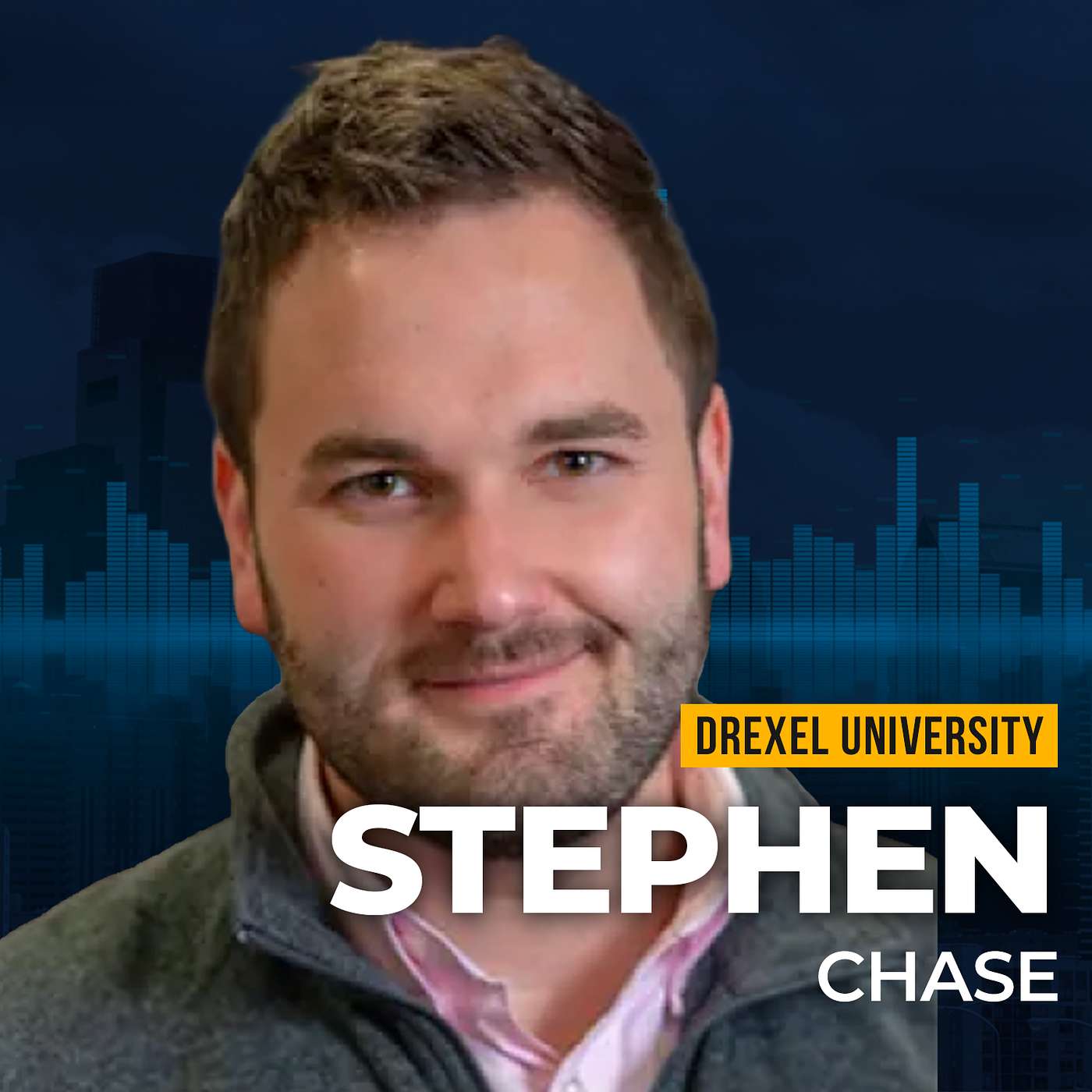
From Anthropology to Investing: How Drexel's Endowment Makes Investment Decisions with Stephen Chase
Jun 1700:53:11Tap to summarizeStephen Chase, Associate Director of Investments at Drexel University, joins host, Robert Morier to discuss how a three-person investment office oversees approximately $1.25 billion across the university's endowment and investment portfolio.In this conversation, Stephen shares his unconventional path from studying anthropology at Trinity College to helping manage one of Philadelphia's leading university endowments.We explore how qualitative thinking, manager due diligence, portfolio construction, private markets, real assets, AI, and risk management shape investment decisions inside a modern institutional investment office.Topics include:• Managing a billion-dollar university endowment with a lean investment team• Why an anthropology degree became an advantage in investment management• How institutional allocators evaluate asset managers and build trust• The future of private markets, real assets, and infrastructure investing• AI's growing role in manager research and investment operations• Portfolio construction, liquidity management, and risk oversightWhether you're an allocator, asset manager, investment consultant, student, or aspiring investment professional, this episode offers a rare behind-the-scenes look at how institutional capital is deployed and managed over the long term.
Transcribe →
Where Investors are Allocating | Insights from Dakota Live! On The Road
Jun 1000:13:37Tap to summarizeWhat happens when you leave the conference stage and sit down with investors where they actually work?Over the past year, Dakota Live! has traveled the country, recording conversations with CIOs, investment office leaders, consultants, OCIOs, foundations, endowments, family offices, and institutional investors. This special episode brings together the most important themes, market observations, and portfolio discussions from those conversations.In this episode, we explore:• How allocators are thinking about portfolio construction in today's market• The outlook for private equity, venture capital, and private credit• Manager selection and due diligence trends• The growing role of AI in investing and operations• Active versus passive management in concentrated markets• Risk management amid uncertainty and idiosyncratic volatility• Emerging opportunities across public and private marketsThe Dakota Live! On the Road series is different because these conversations happen where decisions are made—inside investment offices, on university campuses, and alongside the teams responsible for stewarding long-term capital.On the road. On the ground. In the room.
Transcribe →
The Future of Venture Capital: AI, Seed Investing, and the New Founder Playbook
Jun 301:06:27Tap to summarizeMelody Koh, Partner at NextView Ventures, joins the Dakota Live Podcast to discuss how artificial intelligence is reshaping venture capital, startup building, company scaling, and the future of work.As both a seed-stage investor and the leader of NextView's AI and data initiatives, Melody offers a unique perspective on what separates winning founders from the rest in an AI-native economy. From evaluating startup teams and identifying durable competitive advantages to redesigning venture capital workflows with AI agents, this conversation explores how technology is changing both sides of the investment table.Topics include:The current state of venture capital in 2026How AI is changing startup formation and company buildingAI agents vs. traditional workflowsWhy venture firms must reinvent themselvesThe future of seed-stage investingWhat investors look for in AI-native startupsConsumer AI opportunities that may be overlookedMelody also shares lessons from building and scaling products at Blue Apron, investing through multiple venture cycles, and helping founders navigate the challenges of growth, hiring, and execution.Whether you're a founder, allocator, venture capitalist, institutional investor, or student interested in innovation and emerging technology, this episode provides a practical look at where venture capital and artificial intelligence are headed next.About Melody KohMelody Koh is a Partner at NextView Ventures, a seed-stage venture capital firm focused on the Everyday Economy. She invests in early-stage technology companies and leads the firm's AI and data initiatives. Prior to NextView, Melody held leadership roles at Blue Apron and previously worked in venture investing, entrepreneurship, and product management.
Transcribe →