← Dan Carlin Hardcore History Archives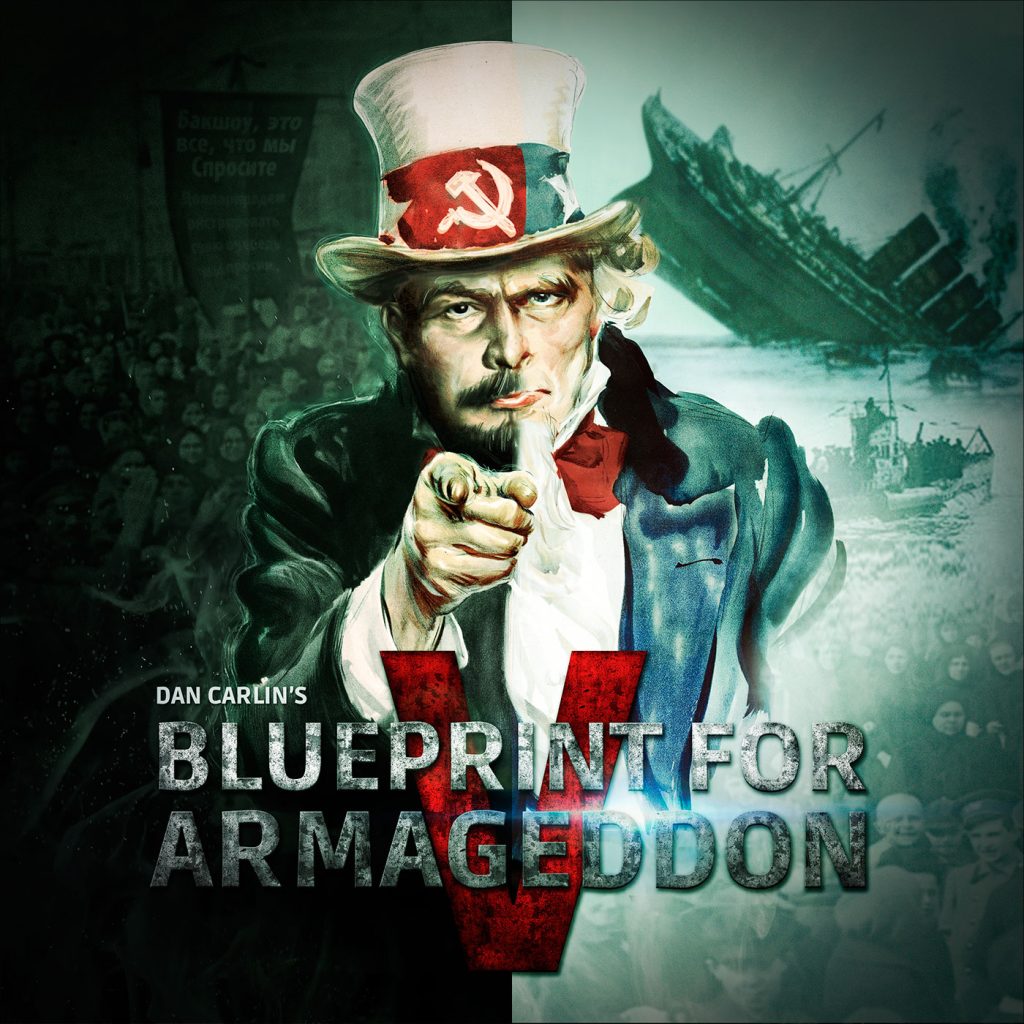
Loading summary
Transcript1 lines
- [00:00]
A
What you're about to hear is part five of a multi part series on the First World War. If you haven't caught the earlier episodes and you want to know what's going on, it might be worth your time to go back and listen to them. If you've already heard them or you don't care about stuff like that, then please join us for part five of blueprint for Armageddon. December 7, 1941. A date which will live in infamy. Its history. One small step for man, one giant leap for mankind. The events. This the figure has not quite to the mooring master from this time and place, I take pride in the words ich bin ein Bielina. Mr. Gorbachev teared down in this world. The Dramatic Urgent Marine 6, now 2 has had a major explosion and what appears to be a complete collapse surrounding the entire area. I welcome this kind of examination because people have got to know whether or not their president is a crook. Well, I'm not a crook. If we dig deep in our history and our doctrines and remember that we are not descended from fearful men. Banana fieldcom it's hardcore history. Earlier in this story we brought up the often quoted phrase that one man's terrorist is another man's freedom fighter. And we brought it up in relation to the man who actually launched the incident that sparked the First World War. The Serbian nationalist Gavrilo Principal, who killed the heir to the Austro Hungarian throne, the Archduke Franz Ferdinand, thereby precipitating the crisis that actually started the war. The Austro Hungarians saw Princip unequivocally as a terrorist. His Serbian nationalist brethren revered him. In fact, not that long ago a statue was unveiled in Sarajevo where the assassination happened, honoring the assassin. So your view of the motives of these people really depends on who's doing the viewing at the time. Princip is far from the only figure in this story who falls into a similar category. The United States is dealing with one themselves. In 1916. For example, in January 1916, just as the German military is putting the finishing touches on on what will become the quintessentially horrible battle of verdun. The quintessentially 20th century style battle. The killing field created by mass artillery, the meat grinder that will be Verdun, the United States attention is taken off European affairs by events going on in northern Mexico. Mexico has been convulsed by Revolution since 1910. Northern Mexico often becomes one of these hotbeds of unrest and instability. And in January 1916, gunmen waylay a train in northern Mexico now, this is at the tail end of the era where train robberies are not uncommon. But these gunmen aren't there to rob the train. In fact, as they go up and down the aisles, they leave the Mexican nationals, the locals, alone. But they pull off every American from the train that they find. They find 16 to 18 workers, employees of a US corporation operating in northern Mexico. They take these Americans off the train, line them up in front of the tracks, force them to strip, and then execute them. We know this because one of the Americans feigned death and got away and told his story. I believe he said that the bodies were also mutilated. This very well may have been an attempt to provoke a response on the part of the U.S. government. And if so, the mutilation is just part of adding fuel to the fire, a little something to make the US Government even angrier at this event. And things had been escalating to this point in northern Mexico for some time. Groups affiliated with these same gunmen had been attacking isolated Americans. A murder here, a murder there, a rape here or there. But this was upping the ante significantly. Nonetheless, the maneuver accomplished nothing concrete of note. So a couple of Months later, in March 1916, this group of gunmen, or outlaws or revolutionaries, if you're looking at it from another point of view, up the ante again and cross the US Mexican border. In strength, more than a hundred go after American interest on the US Side of the border, culminating in an attack on a US City, Columbus, New Mexico. In the middle of the night, they roar through this town shooting, looting, killing, and burning. Eighteen Americans will be killed. The town will be burned down, and the bandits or terrorists or revolutionaries, depending on your point of view, will escape back into Mexico. Now, as a side note, then, as now, Americans are heavily armed people. And those bandits paid a high price for what they did to that town. Many more of them died than Americans died. Nonetheless, the idea that you were safe and protected within the confines of the US Borders was shattered in a way that hadn't happened since the Apache wars in that region had ended 30 years previously. The attackers of Columbus, New Mexico, were affiliated with a Mexican revolutionary leader known to history, not his actual name, as Pancho Villa. Now, Villa almost certainly wasn't in Columbus, New Mexico. He had been hurt not that long before. But these gunmen were part of his men. And if you look at this superficially, there's a lot of similarities between Pancho Villa and Osama bin Laden. Now, this is not said to insult Mexican folks who still in some cases revere Pancho Villa's memory. But it's hard to avoid that, at least from the American side of things. There are rough analogies that you can, you know, point to. For example, like Bin Laden, Villa had once upon a time been a friend to the United States. Someone we thought we could work with and use and, and arm and train and help. In fact, after that attack in Columbus, New Mexico, when it was obvious that some response had to be put together, President Woodrow Wilson, the American leader, launches an expedition, a military expedition into northern Mexico. Sends about 5,000 men across the border. There was an official leader, but he wasn't the guy who actually led things on the ground. The guy who led things on the ground was an American general named John Pershing, whose nickname, by the way, was Black Jack. And a year before, to show you how close the United States had been to Villa at one time, the year before Pershing launches this expedition to capture this terrorist, Pancho Villa, he loses his whole family in a terrible house fire. Pershing's wife and his little girls, they were little children, died in the fire. And as he was wallowing in almost soul crushing grief, amongst the condolence letters he received was one from this Pancho Villa person that he would be chasing about a year later. There are a lot of interesting things that this expedition across the border shows. Not just Mexicans, not just Americans, but European observers everywhere who all throughout this war have wondered what the United States is going to do and what their capabilities are. All of a sudden they have a US military force in the field to have a look at and measure up against the standards of early 20th century warfare. And to be honest, the American endeavor looks like a disaster. It doesn't look a whole lot different than efforts 30 years ago to the year that were launched to go after the last Apache leader to, you know, break off the US reservation system with 40 warriors and go into some of this same country that Villa and his men were hiding in. Looks like a very similar army. Just adds some motor cars, which is what the US military was employing to give them some mobility. And some airplanes that look like they were invented by the Wright brothers themselves. In fact, the pilots were trained in some cases by Orville and Wilbur Wright. That's how recent airplane development is. And the US planes are so rickety and so new that none of them survive the first week or two of operation down there. One of the more interesting aspects to the US operations in Northern Mexico to go get Pancho Villa is the US doesn't know northern Mexico and their maps are all wrong. And so they have, leading their army as scouts, Apaches. And these Apaches include, allegedly some Apache scouts who were amongst the Apache scouts that hunted down Geronimo 30 years before. In fact, there's quite a connection to a lot of these people involved in this conflict. John Blackjack Pershing was a junior officer trailing Geronimo 30 years before these events. It's believed that Pancho Villa wanted to get the US to attack northern Mexico and bog them down in this insane country, to fight in insane terrain, insane weather conditions, and thereby raise his standing amongst several revolutionary leaders vying for control of the instability in Mexico that had been going on since the 1910 revolution began. But if Europeans already had a stereotypical view of the United States as a nation of cowboys and an army mired in an almost Old west sort of approach, the expedition into northern Mexico to capture Pancho Villa did nothing to disabuse them of that stereotype. To many European observers, it wasn't just a frontier army that the United States of America looked like they possessed. It was kind of a frontier mentality to go along with it. One of the things that was really hard for European planners is that on both sides of the war, by the way, is that it began to look more and more like the United States was gonna play this huge role in the war. But what did that even mean? The United States had never sent over lots of men to go fight in some European war. It was alien to the American experience. So would they actually do that? There were a lot of European observers that thought that even if the US Got into the war, they wouldn't send troops. Americans don't do that. And that's part of what makes that pre First World War United States of America hard for modern Americans to understand. You know, if you know your grandparents, if you're lucky enough to have met your grandparents, you can explain them to other people. You begin to get a real feel for what they're about. Even if they're very different than you are, but they're real. You can relate to them. The United States of 1916 is like a great, great, great grandparent. You can read all about it you want, but those people are different from you, and you don't understand them. And you never knew them. You never knew anyone like them. The modern United States of America is the most interventionist, great power in the world. In 1916, it was the opposite. And it had a long mythology connected to its very founding that reinforced the idea that that's the way American foreign policy should be. Before the United States could involve itself in the First World War, it had to somehow deal with this lasting legacy dating all the way back to, you know, pre revolutionary days. But why don't you just start with the farewell speech of the first American president, George Washington? A speech that was re read aloud once a year in patriotic fervor. A speech that told Americans to stay out of Europe's wars. In the middle of his goodbye speech to the American people and his resigning from public life, he said, the great rule of conduct for us in regard to foreign nations is in extending our commercial relations to have with them as little political connection as possible. So far as we've already formed engagements, let them be fulfilled with perfect good faith. Here let us stop. Europe has a set of primary interests which to us have none or very remote relation. Hence, she must be engaged in frequent controversies, the causes of which are essentially foreign to our concerns. Hence, therefore, it must be unwise in us to implicate ourselves by artificial ties in the ordinary vicissitudes of her politics. Or the ordinary combinations and collisions of her friendships or enmities. Our detached and distant situation invites and enables us to pursue a different course. If we remain one people under an efficient government. The period is not far off when we may defy material injury from external annoyance. When we may take such an attitude as will cause the neutrality we may at any time resolve upon to be scrupulously respected. When belligerent nations, under the impossibility of making acquisitions upon us, will not lightly hazard the giving us provocation which we may choose peace or war, as our interest, guided by justice, shall counsel. Why forego the advantages of so peculiar a situation? Why quit our own to stand upon foreign ground? Why, by interweaving our destiny with that of any part of Europe, entangle our peace and prosperity in the toils of European ambition, rivalship, interest, humor or caprice? It is our true policy to steer clear of permanent alliances with any portion of the foreign world. End quote. When Americans revere those people like demigods, and that speech is re read to American schoolchildren and re read publicly once a year on the anniversary. You can see that if you were an American who thought that the United States should enter the First World War, you have a lot of mythology to overcome, a lot of ingrained ideological training. Unless you think that those are revolutionary sentiments. You know, from the beginning of a nation, a lot of times people are very emotional and sensitive, sentimental and lofty and idealistic. When a nation is founded and that cools over time, 45 years after Washington gave that speech. The current president of the United States, a second generation guy like George W. Bush, kind of. John Quincy Adams, gave another one of these foreign policy speeches, coining a famous phrase that Americans would use ever since, you know, going abroad in search of monsters to slay the very antithesis of the idea that the United States government is going to use as the slogan to get the United States into the First World War. John Quincy Adams, in the middle of one of his speeches dealing with what the country's foreign policy should be, 45 years after Washington gave his speech, said, quote, speaking about the United States here in the feminine pronoun, by the way, wherever the standard of freedom and independence has been or shall be unfurled, there will her heart, her benedictions and her prayers be. But she goes not abroad in search of monsters to destroy. She is the well wisher to the freedom and independence of all. She is the champion and vindicator only of her own. She will recommend the general cause by the countenance of her voice and the benignant sympathy of her example. She well knows that by once enlisting under other banners than her own, were they even the banners of foreign independence, she would involve herself beyond the power of extrication in all the wars of interest and intrigue, of individual avarice, envy and ambition which assume the colors and usurp the standard of freedom. The fundamental maxims of her policy would insensibly change from liberty to force. The frontlet upon her brows would no longer beam with the ineffable splendor of freedom and independence, but in its stead would soon be substituted an imperial diadem flashing in false and tarnished luster the murky radiance of dominion and power. She might become the dictatress of the world. She would be no longer the ruler of her own spirit, end quote. This kind of historical legacy of idealism, this mythology, if you will, that Americans, you know, had reinforced all the time, provided a natural counterweight for patriots to choose a side that seemed to be, you know, opposite of what patriotism normally implied in Europe. Patriotism was a key part of nationalism. It's the grabbing of the flag sometimes and pushing your nation's glory and borders farther. That was true in the United States, too. Everybody's human. The same sorts of rallying cries often work on Americans that work on other people. But you also had this refuge for people who were patriotic and who could take an anti interventionist position and couch it as much in the flag as those who were suggesting that real patriots, you know joined up and fought the Spanish in Cuba, for example, as Theodore Roosevelt, the former President of the United States and volunteer for that Spanish American War, kept taking the opposite viewpoint, that the United States of America lived in a different time than those founding Fathers and that real patriotism and real men would be ready to join the first World War. And the United States is looking like a coward by not being involved. But Theodore Roosevelt is not the president in 1916, but he's needling the guy who is a guy from the other party. A Democrat named Woodrow Wilson. One of the most enigmatic and hard to get your mind around figures in this story. And part of the reason that Wilson is so hard to figure out is because the historians don't agree with. The majority of historians have always taken Wilson sort of at face value and portray him as one of the most, if not the most idealistic president in American history. A guy who is so peace loving he's virtually Gandhi esque and a man who did everything he could to keep the United States out of war and to fight for this wonderful, just fair peace afterwards. That's the sort of the good Wilson. I divide them into the good Wilson and the evil Woodrow Wilson. In terms of how some historians see them, the other historical camp is smaller, but very vociferous, very loud and growing. And those are the people who, for a lot of domestic reasons, it should be pointed out, don't like Woodrow Wilson at all. And often, you know, ascribe sinister or venal motives for him doing what he was doing and that. See a man who wanted to get involved with the Allies, who sought peace for his own vainglorious reasons, who was, was a schemer and a person who hid behind a mask that promised idealism and peace. And there were German generals, for example, who were never falling for that story that Wilson was some Bambi deer in the headlights on the world stage and always thought that that was just a really good mask that his Machiavellian schemings hid behind, making him even more dangerous. Right, because his disguise was better. Nonetheless, I'm not gonna wade as a fan of history into which Wilson, I believe, was the real Wilson, but look at how it adds to the uncer of the whole thing. What is this guy all about? Now, I personally think that the air of mystery that surrounds Woodrow Wilson makes him a more interesting character. I mean, he's a giant enigma that's quickly becoming perhaps the most important single individual in the story by the end of 1916. But, you know, I didn't have to Live with him. To the people in this tale, he's not a character, he's a world leader. And what the United States does in this war might decide the conflict, so the stakes couldn't be higher. Winston Churchill, writing after the First World War, he's got a very interesting view on Wilson. It's hard to describe. You can see he's walking on eggshells sometimes. But he says, this guy, we didn't know anything about him. I mean, he comes out of academia, basically, and he says, only in the American system do you get these people that can come from totally outside politics as complete unknowns. He goes, in Britain, such a prime minister would have spent years in the House of Commons or what have you, working their way up. They would be in the public eye the whole time. They would be a known quantity by the time they got the top job. He marvels at the fact that Woodrow Wilson is an unknown, the most powerful man in the United States and quickly becoming the most important single figure in the war. Churchill writes about Wilson in all his strength and in all his weakness, in his nobility and in his foibles. He was, in spite of his long academic record and brief governorship, an unknown, an unmeasured quantity to the mighty people who made him their ruler in 1912. Still more, was he a mystery to the world at large? Writing with every sense of respect, it seems no exaggeration to pronounce that the action of the United States, with its repercussions on the history of the world and depended during the awful period of Armageddon upon the workings of this man's mind and spirit, to the exclusion of almost every other factor. And that he played a part in the fate of nations incomparably more direct and personal than any other man. End quote. That's why we're talking about the United States so much in this episode. And one of the other parts of the Wilson story that are interesting is when you get human beings in positions of great power and authority, oftentimes their little quirks, quirks or idiosyncrasies or characteristics can make or break history. I mean, we all have little things about us that might be quirky or idiosyncratic, but because we're not in positions of power and authority, they don't really make much of a difference. If Adolf Hitler leaves the military after the First World War as a decorated corporal and goes and opens up a sausage shop in Munich, his quirks and idiosyncrasies and characteristics don't make a big difference on the world stage, you probably never hear about them, they only affect the people he has contact with. But you take that same figure and you make him the iron fisted dictator of one of the great 20th century nations on the planet. And all of a sudden that man's quirks and idiosyncrasies and characteristics can create a deadly holocaust. Now Wilson didn't have those kinds of characteristics, at least I haven't heard that even from the evil Wilson camp. But he did have characteristics that impacted this whole situation. One was he was almost always convinced that he was right. Paraphrasing here, but he said something to the effect of once that he felt pity for people who had different opinions than him because he knew they were wrong. You can watch the way he operates in government and he's a supremely gifted politician. But a lot of times those people are unwilling to let other men carry out their policies and their programs because they know they could do it better. And you can see that from Wilson too. After the war, the man who's going to become the British prime minister, a guy named David Lloyd George, will have to sit by the French military leader on one side and the President of the United States on the other. And he said it was like sitting between Napoleon on one side and that was the French leader and Jesus on the other. That was Woodrow Wilson. And Jesus was probably more the way Wilson saw himself is what George was trying to convey, than the way others saw him. Negotiating with a savior can require a deft touch. And Wilson's demeanor and sort of professorial air of superiority and that I'm always right kind of savior air about him sometimes rubbed some people the wrong way and certainly influenced the way that Wilson handled things. And there were several big challenges to American neutrality that Wilson had to deal with. And all were especially acute in 1916. One involved American lives, the other involved American money. And the last involved an American election. Start with perhaps the number one most obvious thing, sucking the United States into the whirlpool, the vortex of the First World War. And it was something that was so obviously doing that you can feel the momentum even now reading the history books about this sort of slide into a war because the Germans use of this thoroughly modern science fiction almost weapon, the submarine. And how the submarine was creating conditions where a couple of Americans here and there every now and then were dying on ships every now and then. It was worse than that. When the Lusitania went down, which was a Titanic like liner to a submarine torpedo, more than a hundred Americans went down with that ship. How long would any nation put up with that? And the problem is that the US would complain, they'd work something out with the Germans, tensions would drop. And then a month later, month and a half later, boom, it happens again. It's like a sore that kept getting poked with a needle before it was able to heal. And yet Wilson kept making the conditions more and more impossible to fulfill. So those anti Wilsonian historians who say, no, no, no, you misunderstand. Wilson was trying to create the conditions that the Germans couldn't help but violate and then get the United States into the war and then claim it was foist upon the Americans. For example, Wilson at one point in his administration, with high minded rhetoric and speeches, was defending the right of an American passenger. And remember, Americans could travel on American ships or neutral ships and at certain times the Germans had sworn they wouldn't go after those. But Wilson was defending the right of an American to travel on a British ship or a French ship, right, a belligerent ship, and defending their right to travel on a belligerent ship, even if it was carrying munitions. And defending their right to travel on a belligerent ship carrying munitions that also was carrying defensive guns on it that could hurt a submarine. That's when the Germans would throw up their hands and say that to them, Wilson didn't look like an honest broker. That's the kind of guy you're gonna trust with peace. I mean, look, and their attitude was he doesn't hold the British to any of these same rules he's trying to hold us to. The British had a blockade going. They didn't use submarines, they used mines. They would mine the North Sea and they'd create these zones where they would stop every liner they could get their hands on, make it go to a British port, search it, you know, decide it was contraband. And Wilson and his administration pretty darn quiet about that. The occasional protest and nothing more. To the Germans this looked like rank hypocrisy. And to anti Wilsonian historians, to them it looks like a perfect example to show that really these ideals that Wilson professed were very conveniently ignored when they ran against what he wanted. There were other complications that affected what he wanted too. One had to do with perhaps the most ancient of motivations of all, economic ones. The United States was making a killing on the First World War by 1916, pardon the pun, and it began to affect its entire outlook toward the conflict. It's one of the longest term impacts, by the way, of the First World War. The results of which we live with every day in our modern world, but it sort of sinks beneath the radar. It's a lot easier to understand the submarine warfare question than it is the economic transfer of wealth from Europe to the United States. This war was so total in its stakes that the sides fighting it found no good reason not to spend every bit of capital they had to win it. When Britain started this war in 1914, she was the richest country in the world. It was not long after the era where the phrase the sun never sets on the British Empire was in vogue. The British Empire controlled, directly or indirectly, about a third of the planet. She was wealthy, and she'd been sucking up a lot of the wealth of Europe for 100 years, during Europe's most dominant time period on the world stage, the era of colonies and post Napoleonic splendor. Right, the Victorian age. And yet, when 1914 started, the British didn't just have their own bills to pay in this most expensive of all human conflicts, they underwrote their dominions, the Canadas, the Australias, the New Zealands. They underwrote countries like Italy and paid for almost all their costs during the war. The Russians too, and a lot of other small powers. The amounts of money that were changing hands, I have seen so many different attempts to come up with it. All you have to know, though, is it's ungodly. At one point, it was like $75 million a week in 1916 money. It's incredible, the wealth transfer. And when Britain started buying stuff from places like the United States when the war started, they used cash and gold. By 1916, we're talking about credit and debt. And if you wanted to think of New York as being like a giant vacuum cleaner with the sucking hose end in London, just sucking out 100 years of civilizational wealth acquirement, that's not a bad image. In four years, the center of world banking, as we said in an earlier episode, is transferred from London to New York. Same thing for the center of world trade. And all of a sudden, by 1916, Wilson is acquiring a huge amount of power because the United States is the banker, and these people are beginning to owe it money. The British realized it. At the same time, historian Justice Donache writes about Wilson's new ability because he controls the purse strings of the Allied side in this war to dictate any sort of outcome he might want. Donache writes, quote, if Wilson desired to force the Allies to the peace table, the opportunity had come, and he knew it. On October 3, 1916, a British interdepartmental Conference noted the nation's utter dependence upon American munitions, steel, foodstuffs, oil, wheat, cotton and lubricants. Were the United States to engage in economic reprisals, Britain's war effort would practically stop. Of the five million pounds sterling needed to prosecute the war, reported a government economist, John Maynard Keynes, later that week, 2 million must come from North America in a few months time, claimed the treasury official, the American public will be in a position to dictate to this country on matters that affect us more nearly than them, end quote. The author continues, Reginald McKenna, Chancellor of the Exchequer, concurred with Keynes telling the Cabinet in late October, by next June or earlier, the President of the American republic will be in a position, if he wishes, to dictate his own terms to us, end quote. The author says at the end of December, McKenna told an American journalist that Wilson could force the Allies to their knees anytime, in a moment, end quote. The United states in late 1916 is like a bank. And Europe, and especially Great Britain, who is the financial underwriter of the whole Allied war effort, basically owes the bank money. That gives the bank a lot of power. But there's an old line in banking that if you owe the bank a little bit of money, it's the bank who has the power. But if you owe a bank a lot of money, that power goes back to the person that owes the money, because the bank now has a vested interest in seeing that that person survives so that they can pay them back. The United States is beginning to worry about what happens if we can't sell this war material anymore or if we can't get paid for the credit we're loaning out. The US has had a very uncomfortable sort of prosperity descend on it in the past two years. In 1914, when the First World War breaks out, the American economy is not doing well at all. By 1916, halfway through the year, the American economy is humming along nicely, thank you. Some historians have actually called the United States a nation of war profiteers at this point. If Wilson was successful in creating a negotiated peace at the end of 1916, somehow, and you wanted to at that point declare the winner in the First World War, do you know which two powers I'd nominate? I'd nominate Japan and the United States. And the Japanese hardly fought in the war at all. And by the end of 1916, the United States hadn't fought in the war at all. Those are the victors. The Japanese get involved in 1914 for purely opportunistic reasons. They can take over all the German holdings in their neck of the woods. And the Germans can't do anything. So you get all this territory for basically nothing. The United States is selling stuff, amazing amounts of stuff. Both sides need everything and the Americans will sell to anybody, but they can't get their stuff to Germany. They still made loans and tried to get stuff to them, but by and large the British blockade had shut that down. But you could still trade with the British, and we did. And the idea that that trade might somehow go away began to filter into the halls of government. The prosperity that this war brought the United States created another vested interest. And there are economic historians and historians who look more at economic motivations for why countries do things that point to this as the most important undercurrent of why the war was really going the way it was. Now there's another reason too, and this is very pedestrian. But Woodrow Wilson in 1916 was an American President that faced an election campaign. And this is where the real uniqueness of the American situation is demonstrated. What does a president do who's running for reelection? And the big elephant in the living room situation is this war in Europe. When he's facing an electorate made up of immigrants of people on both sides of that conflict in the old World, historian David Stevenson does a great job breaking down the ethnic makeup of the United States and showing you all these weird problems that the United States would have if it got into this conflict that other nations wouldn't. For example, he points out that large chunks of the United States is made up of immigrants from some of these countries. The two main groups that are problematic for anyone who wants to talk about siding with the Allies in this First World War are German Americans and Irish Americans. Here's what Stephenson support for American neutrality was strongest in the interior and especially the Middle west where the German Americans were concentrated, of whom only an insignificant minority favored intervention on the side of the central powers. Of a US population in 1910 of 92 million, he writes, 2 1/2 million had been born in Germany and 5.78 million had one or two German born parents. In 1917, 522 German language newspapers and journals were published in the United States and German Americans were the largest ethnic group in Baltimore, Pittsburgh, Chicago, Detroit, Los Angeles and San Francisco, end quote. He then goes on to talk about Irish Americans who. And we didn't even get into this as a person of partly Irish American descent, I would have just gone off on the whole Irish uprising, the Easter uprising that happened during this conflict, of which the Germans may have had a role. The British considered this an especially nasty stab in the back since it happened during wartime, reacted by killing a lot of Irish, or it depends on if you're British or not, killing Irish leaders in the uprising, infuriating Americans of Irish descent, of which there were a ton. And so if you're a politician like Woodrow Wilson, you have to deal with the fact that you have a ton of voters who are the only people that can keep you in power, who are really interested in not joining the side of the Allies, maybe, or anyone. The slogan for the 1916 campaign that's most remembered on the Woodrow Wilson side is the one that said he kept us out of war, end quote. That was a slogan that appealed to most Americans. Wilson's peace oriented Secretary of State, William Jennings Bryan had said at one point that New York and the major newspapers want war, the rest of the country wants peace. And if you're an American planner, it's interesting how many times you can open up the history books and see references to the uncertainty of what these large immigrant descendant populations would do if the US Joined the Allied side in the war. If you have 2.5 million Americans born in Germany, what are they going to do when war breaks out? Are these potential terrorists? And so it became quite an interesting issue before the conflict involved the United States, as to whether or not the United States was unified in the idea that it would go fight on any side in this conflict. Now what do you do if you're one of these American figures, perhaps one of the top politicians who wants the United States to get into the first World War? What's your strategy for dealing with these Americans who don't want to go, who want to stay neutral? It may be a huge majority of the country during this time period. If you're a politician and you're used to sort of putting your finger in the wind and going in the direction the people want to go, but they don't want to go in the direction you want to go. You know, what's your strategy for dealing with that? The strategy of several of the top political figures in this period was to play the super patriot card and to accuse Americans who disagreed with the idea of getting into the war as being disloyal. I mean, take for example the former President Theodore Roosevelt in 1916. Roosevelt is not running for president, but he's campaigning and helping the guy who is from his own party, the Republican that's challenging Woodrow Wilson in the November 1916 elections. Now, Roosevelt is in an interesting position here. He desperately wants to get into the First World War. He thinks it's cowardly that the US Is staying out. He is publicly slamming Woodrow Wilson from pillar to post for not wanting to get involved in the conflict. He compares him on the campaign trail to Pontius Pilate. In fact, he says Wilson's neutrality is worse than Pontius Pilate. Remember Pontius Pilate? He's the Roman official who in the Bible sentences Jesus to be crucified. That's a pretty good political slam at the president, isn't it? But then Roosevelt makes a point to go after what at the time were referred to as hyphenated Americans. You know, people who had a hyphen between their description of their nationality. German Americans, Irish Americans, Jewish Americans. And there was a feeling amongst a lot of Americans that these people weren't real Americans, that they had conflicted loyalties. And there was also this idea that you had to have 100% loyalty to the United States. And any consideration with what the ancestral home might want was equivalent, in Roosevelt's own words, to being a moral traitor. So how do you deal with the fact that you want the United States to do something that most Americans don't want it to do? You slam as traitorous those who oppose it. Now, Wilson was in a bit of a different position because not only many historians think, did he not want to get in the war, maybe, but he certainly had a public Persona of not wanting to get into the war. But Wilson didn't like anyone who disagreed with him. And you can see Wilson's attitude about those who would oppose his policies even in peacetime, in his response to a telegram he received from an Irish American. There's that hyphenation, right? Irish hyphen, American leader in September 1916, a guy named Jeremiah O'. Leary. And O' Leary was telling Wilson something that's. That's perfectly logical. He's explaining to him that all of these moves that seem to lean toward the Allied side of the war are gonna be issues in the campaign, right? There's nothing controversial about that. O' Leary's cable said, quote, your foreign policies, your failure to secure compliance with all American rights, your leniency with the British Empire, your approval of war loans, the ammunition traffic, are issues in this campaign, end quote. Most American political figures would understand that. That's just someone from the opposition explaining that that's how the American political system works. There's nothing wrong with that, especially not in peacetime. Wilson wrote back to Jeremiah o', Leary, your telegram received. I would feel deeply mortified to have you or anybody like you. Vote for me. Since you have access to many disloyal Americans and I have not, I will ask you to convey this message to them. End quote. In other words, to simply oppose Woodrow Wilson's policies in peacetime doesn't make you part of the loyal opposition. It makes you disloyal. What is a president who feels that peacetime opposition to peacetime policies is disloyal? What's a guy like that going to do when it's no longer peacetime? Well, here's a little preview to think about. We still have laws on the books that we're currently enforcing and using in the war on terror that are President Wilson's response to critics who address him negatively in wartime. Unless you think that this is an overreaction, though, or maybe misplaced priorities, it's worth noticing that in late 1916, there are several belligerents in this war who are most threatened not by foreign armies defeating their armies on the battlefield, but by their own populations collapsing from within morally or in terms of their unity and support for the government. In an era where more and more of the armies of these modern 20th century states could take a punch and stay on the battlefield, fighting year after year, the chink in the national armor for some of these states was proving to be the home front. And nowhere, by the way, do you see a better example of the sweeping away of the 19th century mentality than in how the home front is viewed. The home front, of course, is a shorthand word for the people back living their civilian lives and, you know, supporting the war economy and helping to make munitions and all the stuff that helps support those troops at the front. In the 19th century, in Europe's more genteel sort of era, there were all sorts of peace conventions and laws of war meetings to help spare civilians and keep them as far away from the suffering of war as possible. That was considered to be a civilizational advance. It's interesting and telling, I think, to watch that sort of genteel peacetime mentality crash into the rocks of reality that are the 20th century, where all of those rules look like rainbows and unicorns. I mean, from another time, we're gassing each other with insecticide. Humecticide, can we say that? Humecticide, something you use to spray on human beings like they're ants. There go the 19th century genteel conventions right there. And the same applied to civilians. We have the Germans using zeppelin raids to drop bombs on British cities. I mean, there goes those 19th century conventions right there. And The German bombers who do it, you know, cite this idea that everyone's a combatant. Now, if the home front is a legitimate target in total war, then so are the civilians going about their daily lives in places like Germany and Austria, Hungary. When the British cut off trade to those places, they begin to do the equivalent of put an entire nation or an entire alliance under siege. And one British official actually said, you know, what's the difference between putting a city under siege, which has been done throughout history, and the civilian population in that besieged city always suffers, and putting a nation under siege? The British clamped down this blockade at the beginning of the war. By the middle and latter parts of 1916, that long term anaconda like strategy really begins to bite. And part of the reason why is these societies are already straining to the maximum to just keep their militaries in the field. And I think it's easy to forget exactly what the strain on these societies was because you look at. We've often compared the size of these modern armies to what Alexander the Great conquered the known world with back in the 330s BCE. Alexander the Great is a corps in one of these modern armies. Listen to what a German army corps, of which they had dozens in the army, requires to sustain itself. Imagine an ancient economy trying to provide this. This is from Holger Hervig and his book on the First World War. The army consumed copious amounts of food and fodder. A single core of 35,000 soldiers monthly devoured 1 million pounds of meat, 600,000 loaves of bread, 189,000 pounds of fat, or he says, 242,000 pounds of canned meat and 121,000 pounds of marmalade, and, he says, 73,000 pounds of coffee. Its horses, Hervig says, needed 7 million pounds of oats and more than 4 million pounds of hay. The 18th Army Corps, he says, for example, estimated that it needed 1,000 wagons extending for nine miles to haul its monthly allotment of bread. Its butchers slaughtered 1320 cows, 1100 hogs, and 4158 sheep every month. Taken as a whole, he says, the German Army Weekly demolished 60 million pounds of bread, 131 million pounds of potatoes, and 17 million pounds of meat. No one in the government or the general staff, he writes, had given serious considerations to such mammoth needs for a period of four years. End quote. No, no one saw that coming. Someone from the ancient world, I mean, this could never have been sustained before the modern era. But sustaining it took all of those Necessary foodstuffs out of the civilian population's mouths, and they were beginning to starve because of it. The winter of 1916, 1917 will be remembered by Germans forever as the turnip winter. And that's the winter where the hunger blockade really bit. Historian Eric Dornbrose writes, As 1916 turned to 1917, caloric intake, which had already begun to fall in late 1914, slid to about a third of pre war consumption levels. Money, connections and the black market helped the lucky ones, but even the upper crust suffered. Now quoting a noblewoman, we are all gaunt and bony now. We have dark shadows around our eyes and our thoughts are chiefly taken up with wondering where our next meal will be. Pork had almost disappeared from dinner tables and restaurants where crow was now served. Milk was reserved almost exclusively for young children. Butter and sugar could be purchased only in very small quantities. Eggs were rationed at 2 per person per month, and turnips and rutabagas had begun to replace potatoes. End quote. Broze goes into a couple of reminisces from Germans about what those tasted like and then says, inevitably, as nutrition levels fell, bodies succumbed to a variety of ailments like rickets, scurvy, dysentery, tuberculosis and influenza. Estimates place the number of blockade related deaths by war's end at 730,000, which makes popular outrage understandable. End quote. Now, as with everything in the First World War, there are historical dissenters who will challenge every aspect of what's known as the hunger blockade affecting the Central Powers. But nonetheless, the important thing to understand is that it creates a dynamic in this conflict that forces the German side to do something. They're the ones continually getting less food. Their adversaries, the British and the French, do not have a food insecurity problem. That dynamic forces the Germans to do something to change their situation, or they'll just strangle to death. I mean, if you're already living through what Germans are calling the Turnip Winter in 1916 and 1917, what are they going to call the next winter of 1917, 1918? You don't have to be a genius to see that you now have to do something to change the state of affairs, Sherman. Public opinion begins to demand it. Now, I should point out that that just pretty much makes them the equal of all the other populations of all the other belligerents. Seemingly doesn't seem like anyone's particularly happy with the way their government is prosecuting the war, regardless of which country you're talking about, at least amongst the major states in Britain at the end of 1916, their government falls and the new Prime Minister who arises is the very embodiment of what voters would vote for if they wanted to shake things up and get somebody different in there. His name is David Lloyd George, usually just called Lloyd George. A feisty Welshman of a much more working class background than you normally see in these sorts of positions might be exactly what you know, the average dissatisfied with the way the war is going. British citizen wanted. Now, it is a little interesting that only a couple of weeks before Lloyd George gets the job, he's recorded as having said about the Allies in Britain, we've lost this war. And now he's in charge of Britain's war effort. It's also interesting to note that you could tell how up in the air the outcome of the First World War is in 1916, where you can find leading figures on both sides who think their side has lost the war. Nonetheless, the French also get into the game. 1916 has been a terrible year for them too, just as it has been for the British. And they finally find the courage to get rid of their longtime military leader, the legend Joseph Joffre. He's been living off the fumes of his reputation from the Battle of the Marne a long time, I think it's safe to say, been underperforming. And the French finally, they can't fire him, he's too much of a legend. But they finally sort of kick him upstairs and promote him to a ceremonial post and replace him with the first new French leader since the war started, a guy named Nivelle. The Russian population in public opinion, which isn't really supposed to have much of a sway, supposedly because they live in a strange sort of autocracy with a part time legislature, but they're making their feelings known too. More on that in a minute. And in Germany, the population just wants a way out of this trap. Some people would like to see efforts made towards figuring out a way out of the war, which they have people who say this in all the belligerent countries, but you have to be careful. A little while ago we talked about Woodrow Wilson suggesting that people who might oppose his policies were disloyal. It could get you thrown in the jails in a lot of these belligerent countries if you appeared to be disloyal. So too much peace talk could get you in a lot of trouble. Nonetheless, there was a body of German public opinion that was pushing for another outcome. They wanted their government to take the gloves off, stop playing nice with the adversary. They wanted their government to unleash the submarines and to heck with what the Americans would do. To some Germans, the American policy looked to be a very conniving way to simply deny Germany the use of the submarines if you make the rules too restrictive. And in the Americans case, the rule basically was that an American traveling on some ship gives it some magical protection simply by stepping on board. You can't sink that ship. Now there's an American on it. That pretty much nullifies the submarine for Germany at all. But if that's the only way you see a chance to end the war with a German victory over the British, what does that mean? Can you let the Americans hamstring you like that? Add to that the fact that a lot of Germans don't really see the Americans as all that neutral already and think that maybe Britain could be defeated in four or six months before the Americans have a chance to do much of anything. Add to that the fact that when public opinion veers in that direction, there are Germans in the military high command, a majority of them, that were already thinking that themselves. Now they have public opinion on their side. Unleash the submarines. But what if the Americans come in the war? There were German leaders, though, that didn't like this choice, wanted to find another option rather than use the subs, get the United States into the war. Chief among them was the Chancellor of Germany, the top political guy. His name was Bethman Hollweg, and we've discussed him before. This is all, by the way, very controversial, very complicated, very convoluted. You're getting the Dan Carlin, a condensed, potentially unreliable version of this. But it's a fascinating time in the conflict because the politicians, led by Hollwig, think they find a way to throw a monkey wrench into that terrible choice that the Allies have sort of foisted the Germans on with the hunger blockade and everything else. They've got to make a move. So they make a very unexpected one. On December 12, 1916, Bethman, Hollweig and the Germans announce that they are prepared to enter into negotiations to end the war. Now, it should be pointed out that such calls for peace and discussions about peace had gone on since the war started. Woodrow Wilson had stepped up pretty much right at the beginning and said, I'll mediate anytime you want. There were attempts by both sides in the war to try to make a separate peace with somebody else and maybe get one of the allies of your enemy to drop out of the war. But those are peace terms just to get an edge in the conflict. They're not peace terms to end the war. The Germans were making the first apparently serious, certainly public offer to sit down and start talking about the issues that kept the conflict going. This was a huge shock, not exactly to the Wilson administration. They've been getting some information fed through some back channels that the Germans might be ready to do this. But the Americans thought that they were going to unleash this big peace proposal. When the Germans do it, they preempt Woodrow Wilson's version and he has to rush his out, you know, about a week later, a little bit miffed that the Germans stole his thunder a little bit. But all of a sudden, in December 1916, after this horrible year, there are peace proposals on the table, and it puts everybody into a really uncomfortable position. Now the Germans have taken a real chance, by the way, by trying this peace proposal route. If this is a high stakes card game, and I often think of the war in terms like that, the Germans, because of the hunger blockade and everything else, are forced to play a car. And everyone thinks they're going to play that really high risk, high reward, dangerous card. They have the unrestricted submarine warfare card. Instead, they play a potentially equally perilous card, but one that no one's expecting. They play the peace card, but the peace card can blow up in your face if you don't play it deftly. Case in point, what are your enemies going to think when you become the first power to come forward and start talking about stopping the war? They're going to think you need to. What's more, there's a danger your own people might think that too. And you spend a lot of effort in this war to stiffen their backbone and keep their resolve in place. How much are you going to undercut it if you become the first power to seek peace? So this whole thing has to be worded very carefully. And it is, but almost in such a way to give your. To give you whiplash as you're moving your neck between the humanitarian side of the German Chancellor's proposals and the side that's filled with overwhelming hubris. The Germans talk about what this war is doing to civilization and how they'd be willing to get into conversations about ending it, but that they're still invincible and they're going to win the war and they don't need to do this. And what would the terms be on the other side? Maybe you could say that Allies historians have argued about the motives behind this ever since. But the truth of the matter is, if you look at this like a card game, There were some good reasons for the Germans to play that peace card, whether or not it was realistic and whether or not the other side accepted it. And some historians say this was what it was intended to do the whole time, provide some diplomatic cover for the start of the unleashing of the submarines. To go and say, hey, we'll talk about peace. Then when it's rejected, be able to turn around to your own people and say, you better give up those hopes of an easy peace. We just tried. They won't do it. This is a fight to the end. Stiffen yourself. And also to show the world, including the neutrals and including the people on the other side of the war's population, that we're not the ones keeping this carnage going. It could have been over, but your side wants to keep fighting. It most especially is an attempt to maybe influence public opinion in the neutral countries, especially the most important neutral country, the United States, which has so many German Americans in it that there are More than 520 German language newspapers, as we said. What do you think the editorials are going to be in those newspapers after Germany makes a peace proposal and the Allies swat it down? That's going to put some pressure on the US Government to stay out of the war too. And that's going to influence American public opinion over who the bad guys and who the good guys are. That may have been the overriding intention of this German peace effort, but nobody knows. It may have been a serious attempt to at least start negotiations going and to take a position that didn't make you seem too vulnerable at the outset. The Germans picked the right time to do it. It was right after the capital of Romania fell to the central power. So they're negotiating from a position of strength here. And the Allies swat it down. They have to. The problem with asking these powers to state publicly what their war aims are in order to create a peace is to show that the war aims of these powers have gotten so out of hand that they bear no resemblance to anything that could be negotiated. As historian Gwen Dyer wrote, and as we may have quoted already on this program with the governments of Europe who found themselves trapped in the first total war, discovered to their dismay was that if the means used to fight the war are total, then so must be the ends. It was almost impossible to stop short of total victory for one side and unconditional surrender for the other. End quote. The old territorial exchanges and the paying of reparations and the, you know, giving up or acquiring of colonies was a 19th century sort of war aim. It sounded out of place in the 20th century if the British or the French or the Germans or anyone had said that their war aims involved a little change of territory and a little reparations money or what have you, it would have seemed so out of proportion to the cost that there would be a real danger that the public would think that what the country was fighting for wasn't worth what the public was paying for it. In addition to that, of course there were some craven territorial ambitions involved and no one wanted to state those. In fact, both sides had promised other people's territories to allies of theirs. For example, the Italians were promised territory from the Austro Hungarian Empire once the war was over. The British couldn't very well say that was a war aim and still not look like cynical gamesmen in this war when everyone, by the way, on all these sides is a cynical gamesman. But you can't show that to the public. What's more, the idea of war aims that stopped short of defeating the enemy unconditionally clashed with your propaganda. This is a war that's using such 20th century ideas as a war to end all wars and a war to make the world safe for democracy. It's not a war to acquire a few colonies on the Mediterranean and some oil in the Middle east and the breakup of the Austro Hungarian Empire. It's a war for these high minded ideals. The problem is if your propaganda portrays the Germans as the second coming of the Mongols. Well actually the Huns is the word the propaganda used. And they're baby killers and nurse executioners and nun rapers and all the things the propaganda makes them out to be. How can you possibly sit down and sign a piece of paper to compromise with them and have peace again when the Vatican was at this time trying to help create the conditions where peace could happen? The Vatican kept telling the powers to live up to those pre war agreements to make war less horrible. And they were saying that they were favoring this not because they were idealists, but because if these powers kept doing everything in their might to destroy one another, they were going to hate each other so much that there was going to be no space and mutual respect left to carve out a peace. Later. The Germans were no happier by the way, to state their war aims publicly for the exact same reasons. Now there was an implied threat included when the Germans came forward with this attempt to get negotiations started. And the implied threat was if negotiations didn't happen and weren't fruitful, they would play the unrestricted submarine warfare card. The peace negotiations are over by the end of January. In the middle of January, actually around January 20th, Wilson makes a famous speech, a speech where he calls for peace without victory. In his so called peace without victory speech on 22 January, when essentially he already knew that it wasn't going to happen, Wilson lays down the kind of peace that Europe will have to broker to end the First World War. If it's to be a lasting peace, it can't be one of those pieces where the knife is turned and one side is left hating the other. When you think about how the First World War ended and how it sowed the seeds for the Second World War, Wilson sounds like Nostradamus with some of the things he says in this part of the speech where he talks about having to have this kind of peace. He says, I am seeking only to face realities and to face them without soft concealments. Victory would mean peace forced upon the loser, a victor's terms imposed upon the vanquished. It would be accepted in humiliation, under duress, at an intolerable sacrifice, and would leave a sting, a resentment, a bitter memory upon which terms of peace would rest, not permanently, but only as upon quicksand. Only a peace between equals can last. Only a peace, the very principle of which is equality and a common participation in a common benefit, the right state of mind, the right feeling between nations, it is as necessary for a lasting peace. Peace as is a just settlement of vexed questions of territory or of racial and national allegiance. End quote. So he's not only calling for a peace where nobody can claim a victory, we just stop fighting and begin negotiating for a post war world in which Wilson envisions a new international global structure to enforce global peace and harmony so that we never have a First World War again. As I said, for those historians who suggest that Wilson is out to make Wilson the biggest historical figure he can, that would be a heck of a legacy if he could pull that off. But instead, within a couple of months, the United States will be in the war. And from the Allied perspective, not a moment too soon. The end of 1916, early 1917. And we've been spending quite a bit of time setting this period in the war up. But this period in the war is probably the most important six months in the last hundred years. People talk about the First World War as this transformative moment and the after effects that we're living with even now all around us. But the most transformative moment in that conflict is what's about to happen now. And I can't help but find some sort of metaphor, analogy, approach to looking at it. But I mean, it's like we have this tree and they've been shopping at it for two years and at the end of 1916, finally the tree falls over. Winston Churchill says three ingredients acting together create what he calls the second climax of the war. In this period, we've dealt with two of those ingredients, the Americans and the submarine question. The third ingredient involves Russia. Up till now, I think it's pretty obvious in this episode we've been dealing with what you could safely call the first rate powers. The countries that were at the top of everything when the war started. The rich, powerful, cohesive, unified, top of the line states the Frances, the Britons, the Germanys. But if they're worn down by this many years of this war to this point, to where they are now, where the Germans are undernourished, for lack of a more provocative term, what must be the situation that the countries that weren't first rate powers when the war started, the ones that had challenges and were struggling in various areas, how are two years of war treating them? Well, the Italians have open disagreements about peace in their government. In the trenches there are pamphlets distributed by socialists that say, next winter, not another man in the trenches. The generals are not very pleased with that, but it's hard to blame the Italians. They're on like their 10th or 11th battle of the Isonzo river, fighting over this torturous mountainous terrain which creates an environment it's a little teeny horrible war in and itself with all these unique things. I mean, just to give you one example in the mountain war that the Italians are fighting with the Austro Hungarians, when shells hit, they're all carved into rock. I mean, instead of trenches, a lot of times they've blown out like chasms for cover. But when these shells hit the rocks, the rocks just splinter, creating like a secondary amount of shrapnel. That's just horrifying. And then when you get wounded, you're way up at 6,7000ft and you gotta be brought down through, you know, mountainous Alpine conditions to the nearest way station. They still find frozen things even today. It's a horrible conflict. And by 1916, the Italians are on like their 10th or 11th version of it. And all they have to show for it is more and more dead people. They wouldn't be human if they weren't starting to get a little fed up with this. In fact, that just puts them on par with how it seems the populations of all the belligerent countries are doing now? How's Austria Hungary doing? Remember, they're the ones that kind of were at ground zero when this whole war got started. They're the ones who had the Archduke that got himself assassinated. They're the ones that sent the. That uncompromising letter to the Serbians. They're the ones that sparked this war. How are they doing? Well, I bet they wish they hadn't. They're in terrible shape. The venerable emperor that had ruled there for so long, the benign face of stability, had finally died to be succeeded by the next emperor, who's a much younger man and who looks at his country and says to the Germans, this war has to end in 1917. I mean, Austria Hungary is worse than done. This new emperor, during this coming year will go behind the Germans, back to the Allies, reportedly, and try to sort of sell them out. And the Germans find out about it, and then they're never going to take their eyes off Austria Hungary again. All of a sudden, these brothers in arms don't trust each other anymore. It was a very interesting move that a lot of people have talked about. It's almost like World War I's version of Rudolf Hess flying to Great Britain to make a separate peace for, you know, Nazi Germany in the Second World War. It's just this weird little endeavor. And all it does is earn Austria, Hungary, Germany's mistrust. And then you have the Russians now. The Russians, from the very start of this war, even before this war, for a very long time, have been this contradiction in power. In one sense, they are massively powerful. In a military sense, theoretically, they are terrifying. And yet they are at the same time so fatally flawed in the underpinnings that anything Russia's doing in this war always seems to be like riding some rail or walking a tightrope. And disaster loomed at any moment. It was an unsteady sort of situation. There's a story that sort of shows this contradiction in terms. The military leader, the Russian military leader, Brusilov, he'll have have an offensive named after him in 1916. We talked about it. Nowhere near as much as it deserves in the last program. This once again puts the Russians out there in a good light, shows you what they can do when they get their act together. And they are devastating. 750,000 casualties on the Austro Hungarian army. I mean, essentially mortally wounds them. It is frightening what the Russians can do when things go the right way. But Brusilov tells a story that shows you just how fatally compromised everything is, how rotten the insides are. He Says at the height of this offensive, when everything's going so well, he's receiving unsigned letters from his own soldiers telling him that if the fighting doesn't stop soon, they're going to kill him. Russia's been having internal problems for decades now. The current czar, Nicholas ii, the Czar. The Tsar's not even his right name. He's the Emperor of Russia. The Tsar is the old name that goes back hundreds of years, but they still call him that because that's essentially what the office still is in his name, his official long title, it says he's the autocrat. And even if the Russian Duma has been given 1% and the tsar still has 99% of the power, he's an example of the old world at its most royal. And yet he knows how frightfully fragile the underpinnings are. When he was a mere adolescent, he saw his grandfather carried into the royal palace with his legs torn to shreds, his groin gone, his stomach ripped out and his face mangled, and he is bleeding out on the royal carpet. And the royal family included Nicholas II, the man who will be Nicholas II, watch their grandfather die. It takes about 15 minutes. He had been killed in an assassination. Another one of these stories where the Tsar is out in his bulletproof sled and a bomber throws a bomb. It sounds a little like the whole Sarajevo thing that kicked off the First World War. A bomber throws a bomb, the bomb goes off, kills people who are not the target. The target comes out, in this case, the Tsar comes out to look around and, and there's another bomber in the crowd. Supposedly the Tsar at the time had said something about, you know, thank God that nothing happened. And the other assassin, as he's throwing the bomb at him, saying it's a little too early to thank God, boom. And he bleeds out on the royal palace floor. While the Tsar, who will be commanding Russia as the autocrat in the First World War, as a 13 or 14 year old boy, watches. He knows how dangerous the job is, is. And he knows that there's a violent current of rottenness that opposes his system. And he's dealing with it all the time. One of the things that makes this story so interesting, though, is when you're dealing with one person with almost total power, as we said earlier, their little idiosyncrasies make a big impact on history. In the case of Nicholas ii, the autocrat of all the Russians, right, His idiosyncrasies involve some things that I think most people out there who have Children can at least relate to a little bit of. It's interesting that there's a part to this story that just has a personal tragedy wrapped up in it. I mean, this is an example why you can't reduce history to some sort of mathematical equation or some sort of predictable set of rules. I mean, there are human beings involved here. In the case of the Tsar, it's a fascinating story. The man, just so you know, I mean, this is how Europe was. This is the old Europe that's being destroyed. He's the first or second cousin with everybody. He's the first cousin with the King of England. He's the second cousin with the Emperor of Germany. I mean, he's related to everybody. And his wife is the first cousin of the King of England. I mean, a little incestuous maybe, but that explains why the Tsar and his wife. More on her in a second. Who only have one son, give birth to a son who's a hemophiliac. It runs in the family. Queen Victoria, who's sort of the descendant that all these people can trace their heritage back to, said that this did not run in her family. But it seemed to. Victoria, of course was German in her roots. So was the Tsar's wife, the Tsarina Alexandra. Both of them loved each other. And I say this because, you know, you would think today. Well, of course they did. But listen, this is an era where, especially amongst nobility, you often had very political marriages. You also had these very old fashioned things that were very common back then where the husband and wife really didn't love each other and the husband was out with all the girls, all. It wasn't like, like that with Nicholas and Alexandra. This was a love story. And it really was. And not just between the two of them, but with their children too. They loved their children the way we think of every modern person loving their children or the way they should. And that is not to say that people in the past didn't, although you find a lot of examples in the royal families throughout history where the father hardly sees the son. It's not like that with these guys. They take an active day to day role in their parenting and they wrote letters to each other constantly. And they wrote in English, which they both spoke. Well, the Tsarina was German, but she spoke Russian, she spoke English, the Tsar spoke everything. And they communicated in more than a thousand letters with each other, where you get a real feel for these people. And one of the things that they are absolutely terrified about is their son who's got hemophilia. He's their only son. He's the next Tsar, and he is almost certainly going to die young from this disease. Now, just so you know, hemophilia is a disease where your blood doesn't clot. Not to get too technical, because I couldn't explain it anyway, but basically, any little cut or bruise has the potential to spiral out of control. The normal rough and tumble of a young child's life will kill you. And in this era especially, parents just assumed almost a death sentence. And these two parents, as any parents we would think of today, probably could hardly handle that. Thought they were looking around for cures and trying to find them. And eventually they found someone who seemed to be able to fix their son. And because of the little idiosyncrasy connected to who this person tended to be, world histories completely altered. And the funny part about it is, and I know it's a tragic story, it's an interesting story, it's a very human story, but there are elements to it that would make a good sitcom or a good movie premise. And as I walked in to talk about this today, I remembered a movie that was kind of based on that premise. It had Nick Nolte in it. It was called down and out in Beverly Hills. And the story is about a vagrant, kind of homeless kind of guy who, by hook or by crook, ends up, you know, living with a rich family in Beverly Hills. A really fabulously rich family. And of course, because of the dichotomy in their lifestyles and the way they view the world, hilarity ensues. Right, but that's kind of what happened with the tsar and his wife and their hemophiliac son when they found somebody who seemed to be able to heal him. That somebody was basically the equivalent of the vagrant in down and out in Beverly Hills. They were bringing a peasant in to have a look at their sick son. The peasant's name is Grigori Rasputin. And history has always been. I mean, he's a hardcore history personality if you've ever found one. And the fact that this government was run 99% by one guy and his wife opens up the door to a Grigori Rasputin being able to have the effect on history he had. Historian Peter Hart does a good job of framing all the various things that seem to be going on at once, including what I just talked about, the way Russia is sort of a giant, but hamstrung by this ancient system of theirs, so that a guy like Rasputin could make a Difference in the idiosyncrasies of a single individual or two could come to the fore. He writes. The Russian home front was gradually collapsing under the intolerable strain of war. The tsarist government did not have the flexibility necessary to cope with the plague of economic, political and social problems that infected the land. The Tsar himself perceived any form of democracy as a threat to his regime, and rather than introducing an increased measure of liberalism, was more attracted to the idea of a total disillusionment of even the tokenistic Duma. Appointments to positions of considerable authority were routinely assigned by the Tsar on the grounds of either naked favoritism or the authoritarian credentials of the candidate. Spy scares raged through society, with particular suspicion falling on any Russian general unfortunate enough to have a Germanic name. Meanwhile, incompetence and corruption blossomed unfettered, while at the center the Tsar was publicly embarrassed by the adherence of the Tsarina Alexandra to the ludicrous cult of Rasputin, an unhinged religious mystic with a penchant for irreligious pursuits. The whole despotic system of government was resting on just a few weak individuals. Russia was being hollowed out from within, and the vacuum at the center was creating dangerous instability. End quote. Now, everything that Peter Hart says right there could have applied to several other countries in this story. Everything except one thing, the part dealing with Rasputin. Grigori Rasputin is a great wild card in the story and a quintessentially Russian figure. I mean, it's hard to imagine him anywhere else. And he is outrageous and larger than life. And I think Peter Hart, as great a historian as he is, he sounds a little bit like he can't understand, you know, the Tsarina, the wife of the Tsar, kind of falling for this guy and his shtick. He calls it the ludicrous Rasputin cult. I mean, if you'd have had her here to ask her, she'd have probably said to you, but I saw him do it multiple times. Do what? Save my son's life. If you saw somebody save your kid's life multiple times, don't you think it would be hard to have your logic override what you think you saw? I've seen cold hearted total realists turn into people seeking quack remedies when they were dying of cancer, they were looking for hope. If your kid is dying, you're looking for hope. What if somebody actually comes through? I mean, what if that quack treatment for your relative's terminal cancer cured the cancer? That's the weirdness in this story, the royal family, the Emperor and his wife, run into this guy, Grigori rasputin, first in 1905, about 10 years before the time period. We are in this story and there's an entry by the Tsar in his diary. We met a man of God today. And so starts this relationship between this person who was born a poor peasant in Siberia, you know, uneducated everything, and his relationship with two of the most royal figures in the world. I mean, when you think of the King and Queen of England, that's the level we're talking about with the Tsar and Tsarina. Imagine today's Queen of England, who has no power at all, picking up some person off the street who's almost homeless, and not even a London homeless person, someone from the Styx up in the north of England somewhere, some small town, bringing them in the palace and having them live with you for a while and sort of questioning them on the state of things and what are the people saying? And, oh, yeah, letting them minister medicinally to your child. It's a crazy story. And the only reason Rasputin becomes important, you can hardly imagine him important in most of the other systems of government. But because Russia is so autocratic, if you capture the Tsar, you capture the country. Rasputin made the royal family emotional hostages. Now, whether that was intentional or otherwise is debatable. Historians disagree. There are some historians who think this is a person who thought he was a blessed man of God with these special powers to do religious oriented things. And others say he's a charlatan and he knew he had the royal couple sort of emotionally blackmailed, but there was nothing anyone could do about it. There's a great quote from the Czar, you know, in the middle of this story with Rasputin where one of his advisors says something to the effect of, you got to get rid of this guy. And the Tsar's answer is, there's nothing I can do about it. And a lot of historians have always interpreted that to mean that the Tsar is basically saying he can't stand up to his wife, you know, that she wants him and there's nothing that the Tsar can do. He won't stand up to his wife. But, you know, some historians have come out recently and said, you know, it could easily mean there's nothing he can do about it because there's only one person who can save their son's life, the heir to the throne. By the way, if you really believe that this Rasputin guy's got you in a weird position between 1910, 5. When the Tsar and Rasputin first meet and where we are in this story right now, late 1916, Rasputin has been worming his way into the Tsar's family pretty consistently. Not his circle of friends, his family. The Tsar will have these get togethers, sometimes where it's him and his wife and his kids and Rasputin. Now there are back steps. Sometimes the relationship goes sour for a while, usually because Rasputin, who is a surreal misbehavior, does something particularly outrageous, either embarrassing the Tsar so much that he does what his underlings are continually telling him to do and sends Rasputin away or legitimately upsetting him. Nonetheless, every time he manages to break, the relation break up, I guess you could say, with Rasputin. Inevitably, Alexei, his son, the heir to the throne, will get sick again, necessitating a return of Rasputin. He's like a cigarette hat, but you can't kick. Now, this Rasputin character is fascinating on so many levels. You know, you have to think you were dealt some interesting cards by fate to be able to parlay your gifts from his upbringing as an uneducated peasant with no money in the middle of nowhere to where you are in the royal family. And when you see a picture of him, you see a little bit of it. I mean, he was 5 foot 9 inches tall, pretty normal. He had dark black, oily hair parted in the middle, unkempt mustache, unkempt beard, interesting way of dressing. I mean, if you had Photoshopped his picture onto the back of any number of 1970s heavy metal albums, I don't think I would be able to look at the band's photo on the back and know that you did it. He would have fit in perfectly as the bassist of any number of bands from back then. Heck, if he were a lead singer and you named the band after him, it would fit in on any lineup you could think of at a heavy metal festival, wouldn't it? I mean, you know, this weekend only Black Sabbath, Iron Maiden, Motorhead and Rasputin. He had the most amazing eyes. And you can tell because normally you can't tell from photos. A hundred years ago, you know, certain qualities of individuals, it just gets lost through the layers of fuzziness and black and white and all that. But if you catch the right photo of Rasputin, he had to be caught just the right time. You can see what the eyes were like because they jump out of the black and white photo from 100 years ago at you. Even now, the whites of his eyes were said by witnesses to be extra white. And again, it kind of looks that way in some of the photos. His eye color dazzled people to the point where we have multiple descriptions that all contradict each other. Some people say blue, some people say brown, some people say gray, some people say multicolored. When you read about his sort of tick like way of walking moving, his nervous habits, the way he wouldn't talk for a while, and then all of a sudden you get this stream of sometimes unrelated conversation spiced with sexual innuendos. I mean, there's a part of you that thinks, I mean, I just read a book on the late writer Hunter Thompson. They sound like in a room together, they would look like they were impersonating each other. Rasputin is a combination of a person who looks to be a very devout religious figure from Russia's Christianity, an orthodox Christian, and a drunken hellraiser. And apparently that's not that unusual in the Russian tradition, especially in the Siberian tradition where Rasputin's from. There are some offshoots and sects and cults who have these interesting beliefs, and I don't understand them and wouldn't try to explain them, but apparently, apparently it involves needing to sin sometimes in order to get the right kind of repentance working for you. And there are rumors of orgies that take place as part of the rites for these religions. And some historians, not most, but some, have tied Rasputin to some of those strange sects and strange beliefs. And it would make sense in one sense, though, because there are conversations that have been recorded with his wife. And yes, he was married. When she would walk past him in the middle of a town with other women, and they would all see him having sex in the open with some townswoman, she would say something to the effect of, well, that's just his cross to bear. He's got to do that. You know what I mean? Like, he didn't want to. He has to do that. He's helping those people. I'm sure if I was Rasputin, I would want to sell it that way, let's put it that way. The two gossip column type offenses that he's always tarred with are extreme drunkenness and sexual outrageousness. And usually in combination with each other. There are rape charges that are brought to the tsar and Tsarina's attention, where the household staff is accusing him of going after them. He's absolutely brazen. He will sit down next to a figure from the royal family and put his arm around her at a party with all the aristocrats there and start moving in on her. There are stories that you have to know that the Tsar and Tsarina knew he was this way because at these family gatherings I mentioned earlier, where they're all sitting there and it's just him and the family, he'll sit next to the princesses who are all adolescent girls during this time period, and they will jump up like they've been, you know, prodded with a hot needle because he's goosing them and feeling them in front of the Tsar and Tsarina. And yet at the same time, some of this stuff is passed off as just part of his rustic peasant charm. Isn't it cute that he doesn't know how inappropriate that is? Like I said, some of these people in Russia's aristocracy hated him. But those who didn't kind of had a reaction like he was some sort of exotic thing that the zoo brought in. And you have to make allowances for what he doesn't understand. He might not know. You can't just walk up and touch some noble woman's breast at dinner. And how funny and interesting it is. Isn't he outrageous? You know, that kind of an attitude. But he was fun. And historian Joseph Furman, who's written two books on Rasputin, points that out. Rasputin was fun. It was a pleasure to be in his company. He gave people nicknames and they were often cutting and quite appropriate. He might dub a woman hot stuff, boss lady, sexy girl, or good looking, while a man would be called fancy pants, big breeches, long hair or fella. People accepted this as a charming characteristic, the humor of a peasant who meant no disrespect, end quote. So the people that didn't hate Rasputin would often overlook his outrageousness and consider that part of his charm, his rustic peasant charm. Nonetheless, sometimes it was a little too much, even for the czar. There are famous incidents and they all end up in the local media. Believe it or not, Russia had a tabloid media during this time period, and Rasputin was one of their staple figures. Back in my day, every one of them had to have an Elizabeth Taylor story or a Michael Jackson story or something like that, that Kim Kardashian probably today. Back then in Russia, if you didn't have a Rasputin story, you know, every so often, I mean, you were worried about circulation dropping. And just when you think there'd be no new news, he gets roaring drunk in a highfalutin restaurant in the capital city, starts yelling about how he knows the tsar and then pulls his pants down and whips his genitals out to the restaurant. Word like that gets around, and the tabloids eat it up. At one point, the czar had to tell the tabloids that they couldn't mention his name anymore. So they just started referring to him as the guy who lives on so and so street, whatever street he lived on. And everyone in the public just knew who they meant. There were cartoons that made the rounds showing Rasputin with his hand on the naked breast of the Tsarina. Implying what? A lot of people wondered about this relationship, although it's almost certainly not true. If Rasputin's going around town sleeping with everything that moves, from peasants to royal women as well, what's he doing with the Tsarina? There are even whisperings, and one public charge made that the heir to the throne, the Tsar's son, is really Rasputin's son. Almost certainly not true. But the more gossip circulated with that kind of talk, the more it undermined, you know, people's trust in the Tsar and Tsarina. Remember, the Tsarina is already German at a time when the Russian people are hounding Russian generals who just have German last names. What happens if you are German and the Tsar's not around and this strange Russian peasant who seems like a svengali is. I mean, there were protests in 1915 where the people were saying, down with Rasputin. Down with Alexandra. He's not an unknown quantity. Everyone realizes he's almost a public figure. They debate him in the legislature, and the powers that be want him gone. There's a story during this time period about one of the ways they tried to get him out. It's a famous story. One day, Rasputin hears a knock at his door. He goes to the door and there's a man standing there with a package. And he gives Rasputin the package. And Rasputin opens the package, and it's full of photos. And Rasputin looks at the photos, and they are photos of him unconscious, insensible due to drink, and there are naked women all around him. Night photos. The man at the door who gave him the package says, either you leave town and go back to where you came from and stop talking and influencing the Tsar, or we're going to give these pictures to him. It was an extortion attempt. And on one of the nights, apparently that Rasputin had passed out from drink, his enemies had hired prostitutes and positioned them around him naked and started taking photos to blackmail him. Him. In typical, unexpected fashion, Rasputin Took the photos straight to the Tsar and sort of, you know, threw himself on the mercy of the court. Now a lot of the time Rasputin's able to skate away with no real repercussions. Sometimes he's not. As we said, occasional rifts would develop between the Tsar and Rasputin. One of them for example that went on in 1912 is a perfect example of how hard it was for the Tsar to stay away from, from Rasputin. In 1912 they have one of these disagreements. The Tsar sends Rasputin back to Siberia. The royal family goes on a vacation in September 1912 to their country palace. They're playing around and the young heir to the throne, Lexie, jumps in a boat. He's about 7 or 8 years old. Not unusual, not unusual for a 7 or 8 year old to land wrong and hurt themselves. But Most of these 7 or 8 year olds of course are not hemophiliac. So it instantly becomes a problem. There's a giant hematoma in his lower abdomen. They take him back to the palace and they have a terrible scare. He gets very ill, very bad. Takes about a month for him to start to recover. And as he's just starting to turn the corner and I've never understood this, his mother, the Tsarina thinks it'd be great to take him on a little carriage ride. And it's a bumpy road and they hit some bump and he cries out in pain and something's happened inside him. They take him back to the palace and now they have one of the most horrific periods of their life starting because this kid starts to die and it takes a while and it's very painful and the parents are watching it. The kid's fever skyrockets. The pain becomes so terrible he's delirious and slipping in and out of consciousness. I read somewhere that opium is used in the past sometimes for people in the heir to the thrones condition, but they didn't use it for him. And the screams are so terrible that we're told the palace staff has to stuff cotton in their ears to walk around to deal with it. The parents, like I said, loving real hands on parents take their turn at his bedside and he's begging for help. He's saying, lord have mercy on me. Was one of the things recorded over and over and over again. And mama, help me, the pain. And we're told that when the parents shift at the bedside was over. They would walk out of the room and just burst into tears. The Tsar said that the Tsarina handled the Ordeal better than he did did. At a certain point, the doctors run out of things to do. They tell the parents there's nothing more they can do. It becomes apparent to the parents and to the patient that he's dying. And he starts talking about those things that destroy parents. I mean that you never want to hear your little kid saying. He's saying, when I die, will the pain be gone? To his mother, he asked that after he dies, they build this little shrine in the woods for him out of stone. And then the reality of the situation sets in and they start putting together a public statement to tell the Russian people that the heir to the throne has died. The last rites are performed, and while at a meeting, the Tsar gets a hand scrawled note from his wife saying, come quickly, I think it's time. The boy's about to die. At the last minute, the Tsarina pens a note to Rasputin off in Siberia, essentially saying, hell. And she gets a cable the next morning. It's a famous cable and it lets a little air out of the tires that it's not as good, according to historian Joseph Furman, as we always thought it was. The cable was always thought to say, God has seen your tears and heard your prayers. Do not grieve. The little one will not die. Do not allow the doctors to bother him too much. End quote. A Russian historian named Alexander Sporidovich apparently Sundays there were two notes, but the one that was misquoted really said, fear nothing. The illness is not as dangerous as they're saying. See that the doctors do not bother him. End quote. By that afternoon, the boy is out of pain and is able to sleep and the fever starts dropping. The doctors are stunned. And it should be pointed out they hate Rasputin. But they were forced. I mean, there's several of them quoted in the. In Fuhrman's latest book. He's written two books on Rasputin and they're just, they don't know what to even make of it. And it wasn't just this time. They would be trying to stop the boy from bleeding in past incidents, and Rasputin would come up and they would watch him stop it. And historians have been trying to find explanations for this ever since. I mean, I've heard everything from hypnosis to the power of suggestion to drugs to. One theory is that they were giving the young Tsar aspirin, which was like the new wonder drug back then. And that, of course, would have been the worst thing to give them. And when Rasputin says, don't let the doctors bother him too much. They stopped giving him the aspirin. Some people have suggested that there was some potion Rasputin had that sort of kept the boy in a bad state anytime he wanted to put a little emotional pressure on the royal family. There's all kinds of theories. But if you're the Tsarina and you've already seen Rasputin save your son's life several times, and he just pulled him back from the brink of death by 10 telegram, don't you think you'd stop caring about the wherefores and the what ifs and just not want this guy to leave your side? If the czar of Russia was in the process of kicking his Rasputin habit, he fell off the wagon after that 1912, pull your son back from the brink of death moment. Now, here's the thing. Rasputin Putin wasn't a problem because he kept healing the heir to the throne. If he had stuck to that, probably. We don't even talk about him very much. Of course, the reason we do talk about him, the reason he's a famous figure, the reason half of Russia wants him dead, is because he's not sticking to fixing the air. He's meddling in policy. In a funny way, too, I can see how that happened. I'm not so appalled. I mean, if you look at this from the Tsar and Tsarina's vantage point point, and you think this guy has something, the Tsarina thinks he's a man of God and that God favors him and all these, and that he's prophetic. And if you'd seen what she'd seen, wouldn't you think so Maybe, too? And if you thought that, wouldn't you want to use this guy like a Magic 8 ball? Especially with the stakes as high as they are for the Tsar at this time. I mean, when the First World War breaks out, when the Romanov dynasty is threatened, when millions of lives hinge on the decision the Tsar made makes, how tempting would it be, you know, to just sort of ask Rasputin what he thought about disappointment or that idea, should I go to the front and command from the front line? Sources say yes. And that's the event, by the way, the Tsar going to command at the front lines, which opens up the door to turbocharging Rasputin's influence and really ushering Russia into the terminal phase of the end of the Romanov dynasty. Because what happens is, is the terrible losses against the Central Powers that the Russians had suffered. The Tsar thought the people might need a scapegoat. And he altruistically offered himself up as a sacrificial lamb. He thinks he's going to go to the front. His advisors think this is a terrible idea with lots of downsides, but Rasputin likes the idea. Therefore, by the way, the Tsarina likes the idea. And at one point the Tsar is wavering and thinks maybe he shouldn't do it. And Rasputin bolsters his confidence that it's a good idea. And so the Tsar leaves the capital and goes to kind of close to the front line. And all of a sudden the Tsarina is left in charge of the day to day activities. And she's using Rasputin like a Magic 8 ball, like you wouldn't believe. You can read it in the letters back and forth between the Tsar and his wife because she'll inform him what's going on. She calls Rasputin our friend, that's their little code name for him. And she'll say to the Czar, our friend thinks we should do this. Our friend doesn't like that legislator. Our friend thinks that appointment jobs should go to this person. And they'll debate it back and forth. And Rasputin is making huge decisions for Russia's future in wartime, when things are deteriorating badly and bread riots are happening and dissatisfaction is palpably on the rise and demonstrations are occurring and he's drinking 12 bottles of wine a day at wake up. Don't think the belligerent powers of the other countries aren't aware of it either. The British Secret Service is monitoring, according to to historians like Joseph Furman, monitoring Rasputin. They have a nickname for him, a code name. They call him Dark forces. And many things about Rasputin trouble them. They're not sure he's not a German agent. They think he's unstable. Certainly they think he is in favor of some sort of peace deal to get Russia out of the war. There's a lot of reasons they don't kind of like him. But this problem is becoming acute. And some noblemen apparently take it upon themselves to rid Russia of this cancer, which is the way they see Rasputin. They decide to kill him. Now when we reach this point, we're actually caught up with the story timeline again. It's December 1916 where we left off before our little Russian digression. You know, that time with the submarines and the peace deals on the table and the questions about the US getting into the war or not. In December 1916, rumors are flying in the Capitol that Rasputin's going to be killed. And they're so pervasive. Rasputin hears them. Allegedly, his children hear them too, and they hide his clothes so he can't go out. Nonetheless, even with those rumors flying, he can't resist. And this is the traditional story. This is a Kennedy assassination type thing. And good luck finding the truth. I'm just giving you the most common story here. Apparently, a nobleman offers his wife to Rasputin, you know, a nice little clandestine arrangement after a party or something like that. Rasputin takes the guy up on the offer. He's a nobleman. Felix Yusupov is his name. And I think he's so rich, he has more money than the ruling dynasty, and he's working with a bunch of other men. It's a true conspiracy. Nobody knows how deeply. There are some who think the British Secret Service was even in on it. The majority don't. Yusupov meets Rasputin kind of at his door, brings him down into the basement. Yankee Doodle, to tie this story together wonderfully, is playing on the phonograph upstairs that they can hear. So you get this little American tune playing in this story as Russia reaches the terminal phase here in the Romanov dynasty. There's food on the table, there's wine. The rendezvous is a little piece of pushed back, Yusopov says. So they sit there and they eat the food and they drink the wine. And after a while, Yusupov begins to freak out because he's laced all these things with cyanide. And this guy's not dying. He says his throat's bothering him a little and his stomach's bothering him a little. But he's sitting there drinking more, eating more, and asking Yusupov to sing for him. I liked your singing voice. Yusupov excuses himself, goes upstairs to where the other conspirators are and freaks out. What are we gonna do? Finally, one of them decides they should shoot him. And Yusupov's got a pistol. So Yusupov goes down there, tells Rasputin to look at something on the wall over there. And then when Rasputin turns around, the pistol's pointed at him. Yusupov says. He said, you know, say your prayers or something like that. Shot him in the chest. He screams, and he falls down on the rug, frothing at the mouth, convulsions, dies. The assassins all come downstairs, have a look at the body, the blood, everything, go upstairs to commiserate about it for a while, and then we're told that the assassin Yusupov wants to have another look at the body. And so he goes downstairs. And Joseph Furman, the historian, quoting some original sources in his quote, talks about what happened when Yusupov went down there to just make sure that nothing was amiss. Ferman writes, quote, he found Rasputin lying in the same position on the floor, overcome with a terrible inner rage. Usopov grabbed Rasputin by the shoulders and shook him as he stared into Rasputin's face. First one eye and then the other suddenly opened. And then the source he's quoting says, greenish and snake eyed, they fixed the prince with an expression of satanic hatred. Rasputin stumbled to his feet, foaming at the mouth, roaring in anger and wildly clawing at the air as he rushed towards Yusupov, blood dripping from his mouth, he grabbed the prince by the shoulder, ripping an epaulette from his uniform. Rasputin was reportedly growling his tormentor's name in a low, guttural voice. End quote. It's like a zombie. And Yusupov is screaming. I mean, everybody runs downstairs when they hear this struggle going on and Yusupov is screaming. And by the time everybody gets downstairs, Rasputin has lurched into the snowbound courtyard and is running away and he's yelling Yusupov's first name. Who's on? Also the prince. It's Prince Yusupov. Felix. Felix. I'll tell the Tsaritsa everything. You know, he's gonna tattle on the prince for trying to kill him. And people open fire, the prince, among others, at Rasputin as he flees, misses him a couple times, then hits him somewhere in the back. And then they run up to the, you know, body that's on the ground, and they put a bullet through his forehead. Then we're told they wrap him up in a. They tie him up, then wrap him up in a carpet, then go to a nearby river where there's ice and throw him through a hole on the ice and hope he floats to Finland. Of course he doesn't. They find him in a few days, they drag the body out. And the myth of this story. And again, it's so much better with the myth is that during the autopsy, they found water in his lungs and his body untied as though he had freed himself and only at the end drowned. So they cyanided him. It didn't work. They shot him multiple times. It didn't work. They threw him in the river and it almost didn't work. Historians say that the shot to his forehead almost certainly killed him. It's right in the middle of his forehead. And it's possible that the cyanide was old or that never got put in his drinks or who knows? But it adds to the legend of Rasputin. There's a warning before he dies that he gives to the royal family, supposedly that also adds to his legend. You know, another one of these prophecies that are sometimes uncannily correct. He's supposed to have said, said to the royal couple, if I die or you desert me, you will lose your son and your crown. In six months. Rasputin is right again from beyond the grave. This period in the First World War's timeline about the time period Rasputin dies. You know, take a couple of months before, he's assassinated, a couple of months afterwards. That really is the First World War's crowded hour. And you know, that's what Theodore Roosevelt called his combat in the Spanish American War. He was trying to describe these large number of events that was crammed into a short period of time. He said it was his crowded hour. The period from about November 1916 to April 1917 is the First World War's crowded hour. A huge number of events compressed in a short period of time. These events are all connected, though, to the various themes we've examined individually so far. The United States and the United States involvement in Mexico, the submarines, the high level diplomatic activity and maneuvering, and the train wreck that's about to happen with Russia. This all comes to a head, as we said In January, late January 1917, Woodrow Wilson gives his peace without victory victory speech. While he's doing that, the Germans are already behind the scenes prepping for their February 1st resumption of unrestricted warfare. They've pulled the trigger on that because they had given the high level politicians in Germany the go ahead to try some peace maneuvering. Of course, they were told, if the peace maneuvering doesn't win, we let the submarines go. The submarines are slated to go February 1, 1917 now, because Germany was reasonably sure, as was everyone else pretty much, that if they started shooting at every ship on the high seas, the United States was going to get dragged into the war because Americans would die, American ships would go down. It was pretty much inevitable. So the Germans started working on some contingency plans in January 1917 again, right around the same time Wilson's proposing peace for all men and all his high minded sentencing sentiments, the Germans are sending a telegram to their ambassador in Mexico. Giving their ambassador in Mexico some instructions on what to do just in case the United States comes into the war and starts fighting Germany. The telegram from the German Foreign Secretary, a guy named Arthur Zimmerman, to the ambassador of Mexico. Mexico says we intend to begin on the 1st of February unrestricted submarine warfare. We shall endeavor in spite of this to keep the United States of America neutral. In the event of this not succeeding, we make Mexico a proposal of alliance on the following. Make war together, make peace together. Generous financial support and an understanding on our part that Mexico is to reconquer the lost territory in Texas, Texas, New Mexico and Arizona. The settlement in detail is left to you. You will inform the President of the above most secretly, as soon as the outbreak of war with the United States of America is certain. And add the suggestion that he should, on his own initiative, invite Japan to immediate adherents and at the same time mediate between Japan and ourselves. Please call the President's attention to the fact that the ruthless employment of our submarines now offers the prospect of compelling England in a few months to make peace. End quote. So there's a note suggesting that Mexico go to war as part of the Central Powers against the United States if the United States gets into the war. What's more, they talk about getting Japan on board too. That was one of the United States great worries. By the way, the Japanese had scared the Americans. There's all these theories from American planners that maybe they could, you know, go take the Panama Canal and come up through Mexico. I mean, there's all these war plan kind of fantasies. But the idea that Japan could be brought in and flipped because they're on the Allied side. The Germans are talking about flipping the Japanese, making them on the Central Powers too. Having the Japanese attack the Americans, the Mexicans attack the Americans. If nothing else, that keeps the Americans busy so they're not over there fighting Germans in Europe. If you're playing a board game here of risk or something, that's not a bad idea. You know, there's a game called diplomacy. Not a bad move if you're playing the game called diplomacy. The problem is there's all kinds of variables in real life not taken into account in the game of diplomacy. One of them is that your enemies might be tapping into the cable that you use to send a secret message like that from Germany to Mexico. The British got it, snatched it right off of the American Atlantic cable which they were tapping. I think we mentioned in an earlier episode. The British may be the best espionage code breaker people of all time. When the war starts, they cut the German transatlantic cable so Germany can't send telegraph messages across the Atlantic. So they work out deals to borrow other people's cable. Sometimes the United States let them use the US Cable for just messages Woodrow Wilson thought would maybe foster peace, Right. He wants the Germans to have an open channel to him. So the Germans use the American cable to send a message to Mexico offering some American states to them if they come in the war by attacking the United States. A little ironic there. Now the British have a problem. They can't tell the Americans about this cable right away because then you're going to get all these embarrassing questions like how did you get the cable? And then the British would have to say if they were going to be truthful. Well, we tapped into your cable and we've been reading your messages for the whole war. Can't quite say that too easily. So by hook or by crook, it's a great story. Barbara Tuchman wrote a whole book on it. The British figure out a way to sort of hide the source of how they got this cable. They give it to the Americans. Woodrow Wilson is shocked. I mean, just shocked that this would happen. Happen and understand the context, right. This is the very month, January 1917, that American military forces are finally withdrawing from the Pancho Villa expedition, Right? This attempt to go get this terrorist US settlers in Arizona and New Mexico and Texas would have called him. And the US force kind of comes back with their tail between their legs. They didn't get Pancho Villa. They killed a bunch of his men. But despite, you know, know, high public praising of everything involved, General John Blackjack Pershing says it wasn't a very memorable period in American history. Nonetheless, it made the Mexicans mad as hell. And the US almost went to war with Mexico twice in two years. In 1914, US troops occupied the city of Veracruz, and about 200 people died in that little endeavor, maybe closer to 300. Nearly caused the war between the US and Mexico. That. And then in this Pancho Villa expedition, the US Crosses the border, goes after a guy who is also the enemy of Mexico's leader. But it so upset the Mexicans to have US troops in their country for any reason that that almost led to war. And so, just as you're getting your troops, the very month you're getting your troops out of Mexico, the Germans are sending them a telegram saying, hey, want to go to war against the United States? I'll give you three states. We'll help you. It struck at a nerve for Americans when Woodrow Wilson released that letter publicly when the American public first heard about Germany's offer to Mexico, their reaction was one that I think would mirror the reaction of the American public in a similar situation today. A large number of them thought that the telegram was a forgery, that British intelligence was behind it, that this was an attempt to trick the American government and to affect American public opinion and make them more angry at Germany, more pro war. And it's interesting to speculate how much that sort of perception would have stayed that way if the German Foreign secretary, Arthur Zimmerman, hadn't done something in early March 1917 that looks inexplicable. He admitted that the telegram had been sent and that it was genuine twice. The second time, he said he hoped the American people would understand that this was only to come into effect if war broke out between Germany and the United States. As a way of saying, you know, you'd understand then, right? The American people wouldn't understand. The confirmation that the Zimmerman telegram was indeed an official secret proposal from the German government to the Mexican government upset a ton of Americans and undercut the cause of German Americans and Irish Americans who were hoping to keep the United States neutral. Neutral. It was another nail in the coffin of neutrality and a huge German misstep. In fact, the whole decision to unleash the submarines when they did was a bad decision by Germany. If they had only waited a little while longer, events would have happened that would have made that move unnecessary. And if that's the move that gets the United States into the war, then it would have made that event unnecessary. Winston Churchill points out that the timing of the events that happened in March and April 1917 in his mind show the hand of destiny at work. Here's how he frames what's about to happen. And what's about to happen, ladies and gentlemen, that will screw up everything here and set the stage for our modern world. As much as the United States getting into this conflict will set the stage for the modern world. Russia has its revolution. Churchill says this, quote, the beginning of 1917 was marked by three stupendous the German declaration of unlimited U boat war, the intervention of the United States and the Russian Revolution. Taken together, these events constitute the second great climax of the war. The order in which they were placed was decisive. If the Russian Revolution had occurred in January instead of in March, or if, alternatively, the Germans had waited to declare unlimited U boat war until the summer, there would have been no unlimited U boat war and consequently no intervention of the United States. If the Allies had been left to face the collapse of Russia without being sustained by the intervention of the United States, it seems certain that France could not have survived the year, and the war would have ended in a peace by negotiation, or in other words, a German victory. Victory. Had Russia lasted two months less, had Germany refrained for two months more, the whole course of events would have been revolutionized. In this sequence, we discern the footprints of destiny. Either Russian endurance or German impatience was required to secure the entry of the United States, and both were forthcoming. As we've mentioned already, the situation in Russia had been seething and simmering for quite some time. The straw that broke the camel's back was an almost complete breakdown of Russia's transportation system, which had been withering since the war started and that had suffered terribly in the winter that had just happened. Russia almost couldn't handle its transportation needs in peacetime. After several years of war, there were whole cities that were not receiving enough food. One of them was the capital, Petrograd. Petrograd used to be called St. Petersburg, but when the war started, that sounded a little too German, so they changed it to Petrograd. This is a city that will change its name all the time. During the Communist years, it will be known as Leningrad. Now it's St. Petersburg again. Nonetheless, it's the big metropolis and it doesn't have enough food. You take a bunch of people who were angry already, add the war, add no food. It's not surprising they were marching. They'd been doing it all throughout 1917. As Irish historian William Mulligan points out. Quote from the beginning of 1917, there was a wave of strikes concentrated in Petrograd. On 7 March, 30,000 workers were locked out of the Putilov armaments plants in the city. The following day, International Women's Day women gathered in the Vyborg working class district to protest against high bread prices. They marched past Finland Station toward Nevsky Prospect, by which time the strikers numbered 100,000. Down with the war. Down with the high cost of living. Down with hunger. Bread for the workers. They cried as they marched through the city. The protesters connected their experience of war with much broader political claims. Although the crux of their complaints was the food supply crisis, this material experience of war had political implications, including the overthrow of the Tsarist regime and an end to the war. It was possible, in theory, that the food supply system could be reformed, but the strikers knew the Tsarist regime could no longer reform itself. End quote. British General Sir Henry Wilson went to Russia during this time period and came back and reported to his peers. You know, concerning how the people in Russia felt toward the Tsar and Tsarina, and told them, quote, it seems as certain as anything can be that the emperor and empress are riding for a fall. Fall. Everyone, officers, merchants, ladies, talk openly of the absolute necessity of doing away with them. They've lost their people, their nobles, and now their army, and I see no hope for them. There will be terrible trouble one day. Here there are open discussions among some at the higher levels of Russian society that terror attacks should be made against the Tsar. Someone stands up at the Duma, an important person later in this story, and says that the Tsar needs to be removed by terrorist means if necessary. Now, it would be foolish to say that the royal court did not have their supporters. They did. And they had people who didn't have a problem with an emperor, but they had a problem with Nicholas ii. So there were all stripes in this idea that the Tsar needed to go and no consensus at all about what would take its place or how to get from here to there. Russia knew how to have protests and to revolt. About a dozen years before this time period, they had the famous 1905 revolution, which had also come after, you know, Russian problems in a war. When that revolution broke out, it got so serious, the Tsar supposedly wrote out his abdication letter. He didn't deliver it, but it was ready to go. In that particular revolution, the crowd marched on the Winter palace where the Tsar was, to a line of troops who opened fire on them, killing hunters, hundreds of them. It's known as Bloody Sunday. The czar had received intelligence reports a few months before this event saying that recently the conviction has been expressed without exception that we are on the eve of great events in comparison with which 1905 was but a toy, end quote. That was from a police report that the czar received months before these demonstrations in March break out, out. Now, here's the thing. You know, as with many historical events, they can be seemingly inevitable for the longest time and still come as a surprise when they actually show up. The people who were out in the streets March 7, March 8, which was international Women's Day, they didn't know that this is the revolution. In fact, the people on the scene point out that that's one of the tipping moments in this situation, when people understand, wait a minute, this just isn't another demonstration like the kind we've been having. This is the chance to topple the government. That's the big turning point. And the actual moment of the turning point is one of those really interesting almost turning point in history moments. Revolutionaries like Leon Trotsky, who certainly see it that way, spend a lot of time talking about that moment, the tipping point in the revolution. This is seven days, by the way, folks. Seven days for a 300-year-old dynasty to fall. And it starts off with some factory strikers on March 7th. By the way, this is our calendar. These events in Russia happen on the old calendar in February, so it's often called the February Revolution. And it makes the dating confusing as heck for someone like me. Nonetheless, March 7th, by our calendar, 1917, there's an industrial strike. March 8th, it's International Women's Day. The women go out and strike and protest about the lack of bread and all this. This seems to be key. And so many people talk about it, the fact that the women are doing this. A lot of these women are the wives of soldiers at the front, which gives them a huge amount of credibility, as you might imagine, with other soldiers. And they're out on International Women's day on the 8th, on the 9th, the women come back out, bring more people and go to factories and shops and businesses and grab the workers out and have them join the strike. And the crowd swells to at least twice what it was the day before. By the next day, the industry of Russia's capital is paralyzed. And to show you how out of touch the Tsarina is with all this, she writes in her diary on March 10 about the Troubles in the capital, and she's basically in charge in the capitol. This is a hooligan movement. Young people run and shout that there is no bread, simply to create excitement, along with the workers who prevent others from working. If the weather was very cold, they would probably all stay at home. But all this will pass and become calm if only the Duma will behave itself. End quote. The Duma is the Russian legislature, which I think I said earlier, has about 1% of the power in this system, and the TSAR has about 99%. And the Tsarina is complaining that the Duma's misusing its 1%. Sort of. Russian revolutionary Leon Trotsky compares her pretty convincingly to Marie Antoinette before the French Revolution. That's a let them eat cake statement there. And she and the Tsar. And before he died, Rasputin liked this one Russian minister, a guy named Protopopov. And so he begins to sort of act as the Tsarina's minister in all this situation. And according to some on the scene, it's anger at him that prompts a lot of this activity. The events that are happening starting really on March 8, and then March 9 are large enough to be a big news story, and the international media is there. There are magazine journalists, there are newspaper reporters from Britain, France, places like that telling the folks back home what's going on in the Russian capital. One is a British newspaperman named John Pollock, and he writes about the women protesting. He calls them bread riots. He writes, and this is about March 8th, and my apologies for my Russian pronunciation. Quote, the rioting was so far confined to the Vyberg side, the chief workmen's quarter of Petrograd. But in the center, the tramway service had already become irregular. On the 9th, the rioters stopped the trams across the river, terrorizing the drivers and throwing parts of the mechanism away so that the service grew still more intermittent. Visits were paid to all the factories and the hands were called out in sympathetic strike against the sudden food shortage. On this day, too, a prefect of police who threatened the crowd was killed. Strong Cossack squadrons patrolled Petrograd, and there was a collision on the Nevsky in which the Cossacks used their whips, but they told the crowd that they would not shoot so long as they only asked for bread. Alarmed at the attitude of the Cossacks, the authorities on the 10th brought troops of the line into the streets to support the police, posted machine guns on the Nevsky and stopped traffic across it at many points, end quote. John Pollock then points out, it sounds like a rumor, but what the Russian minister working for the Tsarina is supposed to have said when his methods for dealing with this uprising are being questioned. Here's what Pollock writes. He says Protopopov, approached by one who endeavored to convince him of the madness of his methods, only answered, do you know how splendidly machine guns work from the range roof? End quote. Pollock says that the first serious bloodshed happens on March 10, when police open fire on a group of protesters and killer wound 50. The czar is now told about problems at the capitol. Remember, he's off kind of at the front, not in this capitol of his. He's letting his wife sort of run the show with this proto Popov guy. The Czar finds out about it, they tell him things are bad. He issues an order that basically says, make it stop. That order appears on lamp posts and all over the city the next morning, when the rioters and protesters muster to protest for the day, they see this message from the head of Petrograd's military garrison. During the last days, disorders have taken place in Petrograd, followed by force and assaults on the lives of soldiers and members of the police. I forbid every kind of assembly in the streets. I warn the population of Petrograd that commands have been issued and repeated to the troops to use their arms and not to stop short of anything in order to assure tranquility in the capital. End quote. John Pollock is out in the streets that day, and he writes, Sunday, March 11th began nervously. There were soldiers everywhere in the streets and strong bodies held in reserve in courtyards. By now the trams had all stopped and it was hardly possible to find a car. No newspapers appeared. About 3:30pm the troops begin to clear the streets around the Nevsky at the bayonet point. And soon afterwards the police turned their machine guns onto a crowd at the same place as the day before, but with more deadly effects. Effect a Caucasian officer who was nearby, estimating the number of dead at 300. At the same time, heavy firing took place further down the Nevsky and opposite the Kazan Cathedral. Several score more people were killed. The crowd here retaliated with pistol shots. Another prefect and a colonel of the police. Besides policemen, the various innocent passersby being killed. It was significant, he writes, that soldiers were seen among the crowd firing on the police. And a number of men and some 14 officers of different detachments were arrested for refusing to support the police with arms. On the same afternoon, a drunken officer of the Volynsky regiment named Laskevich ordered his men to fire on the crowd. They refused, but Leshkevich forced one of the soldiers to obey. His shot killed a woman. End quote. The hurting of women, as I said, seems to be an important part of this affair because it's mentioned by every everyone. Trotsky says the rumor that was going around was that a police officer struck a woman with a club and that this was witnessed by the Cossacks, who were sort of sitting by neutrally. They're there to kind of add some muscle to the mix. But the army's kind of standing by while the hated police and the public face off. And Trotsky says, whether or not it really happened, everybody believed that a woman had been assaulted in front of the Cossacks, and the Cossacks drove the police away. Who did it? Now, one of the things that if you've watched recent revolutions, you'll notice that oftentimes some incident will happen that the demonstrators and protesters and rioters will sort of cling to some sort of symbol generally from the event that becomes almost like a high sign that protesters use and that they rally around. According to Trotsky, Trotsky. What it was in this revolution was A Cossack cavalryman winking to the crowd. And that this wink became sort of a symbol of what was going on. Here's the way Trotsky explained it. And remember, Trotsky's a revolutionary. For him, this is a hugely heroic tale, and that's the way he tells it. And I think we're all colored, at least those of us who know what's coming by what's coming. This revolution is going to devolve into something very terrible. And a lot of us look back on this event thinking that that's how we should view the removal of what came before communism. And yet there was a period after this revolution where Russia was on the road to becoming something more like the United States. And so getting rid of a czarist regime that these people seem to hate, like a Saddam Hussein was initially viewed as a plus. And the reporter on the scene, for example, for the British press, he's thoroughly in favor of something replacing this regime. The United States is, too. By the way, one of the problems the United States has with joining the Allies or being associated with the Allies is not Britain and France, who they feel very close to in a lot of ways, it's Russia. To them, Russia is the same kind of militant autocracy that US propaganda paints the Germans as. The idea of the tsar going away to be replaced by some sort of constitutional government makes a lot of people in the Allied camp sit up and cheer for the protesters. Now, in the story by Trotsky of the winking Cossack, he explains that the officers of the Cossacks kind of forced them to charge into the crowd at one point. But as soon as the officers pass by and scatter the crowd, the regular Cossacks are very careful moving through with their horses not to hurt any. And Trotsky writes, behind them, filling the whole width of the prospect, galloped the Cossacks decisive moment. But the horsemen, cautiously in a long ribbon, rode through the corridor just made by the officers. Some of them smiled, he quotes a protester, Kayarev recalls, and one of them gave the workers a good wink. This wink, Trotsky says, was not without meaning. The workers were emboldened with a friendly, not hostile kind of assurance and slightly infected the Cossacks with it. The one who winked found imitators. In spite of renewed efforts from the officers, the Cossacks, without openly breaking discipline, failed to force the crowd to disperse, but flowed through it in streams. This was repeated three or four times and brought the two sides even closer together. Individual Cossacks began to reply to the workers questions and even to enter into momentary conversations with, with them of discipline. There remained but a thin, transparent shell that threatened to break through any second. The officers hastened to separate their patrol from the workers and abandoned the idea of dispersing them, lined the Cossacks out across the street as a barrier to prevent the demonstrators from getting to the center. End quote. He then tells the story, though, about how these Cossacks will allow themselves to be used as a mounted barrier, but they don't stop the protesters from diving under the horse's belly. The fact that the Cossacks, traditionally the czarist crowd control mechanism, appear less than enthusiastic about carrying out their traditional role convinces the government that they have to bring in the troops. The garrison of Petrograd is like 150, 160,000 men. So they've got the people and they call them in. And March 11th is the key day, because that's the day that elements of one famous unit, a training square squadron, it's called open fire and kill those people that the British reporter was talking about. Now the people of Petrograd are appealing to the troops, as you heard earlier, mingling with them, talking to them. They are walking up to the line of bayoneted troops in ones and twos and saying, brothers, you're not really going to side with the police and kill us, are you? The women, again, taking the lead in this whole thing, are walking right up to the line, line of bayoneted troops and grabbing their rifles with the bayonets on them and wrestling with them and saying, join us. It's very heroic. There's a lot of that going on. After the shootings in the street on March 11, citizens were told, workers, go up to members of one of these storied units and tell them that people in your unit opened fire yesterday against the people of the city. City. And told him what happened. And then those troops went back to their barracks. And on the evening of March 11, morning of March 12, they had one of those moral crisis moments, a key instant in any revolution, A guy like Leon Trotsky would say, and he describes it with almost heroic tones, this moment where this storied unit confronts the reality that they shot a bunch of those poor people that had been beseeching them not to shoot shoot the day before, and they were going to have to go out and do it again today. Here's what Trotsky writes. Quote, the soldiers had no more time for hesitation. They were compelled to shoot yesterday, and they would be again today. The workers will not surrender or retreat under fire. They're still holding their own. And with them their wives, mothers, sisters, sweethearts. Yes, and this is the very hour that they had so whispered about. If only we could all get together. Let me stop here. Trotsky's saying that all these people in the city had thought about, could the Tsar be overthrown. If only we could all get together, that would happen. And now these soldiers were not taking part in that, they were taking part in crushing that. If only we could all get together. Trotsky writes. And then at that moment, a supreme agony in the unbearable fear of the coming day, the choking hatred of those who are imposing upon them the executioner's role there ring out in the barrack room the first voices of open indignation. And in those voices to be forever nameless. The whole army, with relief and rapture, recognizes itself. Thus dawned upon the earth the day of destruction of the Romanov monarchy. End quote. Those soldiers shot their officer, ran out into the streets cheering and joined the people of Petrograd trying to overthrow the Tsar. They encouraged other military units to follow, most of which by the end of March 12th had done so. The garrison was melting away and joining the anti Tsarist rioters. They ransack the artillery depot, then they go to the arsenal and break into it and take all the weapons. Then they burn down the Court of Justice and a bunch of other government buildings. And from March 12th on, you have open battles in the streets between the people and the army. Army and the very large police forces, you know, we would call them today, the secret police. And all these police agencies that have set up machine guns at intersections. At this point, the big question is, what the heck is the Tsar doing? The first thing the Tsar tries to do is just get rid of the Duma. And when the head of this powerless, for all intents and purposes, Russian legislators receives the order that the Duma is to disband, he says no. And most of the Duma joins him in the street, joining the revolution. Next, the Tsar gets on a train on 13 March and heads back toward the capital from the fighting front, where he is in one of his typically strange moves, he takes a lot longer to get there than he should have because he says he doesn't want to disrupt any of the war traffic heading to the front. So his train takes sort of the long way around and it ends up getting stopped on the way to Petrograd, because the revolution is spreading to other cities now. And at one of these train stops, the revolutionaries are stopping the train. We are told that the Tsar's advisors are bringing him telegrams from power brokers, including, for example, his cousin and others that he needs to give up the crown. And what's sort of interesting about Nicholas is that he almost seems willing to do it. There's a whole line of things, you know, if you read a lot of the primary sources, he's sometimes portrayed as this drunken tyrant, you know, but when you read more modern day histories, he's a much more pitiable figure. Churchill likes him, but Churchill would like a czar, but says great things about him. This poor misunderstood person. Of course he wasn't a great man, just a good man. And he talks about him like that. But the Tsar sort of seems to be relieved by the prospect of giving up the crown. At first there's like five minutes of talk about giving it to his hemophiliac son, but the Tsar doesn't want that. And interestingly enough, in the abdication note to his people, the Tsar specifically mentions not wanting to be parted from the son that he adores. Once again, you get that feeling of Nicholas and Alexandra as these kind of parents who just adore their children. Whether or not this is some sort of smokescreen to cover something, all the evidence seems to point out to a God who cared more about his family in some ways than being czar. There was a quote to the guy who will take over what's called the provisional government of the country in the near future. His name is Alexander Kerensky and he met the Czar after the Czar had been taken into sort of custody. And he said, as I studied his face, I seemed to see behind his smile and charming eyes a stiff, proper mask of utter loneliness and desolation. When I began to know this living mask, I understood why it had been so easy to overthrow his power. He did not wish to fight for it and it simply fell from his hands. End quote. The things that this Tsar was going to have to do to keep power, he seemed unwilling to do. His wife may have wanted him to. She wrote letters telling him he needed to be tougher and stronger. He seemed to care more about the fact that all his children, while all this is going on, have a bad case of the measles, which was pretty serious back then and is as concerned, seemingly for them as he is of giving up his power. All over Russia, they begin to break into government buildings and tear down paintings of the Tsar. And the aftermath of this revolution sounds like the aftermath of the fall of Saddam Hussein again, when all These figures that were part of the government that worked for the Tsar are being arrested and held in custody by people armed with weapons. Two power blocks form in the wake of all this because, remember, there is no plan. The real revolutionaries who've been working for this for years were kind of caught off guard when it happened. So there's competing groups for power. One group is the people that used to be the almost powerless Duma. All of a sudden they have power and they're mostly liberals and mild socialists and people who want to create. They end up writing the United States, by the way, in June saying this. They want to create a constitutional government. They want to use maybe the United States as a sort of a model. But competing with that particular entity for power is power at a much lower level. Groups that especially of revolutionaries forming councils of workers and soldiers together, and they form this rough, weird partnership with the provisional government, as it's called, the former Duma. And they kind of work with each other sometimes, but they come to disagreements over other things. But when push comes to shove, the Soviets, as they're called, the, you know, elected groups of people from soldiers and workers councils seems to win. The first thing that they win is a rule that says that anything involving the military is under the control of the Soviets. And this is the key issue for the other countries in the war. I mean, Germany wants Russia out of the war. They've been paying agitators for a long time to hopefully make that happen. Now you have this situation where the Tsar's gone. What are the Russians going to do militarily? The British and the French feel the same way, along with the Americans. They're not that upset that the Tsar's gone, but they're very concerned that Russia's going to pull out of the war. This provisional government, they'll be known as the Kerensky government. At a certain point, they tell the Allies that they're going to continue fighting. They're committed to continue fighting. The Allies start pouring money and stuff into Russia even at a greater pace than they were before. But how do you continue to hold off Germany and the Central Powers with your army, while your 300 year old monarchy is busy collapsing and all the structures that have been hanging by a string start falling apart. What are the soldiers at the front going to do? This became the key question and it's not answered right away. Churchill, as only he can, saw the whole thing as an unmitigated disaster. Looking back on it from the late 1920s again, now he can see where all this is going to go to communism in the future. So his ideas are probably tainted. He said the tragedy of Russia was, and I'm quoting here, that her ship went down within sight of port, meaning we were just going to win this war. And then Russia doesn't get to share in the spoils. And he says of Russia, quote, with victory in her grasp, she fell upon the earth, devoured alive like Herod of old by worms. But not in vain her valiant deeds. The giant, mortally stricken, had just time with her dying strength to pass the torch eastward across the ocean to a new titan, long sunk in doubt, who now arose and began ponderously to arm. The Russian empire fell on March 16. On April 6, the United States entered the war. End quote. It's been an interesting two months for the United States since Germany decided to unleash the submarines. In the first 20 days of unleashing the submarines, the Germans sink 128 merchant ships, 40 neutrals among them. They're a US shipping company. In the month of February, when this all starts, that start losing a million dollars, 1917 value money, by the way, a week. The next month, March 1917, those numbers will double. And all of a sudden we begin to see what the first real competent use involving at least a minimum number of submarines is like in world history. The Germans have been perfecting what you do with these new new weapon systems, like submarines, these science fiction type weapons. How do you use them? And at the beginning of the war, they're kind of going after warships and whatnot. And then they work on short little bursts going after neutrals and merchant ships. And now by 1917, the Germans know what they want to do with these things. And they have enough ships to make their plan work. Minimum number, but enough. They unleash them to go after everything, which is what their strategy has told them you have to do to really maximize this weapon system system. And they're sinking enough ships so that Britain is for the first time in the war in real danger itself of going under. One of the advantages of being an island nation is if you got the strongest navy, you don't have to have the same kind of fears that a Russia has or a France has. The Germans aren't going to be able to break you directly because they can't reach you. This is the first time in the war that the British face any serious threat of the Germans in one way or another, reaching them, affecting them personally, forcing them perhaps to knuckle under to some sort of peace deal. In April, the month the United States gets into the war. The Germans sink 423 merchantmen, almost 850,000 tons of shipping the British Empire cannot stand and those kind of losses. It's the submarine war that eventually brings the United States in, if for no other reason than it's disrupting operations in the country. The President is under a lot of pressure on a day to day increasing basis because once Germany starts sinking all these ships, US ships stop leaving, they begin to congregate and clog up and cause traffic jams outside the major ports on the eastern seaboard. And then all of the commodities and food and perishables that were going to be loaded onto those ships begin backing up. You've got this terrible clog at all the ports on the eastern coast of material that's rotting and degrading because the ships won't cross the Atlantic because they're afraid of the submarines. At one point Wilson wants to arm these ships to change the situation. He wants to provide insurance so that they can cross. But this is like a ticking time bomb for Wilson. He's got to do something. This situation's only going to get worse. The Zimmerman telegram happens in late February too. I mean, all these things that just increase a situation that's bad and make it worse. But there's no instant moment where the line has been crossed and there never will be. At some point, point by March 1917 at the latest, and probably around the same time the Russian Revolution is happening, the Wilson administration decides that they've had enough. Five US ships go down in March 1917. To some in the Wilson administration, this is confirmation that the US is already at war with Germany. There doesn't have to be Some big Lusitania 9, 11 moment to cross over this invisible line. It's happening every day. And on April 2, Wilson gives gives his most famous speech, one of the most important speeches in American history concerning the situation that he sees that the United States is at war with Germany. And the interesting part about the speech, if you dissect it, it's monumental on so many levels. He's so crafty the way it's put together. He never says to the Congress, declare war on Germany so that we'll be at war with Germany. He says we're at war with Germany and I invite you to confirm that for fact. He at no time gives Congress the impression that they have any control over this decision at all. Now, luckily for him, they went along with him big time. But what if they hadn't? Part of Wilson's speech focuses on the specific reason we're at this point he talks about the submarine warfare, compares Germans to pirates and all these kinds of things. Then he takes some time out of his speech to say that we're not at war with the German people, we have no quarrel with them. It's their government we don't like. And this is a big change by the way way in the way that much of the United States government will craft. The way that they frame relationships with other countries too. Got nothing against the people. It's the government. And Wilson's point of view is if the people aren't running the government like in a democracy or a republic, well then the people aren't responsible for what their government's decisions are. They may be the victims of it. And we might have to hurt you in order to overthrow your government, but we're not mad at you. You about half. This speech is really high minded sentiments forever known afterwards as Wilsonian principles that talk about things like the need to make the world safe for democracy. And I'll give you a taste of that in a second. But more interesting and again one of the more groundbreaking parts of this speech is that Wilson takes on the US tradition of non involvement in European affairs affairs head on. And he basically said that was the way it was. Times have changed. Here's the exact phrasing that he gives. But it is a sea change in American foreign policy and the way the government of the United States approaches the conflicts and involvement with the rest of the world. And that course change is one we are still living with today in the modern world. In the middle of his speech telling Congress that a war exists right now with Germany, Wilson says quote, Our object now as then is to vindicate the principles of peace and justice in the life of the world as against selfish and autocratic power and to set up amongst the really free and self governed peoples of the world such a concert of purpose and of action as will henceforth ensure the observance of those principles. Neutrality is no longer feasible or desirable where the peace of the world is involved and the freedom of its people peoples. And the menace to that peace and freedom lies in the existence of autocratic governments backed by organized force which is controlled wholly by their will, not by the will of their people. We have seen the last of neutrality in such circumstances. We are at the beginning of an age where it will be insisted that the same standards of conduct and of responsibility for wrong done shall be observed among nations and their governments that are observed among the individual citizens civilized of states, end quote. Having a national policy connected to the idea of not going abroad in search of monsters to slay. Just started to sound really old fashioned, didn't it? But at least Wilson's got some really good arguments to justify the historic course change. These are the ideas of Wilsonianism and his. And here's how Wilson enunciates just some of it is a distressing and oppressive duty. Gentlemen of the Congress, which I have performed in thus addressing you. There are, it may be many months of fiery trial and sacrifice ahead of us. It is a fearful thing to lead this great peaceful people into war, into the most terrible and disastrous of all wars. Civilization itself seeming to be in the balance. But the right is more precious than peace. Peace. And we shall fight for the things which we have always carried nearest our hearts. For democracy. For the right of those who submit to authority to have a voice in their own governments. For the rights and liberties of small nations. For a universal dominion of right by such a concert of free peoples as shall bring peace and safety to all nations and make the world itself at last free. To such a task we can dedicate our lives and our fortune, everything that we are and everything that we have with the pride of those who know that the day has come when America is privileged to spend her blood and her might for the principles that gave her birth and happiness and the peace which she has treasured. God helping her, she can do no other. End quote. One wonders what John Quincy Adams would reply to that. Nonetheless, guys like Theodore Roosevelt, who'd been saying he was going to skin Wilson alive if Wilson didn't go to war. War liked the speech a lot. It's interesting to note, by the way, that the one American political figure that the Europeans really respect in this whole question is Theodore Roosevelt. Because Theodore Roosevelt is really one of the early, what will be called Atlanticists. People who believe, for example, in locking arms with countries like Great Britain and doing great things with them. TR was an interventionist before his time. And in the United States he's thought of as an extremist. The Republican candidate for president tells him to stop campaigning for him because he's so bellicose. It's working against the Republican Party. Right. You're letting Wilson and the opposition portray us as warmongers. That's the guy, though, that appeared to be ahead of the curve when it came to figuring out that Germany needed to be dealt with again. From the British point of view, there's a lot of this that you could look at and say the very things the Germans are being slammed for doing. Are things that they were kind of forced into doing by what their opponents were up to. The first World War is not the clear cut good and evil separation that the second World war is, and we've mentioned that before. Nonetheless, if you're on one side of it, it certainly is. The prime minister of Great Britain for about a couple of months when Wilson makes the his historic speech is Lloyd George in his memoirs. Lloyd George, writing after the war, can't help but take a shot at Wilson, not because of what he did, but because of how long it took him. Speaking about Wilson's speech now, George writes, these principles were excellent and excellently expressed. The allied democracies of France and the British Commonwealth had already borne the burden and been scorched by the heat of a thousand days in the battle with this natural foe to liberty. Stealing one of Wilson's lines from his speech, they rejoiced, George says, at the advent of this powerful help from the greatest democracy in the world at a time when troubles were multiplying, they perhaps might be excused for thinking that issues so clear now to president Wilson ought to have been apparent earlier. To his eyes, they felt grateful in their hearts to the great American, Theodore Roosevelt. Roosevelt, whose vision was so undimmed and whose sympathies were so sure from the outset of this grim struggle for international right, end quote. Winston Churchill sounded almost the exact same way. What took you so long? Speaking of Wilson's peace attitudes, he had behind his policy, a reasoned explanation and massive argument. And all must respect the motives of a statesman who seeks to spare his country the waste and horrors of war. But nothing, Churchill writes, can reconcile what he said after March 1917 with the guidance he had given before. What he did in April 1917 could have been done in May 1915. And if done, then what abridgment of the slaughter, what sparing of the agony, what ruin, what catastrophes would have been prevented? In how many million homes would an empty chair be occupied today? How different would be the shattered world in which victors and vanquished alike are condemned to live. Live. Writing from the late 1920s and seeing the mortally wounded and terribly scarred continent which Winston Churchill remembers as being the height of world civilization. To him, the US taking this long to get into the war looks like something that cost you the world you knew. A couple days after the president gives his famous speech, the Congress votes to support him and take the nation to war. The vote wasn't close, by the way. In the House of Representatives. It was something like 374 or 375 to 50. And as much as a wipeout as that sounds, I read somewhere that that's the second most opposition the Congress has ever shown the President in a war vote, the war of 1812 being the most. Nonetheless, it seems pretty clear that most of those people voting were unsure about what voting for going to war was going to mean. The future mayor of New York, Fiorello LaGuardia, was a congressman when this vote was taken. He said that 60%. He said 30 years after the war that 60% of his brethren were pretty sure this wasn't going to mean troops on the ground in Europe. The US didn't send armies overseas to fight on European soil. They thought it was going to be like financial aid and naval help. Naval help is the one thing the US can do right away. Military help in an army, that's a problem because the US really doesn't have one. In April 1917, the US army is ranked 17th largest in the world. Doesn't have any flamethrowers or any tanks or any gas masks or mortars, no grenades. The aircraft are these rickety, strange beasts that, you know, the Wright, they look like the planes, the Wright brothers kind of put together. They don't look modern at all. There's not enough artillery shells for the guns to shoot more than a few minutes by Western Front, you know, standards. Historian Justice Donache says, says that the US relatively speaking, had been better prepared for the American Revolution and the War of 1812 than they were prepared for the First World War. I disagree with him about that, but his point is well taken. The United States, if it's going to be any help to Europe, Europe's going to have to survive while it waits for this help to be accumulated. The only place the US can help right away is with money, which they were kind of doing already. They're going to lower interest rates and give better deals. But it's a continuation of what was already happening and the use of the navy. And the thing the Navy can do right away is help against the submarines because as we said in April 1917, the submarines sink more than 400 merchant ships. Britain's problem isn't that it doesn't have to stop all the sinking. It has to stop the rate, which is so much more than what it can rebuild. If it loses less ships than it can build a month, it's doing well. If it loses more ships than it can build a month, it's in trouble. The height of this submarine war will be from February 1917, when unrestricted warfare is declared. And the next eight months, this is when Britain lives or dies. Those are the stakes. And Lloyd George and Churchill and all these guys go out of their way to talk about the. Almost alarm is the word Lloyd George uses. Lloyd George says that there are some of the most cautious people in his cabinet that are starting to muse out loud about maybe we better make peace while we still have some ships afloat. And he says the Germans were getting gleeful that at times they just had these reports coming in that made all the pro submarine people seem to be perfectly correct. They were all of a sudden going to win the war. Churchill said, we went from being the side that had time on our side and we could just wait this out. And every day the Germans were losing the war a little bit more to having the tables flipped. And now time was on the German side and the British had to come up with countermeasures or lose the war fast. They not only did this, but it was the civilian leadership that pushed for the answer that turned out to make the biggest difference. This is sort of one of these early indications that something is changing in the war. For years, the military men have had almost unquestioned authority to choose whatever path for fighting the war they wanted to, no matter what happened. But now so many people had died and so many disasters, and so much of the same tactics, seemingly to equal the same results, except more bodies stacking higher and higher. There was pushback now from civilian leaders. Lloyd George in Britain is one of these guys who says openly that my job is to protect the soldier in the field. And to the soldier in the field, the general's his biggest enemy sometimes. And you can hear all this talk about the stupidity of the military leaders. Even Churchill kind of goes out of his way to say that the military experts were all against the solution that ended up solving the subject problem. It was the civilian leaders, for the most part, that pushed the idea that won the day. The idea was both breathtakingly simple and incredibly complex. The idea was convoys, the grouping of ships into large formations, Surrounding them with warships and escorts, and sending these large bodies of ships across at organized times and schedules. The military men often believed that this was just going to group your targets for the submarines, make it even easier to line ships up like in a shooting gallery. But when it was experimented on again, the civilian leaders pushing to experiment with this, the results were fantastic. Almost right away, the U boats that approached these kinds of formations Often got sunk. The idea that it was going to be easier to switch spot 50 or 60 ships on the water rather than a single ship. Turned out to not be true. In the vast spaces of the ocean, big old convoys got swallowed up, too. And as Churchill said, when these convoys made it across the water and slipped through the blockade, Instead of having one ship make it through the German blockade, you had 40, 50 or 60 ships do it. By October 1917 of 99, convoys heading to Great Britain with more than 1500 ships in them. Them, only 10 that were still part of the convoy were sunk. 14 more that had strayed and got lost were sunk. Those are easily replaceable losses. And by October 1917, it was clear that the Germans were no longer going to be able to sink more shipping than the British could replace. What's more, they now had US shipyards helping to replace them. As you might imagine, the whole decision on Germany's part to engage in this kind of submarine warfare is one of the most, if not the most criticized decision that the German leadership ever made. It's understandable. And it kind of once again puts the lie to the stereotype of the Germans as sort of applauding, methodical, sort of conservative sort of leadership style. Because in both world wars, the Germans would prove to be great, great gamblers. They just weren't lucky gamblers, but they were willing many times to sort of throw caution to the wind and try these things. In a sense, though, it's a defense mechanism when you are the weaker party. I mean, to me, the analogy that works best in the war that we have going right now is two weightlifters competing against each other. And one of these weightlifters is bigger and stronger than the other one, which is obviously a huge advantage in weightlifting. Weightlifting. But it isn't everything. And the weaker weightlifter has to try to make up for it with technique and training and will to win and maybe taking some chances. That's Germany's strategy for the rest of this war. And you're seeing so many aspects of change from the 19th century to the 20th century that you can point to in this story, because that's really the theme when you look at this war. War in a big picture sense. Germany has transformed in the recent past. 1916, the year before. This time we're in now from really an old style monarchy with legislative balancing out to something that looks much more like a 20th century military dictatorship. It doesn't happen overnight, and it almost kind of happens because it needs to. The only way Germany has a chance in this war is to be the technique master and have the greater will to win all those things I said about the smaller weightlifter. Germany has to organize its society more efficiently than the more powerful allied countries if it's going to stand a chance. And one of the things that happens is when you get Hindenburg and Ludendorff in there, remember the two German commanders, We talked about this military team, but it's really only one guy, the Ludendorff guy. He takes on more and more of the powers that in the 20th century we see over and over again in regimes where you have one strong man who sort of has dictatorial control. And the Germans start to try to organize their society to make it more efficient, like being able to tell workers where they're going to work, controlling people down to that level. Because as one of the German leaders said, the goal is to turn Germany into one vast munitions factory. To do that requires a sort of single mindedness and a lot of power concentrated in one person. At this stage in the war. That person is Ludendorff. He and Hindenburg took over in 1916 and the first thing they did was sort of do an audit of how the war is going and what we're doing to fight it in the conditions. And the first condition you notice when you take over the entire war is on the Western Front. You have about two and a half million men manning the barricades. The other side has about 4 million men and their numbers are increasing every month. How do those trends look? You have food riots at home, women fighting with police officers in the streets because they can't get the food they need. You have have strikes in a bunch of the major firms and in a bunch of the cities. And they get so bad sometimes the army has to be called in to disperse the strikers. So the government is now going in and sending strike leaders to the front to get them out of the way. I mean, the society is under severe stress. And we already talked about the food. I mean, there's a quote from Ernst Glaeser that sums it up when he talks about this period they're in now. He says soon a looted ham thrilled us more than the fall of Bucharest or some apparent success after elsewhere, end quote. These people's needs have shrunk down to the most basic human survival levels. Yeah, great, we took Bucharest, but did you see that ham we have in the cellar that we found? I mean, you know, that's something any of us could understand if we began to starve. The pressure is on Germany's military leadership to do something. You can't very well launch an offensive on the Western Front. When you're outnumbered the way you are. You're going to be lucky to survive at all. 1916 was terrible for the Germans on the Western Front front. So you launch the submarines and that becomes your chance to win the war without having to do the impossible on the Western Front. Now, Ludendorff is a very strange guy. This commander of Germany, sort of, and more every day in this story. Hindenburg, his partner, is the charisma guy, but he's an old man. If he had been great at one time in his life, he's in his dotage now and he's the revered public face of this government. But Ludendorff's the guy behind the the scenes and we talked about him and he's the one who, way back in 1914 got that city in Belgium to surrender by banging on the front doors with the hilt of his sword when he easily could have been killed. Walked right up to the front door. Lone guy. I mean, he's an interesting guy. He's flawed in a lot of ways. And depending on which historian you grab, you're going to hear the bumbling, psychologically fragile Ludendorff or you're going to this great gambler who was fantastic at certain things. And remember, all These generals are 19th century men. They are adapting under fire at quick pace to all these new conditions. And just when you think they're getting it, some new development comes around. Maybe you're starting to understand the physics of land warfare. A year or two into the First World War, if you're a general and then tanks appear and then gas appears, I mean, what do you do with all this? Airplanes start having a real interest impact. You don't just have to learn, you have to be flexible to continue to evolve as these generals. And nobody's great at it. Ludendorff's not bad. Ludendorff changes, by the way, the basic strategy of the guy who came before him. Von Falkenhayn's strategy was basically defend every inch of territory. Ludendorff is perfectly willing to give up territory in exchange for killing people. He'll pull off things like Operation Alberich right about this time period, starts in late February 1917, where he will pull back troops that are in an exposed loop in the line. The line isn't straight because of fighting here and there. It's bulging out in some places and there are kinks in it. And he begins in early 1917 to pull troops back that are way out there in no man's land and straighten up his line. He'll cut off like 25 miles from the Western Front by doing this, freeing up 13 or 14 divisions, that's basically a German army to be used elsewhere. Now, that's a complicated maneuver, but his strategy in 1917, as far as he's concerned, is going to be defense. So he's going to line things up and prepare for that. And it gives him all kinds of advantages. This one area, it'll be called the Hindenburg Line that he puts together. It's hard to imagine making the defenses of 1916 Deeper and stronger and more impenetrable, but that's what they do in 1917. The Hindenburg Line is an example of Ludendorff's idea of defense in depth. And what that means is the German defenses go back miles, and they're designed to act like a rubber band so that when something runs into them, it just stretches and stretches and stretches, and the farther it stretches, the more resistance you find, and then eventually just snaps back. It's devious. I mean, the way it's designed. And I don't need to get into all the details. It's the machine guns and the barbed wire and the pillboxes and all these things, but they just go far back into the distance. And there's no more trenches anywhere near the front lines because those are too easy to pick out, out and shell. Everybody just sort of sits in holes in the ground in a sort of a random pattern, and there's no line. In fact, there's hardly any Germans when you first get to it. It's just a few Germans holding you up and taking casualties. And then as soon as they can't keep you at bay anymore, they retreat back to the next line and then to the next line. And every step of the way, the defenses are a little bit stronger, and the Germans are a little bit more numerous as the British or the French who are attacking them are getting less and less numerous, and then as they're getting more tired, I mean, I thought to myself, some of these defenses go back nine, 10 miles. It would kill me without any resistance. Imagine trying to do it with machine guns and rifle fire and grenades and artillery. And, I mean, you just can't imagine having much left if you even get the nine or ten miles to the end of the defenses. And then waiting for you. There are German armies who are going to counterattack anything that's left that makes it all the way through these defenses. It is absolutely almost impenetrable and devious if you only have two and a half, 2.8 million men to fight four or four and a half million men on the other side. This is a good way to equalize the odds. This is a weightlifter who's figured out a way to lift more than his bigger opponents. Opponent. My favorite part of the Hindenburg line defenses as a military history fan is that they build a giant moat in front of it. I mean, there's no other way to phrase it. It's an absolutely perpendicular walled trench that is between 9 and 10ft deep and 12ft across. It's meant to stop everything. Tanks especially, I mean, will fall into there and won't be able to climb up the perpendicular side. But it's not an easy job job for troops either. And behind this giant moat, as you might imagine, are machine gun positions and all kinds of defenses and more wire and all these sorts of things. It is crazy to think about having to attack something like that. And what's more, when Ludendorff has people retreat sort of toward the Hindenburg line and give up these positions that hundreds of thousands of Germans had died contesting over the last couple of years, years he has soldiers destroy everything, you know, as they go, creating a dead zone from the old front line to the new one. A scorched earth policy. Something which, by the way, upset Crown Prince Rupprecht, who was the field marshal commanding some of the troops who had to do this destruction. He was so upset, he almost resigned over it and complained about, you know, how this would hurt Germany's reputation. And in that discussion, you basically see a 19th century, a figure with 19th century style standards, Crown Prince Rupprecht, a member of the Bavarian royalty, and Ludendorff, a thoroughly 20th century, total war kind of guy. It's a clash of cultures. The 20th century won, Ludendorff got his way, and the troops of the German army, in a very old school style, began creating a dead zone in this part of France in front of the Hindenburg Line and a dead zone that extended in some places 20 miles. Miles. German soldier Ernst Younger was there watching the destruction take place. And he compares it to a kind of lunacy. I mean, it's funny because if you think about people doing this in the Second World War, you think about them using mostly explosives. And there were explosives used to create this dead zone. But Germany needed her explosives. And so a lot of this stuff was done by hand. And Younger says it had a bad effect on the troops. And he also blamed some of it on what he called calls the economic times we live in or something like that. And what he really means by that is this total war, 20th century sort of mentality. Junger writes about passing through this dead zone that was being created by the German army as it moved backwards towards its main line. The villages we passed through on our way had the look of vast lunatic asylums. Whole companies were set to knocking or pulling down walls or sitting on rooftops, uprooting the tiles. Trees were cut down, windows smashed. Wherever you looked, clouds of smoke and dust rose from vast piles of debris. We saw men dashing about wearing suits and dresses left behind by the inhabitants, with top hats on their heads. With destructive cunning, they found the roof trees of the houses, fixed ropes to them, and then with concerted shouts, pulled until they all came tumbling down. Others were swinging pile driving hammers and went around smashing everything that got in their way, from the flower pots on the windowsills to whole ornate conservatories as far back as the Siegfried line. That's what the Germans called the Hindenburg Line. Every village was reduced to rubble, every tree chopped down, every road undermined, every well poisoned, every basement blown up or booby trapped, every rail unscrewed, every telephone wire rolled up, everything burnable, burned. In a word, we were turning the country that our advancing opponents would occupy into a wasteland. As I say, he writes, the scenes were reminiscent of a mad house. And the effect on the men was similar. Half funny, half repellent. They were also, we could see right away, bad for the men's morale and honor. Here for the first time, I witnessed wanton destruction that I was later in life to see to excess. This is something that is unhealthily bound up with the economic thinking of our age, but it does more harm than good to the destroyer and dishonors the soldier. End quote. And it should be remembered that this isn't a war damaged country, this area that they're pulling apart now. And creating a dead zone was an idyllic part of France that wasn't touched by the war. If you weren't right on the front in the First World War, especially on the Western Front, things were great behind. One of the complaints French soldiers on leave have is you can get 20 or 30 miles behind the front line and everything is like there's not even a war going on. You know, they see men with their sweethearts prowling around, going to restaurants for dinner In a town 30 miles from the front, and it's like it's another world. So they're tearing down these beautiful parts of France to create this dead zone. They're destroying everything and then, then they're Leaving booby traps behind. Because when the Germans give up their positions, they're going to retreat, as I said, Sometimes 20 miles in this one area, all the way back to the main line. The Allies are going to follow them. When they follow them, they're going to run into these towns. When they run into these towns, they're going to run into. And Younger talked about it earlier. Booby traps. Here's what he said. Among the surprises we'd prepared for our successors were some truly malicious inventions. Inventions. Very fine wires, almost invisible, were stretched across the entrance of buildings and shelters which set off explosive charges at the faintest touch. In some places, narrow ditches were dug across roads and shells hidden in them. They were then covered over by a large plank and had earth strewn over them. A nail had been driven into the plank only just above the shell fuse. The space was measured so that marching troops could pass over the spot safely. But the moment the first truck or field gun rumbled up, the board would give and the nail would touch off the shell. Or there were spiteful time bombs that were buried in the basements of undamaged buildings. They consisted of two sections with a metal partition going down the middle. In one part was explosive, in the other, acid. After these devil's eggs, he calls them, had been primed and hidden, the acid slowly, over weeks, eroded the metal partition and then set off the bottom bomb. End quote. British reporter Philip Gibbs went through some of these towns right after Younger and his men had vacated them and Allied forces had moved in. And Gibbs talks about all those same kinds of booby traps and then says this quote, only a few of our men were killed or blinded by these monkey tricks. Our engineers found most of them before they were touched off, but one went down dugouts or into ruined houses with a sense of imminent danger. All through the devastated region, one walked with an uncanny feeling of an evil spirit left behind by the masses of men whose bodies had gone away. It exuded from scraps of old clothing. It was in the stench of the dugouts and in the ruins that they had made, end quote. A booby trapped dead zone. Ludendorff is a fully 20th century total war commander. And this is a big move. This is pulling a big rabbit out of a hat. And it's, you know, if you're a military history fan like I am, it's what makes Ludendorff so interesting. Not a lot of generals would pull this kind of stunt. And it was a game changer in many respects. I mean, that whole dead zone, for example, proved to be A huge problem for British and French forces to try to overcome. They move into this cratered, destroyed, denuded area where even the wells have been poisoned. How do you even supp. Why that? The Germans, on the other hand, have moved to sites they've been working on for months. Some parts of the Hindenburg line have had half a million workers working on it for months and months and months. And building a new front line from scratch, it's like building a new home. It was now move in ready. They move back into it, and there are railroads bringing supplies up to the back. What Ludendorff did was wrong foot the Allies. He stole a night march. He seized the initiative. He changed their plans for 1917 without knowing what their plans were. He simply figured, if I do this, all the planning they've been doing for months will be obsolete. They're planning to have me 20 miles closer to Paris than I am. If you were an Allied general, how would you deal with this problem? And if you said you don't want to deal with this problem, that this looks like an impenetrable nightmare, that just puts you in leap with those military thinkers at the time who were known as Easterners, these people who thought attacking on the Western Front was insane. Look at the defenses. Who would do that? The Prime Minister of Britain, Lloyd George, is one of these guys. Here's the thing, though. You can always find generals and military commanders who, no matter how impossible the military task is, looks will be optimistic about explaining to you how their plan will overcome it. After all, people don't get those jobs by explaining how they can't overcome the enemy's defenses. We told you earlier that the French sack their military leader that they've had since the beginning of the war, Joseph Joffre, and they sort of, you know, kick him upstairs. And before they do, they have another one of those yearly meetings where all the Allies, the Russians and the British and the French and all the other Allies, they get together and they have this meeting and they try to coordinate next year's military plans so that when the British and the French attack on the Western Front, the Russians at the same time attack on the east and the Italians attack in the south. And everybody's pushing in multiple directions all at once, forcing the Germans to, you know, maybe break somewhere. I mean, the Central Powers at this point are like an egg. And as soon as you can break into any one of their sides, east, west, north, south, I mean, you feel like the war would be over, but they're all holding steady. But most commanders are Looking at the Western Front and saying, but nothing's as steady as that. Must we attack it? Well, the French had always believed, yes, you must. And of course they were a little biased because the Germans are on their soil and they would like to see them pushed off. When Joseph Joffre is asked in late 1916 at the big meeting, what are we going to do in 1917, what's the plan? Joffre tells them his plan is a repetition of the song Somme. The battle that was just wrapping up, the battle that was so horrible for British and even for French forces gonna wear the Germans down in a several months long battle that forces them to throw in the last of their resources. French politicians were horrified by this. The last thing they wanted is a battle like that. Because as far as they were concerned, how did anybody know that it wouldn't be the French nation that threw in all their resources and men? This is part of the reason Joffre got kicked upstairs. The French politicians had had enough, just like British politicians. They were starting to do the unthinkable in terms of 19th century attitudes. They were starting to interfere with military decisions because they were losing faith that the people making the military decisions had the right priorities. The politicians were worried about the casualty totals. One of the big criticisms, especially from the soldiers in the field, is that the generals weren't the guy who gets the job as the main Allied military commander in 1917. We mentioned him earlier, is a guy named Robert Nivelle. And Nivelle gets this job because he's the guy out there optimistic about victory. Remember, generals do not get hired promising to not not overcome the enemy's defenses. So there's an ingrown bias in the whole process. But Robert Nivelle tells the French leadership when he takes over that you don't have to have another battle of the Somme. You don't have to have a grinding months long battle. You can have a lightning bolt sort of hammer stroke that just ends the war in 48 hours. Now it sounds crazy, doesn't it? And there were a bunch of French, French generals, some of whom Nivelle leapfrogged over. They were guys who probably deserved the job, at least three, maybe four more than Nivelle. But Nivelle was this, he's a charmer. I mean, he's one of these people that can win anyone over. He's not winning over these jealous generals he leapfrogged. But there's a lot of politicians that are sold with Nivelle and some of them aren't even French. Nivelle has this great advantage over the other French, French military leaders. He speaks English, he speaks it perfectly. He speaks it without an accent. His mother's English. So he's a charmer to begin with, kind of a salesman. But people like him. He doesn't feel slimy or sleazy. He's sort of an optimist. And he goes over to Britain and he wins over even the arch Easterner. Lloyd George goes in there and explains to the British exactly how this plan to rupture the enemy lines will work. And it involves creating a reserve of like 27, 28 divisions that are going to be like the spider in the web. And as soon as the Germans are held in certain places and weakened and then there's 27 divisions will go get them and it's going to take 48 hours. And like any good salesman offering sort of a money back guarantee, there's a guarantee in this deal and the guarantee that Neville tells everybody is if it doesn't work in 48 hours, we'll call it off after, after that. Now that's a promise to get rid of the part of these battles that's most troubling to people who care about dead people. A lot of the dead people, unless you have just tragic first days like the Battle of the Somme and the Battle of the Frontiers, a lot of the deaths happen because these battles go on for months. If you could end them after 48 hours, if you had a chance to see is it working or not working, call it off, it's not working. That takes a lot of the risk out of it. And you can see why politicians would like that plot plan a lot more than Joseph Joffre saying, let's have another four or five months long battle. The problem is, in hindsight, as everyone knows, Nivelle was working on an idea that might not have been tenable. Nivelle made his name at the Battle of Verdun, at the very last stages of it, when the Germans were being pushed back in the other direction. There's a lot of historical debate over whether or not any, anything Nivelle did was effective. But even if it was effective, it was effective at a very, very low level to all of a sudden be the military leader in charge of not just all of France's forces, but kind of Britain's forces too. He will clash. Nivelle will clash with Britain's commander, Douglas Haig. They do not like each other. The egos of generals are proverbial anyway. And these two guys will fight and it will create problems between Britain and France's allies. Nonetheless, Nivelle is the most powerful, powerful military commander on the Western Front. He's never commanded forces like this. His first real problem happens when the Germans pull this, you know, Operation Alberich and disappear. And it reminds me a little of the British getting away at Gallipoli and fooling the Turks so that the Turks didn't know that they'd left. You know, the Germans just kind of pull back from this giant salient and wait for the British to find out they're gone. And I love the way it starts, by the way. It starts with the British looking out over their trenches and seeing the German trenches being shelled and then coming to the realization that the German trenches that they're facing off against are being shelled by Germans. And it's German artillery blowing up the trenches and destroying everything of value in it and then destroying the trenches so the British can't move up into them and use them. And then, of course, the probing. It must have been eerie. There were, like, single Germans left behind to shoot a rifle off every now and then and just keep the Allied armies from pursuing too closely. But once it was clear that the Germans were pulling back, you know, miles and miles. Churchill had said like 50 miles. Every place I read said more like 20 at the farthest. But nonetheless, to pull back that far means your military maps are all different. The place that the hammer blow in Nivel's offensive was going to fall, fall is the place Ludendorff just vacated. Okay, so as Ludendorff probably intended, you gotta change your plans, don't you? I mean, conditions on the ground have changed. And Nevel said, I don't have to change my plans. This all helps my goal. And this is where everything starts to fall apart in this plan. And yet, at the same time, you can see how these are such huge affairs involving so many months of preparation, so much moment, that even if you find out near the beginning of the battle that things have changed, there's a momentum that you can't really even stop in this case. Everything starts going wrong for Nivelle before the whole battle starts. Nonetheless, before Nivelle's part of the battle starts, the campaign that's sort of a diversionary campaign designed to make the Germans move away from where Nivelle's going to attack starts. That's the part of this campaign that involves the British and the Dominion forces. It happens next to the French position at a place called Arras. And at this battle for at least a few Days, everyone gets a chance to see exactly how you would go about striking defenses as invincible as the Germans. And it looks a lot like, like World War II. And, you know, several historians have pointed out that by the end of the First World War, the armies are proto Second World War armies. There are certain battles, though, during the war where you can say, aha, there's a big step forward towards that Second World War, 20th century style of fighting. That's what the Battle of Arras is known for. Now, in the grand scheme of things, as we said, this is the Spring offensive. This is what the Allies do every year, right? The weather gets good in spring. Spring, we launch an offensive. The British and the French launch one together or they launch one in tandem. The Italians do as we said. I mean, they launch them everywhere. The Russians, this is the big Spring offensive. The British part is the sort of diversion, as we said. And yet they're going to pull this off initially so well. They're going to show everyone what 20th century combined arms warfare looks like, including aircraft. The amount of coordination, though, that has to come off correctly to make this work work is stunning and it can't be maintained, but for the short period of time they're able to make it work. The British show you that modern combined arms warfare can devastate these static defenses. Here's the way historian Peter Hart describes the many things that were starting to come together that could be unleashed at Arras and how scientific and modern in 20th century, this profession of arms is really becoming. Coming, he writes, quote, many lessons had been learnt from the Somme and artillery was at the heart of the plans. And the Royal Artillery had come a long way since 1915. The thousands upon thousands of new recruits had learned their trade well. The gun detachments, the layers, the NCOs, the officers were all now wedded into efficient batteries that were capable of increasingly sophisticated and complex bombardment. The guns themselves were now plentiful, and there were vast numbers of medium and heavy artillery pieces joining the masses of ordinary 18 pounder and 4 1/2 inch howitzer field artillery. Advances in technology and science also combined to give a greater understanding of the mechanics of a shell in flight and the measurable adjustments caused by different meteorological conditions. Accuracy was improving, and the advent of the 106 fuse meant that shells would burst instantaneously on the slightest contact, which made clearing barbed wire a great deal simpler. Smoke shells were also now routinely incorporated into the barrages to try to mask the attacking infantry from German defenders. Gas shells were a key part of the barrages, and they were less visually dramatic than the clouds of gas released from cylinders, but they were far easier to deploy and much more predictable in their effects. Progress in the linked tasks of photographic reconnaissance reconnaissance and artillery observation allowed targets to be identified and then destroyed by indirect fire. New techniques of flash spotting and sound ranging also assisted in locating the exact positions of German batteries. End quote. The amount of coordination, though, that has to come off correctly to make this stuff work is astounding, and it shouldn't be surprising that it usually doesn't. What makes Arras different is that in some cases, it did at the back. Battle of Arras. Take, for example, the creeping barrage. The creeping barrage is a fantastic military innovation, and they've been trying to make it work before this battle. In this battle, they got it right. In this battle, they were able for a while to create a protective explosive force field around British troops. The way it worked is you would get a ton of guns, anywhere from several hundred to more than a thousand, and firing giant cannonades in front of your advancing forces, creating a wall of explosions in front of them. And you would have it coordinated. Everybody would have their watches synchronized and the troops would be told, okay, in the first 20 minutes, you are to move 100 yards forward, and at this time the barrage will shift another hundred yards in front of you. So this is all worked out so that the protective barrage is supposed to keep the troops safe as they advance toward the enemy. And the very last step, of course, is the barrage will land right on the enemy, and then it will lift at the last second and the enemy will look up and the British forces will be right there standing in front of them, having marched the whole way with a giant explosive force field protecting them. As you might imagine, coordination is critical. You screw this up and one of two things happens. The better thing is that the barrage gets way ahead of the troops and they're exposed to all the machine gun fire and all the stuff the barrage was supposed to pursue protect them from. That's the good part. That's the best outcome. The worst outcome is that the barrage is short and that giant explosive wall that's supposed to protect you from the enemy instead decimates you. When it works, it's fantastic. At the Battle of Arras, it works. Initially, there'll be a bunch of innovations in this battle. Another one, again, that's been tried before, but never quite like this, is whole batteries, batteries of machine guns will be used in what's called indirect fire, meaning they point them up to the sky so that the bullets end up Falling right straight down on targets. You could shoot over hills that way, not even seeing what you're shooting at. As one historian explained it, it's like hosing down an important piece of ground. And they would have thousands of machine gun bullets falling every second on some of these important road crossings and whatnot. All four through this battle. One of the important elements at the start of the battle is that so many of the troops that are going to initially rush the German side are underground at the start of the battle. There's a lot of chalky ground in this part of France and like a lot of these battles there will be a ton of digging. In fact, for months the Germans and the British on both sides have had sort of a tunneling war. And occasionally, you know, British tunnels toward the German front run into German tunnelers going the other way. And they had these terrible gunfights in the dark underground, you know, like troglodyte fighting. Some sources say that the moment the actual ground battle at Arras started, some of these tunnels had gone up all the way to the German lines, but just a couple of feet separated them from the German trench lines. And at the second the battle started, they exploded charges and those little walls of dirt blew down and the Canadian Canadians stormed through the breaches. It doesn't matter what exactly happened. The Canadians stormed up Vimy Ridge though, and took it on the first day. A ridge that untold numbers of Frenchmen had died trying to take back in 1915. It's a huge Canadian victory and the Germans were in terrible trouble for a short while at the battle of Arras. And by the way, it's not just Canadians. They get a lot of credit and deservedly so. But there were Scotsmen for example, up on this same hill hill dealing with all kinds of problems. And yet for the first 24 hours it looked like Douglas Haig, the British commander, was going to have on his hands the long awaited much fantasized about in his head breakthrough. Ludendorff writes in his diaries that it was a dangerous moment. And then lamented the fact that here, this brand new defense in depth system he'd come up with with all this work and all this money spent, was apparently useless against these new British combined arms tactics. That was until he figured out that his commander on the scene, a guy named Falkenhausen, a 70 something year old guy, hadn't quite figured out what he was supposed to do with these new tactics. They were still way too new and he had done a bunch of things that were part of the Old tactics. He put all his guys for the most part way up front where they could be taken by the artillery. More than two and a half million British shells, by the way, fired in a shorter time than the Battle of the Somme. And then he put his reserves that are supposed to be there to plug any holes 15 miles back too far to do anything. And for a short period of time it looked like the British were going to break through at this battle. And then just like all these other battles, it slows down once the troops advance beyond where their gunfire can help them them, then the guns behind them have to move too. And that takes time. And everybody gets tired and they begin to wear out. And while they're resting and rejuvenating themselves for the next push, the Germans are bringing up their reserves. And the Battle of Arras with this wonderful first day and this capture of this important Vimy Ridge turns into just another one of these battles. And by the time it's over, more than a month later, you have like 150,000 British casualties and like 130,000 German ones. And by the way, I found it in interesting that the newer histories numbers of the casualties these battles is significantly higher than the older ones. I have some that say that 75,000 British died at this battle. That's a big discrepancy in the numbers. Nonetheless, the traditional numbers thrown out today are well over 100,000 for both sides. The joy over Vimy was short lived. And what had happened at this battle would happen at a bunch of other First World War battles. It shows the difference between how well the first stage, usually the first 24, maybe 36 hours of these minutely, exquisitely planned encounters go, the part that's all been rehearsed and trained for for months and months and months goes great and you're able to make the coordination work. But then the next jump in, wherever you are in these battles is the part that becomes much more improvisational, much more ad hoc. You can't have a plan months in advance for what you do on the second day of the battle because you're not really sure where you're going to be the second day. You may have some, but that doesn't mean that's what you're going to do. And as many historians point out, when you look at the next jumps in any of these offensives, they are so much more haphazard and all that coordination falls apart that you don't see the wonderful results that that months of preparation gave you for 24 or 36 hours and and yet you can't break through these kinds of deep defenses in that short of a period of time. You would have to have that combined arms activity work as well as it did for the first 24 hours at Arras and be able to carry it through for a week or two. Nevertheless, it was a near run thing. It's gone down in history as a heroic encounter, mostly for the Canadians, the largest endeavor they participated in yet on the Western Front. And I always have to remind myself, you know, you look at this in an almost a field marshal type fashion when you study this for military history, you see it the way the generals often did these advancements on these maps, what worked and what didn't. You know, the coordination question, the technical side of war. You always have to remember though, and I always try to remind myself to the people on the ground, this is not so technical. Philip Gibbs was there. He was in the tunnel with the troops as they came back from these encounters up on Vimy Ridge and places like that. Gibbs gives you a real feel for what it was like. He writes, there were tunnels beneath Arras through which our men advanced to the German lines. And I went along them. When one line of men was going into battle and another was coming back wounded, some of them blind, bloody, vomiting with the fumes of gas in their lungs, lungs, their steel hats clinking as they groped past one another in vaults on each side of these passages, men played cards on barrels to the light of candles, stuck in bottles, or slept until their turn to fight with gas masks for their pillows. He says. Outside the citadel there were long queues of wounded men taking their turn to the surgeons who were working in a deep creep crypt with a high vaulted roof. One day there were 3,000 of them, silent, patient, muddy, blood stained, blind boys or men with smashed faces, swathed in bloody rags, groped forward to the dark passages leading to the vault led by comrades. On the grass outside lay men with leg wounds and stomach wounds. End quote. Norman Collins is an officer with the Scottish Seaforth Highlanders, and they're there too. And Collins just tells these stories that remind you of the very strange moral positions these kinds of conflicts put you in. Collins talks about the fact that they were actually shown how to kill one of their own men on the battlefield because of the pain and suffering that they were enduring. And this isn't specific to this battle. This happened on the battlefields throughout the First World War in basically every army that got caught in these conditions. These are human problems, the physics of humankind on these 20th century battlefields. The results are predictable, horrifying and pitiable. Collins writes, after such intense fighting, you always had men lying out in no man's land land, probably with their testicles blown off and crying in agony and laying out there all night long in the dark, in the rain. Most would never have survived, but you had a choice. They could die in agony or you could shoot them. You were shown how to do the thing very cleanly. You would take your.45 revolver and talk to the man and kneel behind him, and whilst you were talking, pulled the trigger, put a bullet through the back of his head, and immediately the whole front skull came away and they were dead instantly. There was no pain about it. But I can honestly say this, that I never had the courage, because that's what it took. I never had the courage myself to shoot a wounded soldier. I carried out the operation many times afterwards on animals. I could kill a pet dog far better than a vet could. But I was never able to shoot a wounded soldier. I probably should have. My friend Otto Murray Dixon was wounded in the stomach in the Arras attack in April. He was in great agony. From what I was told, the kindest thing would have been to shoot him on the battlefield. Instead of that, they took him back to the hospital and he died days later. It's a tremendous thing to shoot a friend, even though he's in agony, and I just didn't have the courage to do it. Most of them died overnight, but of course they didn't. Thank you for it, I'm sure. End quote. There are battles coming up where the numbers of people who were either shot by their own men been or begged to be will skyrocket. Nonetheless, this battle was tough enough. The initial stages of elation at taking things like Vimy Ridge became nightmarish as the month went on and the casualties piled up. Before long, the British were suffering 4,000 casualties a day at Arras, and it was getting to the morale of the troops. Gibbs tells a story about arriving on a scene right after a bunch of men just behind the front had been blown up in their bath together. And the bath is strewn with body parts and blood. And he and a soldier he knows sits down to talk about how things are going. And the soldier is clearly at the end of his rope as far as what he's willing to put up with. He writes, a few minutes before our meeting, a shell had crashed into a bath close to their hut where men were washing themselves. The explosion filled the bath with blood and bits of flesh. The younger officer stared at me under the tilt forward of his steel hat and said, hello, Gibbs. I'd played chess with him at Groom's Cafe in Fleet street in days before the war. I went back to his hut and had tea with him close to that bath, hoping we should not get cut up with the cake. End quote. Now, this battle, as I said, is known for how wonderfully competent the integration of all the different elements were to make this battle so effective. That's not how the guy on the ground sees it, though. Gibbs says that his friend he's having tea with says, quote, I had heard before some harsh words about our generalship and staff work, but never anything so powerful, passionate, so violent as from that gunner officer. His view of the business was summed up in the word murder. He raged against the impossible orders sent down from headquarters, against the brutality with which men were left in the line week after week, and against the monstrous, abominable futility of all our so called strategy. His nerves were in rags, as I could see by the way in which his hand shook when he lighted one cigarette after another. His spirit was in a flame of reflection, revolt against the misery of his sleeplessness, filth and imminent peril of death. End quote. If British reporter Philip Gibbs thinks that that's a high level of discontent, and perhaps in the British army it is, he ought to see what's going on in the French army at about the same time in France. A great drama is unfolding during this time period because right before these offensives are scheduled to start, the French government falls and new political leaders take over. A new president, a new war minister. All these civilian leaders have changed. And these civilian leaders have a very different attitude towards this offensive that's about to start than the people they succeeded. This causes huge problems. The first thing is they're not big fans of Nivelle, but join the club. There are lots of people who wonder why this guy got the top job when there were so many, several superior figures, really august people who could have gotten it. Petain, Foch, people like that were sitting in the wings and they gave it to a much more junior person. But for political reasons, he fit that last government in ways that were good for that last government. But now that last government was gone and the new one that comes into power would have rather had any one of those other people. What's more, they don't like his plan, his idea for the. This great thunderbolt assault with all this artillery that's gonna end the war in 48 hours. They're not buying it. A lot of people are, by the way, a lot of people are drinking the Robert Nivelle Kool Aid and getting into this optimistic mood about this thunderbolt ending the war. But the new government's pretty sure that that's not what's going to happen. And they've got some people who ought to know sending them messages, warning them. There are other military commanders in France who are saying, call this thing thing off, it's going to be a disaster. Some of them are people who are actually subordinate to Nivelle and who have jobs to do in this coming offensive. That's scaring the government, as you might imagine. This is all part of this growing interference with politicians in the affairs of generals. And this is one of those times where there's sort of a face off. A meeting is called between the new war minister and Nivelle in late March, and the new war minister wants to convince Nivelle to call this whole offensive off. An almost impossible thing to do. As we said earlier, by the time you reach these stages where you're just finishing the last touches, it's ready to go. It's taken months and months and the training and the rehearsals and the money spent and all this stuff. And now the government, the civilian leaders who don't know anything about war, any general would think, want to call it off. My reputation relies on this. I mean, there's a lot of personal motives. And the war minister has some good arguments. He tries to tell him, look, everything's changed since you first formulated this plan. Wouldn't it just be prudent to re evaluate? I mean, the Germans pulled back from their old positions to these new positions on the Siegfried line and other places. Right. There's one big change, but not just that. The war minister tries to make the case that all of these big events are happening right now, these trends coming together, everything we've talked about on this program up to date are coming to the fore at the same time in late March, when the war minister is talking to Nivelle about this. The United States is just about to get in the war and everyone knows it. The Russian Revolution has just happened. The submarines are about to enter into the month where they sink 840,000 tons of Allied shipping. There's a lot going on. And France's war minister tries to tell Nivelle that, listen, no one's going to hold you. I mean, everything's changed. Maybe we should reevaluate. Nivelle says no. The government gets even more desperate as the offensive nears and presses Him. And he, he pulls the takeaway card. He says to the government, either you back me on this or I resign. And everything I've read says that this is a crisis for the French government. At this point, for all sorts of internal reasons, it was likely to bring the government down. If they fired Nivelle right before his offensive was supposed to take hold, and everyone had bought into the optimism and drank the Kool Aid, they had almost no choice in this confrontation between politicians and generals, and the government backed down. But it was even worse than the government knew because the Germans knew all about Nivelle's plans. In detail. Two major incidents, one involving captured documents that never should have been anywhere near the front lines that the Germans got their hands on in a raid. And then an officer that they captured and were able to find out more. The Germans knew all about the French plans and when they were going to take place and what was going to happen happen. And they had known in general for months. Air reconnaissance had told them. I mean, these giant affairs are like giant supply dumps that go on for miles and miles and miles. It's very difficult to keep the enemy from finding out about it. And in January, the Germans had about nine divisions opposite Nivelle's armies. By the time Nivelle's about to launch his attack, The Germans have 48 and they're waiting and it's a disaster. Historian Holzer Herwig writes, quote, after several delays due to foul weather, Nivelle on 16 April unleashed his artillery for nine days and then mounted his infantry charge. In driving rain, reports from agents and French POWs had tipped the Germans off to the coming offensive. Given the news of the offensive and the difficulty of the terrain, the Germans were able to halt the main attack before it got beyond their first line. Whereas Nivelle had forecast a penetration of 7 or 8 miles on the opening day, the French rarely advanced more than one or two miles. Losses were horrendous. Whereas Nivelle had coldly predicted 10,000 casualties for the first day, the number was 10 times greater after the war. The historical service of the French General staff placed casualties for the first four days of the offensive at 30,000 killed, 100,000 wounded, wounded and 4,000 missing. End quote. The story of what happened at this Battle of Nivelles is a wonderful demonstration of how many things can go wrong when you're trying to synchronize everything so carefully. Start with the weather. Just like at Arras a week before, the weather was bad. You know, who has snow during a Spring offensive. But that's what the French sleet, snow, rain, creating mud that slowed the progress of the infantry, which had been calculated precisely to keep up with the explosive force field of the creeping barrage, which this guy Nivelle had pioneered back in Verdun, but never on this kind of a scale. And in this case, the barrage, the force field got way ahead of the troops, exposing the troops to just unbelievable amounts of machine gun fire. There's one part of this front where the French have to travel forever, I mean, miles to take this height in the distance. And in this ridge, the Germans have cut all these little holes into the side of it to add to the ravines and the gorges and everything that are already in it. And they've stuffed machine guns into every hole that you can fit into this hillside. They've got about 4,000 of them trained on this French infantry trying to. To cross this space. And at Arras and here. When you read the history books, they sound like relatively productive First World War battles because the soldiers actually take quite a bit more ground than they did in the earlier battles. But that's sort of deceiving because this is all part of the new German strategy, this defense in depth, where the Germans aren't supposed to fight to the depth all up on the front lines now and not give an inch of ground. They're supposed to fight, fight to a reasonable degree and then retire to the next line of defense. So they're letting the enemy have more ground. They're just killing more of them while they retreat. The French actually stumble into these first line areas and think that they're winning because they're just not finding that many Germans. And then the Germans open up on them from the second line positions. As you might imagine, a government that had been assured that they'll call this thing off in 48 hours, you know, is going to try to cash in on that guarantee. They actually gave Neville an extra day on his 48 hour promise. Here's how writer G.J. meyer describes the situation where the politicians come to the general and tell him to call the whole thing off. Now, you guaranteed it wasn't going to be another psalm. You guaranteed we're going to win the war with this thunderbolt bolt. And here's what meyer writes. On April 19, three days after the attack starts, the war minister intervened, trying to get Nivelle to stop. The general, who, in demanding approval of his grand plan, had promised to call it off if a breakthrough were not achieved within 48 hours, refused. The very next day, he Found to his chagrin, however, that he had no choice but to pause. The divisions at the front were breaking the down, both their morale and their supplies of ammunition dangerously low. Late on the day after that, April 21, a new phenomenon appeared. End quote. John Keegan, among other historians, has gone to great length to point out how there's an accordion like backup that begins once the timetable isn't held too strictly. When the front elements of these French forces get bogged down, everything behind it gets trafficked, jammed. We've quoted Louis Bartas, a French corporal, in this story several times, and Bartos is at this battle, but he never sees anything. He gets stuck in one of these traffic jams and as far as he knows, something's going on a mile or two in front of him, but he doesn't ever get there to find out what it is. The soldiers who find out what it is, though, begin to react as one might imagine from the horror and in this case, the tip of the spear. In one of these areas, areas are French colonial troops. The story of what happened was relayed to British journalist Philip Gibbs, who writes, quote, talking about the French infantry. Here, Gibbs talks about how the French were lured into the lightly defended first zone only to be attacked by the Germans. In the second zone of defense. He writes, quote, they were to be allowed an easy walk through to their death trap. That is what happened. The French infant infantry advancing with masses of black troops in the colonial corps in the front line of assault, all exultant and inspired by a belief in victory, swept through the forward zone of the German defenses, astonished and then disconcerted by the scarcity of Germans, until an annihilating barrage fire dropped upon them and smashed their human waves. From French officers and nurses, I heard appalling tales of this tragedy. The death wail of the the black troops froze the blood of the Frenchmen with horror. Their own losses were immense in a bloody shambles. End quote. The French colonial soldiers which had been thrown into this disaster ran screaming back towards their own lines yelling, peace, down with the war, death to those who are responsible. And all of a sudden, the French army began to collapse. Traditionally, the Nivelle offensive is seen as the straw that breaks the camel's back for the French military. And it's ironic that it would be that way because if it's just judged in relation to all the other French battles, the Nivelle offensive is not terrible. The casualty bill is horrifying, but pretty normal for these big battles. And remember, there's people being killed every day on so called quiet folks. I mean, the British casualties every week to what they call wastage. Just living on the Western Front with snipers and bombs and trench raids and all that is 5,000 people a week. So, I mean, even between the big battles, it's horrible. But in the big battles, the numbers are astronomical. By that standard, the Nivelle offensive's not that bad, and they did gain a pretty decent amount of ground, three miles in some places. But this was sold in a completely different way. The salesman, Robert Nivelle, sold this as the thunderbolt that wins the the war. Everybody's got to have this last push of optimism and strength and resources and gumption to end the war and then we can all go home and the suffering's over. And a lot of people drank the Kool Aid. And the crash after they drank the Kool Aid was worse than if they'd never had the Kool Aid at all. All that optimism boomeranged back on Nivelle, who started to try to recast the marketing. Just, you know, 24 hours into the conflict, he was no longer talking about war winning thunderbolts. He was talking about, hey, it's going very well. Modest gains in this sector, in this sector. And no one was buying the recrafting of the marketing strategy. The French government now has a wonderful little drama on its hands where it tries to get rid of Nivelle and he won't go quietly. They put Petain, who's very competent, we talked about him earlier in Nivelle's old job, and they have a face off. And you see this wonderful, again, change in the guard, because between politicians kind of trying to assert their authority over the generals and this push and tug on who's going to be the ultimate authority. The one thing that the politicians have in their favor is that they're concerned about casualties. And the generals appear to not be concerned about casualties. And the people who are rising up in French units up and down the Western Front are very concerned about casualties. The Nivelle offensive traditionally is what kicks off what are called the 1917 Mutinies or the Mutinies of 1917. That's a weird term, and it makes it sound like one unit rebels. And then the rebellion transfers like wildfire up and down the front and all these units are acting simultaneously. If that had happened, the war would have been over for France. What do you do to stop a rebellion or a revolution when it's the army that's rebelling? If that had happened, it would have been all over. And the French government knew it and acted accordingly. Instead, you have to imagine a burning roof with the embers everywhere going off into the wind and landing all over the dry grass on the lawn. And the French government is running around stamping out fires as they catch hold. I mean, as many as six of these units a day were involved in, as I said, what the French called acts of collective indiscipline, which meant a whole wide range of things. Sometimes it meant getting drunk as an entire unit. And that was the end of that. We're not to going, going anywhere. Other times they just refused to go up to the front. One force decided to march on Paris and was talked out of that at the last minute. And a lot of this was tied to the Russian Revolution going on simultaneously. The French in the field saw that all of a sudden, Russian soldiers maybe were going to get out of fighting this war because they'd somehow with the people, acted together to go after the people that were, as Louis Bartas explained it, enslaving them. Louis Bartas, who's a socialist and who would have viewed these happenings in Petrograd in Russia with great enthusiasm, wrote this right around the times. The outbreaks of collective indiscipline are happening in his army at this time. The Russian Revolution broke out. Those Slavic soldiers only yesterday, enslaved and bent double under the weight of iron discipline, unknowingly marched off to massacres like resigned slaves had thrown off their yokes, proclaimed their liberty and imposed peace on their masters, their hangmen. The whole world was stupefied, petrified by this revolution, this collapse of the immense empire of the tsars. These events had repercussions on the Western Front and throughout the French Revolution ranks, a wind of revolt blew across almost all the regiments. End quote. But as I said, it was an uneven sort of an affair. Sometimes it involved whole units, large numbers of troops. Other times it was a decision made by single individuals alone that they just weren't going to have their lives thrown into a meat grinder anymore. Historian Eric Dorn Broz tries to give you a sense of the feeling when he writes, quote, already on day two of the Nivelle offensive, 17 soldiers of one regiment left their post and went to the rear. And then in May, 30,000 infantrymen abandoned the line. A junior officer recorded the scene at one train station, receiving men who'd been rotated out of the line. Now, Bros is quoting an eyewitness and the eyewitness to the troops getting away from the front during this rebellious time says, quote, as soon as the train Entered, enters with what you would say, a horde of savages. All the doors open on both sides and men flood out on the platforms. Shouts, insults and threats fly in all directions. Death to the shirkers at home, murderers and pigs that they are. Long live the revolution. Down with the war. It's peace we want, etc. Now Broughs picks up the narrative quote. The Trouble spread to 68 of 112 divisions in the French army in June, each reporting one to five mutinous incidents, but no killing of officers. The rank and file demanded an end to further attacks, better pay and living conditions, and more furloughs. End quote. John Keegan and a couple of other historians have an interesting way of describing this act of rebellion that was breaking out almost spontaneously, although influenced by other breakouts all across and up and down the West Front. He says it's like a labor strike, like the soldiers had just decided that they weren't going to do certain things anymore. He said it wasn't defeatism, it was defensism, meaning that these soldiers were not going to let the Germans come and invade France. They weren't going to abandon the line and they wouldn't stop fighting, but they weren't going to be involved in any more of these offensives where 130, 140, 150,000 of them were going to become casual casualties in a hopeless cause. Let's also remember that it didn't get to this point until the French army had suffered in three and a half years about as many killed as the United States has suffered in all its wars put together. How would the United States today, a nation of 300 million France had about 39 or 40, deal with 1.5 or 1.7 million dead in four years. If you adjusted for population size, that'd be more like seven, seven and a half million somewhere around there. Can you imagine? Would you expect us to be hangover free for the rest of the century? In terms of military affairs, the French had some lingering damage because of this first World War. Anyone else would. It's amazing they got back on their feet at all. It's also sort of a wonder for, for the Allied cause that the Germans are unaware of this somehow. It's funny, you have the Nivelle offensive that everybody in Germany is talking about on the streets. It's so well known and yet the French army starts falling apart and rebelling and the Germans don't know if you're the French high command and you've got your army starting to catch fire like a Bunch of rooftop embers that are falling on dry grass. What do you do to stop that? You gotta be very careful. Don't. If you give up too much, it becomes like what the Russians are dealing with, where you can't even have the troops ordered around, where they start electing their own little governing groups and they do what they want. Can't have that. But if you crack down and get all tough on them, you might spread the revolution. It's a deft and terrible tightrope for the French government to walk. This new military leader that takes over for Nivelle Petain, is considered to be sort of a soldier's general, so that helps. Helps. And he'll famously go around all these units, speaking to them and actually promising and delivering some of the reforms they want. For example, reforms on home leave, food, drink. I mean, there's a bunch of things that he can manage to perk up and take care of that help the troops, you know, griping on the front. At the same time, he has to show who's still in charge. This is still a military. Laws are broken, discipline must be maintained. The French start a crackdown in July 1917. They will court martial almost 24,000 soldiers, Soldiers for Collective Indiscipline. They'll issue about 500 death sentences. They will actually carry out less than a hundred of them. But there's one thing Petain can't change. He cannot make this army capable or willing or trustworthy to go on another major offensive. This is an army that has to regroup, be rebuilt, refortified, and Petain is going to do a historically famous job of this. But it's going to take time. And in the meantime, time. The number one thing that he gives to his troops, that they were asking for, because he's got no choice, is that they're not going to be thrown into murderous, hopeless offensives anytime soon. This leaves the Western Front and any sort of offensive activity on it for the rest of 1917 to the British alone. The British commander, Douglas Haig, is fine with that, because he has a plan and he's wanted to carry it out for some time. And now that the French are not in his way, he casts his covetous eye on Ypres and the Belgian ports yet again. Douglas Haig, the British military leader, wants the British to launch an attack on the German defenses in Belgium at Ypres, where there's already been two battles of Ypres in this war already. Now, Haig's got a great army to do this with. The British army in late 1917, mid-1917, is maybe the best army in the war at this time. It's taken years for the British, traditionally a sea power, to build up a land power. But by July, August 1917, they've done a great job of doing just that. And it's millions strong. The British had a boutique army when this war started, very fine and professional and volunteers, but, but a boutique army. What they have in 1917 are a bunch of mostly conscripts, some volunteers, but mostly conscripts. They don't sing on their way to and from battle anymore, like in 1914 after the Psalm that all stopped. These are a bunch of grim professionals who operate with deadly efficiency and have a sort of a morale that's hard to describe. And they suffered a terrible ordeal the year before at the Battle of the Somme. Terror, terrible. Lost a lot of fantastic people, but came back with even more artillery pieces here in 1917. It's a great tool in the hands of Haig and Haig wants to use it in Belgium against the Germans. But there are people that think that that's a stupid idea. And after several years of war, when you've watched the same thing happen over and over again in all these battles, there are people that are going to push back. And you're starting to see some of these political leaders start to question what the military is doing openly to their face. And you know, when we mentioned this earlier, I didn't want to insinuate that this never happens. I mean, Abraham Lincoln, for example, famously would argue with the Civil War generals and they would resent it. But in some countries, like Germany, politicians in Germany do not interfere in military strategy. And they'd only just started doing that in France with the collapse of the Nivelle Offensive. Right. It was the Nivelle offensive that sort of brought them into saying, are you sure we want to do something like, like this again in Britain? I would think as a modern person reading this story, and I think many of you probably thought the same thing, you're wondering why it took this long. How many times can you lose hundreds of thousands of people in what appear to the non military eye to be very similar kinds of attacks? It'd be a little strange if there weren't more people questioning this. In Britain there are, led by the Prime Minister, Lloyd George. Now George, to be fair, is viewed by history very similarly to the way Woodrow Wilson is. It's almost as though there's a good Lloyd George and there's an evil Lloyd George and you know, different histories will portray him Differently, but taken at face value, Lloyd George presents himself as the person who defends the soldiers from the generals. He says, during this whole lead in to whether or not Haig gets to have his Belgian offensive, the Cabinet must regard themselves as trustees for the fine fellows that constitute our army. They are willing to face any dangers and they do so without complaint. But they trust to the leaders of the nation to see that their lives are not needlessly thrown away and that they are not sacrificed on mere gambles which are resorted to merely because those who are directing the war can think of nothing better to do with the men under their command. It is therefore imperative that before we embark upon a gigantic attack which must necessarily entail the loss of scores of thousands of valuable lives and produce that sense of discouragement which might very well rush nations into premature peace, that we should feel a fair confidence that such an attack has a reasonable chance of succeeding. A mere gamble would be both a folly and a crime. I must confess that to the modern observer, having just witnessed the several years previous of this war, you think to yourself when you hear something like that, it's about damn time. But many modern historians wonder. They wonder if Haig didn't have a pretty good feel for this thing and that these politicians were barking up the wrong tree, maybe for their own political purposes. Haig sure makes it look like Lloyd George doesn't know what he's talking about when he opens up an operation on June 7, 1917, to take this high ground that he needs to take before he can have his Ypres battle. It's called Messina Ridge. And the British had since 1915, been tunneling under this eight miles of ridgelines and planting explosives under underneath the incredibly deep and complicated German defenses up there. They were impenetrable. So the British went underneath them. And the Germans knew they were doing some of this because they found one of them. But on June 7, 1917, when Haig decides he's going to take this high ground, he starts off his attack by blowing up that eight miles of ridgelines with these munitions. There's more than a million pounds of explosives underneath those hills. Hills. And when they blow up, all within 28 seconds of each other, supposedly you could hear it in London. I've heard some people say it was heard in Ireland. It's thought to be the biggest man made explosion before nuclear weapons or atomic weapons. And it vaporizes 10,000 Germans instantly. The second those mines are blown up, thousands of British artillery pieces on the horizon open fire on this same line of ridges and the British, 80,000 of them who come out of their trenches and march toward that high ground have a pretty darn easy time taking it. By First World War standards, I've got to always throw that in because to the naked eye it still looks like a lot of people died. But by First World War standards, that's a pretty darn good attack. And once again, it seems to be show that the British have found the secret sauce, the magic formula of how the tanks and the artillery, the aircraft and it all works together perfectly. And boom. Messina Ridge taken for not that much loss of life. Seems like Haig knows what he's doing. But before he gets approval for this battle at Ypres, he's pulling up the guns, he's getting ready. Lloyd George and company take him into a back room and make him kind of do a PowerPoint presentation for Britain's civilian leaders. And Haig sort of grits his teeth and dark does it and explains why it'll be a good thing and why we should be doing this and why it should be a walkover. Did you see that wonderful battle we just fought in took Messina Ridge? Haig will end up getting other generals and admirals to sort of side with him against the political leadership. There were always politicians who sided with the military and thought they're the professionals. You leave things to them. For guys like Churchill or Lloyd George, who were the ones questioning military leadership, they were in a very tough position. Can you imagine what risk they would have run if they had overruled all their military professionals? And then 200,000 guys get killed in a battle, which, by the way, is almost the default result of a lot of these battles. So you could pretty much be assured that that would happen if it happened to the generals. Oh, well, it just happened again to the generals. But if Lloyd George overruled all their generals and it happened happened because of him, you can be sure he would have been roasted. So predictably, Douglas Haig gets his offensive. He starts by starting a military bombardment of the area right around July 15, July 20, before the ground attack starts, the British will shoot almost 4 million shells to just show you how the progression is going. A year ago at the so some we were all saucer eyed and so was the rest of the world at the time when the British shot off a million shells before they started that battle for this one, they're shooting off almost 4 million. You can see why Germany is concerned with finding a way to turn their entire country into a munitions factory, as we said, was the goal on July 31st, 1917. The Ypres offensive starts very soon afterwards. So does the rain. It will be the reign that will give this battle its unique standout character. And there are so many battles in the First World War that sound the same, that only a few stand out. And it's always for some particular reason. They become associated with something special, you know, in a horrific way. The most casualties or the most shells or the most this or that. I mean, everyone knows Verdun is the great artillery meat grinder offensive. The Somme is that horrible, tragic situation with maybe tragic incompetence. The Brusiloff offensive in the east is known for its scope. Passchendaele, which will be the British name for Third Ypres, is known for its mud. And mud doesn't sound like too terrible a thing. But when you think about living outdoors and fighting, mud makes a terrible situation worse. And I don't want to suggest that just because this is probably the worst mud anyone has ever fought in in the First World War, that mud has not been a problem for soldiers on other fronts and in other battles. It's been sort of the bane of the existence for people, especially in trenches. But nowhere is the mud like it is in Flanders. The soldiers fighting in it described it as having a consistency of porridge or cheesecake. There is no bottom to it, and you sink in it slowly, as you would in quicksand. There are a lot of people who died in the first two battles of Ypres by drowning. In addition, there is a complex, very fragile system of dikes and other water and flood control measures that have been implemented in that area over the centuries to keep the water from taking it over. The artillery has done great damage to that before. Third egg now, with this wonderful barrage of 4 million shells that the British have launched into this area, they've destroyed whatever was left of that system. But it's when the rain starts that it gets horrifying, because you take an already horrifying First World War Western Front battlefield of the sort we've described, with the giant trenches everywhere, the vegetation all gone except for the little twigs and sticks that used to be giant trees, this horrific Hel Mordor language like landscape, and you flood it. Now, we've had battles like the Somme where there will be rain and you will have moments of flooding, but it isn't like this. This battlefield will start to flood and it will stay that way. There will only be three dry days in the month of August. In fact, they get double the normal rainfall. And this turns the area into a swamp, a swamp of quicksand. And very quickly, with all of the casualties that start cropping up, you get the same kind of situation we talked about at the Somme, where these shell holes, which are everywhere filled with water, become like toxic dumps with human bodies decaying in them and the remnants of poison gas and trash. And the results of them using these things as latrines, I mean, it is the most sickening stuff you can think of. As a matter of fact, one of the problems confronting the British at this battle is they don't have water for the troops. They have water everywhere. They have water coming out their ears, but none to drink. And these shell holes and the mud will form as nasty an enemy to the soldiers fighting in this as their, you know, opposition. And I don't want to suggest it wasn't bad for the Germans either. That may be the overlooked side of Passchendaele. It's so horrible, and this is seared into British consciousness, that it's so horrible for British troops, which, let's remember, are not just English folks. They're Welsh, Scotch, Irish, Newfoundland, Indian, Australian, New Zealand, Canadian. And I'm leaving some out. They're all there suffering, but the Germans are suffering too. The rain is so bad that within just a few days, Haig has to call a halt to operations. The guns are sinking, you know, the horses are sinking up to their chest. The people, people are sinking. What makes this battle particularly horrifying is that in no other battle in the First World War do you routinely see the soldiers put in that unbelievable situation that we quoted Norman Cousins, that Scottish soldier, you know, as saying he was given the tools to kill his fellow man. If they were badly wounded on the battlefield, what if they're slowly sinking in mud? Because that's what was happening. When we talk about battles, that scar nation, what do we mean by that? Well, in the First World War, hundreds of thousands, sometimes millions of men would go through these terrible places. Passchendaele's one, you know, Verdun was another. The Somme was another. The Brusilov offensive. I mean, these people who go through these horrible experiences number in the hundreds of thousands or millions. Those survivors then go home permanently changed. How many human beings have to go home permanently changed for that to ripple across their entire societies? Passchendaele did just that. And part of the reason why was because what these people saw just destroyed them. I mean, the most widely lampooned poetic line is widely lampooned because it became so associated with this battle. Siegfried Sassoon wrote, I died in hell. They Called it Passchendaele. You can see pictures, by the way, of this battle on the battlefield. To try to keep soldiers from getting stuck in the mountain mud, they laid down duck boards. And so you have. And you have to imagine, go look at pictures. It is amazing. You have a battlefield that looks like the moon, if the moon had been turned to mud. And then on the mud, to try to keep people from sinking into it as though it's quicksand, they've put these little teeny planks and they make them look like paths for where people need to go. But what this does is it means that the soldiers have to actually walk on those, and machine gunners can just target them. And these duck boards are blown up every night by the artillery, and every night the Royal Engineers come and rebuild them for the next day under fire. Peter Hart, in his wonderful book on the First World War, the Great War, quotes Private Norman Cliff, a British soldier in the 1st Grenadier Guards, describing what was happening. And it happened to thousands of soldiers. The approach to the ridge was a desolate swamp, over which brooded an evil, menacing atmosphere that seemed to defy incredible encroachment, far more treacherous than the visible surface defenses with which we were familiar, such as barbed wire. Deep, devouring mud spread deadly traps in all directions. We splashed and slithered and dragged our feet from the pull of an invisible enemy determined to suck us into its depths. Every few steps, someone would slide and stumble and, weighed down by rifle and equipment, rapidly sink into the squelching mess. Those nearest nearest grabbed his arms, struggled against being themselves engulfed and, if humanly possible, dragged him out. When helpers floundered in as well and doubled the task, it became hopeless. All the straining efforts failed and the swamp swallowed its screaming victims. And we had to be ordered to plod on dejectedly and fight this relentless enemy as stubbornly as we did those we could see. It happened that one of those leading us was Lieutenant Chamberlain. And so distraught did he become at the spectacle of men drowning in mud, mud. And the desperate attempts to rescue them, that suddenly he began hysterically belabouring the shoulders of a sinking man with his swagger stick. We were horror struck to see this most compassionate officer so unstrung as to resort to brutality, and our loud protests forced him to desist. The man was rescued, but some could not be, and they sank shrieking with fear and agony. To be ordered to go ahead and leave a comrade to such a fate was the hardest, hardest experience one could be asked to endure. But the objective had to be reached. And we plunged on. Bitter anger against the evil forces prevailing piled on to our exasperation, this was as near to hell as I ever want to be. End quote. In Brian Cooper's the Ironclads of Cambrai, he quotes a soldier at Ypres saying, quote, one of our men was unfortunate enough to step out of the line and fell into one of these mud holes. We managed to loop a rope securely under his armpits, but it was useless. The poor fellow now knew he was beyond all aid and begged me to shoot him rather than leave him to die a miserable death by suffocation. I am not afraid to say, therefore, that I shot this man at his own urgent request. In the accounts, it's clear that this particular mode of dying affected the soul soldiers worse than most of the other ones. This is the true extra horror of Passchendaele of 3rd Ypres. Writer Adam Hochschild, in his book To End all wars, quotes a British major at third Ypres who says, a party of a company men passing up to the front line found a man bogged to above the knees. Bogged with mud, he means, he says, the united efforts of force them with rifles beneath his armpits made not the slightest impression. And to dig, even if shovels had been available, would be impossible, for there was no foothold. Duty compelled them to move on up to the line. And when two days later they passed down that way, the wretched fellow was still there, but only his head was now visible and he was raving mad. End quote. And just like most of the other bad World War I battles, you know, the people stuck out in no Man's land that you couldn't go get drove the men in the trenches, their comrades just almost insane with powerlessness. Historian John Keegan quotes British soldier Edwin Vaughan, who is at the third Ypres and who describes how the rain takes a known horrific situation. The people stuck in no Man's Land and the suffering, suffering that they went through and the suffering that they then transmitted to their powerless comrades in the trenches and made it worse by just adding water. Soldier Vaughn talks about being in a shell hole and then says, from other shell holes, from the darkness on all sides came the groans and wails of wounded men, faint, long sobbing moans of agony and despairing shriek shrieks. It was too horribly obvious that dozens of men with serious wounds must have crawled for safety into new shell holes. And now the water was rising about them and powerless to move, they were slowly drowning. Horrible visions came to me with those cries of men lying Maimed out there, trusting that their pals would find them, and now dying terribly alone amongst the dead in the inky darkness, and we could do nothing to help them. Dunham was crying quietly besides me, and all the men were affected by the piteous cries. Lt. Edwin Vaughan and his men are relieved a couple hours later, and as they're walking back down the line, he notices, quote, the cries of the wounded had been much diminished now. And as we staggered down the road, the reason was only too apparent, for the water was right over the tops of the shell holes. End quote. Now, if you wanted to look at this battle, which went on for months in military terms, and you wanted to look at it positively, as some modern historians do, you could say that it killed between 220,000 and 350,000 more Germans. Nothing wrong with that in a war of attrition, right? Of course, if you're the British political command, you'll note that it killed about the same number of British soldiers. It gained a few miles in some places. The Canadians heroically captured the town of Passchendaele against all odds and through much suffering and persevering. But again, it's not quite apparent how this really pushed the end of the war any closer. It definitely pushed a lot of soldiers, though, closer to a transformation that they would eventually, if they lived, to make it home, transfer to their entire society. British soldier Ronald Skirth was forever transformed by his experiences in Flanders in 1917, as were so many others. It crushed the underpinnings of so much of his worldview. He writes about the battle, quote, I said the men's morale was breaking. I suppose I should have included myself. I had long since lost any desire to continue as a fighting soldier. Soldier, idealists and cowards aren't of much use on a battlefield, and I was a bit of both. At 19, I found my standards of conduct obsolete. My ideals shattered. I'd lost all faith in institutional religion. My church had authorized me to break the sixth commandment in the name of patriotism. He continues quote Eventually I worked it all out, at least for myself. God was all right. Right. It was we who were wrong. Why the hell should he care what happened to us lot? We had brought this war evil into existence, not God. The reason evil and ugliness were triumphing over goodness and beauty. Why pity and compassion were considered weaknesses and ruthlessness and cruelty regarded as noble. The reason for all this was the wickedness in ourselves and not the indifference of God. That's why the more murders you committed, the bigger the hero you became. That's what made your superior officer slap you on the back and say, splendid, old chap, Jolly good shooting. When your shells had destroyed in minutes the beauty which craftsmen had toiled lifetimes to create. Disillusion is very, very bitter when you're young, thoughtful, imaginative and sensitive. End quote. In the postscript to his memoirs, writing in the third person, Skirth says, Before 1917 ended, this unbelligerent, sensitive youth had escaped death by inches a dozen times, had seen his comrades die in dreadful agony, had seen and heard men who should have been dead men, broken, torn, limbless, disemboweled, screaming for anyone with a loaded rifle to end their unbearable sufferings. Had watched his friends, friends and others slowly choke and froth as poison gas suffocated them. Could not believe it possible until his own eyes told him it was that half a man could live for what seemed to him hours. And by the time he was rendered unconscious himself had come to realize that every friend he'd made, every man he'd worked with had become cannon fodder. For years afterwards, memories of these horrors haunted his dreams and disturbed his sleep. Yet awake, he could never bring himself to talk of them. And when he thought of those wounded men and the comrades he'd been with when they were killed, he always came to the same conclusion. It must never happen again. Never. End quote. There were hundreds of thousands of survivors like this young man, and they went home and greatly influenced. Influenced their home societies. I mean, there are literary historians that will point to the influence these people had in the writings of the 1920s and 1930s. Everywhere. War artist Paul Nash was another one permanently affected by Passchendaele. He'd been to other areas and thought the war quite nice and then went to Passchendaele and had his entire world turned upside down. Down. This is as related by David Reynolds in his fine history the Long Shadow. He starts off by saying that Nash enjoyed all these other areas of the war and then writes, quote, but when Nash returned in November to the rain and mud of Passchendaele, he was transfixed by, quote, the most frightful nightmare of a country more conceived by Dante or Poe than by nature, with no glimmer of God's hand to be seen as anywhere. Sunrise and sunset are blasphemies, Reynolds says. He exclaimed, quote, they are mockeries to man. End quote. Reynolds writes that the scene, he says, was gilded with the colors of hell. Yellow, stinking mud, shell holes filled with green, white water, black dying trees and unceasing shells that churned up the land into a graveyard. Quote, quote, I am no longer an artist. Interested and curious. I am a messenger who will bring back word from the men who are fighting to those who want the war to go on forever. Feeble, inarticulate will be my message, but it will have a bitter truth and may it burn their lousy souls. End quote. British war correspondent Philip Gibbs was there. As a matter of fact, he was all over that battle battlefield. And he had a true admiration for not just the English troops, but all the Dominion troops too, and what they accomplished there. Sort of a doomed heroism. And Gibbs was just blown away by what human beings and these gallant soldiers were able to achieve. And nothing upset him more than to hear later that Sir Douglas Haig, the British commander, had proclaimed reports of the battlefield at Passchendaele as being exaggerated. This is how a very angry Gibbs responded. Sir Douglas Haig thinks that some of the descriptions of that six months horror were, quote, end quote, exaggerated. As a man who knows something of the value of words and who saw many of those battle scenes in Flanders and went out from Ypres many times during those months, and then he names all the places that he'd been and ends up by saying and beyond to Polygon Wood and Passchendaele, where his dead lay meant meaning the dead that Haig was responsible for. Where his dead lay in the swamps and round the pillboxes and where tanks that had wallowed into the mire were shot into scrap iron by German gunfire and where our own guns were being flung up by the harassing fire of heavy shells. I say now that nothing that has been written is more than a pale image of the abomination of those battlefields and that no pen or brush has yet achieved the picture of that Armageddon in which so many of our men perished, end quote. Many people began to doubt British military leadership just because they would think you should ever fight in conditions that were that bad. There's a story and some people doubt it ever happened. It used to be something that was mentioned by almost everyone writing about Passchendaele. In his book In Flanders Fields, Leon Wolf tells the story his way and says. The following day, Lieutenant General Sir Lancelot Kigel paid his first visit to the fighting zone. As his staff car lurched through the swampland and neared the battleground, he became more and more agitated. Finally he burst into tears and muttered, good God, did we really send men to fight in that? The man beside him who had been through the campaign replied tonelessly, it's worse. Further on up end Quote, some say it would be ridiculous to think that these military folks had not been been out to the field and seen the conditions or known what they were like. I'm not going to take a position on that. All I will suggest is that there were a lot of people who looked at the conditions at Passchendaele and wondered what was going on in the heads of Britain's military leaders. Passchendaele is one of the most often cited nightmares of this war to Britons along with the Somme. And just like the Somme, it did terrible damage to Britain's army. British military historian John Keegan, who's definitely in the anti Hague camp wrote, quote, on the Somme he had sent the flower of British youth to death or mutilation at Passchendaele. He had tipped the survivors into the slough of despond, end quote. For those in Britain's political climate class that wished the generals would pay more attention to casualties, they would get their wish, but not for an entire generation. The junior officers at places like Passchendaele would be permanently affected by that battle. British military writer Brigadier Peter Young wrote, quote, the memory of this battle affected British leadership in the Second World War, causing many commanders to go to extremes to try to avoid casualties. Casualties, end quote. This attitude will come a generation too late for leaders like Lloyd George. He and his allies had tried to call off the Passchendao campaign after the first sort of impetus was spent, only to fail once again up against the military leadership and was heard to say blood and mud, blood and mud. They can think of nothing but better. But it should be said, even though the British are suffering these kind of casualties, so are the Germans and their soldiers are being as tragically affected by this fighting as the British soldiers. The German general Hermann von Coel wrote in his report about the troops fighting in Flanders. The sufferings, privation and exertions which the soldiers had to bear were indescribable. Terrible was the spiritual burden on the lonely man in a shell hole or trench and terrible the strain on the nerves. During the British bombardment which continued day and night, the hell of Verdun in the Somme was exceeded by Flanders. The battle to hold Flanders has been the greatest martyrdom of the war. And looking back, it seems that what was born here was superhuman. But perhaps it may still prove to be too great a courageous sacrifice. Well, what General Cool didn't know in December 1917 was that something was taking root that would end up leading to the German military commanders getting their hands on between 500,000 and a million fresh veteran rested soldiers. Fate is about to put the dice, the iron dice, back into the hands of Germany's leadership. It's well known they are already inveterate gamblers and the chance to try to throw a knockout punch in a war where both sides lose look like badly beat up and permanently damaged fighters will be irresistible. Seems like no matter what Lloyd George does, there's more blood and mud in the world's future in 1918. Be sure to follow us on Twitter. The address is ardcorehill. Get more hardcore history@dancarlin.com if you think the show you just heard is worth a dollar, Dan and Ben would love to have it. A buck a show, it's all we ask. Go to dancarlin.com for information on how to donate to the show. I'd like to apologize for a couple of things right off the bat. The first thing is for silly little persnickety mistakes. You can probably tell, especially if you wait for these programs to be released as we make them, that I'm a bit of a nut when it comes to detail. And yet the people around me keep telling me that there's a certain failure rate that should be expected. I'm not really good at accepting that, especially when I catch the errors before the show gets out. Nonetheless, this one will go out with me saying the word trenches to describe the kinds of fortifications that the British are in at Passchendaele. And of course, shell ho holes would be a much closer term. I think trenches to those British soldiers would have been a luxury on that battlefield. Nonetheless, those are the piddly little things that slip through our strainer here even when we catch them. So that these shows come out more than once a year, which we are just barely beating that I think right now heading toward once a year if this pace keeps up. So I apologize for the piddly little errors in the past, the ones in this show. Any in the future. We try hard, but we're not perfect. The other thing I'd like to apologize for is for perhaps ignoring your favorite part of this story, whatever that might be. A favorite region, a favorite army, a favorite people, a favorite event. Picking a topic like this is humbling and you know, it once again shows you some of the potential downsides with our leap before we look to topic picking policy here on the program. Nonetheless, I will forgive in advance from now on, I promise I've learned my lesson. Every historian and author who talks too much about the Western Front at the expense of other areas of the first World War because you start to realize why that becomes important. This is a very confusing story. There's a lot going on. It would be so easy to go off in the weeds and lose everybody. I half the time worry about losing myself in the the story. You end up sticking to the Western front and Russia and the United States as a sort of an anchor to keep the story, you know, clinging to some sort of structure. In some ways I think it's probably the weak host's answer to the problem. On the other hand, every time you introduce another theater and another people and another region and more names and individuals, you make the story more and more confusing. Confusing. The First World War is a giant topic, what you're getting here, and I say this about all of our productions, don't I? You're getting the Dan Carlin version of the First World War and unfortunately that's leaving a lot of things out. But I tell you what, as a friend of mine once said, perhaps we should look at it as just leaving a lot more potential future hardcore history topics available for us to handle handle down the road. In the next show, we're going to make up some of the deficit for the things we haven't talked about and make up for some lost time in the Middle East. There are many things going on that create the beginnings of the modern world in that region, including important foundational events that lay the groundwork for the modern recreation of the ancient state of Israel in that region. Region. In Russia we get to see what an intellectual contagion that might be a good way to describe it, drop down into the middle of the very fertile petri dish that is provisional government Russia can do to a country like that. And an answer to the question will perhaps arise as to whether or not an army can actually function if the soldiers get to vote on whether they want to follow or borders or not. And finally we'll get to see the arrival of US troops in large numbers on the European continent for the first time ever, if I'm lucky and get what I want, we will get to delve a little bit into air power and how it's three dimensionalizing battlefields and how that technological race is a little like, you know, Steve Jobs and Bill Gates and those guys were in, involved in technology back in 1916, 1917. They might very well be in airplane development geeks. These pilots in these planes are half technological geek and half medieval knight. We'll talk a bit about that if I get lucky and I can make the time. And finally we'll talk certainly about the difference when both sides are exhausted on the Western Front that half a million to a million fresh troops can make. And I'm not talking about American troops. I'm talking about the German soldiers that arrive from the Eastern Front to the Western Front can make on tired French and British armies before the Americans arrive in enough numbers to make a difference. The last year of the war is full of surprises. All that and more on part six of Blueprint for Armageddon.